分类: politics

  • China’s top legislature wraps up standing committee session, removes 2 officials

    China’s top legislature wraps up standing committee session, removes 2 officials

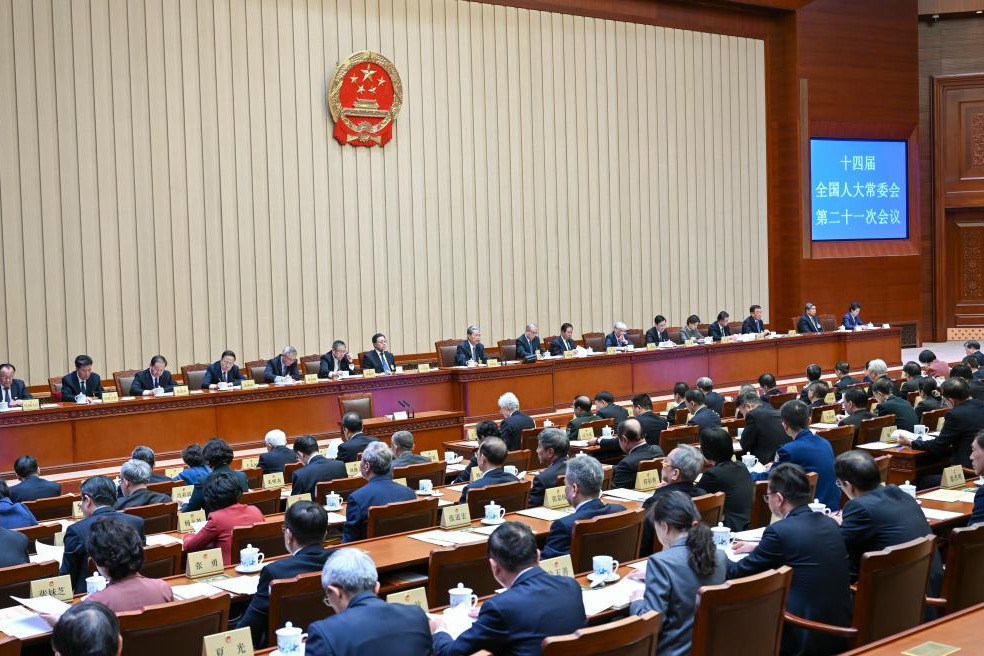
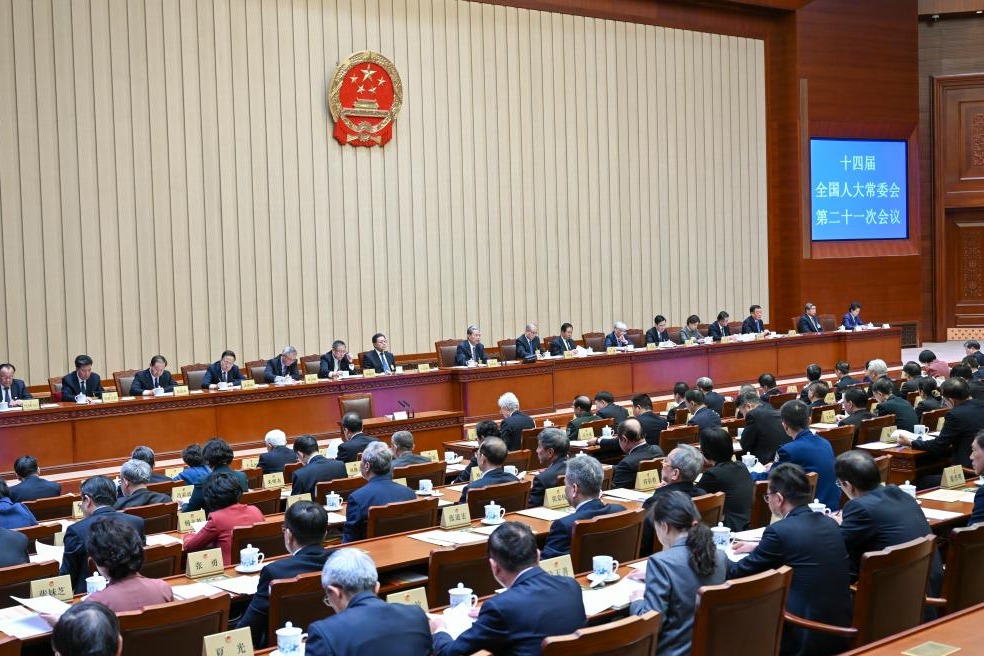
    The 21st session of the 14th National People’s Congress Standing Committee concluded in Beijing on February 26, 2026, marking significant developments in China’s legislative agenda. Presided over by NPC Standing Committee Chairman Zhao Leji, the closing meeting witnessed substantial personnel decisions and procedural approvals ahead of the upcoming full NPC session.

    In a notable administrative reshuffle, legislators voted to remove Wang Xiangxi from his position as Minister of Emergency Management and dismissed Liu Shaoyun from his role as President of the Military Court of the Chinese People’s Liberation Army. These decisions were part of several personnel-related bills approved during the session.

    The committee endorsed in principle the draft work report of the NPC Standing Committee, with the Council of Chairpersons recommending that Chairman Zhao deliver this report at the impending fourth session of the 14th NPC. Additionally, lawmakers ratified the draft agenda for the full NPC session and the proposed list of the session’s presidium and secretary-general, which will undergo further review during the preparatory meeting.

    Chairman Zhao emphasized the critical nature of the upcoming annual session, which will deliberate on China’s 15th Five-Year Plan (2026-2030) and consider major legislative documents including the environmental code, legislation promoting ethnic unity and progress, and national development planning laws. Zhao urged committee members to maintain focus on the central priorities of the Communist Party of China and the nation while fulfilling their statutory responsibilities with heightened accountability.

    The session also featured a special lecture for lawmakers following a meeting of the Council of Chairpersons, further preparing legislators for the significant agenda items facing the full NPC session.
  • Takeaways from a UK special election won by the Green Party over Starmer’s Labour

    Takeaways from a UK special election won by the Green Party over Starmer’s Labour

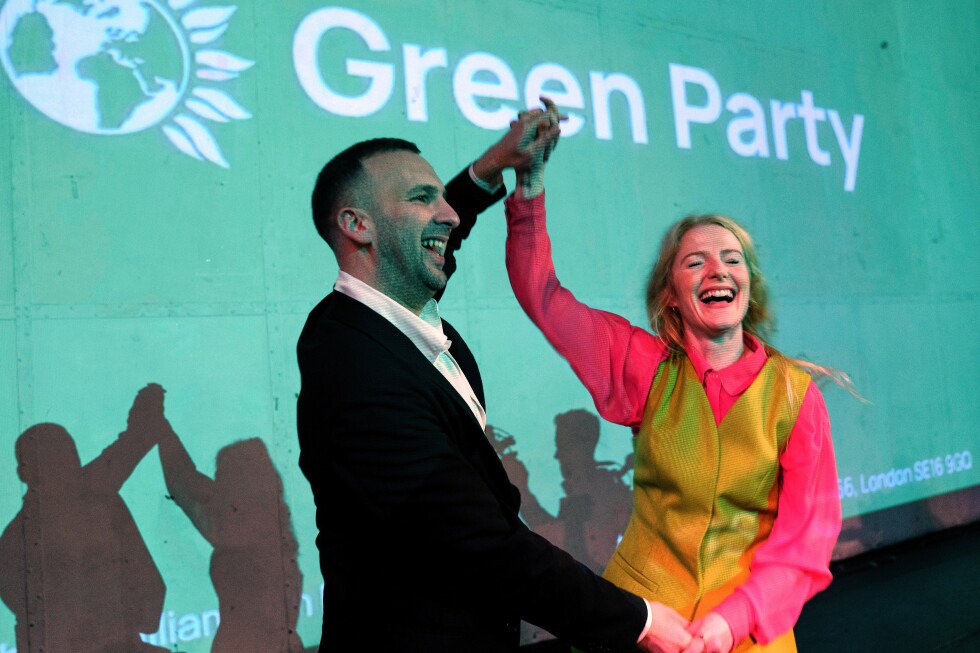
    LONDON — Britain’s political establishment has been rocked by a seismic shift as the environmentalist Green Party secured a stunning victory in the Greater Manchester constituency of Gorton and Denton. The outcome represents a devastating blow to Prime Minister Keir Starmer’s leadership and signals a fundamental realignment of the UK’s traditionally two-party political system.

    In what political analysts are calling a watershed moment, the centre-left Labour Party not only lost its longtime stronghold but finished third behind both the left-leaning Greens and the hard-right Reform UK party. This humiliation comes less than two years after Starmer’s landslide victory in July 2024, raising serious questions about his political survival.

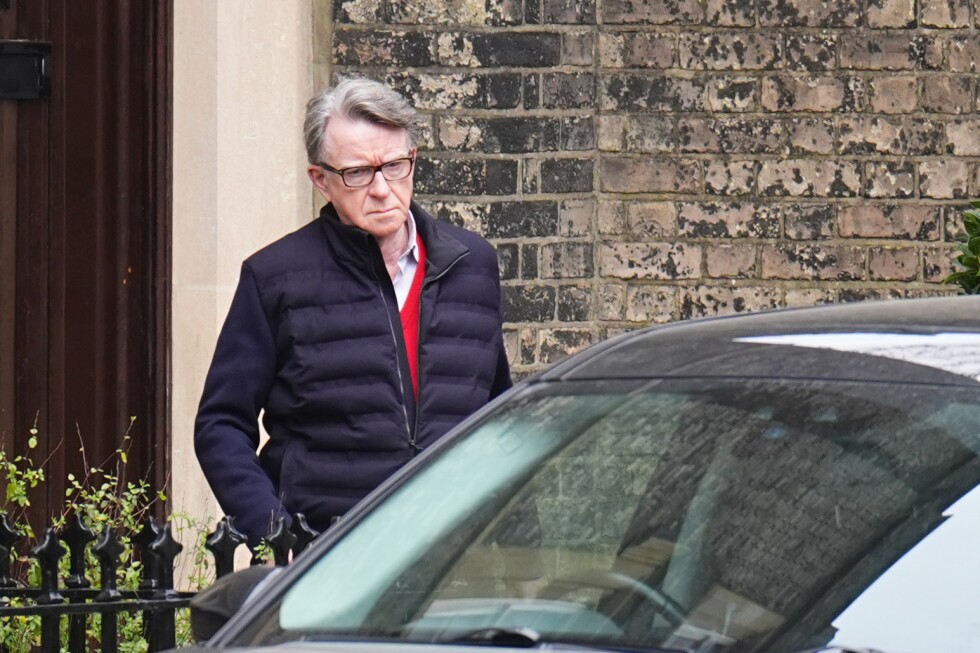
    The Prime Minister’s administration has been plagued by multiple crises, including failure to deliver promised economic growth, deteriorating public services, and controversial policy U-turns. The recent Epstein-related scandal involving former ambassador Peter Mandelson further weakened Starmer’s position, triggering internal party rebellion and high-level resignations.

    Green Party leader Zack Polanski declared that “Labour’s electoral stranglehold is over” as his party expands beyond environmental issues to address cost-of-living concerns, drug legalization, and Palestinian support. Newly elected Green MP Hannah Spencer, a 34-year-old plumber, embodies this populist shift, promising to represent those “left behind and isolated.”

    Meanwhile, Reform UK continues to lead national opinion polls, creating a perfect storm for Labour as it faces challenges from both left and right. Political scientist Rob Ford describes Labour’s predicament as falling into the “electoral Valley of Death”—rejected across the political spectrum.

    With the next general election not required until 2029, Starmer faces mounting internal pressure to resign or change direction. Despite acknowledging voter frustration, the Prime Minister has vowed to “keep on fighting” amid growing speculation about his leadership’s longevity.

  • The EU will ‘provisionally implement’ a trade deal with South American bloc Mercosur

    The EU will ‘provisionally implement’ a trade deal with South American bloc Mercosur

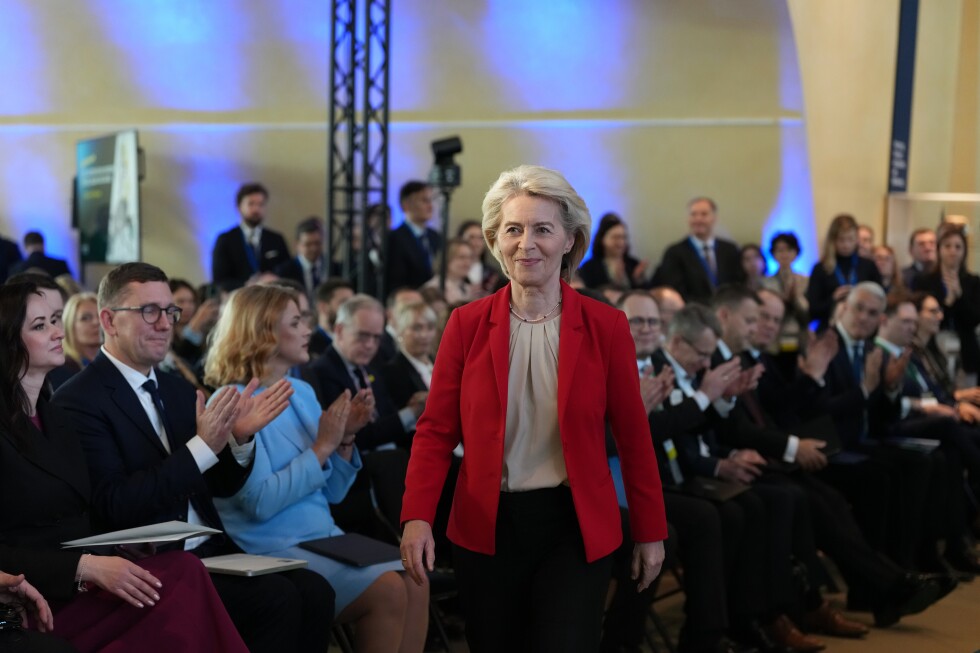
    BRUSSELS — European Commission President Ursula von der Leyen announced on Friday the provisional implementation of the landmark EU-Mercosur trade agreement, circumventing pending approval from the European Parliament. This decisive move follows Uruguay and Argentina’s ratification of the pact on Thursday, triggering the Commission’s unprecedented activation procedure.

    The monumental trade deal represents the culmination of 25 years of complex negotiations between economic blocs encompassing over 700 million people and accounting for approximately 25% of global GDP. The agreement establishes one of the planet’s most extensive free trade zones, strategically positioning both regions against contemporary trade challenges including U.S. tariff policies and China’s critical mineral supply restrictions.

    Von der Leyen emphasized the agreement’s strategic importance at a press conference, stating: “Mercosur embodies the spirit in which Europe is acting on the global scene. Our businesses, our workers, and our citizens will reap the benefits, and they should reap them as soon as possible. This is about resilience, this is about growth, and Europe shaping its own future.”

    The Commission’s approach has generated significant controversy due to its unusual circumvention of parliamentary procedures. The agreement faces substantial opposition from European agricultural sectors concerned about competitive pressures from South American producers. Von der Leyen acknowledged that full ratification remains contingent upon future parliamentary consent, committing to “continue working closely with all EU institutions, member states, and stakeholders to ensure a smooth and transparent process.”

  • India court clears former Delhi chief minister of corruption charges

    India court clears former Delhi chief minister of corruption charges

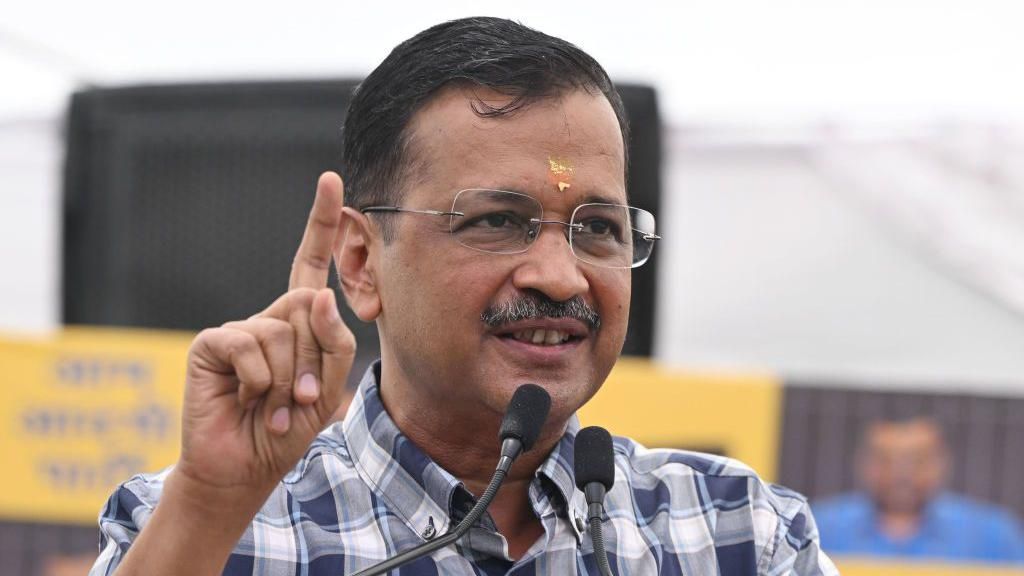
    In a significant judicial development, an Indian court has dismissed a high-profile corruption case against Arvind Kejriwal, the former Chief Minister of Delhi and prominent opposition leader. The ruling comes nearly two years after his controversial arrest in March 2024, which occurred just weeks before India’s general elections.

    The Rouse Avenue Court in Delhi exonerated Kejriwal and 23 co-accused individuals on Friday, delivering a stern rebuke to the Central Bureau of Investigation (CBI). The court found no evidence of “overarching conspiracy or criminal intent” in the excise policy that formed the basis of the corruption allegations. The judge specifically criticized the CBI for attempting to “construct a narrative of conspiracy on the basis of mere conjecture” and for relying excessively on statements from approvers—accomplices who become state witnesses in exchange for leniency.

    The court announced it would recommend a departmental inquiry against CBI officials for what it deemed a “shoddy probe,” emphasizing that “a fair investigation is essential for a fair trial.” The CBI has indicated it will appeal the verdict.

    The case centered on a liquor policy introduced by Kejriwal’s Aam Aadmi Party (AAP) government in 2021, which aimed to curb black market sales, increase state revenues, and ensure equitable distribution of liquor licenses. The policy was withdrawn months later after Delhi’s Lieutenant-Governor Vinai Kumar Saxena accused AAP of manipulating rules to benefit private retailers, leading to a CBI investigation in July 2022.

    Following the court’s decision, an emotional Kejriwal addressed journalists outside the courtroom, stating, “In the end, unrighteousness and injustice are defeated and truth alone prevails.” He was embraced by former deputy chief minister Manish Sisodia, who was also cleared in the case along with AAP spokesperson Sanjay Singh. All three leaders had spent substantial time in jail after being repeatedly denied bail by lower courts before eventually receiving relief from the Supreme Court.

    Kejriwal had consistently alleged political persecution by the ruling Bharatiya Janata Party (BJP), which controls Delhi’s police and investigation agencies—claims that the BJP has denied. The case had drawn significant attention as a test of India’s judicial independence and the treatment of opposition figures.

  • Canadian Prime Minister Mark Carney arrives in India to repair a strained relationship

    Canadian Prime Minister Mark Carney arrives in India to repair a strained relationship

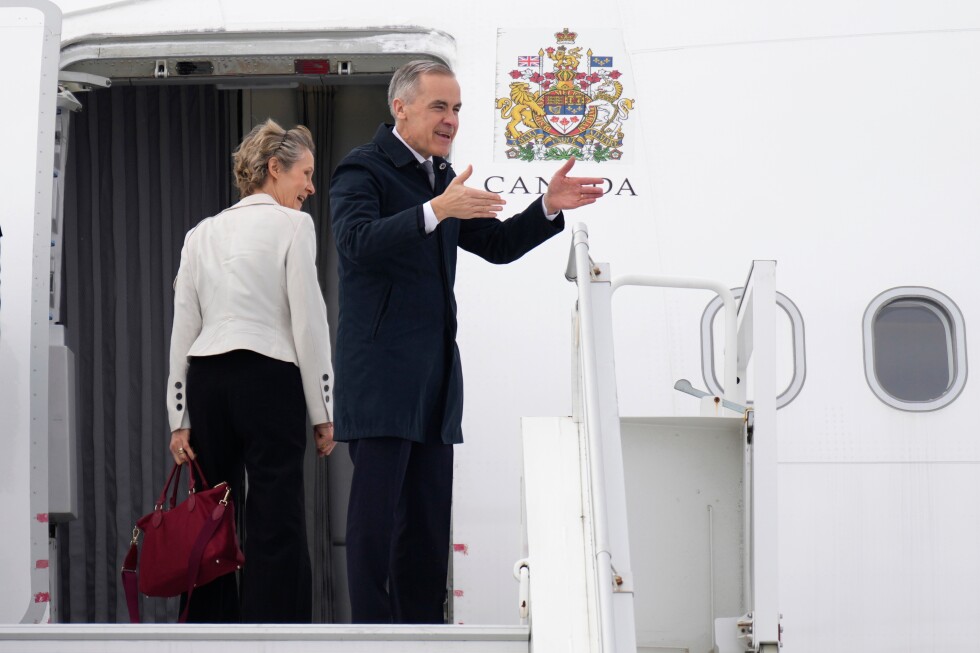
    Canadian Prime Minister Mark Carney commenced his inaugural official visit to India on Friday, landing in Mumbai with ambitions to revitalize bilateral relations and expand trade partnerships. This four-day diplomatic mission represents a strategic effort to mend ties that deteriorated significantly during his predecessor’s administration.

    The cornerstone of Carney’s itinerary includes high-level discussions with Indian business leaders and a pivotal meeting with Prime Minister Narendra Modi scheduled for Monday in New Delhi. India’s Foreign Ministry characterized the upcoming dialogue as an opportunity to reinforce “the positive momentum and shared vision” for a progressive bilateral partnership.

    Both governments are poised to explore enhanced cooperation across multiple sectors including trade and investment, energy security, critical minerals, and technological innovation. This diplomatic re-engagement follows two years of strained relations between the Commonwealth nations.

    The visit forms part of Carney’s broader strategy to diversify Canada’s trade relationships beyond the United States. Subsequent to his Indian engagement, the Canadian leader will proceed to Australia and Japan, implementing his declared objective of doubling non-U.S. exports within the next decade in response to American tariff policies that have dampened investment enthusiasm.

    This diplomatic thaw follows a period of heightened tensions sparked by Canadian allegations of Indian involvement in the June 2023 killing of a Sikh activist near Vancouver. New Delhi had vigorously denied the accusations while countering that previous Canadian administration provided sanctuary to Sikh extremists advocating for Khalistan—a separatist movement prohibited in India.

    The reconciliation process initiated last June when Carney extended an invitation to Modi during the G7 summit in Alberta. Notably, Canada isn’t alone in alleging Indian officials’ involvement in overseas plots, as U.S. prosecutors similarly accused an Indian official of orchestrating a foiled assassination attempt against a Sikh separatist in New York during 2023.

  • White House to allow resale of Venezuelan oil to Cuba’s private sector

    White House to allow resale of Venezuelan oil to Cuba’s private sector

    In a significant policy shift, the United States has authorized the resale of Venezuelan oil to Cuba’s private sector under stringent conditions. The announcement came during a Caribbean summit in Saint Kitts and Nevis, where U.S. Secretary of State Marco Rubio emphasized that Cuba must implement “dramatic” reforms in exchange for the energy concessions.

    The policy modification follows January’s forcible seizure of Venezuelan President Nicolas Maduro, after which Washington blocked Venezuela’s oil shipments to Cuba. This embargo had triggered severe fuel shortages and rolling blackouts across the island nation, which historically relied on Venezuela for nearly half of its oil needs.

    The Treasury Department’s new provisions permit Venezuelan oil exports exclusively for commercial or humanitarian purposes, with explicit warnings that shipments will immediately cease if diverted to Cuban government or military entities. However, significant questions remain regarding Cuban companies’ ability to afford spot market purchases given the country’s prolonged economic struggles.

    Concurrently, Cuban authorities reported a deadly maritime incident involving alleged militants arriving from the United States. According to Havana, four gunmen were killed and six wounded after a speedboat carrying Cuban expatriates opened fire on soldiers in Cuban waters. The government characterized this as a terrorist infiltration attempt by individuals with “known history of criminal and violent activity.”

    Regional leaders expressed deep concern about Cuba’s destabilization, with Jamaican Prime Minister Andrew Holness warning that “a prolonged crisis in Cuba will not remain confined to Cuba.” The humanitarian situation has prompted international responses, including Mexico’s dispatch of 1,193 tons of supplies via naval vessels and Canada’s announcement of $5.8 million in aid.

    The compounded effects of intensified U.S. sanctions and structural economic weaknesses have pushed Cuba into its most severe crisis in decades, with critical shortages and blackouts peaking in early 2026. Rubio maintained that the oil concessions represent a strategic approach to demonstrate private sector capabilities while maintaining pressure for political reform.

  • ‘Shirtless’ protest at AI summit sparks political storm in India

    ‘Shirtless’ protest at AI summit sparks political storm in India

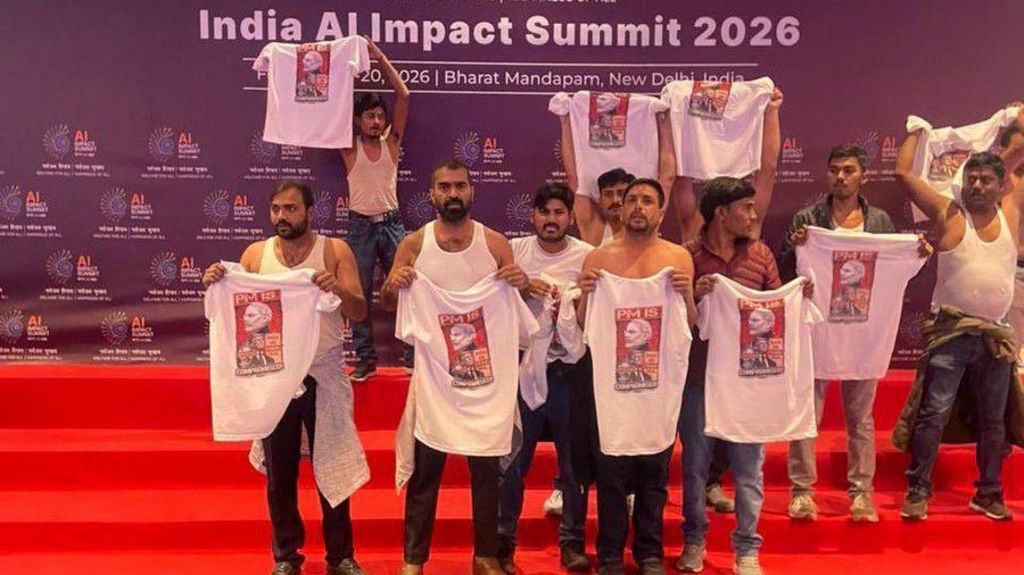
    A dramatic demonstration at Delhi’s prestigious India AI Impact Summit has escalated into a significant political confrontation, exposing deep divisions over democratic expression in the world’s largest democracy. Members of the Indian Youth Congress, the youth wing of the primary opposition party, orchestrated a striking protest on February 20th during the summit’s closing ceremonies.

    The protesters executed a carefully staged demonstration where they removed their jackets to reveal T-shirts criticizing Prime Minister Narendra Modi’s administration. Subsequently, they removed these shirts entirely while vocalizing strong opposition to rising unemployment rates and a proposed India-US trade agreement they claim would adversely affect farmers, small businesses, and youth employment prospects.

    The visual documentation of this event rapidly circulated across social media platforms, triggering intense national discourse regarding appropriate forms and venues for political protest. This incident proved particularly contentious given the summit’s significance as a landmark gathering for artificial intelligence development in India and the Global South, featuring prominent international figures including Sam Altman and Dario Amodei.

    Law enforcement authorities responded by arresting eight Youth Congress members, including National President Uday Bhanu Chib, on charges including rioting, criminal conspiracy, and unlawful assembly. Police allege the protest deliberately violated security protocols and involved jostling of officers, while investigators maintain Chib functioned as the ‘mastermind’ despite not being physically present at the demonstration.

    The political fallout has reached the highest levels of government, with Prime Minister Modi condemning the Congress party for allegedly tarnishing India’s international standing. Conversely, Congress leader Rahul Gandhi has characterized the arrests as evidence of the government’s ‘dictatorial tendencies,’ defending the protest as legitimate patriotic expression rather than criminal activity.

    This incident has ignited broader philosophical debates about democratic norms, with media outlets and political analysts offering polarized perspectives. Some commentators have criticized the protest as an inappropriate spectacle that undermined a significant international event, while others have defended it as a valid exercise of democratic dissent within important public forums.

    The judicial proceedings continue as Chib remains in police custody, with his legal representatives challenging the evidentiary basis for conspiracy charges. The case has subsequently inspired additional protests from Youth Congress members, ensuring this political confrontation remains at the forefront of India’s ongoing discourse about the boundaries between legitimate protest and public disruption.

  • China’s top legislature concludes standing committee session

    China’s top legislature concludes standing committee session

    The 21st session of China’s 14th National People’s Congress (NPC) Standing Committee concluded in Beijing on February 26, 2026, marking significant legislative and personnel developments ahead of the upcoming annual parliamentary meeting. Presided over by NPC Standing Committee Chairman Zhao Leji, the closing session witnessed several critical decisions that will shape the country’s legislative agenda.

    In a notable personnel change, lawmakers voted to remove Wang Xiangxi from his position as Minister of Emergency Management. The decision was subsequently formalized through a presidential order signed by President Xi Jinping. The session also addressed various organizational matters, including the approval of deputy qualification reports and additional personnel-related bills.

    Legislators gave preliminary approval to the draft work report of the NPC Standing Committee, with the Council of Chairpersons recommending that Chairman Zhao Leji deliver this report during the forthcoming fourth session of the 14th NPC. The committee further adopted the draft agenda for the NPC session and proposed the composition of the session’s presidium and secretary-general, which will be submitted to the preparatory meeting for deliberation.

    Addressing the assembly, Chairman Zhao emphasized the significance of the upcoming NPC session, which will review and approve China’s 15th Five-Year Plan (2026-2030) and deliberate on several crucial legislative documents. These include the draft environmental code, the draft law on promoting ethnic unity and progress, and the draft law on national development planning.

    Zhao called upon committee members to maintain focus on the central priorities of the Party and the nation while executing their statutory responsibilities with heightened dedication. He stressed the importance of embracing suggestions from deputies and welcoming supervisory input to ensure the annual NPC session proceeds with efficiency and pragmatism.

    The session concluded with Chairman Zhao presiding over a meeting of the Council of Chairpersons and a subsequent lecture for lawmakers, underscoring the educational component of the legislative process.

  • Brussels orders probe of Mandelson’s Epstein ties while EU trade rep

    Brussels orders probe of Mandelson’s Epstein ties while EU trade rep

    The European Union has formally directed its anti-fraud agency to examine the conduct of Peter Mandelson, the former British ambassador to the United States, regarding his associations with convicted sex offender Jeffrey Epstein during his tenure as Brussels’ trade representative.

    A European Commission spokesperson disclosed on Thursday that the European Anti-Fraud Office (OLAF) received official instructions on February 18 to initiate a comprehensive review of the matter, citing substantial publicly available documentation. OLAF, the EU’s primary watchdog organization renowned for investigating financial misconduct and rights violations within migration authorities and legislative bodies, has not officially confirmed the inquiry.

    Mandelson, a influential British political figure currently under scrutiny for alleged public office misconduct connected to his Epstein relationship, faces potential consequences that extend to Prime Minister Keir Starmer’s leadership. Starmer appointed the veteran statesman to the diplomatic position despite prior warnings concerning his friendship with the disgraced financier.

    With decades of political influence within Britain’s center-left Labour Party, Mandelson earned the moniker ‘Prince of Darkness’ for his strategic acumen and political ruthlessness. He played pivotal roles in both Tony Blair’s and Gordon Brown’s administrations while simultaneously serving as EU trade commissioner from 2004 to 2008.

    Documentary evidence reveals Mandelson maintained communication with Epstein and accomplice Ghislaine Maxwell before, during, and after his Brussels assignment. Their correspondence included suggestive messages, with Maxwell employing disciplinary language toward Mandelson in 2002 exchanges. Financial records indicate Epstein potentially transferred $75,000 to Mandelson or his spouse between 2003-2004, though Mandelson disputes recollection of these transactions and questions document authenticity.

    The investigation may concentrate on Mandelson’s alleged sharing of privileged governmental information with Epstein, whom he referred to as his ‘best pal.’ Particularly concerning is evidence suggesting Mandelson alerted Epstein about the EU’s massive €500 billion eurozone bailout package in May 2010, a full day before official public disclosure—information that could facilitate insider trading.

    European commissioners remain bound by ethical obligations and official conduct codes during and after their service periods. Suspected violations of these standards can trigger OLAF investigations. Mandelson, recently released after nine hours of police questioning, maintains his innocence and has not been formally charged, though investigations continue.

  • Iran urges US to drop ‘excessive demands’ to reach deal

    Iran urges US to drop ‘excessive demands’ to reach deal

    Iran has issued a firm response to United States negotiation tactics, declaring that Washington must abandon its “excessive demands” for any potential nuclear agreement to materialize. The statement from Iranian Foreign Minister Abbas Araghchi came following what participants described as the “most intense” round of negotiations to date, mediated by Oman in Geneva.

    The diplomatic efforts unfold against a backdrop of significant military escalation, with the USS Gerald R. Ford—the world’s largest aircraft carrier—deployed to the Mediterranean this week as part of the largest U.S. military buildup in the region in decades. This strategic positioning coincides with former President Donald Trump’s repeated threats of military action against Iran and his February 19 ultimatum giving Tehran 15 days to reach a diplomatic solution.

    While Iran maintains that discussions should focus exclusively on its nuclear program, the United States has expanded its demands to include limitations on Iran’s ballistic missile capabilities and curtailment of support for militant groups throughout the Middle East. According to reports from The Wall Street Journal, U.S. negotiators would require Iran to dismantle its three primary nuclear facilities and transfer all remaining enriched uranium to American custody.

    Despite these substantial disagreements, diplomatic channels show signs of progress. Technical discussions are scheduled to commence at the UN’s nuclear agency in Vienna on Monday, with another round of high-level talks anticipated within the week. Omani Foreign Minister Badr Albusaidi confirmed that “significant progress” had been achieved during the latest session.

    The negotiations occur alongside heightened rhetoric from both nations. Trump previously utilized his State of the Union address to accuse Iran of “pursuing sinister nuclear ambitions” and developing missiles capable of threatening European targets and U.S. bases overseas—claims that Tehran’s foreign ministry dismissed as “big lies.” Iranian President Masoud Pezeshkian has consistently asserted that the country’s nuclear program serves exclusively civilian purposes.

    Military analysts note the unusual presence of two U.S. aircraft carriers in the region—the USS Abraham Lincoln accompanied by nine destroyers and three additional combat vessels. While Iran’s publicly disclosed missile range reaches approximately 2,000 kilometers, U.S. intelligence estimates suggest capabilities extending to 3,000 kilometers, still insufficient to reach the continental United States.

    The current diplomatic initiative follows the collapse of previous negotiations after Israeli strikes on Iranian facilities last June, which triggered a 12-day conflict that briefly involved American airstrikes on nuclear sites. The domestic context within Iran remains tense as well, with reports indicating a January crackdown on nationwide protests that resulted in significant casualties according to human rights organizations, and subsequent demonstrations continuing around university campuses.