分类: politics

  • Bill Clinton denies wrongdoing at grilling on Epstein ties

    Bill Clinton denies wrongdoing at grilling on Epstein ties

    Former President Bill Clinton faced intensive questioning before a Congressional committee on Friday, vehemently denying any misconduct regarding his associations with the late financier Jeffrey Epstein. The high-stakes deposition, conducted behind closed doors in Chappaqua, New York, saw Clinton asserting his innocence while drawing parallels to what he characterized as a ‘kangaroo court’ proceeding.

    In his opening statement, Clinton emphasized: ‘I saw nothing, and I did nothing wrong,’ while simultaneously advocating that ‘no person is above the law, especially presidents.’ The former president acknowledged multiple flights aboard Epstein’s private aircraft during the early 2000s but maintained these were exclusively for humanitarian initiatives connected to the Clinton Foundation. He stated unequivocally that had he possessed any awareness of Epstein’s criminal activities, he would have severed ties immediately and reported him to authorities.

    The Republican-led House Oversight Committee, chaired by Representative James Comer, is investigating connections between powerful figures and Epstein following the Justice Department’s release of millions of documents related to the sex offender. Comer indicated particular interest in Clinton’s 27 documented flights on Epstein’s plane and Epstein’s 17 visits to the White House during Clinton’s presidency.

    Democrats on the committee attempted to redirect scrutiny toward former President Donald Trump, with Representative Suhas Subramanyam asserting ‘we are talking to the wrong president.’ This sentiment was echoed by Hillary Clinton, who testified before the committee on Thursday and challenged lawmakers to question Trump ‘directly under oath about the tens of thousands of times he shows up in the Epstein files.’

    The proceedings occurred amid heightened security measures, with Secret Service erecting metal barricades around the arts center venue as dozens of journalists descended upon the affluent community. The Clintons initially resisted subpoenas but complied after Republicans threatened contempt of Congress charges.

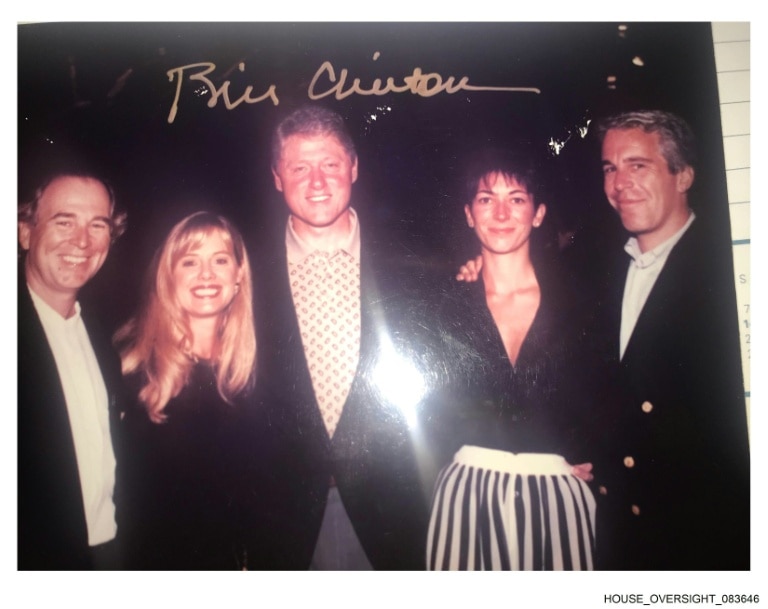
    Newly disclosed photographs from Epstein’s files include images showing Clinton relaxing in a hot tub and swimming alongside Ghislaine Maxwell, Epstein’s convicted accomplice. Clinton’s representatives have emphasized that mere appearance in the released documents does not imply wrongdoing, noting the former president has never been formally investigated or accused of any crime related to Epstein.

    Epstein, convicted in 2008 for soliciting sex from minors and facing sex trafficking charges, died in a New York jail cell in 2019 in what was officially ruled a suicide.
  • Argentina’s Senate convenes for final labor reform vote, as unions and opposition march in protest

    Argentina’s Senate convenes for final labor reform vote, as unions and opposition march in protest

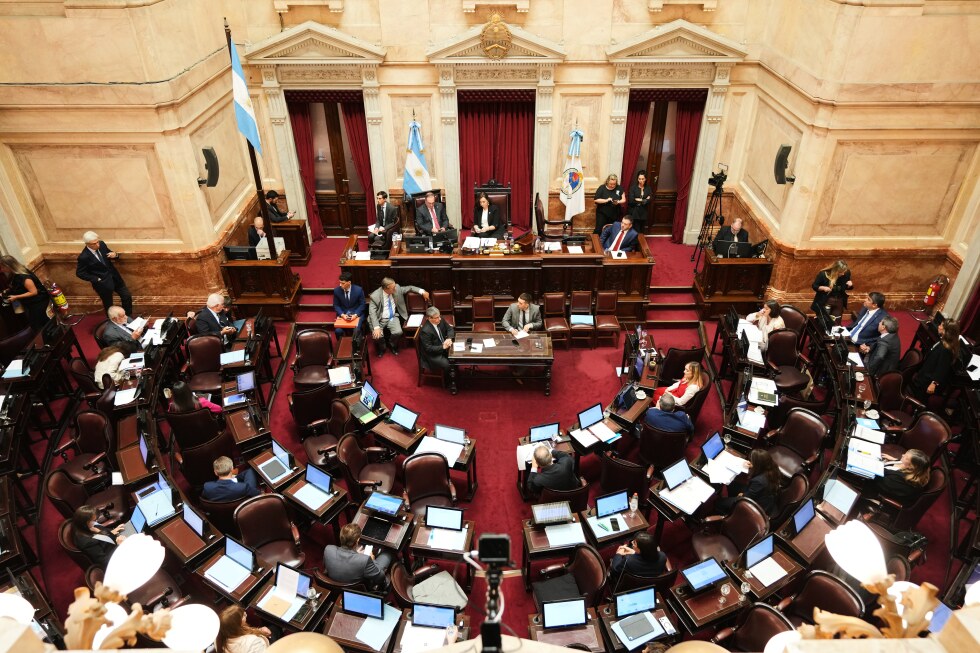
    BUENOS AIRES — Argentina’s capital witnessed massive demonstrations on Friday as a broad coalition comprising labor unions, opposition factions, and leftist organizations flooded the streets of downtown Buenos Aires. The protests targeted President Javier Milei’s comprehensive labor reform package, which is poised for a decisive Senate vote imminently.

    The proposed legislation, championed by Milei’s La Libertad Avanza party, seeks to fundamentally transform Argentina’s labor landscape by granting employers enhanced flexibility regarding hiring practices, termination procedures, severance arrangements, and collective bargaining protocols. This initiative has encountered vehement resistance from labor unions and their Peronist allies, who contend that these measures would dismantle crucial worker protections and exacerbate vulnerabilities amid Argentina’s recurrent economic instability.

    Despite last week’s preliminary Senate endorsement, the government was compelled to modify a contentious provision that proposed halving salaries for workers on leave due to non-work-related injuries or illnesses. This amendment followed vigorous opposition from lawmakers, necessitating a final Senate vote to determine whether to accept the revised text or reinstate the original clause.

    The legislative process has been marked by significant tension, culminating last week in a 24-hour nationwide strike organized by Argentina’s largest trade union group, the General Confederation of Labor. Simultaneously, clashes erupted between police and demonstrators from various leftist factions outside Congress, highlighting the deeply polarized nature of the debate.

    President Milei maintains that modernizing Argentina’s half-century-old labor code is essential to attract foreign investment, enhance productivity, and stimulate job creation in a nation where approximately 40% of workers operate in the informal economy. Union leaders, however, argue these reforms would undermine the worker protections that have characterized Argentina since the emergence of Peronism in the 1940s—a movement that continues to wield substantial influence, particularly among the country’s 13 million registered workers, roughly 40% of whom maintain union affiliations.

    A successful Senate vote would deliver Milei a significant legislative achievement, potentially enabling him to highlight these substantial economic reforms during his upcoming Sunday address at the opening of Congress’s ordinary sessions.

  • Reform’s Zia Yusuf deletes post as ‘family voting’ claims surface

    Reform’s Zia Yusuf deletes post as ‘family voting’ claims surface

    Reform UK’s home affairs spokesperson Zia Yusuf has become embroiled in controversy after deleting a social media post that appeared to celebrate the illegal practice known as “family voting.” The incident occurred during the Gorton and Denton by-election in Greater Manchester, where Reform officials alleged high rates of voter collusion in predominantly Muslim areas.

    The controversy deepened when Yusuf shared and enthusiastically endorsed a post from student James Bennett, who claimed his 93-year-old blind mother had loudly asked for Reform’s ballot box to cheers from waiting voters. Bennett later revealed his post was satirical, clarifying his mother is actually 41, not blind, lives three hours from Manchester, and holds left-wing political views.

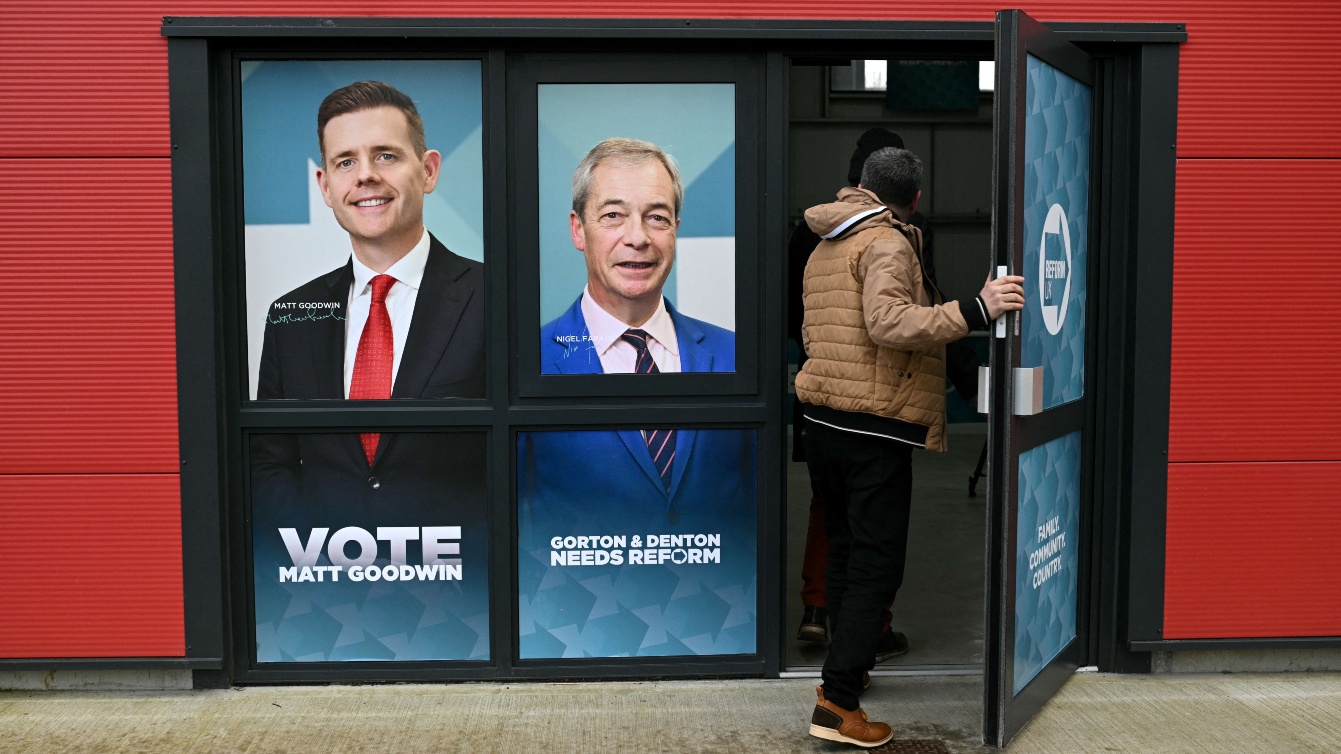
    As election results emerged showing Green Party candidate Hannah Spencer’s victory with 40.7% of votes, followed by Reform’s Matt Goodwin at 28.7% and Labour’s Angeliki Stogia at 25.4%, Reform leadership escalated allegations of electoral misconduct. Party leader Nigel Farage described the situation as “deeply concerning” for democratic integrity, while election observer group Democracy Volunteers claimed to have witnessed 32 cases of family voting across the constituencies.

    Independent MP Adnan Hussain highlighted the contradiction by sharing a screenshot of Yusuf’s deleted post, questioning why Reform initially appeared to encourage family voting behavior before scapegoating Muslim communities after their electoral defeat. The acting returning officer for the by-election stated that polling station staff were trained to detect undue influence and reported no such issues during voting hours.

    Following the loss, Goodwin made inflammatory remarks about “losing our country” to “dangerous Muslim sectarianism,” while Farage characterized the election as “a victory for sectarian voting and cheating.” Labour officials have called for investigation into the family voting allegations while criticizing what they describe as dog-whistle politics against Muslim voters.

  • Greens win thumping victory in by-election as Labour comes in third

    Greens win thumping victory in by-election as Labour comes in third

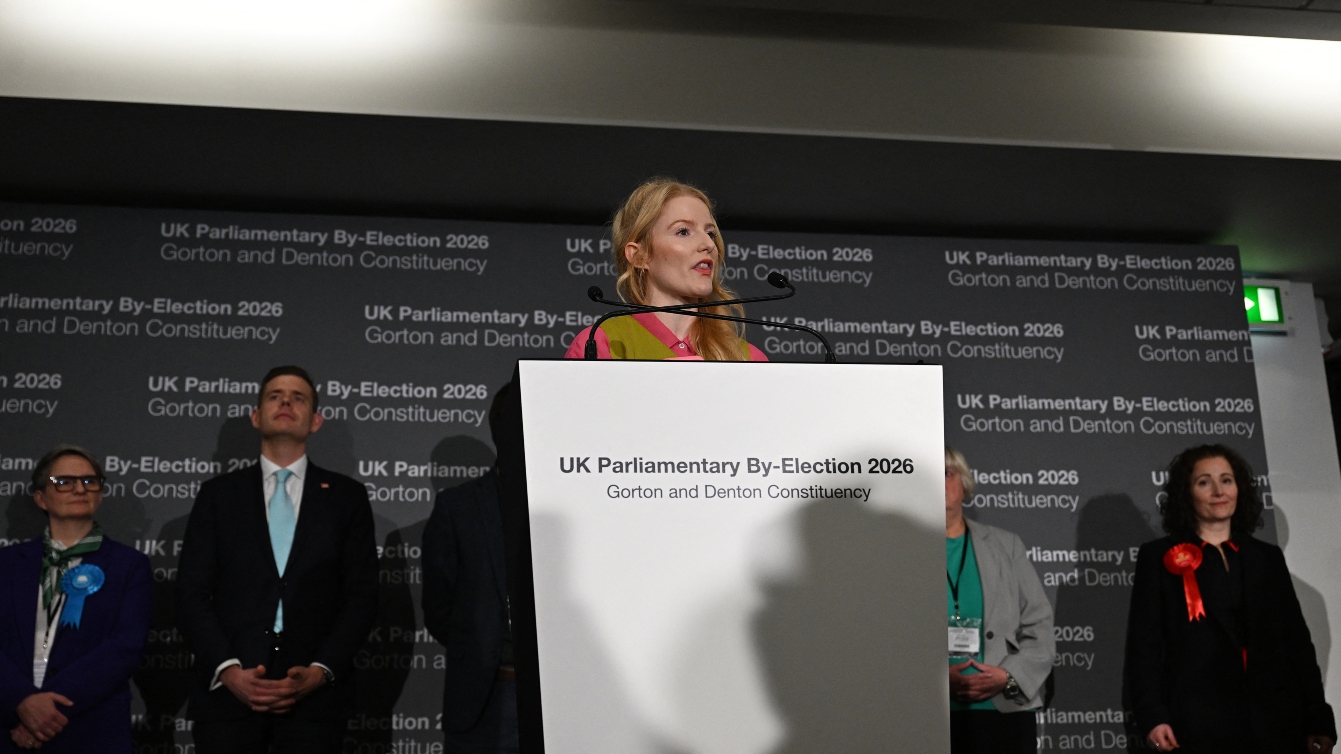
    In a seismic shift for British politics, the Green Party has delivered a humiliating blow to Prime Minister Keir Starmer’s Labour Party by securing victory in the Gorton and Denton by-election. Labour was pushed into an unprecedented third place, trailing behind both the Greens and the surging Reform UK party.

    Green candidate Hannah Spencer, a professional plumber and plasterer, triumphed with 14,980 votes (40.7% of the total), while Reform UK’s Matt Goodwin finished second with 10,578 votes (28.7%). Labour’s Angeliki Stogia managed only 9,364 votes (25.4%), marking a dramatic collapse in traditional Labour support. The Conservative Party, which governed until July 2024, suffered a catastrophic result with merely 1.9% of the vote.

    In her victory speech, Spencer declared she would “work hard for everyone in Gorton and Denton,” emphasizing community solidarity. “Our struggles might not be the same… but we stick up for each other,” she stated, criticizing an economic system where people “work to line the pockets of billionaires” instead of building a “nice life” for all.

    The campaign was notably fierce, with allegations of racism and manipulation dominating the discourse. The Greens accused Goodwin of making racist statements, citing his history of controversial remarks about ethnicities and Muslims. Labour meanwhile accused the Greens of “manipulating Muslim voters,” which Spencer characterized as “racist dogwhistles” from the governing party.

    The outcome has triggered a political crisis for Starmer’s leadership, compounded by revelations that Labour had blocked popular Manchester Mayor Andy Burnham—seen as a potential leadership contender—from standing in the constituency.

    Reform UK’s response to defeat was inflammatory, with Goodwin claiming Britain faces “one general election left to save the country” from “dangerous Muslim sectarianism.” Leader Nigel Farage alleged the election represented “a victory for sectarian voting and cheating,” though election officials reported no irregularities during polling hours.

    The controversy extended to allegations of “family voting,” which Labour requested authorities investigate. However, the acting returning officer confirmed polling staff were trained to prevent voter influence and reported “no such issues.

    A Labour insider revealed the party “didn’t shortlist a single local Muslim candidate,” then blamed Muslim voters for abandoning Labour. The Muslim Vote campaign group called this narrative “irresponsible and insulting,” noting that bloc voting had been “welcomed when it benefited Labour.”

    The campaign group framed the result positively as evidence that “young Muslims and wider voters are breaking from transactional politics and embracing democratic accountability.”

    Adding to the post-election drama, Reform UK’s home affairs spokesperson Zia Yusuf deleted a social media post celebrating an anecdote about an elderly blind voter asking for Reform in a loud voice, which he had enthusiastically endorsed with “Love this!” before the post was revealed as likely satirical.

  • Xi chairs CPC leadership meeting to discuss draft 15th Five-Year Plan, govt work report

    Xi chairs CPC leadership meeting to discuss draft 15th Five-Year Plan, govt work report

    Beijing’s top political leadership convened on Friday under the direction of Xi Jinping, General Secretary of the Communist Party of China Central Committee, to deliberate on two critical national documents. The high-level meeting of the Political Bureau examined the draft framework for China’s 15th Five-Year Plan, which will chart the country’s economic and social development trajectory from 2026 to 2030. Simultaneously, leaders reviewed the draft government work report that will be presented to the National People’s Congress during its upcoming annual legislative session.

    The gathering represents a crucial preparatory phase in China’s policy formulation process, where senior officials refine strategic priorities before presenting them for broader legislative consideration. These documents will establish China’s developmental objectives, policy directives, and implementation mechanisms for the latter half of this decade. The Five-Year Plan tradition, dating back to 1953, remains a cornerstone of China’s governance model, providing comprehensive roadmaps for national progress across economic, technological, environmental, and social dimensions.

    This meeting occurs against the backdrop of complex global economic conditions and China’s ongoing transition toward high-quality development. The forthcoming plan is expected to address contemporary challenges including technological self-reliance, sustainable development, and domestic consumption expansion. The government work report will simultaneously outline immediate policy measures and review previous achievements, creating a cohesive strategy that bridges near-term actions with long-term national aspirations.

  • Spanish opposition calls for disgraced ex-monarch to return from exile

    Spanish opposition calls for disgraced ex-monarch to return from exile

    Spain’s political landscape has been reignited by a controversial appeal from conservative opposition leader Alberto Núñez Feijóo, who has publicly advocated for the return of former monarch Juan Carlos from his self-imposed exile in the United Arab Emirates. The leader of the People’s Party (PP) asserted that despite the former king’s acknowledged transgressions, his pivotal role in Spain’s democratic transition nearly fifty years ago warrants his dignified return to spend his final years in his homeland.

    The 88-year-old former sovereign, who ascended to the throne following Francisco Franco’s death in 1975, played an instrumental role in guiding Spain toward parliamentary democracy. His decisive actions during the 1981 military coup attempt solidified his popularity for decades. However, his legacy was severely tarnished by subsequent scandals, including an extravagant elephant-hunting expedition during Spain’s economic crisis with his mistress Corinna zu Sayn-Wittgenstein-Sayn, followed by revelations of a $100 million payment from the late Saudi monarch and offshore accounts in Jersey.

    These controversies culminated in his 2014 abdication and eventual departure for the UAE in 2020, a move endorsed by his son and current King Felipe. The recent declassification of approximately 150 documents related to the 1981 coup attempt has refocused attention on Juan Carlos’s historical contributions, prompting Feijóo’s bold intervention.

    The socialist-led government has maintained distance from the controversy, with Justice Minister Félix Bolaños emphasizing that the decision rests solely with the former monarch and the Royal Household. Practical complications surrounding a potential return include unresolved marital tensions with Queen Sofía—who remained in Spain—along with logistical challenges regarding residence and financial arrangements.

    Royal commentators like author Ana Romero suggest any homecoming would require Juan Carlos to demonstrate transparent conduct and resolve his financial affairs. The Royal Household has indicated that maintaining the institution’s reputation would necessitate the former king establishing his tax domicile in Spain, though they maintain the ultimate decision remains his alone.

  • Mainland reiterates ban on ‘Taiwan independence’ separatists profiting from mainland

    Mainland reiterates ban on ‘Taiwan independence’ separatists profiting from mainland

    Chinese authorities have launched a formal investigation into allegations that relatives of prominent Taiwan independence advocates have profited from business operations on the mainland while providing financial support to separatist political activities. The announcement came from Chen Binhua, spokesman for Beijing’s Taiwan Affairs Office, during a press briefing on Friday.

    The investigation centers on reports that a family member of Liu Shih-fang, who heads Taiwan’s internal affairs administration, has engaged in commercial ventures and derived financial benefits from mainland operations. According to Chen, these business activities allegedly served as a funding source for political movements advocating Taiwan’s independence from China.

    Beijing’s response reinforces its longstanding policy against what it terms ‘separatist activities’ while simultaneously enforcing regulations that prohibit individuals supporting Taiwan independence from benefiting economically from mainland markets. The spokesman emphasized that authorities are conducting the investigation through proper legal channels and will apply appropriate regulatory measures.

    This development occurs within the broader context of cross-strait relations, where Beijing maintains its ‘One-China’ principle and consistently opposes any form of Taiwan independence. The Chinese government has previously implemented various measures to restrict economic opportunities for those supporting separatist agendas, viewing such actions as undermining national sovereignty and territorial integrity.

    The investigation signals Beijing’s continued vigilance toward economic activities that might indirectly support political movements it considers threatening to national unity. Analysts suggest this case may establish precedents for how mainland authorities handle similar situations involving perceived conflicts between economic engagement and political allegiances across the Taiwan Strait.

  • US moves to legally control tanker and 2M barrels of oil seized off Venezuela’s coast in December

    US moves to legally control tanker and 2M barrels of oil seized off Venezuela’s coast in December

    The U.S. Justice Department has initiated formal legal proceedings to claim permanent ownership of a sanctioned oil tanker and its nearly 2-million-barrel petroleum cargo, marking a significant escalation in the Trump administration’s campaign against Venezuela’s leadership. The vessel, identified as the Skipper, was intercepted off the Venezuelan coast in December as part of Washington’s broader strategy to cripple Nicolás Maduro’s regime by cutting off its primary revenue source.

    This represents the first legal complaint filed by U.S. authorities to formally seize one of at least ten oil tankers intercepted since late last year. American officials allege Venezuela has employed a ‘shadow fleet’ of vessels with falsified flags to clandestinely transport illicit crude into global supply chains, bypassing international sanctions.

    Attorney General Pam Bondi stated, ‘Under President Trump’s leadership, the era of secretly bankrolling regimes that pose clear threats to the United States is over. This Department of Justice will deploy every legal authority at our disposal to completely dismantle and permanently shutter any operation that defies our laws and fuels chaos across the globe.’

    The Justice Department asserts that the Skipper had been moving oil from both Iran and Venezuela worldwide while flying false flags to conceal its activities. Officials claim the operations generated revenue for Iran’s paramilitary Revolutionary Guard, which the U.S. designates as a foreign terrorist organization.

    The seizure comes amid heightened tensions following Maduro’s arrest last month in a U.S. raid and subsequent transfer to New York to face drug trafficking charges. Despite pleading not guilty and maintaining his presidential status, Maduro’s capture has triggered a series of vessel interdictions, with U.S. forces tracking and intercepting tankers as far away as the Indian Ocean.

    The Trump administration has systematically worked to control Venezuela’s oil production, refining, and global distribution while overseeing revenue flows. Concurrently, the U.S. has begun lifting broad sanctions to allow foreign companies to operate in Venezuela in an effort to revitalize the country’s struggling oil industry.

    A federal judge in Washington must now approve the U.S. government’s bid for permanent ownership of the Skipper and its cargo, which could potentially be sold on the market.

  • Trump will head to Beijing weakened — and Xi knows it

    Trump will head to Beijing weakened — and Xi knows it

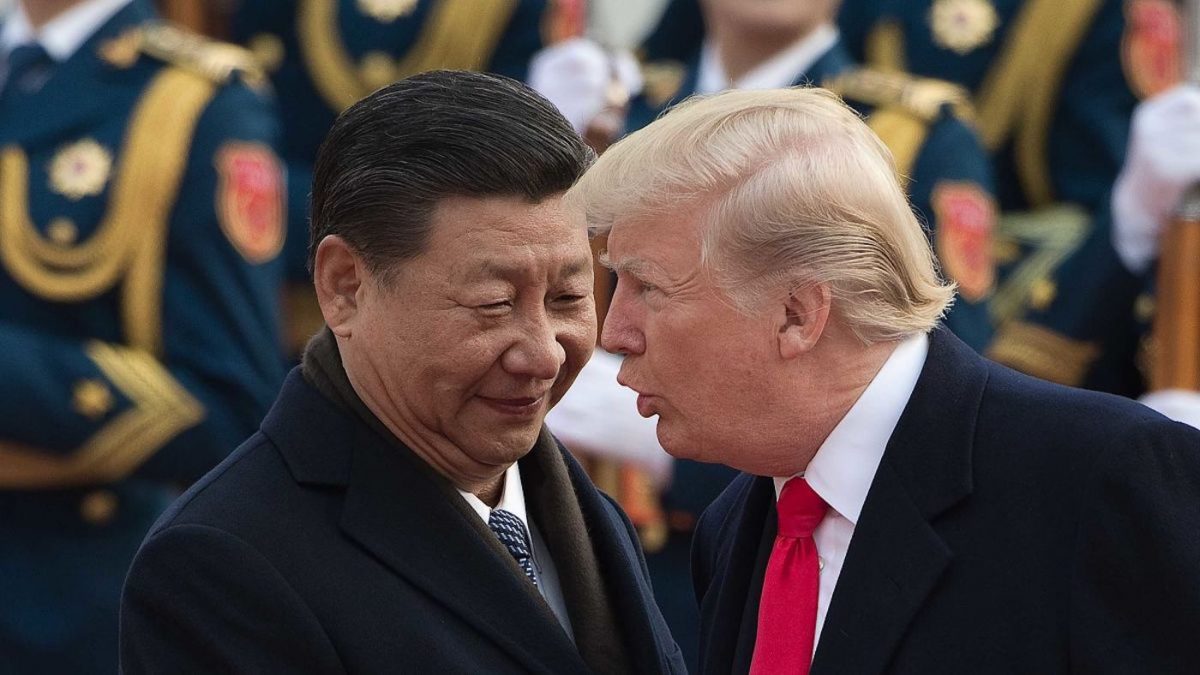
    In a landmark judicial decision, the U.S. Supreme Court has invalidated the cornerstone of former President Donald Trump’s second-term trade doctrine, dramatically altering the power balance in Sino-American relations just weeks before scheduled high-level talks in Beijing. The ruling struck down tariffs imposed under the International Emergency Economic Powers Act (IEEPA), forcing the administration to activate Section 122 of the Trade Act of 1974 instead. This alternative mechanism imposes a temporary 15% surcharge on existing tariffs but remains legally narrower and time-bound, expiring after 150 days.

    The judicial intervention delivers an unexpected strategic advantage to China, relieving pressure on its export sector and recalibrating negotiation dynamics ahead of Trump’s planned April visit. While Section 301 tariffs remain intact, the psychological landscape of negotiations has fundamentally shifted. Beijing now perceives Washington’s threats as legally constrained, recognizing that any sweeping new tariff measures would face protracted litigation.

    This development transforms the upcoming diplomatic choreography. Instead of arriving as an enforcer with unilateral leverage, Trump will enter negotiations with diminished coercive capacity. Consequently, prospects for Chinese capitulation on key issues like industrial subsidies have evaporated. Analysts anticipate Beijing will offer carefully calibrated concessions—potentially including agricultural purchases and symbolic energy contracts—while preserving core industrial policies that maintain China’s competitive advantage.

    The ruling extends beyond immediate tariff relief. Chinese exporters may receive trillions of yuan in tariff reimbursements, injecting liquidity into the domestic economy. More significantly, the decision strengthens China’s positioning as a defender of global trade stability while highlighting American institutional volatility. Meanwhile, Beijing continues consolidating dominance in critical mineral supply chains and green energy components—geopolitical assets that gain enhanced strategic value amid diminished U.S. tariff threats.

    Looking ahead, the technology war appears poised to intensify. Deprived of emergency tariff powers, the U.S. will likely pivot toward non-tariff instruments including stricter semiconductor export controls, expanded entity listings, and targeted investment restrictions. China is utilizing this judicial reprieve to accelerate semiconductor localization and fortify industrial policies before Washington establishes more robust legal foundations for economic containment.

  • Trump says he’s ‘not happy’ with Iran talks but will wait to see what happens in further rounds

    Trump says he’s ‘not happy’ with Iran talks but will wait to see what happens in further rounds

    TEL AVIV, Israel (AP) — President Donald Trump expressed significant dissatisfaction with the progress of nuclear negotiations with Iran on Friday, stating he remains “not happy” with Tehran’s current negotiating position. The President’s comments came amid heightened tensions following unsuccessful diplomatic talks in Geneva and substantial U.S. military deployments in the region.

    Speaking to reporters outside the White House, Trump emphasized his concerns: “I’m not thrilled with their unwillingness to meet our essential requirements. We’ll monitor developments closely as discussions continue, but their acquisition of nuclear weapons remains absolutely unacceptable.”

    The diplomatic impasse follows Thursday’s negotiations in Geneva that concluded without breakthrough agreements. In response to the stalled talks, the U.S. State Department announced Secretary of State Marco Rubio’s emergency visit to Israel scheduled for early next week. Simultaneously, the U.S. Embassy in Jerusalem activated “authorized departure” status, enabling non-essential personnel and families to evacuate at government expense.

    Ambassador Mike Huckabee urgently advised staff considering departure to “do so TODAY,” noting that commercial flight availability might become increasingly limited. This evacuation protocol aligns with similar measures implemented by other nations including Britain, Australia, and China, all recommending their citizens avoid travel to the region.

    The military landscape shows significant escalation, with the U.S. deploying multiple aircraft carriers and warships to the Middle East. Iran has responded with warnings that any American attack would prompt retaliation against U.S. forces throughout the region, potentially involving bases in allied Arab nations.

    Diplomatic efforts continue despite the tensions. Technical discussions are scheduled in Vienna next week, while Vice President JD Vance prepared to meet with Omani Foreign Minister Badr al-Busaidi, who has mediated previous negotiations. U.N. Secretary-General António Guterres urged both nations to “focus on the diplomatic track” despite concerning military movements throughout the region.

    A confidential International Atomic Energy Agency report obtained by The Associated Press confirms that Iran has denied inspectors access to sensitive nuclear sites damaged during last June’s 12-day conflict with Israel. The agency consequently cannot verify Iranian claims about suspending uranium enrichment activities following U.S. and Israeli military actions.

    Israeli Prime Minister Benjamin Netanyahu continues advocating for stronger U.S. measures against Iran, warning that Israel will respond decisively to any Iranian aggression. The situation remains fluid with both diplomatic channels active and military preparations intensifying simultaneously.