分类: politics

  • ‘Not deterred’: Anthony Albanese defiant after alleged far-right kidnap threat

    ‘Not deterred’: Anthony Albanese defiant after alleged far-right kidnap threat

    Australian Prime Minister Anthony Albanese has adopted a resolute stance following disclosures that far-right extremists with neo-Nazi affiliations allegedly plotted to kidnap him. The reported threats emerged from an online Discord chatroom operated by radical activists, where discussions allegedly included a $10,000 offer to rent a vehicle for the abduction operation. These developments occurred shortly after the Bondi Beach terror attack, though investigators have not connected the plot to that incident.

    Addressing the security concerns, Prime Minister Albanese confirmed that threat levels against him have substantially increased, particularly following events of December 14. Despite these security challenges, the Prime Minister emphasized his unwavering commitment to public engagements and direct interaction with Australian citizens. ‘My primary focus remains ensuring the safety of all Australians, not myself,’ Albanese stated during an ABC interview. ‘I maintain full confidence in the Australian Federal Police and security authorities to perform their duties effectively.’

    The security climate has intensified significantly in recent months, with at least five individuals facing charges for allegedly threatening both Prime Minister Albanese and New South Wales Premier Chris Minns. These cases include a Sydney man accused of making threatening communications to the Prime Minister’s office and a 19-year-old from Western Australia allegedly sending social media messages containing death threats.

    This escalation coincides with increased visibility of neo-Nazi organizations across Australia. The recently dissolved Nationalist Socialist Network (NSN) has drawn particular attention from security agencies, with ASIO Director-General Mark Burgess and Home Affairs Minister Tony Burke repeatedly highlighting concerns about the group’s extremist rhetoric. The group announced its disbandment following new anti-hate legislation passed by federal parliament in response to the Bondi attack.

    The threat environment has extended beyond the Prime Minister, with NSW Opposition Leader Kellie Sloane reporting similar security concerns after criticizing neo-Nazi demonstrations outside state parliament. In a separate development, neo-Nazi figure Joel Davis was denied bail this month for allegedly inciting violence against independent Wentworth MP Allegra Spender through Telegram communications.

  • Abu Dhabi talks on Ukraine were ‘constructive, positive’, says UAE

    Abu Dhabi talks on Ukraine were ‘constructive, positive’, says UAE

    Abu Dhabi has emerged as a pivotal diplomatic hub following successful trilateral negotiations between the United States, Russia, and Ukraine. The talks, characterized by participants as constructive and positive, mark a significant advancement in international efforts to resolve the ongoing conflict in Eastern Europe.

    According to Afra Al Hameli, Director of Strategic Communications at the UAE Ministry of Foreign Affairs, the discussions facilitated direct engagement between Russian and Ukrainian representatives. The negotiations focused on critical elements of the US-proposed peace framework and confidence-building measures designed to pave the way for a comprehensive agreement.

    The UAE government extended particular recognition to US President Donald Trump for his instrumental role in facilitating the dialogue, noting his contribution to reinforcing regional stability and advancing the political track toward peace. This diplomatic initiative builds upon the UAE’s established record as a neutral mediator, having previously hosted multiple rounds of Russia-Ukraine negotiations that resulted in approximately 17 successful prisoner-of-war exchanges.

    ‘Our approach to diplomacy is guided by the fundamental principle that conflicts cannot be resolved without dialogue, and progress is built through sustained engagement,’ stated Al Hameli in an official communication. ‘The UAE remains committed to supporting all efforts that advance peace across various global crises.’

    The successful hosting of these high-stakes talks reinforces Abu Dhabi’s growing stature as an international diplomacy center capable of bringing conflicting parties to the negotiation table under neutral auspices.

  • Myanmar holds its last election round with the army already certain to keep control over government

    Myanmar holds its last election round with the army already certain to keep control over government

    YANGON, Myanmar — Myanmar’s military junta concluded its orchestrated three-phase general election on Sunday, finalizing a political process designed to cement the authority of Senior General Min Aung Hlaing’s regime. The election, conducted over nearly a month, has been universally condemned by international observers and domestic opposition groups as a fraudulent endeavor to legitimize the military’s seizure of power in February 2021.

    The electoral framework guaranteed military dominance from the outset. With 25% of parliamentary seats constitutionally reserved for the armed forces, the army-backed Union Solidarity and Development Party (USDP) secured most contested seats during the initial voting phases in December and January. This pre-arranged structure ensures the military and its allies will command the parliamentary majority required to form the next government, with Min Aung Hlaing anticipated to assume the presidency.

    Voting occurred under severe restrictions that criminalized public criticism through a new Election Protection Law, which has already resulted in over 400 individuals facing charges for activities such as distributing leaflets or online commentary. The absence of voting in more than one-fifth of Myanmar’s 330 townships—due to both security concerns and active armed conflict—further undermined the process’s legitimacy.

    The Association of Southeast Asian Nations (ASEAN) explicitly declined to send observers or recognize the election results, with Malaysian Foreign Minister Mohamad Hasan citing concerns over the lack of inclusive participation. Only nations including Russia, China, Belarus, Kazakhstan, Nicaragua, Vietnam, Cambodia, India, and Japan dispatched observers.

    Notably absent from the polls was Aung San Suu Kyi’s National League for Democracy (NLD), which was forcibly dissolved in 2023 after refusing to register under new military regulations. Suu Kyi remains imprisoned on politically motivated charges totaling 27 years. Other opposition parties either boycotted the election or faced severe restrictions, while armed resistance groups disrupted previous voting rounds with attacks on polling stations that resulted in several casualties.

    The final phase of voting commenced at 6 a.m. Sunday across 61 townships in six regions and three states, many of which have experienced recent clashes between military forces and opposition groups. The election commission reported turnout between 50-60% in earlier phases, with approximately 35% fewer eligible voters compared to the 2020 election.

  • Exclusive: Weapons flow to RSF via Libya continue despite pressure on Haftar

    Exclusive: Weapons flow to RSF via Libya continue despite pressure on Haftar

    A complex geopolitical standoff is unfolding across North Africa as weapons shipments persistently transit from Libya to Sudan’s Rapid Support Forces (RSF), despite concerted pressure from Saudi Arabia and Egypt on Libyan commander Khalifa Haftar to terminate Emirati military support. Middle East Eye reveals that this ongoing arms transfer occurs amid escalating tensions between regional powers.

    Eastern Libya commander Khalifa Haftar faces mounting pressure from Cairo and Riyadh, with both nations warning that continued assistance to RSF could fundamentally reshape Egypt’s relationship with his administration. Earlier this month, Saddam Haftar, Khalifa’s son and deputy commander of the Libyan Arab Armed Forces, was unexpectedly summoned to Cairo where Egyptian officials delivered a stern warning demanding immediate cessation of support to RSF.

    Paradoxically, Libyan sources with direct knowledge confirm that Saddam Haftar simultaneously faces counter-pressure from the United Arab Emirates to maintain the weapon facilitation pipeline through eastern Libya. This places the younger Haftar in a precarious position, caught between regional heavyweights, even as arms continue flowing toward the Sudanese conflict zone.

    The pressure campaign constitutes part of a broader Egyptian-Saudi initiative to block transfers of arms, fuel, and fighters to RSF, curtail Emirati influence, and prevent further destabilization along the critical Egypt-Libya-Sudan border triangle. During Saddam Haftar’s Cairo visit, Egyptian intelligence officials presented compelling evidence of Emirati weapons shipments, drones, air defense systems, and fuel deliveries from Libya’s Sarir refinery reaching RSF leadership.

    Since the Sudanese conflict erupted in April 2023 between the Sudanese Armed Forces and RSF, Egypt has watched apprehensively as its southern neighbor descends into chaos. Cairo backs the Sudanese government and military, which have recently lost strategic territories including Darfur’s el-Fasher, where paramilitaries allegedly committed mass atrocities.

    The situation reveals strange bedfellows: while Haftar’s eastern Libyan administration receives longstanding Egyptian support, it simultaneously benefits from UAE backing. The Emirates serves as RSF’s primary patron, funneling weapons, mercenaries, and funds through Libya, Chad, and Ethiopia. Recent intelligence indicates these supply lines directly enabled RSF’s capture of el-Fasher following a 550-day siege.

    Egyptian surveillance has captured aerial imagery documenting weapons moving from Abu Dhabi to Haftar-controlled areas before reaching RSF, plus Libyan fuel tankers supplying paramilitaries in Darfur. Security agencies have also monitored mercenaries from Colombia and Venezuela transiting through Libya en route to join RSF ranks in Sudan.

    In response, Cairo and Riyadh offered Saddam Haftar cooperation alternatives including financial and military support to replace Emirati backing. This diplomatic maneuvering coincided with a substantial $4 billion Saudi arms deal with Pakistan, with weapons potentially allocated to both Haftar’s forces and Sudanese army leader Abdel Fattah al-Burhan.

    Adding complexity, Egyptian officials shared intelligence with Saddam Haftar outlining alleged Emirati plans to fragment Haftar’s territory once RSF secured control over Darfur and Kordofan. The purported strategy involved dividing Libya into multiple zones, potentially undermining Haftar’s authority in eastern and southern regions.

    The situation reflects broader regional realignments, with a public feud emerging between Saudi Arabia and the UAE. The Emirates faces accusations of sowing discord across the Middle East and Africa by backing insurgencies and separatist groups, including RSF which stands accused of genocide and war crimes.

    Recent developments in Yemen saw UAE-backed Southern Transitional Council separatists routed by pro-government fighters supported by Saudi air strikes, accompanied by rare public condemnations between Riyadh and Abu Dhabi. Egypt has joined Saudi Arabia in pushing back against Emirati regional policies, sharing intelligence on UAE activities in Yemen.

    Geopolitical analysts suggest UAE’s RSF backing forms part of a broader strategy to shape Sudan and Libya’s future while strengthening its foothold in the Horn of Africa and Sahel. These ambitions increasingly clash with Saudi interests, particularly as Riyadh perceives RSF’s rise as threatening regional stability and challenging Saudi-backed forces in Yemen.

  • What we know about man shot dead by federal agents in Minneapolis

    What we know about man shot dead by federal agents in Minneapolis

    Minneapolis has become the epicenter of escalating tensions between federal authorities and local communities following the fatal shooting of 37-year-old nurse Alex Pretti by a US Border Patrol officer on January 24. The incident marks the second deadly shooting by federal agents in the city this month, reigniting protests that had initially erupted after the January 8 killing of Renee Nicole Good.

    The confrontation occurred during what Homeland Security spokesperson Tricia McLaughlin described as a ‘targeted operation’ targeting an ‘illegal alien wanted for violent assault.’ According to official accounts, Pretti approached agents while carrying a 9mm semi-automatic handgun. McLaughlin stated that officers attempted to disarm him but he ‘violently resisted,’ prompting an agent to fire ‘defensive shots’ fearing for safety.

    Verified video footage obtained by the BBC shows agents surrounding and tackling Pretti to the ground outside a Nicollet Avenue coffee shop, with one agent appearing to strike him multiple times before gunshots are heard. The Department of Homeland Security subsequently released photographic evidence of the firearm allegedly carried by Pretti, who police described as a lawful gun owner with only minor prior interactions with law enforcement.

    The shooting has intensified existing tensions stemming from the Trump administration’s deployment of 2,000 federal agents to Minneapolis on January 6 following allegations of welfare fraud. This deployment supports an ICE campaign targeting immigrants with deportation orders, particularly members of the city’s Somali community.

    In response to the latest incident, authorities deployed tear gas to disperse protesters who returned to the streets. Minnesota Governor Tim Walz has demanded that state authorities lead the investigation, while Minneapolis Mayor Jacob Frey condemned ICE operations as ‘not creating safety in our city’ and characterized the federal presence as an ‘invasion’ of masked agents operating with impunity.

    President Trump escalated political tensions by sharing the weapon image on social media while questioning local law enforcement’s response and accusing local officials of inciting insurrection. Without providing evidence, Trump alleged a ‘cover up’ to hide theft and fraud, demanding that ICE agents be allowed to ‘do their job.’

  • China’s Global Governance Initiative receives positive feedback at forum

    China’s Global Governance Initiative receives positive feedback at forum

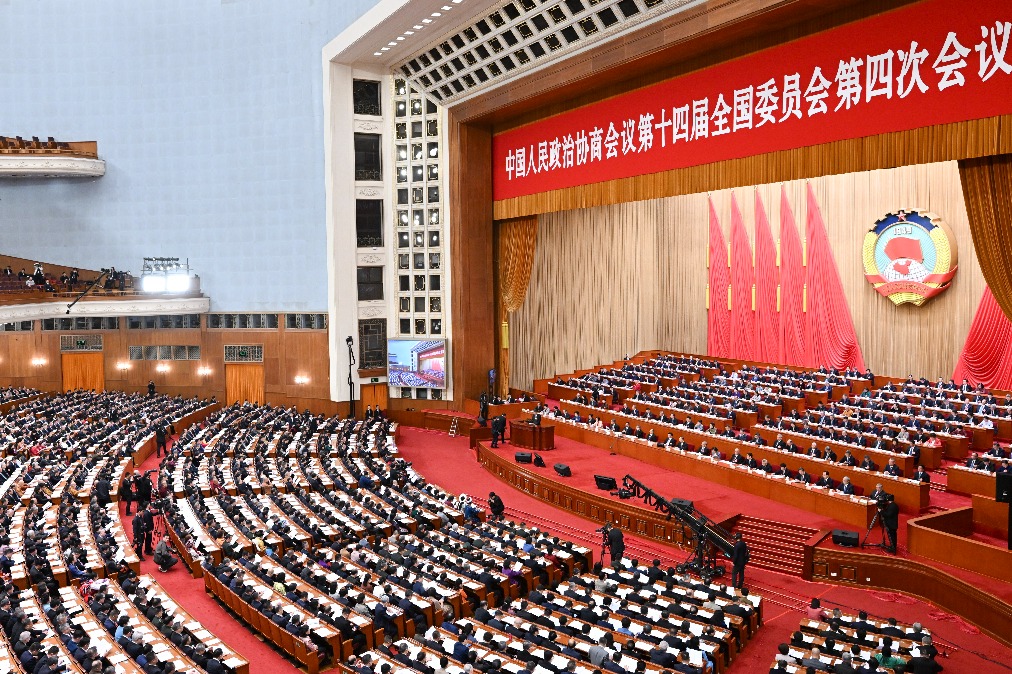
    Beijing witnessed significant international endorsement of China’s Global Governance Initiative during the 2026 Global Governance Forum hosted at Renmin University this weekend. The initiative, positioning China as a leading voice in international cooperation, has drawn praise from diplomats and scholars for its comprehensive approach to addressing worldwide challenges.

    Central to the forum’s discussions was the multilingual publication “Global Governance Initiative: Jointly Building a Community with a Shared Future for Humanity,” unveiled in nine languages, symbolizing the initiative’s global outreach ambitions.

    Wu Hailong, President of the China Public Diplomacy Association, emphasized the growing urgency for establishing equitable global governance structures amid rising challenges from hegemonism and power politics. He outlined three critical pillars for effective global governance: maintaining fundamental international relations norms, strengthening United Nations authority, and ensuring sustained commitment to addressing transnational issues.

    China’s consistent approach prioritizes international community interests across multiple domains—from upholding international order to addressing emerging challenges like climate change and artificial intelligence governance. The nation has committed to collaborating with Global South countries and other international partners to advance a more just global governance framework.

    Academic perspective was provided by Gao Fei, President of China Foreign Affairs University, who noted that increasing global deficits in peace, development, security, governance, and trust necessitate reinforced commitment to principles of extensive consultation and shared benefits. The GGI represents China’s strategic response to governance gaps and international concerns.

    International support came from Syrian Ambassador Muhammad Hassanein Khaddam, who contrasted China’s inclusive approach with what he described as “exclusionary hegemonic thinking” that has disappointed global populations. He praised China’s emphasis on common human interests and consensus-based multilateralism.

    Venezuelan Embassy Minister-Counselor Francisco Cesar commended the initiative’s advocacy for an inclusive, resilient governance system that aligns with most nations’ expectations. He highlighted the importance of upholding UN authority, promoting democratic international decision-making, and enhancing practical development cooperation—areas where China has demonstrated leadership.

  • Palestinian group ‘unequivocally rejects’ US sanctions over Gaza flotillas

    Palestinian group ‘unequivocally rejects’ US sanctions over Gaza flotillas

    A significant diplomatic confrontation has emerged between Palestinian advocacy organizations and the United States government following the Treasury Department’s imposition of sanctions against six Gaza-based aid groups and the Popular Conference for Palestinians Abroad (PCPA). The Treasury’s Office of Foreign Assets Control designated these entities on Wednesday, alleging they function as a “covert support network” for Hamas through its military wing, the Qassam Brigades.

    The PCPA, which coordinates humanitarian flotillas attempting to breach Israel’s long-standing blockade of Gaza, responded with forceful condemnation. In an official statement released Saturday, the organization expressed “profound dismay” and “unequivocal rejection” of the sanctions, characterizing them as “unilateral administrative measures” lacking judicial foundation or binding international authorization.

    The Treasury’s announcement specifically identified the PCPA as “a front organization for Hamas that operates in accordance with Hamas directives,” citing a 2018 communication from late Hamas political leader Ismail Haniyeh that referenced the conference as instrumental to Hamas’ international outreach efforts. Zaher Birawi, the UK-based founder of PCPA, was simultaneously sanctioned.

    Among the Gaza-based organizations targeted were Waed Society, Al-Nur, Qawafil, Al-Falah, Merciful Hands, and Al-Salameh. Treasury officials asserted that Hamas security personnel are formally assigned to work within several of these charities, with some organizations allegedly transferring funds directly to Hamas’ military operations.

    Despite these allegations, the sanctioned groups maintain visible humanitarian missions. Their digital platforms showcase programs supporting amputees from repeated conflicts in Gaza, medical assistance for critical war injuries, food and medicine distribution, community support sessions, and advocacy campaigns for Palestinians detained in Israeli facilities.

    Majed al-Zeer, PCPA’s vice president, condemned the sanctions as “a new and blind extension of US policy in absolute support of the Israeli occupation,” asserting the decision aims to restrict Palestinian rights advocacy through internationally recognized channels. The conference reaffirmed its commitment to continue peaceful, rights-based activities, declaring Palestine remains its “moral and political compass.”

    The designations effectively freeze all US-based assets of these organizations and individuals while blocking their access to American banking systems, including credit card processing through Visa and Mastercard. US citizens are now prohibited from conducting transactions with these entities.

    This development occurs amidst heightened international scrutiny of the humanitarian situation in Gaza and represents the latest chapter in the complex relationship between Palestinian civil society organizations and international counter-terrorism financing mechanisms.

  • Trump says UK soldiers in Afghanistan ‘among greatest of all warriors’

    Trump says UK soldiers in Afghanistan ‘among greatest of all warriors’

    A diplomatic firestorm erupted following former U.S. President Donald Trump’s controversial characterization of NATO allies’ contributions to the Afghanistan conflict, triggering widespread condemnation from military families, veterans, and political leaders across multiple nations.

    During a recent Fox News interview, Trump asserted that NATO forces historically avoided front-line combat roles, stating: ‘We’ve never needed them. They’ll say they sent some troops to Afghanistan… they stayed a little back, a little off the front lines.’ These remarks immediately drew fierce criticism from international officials who characterized them as factually inaccurate and deeply offensive to fallen soldiers.

    The backlash intensified when Prince Harry issued a rare public statement emphasizing that NATO’s Article 5 collective defense provision had been invoked specifically following the 9/11 attacks, marking the only time in the alliance’s history that members were formally obligated to support U.S. military operations. ‘Thousands of lives were changed forever,’ the Afghanistan veteran noted. ‘Those sacrifices deserve to be spoken about truthfully and with respect.’

    Statistical data reveals the substantial human cost borne by coalition partners: over 3,500 coalition fatalities occurred during the conflict, with British forces suffering 457 deaths—the second-highest toll after American casualties. Veterans like Corporal Andy Reid, who lost three limbs to an IED explosion, provided firsthand accounts contradicting Trump’s assertions: ‘If [American soldiers] were on the front line and I was stood next to them, clearly we were on the front line as well.’

    The political response proved equally forceful. UK Opposition Leader Keir Starmer condemned the remarks as ‘insulting and frankly appalling,’ while Polish Foreign Minister Radosław Sikorski—among 33,000 Polish troops deployed to Afghanistan—declared that ‘no one has the right to mock the service of our soldiers.’ Canadian Defense Minister David J. McGuinty emphasized his nation’s participation stemmed from moral conviction rather than obligation.

    Following a Saturday conversation with UK Prime Minister Rishi Sunak, Trump posted a modified statement on Truth Social acknowledging British soldiers as ‘among the greatest of all warriors’ and recognizing their 457 fatalities. While stopping short of a direct apology, this revised messaging represented a notable softening of his initial position. Conservative leader Kemi Badenoch welcomed the acknowledgment while maintaining that ‘it should never have been questioned in the first place.’

    The episode highlights ongoing tensions regarding NATO’s strategic future and the complex legacy of multinational military cooperation in prolonged conflicts, with diplomatic relationships showing strain despite Trump’s subsequent attempt to mitigate the damage through revised praise for allied forces.

  • Federal agents shoot dead another person in Minneapolis

    Federal agents shoot dead another person in Minneapolis

    Minneapolis became the epicenter of renewed civil unrest on Saturday following a fatal shooting involving federal immigration agents, marking the second such incident involving civilian casualties within three weeks. According to official statements from the Department of Homeland Security (DHS), agents were conducting a targeted operation to apprehend an undocumented individual wanted for violent assault when the confrontation turned deadly.

    DHS claims its officers acted in self-defense after an individual approached Border Patrol agents brandishing a 9 mm semi-automatic handgun. The agency stated that during attempts to disarm the suspect, who allegedly resisted violently, an agent fired defensive shots fearing for his safety and that of fellow officers. Despite immediate medical attention, the individual was pronounced dead at the scene.

    Contradicting this narrative, Minneapolis Police Chief Brian O’Hara revealed preliminary information suggesting the deceased was potentially a lawful gun owner with valid permits. Minnesota state law permits open carry of firearms with proper authorization.

    The incident triggered immediate demonstrations, with law enforcement deploying tear gas and establishing road blockades using dumpsters in the densely populated south Minneapolis neighborhood. Authorities declared the gathering an unlawful assembly as tensions escalated.

    Minnesota Governor Tim Walz condemned the shooting as ‘horrific’ and demanded state-led investigation into the matter. In a social media statement, Walz directly addressed the White House: ‘Minnesota has had it. This is sickening. The President must end this operation.’

    Minneapolis Mayor Jacob Frey joined the criticism, urging President Trump to withdraw federal operations from the city: ‘This is a moment to act like a leader. Put Minneapolis, put America first in this moment.’

    The shooting occurs amidst heightened tensions following the January 7th killing of US citizen Renee Good by Immigration and Customs Enforcement officers during similar operations. That incident was officially classified as homicide by medical examiners, though the involved agent remains neither suspended nor charged. Recent detention of a five-year-old child during enforcement actions had already renewed public outrage prior to Saturday’s events.

    Democratic Senator Amy Klobuchar echoed the growing criticism, addressing federal authorities directly: ‘Donald Trump and all your lieutenants who ordered this ICE surge: watch the horrific video of the killing today. The world is watching.’

  • Trump praises UK troops as row over his NATO comments grows

    Trump praises UK troops as row over his NATO comments grows

    A transatlantic diplomatic crisis has erupted following controversial remarks by former US President Donald Trump regarding NATO allies’ contributions in Afghanistan. The situation intensified as European leaders issued sharp rebukes against what they characterized as deeply offensive comments questioning allied military sacrifices.

    Trump initially provoked international condemnation during a Fox News interview aired Thursday, suggesting NATO forces remained cautious during Afghan operations and implying conditional US support for alliance members. These assertions triggered immediate backlash across European capitals.

    British Prime Minister Keir Starmer led the criticism, labeling Trump’s statements “appalling” and expressing concern for affected military families. In an apparent partial reversal, Trump subsequently praised UK forces on his Truth Social platform Saturday, describing British soldiers as “among the greatest of all warriors” and emphasizing their “bond too strong to ever be broken” with America.

    This qualified apology failed to placate other NATO members. Danish Prime Minister Mette Frederiksen declared Trump’s comments “unacceptable” on Facebook, highlighting Denmark’s significant per capita losses in Afghanistan. French President Emmanuel Macron’s office dismissed the remarks as “unworthy of response,” instead emphasizing gratitude to fallen soldiers’ families.

    Italian Foreign Minister Antonio Tajani honored Italy’s 53 casualties, while German Defense Minister Boris Pistorius underscored Germany’s readiness to support US operations despite paying a “heavy price.” The Danish Veterans’ Association announced plans for a silent protest march in Copenhagen on January 31, stating members were “at a loss for words” over Trump’s claims.

    The controversy emerges against a backdrop of recent US-Danish tensions regarding Trump’s expressed interest in purchasing Greenland, though those concerns appeared resolved earlier last week when the former president withdrew threatened tariffs on European goods.