分类: politics

  • US ouster of Maduro nightmare scenario for Kim: N. Korean ex-diplomat

    US ouster of Maduro nightmare scenario for Kim: N. Korean ex-diplomat

    The recent US-led operation that unseated Venezuelan leader Nicolas Maduro has created profound security anxieties within North Korea’s highest echelons, according to Lee Il-kyu, a former senior Pyongyang diplomat who defected to South Korea. In an exclusive interview with AFP, Lee revealed that Kim Jong Un likely perceives himself as vulnerable to similar ‘decapitation’ tactics following the dramatic events in Caracas.

    Lee, who served as North Korea’s political counselor in Cuba from 2019 until his defection in November 2023, described the Venezuelan operation as Kim’s ‘worst-case scenario’ becoming reality. ‘Kim must have felt that a so-called decapitation operation is actually possible,’ stated Lee, who now works for a Seoul-based think tank. This development is expected to trigger comprehensive security overhauls within North Korea’s paranoid leadership structure.

    The former diplomat possesses unique insights into Pyongyang’s international operations, having played instrumental roles in high-stakes negotiations including the release of a North Korean vessel detained in Panama in 2013—an achievement that earned him personal commendation from Kim Jong Un. His final assignment involved attempting to prevent Cuba from establishing diplomatic relations with South Korea, a mission that ultimately failed.

    Lee’s defection story reads like a geopolitical thriller. His breaking point came after being denied professional opportunities for refusing to bribe a superior. ‘I was fed up,’ he confessed to AFP. The actual escape nearly ended in tragedy when Lee and his family found themselves trapped at a Central American airport, facing forced repatriation to Venezuela—a certain death sentence. Their salvation came only through the dramatic intervention of South Korean diplomats who secured their protection.

    Now settled in South Korea, the 53-year-old defector has become an outspoken commentator on North Korean affairs, publishing a memoir titled ‘The Kim Jong Un I Witnessed’ with an English version forthcoming. He has also emerged as a vocal advocate for two North Korean prisoners of war currently held in Ukraine, part of Pyongyang’s contingent supporting Russian forces. Lee urgently appeals for their transfer to South Korea, warning that repatriation would mean certain torture and execution.

    Lee’s perspective on South Korea’s recent political turbulence—including President Yoon Suk Yeol’s impeachment and the subsequent election of progressive leader Lee Jae Myung—has deepened his appreciation for democratic resilience. ‘South Korea went months without a president following impeachment, yet the system worked very well,’ he observed, contrasting this with North Korea’s deified leadership structure where such popular accountability remains unimaginable.

  • Will the EU ban social media for children in 2026?

    Will the EU ban social media for children in 2026?

    The European Union is actively contemplating the implementation of a bloc-wide prohibition on social media access for minors, inspired by recent regulatory movements in Australia and individual member states. This consideration gains momentum as France advances legislation to ban social media for children under 15, following approval from its lower parliamentary house. The bill now awaits Senate ratification to become national law.

    European Commission President Ursula von der Leyen has championed the establishment of a minimum age requirement for social media platforms. However, the Commission intends to await recommendations from a specialized consultative panel, scheduled for formation early this year, before determining the Union’s collective approach. The panel’s mandate is to provide expert guidance on enhancing online protection for children, with all policy options remaining under evaluation.

    Several EU nations have demonstrated impatience with the bloc’s deliberative pace. Denmark has already instituted its own ban on social media access for minors under 15, joining France in pioneering national-level restrictions. These countries are concurrently participating in a pilot program for an age-verification application, designed to shield young users from harmful digital content. This technological solution is anticipated to facilitate enforcement of forthcoming regulations across member states.

    Existing EU framework, particularly the Digital Services Act (DSA), already empowers regulators to mandate platform modifications for improved child safety, including prohibitions on targeted advertising to minors. Current investigations into TikTok and Meta’s Instagram and Facebook are examining potential failures to mitigate adverse impacts on youth, with preliminary findings expected in the first half of the year. These probes specifically address concerns regarding algorithmic amplification of extreme content through the ‘rabbit hole’ effect.

    The international landscape shows growing consensus on age restrictions, with Malaysia, Norway, and New Zealand developing similar prohibitions. The European Parliament has previously advocated for banning social media for users under 16, indicating legislative support for stringent measures. As the EU monitors legal challenges to Australia’s under-16 ban, the bloc prepares to potentially enact the most comprehensive youth protection standards in the digital realm.

  • Minnesota congresswoman Ilhan Omar attacked with ‘unknown liquid’ during town hall

    Minnesota congresswoman Ilhan Omar attacked with ‘unknown liquid’ during town hall

    U.S. Representative Ilhan Omar (D-Minnesota) demonstrated remarkable resilience Tuesday when an assailant targeted her with an unknown chemical substance during a public town hall event in north Minneapolis. The incident occurred shortly after the congresswoman delivered forceful remarks calling for structural immigration reform.

    According to Minneapolis Police Department reports, an audience member deployed a syringe to spray liquid toward Representative Omar during the gathering attended by approximately 100 constituents. Security personnel immediately subdued the individual while shouting ‘make a hole’ to clear a path during the apprehension. Forensic teams subsequently conducted analysis at the scene to identify the composition of the deployed substance, which witnesses described as emitting a pungent, chemical-like odor.

    Despite the alarming interruption, Representative Omar refused to conclude the event prematurely. ‘I’m ok. I’m a survivor so this small agitator isn’t going to intimidate me from doing my work,’ she stated in a social media post following the incident. From the podium, she reassured attendees: ‘We will continue… we are Minnesota strong,’ earning praise from constituents for her composure under duress.

    The context of the town hall discussion notably focused on recent immigration enforcement actions, including two fatal shootings of American citizens by immigration officials within the month. Representative Omar had just called for the abolition of Immigration and Customs Enforcement (ICE) and demanded the resignation or impeachment of Homeland Security Secretary Kristi Noem when the attack occurred.

    Minneapolis Mayor Jacob Frey condemned the act unequivocally, stating: ‘Violence and intimidation have no place in Minneapolis. We can disagree without putting people at risk… This kind of behavior will not be tolerated in our city.’

    The incident occurs against a backdrop of heightened political tensions, with many local residents interpreting increased immigration enforcement as retaliation for President Trump’s characterization of Representative Omar as a ‘radical left lunatic.’ Earlier Tuesday, the administration had signaled potential de-escalation in Minnesota following the recent shootings.

    Representative Omar, who made history in 2019 as the first Somali-American, first African-born American, and among the first Muslim American women elected to Congress, has previously faced numerous threats related to her political positions and public profile.

  • Exclusive: Blair meeting with Gaza committee stresses no role in politics, disarmament

    Exclusive: Blair meeting with Gaza committee stresses no role in politics, disarmament

    In a significant diplomatic engagement, former British Prime Minister Tony Blair met with the newly formed National Committee for the Administration of Gaza (NCAG) on Monday, delivering a clear mandate for the technocratic body to concentrate exclusively on service provision while explicitly avoiding political and security matters.

    Blair, serving on the executive board of the U.S.-appointed ‘Board of Peace,’ emphasized during the meeting that the NCAG’s role is strictly humanitarian and administrative. According to Palestinian sources briefed on the discussions, Blair acknowledged the committee’s challenging task but stressed that international support exists for its success, provided it remains focused on civilian services rather than political issues or the disarmament of armed groups.

    The NCAG, comprising 15 Palestinians and led by former Planning Deputy Minister Dr. Ali Shaath, represents a cornerstone of the ceasefire agreement ending the Israeli genocide in Gaza. Blair and Shaath reportedly agreed that the committee would have no involvement in weapons-related matters, with Shaath explicitly stating: ‘Don’t involve us in the issue of weapons.’

    Despite high-level discussions, concrete operational details remain unresolved. Committee members raised pressing concerns about funding mechanisms and border crossing operations, to which Blair could not provide specific answers. He suggested the committee could utilize existing civil servants in Gaza while acknowledging many might not remain in their positions due to the wartime conditions.

    The meeting also addressed coordination with international bodies, with Blair announcing that U.S.-appointed Gaza representative Nickolay Mladenov would meet with the committee in Cairo on Wednesday. Mladenov will serve as the crucial liaison between the Board of Peace and the NCAG.

    Parallel diplomatic efforts are underway, with Turkish and Moroccan officials offering support including field hospitals and medical supplies. However, European Union representatives similarly failed to provide specific commitments during separate meetings with Shaath, particularly regarding funding through World Bank mechanisms or police training programs.

    According to assessments from U.S. sources, NCAG members could potentially enter Gaza as early as next week, though security arrangements through the Al-Shurafa Company are still being organized without a permanent headquarters yet established.

  • Iran-aligned militias threaten retaliatory strikes, but will they follow through?

    Iran-aligned militias threaten retaliatory strikes, but will they follow through?

    Iran-aligned paramilitary forces across the Middle East have issued stark warnings of potential retaliation against any American military action targeting the Islamic Republic. The escalating tensions emerge as the Trump administration deliberates possible precision strikes against Iranian officials deemed responsible for protester casualties.

    In Iraq, Kataib Hezbollah leader Abu Hussein al-Hamidawi declared readiness for “total war” in a Sunday statement, threatening that enemies “will taste every form of deadly suffering” and promising to eliminate all US presence from the region. Simultaneously, Yemen’s Houthi movement released a provocative video暗示 the resumption of maritime attacks in the Red Sea, captioned simply “Soon.”

    The geopolitical landscape reflects heightened vulnerability for US forces, with approximately 40,000 American troops stationed throughout the Middle East. Critical bases in Iraq, Syria, and particularly Gulf states like Kuwait, Qatar, UAE, Bahrain, and Saudi Arabia represent potential flashpoints. Several Arab governments have actively lobbied against US military action, fearing regional escalation.

    Military preparedness indicators show significant US mobilization, including the redeployment of the Abraham Lincoln aircraft carrier strike group from the South China Sea to the Middle East, accompanied by F-35 and F/A-18 fighter squadrons. Open-source intelligence also reveals F-15 warplane reinforcements at Jordan’s Muwaffaq Salti Air Base.

    The current tensions recall earlier confrontations in 2025, when direct conflict occurred between the US, Israel, and Iran, including US bombing of Iranian nuclear facilities. The January 2024 drone strike in Jordan that killed three US soldiers remains a recent precedent for militia capabilities.

    Regional dynamics have shifted substantially since the 2023 Hamas-led attack on Israel and subsequent Gaza conflict. Iranian proxy networks have experienced significant transformations, with Lebanese Hezbollah particularly degraded following the assassination of leader Hassan Nasrallah and subsequent disarmament agreements. This has elevated the strategic importance of Iraqi militias like Kataib Hezbollah within Iran’s regional strategy.

    The so-called “axis of resistance” exhibits varying degrees of independence from Tehran, with Iraq’s Popular Mobilization Forces integrated into state structures, Hezbollah maintaining political influence in Lebanon, and the Houthis operating with considerable autonomy in Yemen. The Houthis have emerged particularly strengthened from recent conflicts, having maintained missile capabilities against Israel despite a May 2025 truce with the US.

    Current administration discussions have been characterized as “chaotic” amid concerns about potential escalation consequences, reflecting the complex calculations surrounding any military action against Iran and its regional network.

  • Republicans criticise immigration force but steer clear of Trump attacks

    Republicans criticise immigration force but steer clear of Trump attacks

    A significant fracture is emerging within the Republican Party as lawmakers grapple with the political fallout from a controversial immigration enforcement operation in Minneapolis that resulted in the fatal shootings of two U.S. citizens. While maintaining support for President Trump’s broader immigration agenda, prominent Republican senators are increasingly expressing criticism toward the implementation tactics and leadership of Department of Homeland Security agencies.

    The tension highlights the party’s delicate balancing act heading into midterm elections: supporting popular immigration policies while responding to public outrage over specific enforcement actions. Several Republican senators have called for increased oversight and accountability, with North Carolina Senator Thom Tillis demanding the resignation of DHS Secretary Kristi Noem, stating she has proven ‘way out of her depth.’

    Despite these criticisms, most Republicans have avoided direct condemnation of President Trump himself. Instead, lawmakers have focused their concerns on operational execution rather than policy fundamentals. The party remains largely supportive of the administration’s immigration objectives, having approved approximately $45 billion for border security and interior enforcement last year.

    The situation has created unusual alliances, with both moderate Republicans and some Trump allies expressing concerns about the shootings. Senators including Rand Paul (KY) and Lisa Murkowski (AK) have called for congressional hearings, while Representative Andrew Garbarino (NY) supports a full investigation into the incidents.

    In response to growing pressure, the administration has moderated its rhetoric and taken steps to de-escalate tensions. President Trump dispatched border tsar Tom Homan to assume control of Operation Metro Surge in Minneapolis, replacing top Border Patrol official Gregory Bovino. The president has also engaged in discussions with Minnesota Democratic leaders Governor Tim Walz and Mayor Jacob Frey, acknowledging the unsustainable nature of the current situation.

    The political implications continue to evolve as Senate Democrats threaten to block spending packages containing additional DHS funding, potentially triggering a government shutdown. This development may force Republicans to more vigorously defend the administration’s immigration policies, potentially overshadowing calls for investigation into the Minneapolis shootings.

  • Israel President Isaac Herzog to meet with Jewish, federal leaders in Australia visit

    Israel President Isaac Herzog to meet with Jewish, federal leaders in Australia visit

    Israeli President Isaac Herzog’s upcoming official visit to Australia has generated both diplomatic anticipation and significant controversy, with pro-Palestinian groups organizing nationwide protests against the high-profile trip. The presidential office confirmed on Wednesday that Herzog will embark on a five-day diplomatic mission beginning February 8, 2026, featuring high-level meetings with Australian political leadership and Jewish community representatives.

    The visit, extended by Prime Minister Anthony Albanese following the Bondi Beach terrorist attack that claimed fifteen lives, will include solemn meetings with victims’ families and survivors of the December 14 tragedy. Herzog’s itinerary encompasses discussions with Governor-General Sam Mostyn, Prime Minister Albanese, and cross-party political leaders, alongside engagements with Australian Jewish communities to express international solidarity.

    Accompanying the President will be a delegation comprising World Zionist Organization chairman Yaakov Hagoel and Jewish Agency for Israel chairman Major-General Doron Almog, underscoring the visit’s significance for Israeli-Australian relations.

    However, the diplomatic mission faces substantial opposition from pro-Palestinian organizations alleging Herzog’s involvement in inciting genocide in Gaza, where casualties have exceeded 70,000 since Hamas’s October 2023 offensive. These allegations reference a United Nations Human Rights High Commissioner investigation that identified both Herzog and Israeli Prime Minister Benjamin Netanyahu as having potentially incited genocidal actions—claims Herzog has denied as taken out of context.

    The Sydney-based Palestine Action Group has announced coordination meetings to plan a “massive national day of protest,” demanding Herzog’s arrest upon arrival for alleged war crimes. Concurrently, the left-wing Jewish Council of Australia has urged rescinding the invitation, accusing the government of exploiting Jewish trauma for political purposes.

    Despite the controversy, Australian Jewish organizations including the Executive Council of Australian Jewry and Zionist Federation of Australia have welcomed the visit, anticipating it will provide meaningful comfort to attack victims’ families while strengthening bilateral ties between the nations.

  • North Korea’s Kim says upcoming party congress will unveil plans to bolster nuclear deterrent

    North Korea’s Kim says upcoming party congress will unveil plans to bolster nuclear deterrent

    North Korean leader Kim Jong Un has declared intentions to reveal enhanced nuclear development strategies during the forthcoming ruling party congress, following his supervision of the nation’s latest weapons test. State media confirmed on Wednesday that Kim observed live-fire drills featuring an upgraded large-caliber multiple rocket launcher system on Tuesday—an event neighboring countries South Korea and Japan had previously identified as ballistic missile launches.

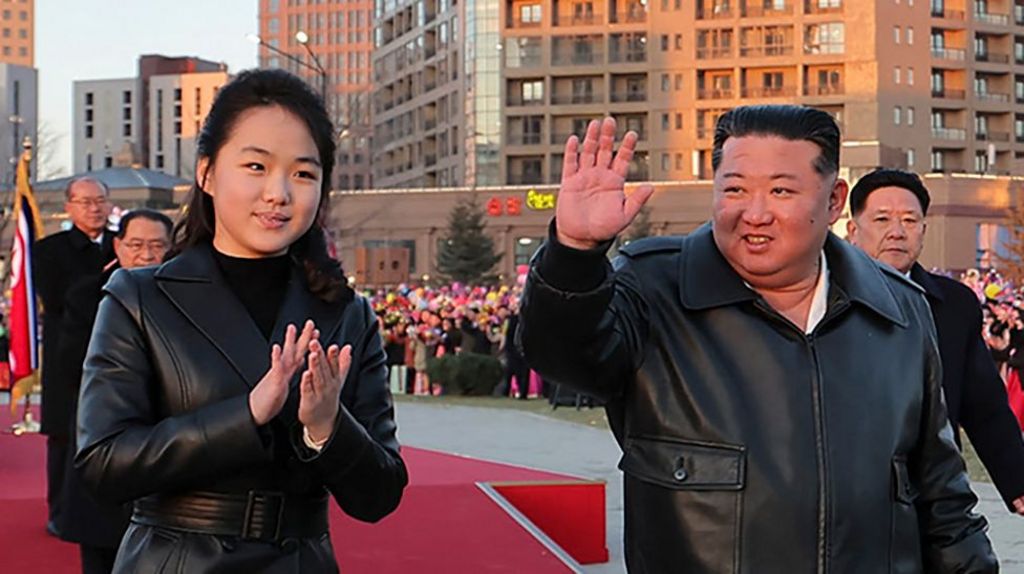
    Accompanied by his teenage daughter Kim Ju Ae—whose repeated public appearances have fueled speculation about her potential succession—Kim inspected the mobile launch vehicle. South Korea’s intelligence services have previously indicated they view the young Kim as her father’s probable heir apparent.

    According to the Korean Central News Agency (KCNA), the demonstration aimed to refine the operational effectiveness of North Korea’s ‘strategic deterrent’—a term synonymous with its nuclear capabilities. The report emphasized improvements in both mobility and targeting precision of the rocket system.

    Military analysts note that North Korea’s advanced rocket launchers occupy a gray area between conventional artillery and ballistic missiles, possessing self-propulsion capabilities and guided delivery systems. Pyongyang claims certain variants can deploy nuclear warheads.

    Kim reaffirmed that military strengthening remains an unwavering policy of the Workers’ Party. The upcoming congress—the first in five years—will serve as a platform to announce ‘next-stage plans for further bolstering up the country’s nuclear war deterrent,’ KCNA reported.

    The February gathering, among North Korea’s most significant propaganda events, establishes new political and economic directives. Recent months have witnessed tests of hypersonic missiles, long-range strategic cruise missiles, and advanced anti-aircraft systems, likely demonstrating weapons development milestones ahead of the congress.

    While KCNA withheld specifics regarding nuclear expansion plans, international analysts suggest North Korea may be pursuing multiple independently targetable reentry vehicle (MIRV) technology to penetrate missile defense systems. Questions persist regarding Pyongyang’s capability to protect warheads during atmospheric reentry for long-range strikes targeting the U.S. mainland.

    North Korea has maintained refusal of diplomatic engagement with the United States and South Korea since the collapse of denuclearization talks with former President Donald Trump in 2019. Experts speculate Kim might reconsider negotiations if offered economic and political incentives for limited disarmament measures.

  • Celebrities call for action against US immigration raids

    Celebrities call for action against US immigration raids

    A coalition of high-profile celebrities spanning the entertainment industry has launched a vocal campaign demanding accountability and reform of U.S. Immigration and Customs Enforcement (ICE) operations. This unprecedented mobilization comes in response to the recent shooting deaths of two American citizens—37-year-old ICU nurse Alex Pretti and 37-year-old Renee Good—by federal agents during enforcement actions in Minneapolis.

    The movement, gaining momentum across social media platforms and public statements, represents a significant departure from the traditionally apolitical stance of many celebrities. Chilean-American actor Pedro Pascal initiated calls for a nationwide strike, emphasizing the necessity of governmental transparency. ‘Truth serves as the fundamental boundary separating democratic governance from authoritarian rule,’ Pascal declared in an Instagram tribute to the victims.

    Academy Award-winning actress Jamie Lee Curtis amplified the message with emphatic posts stating ‘THESE WERE AMERICANS! SHOT BY OUR GOVERNMENT!’ accompanied by portraits of the deceased. Meanwhile, music icon Katy Perry urged her substantial following to channel their outrage into political action, specifically advising constituents to pressure Senate representatives through budget oversight mechanisms.

    Television star Kerry Washington produced an instructional video demonstrating how citizens could effectively contact their elected officials to demand defunding of ICE operations. In a notable intergenerational appeal, business magnate Martha Stewart revealed her 14-year-old granddaughter inspired her to speak out against immigration policies she described as fundamentally un-American.

    The movement gained further momentum when Billie Eilish, the nine-time Grammy winning artist, directly challenged fellow celebrities to break their silence regarding the Minneapolis incidents. This collective activism signals a growing convergence of entertainment influence and political advocacy surrounding immigration enforcement practices.

  • Former US soldiers turned Palestine advocates make a run for Congress

    Former US soldiers turned Palestine advocates make a run for Congress

    Two decorated military veterans turned outspoken critics of US foreign policy have launched insurgent campaigns for Congress, leveraging their opposition to Israel’s military operations in Gaza as a central platform. Former Army Ranger Greg Stoker and retired Green Beret Anthony Aguilar are mounting third-party challenges in traditionally Republican districts, representing what they describe as a fundamental break from establishment politics.

    Stoker, a four-tour Afghanistan veteran turned political podcaster, announced his candidacy for Texas’s 31st Congressional District on January 15th. The anti-war activist framed his campaign as a rejection of corporate influence and culture wars, emphasizing affordability and governmental accountability. Stoker has pledged to refuse donations from political action committees and corporate donors.

    Eight days later, Aguilar revealed his bid for North Carolina’s 13th District, bringing a whistleblower’s perspective from his brief tenure with the controversial Gaza Humanitarian Foundation. The retired Special Forces soldier has become a prominent voice against what he terms ‘fascist corporatization’ and endless foreign wars, advocating instead for universal healthcare, affordable housing, and living wage policies.

    Both candidates have developed substantial digital followings through their critique of US-Israel relations, particularly following Israel’s military campaign in Gaza. Their campaigns represent an unusual fusion of military credibility with anti-establishment messaging, challenging both Republican incumbents and Democratic opposition simultaneously.

    The political landscape appears increasingly receptive to unconventional candidates following recent electoral surprises and declining approval ratings for establishment figures. Stoker specifically referenced low voter participation in Texas, suggesting dissatisfaction with traditional options creates opportunity for alternative voices.

    While their military backgrounds provide conventional political credibility, their specific anti-Zionist positions and direct criticism of US-Israel relations mark a significant departure from mainstream foreign policy consensus. Both candidates have been embraced by advocacy groups critical of American Middle East policy, though their campaigns face significant challenges in traditionally conservative districts.