分类: politics

  • US urged to take objective, rational perception of China

    US urged to take objective, rational perception of China

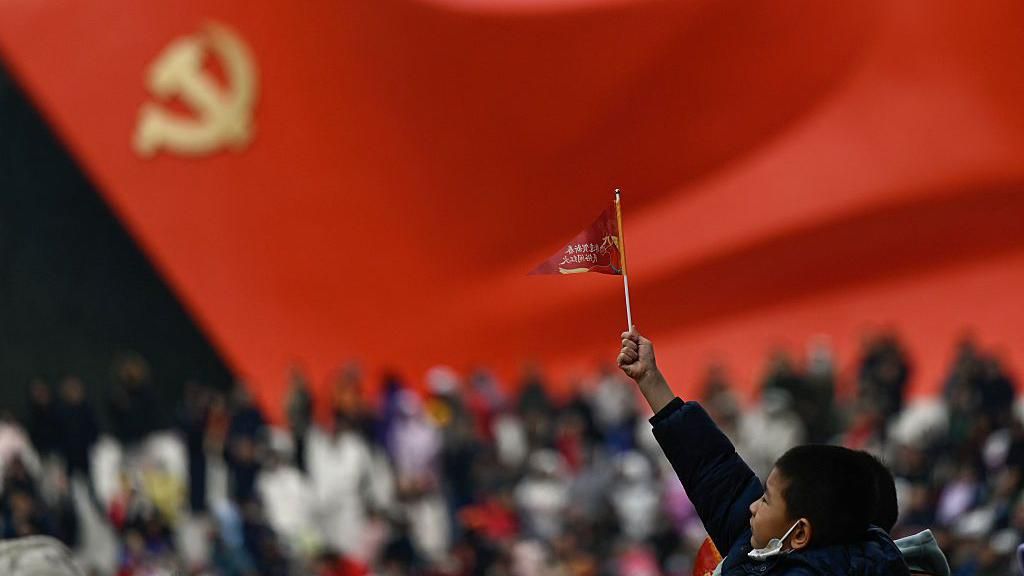
    In a significant diplomatic statement, China’s Ministry of National Defense has called upon the United States to adopt a more objective and rational perspective regarding China’s global role and military development. Defense Ministry spokesperson Jiang Bin articulated this position on Thursday in response to queries about the recently unveiled US 2026 National Defense Strategy.

    The American defense document, published by the US Department of War, outlines a strategic approach focused on deterring Chinese influence in the Asia-Pacific region through demonstrated strength rather than direct confrontation. The strategy emphasizes expanding military-to-military communications with China’s People’s Liberation Army to maintain strategic stability and foster what it describes as “a decent peace.” Notably, the plan includes establishing a robust denial defense system along the First Island Chain.

    Jiang Bin countered these proposals with firm diplomatic language, stating that historical evidence demonstrates the inevitable failure of any containment efforts against China. The spokesperson emphasized that mutual respect, peaceful coexistence, and win-win cooperation represent the only viable framework for Sino-American relations.

    While expressing China’s willingness to collaborate with the United States in fostering stable bilateral relations, Jiang simultaneously underscored China’s unwavering commitment to protecting its sovereignty, security, and developmental interests. The defense official specifically urged American leadership to cease promoting bloc confrontation tactics and to avoid contradictory statements and actions concerning China’s core interests. The statement concluded with an appeal for substantive American efforts to facilitate sound and steady development between the two nations’ military establishments.

  • What a thaw of the ‘ice age’ with China means for the UK economy

    What a thaw of the ‘ice age’ with China means for the UK economy

    In a significant diplomatic shift, the United Kingdom and China have initiated a cautious recalibration of their economic relationship following Prime Minister Sir Keir Starmer’s landmark visit to Beijing—the first by a British leader since 2018. The breakthrough comes as both nations confront domestic economic pressures while navigating an increasingly volatile global trading landscape shaped by U.S. President Donald Trump’s aggressive tariff policies.

    The high-stakes diplomatic engagement yielded substantive agreements across multiple sectors without achieving a comprehensive free trade deal. The most notable outcomes include China’s commitment to halve tariffs on Scotch whisky—a move projected to generate £250 million for the British economy over five years—and the establishment of visa-free travel for UK citizens visiting China for up to 30 days.

    Commercial partnerships formed a cornerstone of the reset, with pharmaceutical giant AstraZeneca announcing its largest-ever Chinese investment of $15 billion over four years to expand research and manufacturing capabilities. Simultaneously, British energy disruptor Octopus Energy revealed its inaugural entry into China’s renewable market through a strategic partnership with local firm PCG Power to develop digital electricity trading platforms.

    Prime Minister Starmer characterized the agreements as “pragmatic, hard-headed international engagement” that delivers tangible domestic benefits. The visit served dual purposes: showcasing British excellence in finance, pharmaceuticals, healthcare, and clean technology while allowing President Xi Jinping to position China as a reliable Western partner amid escalating U.S. trade tensions.

    The diplomatic thaw extends beyond bilateral economics to include security cooperation, with both nations agreeing to collaborate on disrupting migrant-smuggling networks—a key priority for Starmer’s administration. This re-engagement represents a delicate balancing act for the UK, which must navigate its special relationship with Washington while pursuing independent economic opportunities with Beijing.

    Analysts suggest the UK-China reset reflects broader patterns among middle powers—including recent visits by French, Canadian and Finnish leaders—seeking to diversify trade relationships and hedge against an increasingly unpredictable United States. As Western nations compete for Chinese investment and market access, this diplomatic breakthrough demonstrates how geopolitical recalibration can yield mutually advantageous economic outcomes.

  • Starmer arrives in Shanghai as he looks to boost UK business opportunities

    Starmer arrives in Shanghai as he looks to boost UK business opportunities

    British Prime Minister Keir Starmer commenced a significant diplomatic mission in China on Friday, marking the first visit by a UK leader to Shanghai in eight years. The trade-oriented journey, accompanied by over 50 British business executives, aims to forge stronger economic partnerships with the world’s second-largest economy.

    Starmer’s initial meetings in Beijing culminated in a mutual commitment with Chinese President Xi Jinping to establish a long-term strategic partnership. This development signals a notable thaw in Sino-British relations following years of diplomatic strain.

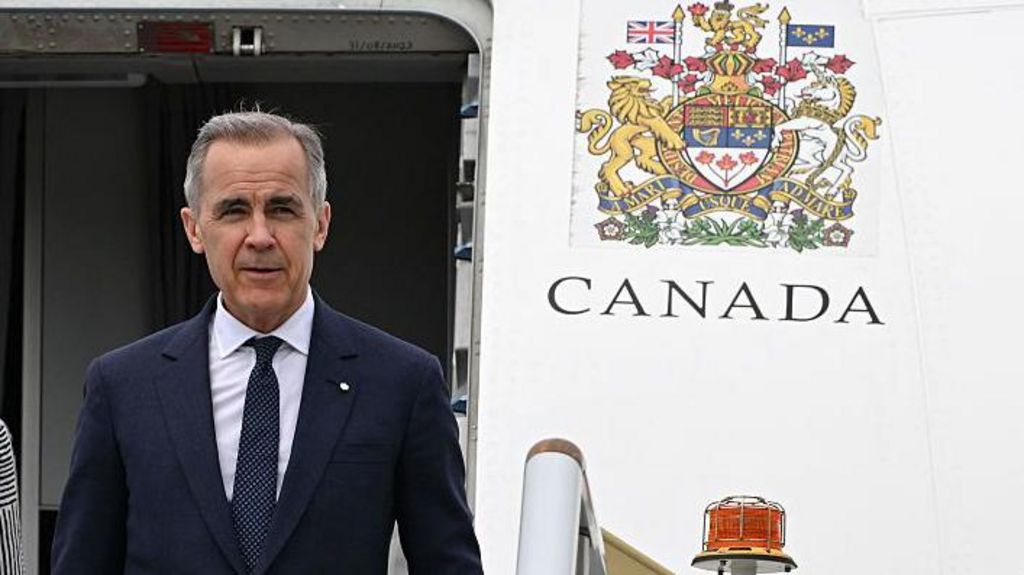
    The UK delegation’s efforts to expand commercial opportunities encountered immediate international headwinds. U.S. President Donald Trump voiced strong reservations about Western nations engaging economically with China, specifically referencing both Starmer’s mission and Canadian Prime Minister Mark Carney’s recent visit to Beijing.

    “Well, it’s very dangerous for them to do that,” President Trump remarked when questioned about potential UK-China trade agreements. He extended his criticism to Canada’s outreach efforts, stating, “It’s even more dangerous, I think, for Canada to get into business with China. Canada is not doing well. They’re doing very poorly.”

    This diplomatic activity occurs against a backdrop of numerous Western nations reassessing their economic relationships with China. Many countries have experienced commercial disruptions due to recent U.S. tariff policies and are consequently exploring alternative export markets and diversified trade partnerships.

    The convergence of multiple foreign leaders in Beijing reflects a broader trend of nations seeking to rebalance their international trade strategies while navigating complex geopolitical considerations.

  • US Senate Democrats reach deal with White House on spending bills: NYT

    US Senate Democrats reach deal with White House on spending bills: NYT

    WASHINGTON – In a dramatic eleventh-hour breakthrough, Senate Democrats have successfully negotiated a comprehensive spending agreement with Republican counterparts and the Biden administration, effectively preventing an imminent partial government shutdown. The resolution, confirmed by The New York Times on Thursday, emerged merely 24 hours before federal funding was scheduled to expire across multiple agencies.

    The bipartisan consensus encompasses five critical appropriations bills that will sustain operations for substantial segments of the federal government through the remainder of the current fiscal year. This legislative accomplishment represents a significant departure from the political stalemate that has characterized recent budget negotiations, demonstrating rare cross-aisle cooperation amid heightened partisan tensions.

    While specific allocation details remain under review, insiders indicate the package addresses funding priorities for departments previously facing operational suspension. The agreement follows weeks of intensive behind-the-scenes negotiations between congressional leadership and White House officials, who worked tirelessly to reconcile divergent policy priorities and spending targets.

    This development marks a crucial stabilization of government functions, ensuring continuity of services and preventing workforce disruptions that would have affected numerous federal agencies. The successful negotiation also signals potential for further bipartisan collaboration on upcoming fiscal legislation, setting a constructive precedent for future budgetary deliberations.

  • Hong Kong company’s concession to operate Panama Canal ports is ruled unconstitutional

    Hong Kong company’s concession to operate Panama Canal ports is ruled unconstitutional

    In a landmark decision with significant geopolitical implications, Panama’s Supreme Court declared unconstitutional late Thursday the concession held by a Hong Kong-based subsidiary of CK Hutchison Holdings to operate ports at both ends of the Panama Canal. The ruling represents a substantial victory for U.S. efforts to counter Chinese influence over the strategically vital waterway.

    The judicial decision followed an extensive audit by Panama’s comptroller general that uncovered multiple irregularities in the 25-year concession extension granted in 2021. The audit revealed unpaid fees, accounting discrepancies, and the alleged existence of unauthorized ‘ghost’ concessions operating within the ports since 2015.

    This development aligns with longstanding U.S. foreign policy objectives in the region. The Trump administration had prioritized blocking Chinese influence over the Panama Canal, with then-Secretary of State Marco Rubio explicitly characterizing the port operations as a national security concern for the United States. Despite assurances from Panamanian authorities that China exercised no operational control over the canal, U.S. officials maintained vigorous opposition to Chinese involvement.

    The court’s ruling leaves unresolved the future operational status of the ports, with the matter now transitioning to Panama’s executive branch and the Panama Maritime Authority. Political analysts suggest operations are unlikely to cease immediately, though the constitutional invalidation of the concession necessitates governmental action.

    Financial implications are substantial, with the audit estimating approximately $300 million in losses since the concession extension and nearly $1.2 billion during the original 25-year contract period. The comptroller’s office additionally noted the extension was granted without required official endorsement.

    The ruling occurs against the backdrop of CK Hutchison’s previously announced deal to sell its majority stake in Panamanian and global ports to an international consortium including BlackRock Inc.—a transaction that reportedly stalled due to objections from the Chinese government.

  • Britain’s Starmer seeks to bolster China ties despite Trump warning

    Britain’s Starmer seeks to bolster China ties despite Trump warning

    British Prime Minister Keir Starmer has embarked on a landmark diplomatic mission to China, marking the first visit by a UK leader in eight years. The trip signals a strategic pivot toward strengthening bilateral relations with Beijing despite cautions from former US President Donald Trump, who characterized such engagement as “very dangerous.

    During high-level discussions with Chinese President Xi Jinping and Premier Li Qiang on Thursday, both nations emphasized the critical importance of enhanced cooperation. The meetings yielded substantial agreements, including a significant visa liberalization arrangement that permits British passport holders visa-free travel to China for stays under 30 days. This provision aligns the UK with approximately 50 other nations enjoying similar access, including France, Germany, Australia, and Japan.

    Additional accords addressed collaborative efforts to combat migrant smuggling networks, expand British exports to Chinese markets, advance health initiatives, and reinforce the UK-China trade commission. In a move particularly beneficial to British industry, China committed to reducing tariffs on whisky imports from 10% to 5%.

    President Xi noted the importance of strengthened dialogue between the two nations within today’s “complex and intertwined” global landscape. Starmer characterized the engagements as producing “real progress” and exactly the “level of engagement that we hoped for.”

    The diplomatic outreach occurs against the backdrop of deteriorating UK-China relations since 2020, when Beijing implemented its national security law in Hong Kong. Despite these tensions, China remains Britain’s third-largest trading partner, and Starmer’s government views economic collaboration as essential to achieving its primary objective of stimulating UK economic growth.

    The business delegation accompanying Starmer, comprising approximately 60 executives, witnessed significant commercial commitments, including AstraZeneca’s announcement of a $15 billion investment in China through 2030 to expand pharmaceutical manufacturing and research capabilities.

  • Trump and his sons sue IRS and US Treasury over leaked tax information

    Trump and his sons sue IRS and US Treasury over leaked tax information

    Former President Donald Trump and his sons Donald Trump Jr. and Eric Trump have initiated a massive $10 billion civil lawsuit against the U.S. federal government, alleging systemic failures in protecting their confidential tax information. The legal action, filed in Miami federal court, targets both the Internal Revenue Service and Treasury Department for their purported negligence in preventing the unauthorized disclosure of sensitive financial documents.

    The lawsuit centers on the actions of former IRS contractor Charles “Chaz” Littlejohn, currently serving a five-year prison sentence after admitting to leaking Trump’s tax data to major media outlets. According to the filing, government agencies breached their statutory duty to safeguard taxpayer information, resulting in significant reputational damage and public embarrassment for the Trump family and their business organization.

    The complaint details how Littlejohn, motivated by political opposition to Trump, weaponized his access to unmasked taxpayer data to advance his personal agenda. Court documents reveal the contractor considered Trump ‘dangerous’ and a ‘threat to democracy,’ justifying his actions as necessary despite legal boundaries.

    This legal battle revives scrutiny of Trump’s longstanding resistance to tax transparency. During both his 2016 and 2020 presidential campaigns, Trump broke with decades of tradition by refusing to voluntarily release his returns, citing ongoing audits. The New York Times’ September 2020 exposé based on leaked documents revealed Trump paid minimal federal income taxes—just $750 in the year he won the presidency—and no taxes at all in ten of the previous fifteen years.

    The Trump Organization claims the leaks caused substantial financial harm and unfairly tarnished their business reputation. Notably, Trump eventually released his tax documents voluntarily in 2022, two years after the initial media disclosure. The lawsuit emphasizes the government’s failure to implement mandatory security precautions despite handling exceptionally sensitive information about a sitting president.

  • White House border czar plans to cut immigration agents in Minneapolis, pending local cooperation

    White House border czar plans to cut immigration agents in Minneapolis, pending local cooperation

    In a significant shift in immigration enforcement strategy, White House Border Coordinator Tom Homan revealed plans Thursday to substantially reduce federal immigration personnel in Minneapolis. The decision follows successful negotiations with Minnesota state and local leaders that established a new framework for handling undocumented immigrants who pose public safety risks.

    During a Minneapolis press conference, Homan detailed the agreement reached with Minnesota Governor Tim Walz, Attorney General Keith Ellison, and Mayor Jacob Frey. The arrangement ensures that individuals arrested for public safety offenses will not be released back into the community but instead will be lawfully transferred to U.S. Immigration and Customs Enforcement (ICE) custody upon completion of their local sentences.

    “This common-sense cooperation eliminates the need to repeatedly arrest the same public safety threats,” Homan explained. “County jails will now notify ICE of release dates for identified criminal risks, enabling seamless federal custody transfer.”

    The border czar confirmed that personnel from both Customs and Border Protection and ICE are developing a detailed drawdown plan contingent on continued local cooperation and the diminishing number of enforcement targets. Homan emphasized that further reductions would be possible if what he described as “hateful rhetoric and interference” against immigration agents ceases.

    The announcement came during Homan’s three-day mission to Minnesota dispatched by President Donald Trump. While declining to comment on recent fatal shootings involving border patrol agents, Homan strongly condemned the “hostile rhetoric and dangerous threats” directed against immigration enforcement personnel.

    This policy shift represents a pragmatic approach to immigration enforcement that prioritizes dangerous offenders while potentially reducing the federal footprint in communities demonstrating cooperation with federal priorities.

  • ‘Pretty boring’: Trump cuts short cabinet meeting after dozing claims

    ‘Pretty boring’: Trump cuts short cabinet meeting after dozing claims

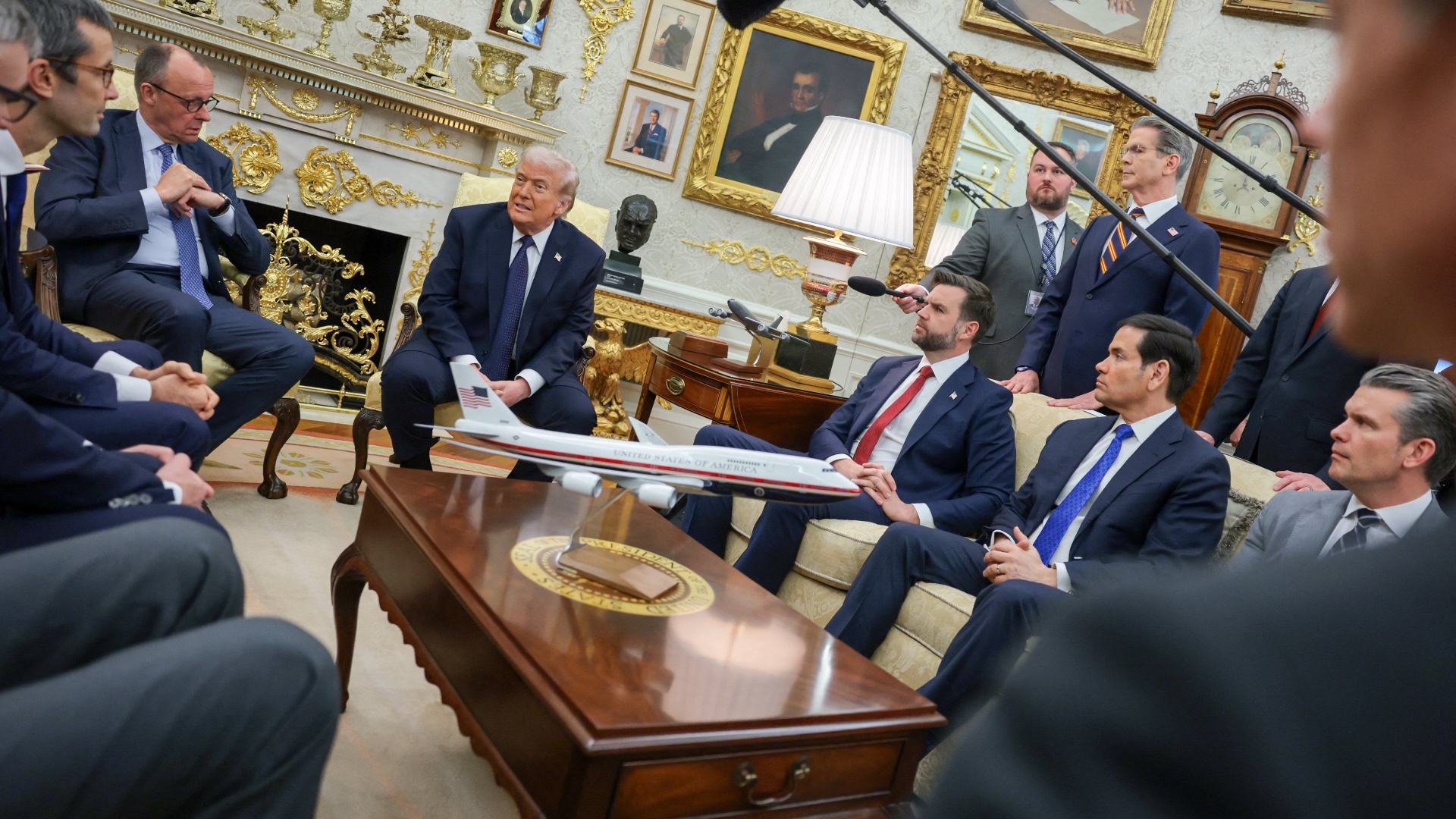
    President Donald Trump unexpectedly shortened a White House cabinet assembly on Thursday, January 29, 2026, addressing recent speculation about his apparent drowsiness during extended governmental meetings. The session concluded after merely one hour and twenty minutes—a notable contrast to previous gatherings that extended beyond three hours.

    Trump openly acknowledged the tedious nature of these meetings, describing them as ‘pretty boring’ while vehemently denying allegations of sleeping during proceedings. ‘I just closed them because I wanted to get the hell out of here,’ he stated during his 25-minute introductory address, clarifying that eye-closing was merely a response to boredom rather than actual sleep.

    The president’s approach to cabinet meetings has drawn comparisons to North Korean-style leadership displays, with officials traditionally competing to praise his administration. However, Thursday’s session notably excluded Homeland Security Secretary Kristi Noem, who faces mounting criticism over immigration agents’ fatal shooting of a protester in Minneapolis.

    This development occurs amid growing concerns about the 79-year-old president’s vitality—the oldest individual ever elected to the Oval Office. Trump has consistently dismissed questions about his energy levels, recently attributing his tired appearance to what he called ‘boring as hell’ cabinet meetings in a New York Magazine interview.

    In an unusual departure from standard protocol, the president declined to entertain press questions following the meeting, avoiding potential inquiries regarding Noem’s situation or escalating military threats toward Iran.

  • US Senate fails to advance funding package as partial govt shutdown looms, according to unofficial tally

    US Senate fails to advance funding package as partial govt shutdown looms, according to unofficial tally

    WASHINGTON — The United States Senate reached an impasse Thursday, failing to advance a critical government funding package and significantly escalating the threat of a partial federal shutdown. The legislative stalemate stems from deep-rooted disagreements over immigration enforcement policy, creating a political gridlock that lawmakers have thus far been unable to break.

    The procedural vote, which required 60 votes to move forward, fell short of the necessary threshold. The failure leaves a substantial portion of the federal government on the brink of a funding lapse, with key agencies set to begin shutting down operations if a resolution is not reached before the impending deadline.

    Senate Majority Leader John Thune (R-SD) addressed reporters on Capitol Hill earlier in the day, acknowledging the challenges in resolving the dispute. Lawmakers from both parties have been engaged in intense negotiations, yet fundamental differences regarding border security measures and immigration protocols have prevented a consensus. The deadlock reflects the broader, highly polarized national debate on immigration, which continues to dominate the legislative agenda and complicate budgetary processes.

    The impending shutdown would affect numerous non-essential government services and federal employees, potentially leading to furloughs and disruptions in public services. This latest standoff echoes previous government funding crises, underscoring the persistent challenges in achieving bipartisan cooperation on fiscally critical matters intertwined with contentious policy issues.