分类: politics

  • Sheikh Mohamed, Putin review UAE-Russia ties, discuss key economic agreements in Moscow

    Sheikh Mohamed, Putin review UAE-Russia ties, discuss key economic agreements in Moscow

    In a significant diplomatic engagement at the Kremlin on January 29, 2026, UAE President Sheikh Mohamed bin Zayed Al Nahyan and Russian President Vladimir Putin convened to strengthen bilateral relations and explore new cooperative frontiers. The high-level discussions centered on enhancing the strategic partnership between the two nations across multiple sectors including trade, investment, technology, space exploration, and energy security.

    The meeting, marked by formal ceremonies including an honor guard reception and military jet escort departure, underscored the importance both nations place on their relationship. President Sheikh Mohamed expressed optimism that 2026 would mark a year of substantial progress for Russia and continued advancement in UAE-Russia relations, noting the foundation of trust built over five decades of cooperation.

    A key outcome of the summit was the highlighting of two major economic agreements: the UAE-Russia Trade in Services and Investment Agreement (August 2025) and the UAE-Eurasian Economic Union Economic Partnership Agreement (June 2025). These frameworks are expected to significantly boost bilateral trade flows and investment opportunities while supporting sustainable development goals.

    The leaders also addressed critical regional and international issues, particularly emphasizing the urgent need for peace in the Middle East through a two-state solution. President Sheikh Mohamed reaffirmed the UAE’s commitment to global peace and stability through dialogue and diplomatic solutions.

    Notably, President Putin expressed appreciation for the UAE’s mediation efforts in the Russia-Ukraine conflict, specifically acknowledging successful prisoner exchanges facilitated by Emirati diplomacy. The Russian leader thanked the UAE for hosting trilateral talks involving Russia, Ukraine, and the United States, highlighting the Emirates’ growing role as an international peace broker.

    The delegation included senior UAE officials including Sheikh Hamed bin Zayed Al Nahyan, Managing Director of the Abu Dhabi Investment Authority, and Sheikh Hamdan bin Mohamed bin Zayed Al Nahyan, Deputy Chairman of the Presidential Court for Special Affairs, signaling the comprehensive nature of the bilateral engagement.

  • UN criticizes Haiti for lack of progress on a political transition

    UN criticizes Haiti for lack of progress on a political transition

    The United Nations Security Council has unanimously approved a resolution extending its political mission in Haiti through January 2027 while issuing strong criticism of the country’s leadership for failing to advance political transition processes. The council’s decision comes as Haiti experiences unprecedented levels of gang violence that now dominates 90% of the capital city Port-au-Prince and continues spreading into rural areas.

    In the strongly-worded resolution co-sponsored by the United States and Panama, Security Council members condemned in the strongest terms the dramatic surge in criminal activities, citing extensive human rights violations including systematic sexual violence against all demographics, human trafficking, migrant smuggling, child abductions, and targeted killings by armed groups. The violence has escalated significantly since the 2021 assassination of President Jovenel Moïse, which created a power vacuum that criminal organizations have exploited.

    The extended UN mission, known as BINUH, will now refocus its mandate toward facilitating national dialogue and supporting electoral processes for municipal, parliamentary, and presidential elections. Additionally, the mission will collaborate with the newly authorized international security force to develop comprehensive programs for disarming and reintegrating former gang members, with particular attention to children recruited by armed groups.

    Haiti’s current transitional governance structure, established in April 2024 with Caribbean leadership support after gangs forced closure of the main international airport and critical infrastructure, has struggled to maintain stability. The council has overseen three different prime ministers despite its original mandate to dissolve by February 2025. Recent warnings from the United States against governmental changes highlight international concerns about the unelected body’s ability to transition toward democratic elections for the first time in ten years.

    The resolution emphasizes urgent security sector reform requirements and calls for enhanced coordination between the political mission and the planned 5,500-member international security force authorized in September, which remains without a definitive deployment timeline despite being hailed as offering ‘hope’ for the crisis-stricken nation.

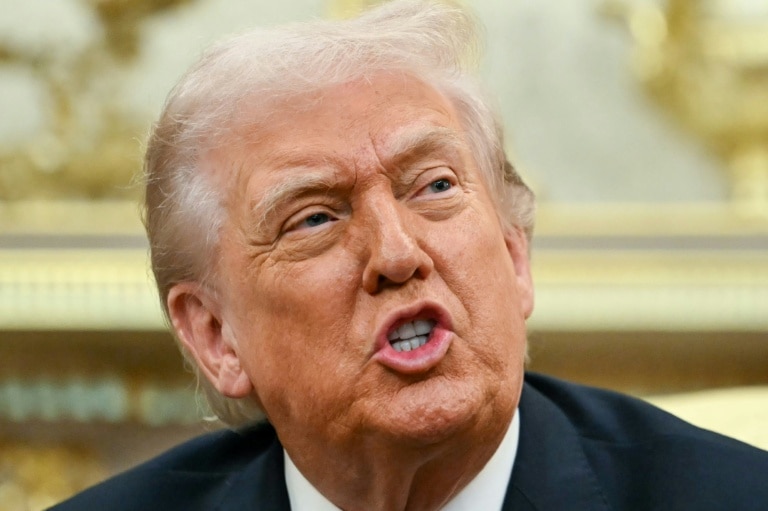
  • Trump threatens tariffs for countries that sell oil to Cuba

    Trump threatens tariffs for countries that sell oil to Cuba

    The Trump administration has intensified its economic pressure campaign against Cuba by threatening to impose tariffs on countries that supply oil to the Caribbean nation. This latest move was formalized through an executive order, though specific tariff rates and targeted nations remain unspecified.

    The development follows President Trump’s assertion on Tuesday that Cuba’s communist government “will be falling pretty soon,” citing Venezuela’s recent cessation of oil shipments to the island nation. Previously, Venezuela had been supplying approximately 35,000 barrels of oil daily to Cuba, representing a crucial energy lifeline for the Cuban economy.

    This escalation in US policy toward Cuba gained momentum after American forces participated in the January 3rd raid in Caracas that resulted in the capture of Venezuelan leader Nicolás Maduro, a longstanding Cuban ally. The administration’s approach marks a significant hardening of stance against both communist governments in the region.

    Cuban Foreign Minister Bruno Rodríguez has vehemently opposed the US position, asserting Cuba’s “absolute right to import fuel” from any willing exporter without submission to “unilateral coercive measures of the United States.” This diplomatic confrontation highlights the deepening rift between the two nations and potentially signals a return to more adversarial relations.

    The proposed tariffs represent another front in the Trump administration’s broader strategy of applying maximum economic pressure on governments it considers adversarial, continuing a pattern of utilizing trade measures as foreign policy instruments.

  • US eases Venezuela sanctions after oil sector reforms

    US eases Venezuela sanctions after oil sector reforms

    In a significant shift in foreign policy, the United States has moved to ease key sanctions on Venezuela’s oil industry, responding directly to sweeping legislative reforms approved by the Venezuelan parliament. The U.S. Treasury Department issued a general license authorizing a wide range of transactions involving Venezuelan-origin oil, including its extraction, export, refining, and transportation, mere moments after lawmakers in Caracas voted to dismantle state controls that had long restricted private investment.

    The sanctions relief follows intensive diplomatic engagement between Washington and the administration of Venezuela’s interim President, Delcy Rodriguez. This development marks a dramatic reversal from the longstanding U.S. policy of maximum pressure, which was instituted during the socialist rule of Nicolas Maduro. The reform fundamentally alters the nation’s hydrocarbon law, which dated to 2006 and had mandated that the state oil company, PDVSA, retain a majority stake in all joint ventures with foreign entities.

    President Donald Trump, who has publicly praised Rodriguez, framed the policy shift as a strategic victory. He asserted that Washington is now ‘in charge’ of Venezuela’s vast energy resources, the largest proven oil reserves in the world. The administration pressured Caracas to open its oil fields to U.S. investors, a condition for its support of Rodriguez’s interim government following the ouster of Maduro.

    For Venezuela, the reform is touted by its leadership as a ‘historical leap’ essential for economic recovery. Years of crippling U.S. sanctions, compounded by profound mismanagement, corruption, and underinvestment, had decimated the nation’s oil production, which plummeted to just 300,000 barrels per day in 2020. The influx of foreign capital is seen as the only path to reviving the battered economy and stabilizing the struggling national currency, the bolivar. Rodriguez has already allocated $300 million from an initial crude sale to shore up the currency.

    While the reform paves the way for the return of U.S. energy majors like Exxon Mobil and ConocoPhillips—which exited in 2007—analysts note that the state retains some discretionary power in awarding contracts. The changes offer greater guarantees to private players, relinquish state control of exploration activities, and lower taxes and royalties. The industry, though showing a slow recovery with production reaching 1.2 million barrels per day, remains a shadow of its former capacity of 3 million barrels at the start of the century.

  • Federal judge blocks Trump administration from detaining refugees in Minnesota

    Federal judge blocks Trump administration from detaining refugees in Minnesota

    A federal court in Minneapolis has delivered a significant blow to the Trump administration’s immigration enforcement tactics by issuing a temporary restraining order against the arrest of lawfully resettled refugees in Minnesota. U.S. District Judge John Tunheim ruled Wednesday that Immigration and Customs Enforcement (ICE) agents likely violated multiple federal statutes through their targeted operations against refugees who had undergone proper admission procedures.

    Judge Tunheim’s order specifically mandates the immediate release of any refugees detained under Operation PARRIS (Post-Admission Refugee Reverification and Integrity Strengthening), a program announced by the Department of Homeland Security earlier this month that proposed reexamining thousands of refugee cases through new background checks.

    In his ruling, Tunheim emphasized that refugees possess legal rights to reside and work peacefully in the United States without facing “the terror of being arrested and detained without warrants or cause.” The judge articulated America’s historical role as “a haven of individual liberties in a world too often full of tyranny and cruelty,” warning that this ideal is abandoned “when we subject our neighbors to fear and chaos.”

    The court decision permits the administration to continue reviewing refugee status and enforcing immigration laws but prohibits the arrest and detention of lawfully admitted refugees. This nuanced approach acknowledges governmental authority while protecting individual rights.

    The ruling prompted immediate condemnation from White House deputy chief of staff Stephen Miller, the architect behind Trump’s immigration crackdown, who denounced it as “judicial sabotage of democracy” in a social media post.

    According to court documents, refugees affected by the operations had undergone rigorous background checks, received approval from multiple federal agencies, and were awaiting adjustment to permanent resident status while following all regulations. Reports from Minnesota described violent arrests where refugees were dragged from homes and vehicles, detained locally, then transferred to Texas facilities where judges are more likely to align with administration policies.

    Sarah Kahn, senior staff attorney at the Center for Human Rights and Constitutional Law, welcomed the decision, stating the judge recognized that “this brutal and senseless practice is illegal” and required governmental respect for longstanding refugee protections. The case highlights Minnesota’s emergence as a focal point in Trump’s immigration enforcement, where two U.S. citizens were killed by ICE agents during observation activities.

  • Imran Khan not the only one silenced as Pakistan military stifles dissent

    Imran Khan not the only one silenced as Pakistan military stifles dissent

    Pakistan’s political landscape is witnessing an unprecedented contraction of democratic freedoms as former Prime Minister Imran Khan remains in complete isolation at Rawalpindi’s Adiala Jail. According to his political party, Khan has been denied visitation rights for over five weeks, with his last family visit occurring more than eight weeks ago and legal consultations limited to a mere eight-minute session.

    The government attributes this isolation to Khan’s violation of prison regulations prohibiting political discussions, while his family alleges a deliberate attempt to silence his criticism of military leadership. Khan’s sister, Aleema Khanum, asserts that Field Marshal Asim Munir, Pakistan’s military chief, is personally orchestrating this information blockade—an accusation the government vehemently denies.

    This suppression extends far beyond Khan’s case. Recent developments reveal a systematic crackdown on dissent across multiple sectors. Human rights lawyer Imaan Mazari and her husband received ten-year prison sentences for allegedly sharing ‘anti-state’ social media content, drawing condemnation from Amnesty International regarding Pakistan’s use of coercive tactics against human rights defenders.

    Media freedom has suffered significantly under new regulations. Television networks operate under strict directives prohibiting any coverage of Khan, including visual representations, audio recordings, or even mentioning his name. Journalists report escalating self-censorship and intimidation tactics, with even tangential coverage of military-related topics triggering warnings from unidentified callers.

    The legal framework itself has been weaponized against free expression. The 2025 amendments to Pakistan’s Prevention of Electronic Crimes Act introduced vague definitions of ‘national interest’ and established severe penalties for criticizing state institutions. Media analyst Adnan Rehmat notes that these changes have created ‘forever shifting boundaries’ that make legitimate journalism increasingly perilous.

    Historical context reveals this repression represents both continuity and escalation. While Pakistan has experienced media restrictions under previous administrations, current measures demonstrate increased institutionalization of suppression. The military’s influence has reached new heights following constitutional amendments granting Field Marshal Munir lifetime immunity from prosecution and oversight of all defense forces.

    International observers express growing concern. Michael Kugelman of the Atlantic Council notes that ‘Pakistan is coming quite close to authoritarian rule,’ with current repression levels exceeding any previous period of civilian governance. The situation illustrates the delicate balance between state security concerns and fundamental democratic rights, with Pakistan’s authorities insisting their actions represent necessary measures against ‘digital terrorism’ rather than suppression of legitimate dissent.

  • Myanmar’s USDP wins majority of seats in Union Parliament

    Myanmar’s USDP wins majority of seats in Union Parliament

    YANGON – Myanmar’s Union Solidarity and Development Party (USDP) has achieved a decisive parliamentary majority following the nation’s meticulously organized general election, according to official results published by the Union Election Commission (UEC) on Thursday.

    The comprehensive electoral process, conducted across three distinct phases between December 2025 and January 2026, culminated in the USDP securing 339 parliamentary seats. The party obtained 231 seats in the Pyithu Hluttaw (Lower House) and 108 seats in the Amyotha Hluttaw (Upper House), representing a commanding position within the 664-seat Union Parliament structure.

    Electoral authorities reported that 420 contested seats were available nationwide during this democratic exercise. The election administration demonstrated considerable logistical complexity, with voting occurring in 263 townships across the designated phases: December 28, 2025 (102 townships), January 11, 2026 (100 townships), and January 25, 2026 (61 townships).

    The parliamentary framework consists of a bicameral system with the 440-seat Lower House and 224-seat Upper House forming the complete legislative body. This electoral outcome positions the USDP with significant influence over Myanmar’s legislative agenda and policy direction for the forthcoming parliamentary session.

  • Burkina Faso’s junta dissolves all of country’s political parties, saying they cause divisions

    Burkina Faso’s junta dissolves all of country’s political parties, saying they cause divisions

    OUAGADOUGOU, Burkina Faso — In a dramatic consolidation of power, Burkina Faso’s military government has officially dissolved all political parties and nullified the legislation that governed them through a decree ratified during Thursday’s Council of Ministers meeting.

    The decision represents the most severe measure yet in a series of actions that civil society advocates characterize as systematically dismantling democratic institutions and suppressing opposition voices since the 2022 coup brought the junta to power. While political activities had remained suspended under military rule, the new mandate goes further by requiring the immediate transfer of all party assets to state control, as confirmed by the government-operated news agency.

    Emile Zerbo, Minister of Territorial Administration, justified the sweeping dissolution by asserting that political organizations had strayed from their foundational principles. “The administration concludes that the excessive proliferation of political parties has precipitated abuses, exacerbating societal divisions and undermining national cohesion,” Zerbo stated following the ministerial council’s approval.

    The military regime, which seized control two years ago, has implemented extensive reforms including the indefinite postponement of elections originally intended to reestablish civilian governance and the disbandment of the autonomous electoral commission. Officials indicated that new legislation outlining the framework for future political organizations will be presented to the legislative body promptly.

    Burkina Faso joins several West and Central African nations experiencing a wave of military takeovers and deferred transitions to democratic governance, reflecting broader regional instability and challenges to constitutional order.

  • Trump says Putin will not attack Ukraine cities during cold week

    Trump says Putin will not attack Ukraine cities during cold week

    In a significant diplomatic development, U.S. President Donald Trump has announced that Russian President Vladimir Putin has agreed to temporarily halt military attacks on Kyiv and other Ukrainian urban centers for one week. The purported ceasefire, attributed by Trump to “extraordinary cold” weather conditions, represents a potential humanitarian reprieve for millions of Ukrainians enduring brutal winter temperatures.

    Speaking during a televised cabinet meeting in Washington DC, Trump revealed he personally requested the military pause from Putin. “I asked President Putin not to fire into Kyiv and the various towns for a week, and he agreed to do that,” Trump stated, characterizing the exchange as unexpectedly productive despite skepticism from advisors.

    The announcement comes as meteorological forecasts predict temperatures in the Ukrainian capital plummeting to -24°C (-11°F) in coming days, creating dangerously cold conditions for civilians already struggling with damaged infrastructure. Russia has not officially confirmed any such agreement, maintaining its characteristic silence on diplomatic communications.

    Ukrainian President Volodymyr Zelensky responded positively to Trump’s announcement via social media, describing it as an “important statement” regarding security provisions during extreme winter conditions. Zelensky indicated that discussions on this matter had occurred during recent trilateral talks in the United Arab Emirates, expressing expectation that agreements would be implemented.

    According to sources familiar with the negotiations, Ukraine has reportedly agreed to reciprocate by temporarily suspending its attacks on Russian oil refineries, suggesting a potential mutual de-escalation arrangement. This development follows the first trilateral talks between Russian, Ukrainian, and U.S. negotiators since the conflict began in 2022, which all parties previously characterized as constructive though without concrete announcements.

    The potential pause offers critical relief for Ukraine’s energy infrastructure, which has suffered intensified Russian attacks during winter months. Previous assaults have crippled power supplies to major cities, leaving millions without heating or electricity despite round-the-clock repair efforts by electrical companies. Even when power is restored, supply typically lasts only a few hours—sufficient for charging devices but inadequate for substantially warming homes.

  • Border tsar Homan promises a ‘draw down’ of forces in Minneapolis

    Border tsar Homan promises a ‘draw down’ of forces in Minneapolis

    The White House announced a partial reduction of federal immigration forces in Minneapolis on Thursday following fatal shootings that claimed the lives of two American citizens, though officials emphasized the administration remains committed to its immigration enforcement mission.

    Tom Homan, the administration’s border operations lead, confirmed the planned drawdown during a press conference in Minneapolis while maintaining that federal authorities would continue their operations with modified tactics. “The draw down is going to happen,” Homan stated, “We are not surrendering our mission at all. We’re just doing it smarter.”

    The announcement comes amid escalating tensions following the deaths of Renee Good and Alex Pretti, who were killed by federal agents implementing President Trump’s immigration crackdown this month. Their deaths have triggered widespread protests across Minneapolis, national outrage, and bipartisan calls for the removal of certain administration officials.

    Minnesota Governor Tim Walz and Minneapolis Mayor Jacob Frey, both Democrats, have demanded complete withdrawal of federal agents from the state’s capital region. The state has simultaneously pursued legal action, petitioning a federal judge to halt “Operation Metro Surge”—a initiative deploying approximately 3,000 immigration, border patrol, and Department of Homeland Security (DHS) personnel.

    Homan indicated that operational adjustments would be contingent on the level of cooperation from state and local authorities, though he noted the administration opposed certain unspecified demands from Minnesota officials. The federal response will become more “targeted,” according to Homan, though he provided no specific details regarding the scale or timeline of the planned reduction.

    The situation has created political ramifications extending beyond Minnesota. Senate Democrats have threatened a partial government shutdown if spending legislation includes new funding for DHS, while seven Senate Republicans joined Democrats in blocking a procedural vote on the spending bill. Legislative negotiations are currently underway to potentially separate DHS funding from the broader spending package.

    Meanwhile, Mayor Frey reported that federal forces in Minneapolis number between 3,000-4,000 personnel, significantly outnumbering the city’s 600 local police officers. He described accounts of citizens being “indiscriminately pulled off the street” and targeted based on ethnic appearance rather than legal justification.

    The administration has defended its immigration enforcement measures, citing improved border security and targeting of undocumented immigrants for deportation as contributing to national safety. According to documents obtained by CBS News, Immigration and Customs Enforcement (ICE) conducted over 480,000 deportations during Trump’s first year back in office—exceeding the previous record set during the Obama administration.