分类: politics

  • France honors fallen soldiers in Afghanistan after Trump’s false claim about NATO troops

    France honors fallen soldiers in Afghanistan after Trump’s false claim about NATO troops

    PARIS — In a dignified response to controversial statements made by former U.S. President Donald Trump, French defense officials have publicly honored the memory of their nation’s fallen soldiers in Afghanistan. Alice Rufo, Minister Delegate at the Defense Ministry, presided over a solemn ceremony at a Paris monument dedicated to French military personnel who perished in overseas operations.

    The ceremony, which officials noted was organized specifically in response to recent remarks about NATO allies’ participation in the Afghanistan conflict, served as a powerful rebuttal to claims that non-American troops avoided frontline combat. Rufo emphasized the importance of preserving the honor and sacrifice of the ninety French soldiers who lost their lives during the conflict that began in October 2001.

    This diplomatic response comes after Trump’s interview with Fox Business Network in Davos, Switzerland, where he suggested that non-U.S. NATO forces remained distant from combat zones. Although the former president subsequently praised British forces, he omitted recognition of other allied troops, creating diplomatic tension among NATO partners.

    Rufo acknowledged the profound emotional impact of these statements on veterans’ associations, noting their ‘outrage, anger, and sadness.’ However, she emphasized the enduring ‘brotherhood of arms’ between American, British, and French military forces, advocating for trans-Atlantic solidarity to overcome political disagreements.

    The Afghanistan campaign represented a historic moment for NATO, marking the first activation of its mutual-defense clause following the September 11 attacks. The international coalition, comprising dozens of nations, worked collectively to dismantle al-Qaida and confront Taliban forces in their Afghan stronghold.

  • Minnesota officials call for feds to leave

    Minnesota officials call for feds to leave

    A deepening political crisis is unfolding in Minnesota as state leaders demand the immediate withdrawal of federal immigration officers following a second fatal shooting by US agents in Minneapolis. The incident, which occurred on Saturday, has ignited fresh protests and exposed severe fractures between state and federal authorities.

    Minnesota Governor Tim Walz condemned the shooting as “horrific” and insisted that state investigators take charge of the case, declaring, “The federal government cannot be trusted to lead this investigation.” However, according to Associated Press reports, the Department of Homeland Security blocked state investigators from accessing the crime scene despite having a signed warrant.

    The DHS presented a starkly different account of the incident, characterizing it as an attack on federal personnel. Officials claimed a Border Patrol agent acted in self-defense after 37-year-old Alex Pretti—an ICU nurse at a VA hospital licensed to carry a concealed weapon—approached agents with a handgun and resisted disarmament attempts. Homeland Security Secretary Kristi Noem described Pretti as intending to “inflict maximum damage” while White House deputy chief of staff Stephen Miller labeled him an “assassin.”

    This narrative conflicts directly with verified bystander footage reviewed by Reuters, which shows Pretti holding a phone rather than a firearm while attempting to assist protesters who had been pushed to the ground by immigration agents.

    The shooting represents the second such incident in weeks, following the January 7th death of Renee Good, where similar discrepancies emerged between federal accounts and cellphone evidence. A recent Hennepin county medical examiner’s report classified Good’s death as a homicide.

    President Donald Trump escalated tensions by accusing Governor Walz and Minneapolis officials of “inciting Insurrection” through their “pompous, dangerous, and arrogant rhetoric.” The administration has deployed approximately 3,000 federal agents to Minneapolis as part of a sweeping immigration crackdown backed by $170 billion in funding through 2029.

    Former President Barack Obama broke silence to call Pretti’s death a “heartbreaking tragedy” warning that “many of our core values as a nation are increasingly under assault.” He urged the administration to collaborate with local officials “to avert more chaos.”

    Academic experts warn the standoff may have far-reaching consequences. Professor Chen Hong of East China Normal University predicts the conflicting law enforcement narratives will harden positions and intensify social tensions, potentially spilling into Congressional battles over immigration policy, homeland security funding, and law enforcement oversight that could trigger government shutdowns.

    Professor Li Haidong of China Foreign Affairs University notes that the Republican-led federal government’s immigration crackdown in a Democratic stronghold known for its diverse immigrant culture appears designed to reshape the local voter base through mass deportations. These policies have severely disrupted Minnesota’s social fabric and cultural ecosystem, generating widespread public discontent that promises to make immigration a central battleground in upcoming midterm elections.

  • Philippines tells Beijing it is alarmed over escalating verbal tussle in South China Sea dispute

    Philippines tells Beijing it is alarmed over escalating verbal tussle in South China Sea dispute

    MANILA, Philippines — The Philippine government has formally expressed alarm to Chinese diplomats regarding intensifying diplomatic exchanges concerning the protracted territorial conflict in the South China Sea. On Monday, the Department of Foreign Affairs (DFA) in Manila revealed it had lodged serious representations with Chinese Ambassador Huang Xilian and the Chinese Embassy, highlighting concerns about the deteriorating diplomatic discourse.

    The DFA cautioned that these increasingly confrontational exchanges risk undermining crucial diplomatic channels necessary for managing maritime tensions. Despite this warning, the Philippine government reaffirmed its support for officials who have vocally defended the nation’s territorial claims, including several senators.

    This diplomatic friction follows Beijing’s recent summons of Philippine Ambassador Jaime FlorCruz to protest statements made by Philippine Coast Guard spokesperson Commodore Jay Tarriela, who has consistently criticized China’s assertive maneuvers in contested waters.

    China maintains expansive claims over virtually the entire South China Sea—a critical global shipping corridor—despite a 2016 ruling by the Permanent Court of Arbitration in The Hague that invalidated these claims under the 1982 UN Convention on the Law of the Sea. Beijing, which boycotted the arbitration proceedings initiated by Manila following a 2013 territorial confrontation, continues to reject the tribunal’s decision.

    Maritime confrontations have notably intensified between Chinese and Philippine vessels in recent years. Unlike other claimant states including Vietnam, Malaysia, Brunei, and Taiwan, the Philippine government has adopted a strategy of transparently documenting and publicizing China’s assertive actions, including the use of powerful water cannons and dangerous blocking maneuvers.

    The Chinese Embassy has specifically targeted Commodore Tarriela, accusing him of “persistently hyping up maritime issues, confounded right and wrong, misrepresented facts, incited confrontation, misled public opinion, undermined China’s national interests and dignity.”

    Chinese Embassy deputy spokesperson Guo Wei dismissed Tarriela’s comments as “ignorant and arrogant views,” prompting the Philippine official to respond via social media with a critique of China’s restrictions on free expression.

    The diplomatic spat has extended to Philippine Senator Risa Hontiveros, who accused Chinese diplomats of violating the Vienna Convention on Diplomatic Relations by attempting to restrain Filipino officials’ expressions within their own country. Hontiveros characterized the Chinese Embassy as “a bad guest” in the Philippines.

    The Chinese diplomatic mission denied any intention to silence critics but vowed to respond to attempts to “smear” China and its leadership, questioning whether Hontiveros’ criticisms served national interests or personal political ambitions. The senator is widely considered a potential contender in the 2028 presidential elections.

  • Uganda’s military chief denies army assaulted Bobi Wine’s wife

    Uganda’s military chief denies army assaulted Bobi Wine’s wife

    Uganda’s military leadership has vehemently denied allegations that soldiers physically assaulted Barbara Kyagulanyi, wife of prominent opposition figure Bobi Wine, during a controversial raid on their residence. The incident occurred amidst escalating political tensions following President Yoweri Museveni’s disputed electoral victory on January 15.

    Bobi Wine, whose real name is Robert Kyagulanyi, has accused military personnel of holding his wife at gunpoint, conducting violent assaults, and confiscating personal documents and electronic devices during the home invasion. From her hospital bed, Barbara Kyagulanyi provided harrowing details of the encounter, describing how dozens of armed men—some in military attire—forcibly entered their home, demanded information about her husband’s whereabouts, and subjected her to physical violence when she refused to cooperate.

    The alleged assault included being struck in the face resulting in a torn lip, lifted by her waistband while being choked, and having her blouse forcibly removed leaving her partially exposed. She reported losing consciousness during the ordeal and is currently receiving treatment for both physical injuries and psychological trauma.

    Military Chief Muhoozi Kainerugaba, who is also President Museveni’s son, publicly refuted these claims via social media platform X, stating: ‘My soldiers did not beat up Barbie’s wife. First of all, we do not beat up women. They are not worth our time. We are looking for her cowardly husband not her.’

    Since the election results were announced, Kainerugaba has repeatedly demanded Wine’s surrender and issued explicit threats against the opposition leader. Wine remains in hiding, confirming that his home continues to be surrounded by military forces while expressing gratitude to supporters for ensuring his safety.

    The Uganda Law Society has condemned what it describes as an ‘ongoing wave of detentions, torture and enforced disappearance’ targeting opposition figures and their supporters. According to Kainerugaba’s own statements, security forces have killed 30 supporters of Wine’s National Unity Party (NUP) and detained approximately 2,000 individuals since the election.

    This political crisis unfolds against the backdrop of Museveni’s extended 45-year presidency, with Uganda having never experienced a peaceful presidential transition since gaining independence.

  • Syria extends ceasefire with Kurdish forces by 15 days

    Syria extends ceasefire with Kurdish forces by 15 days

    DAMASCUS — The Syrian government announced on Saturday a 15-day extension of its ceasefire agreement with Kurdish-led forces, a move intended to facilitate the complex transfer of Islamic State detainees from northeastern Syria to Iraq. The truce extension, which took effect at 11 pm local time, comes amid escalating tensions and mutual accusations of violations between the conflicting parties.

    According to an official statement from Syrian defense authorities, the decision to prolong the ceasefire directly supports a US-coordinated operation to relocate IS prisoners from facilities previously administered by the Syrian Democratic Forces (SDF). This development occurs against a backdrop of heightened military preparations and logistical movements by both sides, underscoring the precarious nature of recent de-escalation efforts following weeks of intense clashes in the region.

    The Syrian military operations authority leveled serious allegations against the SDF on Saturday, claiming the Kurdish forces had deployed reinforcements from Kurdistan Workers’ Party militias based in Iraq’s Qandil Mountains into Hasakah province. Syrian officials warned these movements jeopardized regional stability and represented a breach of trust.

    Conversely, the SDF issued counter-accusations through an evening statement, asserting that Syrian government forces were conducting systematic military preparations around Syria’s Jazira region and near the town of Kobani. The Kurdish-led forces reported two separate attacks against their positions earlier in the day, characterizing these incidents as explicit violations of the ceasefire agreement.

    Syrian Foreign Affairs official Mohammad Taha al-Ahmad expressed frustration to state media, noting that the SDF had provided no constructive response to government proposals. He accused the Kurdish administration of repeatedly exploiting truce periods to buy time and strengthen their military position.

    International observers remain deeply concerned about the fragile security situation in northeastern Syria, where efforts continue to prevent the collapse of the ceasefire, secure detention facilities housing thousands of IS suspects, and avert a broader regional escalation that could further destabilize an already volatile area.

  • Myanmar’s election ends amid mixed intl response

    Myanmar’s election ends amid mixed intl response

    Myanmar’s military government concluded its three-phase general election on Sunday, marking the country’s first electoral process since the 2021 coup that ousted Aung San Suu Kyi’s democratically elected administration. The final voting round occurred across approximately 60 townships, completing a staggered electoral schedule that began December 28 and continued through January 11.

    Senior General Min Aung Hlaing, head of the ruling military junta, emphasized domestic validation over international recognition, stating: “The people’s vote is the recognition we need.” In televised remarks, the military leader expressed indifference toward the international community’s stance on the election’s legitimacy, asserting that Myanmar citizens retain the freedom to support their preferred candidates.

    Electoral participation metrics revealed modest turnout rates of 52.13% and 55.59% during the initial two phases, with over 24.22 million eligible voters selecting representatives from nearly 5,000 candidates representing 57 political parties. The complex electoral process will determine composition of the Pyithu Hluttaw (lower house), Amyotha Hluttaw (upper house), and various state and regional parliaments.

    Preliminary results indicate dominant performance by the military-backed Union Solidarity and Development Party (USDP), which analysts project may secure 80-90% of parliamentary seats. Despite the military government’s plans to establish a new administration through this electoral process in April, experts anticipate continued domestic instability due to escalating conflicts between opposition factions and military forces.

    The international response remains divided, with ASEAN preparing to address the Myanmar situation during its upcoming Foreign Ministers’ Retreat in the Philippines. While the regional bloc continues advocating its five-point consensus peace plan, ASEAN special envoy Theresa Lazaro confirmed the organization has not endorsed the electoral process, emphasizing continued engagement with diverse Myanmar stakeholders.

  • How a purge of China’s military leadership could impact the army and the future of Taiwan

    How a purge of China’s military leadership could impact the army and the future of Taiwan

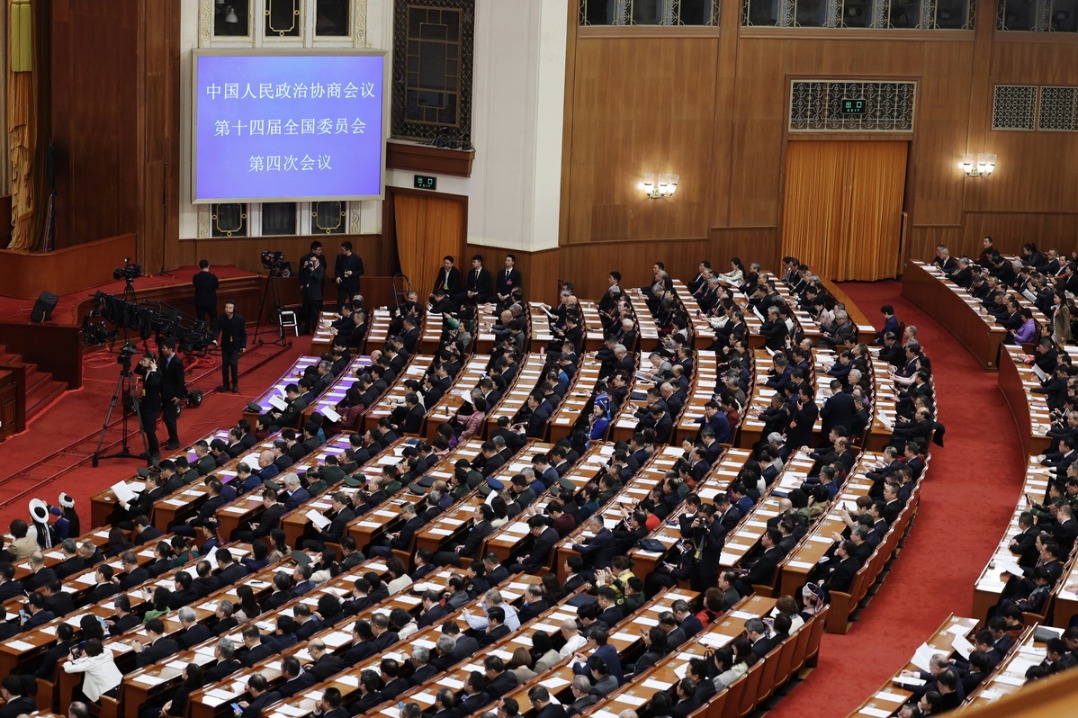
    BEIJING — In an unprecedented restructuring of China’s military leadership, President Xi Jinping has initiated one of the most significant purges in the history of the People’s Liberation Army. The Chinese Defense Ministry confirmed over the weekend that authorities are investigating two senior generals for suspected serious violations of discipline and law, effectively dismantling the leadership structure of the nation’s top military body.

    The investigation targets General Zhang Youxia, the senior vice chairman of the Central Military Commission, and General Liu Zhenli, who previously oversaw the military’s Joint Staff Department. This dramatic development leaves only one of the six positions on the powerful commission filled, with President Xi maintaining his role as chairman.

    Analysts characterize this move as part of President Xi’s broader anti-corruption campaign that has disciplined over 200,000 officials since he assumed power in 2012. The military purge represents a strategic effort to reform the armed forces and ensure absolute loyalty to China’s leadership. This follows the October expulsion of another vice chair, He Weidong, who was subsequently replaced by Zhang Shengmin—now the sole remaining commission member besides Xi.

    The specific allegations against the generals remain undisclosed, though official statements emphasize China’s commitment to rooting out corruption. An editorial in the People’s Liberation Army Daily described the investigations as demonstrating the nation’s determination to maintain military discipline, though it provided no concrete details about the nature of the violations.

    International experts suggest these developments could have significant implications for China’s strategic posture, particularly regarding Taiwan. While some analysts believe the leadership turmoil might temporarily weaken China’s military readiness, others argue that long-term benefits could include a more loyal and capable command structure. The timing of these changes raises questions about potential impacts on cross-strait relations, especially given recent increased military exercises around Taiwan.

    The future composition of the Central Military Commission remains uncertain, with five positions now vacant. It is unclear whether replacements will be appointed immediately or whether President Xi will wait until the 2027 Communist Party Congress when new Central Committee appointments typically occur.

  • Israel agrees to ‘limited reopening’ of Rafah crossing, Netanyahu’s office says

    Israel agrees to ‘limited reopening’ of Rafah crossing, Netanyahu’s office says

    In a significant diplomatic development, the Israeli government has consented to a conditional reopening of the Rafah border crossing between Gaza and Egypt. Prime Minister Benjamin Netanyahu’s office announced the decision on Monday after high-level discussions with US envoys in Jerusalem.

    The arrangement, formulated under President Trump’s 20-point peace framework, permits exclusively pedestrian transit through the critical passage. All movement will be subject to comprehensive Israeli inspection protocols. This partial reopening represents a carefully negotiated compromise after extensive dialogue between Israeli officials and US representatives Jared Kushner and Steve Witkoff.

    Israel has established explicit conditions for the crossing’s operational status, demanding the complete return of all living captives alongside a verifiable, maximum effort by Hamas to locate and repatriate deceased captives’ remains. This stance initially included the specific requirement to recover the body of Israeli citizen Ran Gvili before permitting any border access, a position reportedly softened following American diplomatic intervention.

    The Rafah crossing holds immense strategic and humanitarian importance as Gaza’s primary gateway for aid delivery and civilian passage. Its closure since Israel’s imposition of a blockade in 2007 has drawn consistent criticism from the United Nations and international humanitarian organizations, which have persistently advocated for its reopening to alleviate the region’s humanitarian challenges.

    The current agreement, originating from the October 10 ceasefire negotiations brokered by the Trump administration, marks a tentative step toward normalized transit while maintaining Israel’s security requirements. The development illustrates the continuing complexity of Middle Eastern diplomacy and the ongoing international efforts to balance security concerns with humanitarian needs in the region.

  • US’ Greenland push rattles NATO alliance, experts say

    US’ Greenland push rattles NATO alliance, experts say

    A diplomatic crisis has erupted within NATO following the United States’ controversial push to acquire Greenland, creating unprecedented tensions among Western allies. The world’s largest island, spanning over 2.16 million square kilometers with a mere 57,000 inhabitants, has become the epicenter of a geopolitical storm that threatens to undermine the foundation of the transatlantic alliance.

    President Donald Trump’s public declaration of interest in bringing the Danish territory under US control, justified as a ‘national security’ measure against perceived Russian and Chinese presence, sent shockwaves through European capitals. The situation escalated when Trump announced following his meeting with NATO Secretary-General Mark Rutte in Davos that he had established the ‘framework of a future deal’ concerning Greenland and the broader Arctic region.

    European leaders responded with alarm and firm resistance. Danish Prime Minister Mette Frederiksen asserted unwavering commitment to sovereignty, stating, ‘We can negotiate on everything political; security, investments, economy. But we cannot negotiate on our sovereignty.’ The crisis prompted an emergency EU summit in Brussels where foreign policy chief Kaja Kallas acknowledged that ‘trans-Atlantic relations have definitely taken a big blow over the last week.’

    Security experts warned of potentially devastating consequences. Professor Michael A. Allen of Boise State University cautioned that ‘if gained through coercion, the impact would have been devastating for the United States and the rest of the world,’ potentially causing the collapse of NATO itself. The alliance, formed in 1949 to provide collective security, faced its most serious internal crisis in decades.

    The tension temporarily eased when Trump withdrew threats of imposing punitive tariffs—initially set at 10% escalating to 25%—against eight European nations that opposed the Greenland initiative. However, the episode has fundamentally altered dynamics within the alliance, with leaders including French President Emmanuel Macron and British Prime Minister Keir Starmer demonstrating unusually direct criticism of US actions.

    China’s Foreign Ministry spokesperson Guo Jiakun dismissed Trump’s security concerns as ‘baseless,’ reaffirming China’s commitment to UN Charter principles in international relations. The Greenland controversy has exposed deepening fractures within NATO and raised questions about the future of US leadership in the alliance amid shifting global power dynamics.

  • Pauline Hanson slams ‘un-Australian’ opponents amid surge in poll support

    Pauline Hanson slams ‘un-Australian’ opponents amid surge in poll support

    In a significant shift within Australian politics, One Nation leader Pauline Hanson has capitalized on surging poll numbers to deliver a blistering critique of newly enacted hate speech legislation. The controversial figure, whose party now outperforms the Coalition in primary voting intentions according to recent Newspoll data, addressed enthusiastic supporters during Australia Day rallies where “Pauline 4 PM” signage signaled growing momentum.

    The Brisbane gathering, characterized by its festive atmosphere with music, flags, and widespread cheering, served as the platform for Hanson’s multifaceted address. She launched particularly sharp criticism against Prime Minister Anthony Albanese, whom she labeled “the worst prime minister I have ever seen,” while attributing Australia’s mass migration challenges to his leadership.

    Central to Hanson’s rhetoric was a vehement rejection of recently passed hate speech laws, which she argued could be weaponized to suppress minority parties and stifle crucial debates on immigration and multiculturalism. “We can never give up our freedom of speech,” she declared to applauding supporters. “I will not let them stop me. I will keep going.”

    Despite her inflammatory statements regarding climate change skepticism and calls to wind back environmental policies, Hanson concluded her address with an unexpected plea for national unity. She emphasized that Australia belongs to all who embrace its values, whether native-born or migrant, while maintaining her signature criticism of what she perceives as divisive identity politics.

    The event drew immediate condemnation from Greens Senator Larissa Waters, who attended a nearby Invasion Day protest and accused Hanson of employing racist dog-whistle tactics. Waters challenged Hanson’s populist narrative by highlighting her voting record on affordability issues, claiming the One Nation leader “votes with the one per cent” rather than ordinary Australians.

    Hanson dismissed these criticisms as coming from “un-Australian” opponents filled with hatred, setting the stage for continued ideological clashes as Australia approaches its next federal election.