
Amid escalating geopolitical friction, American military families are confronting profound anxieties regarding the prospect of armed engagement with Iran. The BBC’s North America editor, Sarah Smith, has captured these deeply personal apprehensions through poignant dialogues with those most directly affected by the human cost of war. A central voice in this narrative is Lynn, a Gold Star mother who carries the enduring grief of losing her son during the Iraq War. Her perspective is compounded by the insights of Jeremy, a military veteran whose service provides a ground-level view of the ramifications of international conflict. Their collective testimony transcends political debate, offering a raw examination of the potential consequences of further military action in the Middle East. This reporting underscores a critical dichotomy between strategic justifications at the governmental level and the palpable fears within the armed forces community. The analysis delves into whether a new confrontation is a necessary measure for national security or a path toward repeating past tragedies, exploring the complex emotional and psychological landscape for those who serve and the families who support them.
分类: politics
-

UK government loses appeal over Kneecap terror charges
The British government has suffered a significant legal defeat after the High Court in London rejected its appeal to reinstate terrorism charges against Liam Og O hAnnaidh, a member of the Irish rap collective Kneecap. The ruling represents the third judicial setback for prosecutors in this controversial case.
O hAnnaidh, professionally known as Mo Chara, faced allegations of waving a Hezbollah flag during a November 2024 concert performance in London. The Lebanese organization maintains proscribed terrorist status under UK law, making support displays potentially criminal under the Terrorism Act.
The legal foundation collapsed when Westminster Magistrates’ Court Judge Paul Goldspring determined in September that prosecutors had exceeded the statutory six-month limitation period for bringing summary charges. Wednesday’s High Court judgment affirmed this procedural dismissal, preventing any possibility of renewed prosecution.
Following the verdict, O hAnnaidh conducted an impassioned press conference in West Belfast, asserting the case represented political theater rather than genuine counterterrorism concern. “This entire process was never about me, never about any threat to the public and never about terrorism… it was always about Palestine,” he stated.
The artist directly challenged UK authorities: “We said we would fight you in your court and we would win, we have three times now. Your own High Court has ruled against you.” Kneecap collectively maintains the prosecution attempted to divert attention from Israeli military operations in Gaza, characterizing the legal action as governmental distraction tactics.
The case has highlighted ongoing tensions between artistic expression, political symbolism, and counterterrorism legislation in the United Kingdom, particularly regarding the Israeli-Palestinian conflict’s international ramifications.
-

China is expected to push for an ethnic unity law that critics say will cement assimilation
China’s legislative body is poised to enact a comprehensive Ethnic Unity Law that authorities claim will foster national cohesion but critics argue systematically dismantles cultural autonomy for minority groups. The legislation, introduced by National People’s Congress delegate Lou Qinjian, mandates all government entities, private enterprises, and social organizations to actively promote what it terms “a common consciousness of the Chinese nation.”
The controversial measure represents a significant departure from constitutional provisions that previously guaranteed ethnic groups the right to develop their own languages and maintain limited self-rule. Academic experts characterize the law as the culmination of President Xi Jinping’s fundamental restructuring of China’s approach to ethnic relations, effectively nullifying earlier promises of meaningful autonomy.
Central to the legislation is Article 15, which establishes Mandarin Chinese as the mandatory language of instruction from preschool through secondary education nationwide. This provision effectively eliminates minority languages as primary educational mediums, reversing decades of pedagogical practice in regions like Inner Mongolia where curricula were previously taught in local languages.
The law also introduces extraterritorial jurisdiction provisions, allowing Chinese authorities to prosecute individuals and organizations outside China whose actions are perceived as threatening ethnic unity. This legal mechanism parallels the controversial National Security Law imposed on Hong Kong in 2020.
Human rights advocates and legal scholars express grave concerns about the legislation’s implications. Rayhan Asat, a Harvard legal scholar whose brother received a 15-year prison sentence in Xinjiang, warns the law provides pretext for systematic human rights violations against minority populations, particularly Uyghur Muslims who have faced widespread detention campaigns.
The legislation emerges against the backdrop of intensified assimilation policies across minority regions, including the forced migration programs that break up ethnic communities under the guise of creating “mutually embedded community environments.” While China maintains these policies promote development and equality, critics argue they fundamentally undermine cultural preservation and linguistic diversity.
-
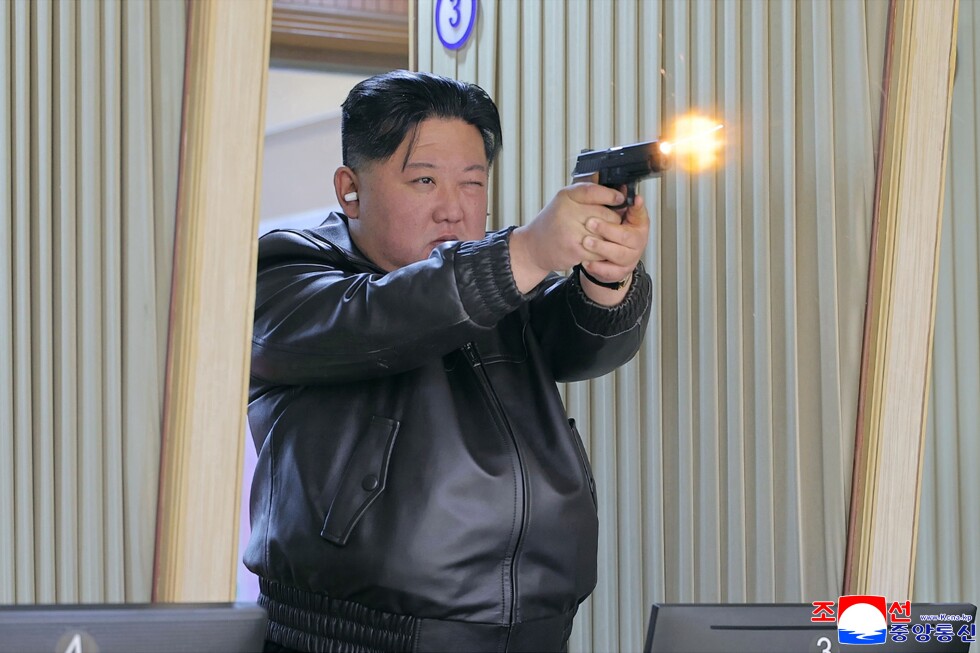
North Korean leader Kim and his daughter try out new pistols at shooting range
North Korean leader Kim Jong Un and his teenage daughter were photographed firing pistols during an inspection of a light munitions factory, according to state media imagery released Thursday. The images depict the pair testing weapons alongside senior military officials as Kim intensifies efforts to modernize his nation’s conventional forces following years of nuclear weapons development focus.
During Wednesday’s factory visit, Kim personally evaluated a newly produced pistol at a shooting range, subsequently rating the weapon as “excellent” according to the Korean Central News Agency (KCNA). While the official text report omitted mention of his daughter’s presence, the accompanying photographs clearly showed the young woman, believed to be approximately 13-year-old Kim Ju Ae, actively participating in the weapons demonstration.
Kim emphasized the factory’s critical role in supplying pistols and light arms to military and security forces, urging expanded production capacity and more modern manufacturing processes. This inspection follows a pattern of increasingly prominent public appearances by Kim’s daughter since her November 2022 debut at a long-range missile test.
Her growing visibility at military displays, factory openings, and even during her father’s September summit with Chinese leader Xi Jinping in Beijing has prompted intelligence analysts and experts to speculate that Kim Jong Un may be grooming her as a potential successor. This would extend the family’s dynastic rule into a fourth generation.
The munitions factory visit occurred just one day after Kim and his daughter observed test launches of nuclear-capable cruise missiles from a naval destroyer, with Kim calling for accelerated nuclear armament of North Korea’s naval forces. Last month, state media also showed the teenager testing a sniper rifle as Kim presented weapons to senior officials following a ruling party congress where he outlined major political and military objectives for the coming five-year period.
-
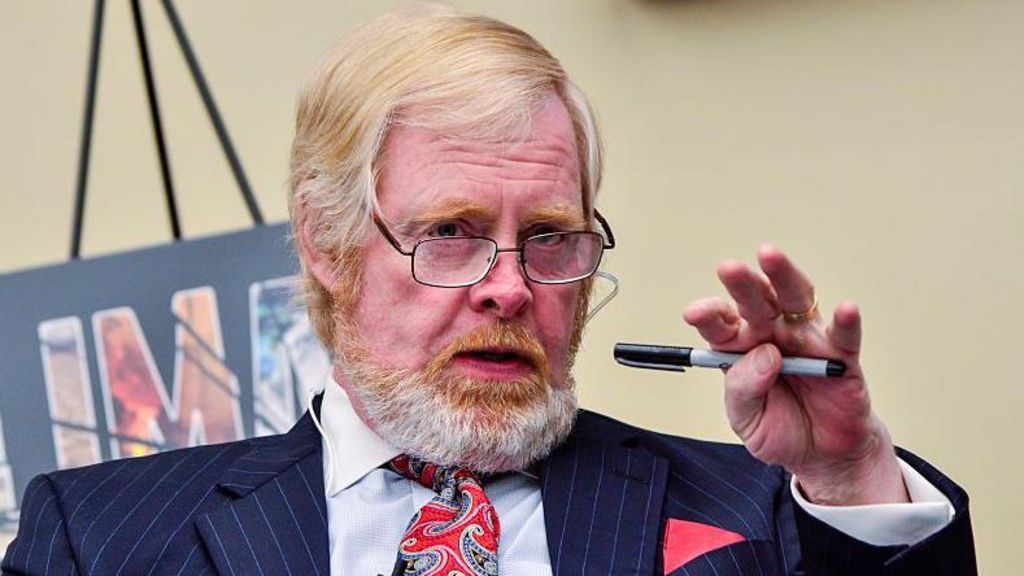
New US ambassador to South Africa summoned over ‘undiplomatic remarks’
South Africa has formally summoned US Ambassador Leo Brent Bozell III following controversial remarks he made about the anti-apartheid chant ‘Kill The Boer,’ creating a significant diplomatic rift between the two nations. The newly appointed ambassador, who assumed his position last month, sparked outrage by challenging a South African Constitutional Court ruling that had previously determined the chant does not constitute hate speech.
The diplomatic confrontation unfolded after Bozell addressed a business gathering in Hermanus on Tuesday, where he presented five areas requiring improvement in South Africa. His comments regarding the judicial system’s handling of the contentious chant were particularly inflammatory, with the ambassador stating he ‘did not care what the courts said’—a remark perceived as disrespecting the country’s legal institutions.
South Africa’s Department of International Relations and Cooperation issued a formal demarche, expressing the government’s severe disapproval of Bozell’s ‘undiplomatic’ statements. Foreign Minister Ronald Lamola emphasized the reciprocal nature of US-South Africa relations, noting that South African companies maintain substantial investments in the United States.
Following the diplomatic summons, Bozell issued a clarification and apology on Wednesday. Zane Dangor, Director-General of International Relations, confirmed the ambassador had expressed regret that his comments ‘detracted from any impression that he wanted to work with us constructively.’ Bozell subsequently affirmed that ‘the US government respects the independence of South Africa’s judiciary.’
This incident occurs against a backdrop of deteriorating relations since President Donald Trump took office. Tensions have escalated over multiple issues including trade policies, diplomatic approaches, and South Africa’s strategic partnerships. Trump has repeatedly criticized President Cyril Ramaphosa’s administration, accusing it of failing to protect white minorities and questioning land reform initiatives.
Conversely, South Africa has condemned the US decision to prioritize refugee applications from white Afrikaners, maintaining that claims of ‘white genocide’ lack credible evidence. The relationship further strained last year when the US imposed unprecedented tariffs on South African goods, the highest among African nations.
-
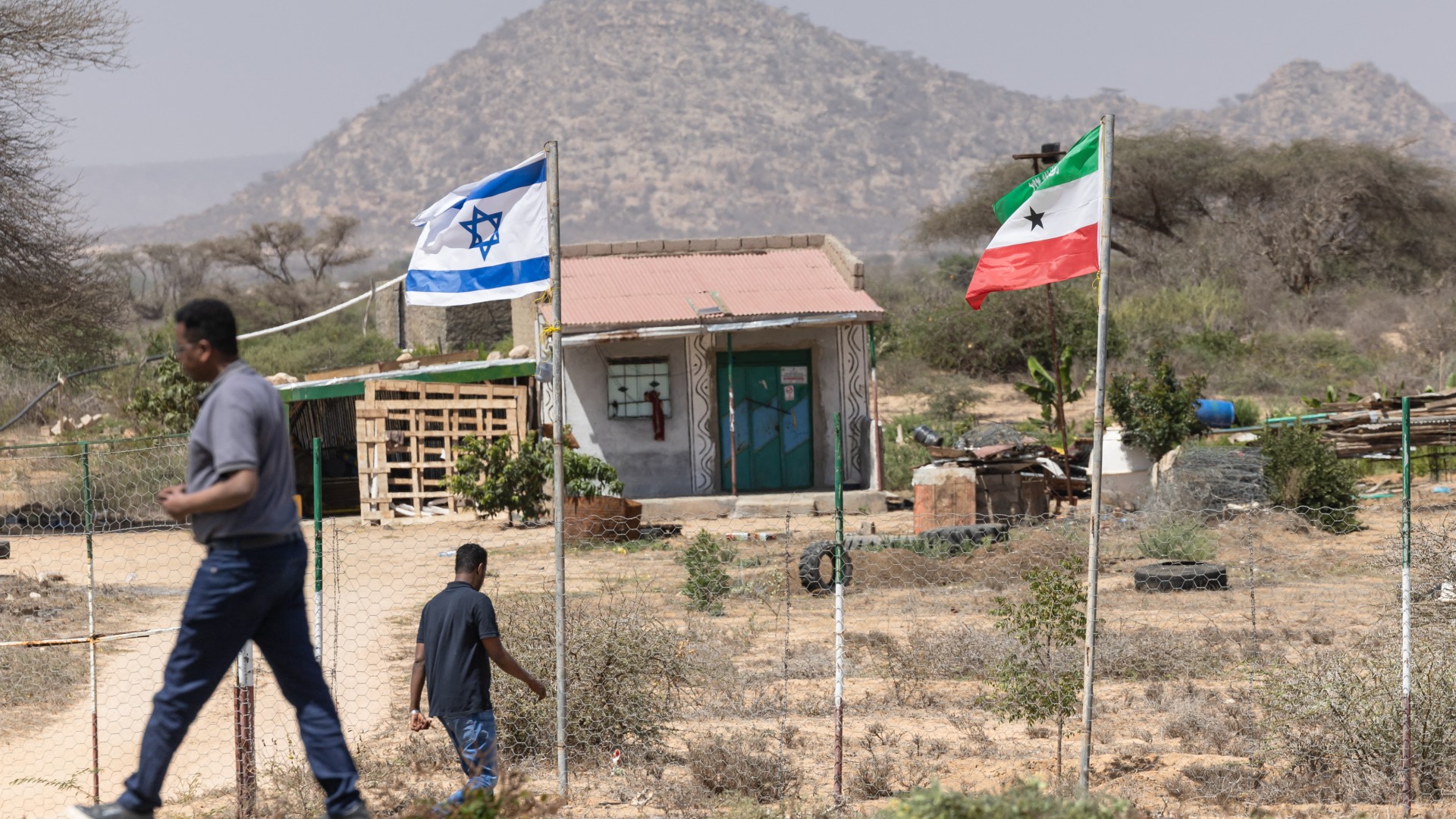
Israel to build base in Somaliland to target Houthis, says report
Israel is actively considering the establishment of a strategic military installation in Somaliland to enhance its operational capabilities against Yemen’s Houthi forces, according to a Bloomberg investigation. This development follows Israel’s groundbreaking diplomatic recognition of Somaliland as a sovereign state in December—making it the first nation to extend such acknowledgment.
Anonymous Somaliland officials revealed that the proposed facility would serve dual purposes: intelligence gathering and direct military operations targeting Houthi positions. The strategic location, approximately 260 kilometers from Yemen across the Gulf of Aden, offers geographical advantages for regional security operations.
Preparatory activities have already commenced, with Israeli security delegations conducting coastal surveys along Somaliland’s shoreline in June to identify suitable locations. Concurrently, Israel has secured blast-resistant facilities in Hargeisa’s hotels while scouting for permanent diplomatic premises.
Somaliland’s Minister of the Presidency, Khadar Hussein Abdi, confirmed the evolving security partnership, stating: “We will have a strategic relationship that encompasses many dimensions. While military base discussions remain preliminary, comprehensive analysis will undoubtedly occur.”
The timing of this initiative coincides with heightened regional tensions. The Houthi movement, aligned with Iran, has previously launched missile and drone attacks against international shipping routes and Israeli territory in solidarity with Palestinians during the Gaza conflict. Israeli military officials have established specialized intelligence units dedicated to monitoring the Houthis, whom they consider among Israel’s most significant security threats.
This strategic partnership also intersects with complex regional dynamics. The United Arab Emirates maintains substantial infrastructure in Somaliland, including a military airstrip and port operations managed by DP World. Somalia’s federal government has previously severed ties with the UAE over these developments, while both Somaliland and Puntland administrations rejected Mogadishu’s objections.
The geopolitical implications extend beyond immediate security concerns, potentially reshaping diplomatic recognition patterns and regional alliance structures in the Horn of Africa and Arabian Peninsula.
-

US dropped charges against Turkey’s Halkbank in Hamas hostage deal, court documents show
In a landmark decision with significant geopolitical implications, the United States Justice Department has formally abandoned its multi-billion dollar prosecution against Türkiye’s Halkbank. The case, which alleged massive sanctions evasion on behalf of Iran, was terminated following Ankara’s crucial role in securing the release of Israeli hostages held by Hamas in 2025, according to legal documents filed in the U.S. District Court for the Southern District of New York.
The judicial proceedings, initiated in 2019, accused the Turkish state-owned financial institution of orchestrating a sophisticated scheme involving fraud, money laundering, and conspiracy. Prosecutors contended that Halkbank facilitated the covert transfer of approximately $20 billion in restricted Iranian assets, orchestrated the conversion of oil revenues into gold and cash, and fabricated documentation for nonexistent food shipments to legitimize illicit financial flows through entities in Iran, Turkey, and the United Arab Emirates.
Under a deferred prosecution agreement endorsed by U.S. Attorney Jay Clayton, all charges will be dismissed contingent upon the bank implementing comprehensive internal reforms. Notably, the settlement imposes no financial penalties or administrative fines on Halkbank, as confirmed in the institution’s official statement.
This resolution underscores the strengthened diplomatic alignment between Turkish President Recep Tayyip Erdoğan and U.S. leadership, with sources indicating former President Trump pledged to resolve the matter amicably. Court documents dated March 6, 2026, reveal the settlement was directly intertwined with high-stakes diplomatic negotiations concerning the Gaza conflict. The filing specifically acknowledges the involvement of Trump and Secretary of State Marco Rubio in multilateral efforts that ultimately yielded a ceasefire agreement and hostage release following the protracted hostilities initiated by the October 2023 terror attacks.
The judicial documentation states: ‘The national security and foreign policy interests furthered by the Agreement are unique and extraordinary… serving as an important component of multilateral international efforts to secure the release of dozens of living hostages and hostage remains.’ It further emphasizes that the U.S. commitment to resolving the Halkbank case was a pivotal element in obtaining Türkiye’s instrumental assistance. The agreement is anticipated to receive formal court approval in an upcoming hearing.
-
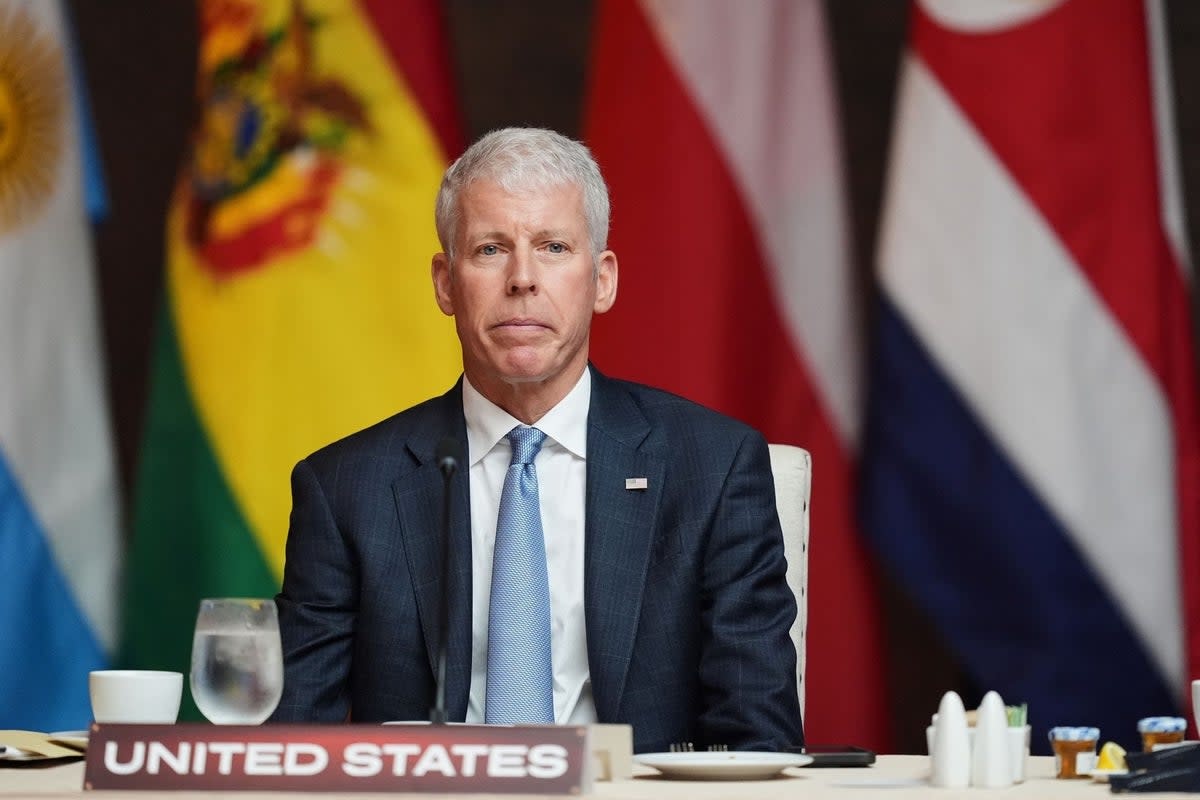
US energy chief’s deleted Hormuz X post called market manipulation
US Energy Secretary Chris Wright, a former fracking executive, faces allegations of market manipulation after posting and swiftly deleting a false claim about naval operations in the Strait of Hormuz. On Tuesday, Wright asserted on social media platform X that the American Navy had “successfully escorted an oil tanker through the Strait of Hormuz to ensure oil remains flowing.”
The post triggered immediate market reactions, with oil prices experiencing their most dramatic plunge in years according to Wall Street Journal reports. The Energy Department subsequently attributed the misinformation to staff who “incorrectly captioned” the post, while White House officials publicly acknowledged the statement’s inaccuracy. This incident occurs amid escalating tensions following the US-Israeli military campaign against Iran, which has threatened global oil supplies.
Hedge fund manager Spencer Hakimian questioned the financial implications, asking: “So who just made $100 million dollars shorting oil for the three minutes that Chris Wright had that post up?” The controversy drew international condemnation, with Iranian Foreign Minister Abbas Araghchi accusing US officials of “posting fake news to manipulate markets.”
Contrary to Wright’s deleted assertion, Reuters confirmed that the US Navy has consistently denied escort requests through the critical waterway due to heightened security risks. The strategic Strait of Hormuz handles approximately 31% of global seaborne crude oil, transporting 13 million barrels daily. Iran’s Revolutionary Guards have explicitly threatened vessels associated with nations attacking Iran, creating unprecedented market uncertainty that analysts compare to historical oil crises combined.
The situation intensified as UK Maritime Trade Operations reported a cargo vessel struck by an unknown projectile in the strait, forcing crew evacuation. Simultaneously, the US military claimed to have eliminated multiple Iranian naval vessels, including minelayers near the strategic passage. Senator Chris Murphy (D-Conn.) revealed after a classified briefing that the administration “had no plan” for securing the strait despite the predictable consequences of military action against Iran.
-

US will permanently close the consulate in Peshawar, Pakistan, its closest mission to Afghanistan
The United States Department of State has announced the permanent closure of its diplomatic consulate in Peshawar, Pakistan, marking the first overseas mission shuttered under the administration’s comprehensive reorganization plan. Located strategically near the Afghan border, this consulate served as a critical operational hub during multiple phases of U.S. involvement in Afghanistan since the 2001 invasion.
According to official congressional notification documents obtained by The Associated Press, the closure decision results from a year-long review process and is projected to generate annual savings of $7.5 million. The State Department emphasized that this diplomatic consolidation will not impair America’s ability to protect its national interests within Pakistan.
The Peshawar mission currently employs 107 personnel, including 18 American diplomats and government officials alongside 89 local staff members. The shutdown process will require approximately $3 million in implementation costs, with a significant portion ($1.8 million) allocated for relocating armored trailers that functioned as temporary office structures. Remaining resources will facilitate the transfer of vehicle fleets, telecommunications infrastructure, and office equipment to the U.S. Embassy in Islamabad and consulates in Karachi and Lahore.
Despite its historical significance as a logistical gateway to Afghanistan and contact point for American citizens and Afghan nationals, consular services will transition to the Islamabad embassy located 184 kilometers away. The department confirmed that the closure is unrelated to recent regional tensions surrounding Iran, which temporarily suspended operations at multiple U.S. diplomatic facilities in Pakistan.
This action follows broader staffing reductions within the State Department, including substantial cuts to diplomatic personnel and the restructuring of the U.S. Agency for International Development.
-

US has ‘no plan’ for Iran war and Strait of Hormuz, senators say after briefing
In a striking display of bipartisan concern, Democratic senators emerged from a confidential briefing on Tuesday to condemn the Trump administration’s apparent lack of strategic planning for the ongoing conflict with Iran. The two-hour session with the Senate Armed Services Committee revealed what lawmakers described as a dangerously incoherent approach to one of America’s most significant military engagements.
The briefing exposed critical gaps in strategic thinking across multiple fronts, including the vital Strait of Hormuz—the world’s most crucial energy chokepoint—as well as questions regarding regime change and handling Iran’s nuclear program. Senator Chris Van Hollen of Maryland characterized the administration’s position as demonstrating ‘complete incoherence,’ mirroring concerns already circulating in public discourse.
Multiple senators revealed that administration officials explicitly stated the war aims did not include destroying Iran’s nuclear capabilities or effecting regime change. Instead, according to Senator Chris Murphy of Connecticut, the objectives appeared limited to ‘destroying lots of missiles and boats and drone factories’—a approach he warned could lead to ‘endless war’ as Iran inevitably rebuilds its capabilities.
Perhaps most alarmingly, Murphy disclosed that administration officials admitted having ‘NO PLAN’ for resolving the critical situation at the Strait of Hormuz, acknowledging they lacked a strategy to safely reopen this essential global energy artery despite the crisis being ‘100 percent foreseeable.’
The senators further questioned the legitimacy of the conflict’s foundation. Massachusetts Senator Elizabeth Warren declared the ‘illegal war is based on lies and was launched without any imminent threat to our nation,’ noting Trump ‘has not given a single clear reason for the war and has no plan to end it.’
The briefing also revealed troubling motivations behind the conflict. Van Hollen suggested the administration was effectively executing Israeli Prime Minister Benjamin Netanyahu’s long-standing desire to attack Iran, quoting Secretary of State Marco Rubio’s March remarks about Netanyahu’s decision to strike. This perspective was bolstered by Alon Pinkas, a former Israeli diplomat, who told Middle East Eye that Netanyahu had been ‘trying to co-opt and manipulate Trump into a major war for the last year’ for political reasons.
The decision to engage in conflict has created divisions within Trump’s base and administration, with figures like Tucker Carlson viewing it as a betrayal of ‘America First’ principles, while officials including Jared Kushner and Defense Secretary Pete Hegseth have adopted more aggressive postures.