分类: politics

  • Hong Kong media mogul Jimmy Lai faces sentencing in landmark national security case

    Hong Kong media mogul Jimmy Lai faces sentencing in landmark national security case

    Hong Kong’s High Court is poised to deliver sentencing on Monday for Jimmy Lai, the former media proprietor and prominent Beijing critic, in a watershed case under the national security legislation imposed by China. The 78-year-old democracy advocate, convicted in December by three state-approved judges, faces potential life imprisonment for conspiring with foreign forces and publishing seditious materials through his now-defunct Apple Daily newspaper.

    The prosecution successfully argued that Lai orchestrated systematic campaigns requesting international sanctions against Chinese and Hong Kong authorities, utilizing his media platform as a facade for activities deemed threatening to national security. Despite Lai’s vigorous 52-day testimony maintaining his innocence and denying calls for foreign sanctions, the judiciary determined he consistently pursued the destabilization of China’s governing Communist Party.

    This case has ignited international condemnation from Western governments, with both the United States and United Kingdom formally requesting Lai’s release. The British citizen’s deteriorating health conditions—including cardiovascular issues and diabetes—have added complexity to the proceedings, though prison authorities maintain his medical status remains stable.

    Parallel to Lai’s sentencing, several former Apple Daily staff members and activists who entered guilty pleas are anticipated to receive reduced penalties after cooperating with prosecutors. The 2021 closure of Apple Daily following asset freezes and arrests marked a dramatic turning point for Hong Kong’s media landscape, which has plummeted in global press freedom rankings from 18th position in 2002 to 140th currently.

    Legal scholars note the case establishes concerning precedents regarding the interpretation of ‘seditious intent’ and ‘foreign collusion,’ potentially criminalizing standard journalistic practices involving international engagement. The verdict arrives days before Lunar New Year celebrations, with supporters hoping for family reunifications despite the expected lengthy prison terms.

  • Centre-left candidate poised to comfortably win Portuguese presidency

    Centre-left candidate poised to comfortably win Portuguese presidency

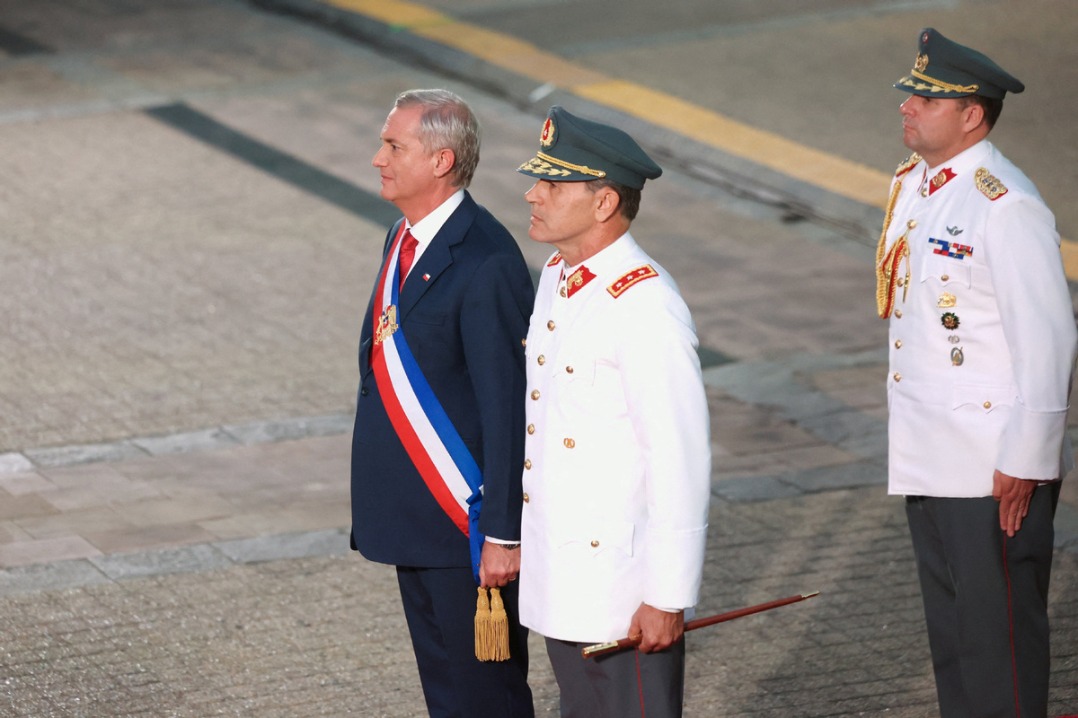
    Portugal has delivered a decisive rejection of far-right politics with centre-left candidate António José Seguro securing a commanding victory in the presidential runoff election. With 95% of ballots counted, official results show Seguro capturing 66% of the vote, soundly defeating his far-right opponent André Ventura who garnered just 34%.

    The election occurred against the backdrop of severe weather emergencies as Storm Leonardo triggered mass evacuations across the Iberian Peninsula, forcing voting postponements in the most severely flooded regions.

    Seguro’s victory represents a remarkable show of cross-party unity against the rising far-right movement. The 63-year-old former Socialist Party leader received unprecedented support from across the political spectrum, including endorsements from conservative figures and thousands of self-declared ‘non-socialists’ who signed an open letter backing his candidacy. This broad coalition united behind Seguro specifically to prevent Ventura’s far-right platform from gaining power.

    Despite his defeat, Ventura’s second-place finish demonstrates the continued influence of his Chega (Enough) party, which has experienced rapid growth since its formation in 2019 and now represents the second-largest bloc in Portugal’s parliament.

    The presidential role in Portugal, while largely ceremonial, carries significant constitutional powers including the authority to dissolve parliament, call snap elections, and veto legislation. Seguro will succeed conservative President Marcelo Rebelo de Sousa, marking a shift in the nation’s political landscape.

    Prime Minister Luís Montenegro, leader of Portugal’s centre-right government, had previously denounced Ventura as ‘xenophobic, racist and demagogic’ but notably declined to endorse either candidate in the runoff election.

  • Iran’s FM says nuclear talks to continue if US shows ‘necessary seriousness’

    Iran’s FM says nuclear talks to continue if US shows ‘necessary seriousness’

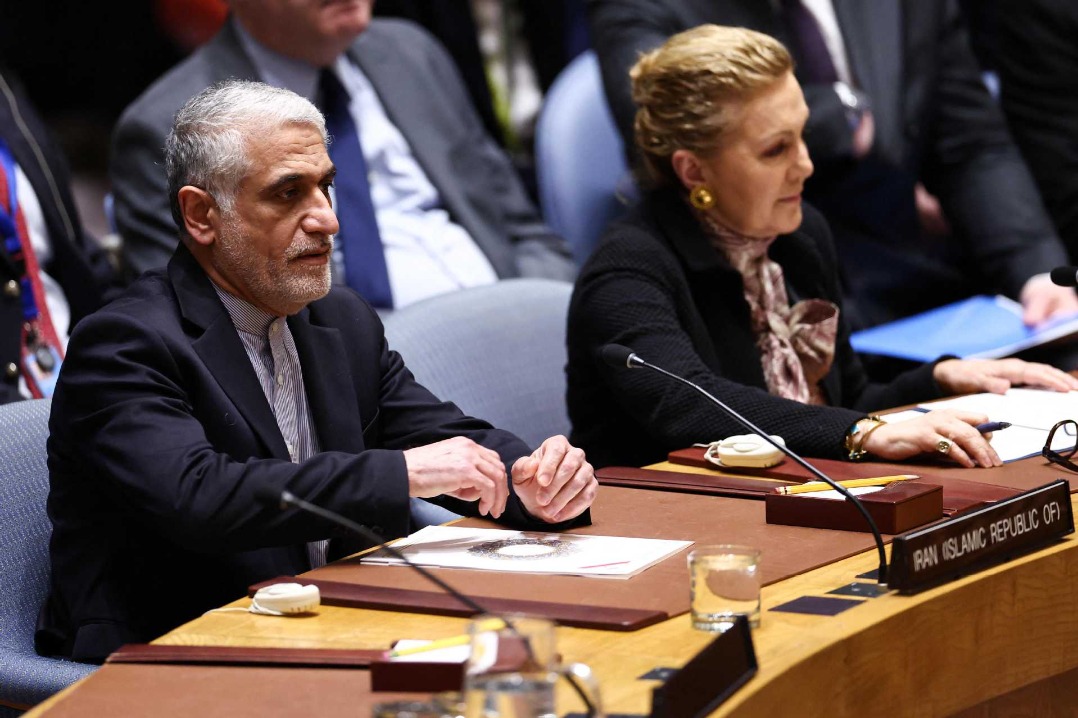
    TEHRAN – Iranian Foreign Minister Seyed Abbas Araghchi declared on Sunday that the continuation of indirect nuclear negotiations with the United States hinges entirely on Washington demonstrating ‘necessary seriousness’ toward reaching a diplomatic resolution. The statement came during a press briefing in Tehran where Araghchi elaborated on Friday’s talks mediated by Oman in Muscat.

    Araghchi presented a contradictory assessment of American intentions, noting that while some signals suggest genuine diplomatic willingness, other actions—including ongoing sanctions enforcement and concerning military movements in West Asia—cast doubt on U.S. commitment. The Foreign Minister emphasized that the negotiation format itself doesn’t prevent agreement, but substantive issues regarding ‘excessive and unrealistic demands’ from Washington pose significant obstacles.

    The Iranian diplomat firmly stated that Tehran would never relinquish its right to peaceful nuclear development, including uranium enrichment capabilities, and clarified that Iran’s missile program remains strictly off the negotiation table. Simultaneously, Chief of Staff of the Iranian Armed Forces Abdolrahim Mousavi indicated that while Iran seeks to avoid regional conflict, the nation remains fully prepared for such military escalation.

    The recently resumed diplomatic engagement occurs against a backdrop of heightened regional tensions and substantial U.S. military deployment in the area, marking the first significant dialogue since the collapse of the 2015 nuclear agreement.

  • Romania’s president says invited to attend Trump’s ‘Board of Peace’ meeting on Feb 19

    Romania’s president says invited to attend Trump’s ‘Board of Peace’ meeting on Feb 19

    Romanian President Nicusor Dan confirmed via his official Facebook page on Sunday that the nation has received a formal invitation to participate in the inaugural assembly of former U.S. President Donald Trump’s proposed ‘Board of Peace.’ The high-profile diplomatic gathering is scheduled to take place in Washington on February 19th.

    President Dan emphasized that Romania has not yet finalized its decision regarding attendance. The Eastern European nation’s participation hinges on ongoing diplomatic consultations with American counterparts concerning the meeting’s structure and operational framework.

    Critical to Romania’s potential involvement is the condition that the Board’s foundational charter undergoes substantial revisions. As a non-member state seeking possible future membership, Bucharest seeks clarity on procedural mechanisms and substantive commitments before committing to participate.

    This development occurs amidst broader international scrutiny of Trump’s geopolitical initiative, which has generated mixed reactions from global powers. Several nations have already declared their positions regarding participation, creating a complex diplomatic landscape for middle powers like Romania to navigate.

    The invitation places Romania at a strategic crossroads, balancing its traditional Atlanticist orientation with cautious pragmatism toward unconventional diplomatic platforms. The decision will likely reflect broader calculations about multilateral engagement formats and evolving transatlantic relations.

  • Hamas leader Khaled Meshaal rejects foreign rule in Gaza

    Hamas leader Khaled Meshaal rejects foreign rule in Gaza

    In a definitive address at a conference in Doha, Qatar, Hamas political leader Khaled Meshaal articulated the Palestinian movement’s firm rejection of any foreign control over Gaza and its refusal to surrender its weapons. This stance directly challenges calls for disarmament from both Israel and the United States.

    Meshaal defended the right to armed resistance as long as Israeli occupation persists, stating, ‘Criminalising the resistance, its weapons and those who have led it is something we should not accept… Resistance is the right of people under occupation. It is something nations are proud of.’

    This declaration comes as the second phase of a U.S.-brokered ceasefire initiative, initiated in mid-January following a nominal truce on October 10, envisions Hamas’s disarmament and a gradual Israeli military withdrawal from the enclave.

    Parallel to these political developments, Israeli officials are reportedly exploring economic opportunities arising from Gaza’s reconstruction. According to Haaretz, senior Israeli finance ministry and military officials discussed potential projects, including the construction of a highway in Israel connecting to Gaza. The proposal suggests that countries seeking access to Gaza via Israel would fund such infrastructure development, including a southern route that would improve travel between Gaza and the West Bank. Additionally, Israeli officials examined economic prospects in supplying electricity to Gaza.

    While Hamas has governed Gaza since 2007 and remains opposed to disarmament, the movement has indicated potential flexibility regarding transferring weapons to a future Palestinian-led authority. The U.S. plan proposes temporary governance by a committee of 15 Palestinian technocrats under the authority of a ‘Peace Council’ chaired by former President Donald Trump.

    Meshaal emphasized that any peace council must adopt a ‘balanced approach’ facilitating Gaza’s reconstruction and humanitarian aid delivery, while firmly asserting Palestinian autonomy: ‘We adhere to our national principles and reject the logic of guardianship, any foreign intervention, or the return of a mandate in any form… Palestinians must be governed by Palestinians. Gaza belongs to the people of Gaza and to Palestine. We will not accept foreign domination.’

  • Bangladesh seeks UN help to probe killing of uprising leader

    Bangladesh seeks UN help to probe killing of uprising leader

    The interim government of Bangladesh has formally requested United Nations support for an independent investigation into the assassination of Sharif Osman Hadi, a prominent figure in the nation’s 2024 youth-led uprising. In an official diplomatic communiqué dispatched to Geneva, Bangladeshi authorities have appealed to the Office of the UN High Commissioner for Human Rights (OHCHR) to provide technical and institutional assistance for what they describe as a “fair, impartial and expeditious” probe.

    Hadi, aged 32, was fatally shot by masked assailants in Dhaka last December and subsequently succumbed to his injuries at a medical facility in Singapore. His untimely death ignited widespread violent demonstrations across the country, reflecting deep-seated political tensions.

    The slain leader had been preparing to contest upcoming parliamentary elections as an independent candidate. These polls represent a crucial milestone in establishing Bangladesh’s first democratically elected administration since the ousting of former Prime Minister Sheikh Hasina.

    The current caretaker government, under the leadership of Nobel Peace Prize laureate Muhammad Yunus, has reaffirmed its dedication to maintaining “the highest standards of transparency and accountability” throughout the investigation process. Authorities have pledged to identify and prosecute all individuals responsible for the political killing.

    Hadi had gained recognition as a vocal critic of India, where the deposed Prime Minister Hasina has sought refuge since fleeing Dhaka during the July 2024 uprising that ended her administration. His supporters have memorialized him as both a martyr and symbolic figurehead for the anti-establishment youth movement that continues to transform Bangladesh’s volatile political landscape.

  • Thailand awaits poll results amid prolonged political instability

    Thailand awaits poll results amid prolonged political instability

    Thailand concluded a critical general election on Sunday, February 8, 2026, with millions of citizens participating in a nationwide vote that will shape the country’s political trajectory after prolonged instability. The electoral process unfolded smoothly despite challenging conditions, including flooding in some areas of Bangkok where officials diligently counted ballots under temporary shelters.

    This electoral contest featured an expansive field of 57 political parties vying for parliamentary influence, with 43 parties putting forward 93 candidates for the prime ministerial position. The political landscape has evolved into a three-way competition between incumbent Prime Minister Anutin Charnvirakul’s Bhumjaithai Party, the progressive People’s Party led by 38-year-old Natthaphong Ruengpanyawut, and the Shinawatra family-backed Pheu Thai Party.

    The electoral mechanism employed a mixed system where voters cast separate ballots for constituency representatives and party-list members of parliament. The resulting 500-member parliament will exclusively determine Thailand’s next prime minister in April, requiring candidates to secure at least 251 votes without Senate participation following the expiration of transitional constitutional provisions.

    Significant security measures accompanied the election, with over 126,000 police officers deployed to safeguard 99,538 polling stations nationwide. Bangkok, as the most valuable electoral battleground with 33 parliamentary seats representing approximately 5.4 million residents, received particular attention with 97,000 officials ensuring orderly operations across more than 6,530 polling stations.

    Policy distinctions between major parties have become increasingly nuanced. The People’s Party has attracted younger voters with progressive economic proposals including small business loans, a national single-wage formula, and co-payment support programs. Meanwhile, Bhumjaithai has emphasized economic recovery, disaster response, and infrastructure development, including border wall construction amid tensions with Cambodia. Pheu Thai continues to focus on economic revitalization through startup promotion, agricultural profitability, and innovative lottery programs.

    Economic analysts express concern about Thailand’s declining attractiveness to international investors, with Kasikorn Bank’s chief economist Burin Adulwattana noting the country risks becoming ‘the forgotten man of Asia’ without immediate policy corrections. The incoming administration faces urgent pressure to implement responsible economic policies and fulfill campaign promises to avoid financial downgrades and maintain governmental stability.

    International relations experts note concerning trends in foreign policy positioning. Thammasat University lecturer Pongkwan Sawasdipakdi observed that major parties have adopted increasingly conservative and nationalist stances regarding border issues with Cambodia, potentially creating long-term obstacles for regional cooperation and ASEAN integration.

    The Election Commission must certify at least 95 percent of parliamentary seats by April 9, with parliament convening within 15 days thereafter to select leadership and determine the premiership. If coalition negotiations proceed efficiently, Thailand could establish a fully functional government by late May or June, concluding this significant democratic exercise that includes an additional constitutional referendum ballot regarding potential charter reforms.

  • Japan’s ruling coalition to secure lower house majority in election

    Japan’s ruling coalition to secure lower house majority in election

    Prime Minister Sanae Takaichi’s ruling coalition appears positioned to maintain its parliamentary control as exit polls project a majority victory in Japan’s snap lower house election. According to NHK’s 8 PM exit poll released Sunday, Takaichi’s Liberal Democratic Party (LDP) alone is forecast to capture between 274 and 328 seats in the 465-member House of Representatives.

    The nationwide voting commenced at 7 AM and concluded at 8 PM local time, with final results anticipated in the early hours of Monday. Over 1,200 candidates competed for parliamentary representation, with 289 seats determined through single-member districts and 176 allocated via proportional representation across 11 regional blocs.

    This unusual February election—occurring during peak snowfall season and coinciding with school entrance examinations—followed Takaichi’s controversial dissolution of parliament just 15 months after the previous election. The 16-day campaign period marked the shortest in Japan’s post-war history, drawing criticism for potentially delaying passage of the fiscal 2026 budget originally scheduled for March approval.

    While a simple majority requires 233 seats, the ruling coalition’s potential performance carries significant implications. With 243 seats, the bloc would control all standing committee chairs; 261 seats would deliver an “absolute stable majority” ensuring committee control; and 310 seats would provide veto-override capability against the upper house where the coalition lacks majority control.

    Despite the projected lower house victory, the ruling coalition’s minority status in the upper chamber remains unchanged, necessitating continued opposition support for legislation. The LDP had suffered defeats in both the 2024 lower house and July 2025 upper house elections, rendering Takaichi’s cabinet a minority government since its formation last October.

    The election also marked the debut of the newly formed Centrist Reform Alliance, an opposition bloc created by the Constitutional Democratic Party and former LDP coalition partner Komeito. NHK’s exit poll projected the alliance would secure between 37 and 91 seats, a substantial decline from their pre-election total of 167 seats.

  • What to know about the Israeli president’s state visit to Australia

    What to know about the Israeli president’s state visit to Australia

    MELBOURNE, Australia — Israeli President Isaac Herzog’s four-day state visit to Australia, commencing Monday, has become a focal point of international diplomatic strain and domestic controversy. While officially intended to console the Jewish community following December’s deadly Bondi Beach attack that claimed 15 lives, the visit has ignited fierce criticism from human rights advocates and pro-Palestinian groups.

    The diplomatic backdrop reveals severely frayed relations between the two traditional allies. Tensions escalated when Israeli Prime Minister Benjamin Netanyahu publicly condemned Australian Prime Minister Anthony Albanese’s support for Palestinian statehood, accusing him of fueling antisemitism. Albanese subsequently characterized Netanyahu as being ‘in denial’ regarding Gaza’s humanitarian crisis, while Netanyahu dismissed the Australian leader as having ‘betrayed Israel.’

    Australian Jewish leaders, including Executive Council of Australian Jewry co-CEO Alex Ryvchin, have welcomed Herzog’s visit as an opportunity to ‘recalibrate bilateral relations’ and comfort a grieving community. Ryvchin described Herzog as ‘a patriot and person of dignity’ whose presence would ‘fortify our community in its darkest time.’

    However, significant opposition has emerged from human rights organizations. UN-appointed expert Chris Sidoti labeled Herzog ‘one of the most divisive figures in the world’ and criticized the invitation as a ‘crazy idea’ that would undermine social cohesion. Sidoti referenced a UN report alleging Herzog, along with Netanyahu and former Defense Minister Yoav Gallant, had incited genocide in Gaza—claims Israel dismisses as antisemitic ‘blood libel.’

    Security preparations have intensified in Sydney, where New South Wales Premier Chris Minns authorized enhanced police powers to manage expected protests. The Palestine Action Group has organized demonstrations, with some Labor Party lawmakers pledging to participate. Protest organizer Josh Lees stated their intention to oppose ‘this tour, which is designed to normalize genocide.’

    Herzog, speaking ahead of his visit, emphasized his dual mission: to support Australian Jews and ‘reinvigorate relations’ between the nations. He expressed hope to ‘dispel many of the lies and misinformation spread about Israel’ during his engagements in Sydney, Melbourne, and Canberra.

  • Japan’s ruling coalition to secure majority in lower house: NHK exit poll

    Japan’s ruling coalition to secure majority in lower house: NHK exit poll

    TOKYO – Japan’s ruling coalition appears poised to maintain its parliamentary dominance following Sunday’s general election, with exit polling data indicating a strong majority victory. According to NHK public broadcasting network, the coalition comprising the Liberal Democratic Party (LDP) and its junior partner, the Japan Innovation Party, is projected to secure between 302 and 366 seats in the 465-seat House of Representatives.

    The results comfortably exceed the 233-seat threshold required for an outright majority, ensuring the continuation of the current government’s legislative agenda. Notably, the LDP alone is forecasted to achieve a single-party majority in the lower chamber, reinforcing its position as Japan’s dominant political force.

    NHK’s comprehensive exit poll methodology involved data collection at approximately 4,000 polling stations across the nation. The broadcaster gathered responses from roughly 340,000 voters out of 571,000 individuals surveyed, achieving a substantial 59.7 percent response rate. This extensive sampling provides significant statistical reliability to the projected outcomes.

    The anticipated victory suggests public endorsement of the ruling coalition’s policies and indicates political stability for Japan’s governance framework in the coming legislative term. The final official results will confirm the exact distribution of parliamentary seats and the consequent governing dynamics.