分类: politics

  • Iran says missile programme ‘never negotiable’ in talks with US

    Iran says missile programme ‘never negotiable’ in talks with US

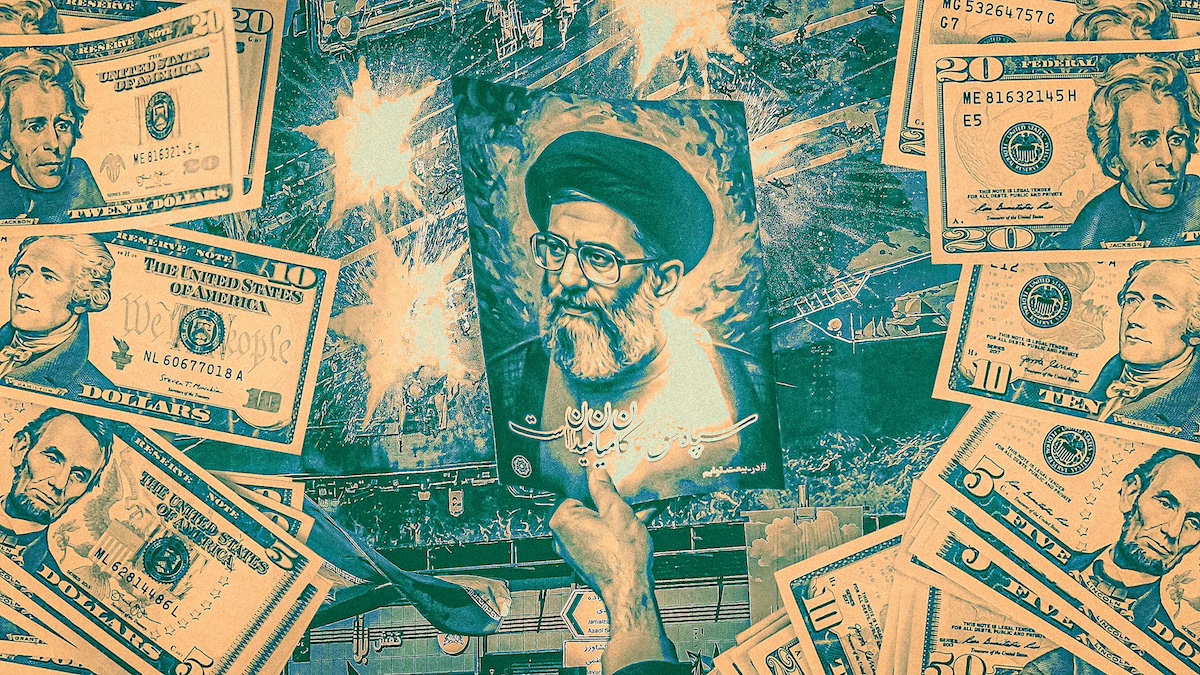
    Iran’s Foreign Minister Abbas Araghchi delivered a definitive statement regarding his country’s missile capabilities during ongoing diplomatic engagements with the United States, asserting that the Islamic Republic’s missile program remains “never negotiable” in any discussion framework. The declaration came through an interview with Al Jazeera on Saturday as indirect negotiations between Iranian and American delegations continued in Muscat, Oman.

    The discussions, mediated by Omani Foreign Minister Badr bin Hamad Al Busaidi, brought together US envoys Steve Witkoff and Jared Kushner with Iranian representatives led by Araghchi. Despite previous US demands for comprehensive talks encompassing both nuclear and ballistic missile programs, reports from Israeli newspaper Haaretz indicate Washington has acquiesced to Tehran’s conditions limiting discussions exclusively to nuclear matters. This apparent concession reportedly followed diplomatic interventions from regional powers including Qatar, Saudi Arabia, and Oman.

    While Omani officials characterized the dialogue as “useful to clarify both Iranian and American thinking,” tensions between the nations remain elevated. Shortly after the talks concluded, the United States implemented new sanctions targeting Iran’s oil export capabilities, designating 14 vessels flagged in Turkey, India, and the United Arab Emirates alongside sanctions against 15 entities and two individuals.

    The military posture in the region reflects ongoing volatility, with US aircraft carriers maintaining positions near Iranian coastal waters. The USS Abraham Lincoln was documented conducting replenishment operations in the Arabian Sea as Iran’s army spokesperson Brigadier-General Mohammad Akraminia warned of readiness for potential conflict that would “encompass the entire region and all US bases” if provoked.

    Diplomatic warnings have intensified concurrently, with the virtual US embassy in Iran issuing alerts urging American citizens to “leave Iran now” while Israeli Prime Minister Benjamin Netanyahu reportedly suggested conditions were building toward “the downfall of the Iranian regime.” Iranian officials have countered that they remain prepared for regional conflict should their negotiation framework conditions be rejected.

  • ‘Doctrine of domination’: Iran’s FM criticises Israel after nuclear talks with US

    ‘Doctrine of domination’: Iran’s FM criticises Israel after nuclear talks with US

    Iranian Foreign Minister Abbas Araghchi launched a sharp critique against Israel during his address at the Al Jazeera Forum in Qatar on Saturday, condemning what he characterized as a “doctrine of domination” in regional security affairs. Speaking just one day after nuclear discussions with American officials, Araghchi asserted that this doctrine enables unchecked Israeli military expansion while demanding neighboring nations disarm.

    The senior diplomat articulated that Israel’s strategic objectives necessitate the systematic weakening of adjacent countries across multiple domains—military, technological, economic, and social. “Under this project Israel is free to expand its military arsenal without limits… Yet other countries are demanded to disarm. Others are pressured to reduce defensive capacity. Others are punished for scientific progress,” Araghchi stated before the international audience.

    Notably absent from his remarks was any direct reference to Friday’s negotiations in Muscat, where Araghchi led Iran’s delegation in indirect talks with US Middle East envoy Steve Witkoff. Both sides subsequently characterized the discussions positively, with US President Donald Trump describing them as “very good” and confirming mutual agreement to continue diplomatic engagement.

    These talks occurred against a complex backdrop of regional tensions. Last June witnessed the collapse of previous negotiations when Israel initiated an unprecedented bombing campaign against Iranian targets, triggering a twelve-day conflict that included Israeli strikes on military officials, nuclear scientists, and civilian areas. Iran responded with drone and missile attacks against Israeli positions and the largest US military installation in the Middle East, located in Qatar.

    The renewed diplomatic engagement follows recent Washington threats and aircraft carrier deployments to the region after Iran’s suppression of anti-government protests last month. The United States continues advocating for expanded negotiations addressing Iran’s ballistic missile program and support for regional militant groups—issues Israel strongly supports including in discussions. Tehran maintains its consistent position rejecting any expansion beyond nuclear matters.

  • Man charged with threatening to kill US vice president

    Man charged with threatening to kill US vice president

    Federal authorities have charged Shannon Mathre, a 33-year-old Toledo resident, with issuing death threats against U.S. Vice President JD Vance during his January visit to Ohio. The Justice Department unsealed court documents Friday revealing Mathre specifically threatened to “use my M14 automatic gun and kill him” while referencing his intention to locate the Vice President’s whereabouts.

    Mathre’s arrest by U.S. Secret Service agents precedes a detention hearing scheduled for February 11 in the Northern District of Ohio. During the threat investigation, authorities discovered additional serious allegations against Mathre, including possession of multiple digital files containing child sexual abuse materials.

    This security incident represents the second known threat against Vice President Vance within weeks. In early January, another individual attempted to breach the Vice President’s Ohio residence by hammering windows while the family was absent. That 26-year-old suspect remains in custody according to media reports.

    The case highlights ongoing security challenges facing high-ranking government officials and demonstrates the coordinated response capabilities of federal protective services. Mathre made his initial appearance before a federal magistrate Friday, with prosecutors seeking continued detention pending trial.

  • General shot in Moscow conscious after surgery, Russian media say

    General shot in Moscow conscious after surgery, Russian media say

    A senior Russian military intelligence official, Lieutenant General Vladimir Alexeyev, has regained consciousness following a targeted shooting in his Moscow apartment building on Friday. The deputy head of Russia’s GRU intelligence service sustained three bullet wounds during the ambush on his residential building’s landing in the capital’s north-western outskirts.

    Medical authorities confirmed on Saturday that Alexeyev successfully underwent surgery and has emerged from a medically induced coma. While his condition remains serious, doctors now cautiously indicate that the immediate threat to his life has subsided.

    Russian law enforcement has reportedly apprehended two suspects connected to the attack. A court hearing is scheduled for Sunday to determine their pretrial detention arrangements as investigators pursue an attempted murder case.

    The incident has triggered immediate diplomatic repercussions, with Russian Foreign Minister Sergei Lavrov directly accusing Ukraine of orchestrating the attack to disrupt ongoing peace negotiations. This allegation was promptly rejected by Ukrainian Foreign Minister Andriy Sybiha, who denied any Kyiv involvement to Reuters.

    At 64 years old, Alexeyev represents one of Russia’s most decorated military officers, having received the Hero of Russia honor for his role in Syria and serving as a key operative in Ukraine operations. His career includes controversial assignments, notably negotiations during the Wagner Group mutiny and facing Western sanctions following the Salisbury nerve agent incident.

    The shooting occurs against a backdrop of intensified diplomatic activity, with Ukrainian President Volodymyr Zelensky revealing on Saturday that the United States has proposed hosting unprecedented Moscow-Kyiv negotiations on American soil, potentially in Miami. Zelensky further indicated Washington’s apparent ambition to conclude the conflict by June, though neither capital has officially confirmed these developments.

    This attack continues a pattern of targeting high-ranking Russian military officials since the February 2022 invasion, following previous assassinations of generals Igor Kirillov and Fanil Sarvarov in similar Moscow operations.

  • Pentagon ends academic ties with Harvard over its ‘woke ideology’

    Pentagon ends academic ties with Harvard over its ‘woke ideology’

    The United States Department of Defense has announced it will terminate all graduate-level military training programs, fellowships, and certificate collaborations with Harvard University. Defense Secretary Pete Hegseth declared the move in a video statement posted on social media platform X, characterizing the prestigious Ivy League institution as a hub of ‘hate-America activism’ and a ‘factory for woke ideology’.

    Hegseth asserted that Harvard’s academic environment has become fundamentally incompatible with the Pentagon’s core objectives of military lethality and strategic deterrence. The decision, which will take effect in the fall semester, allows currently enrolled military personnel to complete their studies without disruption.

    The Secretary detailed multiple grievances against the university, including allegations that Harvard has cultivated a ‘breeding ground for anti-American radicals’ and fostered a campus climate that ‘celebrated Hamas’ while permitting ‘attacks on Jews.’ Hegseth specifically referenced the university’s handling of pro-Palestinian demonstrations following the October 2023 attack on Israel.

    A significant portion of the criticism focused on Harvard’s international connections. Hegseth revealed that the Pentagon’s decision was partially motivated by Harvard’s research partnerships with Chinese entities, noting that the university had received approximately $560 million in gifts and contracts from Chinese foundations, private donors, and government organizations between 2010 and 2025.

    This move represents the latest escalation in the Trump administration’s ongoing campaign against elite educational institutions perceived as promoting progressive ideologies. The administration has previously threatened to withhold federal funding, challenge tax-exempt status, and restrict international student enrollment at Harvard, though several such measures have been blocked by judicial intervention.

    Hegseth, himself a 2013 graduate of Harvard’s Kennedy School of Government, returned his diploma in 2022 to protest the university’s courses on critical race theory. He indicated that the Pentagon might consider similar actions against other top-tier academic institutions, though Harvard remains the primary focus of current measures.

  • ‘I didn’t make a mistake’: Trump won’t apologize for video showing Obamas as apes

    ‘I didn’t make a mistake’: Trump won’t apologize for video showing Obamas as apes

    President Donald Trump has refused to apologize for a racially charged video shared on his Truth Social account that digitally altered former President Barack Obama and First Lady Michelle Obama to appear as dancing primates. The controversial footage, which circulated for approximately 12 hours before being removed, triggered widespread condemnation from both Democratic and Republican officials.

    The White House initially defended the content as an innocuous ‘internet meme’ before reversing position and attributing its publication to staff error. Trump acknowledged awareness of the video’s initial segment concerning alleged voter fraud but claimed unfamiliarity with the offensive conclusion. ‘I didn’t make a mistake,’ the president asserted when pressed by journalists, while simultaneously offering conditional condemnation of the imagery.

    This incident represents the latest in a series of racially provocative actions from the Trump administration. The president has previously promoted the ‘birther’ conspiracy theory questioning Obama’s citizenship and used derogatory language describing developing nations and their populations. Republican Senator Tim Scott, a prominent Black ally, characterized the video as ‘the most racist thing I’ve seen out of this White House’ in a social media statement.

    Civil rights organizations including the NAACP denounced the footage as ‘blatantly racist, disgusting, and utterly despicable.’ Historical context notes that depicting people of African ancestry as primates has been a recurring tactic in white supremacist propaganda designed to dehumanize Black communities.

    The controversy has raised questions about social media protocols within the administration, particularly regarding which staff members maintain access to the president’s official accounts. White House officials declined to identify the individual responsible for posting the video, though an adviser confirmed Trump had not previewed the content before publication.

  • Pentagon to cut academic ties with Harvard, statement says

    Pentagon to cut academic ties with Harvard, statement says

    The U.S. Department of Defense announced on Friday its decision to terminate all academic partnerships with Harvard University, marking a significant escalation in the Trump administration’s ongoing ideological conflict with elite academic institutions. The complete severance will affect military education programs, fellowships, and certificate courses currently offered through the Ivy League university.

    Defense Secretary Pete Hegseth articulated the administration’s position in an official statement, asserting that Harvard had failed to appreciate military values while promoting what he characterized as ‘globalist and radical ideologies.’ The Pentagon’s disengagement will commence in the 2026-2027 academic year, though currently enrolled military personnel will be permitted to complete their studies.

    The decision represents the latest development in a broader campaign against perceived ideological bias in higher education. Secretary Hegseth indicated that the Pentagon would extend its review to all Ivy League institutions, evaluating whether they provide cost-effective strategic education compared to public universities and military graduate programs.

    The administration’s confrontational stance toward Harvard includes legal and financial dimensions. President Trump recently announced his administration would seek $1 billion in damages from the university, citing alleged failures to protect Jewish students during pro-Palestinian protests. This follows previous efforts to cut substantial federal funding to the institution and restrict international student admissions.

    Critics, including former Harvard president Lawrence Bacow, have raised concerns about potential erosion of academic freedom. The administration’s actions have sparked debate about the appropriate relationship between government institutions and higher education regarding ideological diversity and institutional autonomy.

  • Iran says talks with US in Oman were ‘good start’, will continue

    Iran says talks with US in Oman were ‘good start’, will continue

    Initial diplomatic engagements between the United States and Iran, facilitated by Oman, have yielded cautious optimism despite fundamental disagreements on key issues. Iranian Foreign Minister Abbas Araqchi characterized the Muscat talks as a “good start” while emphasizing Tehran’s refusal to discuss its ballistic missile program or regional activities.

    The negotiations, which included U.S. Special Envoy Steve Witkoff and Presidential advisor Jared Kushner, occurred against a backdrop of heightened military posturing and economic pressure. Simultaneously with the talks, the Trump administration imposed new 25% tariffs targeting countries maintaining commercial ties with Iran, particularly in energy and petrochemical sectors that remain vital to Iran’s economy.

    According to diplomatic sources briefed on the discussions, Iran demonstrated flexibility regarding potential limitations on enrichment levels and purity while maintaining its insistence on recognition of uranium enrichment rights. Tehran’s demands reportedly included immediate sanctions relief and the relocation of U.S. military assets from the region.

    The fundamental impasse remains Washington’s requirement that Iran cease all enrichment activities on its soil—a position Tehran has consistently rejected while denying any nuclear weapons ambitions. Despite this divergence, both sides acknowledged the talks as serious and expressed willingness to continue discussions, with Omani Foreign Minister Badr al-Busaidi characterizing the dialogue as “very serious.

    Regional tensions continue to simmer with Iran displaying advanced ballistic missiles in underground facilities and warning neighboring states that host U.S. bases of potential retaliation. The diplomatic efforts occur alongside significant U.S. naval deployments to the region, creating a complex environment where dialogue and military preparedness proceed simultaneously.

  • Trump signs order threatening tariffs on nations doing business with Iran

    Trump signs order threatening tariffs on nations doing business with Iran

    In a significant escalation of economic pressure on Iran, U.S. President Donald Trump issued a sweeping executive order on Friday authorizing potential tariff penalties against nations maintaining commercial ties with the Islamic Republic. The directive establishes a framework for imposing substantial tariffs of up to 25 percent on countries that continue business relationships with Iran, representing the latest development in ongoing tensions between Washington and Tehran.

    The executive action emerges amid delicate diplomatic engagements between American and Iranian officials this week, highlighting the complex interplay between economic coercion and diplomatic channels. The order specifically targets international trade partners who defy U.S. sanctions regimes by continuing commercial relationships with Iran, potentially affecting numerous American allies and trading partners worldwide.

    This economic maneuver reinforces the administration’s maximum pressure campaign against Iran, which has remained a cornerstone of U.S. foreign policy in the Middle East. The tariff threat introduces a new dimension to international economic diplomacy, potentially compelling nations to choose between access to the American market and maintaining economic relationships with Iran.

    Analysts suggest this development may create significant complications for multilateral trade relationships, particularly with European and Asian partners who have sought to maintain economic ties with Iran while navigating U.S. sanctions architecture. The order represents one of the most aggressive unilateral economic measures taken against third countries in recent years, testing the boundaries of extraterritorial sanction enforcement.

    The timing of this executive action, coinciding with ongoing diplomatic contacts between the two nations, suggests a calculated strategy of combining economic pressure with negotiation tracks. Administration officials have characterized the approach as essential for bringing Iran back to comprehensive negotiations regarding its nuclear program and regional activities.

  • White House planning leaders meeting for Gaza ‘Board of Peace’ on Feb 19, Axios reports

    White House planning leaders meeting for Gaza ‘Board of Peace’ on Feb 19, Axios reports

    The White House is orchestrating a landmark diplomatic initiative with the inaugural leadership assembly for the Gaza ‘Board of Peace’ set to convene on February 19, according to an exclusive Axios report published Friday. This high-level gathering, which simultaneously will function as a fundraising conference aimed at mobilizing resources for Gaza’s reconstruction efforts, remains in its preliminary planning phase, with potential adjustments to the agenda and participant list still anticipated.

    The report indicates that while the foundational framework for the summit has been established, specific details regarding attendee confirmation and program specifics are subject to modification. The dual-purpose nature of the event underscores the administration’s integrated approach to addressing both immediate humanitarian needs and long-term stability planning for the conflict-affected territory.

    Neither the White House press office nor the U.S. State Department issued immediate official statements regarding the proposed summit when contacted for commentary late Friday. The reported timing follows recent diplomatic movements, including the appointment of UAE Minister Reem Al Hashimy to the Gaza Executive Board and previous invitations extended to Arab officials that drew objections from Israeli representatives regarding participant composition.

    The developing story represents a significant escalation in international engagement with the Gaza situation, potentially marking a turning point in coordinated reconstruction and peace-building efforts following prolonged regional tensions.