分类: politics

  • Kim expected to issue major policy goals at North Korea party congress in late February

    Kim expected to issue major policy goals at North Korea party congress in late February

    SEOUL, South Korea — North Korea has announced plans to convene a significant Workers’ Party congress in late February, where Supreme Leader Kim Jong Un is anticipated to unveil his strategic vision for both domestic governance and international relations over the coming five-year period. This pivotal political gathering, confirmed by the Korean Central News Agency following a Politburo meeting supervised by Kim himself, marks the third such congress under his leadership since 2016.

    The upcoming congress occurs against a backdrop of dramatically heightened geopolitical tensions, characterized by Pyongyang’s accelerated nuclear weapons development and increasingly assertive military partnerships with Moscow. Observers anticipate this meticulously orchestrated event will serve as a platform for Kim to reinforce his authoritarian leadership while announcing ambitious plans to simultaneously strengthen nuclear capabilities and pursue economic development through mass mobilization strategies.

    Recent weeks have seen Kim conducting high-profile inspections of weapons testing facilities and military installations, with state media consistently attributing national advancements to his ‘immortal leadership.’ Analysts interpret these activities as preparatory moves setting the stage for congress announcements that will likely include plans to upgrade conventional weapons systems and further integrate them with nuclear forces.

    Kim’s foreign policy approach has undergone significant transformation since the 2021 congress, with Pyongyang forging deeper alliances with Russia and China while adopting increasingly adversarial stances toward South Korea and the United States. The leader has effectively leveraged global conflicts, particularly Russia’s invasion of Ukraine, to advance weapons testing programs and secure strategic partnerships—including substantial arms exports to Moscow that have reportedly provided economic benefits.

    Despite these geopolitical maneuvers, Kim has maintained a firm rejection of diplomatic overtures from the United States, insisting that Washington abandon demands for nuclear disarmament as a precondition for talks. As Kim enters his 15th year in power, he appears positioned more strongly than during the pandemic-challenged 2021 congress, with indications of economic improvement through resumed trade with China and military exports to Russia.

  • Thailand votes in early election with 3 main parties vying for power

    Thailand votes in early election with 3 main parties vying for power

    BANGKOK — Thailand stands at a political crossroads as millions of voters participate in Sunday’s snap general election, confronting a complex electoral landscape shaped by competing ideologies and power dynamics. The electoral contest emerges as a triangular struggle between progressive reformism, establishment conservatism, and traditional patronage politics.

    The electoral battlefield presents three dominant forces with distinct visions: the reform-oriented People’s Party, the establishment-backed Bhumjaithai Party led by incumbent Prime Minister Anutin Charnvirakul, and the populist Pheu Thai Party representing the political machinery of exiled billionaire Thaksin Shinawatra. This political trifecta operates within a nation grappling with economic stagnation and rising nationalist sentiments.

    Electoral projections indicate no single party will secure an outright parliamentary majority, necessitating complex coalition negotiations. The progressive People’s Party, successor to the dissolved Move Forward Party that triumphed in the 2023 elections, faces significant governing obstacles despite potential plurality victory. Its reform agenda targeting military, police, and judicial institutions faces resistance from conservative power structures.

    Prime Minister Anutin’s Bhumjaithai Party has leveraged recent border tensions with Cambodia to bolster its national security credentials, rebranding its leadership image following earlier challenges from natural disasters and financial controversies. The party employs sophisticated grassroots mobilization techniques and traditional patronage networks, particularly in the vote-rich northeastern regions.

    Meanwhile, the Pheu Thai Party continues its political resilience campaign, utilizing populist economic policies and the enduring influence of the Shinawatra political dynasty. The party has moderated its stance to gain acceptability within Thailand’s conservative establishment, nominating Thaksin’s nephew as its premier candidate while emphasizing economic revitalization and direct cash distribution programs.

    Adding constitutional significance to the election, voters simultaneously consider a referendum authorizing parliamentary proceedings to replace the 2017 military-drafted charter. This constitutional question highlights the fundamental divide between pro-democracy advocates seeking reduced military influence and conservatives prioritizing political stability.

  • King Charles to host Nigeria’s first UK state visit in 37 years

    King Charles to host Nigeria’s first UK state visit in 37 years

    Buckingham Palace has confirmed a landmark diplomatic event: King Charles III and Queen Camilla will welcome Nigerian President Bola Tinubu and First Lady Oluremi Tinubu for an official state visit from March 18-19, 2025. This marks Nigeria’s first state visit to the United Kingdom since 1989, ending a 37-year hiatus in top-level ceremonial diplomacy between the Commonwealth nations.

    The upcoming visit represents a significant elevation in bilateral relations, utilizing the full spectacle of royal protocol to reinforce diplomatic ties. State visits serve as instruments of soft-power diplomacy, employing ceremonial grandeur to underscore the importance of international partnerships. While President Tinubu previously met the monarch at Buckingham Palace in September 2024 and during COP28 discussions in Dubai, this occasion will feature the complete ceremonial treatment reserved for the most valued allies.

    The context for this diplomatic milestone reveals substantially strengthened economic connections. Recent government statistics indicate UK-Nigeria trade exceeded £8 billion in the year ending October 2024, positioning Nigeria among Britain’s foremost economic partners in Africa. This commercial relationship received further institutional support through a new trade and investment partnership agreement signed in 2024, designed to expand business opportunities between the nations.

    Though the precise agenda remains undisclosed, traditional state visit elements typically include carriage processions, an elaborate state banquet, and parallel political discussions between government representatives. The event continues King Charles’s active diplomatic calendar, which featured three state visits in 2025 alone—hosting leaders from France, the United States, and Germany.

    The monarch maintains particularly strong connections with Nigeria, having visited four times as Prince of Wales in 1990, 1999, 2006, and 2018. His appreciation for Nigerian culture includes publicly expressed admiration for Pidgin English and Afrobeats music. These ties were further institutionalized in 2023 when The King’s Trust International launched operations in Nigeria, initiating programs to address youth unemployment in the nation.

  • Japan votes in snap election as PM Takaichi takes a gamble

    Japan votes in snap election as PM Takaichi takes a gamble

    Japanese Prime Minister Sanae Takaichi has called a snap parliamentary election, testing her conservative coalition’s momentum against a backdrop of economic concerns and diplomatic tensions. The Liberal Democratic Party (LDP)-Japanese Innovation Party alliance is projected to secure up to 300 of the 465 seats in the Lower House, marking a dramatic recovery after the LDP lost control of both parliamentary chambers last year.

    Takaichi’s personal popularity has emerged as a defining factor in the campaign. Despite her traditional views on gender and family, the 64-year-old leader has developed an unexpected cult following among young voters aged 18-30. Her social media presence has exploded with 2.6 million followers on X, while a campaign video featuring her garnered over 100 million views in under ten days.

    The phenomenon dubbed ‘sanakatsu’ (Sanae-mania) has transformed the prime minister into an unlikely fashion icon. Her signature black leather tote bag has sold out nationwide, and the pink pen she used during her first press conference has gone viral.

    Tokyo University sociologist Yuiko Fujita notes this represents a significant shift in Japanese politics, traditionally dominated by older men. ‘The fact that the prime minister is now a woman, someone with a different background from what people are accustomed to, creates a feeling that something is shifting,’ she told Nikkei Asia.

    However, political science professor Koichi Nakano of Sophia University cautions that popularity may not directly translate into votes. ‘This is not a presidential election but a parliamentary election, in which the LDP’s candidates are mostly men tainted by past scandals,’ he told the BBC.

    The LDP faces significant challenges beyond candidate selection. The party remains embroiled in a fundraising scandal that forced four cabinet ministers to resign in 2023 and triggered corruption investigations. Economists question the sustainability of Takaichi’s tax cuts and subsidies, warning they may exacerbate Japan’s financial fragility without addressing underlying productivity and wage stagnation.

    In foreign policy, Takaichi has deepened tensions with China, Japan’s largest trading partner, by suggesting Tokyo could deploy self-defense forces if China attacks Taiwan. This has plunged bilateral relations to their lowest point in over a decade. Simultaneously, she has pursued closer ties with U.S. President Donald Trump, who recently endorsed her in a rare move for an American leader.

    The election occurs as the opposition consolidates, with the LDP’s former coalition partner Komeito joining forces with the Constitutional Democratic Party to form the largest opposition bloc. Early voting numbers show a 2.5% decline from the 2024 election, attributed partly to heavy snow in northern and western regions.

  • Bangladesh PM front-runner rejects unity government offer, says his party set to win

    Bangladesh PM front-runner rejects unity government offer, says his party set to win

    In a definitive political stance, Bangladesh Nationalist Party (BNP) leader Tarique Rahman has outright rejected proposals for a post-election unity government from rival Jamaat-e-Islami, expressing unwavering confidence in his party’s ability to secure victory independently in the upcoming February 12 parliamentary elections.

    The 60-year-old opposition leader, who recently returned from nearly two decades of exile in London following the youth-led uprising that ousted long-time leader Sheikh Hasina, made these declarations during an exclusive interview at his party headquarters. Rahman’s political heritage is deeply entrenched in Bangladeshi politics, being the son of the nation’s first female Prime Minister Khaleda Zia and former president Ziaur Rahman.

    The political landscape presents a complex dynamic with the resurgent Jamaat-e-Islami, previously banned but now emerging as the BNP’s primary competitor. This alliance includes a Gen Z party that gained prominence during the anti-Hasina protests that rocked the nation in 2024. Despite opinion polls forecasting a competitive race, Rahman’s aides project the BNP will secure more than two-thirds of the 300 parliamentary seats, with the party contesting 292 constituencies directly.

    Addressing international relations, Rahman outlined a pragmatic foreign policy approach, emphasizing that Bangladesh would maintain relationships based on economic benefits rather than political allegiances. This statement gains significance against the backdrop of strained relations with India, which granted shelter to the exiled Sheikh Hasina after a Dhaka court sentenced her to death for her role in the deadly crackdown on protests. The situation has created diplomatic opportunities for China to expand its influence in the region.

    Regarding the Rohingya refugee crisis, Rahman committed to maintaining Bangladesh’s humanitarian stance, affirming that the nearly 1.2 million refugees would be welcome until safe repatriation to Myanmar becomes feasible. This position acknowledges both the humanitarian imperative and the substantial economic challenges facing one of the world’s most densely populated nations.

    The election marks a critical juncture for Bangladesh’s democracy, representing the first electoral process since the collapse of Hasina’s government and the establishment of an interim administration in August 2024. The outcome will determine the political direction of a nation seeking stability after prolonged turmoil that significantly impacted its vital garment industry.

  • Japanese Prime Minister Sanae Takaichi hopes for big win as polls open in national elections

    Japanese Prime Minister Sanae Takaichi hopes for big win as polls open in national elections

    TOKYO — Japanese voters cast ballots Sunday in a snap parliamentary election that could determine the trajectory of Prime Minister Sanae Takaichi’s conservative agenda and potentially reshape Japan’s postwar identity. The nation’s first female leader, who assumed office in October, seeks to leverage her personal popularity to revitalize her struggling Liberal Democratic Party (LDP).

    Despite Takaichi’s high approval ratings, the LDP—which has dominated Japanese politics for nearly seventy years—faces significant public skepticism. Sunday’s unexpectedly called election represents her strategic attempt to reverse the party’s fortunes following disappointing 2024 results. Pre-election surveys indicated the LDP might achieve a landslide victory in the powerful 465-seat lower house, potentially securing a majority either independently or through its coalition with the Japan Innovation Party.

    The Prime Minister’s ambitious platform emphasizes strengthened military capabilities amid growing regional tensions with China, revised security policies permitting weapons exports, and increased defense spending—partly in response to pressure from U.S. President Donald Trump. Her administration also advocates stricter immigration controls, enhanced anti-espionage measures, and tighter regulations on foreign property ownership.

    Takaichi’s distinctive political style—described as both resolute and approachable—has resonated particularly with younger demographics. Her campaign mantra of ‘work, work, work’ emphasized economic priorities while avoiding more divisive issues. However, opposition remains fragmented despite the emergence of new centrist alliances and surging far-right movements like the anti-globalist Sanseito party.

    Election logistics faced potential disruption from record snowfall in northern Japan, where blocked roads and weather-related fatalities threatened to impact voter turnout and ballot counting. The Prime Minister has staked her political future on the outcome, explicitly pledging to resign if the LDP fails to secure a parliamentary majority.

  • Thousands of Iraqis volunteer to defend Iran against US attack

    Thousands of Iraqis volunteer to defend Iran against US attack

    In a significant demonstration of regional solidarity, nearly 5,000 Iraqi citizens from Diyala province have formally pledged to defend Iran against potential US military action. The volunteers declared their readiness to support both Iraqi security forces and Iran-backed armed groups without financial compensation, explicitly rejecting American intervention in the Islamic Republic.

    This mobilization occurs against a backdrop of intensifying US-Iran tensions, despite ongoing diplomatic discussions in Oman. The United States recently implemented stringent new sanctions targeting Iran’s oil export capabilities, including measures against 14 vessels flagged in Turkey, India, and the United Arab Emirates, alongside sanctions affecting 15 entities and two individuals.

    Military posturing continues simultaneously, with US aircraft carriers maintaining positions near Iran’s coastal waters. Central Command has released footage showing the USS Abraham Lincoln conducting replenishment operations in the Arabian Sea, underscoring the persistent military presence.

    Iran’s military leadership has responded with heightened readiness. Brigadier-General Mohammad Akraminia, the army spokesperson, stated that any conflict would ‘encompass the entire region and all US bases’ if Washington pursues military escalation. This warning echoes President Donald Trump’s earlier caution about ‘bad things’ happening should diplomatic efforts fail.

    The volunteer initiative was coordinated by the Iran-backed Badr Organization, though organizers emphasize the volunteers are not affiliated with specific armed factions. Ammar al-Tamimi, a Badr Organization leader, characterized the participants as ‘volunteers ready to serve as a reserve force for the security forces.’ The comprehensive list of 4,947 names will be formally submitted through Iraq’s military chain of command.

    This development reflects Iraq’s complex geopolitical position, maintaining strong ties with Iran since Saddam Hussein’s overthrow in 2003 while hosting thousands of US troops. Iran-aligned groups including Kataeb Hezbollah and Harakat al-Nujaba have established recruitment stations across Iraq, including Baghdad, preparing for potential conflict scenarios.

  • Iran FM says missile programme was ‘never negotiable’ as US talks to resume ‘soon’

    Iran FM says missile programme was ‘never negotiable’ as US talks to resume ‘soon’

    In a significant diplomatic development, Iranian Foreign Minister Abbas Araghchi has expressed optimism that negotiations with the United States will reconvene shortly, while simultaneously issuing stern warnings against potential American aggression. The comments followed unprecedented indirect talks between the two nations in Muscat, Oman—the first such engagement since the collapse of nuclear discussions last year.

    Araghchi, communicating through his official Telegram channel after an appearance on Al Jazeera, firmly declared Iran’s missile program as “never negotiable,” characterizing it as an essential matter of national defense. He emphasized that while Tehran is prepared to reach a “reassuring agreement” regarding nuclear enrichment—which it considers an “inalienable right”—the scope of negotiations must remain limited to nuclear matters, rejecting Washington’s efforts to include ballistic missiles and regional militant support in discussions.

    The Foreign Minister issued a clear warning that any U.S. attack on Iranian territory would prompt immediate retaliation against American bases throughout the region. This statement comes amid a substantial U.S. military buildup following Iran’s crackdown on domestic protests that began in late December over economic grievances.

    Despite these tensions, Araghchi described the Oman talks as “a good start” and acknowledged an unexpected opportunity to shake hands with the American delegation, though he noted that building trust would require time. The U.S. side, led by President Trump’s Middle East envoy Steve Witkoff and son-in-law Jared Kushner, reportedly engaged in what Iranian state media characterized as a “very positive atmosphere” with exchanged arguments and shared perspectives.

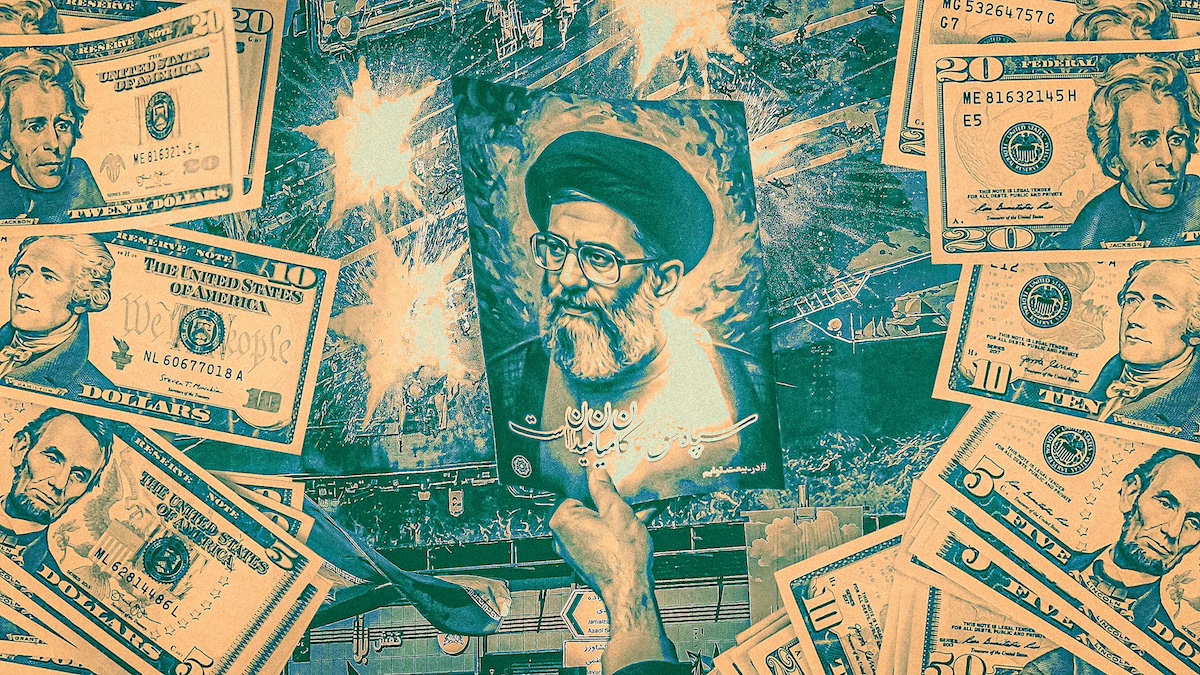
    Contradicting the diplomatic progress, President Trump signed an executive order imposing tariffs on countries maintaining business relationships with Iran, effective immediately after the talks. Simultaneously, the United States announced fresh sanctions targeting numerous shipping entities and vessels in continued efforts to curb Iranian oil exports—a significant economic pressure given that more than a quarter of Iran’s trade involves China, with $32.5 billion in total bilateral trade recorded in 2024.

    The talks occurred against the backdrop of substantial human cost from recent protests. Iranian authorities acknowledged 3,117 fatalities while publishing a list of 2,986 names, predominantly security forces and bystanders. However, U.S.-based Human Rights Activists News Agency (HRANA) reported verified deaths totaling 6,872, mainly protesters, with over 11,280 cases under investigation and more than 50,000 arrests documented.

  • PLA conducts routine patrols in South China Sea: spokesman

    PLA conducts routine patrols in South China Sea: spokesman

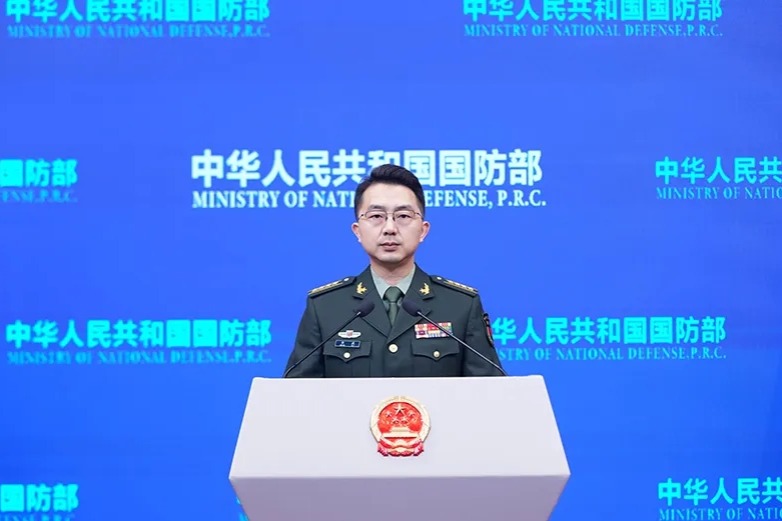
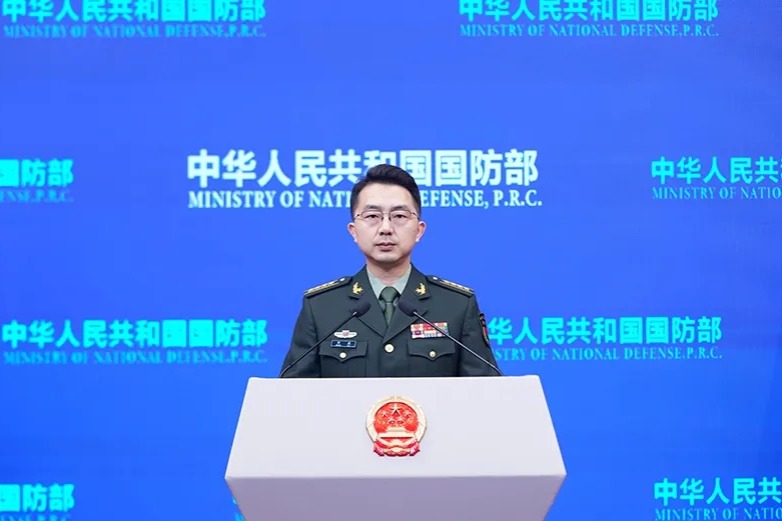
    The Southern Theater Command of China’s People’s Liberation Army (PLA) has completed a series of routine naval and air patrol operations in the South China Sea, conducted from Monday through Friday. The military activities were officially confirmed by theater command spokesman Zhai Shichen in a statement released on Saturday.

    According to the military spokesperson, these patrols represent standard operational procedures aimed at maintaining regional security. The announcement came alongside criticism of recent military cooperation between the Philippines and an unspecified external nation. Zhai characterized these joint aerial exercises as destabilizing to regional peace and security.

    ‘The Philippines has colluded with certain countries outside the region to conduct so-called bilateral air patrols,’ Zhai stated, suggesting such actions compromise the stability of the strategic waterway. The spokesman emphasized that Chinese military forces remain in a state of heightened readiness to protect what Beijing considers its sovereign territories and maritime interests.

    The statement reaffirmed China’s position on maintaining control over disputed waters while underscoring the PLA’s commitment to responding to perceived provocations. The patrols occurred amid ongoing tensions in one of the world’s most crucial shipping corridors, where multiple nations maintain competing territorial claims.

  • Annual session of Shanghai Municipal People’s Congress concludes

    Annual session of Shanghai Municipal People’s Congress concludes

    The Shanghai Municipal People’s Congress concluded its annual plenary session on Saturday after successfully completing all scheduled agendas. The legislative gathering saw deputies approve critical resolutions concerning the municipal government’s work report and the city’s 15th Five-Year Plan (2026-2030), marking a significant milestone in Shanghai’s development planning.

    During the closing ceremony, Shanghai Party Secretary Chen Jining commended deputies for their dedicated service, emphasizing how their collective wisdom and thorough deliberation on major development initiatives demonstrated the effectiveness of whole-process people’s democracy. Chen highlighted that the coming five years represent a pivotal transformation period for Shanghai to leverage its unique advantages and achieve comprehensive progress.

    The city leadership outlined Shanghai’s expected role as a pioneer in advancing Chinese-style modernization, with particular focus on enhancing its capabilities as an international hub for economy, finance, trade, shipping, and technological innovation. Central to this vision is the acceleration of new productive forces cultivation and expansion, alongside better implementation of national strategies that safeguard China’s interests and security.

    Shanghai is positioned to champion pioneering reforms, leading openness initiatives, and breakthrough innovations that will stimulate high-quality development momentum. This strategic direction aims to establish new mechanisms and pathways that could serve as a national model, reinforcing Shanghai’s status as a frontrunner in China’s modernization journey.