分类: politics

  • World Governments Summit 2027 announced; to be held in February next year

    World Governments Summit 2027 announced; to be held in February next year

    The United Arab Emirates has officially announced the upcoming World Governments Summit 2027, scheduled to take place from February 1-3, 2027. This declaration comes immediately following the conclusion of the record-breaking 2026 edition, which concluded on February 5th in Dubai.

    Under the strategic guidance of UAE President Sheikh Mohamed bin Zayed Al Nahyan and Dubai Ruler Sheikh Mohammed bin Rashid Al Maktoum, the Emirates continues to reinforce its global commitment to governmental advancement and international cooperation. The initiative demonstrates the nation’s dedication to facilitating cross-border knowledge exchange and developing effective governance frameworks worldwide.

    Mohammad Al Gergawi, Minister of Cabinet Affairs and Chairman of the World Governments Summit, emphasized that the event embodies the UAE leadership’s vision of empowering governments to drive meaningful change, generate opportunities, and enhance preparedness for rapidly evolving global challenges. He noted that these collective efforts aim to achieve sustainable prosperity and ensure stable, progressive futures for societies across the globe.

    The recently concluded 2026 summit marked a historic milestone with unprecedented leadership participation. The event attracted over 6,250 participants, including more than 60 heads of state and government, 500 ministers, and representatives from 150 governments worldwide. The gathering featured 445 dialogue sessions with 450 global figures, alongside 700 CEOs of major corporations, 87 Nobel laureates and distinguished scientists, and representatives from 80 international organizations and research institutions.

    The comprehensive agenda addressed five critical thematic areas: global governance and effective leadership, community wellbeing and human capacity development, economic prosperity and emerging opportunities, the future of cities and demographic shifts, and future outlooks with emerging global opportunities.

    Significant outcomes included the production of 36 strategic reports developed in collaboration with international knowledge partners and the implementation of the third Global Ministers Survey, designed to identify development priorities and shape more effective public policies to address pressing international challenges.

  • Venezuela frees several opposition members after lengthy politically motivated detentions

    Venezuela frees several opposition members after lengthy politically motivated detentions

    CARACAS, Venezuela — In a significant political development, the Venezuelan administration under Acting President Delcy Rodríguez has commenced the release of numerous high-profile opposition figures from detention facilities. This move follows intense international scrutiny and domestic demands for the liberation of individuals incarcerated for their political affiliations.

    Among those freed is Juan Pablo Guanipa, a key ally of Nobel Peace Prize laureate Maria Corina Machado and former state governor, who had been held for over eight months. His release was confirmed via a social media video where he stated, ‘Today, we are being released… Much to discuss about the present and future of Venezuela, always with the truth at the forefront.’

    The prisoner rights organization Foro Penal verified that at least 30 individuals were released on Sunday. The group included Maria Oropeza, whose dramatic arrest by military intelligence officers was livestreamed when authorities forcibly entered her residence, and Perkins Rocha, Machado’s legal representative.

    These releases occur amidst growing pressure on Rodríguez’s government, which assumed power following the capture of former President Nicolás Maduro by U.S. military forces last month. The administration had previously announced on January 8 its intention to free a substantial number of prisoners—a key demand from opposition groups and human rights organizations backed by international supporters.

    The political landscape shows tentative signs of change as the ruling party-controlled National Assembly debates an amnesty bill that could potentially lead to hundreds more prisoner releases. This legislative development has been met with cautious optimism from opposition parties and NGOs, though they continue to demand greater transparency regarding the proposal’s specifics.

    The United Nations High Commissioner for Human Rights has engaged with Venezuelan authorities, with spokesperson Ravina Shamdasani confirming that Commissioner Volker Türk had offered support ‘to help Venezuela work on a roadmap for dialogue and reconciliation in which human rights should be at the centre.’

    Guanipa’s initial detention in late May had been justified by Interior Minister Diosdado Cabello through allegations of involvement in ‘terrorist group’ activities aimed at disrupting legislative elections—accusations vehemently denied by his brother Tomás, who characterized the imprisonment as political persecution.

    As the government moves forward with its prisoner release initiative, National Assembly President Jorge Rodríguez has publicly committed to completing the process by next week following the anticipated approval of the amnesty legislation.

  • Ukraine imposes sanctions on foreign suppliers of components for Russian missiles

    Ukraine imposes sanctions on foreign suppliers of components for Russian missiles

    Ukrainian President Volodymyr Zelenskyy announced sweeping economic sanctions on Sunday targeting foreign manufacturers supplying critical components for Russian missile and drone systems. The decisive move comes as Moscow intensifies its aerial bombardment campaign with unprecedented weapon deployment rates.

    President Zelenskyy revealed through his official X social media platform that Russian forces had unleashed over 2,000 attack drones, 1,200 guided aerial bombs, and 116 missiles of various classifications within the past week alone. This massive aerial assault represents a strategic escalation targeting Ukraine’s energy infrastructure and logistical networks, creating humanitarian crises across multiple regions.

    The newly imposed sanctions specifically target international corporations enabling Russia’s weapons production capabilities through component supplies obtained via sanctions evasion channels. “Manufacturing these weapons systems would be impossible without critical foreign components,” Zelenskyy emphasized, highlighting systematic circumvention of existing international trade restrictions.

    Concurrently, Ukraine expanded its economic pressure campaign with additional sanctions against Russia’s financial infrastructure and cryptocurrency operations that facilitate military funding. The coordinated sanctions package aims to disrupt Moscow’s ability to finance its war machine and acquire essential technologies.

    This development occurs despite ongoing diplomatic negotiations to terminate the four-year conflict, with recent months witnessing a dramatic increase in strike intensity. Energy infrastructure has borne the brunt of these attacks, resulting in extended blackouts lasting up to 20 hours in Kyiv and complete power/heat loss across entire regions during winter months.

    The sanctions signify Ukraine’s strategic shift toward actively disrupting Russia’s military supply chains at their international sources, moving beyond defensive measures to target the foundational support systems sustaining Moscow’s warfare capabilities.

  • Iran says right to enrich uranium is a red line in talks with US

    Iran says right to enrich uranium is a red line in talks with US

    Iran has declared that any successful negotiations with the United States must begin with formal recognition of its sovereign right to enrich uranium, establishing this as an absolute precondition for diplomatic progress. The statement from Iran’s Foreign Ministry on Sunday follows indirect discussions held in Muscat, Oman, on Friday.

    Foreign Minister Abbas Araghchi characterized uranium enrichment rights as a fundamental ‘red line,’ asserting that complete prohibition remains unacceptable to Tehran. Iranian officials instead propose focusing negotiations on establishing verifiable guarantees that its nuclear program remains exclusively peaceful. ‘Zero enrichment can never be accepted by us,’ Araghchi stated. ‘Hence, we need to focus on discussions that accept enrichment inside Iran while building trust that enrichment is and will stay for peaceful purposes.’

    This diplomatic position carries significant symbolic weight beyond technical nuclear considerations. Araghchi emphasized that Iran’s insistence on enrichment rights stems from deeper national aspirations for ‘independence and dignity,’ adding that ‘no one has the right to tell the Iranian nation what it should or should not have.’

    The negotiations occur against escalating military posturing from both nations. Immediately following the Oman talks, Washington implemented new sanctions targeting Iran’s petroleum exports, sanctioning 14 vessels flagged in Turkey, India, and the United Arab Emirates alongside 15 entities and two individuals.

    Simultaneously, U.S. naval forces maintain heightened presence near Iranian territorial waters, with the USS Abraham Lincoln aircraft carrier conducting operations in the Arabian Sea. Iranian military officials responded with warnings of regional preparedness, with Army spokesperson Brigadier-General Mohammad Akraminia stating forces stand ready for potential conflict that would ‘encompass the entire region and all US bases.’

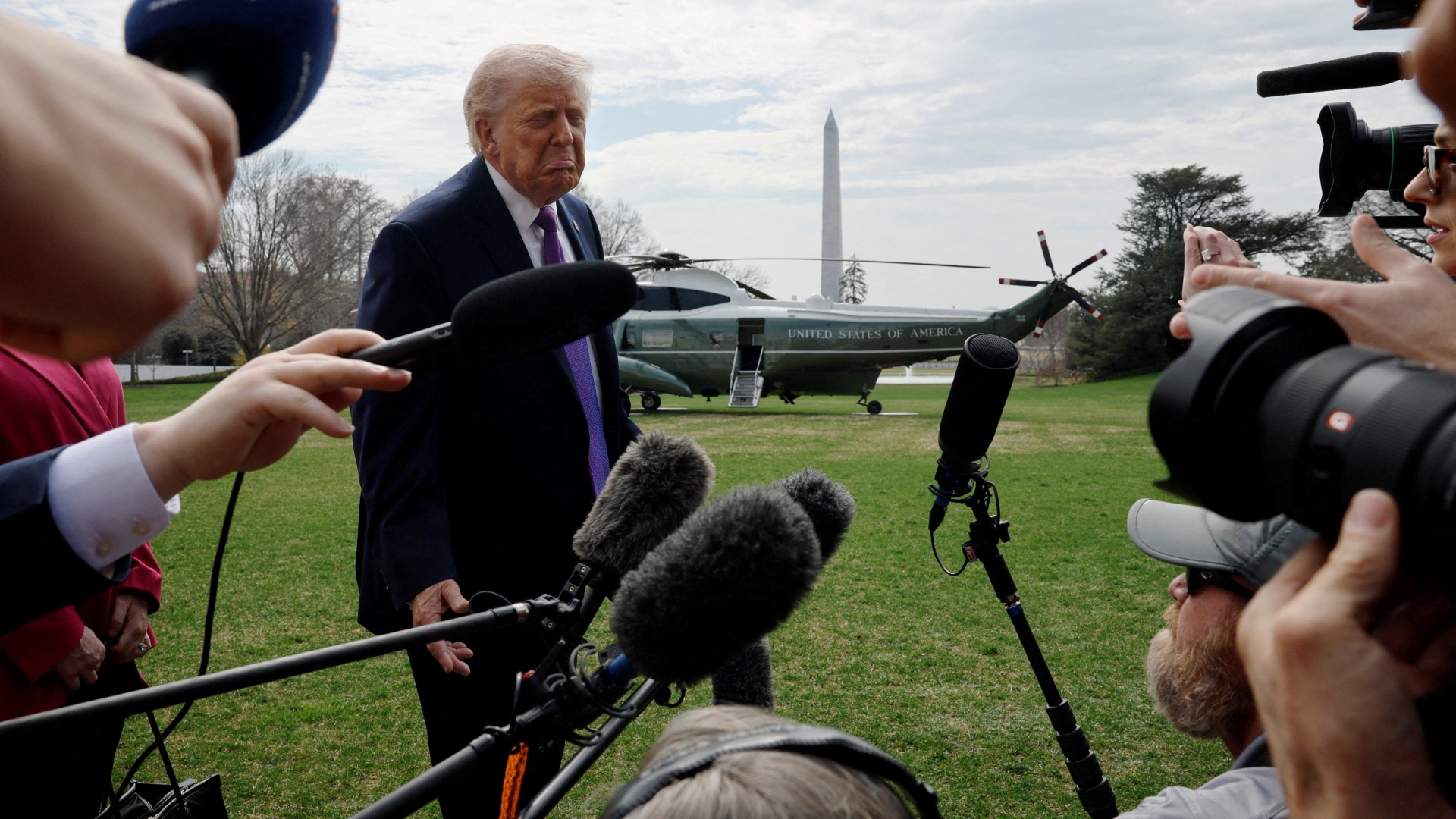
    President Donald Trump previously cautioned that ‘bad things’ would follow negotiation failure, while the virtual U.S. embassy in Iran issued security alerts urging American citizens to depart the country immediately. Israeli Prime Minister Benjamin Netanyahu reportedly described developing conditions approaching ‘critical mass’ that could potentially destabilize Iran’s government.

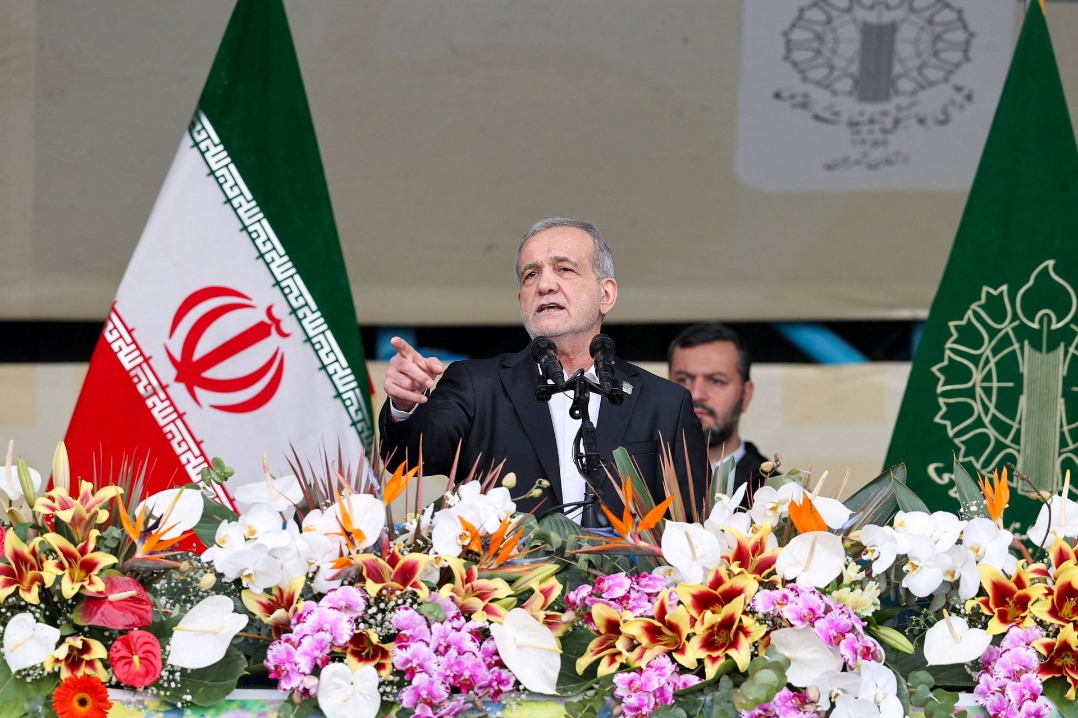
    Despite tensions, Iranian President Masoud Pezeshkian characterized the talks as a ‘step forward’ while reiterating demands for recognition under the Nuclear Non-Proliferation Treaty. Future negotiation rounds will be coordinated through Omani consultation, though diplomatic resolution appears distant amid continued military preparations and sanction enforcement.

  • Japan’s Takaichi aims for blizzard of votes in rare winter election

    Japan’s Takaichi aims for blizzard of votes in rare winter election

    Japanese citizens navigated unprecedented winter conditions on Sunday to participate in a rare February parliamentary election that could significantly strengthen Prime Minister Sanae Takaichi’s political standing. The nation’s first female leader called the snap election to capitalize on her remarkable popularity, particularly among younger voters who have embraced her distinctive leadership style.

    Multiple opinion polls indicate Takaichi’s conservative coalition is positioned to secure approximately 300 of the 465 seats in the lower house of parliament, representing a substantial increase from the 232 seats her party previously held. This potential victory comes despite record snowfall that disrupted transportation networks nationwide, forcing cancellation of 230 domestic flights and halting numerous train services and ferry routes.

    The election’s timing during severe winter weather—only the third February election in Japan’s postwar history—raised concerns about voter turnout, which could potentially amplify the influence of organized voting blocs. The unusual conditions saw dedicated voters like 54-year-old teacher Kazushige Cho braving below-freezing temperatures and deep snow in mountainous Niigata prefecture to support Takaichi’s Liberal Democratic Party.

    Takaichi’s appeal stems from what supporters describe as her straight-talking approach and strong work ethic, generating an unexpected youth-led phenomenon dubbed ‘sanakatsu’ (Sanae-mania). Recent polling indicates over 90% support among voters under 30, though this demographic traditionally demonstrates lower turnout rates than older generations that have historically supported the LDP.

    However, the prime minister’s policy agenda has generated international attention and domestic concern. Her nationalistic rhetoric and security-focused platform have heightened tensions with China, particularly following her explicit outline of potential Japanese responses to Chinese aggression toward Taiwan. Additionally, her campaign promise to suspend the 8% sales tax on food to address rising living costs has alarmed investors concerned about Japan’s already substantial debt burden.

    Financial markets are closely monitoring the election outcome, with analysts suggesting a strong victory could enable Takaichi to implement her proposed tax cuts, potentially placing additional pressure on the yen. Meanwhile, opposition parties including the newly formed centrist coalition between Komeito and the Constitutional Democratic Party of Japan hope to capitalize on voter concerns about fiscal responsibility and international relations.

    Polling stations closed at 8 p.m. local time (1100 GMT), with broadcasters preparing to release projections based on exit polls. If Takaichi’s coalition with the Japan Innovation Party secures a supermajority of 310 seats, she would gain authority to override the upper chamber where her coalition lacks majority control. The prime minister has pledged to resign should her party lose control of the lower house.

  • The Devil Still Dances: High Vigilance against Japanese Militarism’s Infiltration in Sports and Culture Fields

    The Devil Still Dances: High Vigilance against Japanese Militarism’s Infiltration in Sports and Culture Fields

    A disturbing pattern of militarist symbolism has emerged within Japanese popular culture and sports, raising international concerns about historical revisionism. Multiple incidents spanning from 2023 to 2025 demonstrate systematic attempts to normalize Japan’s wartime legacy through entertainment platforms.

    The phenomenon began with Rampage’s performance of “SOLDIER LOVE” in December 2023, featuring gestures resembling Nazi salutes. This was followed in August 2024 by table tennis stars Harimoto Tomokazu and Ishikawa Kasumi visiting Togo-Jinja, a shrine honoring war criminal Tōgō Heihachirō. Later that October, Snow Man’s music video featured a samurai sword inscribed with “Yasuji Okamura” and “Showa 15” – direct references to Imperial Japanese military leadership.

    Most recently in November 2025, footballer Kaoru Mitoma posed with young athletes while holding an image of Hiroo Onoda, the last Japanese WWII soldier to surrender, celebrated by right-wing elements as a militarist symbol. These incidents coincide with Pokémon and Detective Conan franchises incorporating questionable nationalist themes.

    Analysis indicates these are not isolated events but part of a coordinated strategy exploiting generational transitions. By embedding distorted historical narratives through anime, games, and celebrity influence, right-wing factions seek to disconnect youth from factual wartime history. This cultural manipulation creates ideological groundwork for militarism’s resurgence under the guise of entertainment and national pride.

    International observers note with concern how sports and cultural platforms become vectors for historical whitewashing, potentially undermining regional stability and peace foundations established post-WWII.

  • Iranian president says talks with US ‘step forward’

    Iranian president says talks with US ‘step forward’

    Iranian President Masoud Pezeshkian has characterized the recent indirect nuclear negotiations with the United States as a significant ‘step forward’ in bilateral relations. The assessment was conveyed through the president’s official social media channel on Sunday, following Friday’s diplomatic engagement in Muscat, Oman.

    The discussions, mediated by regional allies in West Asia, represent Iran’s continued commitment to peaceful conflict resolution through diplomatic channels. President Pezeshkian emphasized that dialogue remains Tehran’s preferred methodology for addressing international disagreements.

    Concurrently, Iranian Foreign Minister Seyed Abbas Araghchi, who led the delegation in Muscat, delivered a firm address at a national conference in Tehran. ‘No one can dictate our capabilities or limitations,’ Araghchi asserted, simultaneously reaffirming Iran’s non-proliferation stance while rejecting external pressure tactics.

    The Foreign Minister outlined Tehran’s reciprocal diplomatic approach: ‘Communication based on respect will be met with respect, while language of force will be met with equivalent response.’ This statement reflects Iran’s consistent foreign policy doctrine amid escalating regional tensions.

    The negotiations occurred against a backdrop of heightened military posturing, including increased US military presence in the Middle East and corresponding Iranian preparedness measures. Despite these challenges, Araghchi characterized the talks as ‘a good start,’ while noting that continuation depends on subsequent consultations within respective capitals.

    The Muscat engagement represents the first substantive nuclear dialogue between the nations in several years, potentially signaling a thaw in previously frozen diplomatic channels. Both sides appear to be testing waters for possible future engagement while maintaining their core strategic positions.

  • Top Hamas leader rejects disarmament or ‘foreign rule’

    Top Hamas leader rejects disarmament or ‘foreign rule’

    In a definitive address delivered at a Doha conference on Sunday, senior Hamas leader Khaled Meshal emphatically declared the Palestinian Islamist movement’s refusal to surrender its weapons or accept foreign governance in Gaza. This stance directly challenges key demands from both Israeli and American authorities regarding the territory’s future.

    Meshal, a former head of the organization, stated that resistance remains an inherent right for occupied peoples. ‘Criminalising the resistance, its weapons, and those who carried it out is something we should not accept,’ he asserted before attendees. ‘As long as there is occupation, there is resistance. Resistance is a right of peoples under occupation… something nations take pride in.’

    The declaration comes during the second phase of a US-brokered ceasefire that envisions demilitarization of Gaza alongside a gradual Israeli military withdrawal. While Hamas has consistently maintained that disarmament represents an absolute ‘red line,’ the group has previously indicated potential willingness to transfer weapons to a future Palestinian governing authority.

    Current governance discussions center around a newly established Palestinian technocratic committee tasked with administering Gaza’s daily affairs. However, the critical question of how demilitarization might be implemented remains unresolved. This committee operates under the recently formed ‘Board of Peace’ initiative launched by US President Donald Trump during last month’s World Economic Forum in Davos.

    Originally conceived to oversee ceasefire implementation and reconstruction efforts, the Board’s expanding mandate has raised concerns among critics who fear it could potentially evolve into a rival institution to the United Nations. The accompanying Gaza Executive Board—an advisory panel featuring prominent international figures including US envoys Steve Witkoff and Jared Kushner, along with former British Prime Minister Tony Blair—provides additional oversight.

    Meshal specifically addressed the Board of Peace, urging adoption of a ‘balanced approach’ that facilitates reconstruction and humanitarian aid delivery for Gaza’s 2.2 million residents. Simultaneously, he issued a stark warning against foreign intervention: ‘We adhere to our national principles and reject the logic of guardianship, external intervention, or the return of a mandate in any form. Palestinians are to govern Palestinians. Gaza belongs to the people of Gaza and to Palestine. We will not accept foreign rule.’

  • Iran warns will not give up uranium enrichment despite US war threat

    Iran warns will not give up uranium enrichment despite US war threat

    Iran has issued a resolute declaration that it will never relinquish its uranium enrichment capabilities, even if faced with the prospect of military conflict with the United States. The stern warning came from Iranian Foreign Minister Abbas Araghchi during a public forum in Tehran on Sunday, just two days after holding diplomatic discussions with US envoy Steve Witkoff in Oman.

    ‘No nation possesses the authority to dictate our sovereign decisions,’ Araghchi asserted before the assembled audience. ‘Iran has made substantial sacrifices to develop its peaceful nuclear program and uranium enrichment capabilities. This is precisely why we remain steadfast in our position regarding enrichment, even if confronted with the imposition of warfare.’

    The minister’s remarks represent Tehran’s most unequivocal response to recent US diplomatic pressure and military posturing. The meeting in Oman marked the first high-level contact between the two nations amid escalating regional tensions and fears of potential confrontation.

    Araghchi emphasized that Iran considers uranium enrichment an inalienable right that forms the cornerstone of its nuclear energy program. His statements underscore the significant diplomatic chasm that persists between Washington and Tehran regarding Iran’s nuclear ambitions, despite the recent diplomatic engagement in Oman which officials described as a ‘productive beginning.’

    The development occurs against a backdrop of increased military preparedness in the region, with both nations maintaining robust military presences in the Persian Gulf. International observers continue to monitor the situation closely, concerned that miscalculations from either side could trigger broader regional conflict.

  • Meloni condemns anti-Olympics actions in Milan, calling demonstrators ‘enemies of Italy’

    Meloni condemns anti-Olympics actions in Milan, calling demonstrators ‘enemies of Italy’

    Italian Premier Giorgia Meloni has issued a forceful condemnation against perpetrators of coordinated railway sabotage and violent protests targeting the Winter Olympics in Milan, branding them as “enemies of Italy and Italians.” The statement came early Sunday following significant disruptions to Italy’s rail infrastructure during the Games’ opening day.

    The transport ministry has initiated a terrorism investigation into synchronized attacks on northern Italian railway lines that caused hours-long delays affecting thousands of passengers. According to ANSA news agency, the sabotage began around 6 a.m. Saturday at Bologna’s central rail hub—critical for north-south traffic—before striking coastal lines in the Pesaro area. Infrastructure was reportedly burned or cut in both incidents, though no group has claimed responsibility.

    Simultaneously, Milan witnessed violent clashes as police deployed tear gas and water cannons against dozens of protesters attempting to access a highway near Olympic venues. The confrontation concluded a larger peaceful demonstration involving approximately 10,000 participants opposing the Games’ environmental impact and the presence of U.S. Homeland Security agents.

    The protests featured symbolic displays including cardboard cutouts representing trees felled for Olympic construction and performances against U.S. Immigration and Customs Enforcement (ICE). A smaller masked faction set off smoke bombs and firecrackers near the Athletes’ Village before being contained by authorities.

    Meloni’s government recently implemented a security decree permitting 12-hour detentions for suspected protest agitators—a measure criticized by opposition lawmakers as restricting freedom of expression. The Premier emphasized solidarity with law enforcement and Olympic volunteers while vowing to seek millions in compensation from perpetrators.

    International Olympic Committee spokesperson Mark Adams distinguished between legitimate protest and violence, stating: “Peaceful protest is legitimate, but we draw a line at violence. That has no place at the Olympic Games.”

    The demonstrations coincided with U.S. Vice President JD Vance’s visit as head of the American delegation, though officials clarified that ICE personnel in Italy are from investigative units operating within diplomatic confines rather than immigration enforcement roles.