分类: politics

  • UAE, India among 13 countries invited to Bangladesh’s Tarique Rahman’s swearing-in

    UAE, India among 13 countries invited to Bangladesh’s Tarique Rahman’s swearing-in

    Dhaka is poised for a significant political transition as the Bangladesh Nationalist Party (BNP), under the leadership of Chairperson Tarique Rahman, prepares to form a new government following its decisive electoral victory. The swearing-in ceremony for the new cabinet is scheduled for Tuesday afternoon at the South Plaza of the National Parliament, marking a historic shift in the country’s political landscape.

    In a demonstration of diplomatic outreach, Chief Adviser of the interim government Professor Muhammad Yunus has extended invitations to representatives from thirteen nations to witness the inauguration. The guest list includes China, India, Pakistan, Saudi Arabia, Türkiye, the United Arab Emirates, Qatar, Malaysia, Brunei, Sri Lanka, Nepal, the Maldives, and Bhutan, reflecting Bangladesh’s commitment to regional engagement.

    The BNP’s foreign policy approach was articulated by party leader ANM Ehsanul Hoque Milan, who emphasized the principle of “friends to all, malice to none” as the guiding vision for international relations. This inclusive stance was further evidenced by the party’s appreciation for Indian Prime Minister Narendra Modi’s congratulatory message following their electoral success.

    In a social media post, the BNP acknowledged Modi’s recognition of Rahman’s leadership and expressed commitment to strengthening bilateral ties with India. “We look forward to engaging constructively with India to advance our multifaceted relationship, guided by mutual respect, sensitivity to each other’s concerns, and a shared commitment to peace, stability, and prosperity in our region,” the statement read.

    The February 12, 2026 general election represented a dramatic political realignment, ending the long tenure of Sheikh Hasina’s administration following mass protests in 2024. The BNP secured a commanding majority in the 300-seat parliament, well beyond the 151 seats required to form a government, with the Islamist Jamaat-e-Islami alliance emerging as the primary opposition. The electoral process, which saw approximately 59% voter participation, included a constitutional referendum on governance reforms that passed successfully.

  • Germany will keep supporting Lebanon after UN peacekeepers leave, the German president says

    Germany will keep supporting Lebanon after UN peacekeepers leave, the German president says

    BEIRUT — German President Frank-Walter Steinmeier committed to sustained support for Lebanon’s government during his Monday visit to Beirut, despite Germany’s planned withdrawal from the UN peacekeeping mission along the Lebanon-Israel border later this year.

    Speaking at a presidential palace news conference, Steinmeier emphasized Germany’s ongoing commitment to Lebanese stability even after the United Nations Interim Force in Lebanon (UNIFIL) concludes its nearly five-decade mission in southern Lebanon at the end of 2026. The German navy is already engaged in training Lebanese troops as they enhance their presence in the country’s volatile southern regions.

    The announcement comes amid growing concerns about the security vacuum that will follow UNIFIL’s departure. The peacekeeping force, currently numbering approximately 7,500 personnel including 179 Germans, has played a critical role in monitoring regional security throughout various conflicts, including the recent 14-month war between Israel and Hezbollah.

    While Steinmeier stated that “Germany will stay by the side of your country to boost state authority” post-UNIFIL, he did not specify the nature of this continued support. German troops currently focused on preventing arms smuggling and assisting with maritime border monitoring are unlikely to remain after the mission concludes.

    Lebanese President Joseph Aoun highlighted the devastating impact of the recent conflict, which killed over 4,000 people in Lebanon and caused an estimated $11 billion in damage according to World Bank figures. Aoun emphasized that Lebanon “bore burdens” of a violent conflict it “did not choose” and can no longer sustain such costs.

    The German president also addressed the delicate peace process, urging progress on disarming Hezbollah—a key component of the U.S.-brokered ceasefire that halted fighting in November 2024—and calling for Israel’s complete withdrawal from Lebanese territory. Aoun separately requested that Germany assume a “main role” in the post-UNIFIL era and pressure Israel to adhere to ceasefire terms, though he notably omitted any mention of Hezbollah’s withdrawal from southern Lebanon.

  • Pressure grows for release of remaining Venezuelan political prisoners

    Pressure grows for release of remaining Venezuelan political prisoners

    Tensions are escalating in Venezuela as human rights advocates and families of detainees intensify demands for the immediate release of all remaining political prisoners. The interim government faces mounting international and domestic pressure following the ousting of former leader Nicolás Maduro.

    According to documentation from Foro Penal, a prominent human rights organization monitoring detainee cases, Venezuelan authorities have released 444 political prisoners since U.S. forces captured Maduro in January. However, the organization confirms that hundreds more remain incarcerated despite increasing demands for their freedom.

    The situation has grown increasingly urgent as relatives of imprisoned individuals have undertaken hunger strikes outside the Zona 7 detention facility in Caracas. Visual evidence circulated by opposition group Vente Venezuela shows at least one protester requiring medical attention after their health deteriorated significantly. Ten individuals initiated the hunger strike on Saturday, joining a vigil that has continued since January 8th.

    While the Trump administration has acknowledged the interim government’s progress, Venezuelan activists criticize the process as dangerously slow and lacking transparency. Opposition figures further allege that released prisoners face severe restrictions, citing the case of politician Juan Pablo Guanipa who was rearrested hours after his February 8th release and placed under house arrest for allegedly violating release conditions.

    The political confrontation has expanded to include student demonstrations calling for comprehensive amnesty for those imprisoned during Maduro’s crackdown on government critics. Interim leader Delcy Rodríguez has proposed amnesty legislation that passed its initial reading unanimously on February 5th. However, legislative progress stalled last week as lawmakers failed to reach consensus on implementation mechanisms, with further discussions anticipated this week.

  • Pakistan ex-PM Imran Khan’s family doctor denied from meeting him, says sister

    Pakistan ex-PM Imran Khan’s family doctor denied from meeting him, says sister

    Pakistan’s imprisoned former Prime Minister Imran Khan faces escalating health concerns as prison authorities systematically reject medical advocacy from his family and personal physicians. Khan, now incarcerated for over 800 days at Adiala Jail in Rawalpindi, has experienced significant vision deterioration with his right eye reportedly retaining only 15% visual capacity.

    The situation reached a critical juncture when Khan’s sister Aleema Khanum publicly denounced the government’s obstruction of proper medical care. Through detailed social media statements, she revealed that authorities repeatedly rejected qualified family representatives despite multiple compliance attempts. Initially proposing Dr. Asim Yousaf (Khan’s personal physician) accompanied by family member Uzma Khan, the government dismissed both the specialist and family representation. Subsequent nomination of cousin Dr. Nausherwan Burki—another medically qualified relative—was similarly rejected.

    This medical standoff follows a Supreme Court directive mandating proper medical evaluation and permitting communication with his children before February 16. While a five-doctor medical team conducted preliminary eye examinations, blood tests, and blood pressure monitoring on Sunday, the family maintains these measures are insufficient without independent medical supervision.

    The prison administration has characterized hospital transfer rumors as unfounded, asserting that Khan merely underwent scheduled examinations. However, the family’s concerns intensify as they question whether authorities deliberately exclude medically knowledgeable family members to control diagnostic outcomes. The pattern of rejected medical advocates and delayed proper treatment has raised alarms about political victimization manifesting through healthcare denial, transforming Khan’s imprisonment into both a political and humanitarian crisis.

  • When Trump’s bluff meets reality on Iran

    When Trump’s bluff meets reality on Iran

    The longstanding geopolitical tension between the United States and Iran has entered another predictable cycle of military posturing and diplomatic maneuvering. Current tensions, ignited by Iran’s severe suppression of domestic protests and the US deployment of the USS Abraham Lincoln carrier strike group to the Persian Gulf, follow a familiar pattern of escalation and de-escalation that has characterized four decades of bilateral relations.

    While President Trump threatens severe action against Iran, his administration simultaneously engages in backchannel negotiations through Omani intermediaries. Iran’s Supreme Leader Ali Khamenei warns of regional war while his foreign minister pursues what he characterizes as “fair and equitable” negotiations. Regional powers including Turkey, the UAE, and Saudi Arabia find themselves scrambling to prevent a conflict that none desire.

    Historical precedent suggests this confrontation will likely conclude not with military conflict but with a reluctant return to the status quo, framed by both sides as strategic victory. The persistent American fantasy that maximum pressure combined with military threats would force Iranian capitulation has repeatedly proven flawed. The Trump administration’s 2018 withdrawal from the Joint Comprehensive Plan of Action (JCPOA) and subsequent maximum pressure campaign failed to cripple Iran—instead driving Tehran to enrich uranium to near-weapons-grade levels.

    The June 2025 Israeli-American strikes on Iranian nuclear facilities similarly failed to eliminate Iran’s nuclear program, instead potentially accelerating Tehran’s determination to acquire deterrent capability. Current proposals for additional carrier deployments and sustained bombing campaigns ignore the fundamental contradiction of demanding negotiations from a position of weakness while simultaneously pursuing military aggression.

    Operational realities further complicate military options. Even a sustained air campaign against Iranian nuclear and military facilities—potentially requiring weeks of operations—would trigger formidable retaliation. Tehran’s missile arsenal can reach every US base from Qatar to Iraq, while its proxies retain capacity to strike across the region. The Strait of Hormuz, through which 20% of global oil passes, remains particularly vulnerable.

    The critical question overlooked by Washington planners remains: what happens after bombing stops? Historical parallels from American military interventions in Lebanon (1983), Iraq (2003), and Libya (2011) consistently demonstrate outcomes worse than the original problems they aimed to solve. Rather than producing a pliant regime, military action would likely strengthen hardliners, accelerate nuclear weapons development with domestic political legitimacy, and transform a manageable adversarial relationship into a genuine blood feud.

    Despite Iran’s domestic upheaval and genuine legitimacy challenges, American military action would likely rally Iranians around the flag rather than empower democratic forces—a fundamental misunderstanding of nationalism’s power. Regional actors, despite differences with Tehran, show no enthusiasm for full-scale US-Iran war, recognizing such conflict would destabilize the entire region, disrupt global energy markets, and potentially draw in Russia and China.

    The actual resolution will likely emerge through the unglamorous diplomatic engagement already underway in Muscat. While comprehensive solutions remain unlikely given the complex US-Iran relationship, temporary arrangements addressing immediate concerns represent the most realistic pathway forward. These might include restrictions on Iranian enrichment in exchange for limited sanctions relief, understandings about regional behavior, and mechanisms to prevent military incidents from escalating.

    This outcome won’t satisfy hawks or hardliners but represents a preferable alternative to unwinnable military conflict. Recent polling shows 85% of Americans oppose war with Iran, a statistic unlikely to change despite renewed claims that “this time will be different.”

    The Trump administration faces a critical choice between continuing the fantasy that threats and pressure will produce Iranian collapse—risking catastrophic conflict—or embracing the messy reality that sustainable arrangements with adversarial powers require mutual accommodation rather than unilateral demands. This doesn’t mean abandoning American interests or ignoring Iranian malign activities, but rather pursuing core security concerns—preventing nuclear weapons and protecting American personnel—through sustainable policies rather than unenforceable maximalist positions.

    The current crisis will likely conclude where most such crises end: with both sides stepping back from the brink while claiming achieved objectives, as fundamental tensions remain unresolved. Iran will continue enriching uranium at levels maintaining nuclear threshold capability without crossing into weapons production, while the US maintains military presence and sanctions alongside episodic diplomatic engagement.

    This unsatisfying conclusion reflects the reality that some geopolitical problems cannot be solved—only managed. In the Middle East, where American attempts at problem-solving have consistently worsened situations, management begins to resemble wisdom. The alternative—another American war against a more formidable regional adversary than previously faced—would ironically accelerate precisely what Iran most desires: American disengagement from a region where US military presence has become more liability than asset.

    Ultimately, dealing with Iran requires not the fantasy of military dominance but the hard work of diplomatic engagement, regional coalition-building, and patient acceptance of outcomes short of total victory. The current confrontation will eventually end through diplomatic channels—the only question remains how much damage will be inflicted before all parties accept this reality.

  • China grants UK and Canada visa-free entry, raising total to 79 countries

    China grants UK and Canada visa-free entry, raising total to 79 countries

    China has implemented a significant visa policy expansion effective Tuesday, granting British and Canadian citizens visa-free entry privileges. This strategic move brings the total number of countries enjoying visa-free access to China to 79, marking a substantial diplomatic and economic opening.

    The new policy permits stays of up to 30 days for various purposes including business engagements, tourism activities, cultural exchanges, and visits to relatives and friends. This development represents China’s continued effort to streamline entry procedures and foster international connectivity after significantly broadening eligibility criteria over the past two years.

    European nationals continue to constitute the majority of visa-free beneficiaries, with the program now extending to select nations across Latin America, Southeast Asia, and the Middle East. Additionally, citizens from several countries including the United States and Indonesia can avail themselves of 10-day visa-free transit privileges when continuing to a third destination.

    The policy change has been met with enthusiasm from business leaders and tourists alike, particularly those who previously navigated China’s comprehensive visa application process. The inclusion of the UK and Canada follows high-level diplomatic engagements last month involving British Prime Minister Keir Starmer and Canadian Prime Minister Mark Carney, both recently appointed leaders seeking to recalibrate relationships with Beijing after periods of diplomatic strain.

    While the visa-free arrangement is currently set to expire at year’s end for most participating countries, historical precedent suggests possible extensions based on bilateral relations and program effectiveness.

  • Iran meets UN nuclear watchdog in Geneva ahead of a second round of US talks

    Iran meets UN nuclear watchdog in Geneva ahead of a second round of US talks

    GENEVA — In a significant diplomatic development, Iran’s top foreign policy official engaged in direct discussions with the United Nations’ nuclear watchdog chief on Monday, setting the stage for crucial negotiations with the United States regarding Tehran’s controversial nuclear program.

    Iranian Foreign Minister Abbas Araghchi convened with Rafael Grossi, Director-General of the International Atomic Energy Agency (IAEA), marking a notable thaw in relations following months of suspended cooperation. The meeting occurred alongside planned discussions with Omani Foreign Minister Badr al-Busaidi, whose nation is facilitating the indirect U.S.-Iran talks in Geneva.

    Through a social media statement, Araghchi conveyed Tehran’s position: “I am in Geneva with real ideas to achieve a fair and equitable deal. What is not on the table: submission before threats.”

    The diplomatic movement follows signals from Iranian Deputy Foreign Minister Majid Takht-Ravanchi, who indicated Sunday that Tehran might consider compromises on nuclear activities in exchange for relief from international sanctions. “The ball is in America’s court. They have to prove they want to have a deal with us,” Takht-Ravanchi told the BBC. “If we see sincerity on their part, I am sure we will be on a road to have an agreement.”

    These developments occur against a complex backdrop of military posturing and failed previous negotiations. The United States has maintained significant military assets in the region, including the recent deployment of the USS Gerald R. Ford aircraft carrier. Previous talks collapsed following Israel’s military actions against Iran last year, which included U.S. airstrikes on Iranian nuclear facilities.

    A critical concern remains Iran’s nuclear advancements. IAEA reports indicate Tehran has accumulated uranium enriched to 60% purity—technologically proximate to weapons-grade levels. Agency experts estimate this stockpile could potentially yield up to ten nuclear devices if weaponization occurred, though no evidence suggests Iran has crossed that threshold.

    The current negotiations represent the second round of indirect discussions hosted by Oman, with the initial meeting occurring on February 6. Simultaneously, Geneva is hosting separate U.S.-brokered talks between Russian and Ukrainian officials, creating a rare convergence of major diplomatic initiatives in the Swiss city.

    Israeli Prime Minister Benjamin Netanyahu recently visited Washington to advocate for stringent agreement terms that would address Iran’s ballistic missile capabilities and support for regional proxy groups. The Trump administration maintains its position that Iran must completely halt uranium enrichment, a demand Tehran consistently rejects while insisting its nuclear program serves purely peaceful purposes.

  • Myanmar expels East Timor’s top diplomat over a criminal complaint alleging military abuses

    Myanmar expels East Timor’s top diplomat over a criminal complaint alleging military abuses

    In a significant escalation of diplomatic tensions within Southeast Asia, Myanmar’s military government has formally ordered the expulsion of East Timor’s senior diplomat from the country. The directive, announced through state media on Monday, comes as a direct response to East Timor’s judicial authorities accepting a criminal complaint filed against Myanmar’s armed forces leadership.

    The Myanmar Foreign Ministry’s statement, published in the state-run Myanma Alinn newspaper, revealed that Charge d’Affaires Elisio do Rosario de Sousa has been instructed to depart Myanmar by February 20th. This drastic measure follows East Timor’s judicial appointment of a senior prosecutor to examine allegations of war crimes and crimes against humanity against senior members of Myanmar’s military establishment, including Commander-in-Chief Senior General Min Aung Hlaing.

    The complaint, initiated by the Chin Human Rights Organization (CHRO), documents extensive human rights violations allegedly committed particularly in Myanmar’s northwestern Chin state. Evidence presented includes accounts of gang rape, the massacre of ten individuals including a journalist, deaths of Christian religious figures, and airstrikes targeting hospitals and religious buildings.

    This confrontation marks an unprecedented development within the Association of Southeast Asian Nations (ASEAN), representing the first instance where one member state has pursued legal action against another through domestic courts. East Timor, which gained independence from Indonesia in 2002 and became ASEAN’s newest member in October 2023, maintains legal provisions allowing its judicial system to investigate serious international crimes regardless of where they were committed or the nationalities involved.

    The current diplomatic rupture continues a pattern of deteriorating relations between the two nations. In August 2023, Myanmar initially expelled East Timor’s charge d’affaires following President José Ramos-Horta’s meetings with Myanmar’s shadow National Unity Government. The Nobel Prize laureate has consistently criticized Myanmar’s military rulers and expressed support for opposition groups since the army seized power from Aung San Suu Kyi’s elected government in February 2021.

    International human rights organizations and UN investigators have widely accused Myanmar’s military of systematic rights violations following the 2021 coup, which triggered massive resistance that has evolved into widespread armed conflict. Many nations have subsequently downgraded diplomatic relations with Myanmar, maintaining only junior-level diplomatic representation.

  • Rubio meets Orbán in Budapest as US and Hungary are to sign a civilian nuclear pact

    Rubio meets Orbán in Budapest as US and Hungary are to sign a civilian nuclear pact

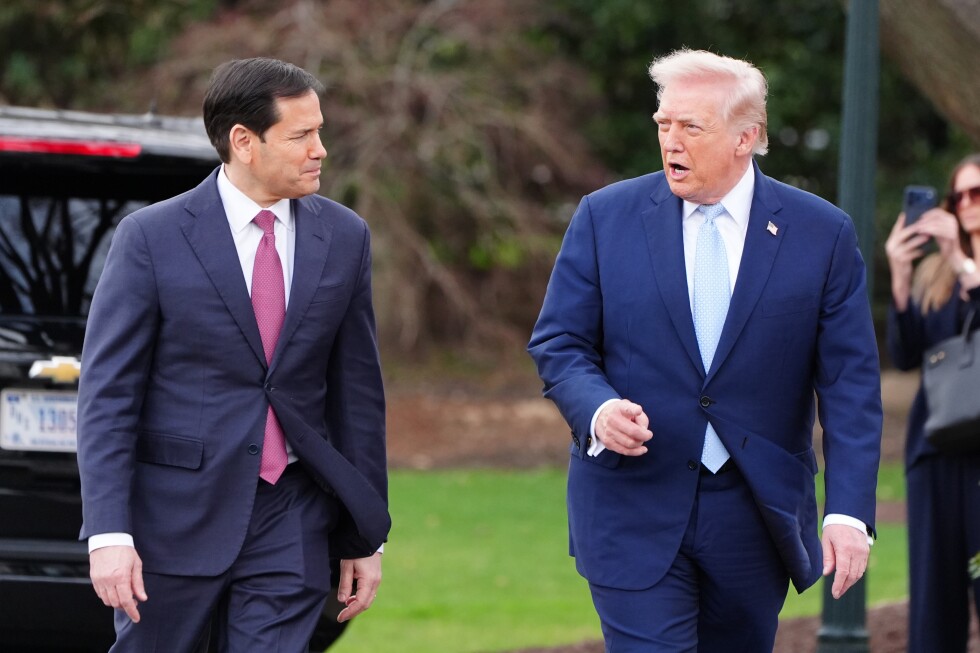
    BUDAPEST, Hungary – U.S. Secretary of State Marco Rubio convened with Hungarian Prime Minister Viktor Orbán in Budapest on Monday, culminating in the signing of a landmark civilian-nuclear cooperation agreement endorsed by President Donald Trump. This diplomatic engagement occurs precisely two months before Hungary’s pivotal April 12 parliamentary elections, where Orbán’s Fidesz party confronts its most formidable electoral challenge since returning to power in 2010.

    The Budapest meeting followed Rubio’s diplomatic tour through Central Europe, including stops in Slovakia and attendance at the Munich Security Conference. Both Hungary and Slovakia, governed by Euroskeptic populists who oppose Ukrainian military support and align with Trump’s policies, represent strategic partners for U.S. energy diplomacy in the region.

    Orbán, widely regarded as Vladimir Putin’s most reliable EU ally, has maintained cordial Kremlin relations throughout Russia’s Ukraine offensive while simultaneously cultivating favor with Trump’s political movement. This balancing act has positioned Hungary as an ideological model for conservative nationalists despite concerns about democratic backsliding and the nation’s status as one of the EU’s least prosperous members.

    Trump’s explicit endorsement of Orbán earlier this month praised the Hungarian leader as a “truly strong and powerful Leader” and “a true friend, fighter, and WINNER” on his Truth Social platform. This political affinity stems from Orbán’s stringent immigration policies, including border fencing implemented during the 2015 refugee crisis, and his government’s conservative social agenda targeting LGBTQ+ rights through bans on Pride celebrations, same-sex adoption, and legal gender recognition.

    Notably, Hungary secured exemptions from U.S. sanctions on Russian energy following Orbán’s White House meeting with Trump in November, allowing continued reliance on Kremlin energy supplies despite EU diversification efforts. With polls indicating a tight electoral race, Orbán’s administration has actively courted a potential Trump visit to Hungary before the April elections, hoping a high-profile endorsement might secure his political survival.

  • Trump’s new world order has become real and Europe is having to adjust fast

    Trump’s new world order has become real and Europe is having to adjust fast

    The elegant boulevards of Munich, traditionally adorned with luxury boutiques and high-performance automobiles, now showcase a strikingly different exhibition: sleek black-and-white posters heralding next-generation drones and proclaiming ‘Europe’s Security Under Construction.’ This bold military display represents a profound psychological shift for Germany, where such overt defense promotion would have been unthinkable merely years ago.

    Bavaria has rapidly emerged as Germany’s premier defense technology corridor, specializing in artificial intelligence, unmanned aerial systems, and aerospace innovation. This transformation reflects a continent grappling with unprecedented geopolitical pressures—sandwiched between an expansionist Russia and economically assertive China to the east, while confronting an increasingly unpredictable United States to the west.

    Recent Eurobarometer data reveals 68% of Europeans perceive their nations as under threat, prompting Germany’s Federal Office of Civil Protection and Disaster Assistance to issue its first Cold War-era warning about potential conflict. Concurrently, Germany has ascended to become Ukraine’s primary military benefactor following the cessation of American direct aid.

    The central question dominating the Munich Security Conference—the world’s premier annual defense gathering—was whether traditional alliances through NATO and the EU remain sufficient, or whether Europe must diversify into ad-hoc coalitions with like-minded nations including Australia, South Korea, and Japan.

    NATO Secretary General Mark Rutte highlighted Germany’s remarkable defense commitment, noting its €150 billion expenditure by 2029 will surpass combined British and French military budgets. While acknowledging American appreciation for this investment, Rutte observed that Donald Trump represents merely the latest in a succession of U.S. presidents demanding greater European security self-sufficiency, albeit with notably more confrontational rhetoric.

    The conference’s most anticipated address came from U.S. Secretary of State Marco Rubio, whose appearance generated palpable anxiety among European leadership. Transatlantic relations have deteriorated to their lowest point in eight decades, exacerbated by Trump’s threats against Danish sovereignty over Greenland, punitive tariffs on European exports, and temporary intelligence withdrawal from Ukrainian forces.

    Rubio’s delivery surprised attendees with historically grounded kinship language, asserting that America desires ‘Europe to be strong’ and acknowledging intertwined destinies. European officials visibly relaxed during his address, relieved by the absence of threats that characterized previous administration appearances.

    However, careful analysis revealed Rubio’s unwavering commitment to Trump administration priorities: climate action skepticism, multilateralism opposition, migration restrictions, and advancement of Christian Western civilization. His conditional partnership offer demanded European alignment with American values without compromise.

    European Commission President Ursula von der Leyen responded with sober realism, noting ‘some lines have been crossed that cannot be uncrossed’ and describing Europeans as having endured ‘shock therapy.’ This sentiment echoes across the continent, where defense experts like RUSI Director-General Rachel Ellehuus identify emerging divisions between northern nations increasing military spending and southern countries resisting budget hikes.

    U.S. Undersecretary of Defense Elbridge Colby delivered blunt messaging in Brussels: Europe no longer represents America’s priority, with focus shifting to the Indo-Pacific. While reaffirming NATO’s mutual defense clause, Colby announced reduced American capabilities in Europe and advocated for a ‘NATO 3.0’ with Europe as partner rather than dependent.

    In response, European leaders are pursuing à la carte coalitions beyond traditional structures. The UK-France led ‘Coalition of the Willing’ for Ukrainian sovereignty includes Turkey, New Zealand, and Australia. Canada increasingly collaborates with Nordic and Baltic nations, while Japan and South Korea are embraced as ‘like-minded family’ members.

    French President Emmanuel Macron’s concept of ‘strategic autonomy’ expands beyond defense to encompass energy security, supply chains, and technological independence. Even von der Leyen acknowledged that if EU competitiveness improvements proceed too slowly, smaller member state groups may advance independently.

    Despite this momentum, the conference underscored Europe’s continued dependence on American security infrastructure—from nuclear deterrence to intelligence architectures—and its technological lag behind the U.S. The ongoing Franco-German dispute over the Future Combat Air System exemplifies challenges in European defense cooperation.

    Ultimately, Munich revealed a continent undergoing fundamental strategic reorientation. These changes extend beyond short-term Trump administration adaptation toward lasting structural transformation. As global politics increasingly dance to the tune of great power competition, even traditionally deliberate Europe recognizes the imperative to evolve its security paradigm.