分类: politics

  • Iran FM in Geneva for US talks, as Guards begin military drills in Hormuz Strait

    Iran FM in Geneva for US talks, as Guards begin military drills in Hormuz Strait

    Diplomatic efforts to address Iran’s nuclear program have entered a critical phase as Iranian Foreign Minister Abbas Araghchi arrived in Geneva for a second round of negotiations with United States officials. The talks, mediated by Oman and scheduled for Tuesday, occur against a backdrop of heightened military activity and escalating rhetoric from both nations.

    Simultaneously with the diplomatic movements, Iran’s Revolutionary Guards commenced military exercises in the strategically vital Strait of Hormuz. Iranian state television reported these drills are designed to prepare for “potential security and military threats” in the waterway, though the duration of the exercises remains unspecified. The Strait serves as a crucial maritime passage for approximately 20% of globally traded oil, and Iranian officials have repeatedly threatened to block transit through this channel.

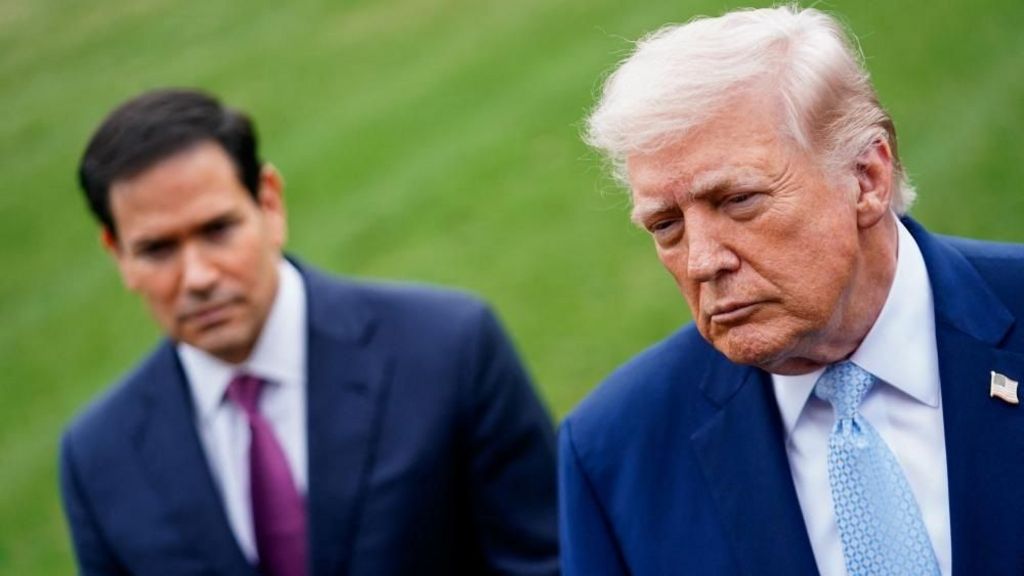
    The renewed negotiations follow the collapse of previous talks in June after Israel launched an unprecedented bombing campaign against Iranian targets. U.S. Secretary of State Marco Rubio expressed cautious optimism, stating, “we’re hopeful there’s a deal” and noting that President Trump “always prefers peaceful outcomes and negotiated outcomes.”

    Significant obstacles remain, particularly regarding Iran’s stockpile of more than 400kg of 60%-enriched uranium, last inspected by nuclear watchdog officials in June. Iranian Deputy Foreign Minister Majid Takht-Ravanchi told the BBC that Tehran would consider compromises on its uranium stockpile if Washington lifts economically crippling sanctions.

    The U.S. delegation includes Middle East envoy Steve Witkoff and President Trump’s son-in-law Jared Kushner. Araghchi confirmed he was meeting with International Atomic Energy Agency head Rafael Grossi for “deep technical discussion” ahead of the main negotiations.

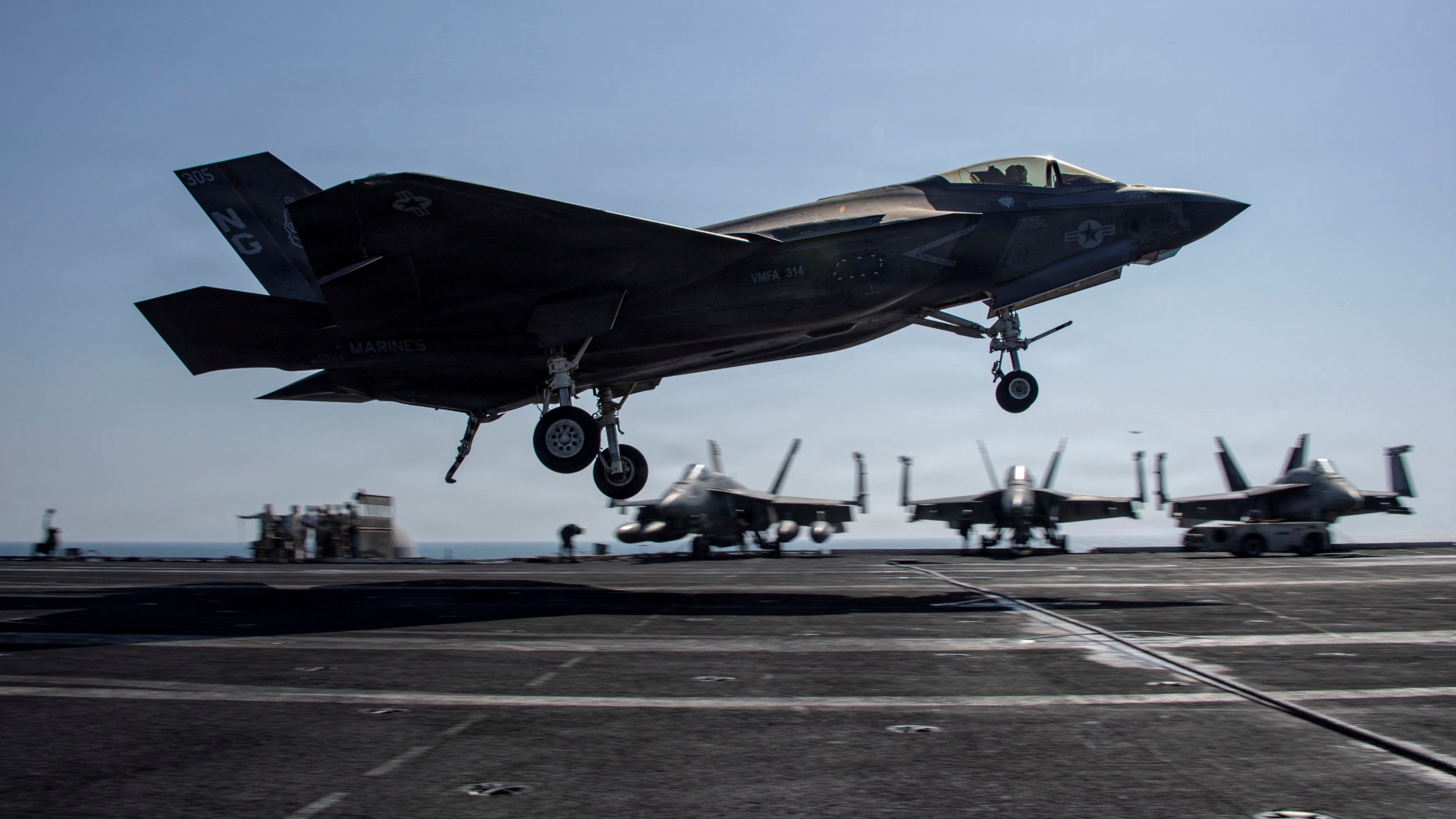
    Tensions have been further exacerbated by Trump’s repeated threats of military action against Tehran, initially concerning Iran’s crackdown on anti-government protests and more recently targeting the country’s nuclear program. On Friday, Trump dispatched a second aircraft carrier to the Middle East while stating that a change of government in Iran would be the “best thing that could happen.”

    Israeli Prime Minister Benjamin Netanyahu insisted any agreement must involve “the removal of all enriched uranium from Iran” as well as the elimination of Tehran’s enrichment capability. Meanwhile, Iranian officials emphasized their desire for an economically beneficial agreement, with Deputy Foreign Minister Hamid Ghanbari noting the importance of “strong and rapid economic return potential” for both nations in sectors including aviation, mining, and oil and gas.

  • More third-country nationals have been deported by the US to Cameroon, lawyers tell AP

    More third-country nationals have been deported by the US to Cameroon, lawyers tell AP

    The United States has executed a second deportation flight transporting non-Cameroonian nationals to Yaoundé, according to legal representatives familiar with the matter. This development follows the recent revelation that nine African migrants from various countries were secretly relocated to Cameroon in January through a controversial immigration program.

    US-based attorney Alma David of Novo Legal Group confirmed the arrival of eight third-country nationals aboard Monday’s flight to the Cameroonian capital. Both David and Cameroon-based lawyer Joseph Awah Fru, who are providing legal assistance to the previously deported group, anticipate extending counsel to the newly arrived deportees.

    “My immediate priority is addressing their state of shock,” Fru stated regarding the psychological impact on deportees.

    The Trump administration’s program, which involves transferring migrants to nations without established connections, has drawn significant criticism after documents revealed that eight of the nine individuals deported in January possessed protection orders from US immigration judges. These judicial protections prohibited their return to home countries due to credible fears of persecution, torture, or violence—particularly concerning LGBTQ+ individuals and political activists.

    Cameroon becomes the latest participant in a series of agreements with at least seven African nations, including South Sudan, Rwanda, Uganda, Eswatini, Ghana, and Equatorial Guinea. State Department records indicate that some countries have received multimillion-dollar payments to accept deported migrants, though specific terms of the Cameroon arrangement remain undisclosed.

    According to a Senate Foreign Relations Committee report compiled by Democratic staff, the administration has allocated approximately $40 million to deport nearly 300 migrants to non-native countries across Africa and Central America. Internal documents reviewed by the AP reveal 47 third-country agreements in various negotiation stages, with 15 finalized and 10 nearing completion.

    The State Department declined to comment on diplomatic communications but affirmed that “implementing the Trump Administration’s immigration policies remains a top priority,” emphasizing their “unwavering commitment to end illegal and mass immigration.”

    Human rights advocates express grave concerns that deporting migrants to countries with documented human rights abuses—particularly under Cameroon’s long-standing President Paul Biya—creates risks of denied due process and potential mistreatment. This concern echoes the situation in Eswatini, where four deportees have been held without charges in maximum-security confinement for over six months despite completing US criminal sentences.

  • EU Commission to attend Trump’s Board of Peace meeting as observer

    EU Commission to attend Trump’s Board of Peace meeting as observer

    The European Union Commission has confirmed its participation in former US President Donald Trump’s newly established ‘Board of Peace’ meeting in Washington this week, though officials emphasized the bloc will attend strictly in an observer capacity rather than as a formal member.

    EU Commissioner Dubravka Šuica will represent the Commission at the gathering, which marks Trump’s latest diplomatic initiative addressing the Gaza conflict. The development comes amid ongoing international efforts to broker and sustain a ceasefire between Israel and Hamas.

    Commission spokesperson Guillaume Mercier clarified the EU’s position during a press briefing on Monday, stating: “The EU Commission is not becoming a member of the board of peace; we are participating in this meeting precisely in our longstanding commitment to the implementation of the ceasefire in Gaza, as well as to take part in international efforts to support reconstruction and the post-war recovery in Gaza.”

    The diplomatic move demonstrates the EU’s cautious engagement with Trump’s initiative while maintaining its independent diplomatic stance. The Commission’s participation reflects the bloc’s substantial financial and humanitarian investment in Gaza reconstruction efforts, which aligns with the Board’s stated objective of mobilizing resources for the territory’s recovery.

    Trump previously announced that Board of Peace members had pledged over $5 billion for Gaza assistance, though specific donor commitments remain unclear. The former president has also extended invitations to Egyptian President Abdel Fattah el-Sisi and Turkish President Recep Tayyip Erdoğan to participate in the initiative.

    The EU’s decision to attend as an observer rather than a full member suggests careful diplomatic positioning, allowing the bloc to monitor developments while preserving its established coordination role with other international mediators including the United Nations and Arab states.

  • ‘We will discriminate’: Elon Musk-backed Restore Britain party launches with hard-right vision

    ‘We will discriminate’: Elon Musk-backed Restore Britain party launches with hard-right vision

    A new far-right political force has emerged in the United Kingdom with an explicitly anti-immigration platform that promises mass deportations and bans on religious slaughter practices. The Restore Britain party, launched formally on Friday night in Great Yarmouth by former Reform UK MP Rupert Lowe, has already garnered significant attention through its endorsement by tech billionaire Elon Musk.

    Lowe, a millionaire businessman and former chairman of Southampton Football Club, unveiled what he termed “deportation poetry” as his immigration policy framework. The platform calls for immediate closure of visa routes for numerous countries including Albania, Pakistan, Somalia, Eritrea, and Afghanistan, with Lowe openly stating: “We will discriminate. We will look at the facts, and then discriminate.”

    Elon Musk amplified the party’s message to his massive following on X, writing: “Join Rupert Lowe in Restore Britain, because he is the only one who will actually do it!” This endorsement came as the party claimed to have already recruited over 50,000 members.

    The party’s agenda extends beyond immigration to include banning non-stun halal and kosher slaughter methods, with Lowe asserting that “In Britain, we treat our animals with care – we do not brutally butcher them alive.” This position comes despite controversy surrounding Lowe’s own animal treatment practices, having previously revealed he ordered his gamekeeper to shoot his 17-year-old dog in the head.

    Additional proposed policies include outlawing cousin marriages, implementing selective spouse visa regulations that would exclude applicants from specific countries, and instituting a “total ban on all foreigners voting, or standing in elections.” Lowe explicitly promised that “Restore Britain will not be putting forward any Bangladeshi candidates.”

    The party’s emergence has already created friction within right-wing political circles. Reform UK parliamentary candidate Matt Goodwin accused Restore Britain of advocating “blatant racism” and housing “white supremacists, antisemites, racists and conspiracy theorists” in its ecosystem. Meanwhile, Advance UK, another far-right group led by former Reform deputy leader Ben Habib, has expressed interest in a potential merger.

    Political analysts suggest Restore Britain could fragment the anti-immigration vote in upcoming elections, potentially creating challenges for Nigel Farage’s Reform UK. Lowe himself described the party’s mission as “incredibly painful” but necessary, declaring: “This is going to be the fight of our lives.”

  • ‘Blurring the green line’: Israel advances plan to expand boundary into West Bank

    ‘Blurring the green line’: Israel advances plan to expand boundary into West Bank

    Israeli authorities have greenlit a contentious settlement expansion project that would effectively extend Jerusalem’s municipal boundaries deeper into the occupied West Bank, a move critics are labeling as de facto annexation. The plan, approved last week according to Israeli anti-settlement organization Peace Now, involves constructing a new neighborhood for the Adam settlement (also known as Geva Binyamin) northeast of occupied East Jerusalem.

    Despite being presented as merely an expansion of the existing Adam settlement, the project would actually establish a disconnected enclave with no physical connection to the main settlement. This strategic placement would mark the first formal extension of Jerusalem’s boundaries into West Bank territory since Israel’s occupation began in 1967.

    Peace Now condemned the move, stating: ‘Under the guise of establishing a new settlement, the government is carrying out de facto annexation through the back door. The new settlement will function in every way as a neighborhood of Jerusalem, with its designation as part of Adam settlement serving merely as a pretext to conceal applying Israeli sovereignty to West Bank areas.’

    Israeli newspaper Yedioth Ahronoth described the plan as part of a broader strategy of ‘blurring the boundaries of the Green Line’—the 1949 armistice line separating Israel from the West Bank and Gaza Strip. The proposal includes hundreds of housing units intended for Israel’s ultra-Orthodox community, to be built on land separate from the main settlement, with previous discussions including possible bridge construction to connect them.

    The blueprint indicates construction would begin from the Neve Yaakov settlement in East Jerusalem, effectively enlarging Jerusalem’s jurisdiction for the first time in over five decades. Final approval is expected soon, with implementation possible within few years amid intensified efforts to expand Israeli control over Palestinian lands.

    Knesset member Gilad Kariv has submitted an urgent inquiry to Housing Minister Haim Katz regarding potential annexation intentions, warning the move would ‘exacerbate friction between Israelis and Palestinians’ and create unnecessary tensions. Kariv added that the plans contradict Israel’s international commitments and reflect Prime Minister Netanyahu’s ‘complete capitulation to his extremist partners.’

    This development coincides with other far-reaching measures approved recently that critics say entrench annexation and weaken the Palestinian Authority’s limited self-rule. These include a proposal allowing authorities to legalize confiscation of unregistered ‘abandoned’ land by reclassifying it as ‘state land’—a process prohibited under international law for occupying powers due to its irreversible nature and use as a sovereignty assertion tool.

    The approval follows last week’s measures expanding Israel’s civil control in Areas A and B, where major Palestinian cities are located and which have officially been under Palestinian Authority jurisdiction since the Oslo Accords.

  • 2 years on, Navalny’s death still casts a shadow over Russia and wider Europe

    2 years on, Navalny’s death still casts a shadow over Russia and wider Europe

    MOSCOW — Two years after the controversial death of Russian opposition leader Alexei Navalny in an Arctic penal colony, international tensions have reached new heights following a groundbreaking forensic revelation. European laboratories have conclusively identified epibatidine—a rare neurotoxin derived from poison dart frogs—in samples from Navalny’s body, according to joint statements from five European governments.

    The second anniversary of Navalny’s death on February 16, 2024, witnessed emotional gatherings at Moscow’s Borisovsky Cemetery, where the activist’s mother Lyudmila Navalnaya publicly accused Russian authorities of orchestrating her son’s murder. The memorial events occurred under intense security surveillance, with diplomatic representatives from several European embassies joining mourners amid growing geopolitical tensions.

    France’s President Emmanuel Macron issued a stark condemnation, stating Navalny’s death “revealed the Kremlin’s weakness and fear of opposition.” Meanwhile, Navalny’s widow Yulia Navalnaya, speaking at the Munich Security Conference, declared she now possessed irrefutable proof that “Putin killed Alexei with a chemical weapon.”

    The Kremlin maintains its consistent denial of involvement, with presidential spokespersons dismissing the allegations as “biased and unfounded.” Russian officials continue to assert that Navalny died of natural causes following a walk in the penal colony.

    This development marks the second confirmed poisoning attempt against Navalny, who survived a 2020 nerve agent attack that he attributed to Kremlin operatives. His subsequent return to Russia resulted in immediate imprisonment on what supporters claim were politically motivated charges.

    The Russian opposition movement now faces critical challenges, with key figures operating from exile and receiving lengthy prison sentences in absentia. Despite the recent establishment of the Platform for Dialogue with Russian Democratic Forces by the Council of Europe’s PACE assembly, the opposition remains fragmented without its most charismatic leader.

    European nations emphasized that epibatidine—a substance not naturally occurring in Russia—represents further evidence of state-sponsored assassination. The joint investigation by the UK, France, Germany, Sweden, and the Netherlands concluded that “Russia had the means, motive and opportunity to administer this poison.”

  • PA forces kill Palestinian toddler and teenager in West Bank shooting

    PA forces kill Palestinian toddler and teenager in West Bank shooting

    A tragic incident in the occupied West Bank city of Tubas has sparked widespread condemnation after Palestinian Authority security forces opened fire on a vehicle carrying a Palestinian family, resulting in the deaths of two children. On Sunday, PA forces targeted Samer Samara, a man reportedly sought by the Israeli military, while he was traveling with his wife and children.

    The operation turned deadly when security personnel shot at the vehicle, instantly killing 16-year-old Yazan Samara. His three-year-old sister, Ronza, succumbed to critical head wounds shortly after the shooting. Samara himself sustained leg injuries and was subsequently taken into custody by PA forces, though his current medical condition remains undisclosed.

    The incident triggered immediate protests outside Tubas’s Turkish Hospital, where outraged residents gathered to express their fury over the children’s deaths. The Committee of Families of Political Detainees, representing Palestinians arbitrarily detained by the PA, characterized the shooting as a “serious crime” and accused security services of systematically targeting Israel-wanted Palestinians at the cost of “shedding Palestinian blood.”

    Hamas issued a strongly worded statement condemning what it described as a “new black mark” on the PA’s record, asserting that the authority has chosen to oppress Palestinians rather than ensure their security. The movement warned of dangerous repercussions for the national fabric and held PA leadership fully responsible for these actions.

    Tubas Governor Ahmed Asaad acknowledged the incident as “unfortunate” and confirmed the initiation of an official investigation. PA security spokesperson Anwar Rajab expressed “deep regret” for the casualties while maintaining that circumstances surrounding the operation remain under “close and diligent investigation.”

    The shooting has intensified existing criticisms regarding the PA’s security coordination with Israel. A Palestinian grassroots forum previously warned that PA policies under “Israeli and external pressure” contradict popular will and deepen internal divisions, particularly concerning the suspension of payments to families of martyrs, wounded Palestinians, and prisoners—a move criticized as abandoning national and moral obligations.

  • A writer is cleared by Thai court after Malaysian agency withdraws defamation case

    A writer is cleared by Thai court after Malaysian agency withdraws defamation case

    BANGKOK — In a significant development for free speech advocacy, Malaysian telecommunications authorities have formally withdrawn their criminal defamation case against Australian writer Murray Hunter through a Thai court proceeding on Monday. The resolution follows successful mediation between the parties, marking the conclusion of a case that had raised substantial concerns about cross-border repression tactics.

    The Malaysian Communications and Multimedia Commission (MCMC) initiated legal action against Hunter in connection with critical articles published on his Substack newsletter platform. The case prompted strong reactions from international free expression organizations, including IFEX, which characterized it as part of a disturbing trend of Strategic Lawsuits Against Public Participation (SLAPPs) aimed at silencing critical voices across borders.

    While specific terms of the mediation agreement remain confidential, Hunter confirmed to The Associated Press that the settlement involved his retraction of approximately ten articles and a formal apology. In exchange, the Bangkok South Criminal Court dismissed all charges without imposing costs or penalties. The defamation charge had carried potential consequences of up to two years imprisonment and fines exceeding $6,000.

    Hunter, a Thailand-based Australian academic, had been arrested at Bangkok’s Suvarnabhumi Airport in September 2025 while preparing to travel to Hong Kong. Following overnight detention, he secured release on bail of 20,000 baht ($643) but faced travel restrictions due to passport seizure until the case’s resolution.

    Despite the favorable outcome, Hunter expressed reservations about the broader implications, noting that the underlying threat of transnational SLAPP lawsuits persists for critical writers and journalists. Thai legal representative Akarachai Chaimaneekarakate echoed these concerns, emphasizing that even unsuccessful cases create a chilling effect through the punitive nature of legal processes themselves.

    The MCMC declined immediate commentary regarding Monday’s court proceedings, citing ongoing Lunar New Year observances in Malaysia.

  • Qatar condemns Israel’s ‘illegal plan’ to convert West Bank land into state property

    Qatar condemns Israel’s ‘illegal plan’ to convert West Bank land into state property

    Qatar has issued a formal condemnation of Israel’s recent decision to designate West Bank territories as state property, characterizing the move as an unlawful expansion of settlement policies. The Qatari Ministry of Foreign Affairs released a statement on February 15th denouncing what it described as systematic efforts to undermine Palestinian rights through administrative measures.

    This development follows Israel’s security cabinet approval on February 8th of provisions that facilitate land acquisition by settlers while augmenting Israeli regulatory authority over Palestinian-administered zones. The controversial measures extend to environmental management, water resource oversight, and administration of certain religious sites within areas nominally under Palestinian Authority control.

    Palestinian President Mahmoud Abbas has characterized these actions as dangerous precedents amounting to de facto annexation, echoing concerns raised by multiple international bodies. The International Court of Justice previously issued a non-binding opinion in 2024 declaring Israel’s occupation and settlement activities illegal under international law.

    Diplomatic opposition has coalesced rapidly across the Middle East, with foreign ministers from eight nations—including the UAE, Saudi Arabia, Egypt, and Jordan—issuing a joint statement rejecting Israel’s assertion of sovereignty over occupied territories. The coalition warned that these policies exacerbate regional tensions while undermining the legal foundation for a two-state solution based on 1967 borders.

    United Nations Secretary-General Antonio Guterres expressed grave concern through spokesperson Stephane Dujarric, noting that such measures progressively erode prospects for peaceful coexistence. Notably, the United States—while stopping short of direct criticism—indicated through an administration official that President Trump opposes formal annexation of the West Bank, emphasizing preference for stability in the region.

    The British government joined the international chorus of disapproval, explicitly calling for reversal of the cabinet decision and reaffirming that unilateral alterations to Palestine’s demographic composition violate established international norms.

  • Trump says ‘Board of Peace’ members pledged $5bn for Gaza reconstruction

    Trump says ‘Board of Peace’ members pledged $5bn for Gaza reconstruction

    Former US President Donald Trump revealed on Sunday that members of the newly established ‘Board of Peace’ initiative have committed $5 billion toward Gaza Strip reconstruction efforts and pledged thousands of personnel for international stabilization missions in the conflict-ravaged territory. Trump, serving as the board’s chairman, proclaimed the organization would become “the most consequential International Body in History” through a social media announcement.

    The Board of Peace emerged as a central component of the recent Gaza ceasefire agreement, which concluded a devastating two-year conflict that resulted in approximately 72,000 Palestinian casualties and widespread infrastructure destruction according to reports. The financial commitments and operational details are scheduled for formal confirmation during the board’s inaugural meeting this Thursday in Washington, DC.

    Notably, the board’s charter grants Trump extensive executive authority, including the power to appoint and remove member states—a decision reversible only by a two-thirds majority vote. This controversial structure has drawn significant criticism from European leaders who argue the initiative bypasses United Nations mandates that originally supported its creation.

    At the Munich Security Conference, EU High Representative for Foreign Affairs Kaja Kallas expressed concern that Trump’s initiative made no reference to Gaza or UN involvement, contradicting original resolution stipulations that ensured Palestinian input and explicit Gaza focus. Spanish Foreign Minister José Manuel Albares and US Democratic Senator Chris Murphy similarly criticized the approach.

    The current membership includes 19 nations, featuring nearly all major Middle Eastern powers including Qatar, UAE, Saudi Arabia, Turkey, Pakistan, Armenia, and Azerbaijan. Indonesia has committed 8,000 non-combat troops for potential deployment, while Italy will participate as an observer due to constitutional constraints preventing full membership.

    The reconstruction challenges are monumental, with UN, World Bank and European Union estimates projecting $70 billion in rebuilding costs following Israel’s sustained bombardment since October 2023. United Nations assessments indicate approximately 80% of all structures and housing units in Gaza have been destroyed or severely damaged.