分类: politics

  • Trump directs federal authorities to manage sewage spill ‘disaster’

    Trump directs federal authorities to manage sewage spill ‘disaster’

    President Donald Trump has mandated federal agencies to address a severe sewage contamination crisis in the Potomac River, following the collapse of a major sewer line in late January. The incident has resulted in millions of gallons of wastewater flowing into the river that traverses the nation’s capital, creating what public health experts describe as one of the most significant sewage spills in U.S. history.

    In a Monday social media statement, Trump directed authorities to provide immediate management and coordination, criticizing local leadership for transforming the Potomac into what he termed a ‘Disaster Zone.’ The President designated the Federal Emergency Management Agency (FEMA) to lead the response effort, despite acknowledging that the agency’s funding remains frozen due to a congressional standoff over Department of Homeland Security appropriations.

    The rupture occurred on January 19th in the Potomac Interceptor sewer line, managed by DC Water and Sewer Authority, triggering continuous uncontrolled wastewater discharge into the river. While officials assure that drinking water remains unaffected, testing has revealed dangerous concentrations of E. coli and MRSA bacteria, prompting health advisories against river contact.

    Trump specifically blamed Maryland Governor Wes Moore, a frequent political adversary, for ‘gross mismanagement’ of the ecological disaster. Moore’s office countered that responsibility lies with federal authorities since the infrastructure is managed by Washington DC officials. The governor’s spokesperson accused the Trump administration of failing to act for four weeks, thereby endangering public health.

    Repair efforts face significant challenges, with DC Water officials estimating several weeks for temporary containment and months for permanent infrastructure restoration. The political dimension intensifies as Democratic lawmakers demand immigration enforcement policy changes before approving DHS funding, creating a stalemate unlikely to resolve before month’s end.

  • Is the UN headed for financial collapse without US support?

    Is the UN headed for financial collapse without US support?

    The United Nations faces an unprecedented financial crisis as chronic non-payment of dues by its largest contributor threatens to paralyze the international organization. At the recent Munich Security Conference, U.S. Secretary of State Marco Rubio delivered scathing criticism of the UN’s effectiveness, declaring the institution had “no answers” in resolving global conflicts while praising American leadership for achieving fragile truces.

    This rhetorical confrontation mirrors tangible financial pressures. The United States currently owes approximately $4 billion in unpaid dues, with Washington having ceased regular payments since the Trump administration took office thirteen months ago. Although the Biden administration resumed some contributions, significant arrears accumulated during both administrations.

    UN Secretary-General Antonio Guterres has issued dire warnings to all 196 member states, indicating the organization could face financial collapse as early as July without urgent payment. This would potentially force cancellation of September’s General Assembly meetings and even shutdown of its New York headquarters.

    The funding crisis stems from a structural arrangement where the U.S. contributes 22% of the UN’s operating budget and 25% of peacekeeping operations—a percentage tied to its Security Council veto power and economic size. For 2026, the UN requires $3.5 billion for agencies and $5.7 billion for peacekeeping operations worldwide.

    Complicating matters, the Trump administration has withdrawn from 66 multilateral organizations, approximately half being UN initiatives addressing climate change, counterterrorism, and children in armed conflict. Previous withdrawals included UNESCO, the UN Human Rights Council, and funding for Palestinian refugee agency UNRWA, citing anti-Israel bias.

    Analysts describe the situation as dire. Daniel Forti of the International Crisis Group noted that “the root cause of this financial crisis lies at the feet of Washington,” while emphasizing that U.S. financial obligations reflect institutional privilege rather than penalty.

    Simultaneously, the Trump administration appears to be developing alternative mechanisms. The newly established “Board of Peace,” initially focused on Gaza, is being positioned as a complementary conflict resolution body that would operate alongside rather than replace UN structures.

    However, former State Department official Allison Lombardo cautioned that the Board of Peace lacks proven capability to provide funding or political leverage comparable to the UN’s international mandate. The funding crisis has reignited calls from Global South nations to reform the UN’s funding structure and Security Council representation to better reflect contemporary global realities.

  • Hillary Clinton accuses Trump administration of Epstein files ‘cover-up’ in BBC interview

    Hillary Clinton accuses Trump administration of Epstein files ‘cover-up’ in BBC interview

    Former Secretary of State Hillary Clinton has publicly accused the Trump administration of orchestrating a deliberate “cover-up” regarding the handling of documents connected to the late financier and convicted sex offender Jeffrey Epstein. During an interview at the World Forum in Berlin, Clinton demanded full transparency, stating authorities were “slow-walking” the release of critical files.

    The Justice Department recently disclosed millions of Epstein-related documents following the Epstein Files Transparency Act, legislation passed by Congress mandating transparency in investigations concerning Epstein. While the DoJ claims compliance with all legal requirements, lawmakers including Republican Representative Thomas Massie argue the disclosure remains insufficient and have called for additional internal memoranda outlining past charging decisions.

    Simultaneously, mounting political pressure surrounds testimonies from high-profile figures connected to Epstein. Prince Andrew faces renewed calls from U.S. officials and the family of his accuser, the late Virginia Giuffre, to appear before the Oversight Committee. Both Bill and Hillary Clinton are scheduled to testify before Congress later this month, marking the first instance of a former president appearing before a congressional panel since Gerald Ford in 1983.

    Hillary Clinton emphasized that “everyone should testify who is asked to testify,” while advocating for public hearings rather than closed-door depositions. She characterized the scrutiny directed at her and her husband as a political diversion tactic, stating they were being used as a “shiny object” to shift attention from former President Trump.

    The White House countered Clinton’s allegations, asserting that the Trump administration had “done more for the victims than Democrats ever have” by releasing documents and cooperating with congressional subpoenas. President Trump, frequently mentioned in the Epstein files, has consistently denied any wrongdoing and maintains he severed ties with Epstein decades ago.

    Epstein died in federal custody in August 2019 while awaiting trial on sex trafficking charges. Prince Andrew settled a civil lawsuit with Giuffre in 2022 without admitting liability, while the Clintons deny any knowledge of Epstein’s criminal activities during their acquaintance with him.

  • China is hitting Japan where it hurts. Will PM Takaichi give in?

    China is hitting Japan where it hurts. Will PM Takaichi give in?

    The recent return of giant pandas Xiao Xiao and Lei Lei from Tokyo’s Ueno Zoo to China marks more than just the end of an era in Sino-Japanese cultural exchange—it symbolizes the rapid deterioration of bilateral relations to their lowest point in decades. This diplomatic crisis emerged following Japanese Prime Minister Sanae Takaichi’s November comments suggesting Japan would activate its self-defense forces in response to any attack on Taiwan, crossing what China considers an “absolute red line” regarding its territorial sovereignty.

    Beijing’s response has been multifaceted and sustained, employing what analysts describe as “greyzone warfare” tactics across diplomatic, military, economic, and cultural fronts. Beyond recalling its pandas—a powerful symbol of friendship—China has deployed warships near Japanese territories, restricted exports of critical rare earth minerals, canceled flight routes, discouraged tourism to Japan, and halted cultural exchanges including music events and film releases.

    The situation differs from previous bilateral spats due to both China’s expanded capabilities and Prime Minister Takaichi’s strengthened domestic position following her historic electoral victory. Analysts from the Center for Strategic and International Studies note that while China’s responses have been relatively measured compared to past conflicts, there remains “ample room for further escalation.” Takaichi, emboldened by her strong mandate, has refused to retract her Taiwan comments while pledging to accelerate defense spending increases to 2% of GDP.

    Complicating the geopolitical landscape is the role of the United States, which has offered strong support for Takaichi’s government but remains unpredictable in its China policy. Some experts express concern that potential warming US-China relations, including scheduled meetings between President Trump and Xi Jinping, might lead to a “grand bargain” that could leave Japan strategically isolated. As both nations dig in their positions, analysts predict sustained tensions that will fundamentally reset the relationship at a more confrontational level than before the crisis.

  • Israeli approval of West Bank land registration draws outrage

    Israeli approval of West Bank land registration draws outrage

    Israel’s recent authorization of a contentious land registration procedure in the West Bank has ignited widespread international criticism and raised concerns about accelerated annexation of Palestinian territories. The government-approved measure, ratified late Sunday, designates disputed lands as “state property”—a move that Israeli authorities claim will establish transparency in resolving legal ownership conflicts.

    The decision has drawn sharp rebukes from multiple Arab nations. Egypt characterized the action as a “dangerous escalation” intended to solidify Israeli dominance over occupied territories. Qatar similarly denounced the declaration, asserting it would systematically deprive Palestinians of their legitimate land rights. Jordan joined the chorus of condemnation, labeling the measure a violation of international law.

    Israeli peace organization Peace Now condemned the policy as a “mega land grab” that advances the annexation agenda of Israel’s political right. Jonathan Mizrachi, the group’s co-director, explained that the registration process would exclusively affect Area C—comprising approximately 60% of the West Bank under Israeli administrative control. Mizrachi warned that numerous Palestinians would discover their traditionally held lands suddenly reclassified as state property under the new framework.

    This development occurs alongside other recently approved measures strengthening Israeli authority in West Bank regions nominally administered by the Palestinian Authority under the Oslo Accords. These include provisions enabling direct land purchases by Jewish Israelis and expanded Israeli administration of religious sites.

    The United Nations human rights chief Volker Turk expressed alarm over rapidly changing demographics in the occupied territories, noting that these policies systematically dispossess Palestinians of their lands. Despite international opposition, the U.S. administration has refrained from direct criticism of these recent Israeli initiatives. Currently, over 500,000 Israeli settlers reside in West Bank settlements considered illegal under international law.

  • Iran FM in Geneva for US talks, as Guards begin military drills in Hormuz Strait

    Iran FM in Geneva for US talks, as Guards begin military drills in Hormuz Strait

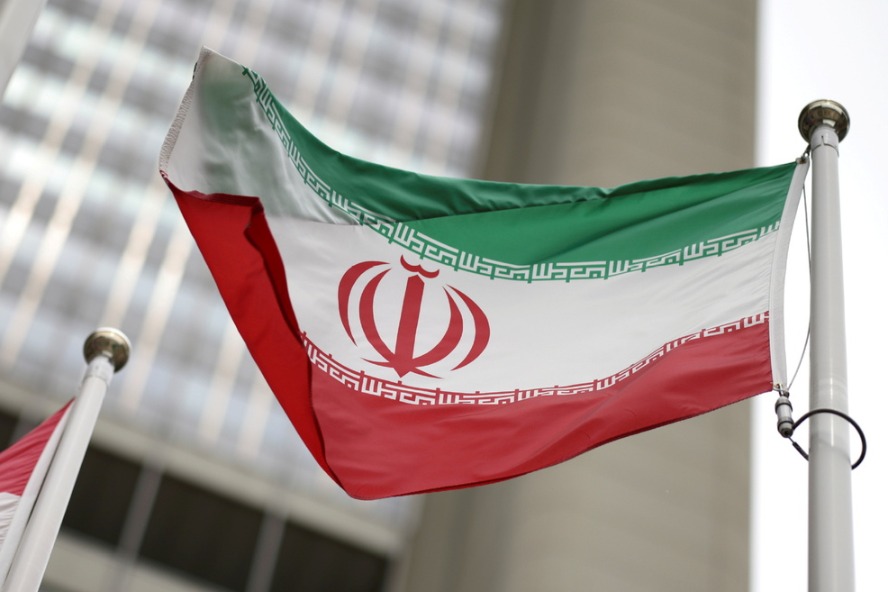
    Diplomatic efforts to address Iran’s nuclear program have entered a critical phase as Iranian Foreign Minister Abbas Araghchi arrived in Geneva for a second round of negotiations with United States officials. The talks, mediated by Oman and scheduled for Tuesday, occur against a backdrop of heightened military activity and escalating rhetoric from both nations.

    Simultaneously with the diplomatic movements, Iran’s Revolutionary Guards commenced military exercises in the strategically vital Strait of Hormuz. Iranian state television reported these drills are designed to prepare for “potential security and military threats” in the waterway, though the duration of the exercises remains unspecified. The Strait serves as a crucial maritime passage for approximately 20% of globally traded oil, and Iranian officials have repeatedly threatened to block transit through this channel.

    The renewed negotiations follow the collapse of previous talks in June after Israel launched an unprecedented bombing campaign against Iranian targets. U.S. Secretary of State Marco Rubio expressed cautious optimism, stating, “we’re hopeful there’s a deal” and noting that President Trump “always prefers peaceful outcomes and negotiated outcomes.”

    Significant obstacles remain, particularly regarding Iran’s stockpile of more than 400kg of 60%-enriched uranium, last inspected by nuclear watchdog officials in June. Iranian Deputy Foreign Minister Majid Takht-Ravanchi told the BBC that Tehran would consider compromises on its uranium stockpile if Washington lifts economically crippling sanctions.

    The U.S. delegation includes Middle East envoy Steve Witkoff and President Trump’s son-in-law Jared Kushner. Araghchi confirmed he was meeting with International Atomic Energy Agency head Rafael Grossi for “deep technical discussion” ahead of the main negotiations.

    Tensions have been further exacerbated by Trump’s repeated threats of military action against Tehran, initially concerning Iran’s crackdown on anti-government protests and more recently targeting the country’s nuclear program. On Friday, Trump dispatched a second aircraft carrier to the Middle East while stating that a change of government in Iran would be the “best thing that could happen.”

    Israeli Prime Minister Benjamin Netanyahu insisted any agreement must involve “the removal of all enriched uranium from Iran” as well as the elimination of Tehran’s enrichment capability. Meanwhile, Iranian officials emphasized their desire for an economically beneficial agreement, with Deputy Foreign Minister Hamid Ghanbari noting the importance of “strong and rapid economic return potential” for both nations in sectors including aviation, mining, and oil and gas.

  • More third-country nationals have been deported by the US to Cameroon, lawyers tell AP

    More third-country nationals have been deported by the US to Cameroon, lawyers tell AP

    The United States has executed a second deportation flight transporting non-Cameroonian nationals to Yaoundé, according to legal representatives familiar with the matter. This development follows the recent revelation that nine African migrants from various countries were secretly relocated to Cameroon in January through a controversial immigration program.

    US-based attorney Alma David of Novo Legal Group confirmed the arrival of eight third-country nationals aboard Monday’s flight to the Cameroonian capital. Both David and Cameroon-based lawyer Joseph Awah Fru, who are providing legal assistance to the previously deported group, anticipate extending counsel to the newly arrived deportees.

    “My immediate priority is addressing their state of shock,” Fru stated regarding the psychological impact on deportees.

    The Trump administration’s program, which involves transferring migrants to nations without established connections, has drawn significant criticism after documents revealed that eight of the nine individuals deported in January possessed protection orders from US immigration judges. These judicial protections prohibited their return to home countries due to credible fears of persecution, torture, or violence—particularly concerning LGBTQ+ individuals and political activists.

    Cameroon becomes the latest participant in a series of agreements with at least seven African nations, including South Sudan, Rwanda, Uganda, Eswatini, Ghana, and Equatorial Guinea. State Department records indicate that some countries have received multimillion-dollar payments to accept deported migrants, though specific terms of the Cameroon arrangement remain undisclosed.

    According to a Senate Foreign Relations Committee report compiled by Democratic staff, the administration has allocated approximately $40 million to deport nearly 300 migrants to non-native countries across Africa and Central America. Internal documents reviewed by the AP reveal 47 third-country agreements in various negotiation stages, with 15 finalized and 10 nearing completion.

    The State Department declined to comment on diplomatic communications but affirmed that “implementing the Trump Administration’s immigration policies remains a top priority,” emphasizing their “unwavering commitment to end illegal and mass immigration.”

    Human rights advocates express grave concerns that deporting migrants to countries with documented human rights abuses—particularly under Cameroon’s long-standing President Paul Biya—creates risks of denied due process and potential mistreatment. This concern echoes the situation in Eswatini, where four deportees have been held without charges in maximum-security confinement for over six months despite completing US criminal sentences.

  • EU Commission to attend Trump’s Board of Peace meeting as observer

    EU Commission to attend Trump’s Board of Peace meeting as observer

    The European Union Commission has confirmed its participation in former US President Donald Trump’s newly established ‘Board of Peace’ meeting in Washington this week, though officials emphasized the bloc will attend strictly in an observer capacity rather than as a formal member.

    EU Commissioner Dubravka Šuica will represent the Commission at the gathering, which marks Trump’s latest diplomatic initiative addressing the Gaza conflict. The development comes amid ongoing international efforts to broker and sustain a ceasefire between Israel and Hamas.

    Commission spokesperson Guillaume Mercier clarified the EU’s position during a press briefing on Monday, stating: “The EU Commission is not becoming a member of the board of peace; we are participating in this meeting precisely in our longstanding commitment to the implementation of the ceasefire in Gaza, as well as to take part in international efforts to support reconstruction and the post-war recovery in Gaza.”

    The diplomatic move demonstrates the EU’s cautious engagement with Trump’s initiative while maintaining its independent diplomatic stance. The Commission’s participation reflects the bloc’s substantial financial and humanitarian investment in Gaza reconstruction efforts, which aligns with the Board’s stated objective of mobilizing resources for the territory’s recovery.

    Trump previously announced that Board of Peace members had pledged over $5 billion for Gaza assistance, though specific donor commitments remain unclear. The former president has also extended invitations to Egyptian President Abdel Fattah el-Sisi and Turkish President Recep Tayyip Erdoğan to participate in the initiative.

    The EU’s decision to attend as an observer rather than a full member suggests careful diplomatic positioning, allowing the bloc to monitor developments while preserving its established coordination role with other international mediators including the United Nations and Arab states.

  • ‘We will discriminate’: Elon Musk-backed Restore Britain party launches with hard-right vision

    ‘We will discriminate’: Elon Musk-backed Restore Britain party launches with hard-right vision

    A new far-right political force has emerged in the United Kingdom with an explicitly anti-immigration platform that promises mass deportations and bans on religious slaughter practices. The Restore Britain party, launched formally on Friday night in Great Yarmouth by former Reform UK MP Rupert Lowe, has already garnered significant attention through its endorsement by tech billionaire Elon Musk.

    Lowe, a millionaire businessman and former chairman of Southampton Football Club, unveiled what he termed “deportation poetry” as his immigration policy framework. The platform calls for immediate closure of visa routes for numerous countries including Albania, Pakistan, Somalia, Eritrea, and Afghanistan, with Lowe openly stating: “We will discriminate. We will look at the facts, and then discriminate.”

    Elon Musk amplified the party’s message to his massive following on X, writing: “Join Rupert Lowe in Restore Britain, because he is the only one who will actually do it!” This endorsement came as the party claimed to have already recruited over 50,000 members.

    The party’s agenda extends beyond immigration to include banning non-stun halal and kosher slaughter methods, with Lowe asserting that “In Britain, we treat our animals with care – we do not brutally butcher them alive.” This position comes despite controversy surrounding Lowe’s own animal treatment practices, having previously revealed he ordered his gamekeeper to shoot his 17-year-old dog in the head.

    Additional proposed policies include outlawing cousin marriages, implementing selective spouse visa regulations that would exclude applicants from specific countries, and instituting a “total ban on all foreigners voting, or standing in elections.” Lowe explicitly promised that “Restore Britain will not be putting forward any Bangladeshi candidates.”

    The party’s emergence has already created friction within right-wing political circles. Reform UK parliamentary candidate Matt Goodwin accused Restore Britain of advocating “blatant racism” and housing “white supremacists, antisemites, racists and conspiracy theorists” in its ecosystem. Meanwhile, Advance UK, another far-right group led by former Reform deputy leader Ben Habib, has expressed interest in a potential merger.

    Political analysts suggest Restore Britain could fragment the anti-immigration vote in upcoming elections, potentially creating challenges for Nigel Farage’s Reform UK. Lowe himself described the party’s mission as “incredibly painful” but necessary, declaring: “This is going to be the fight of our lives.”

  • ‘Blurring the green line’: Israel advances plan to expand boundary into West Bank

    ‘Blurring the green line’: Israel advances plan to expand boundary into West Bank

    Israeli authorities have greenlit a contentious settlement expansion project that would effectively extend Jerusalem’s municipal boundaries deeper into the occupied West Bank, a move critics are labeling as de facto annexation. The plan, approved last week according to Israeli anti-settlement organization Peace Now, involves constructing a new neighborhood for the Adam settlement (also known as Geva Binyamin) northeast of occupied East Jerusalem.

    Despite being presented as merely an expansion of the existing Adam settlement, the project would actually establish a disconnected enclave with no physical connection to the main settlement. This strategic placement would mark the first formal extension of Jerusalem’s boundaries into West Bank territory since Israel’s occupation began in 1967.

    Peace Now condemned the move, stating: ‘Under the guise of establishing a new settlement, the government is carrying out de facto annexation through the back door. The new settlement will function in every way as a neighborhood of Jerusalem, with its designation as part of Adam settlement serving merely as a pretext to conceal applying Israeli sovereignty to West Bank areas.’

    Israeli newspaper Yedioth Ahronoth described the plan as part of a broader strategy of ‘blurring the boundaries of the Green Line’—the 1949 armistice line separating Israel from the West Bank and Gaza Strip. The proposal includes hundreds of housing units intended for Israel’s ultra-Orthodox community, to be built on land separate from the main settlement, with previous discussions including possible bridge construction to connect them.

    The blueprint indicates construction would begin from the Neve Yaakov settlement in East Jerusalem, effectively enlarging Jerusalem’s jurisdiction for the first time in over five decades. Final approval is expected soon, with implementation possible within few years amid intensified efforts to expand Israeli control over Palestinian lands.

    Knesset member Gilad Kariv has submitted an urgent inquiry to Housing Minister Haim Katz regarding potential annexation intentions, warning the move would ‘exacerbate friction between Israelis and Palestinians’ and create unnecessary tensions. Kariv added that the plans contradict Israel’s international commitments and reflect Prime Minister Netanyahu’s ‘complete capitulation to his extremist partners.’

    This development coincides with other far-reaching measures approved recently that critics say entrench annexation and weaken the Palestinian Authority’s limited self-rule. These include a proposal allowing authorities to legalize confiscation of unregistered ‘abandoned’ land by reclassifying it as ‘state land’—a process prohibited under international law for occupying powers due to its irreversible nature and use as a sovereignty assertion tool.

    The approval follows last week’s measures expanding Israel’s civil control in Areas A and B, where major Palestinian cities are located and which have officially been under Palestinian Authority jurisdiction since the Oslo Accords.