分类: politics

  • Israel’s West Bank annexation moves raise security alarm in Jordan

    Israel’s West Bank annexation moves raise security alarm in Jordan

    Jordan has issued a stern condemnation of Israel’s recent policy overhaul in the occupied West Bank, characterizing the measures as an acceleration toward full annexation that directly threatens Jordanian national security. The sweeping changes, announced last week, represent what Jordanian officials describe as a dangerous escalation beyond previous ‘creeping annexation’ into a phase of systematic territorial absorption.

    The most contentious measure involves revoking the 1953 Jordanian-era law that prohibited property sales to non-Arabs in the Palestinian territory—a legal safeguard originally intended to prevent Israeli settlement expansion through land purchases. Additional provisions include declassifying West Bank land registers (previously kept confidential to protect against fraudulent property transfers to settlers) and enabling Israel to reclassify unregistered or abandoned lands as ‘state lands’ for confiscation.

    Jordanian Senator Omar al-Ayasrah warned Middle East Eye that these actions constitute ‘a leap across strategic stages’ designed to eliminate Jordan’s influence over Palestinian affairs while dismantling legal protections for Arab landowners. The fundamental concern, analysts note, is demographic: Jordan fears Israel’s systematic pressure—through geographic constriction, economic suffocation, and political stagnation—will precipitate Palestinian emigration eastward, potentially destabilizing Jordan’s delicate social and security balance.

    In response, Jordan is pursuing diplomatic and legal countermeasures. The Royal Hashemite Documentation Centre is intensifying efforts to restore historical land deeds dating to the Ottoman era, potentially for use in an International Court of Justice challenge. While some Jordanians advocate more drastic responses—including revocation of the 1994 peace treaty or military confrontation—government officials currently describe treaty cancellation as ‘political suicide,’ preferring to exhaust diplomatic channels.

    Political analyst Lamis Andoni cautioned that Jordan’s hesitation to leverage economic agreements (such as the gas deal with Israel) might be interpreted as tacit approval. Meanwhile, retired Major General Mamoun Abu Nuwar characterized the land confiscations as an ‘undeclared war’ on Jordan, warning that forced displacement could ‘trigger a regional earthquake’ given Jordan’s strategic geopolitical position and preparedness to defend its demographic stability.

  • What is the dart frog toxin allegedly used to kill Alexei Navalny?

    What is the dart frog toxin allegedly used to kill Alexei Navalny?

    In a coordinated declaration, the United Kingdom alongside several European allies has formally attributed the death of Russian opposition leader Alexei Navalny to a rare neurotoxin derived from South American poison dart frogs. Official statements indicate that laboratory analysis confirmed traces of epibatidine, an exceptionally potent compound, within samples taken from Navalny’s body. The allies asserted that the Russian state singularly possessed the “means, motive and opportunity” to deploy such an obscure biological agent.

    The Kremlin has vehemently rejected these allegations. Russian state-run news agency Tass quoted government spokesperson Maria Zakharova dismissing the findings as a baseless “information campaign” engineered to divert attention from Western political issues. The Russian embassy in London further decried the announcement as “feeble-mindedness” and “necro-propaganda.”

    Epibatidine, as explained by toxicology expert Jill Johnson, is a natural compound isolated from the skin of Ecuadorian poison dart frogs, notably the Anthony’s poison arrow frog and the Phantasmal poison frog. It is estimated to be 200 times more potent than morphine. Professor Alastair Hay, an environmental toxicologist at the University of Leeds, detailed its mechanism: the toxin overstimulates nicotinic receptors in the nervous system, which can lead to muscle paralysis, respiratory failure, and ultimately death by suffocation. Its presence in human blood is a strong indicator of deliberate administration.

    The rarity of this toxin underscores the gravity of the accusation. Epibatidine is not found naturally in Russia. Its production is contingent on a specific ecological chain; the frogs synthesize it only by consuming a precise diet of alkaloid-rich insects in their native habitats of Ecuador and Peru. Consequently, frogs in captivity do not produce the toxin. Johnson emphasized that finding a wild frog producing the exact required compound is “almost impossible,” and known cases of human epibatidine poisoning are virtually nonexistent outside of controlled laboratory accidents, which were non-fatal.

    Navalny died two years ago in a Siberian penal colony, where he had been imprisoned for three years following his return to Russia. Official Russian accounts claimed he felt unwell after a walk before collapsing and dying of natural causes—a narrative staunchly contradicted by his widow, Yulia Navalnaya, who has consistently stated her husband was murdered. This latest accusation from European nations reignites international scrutiny on the Kremlin’s alleged involvement in the dissident’s death.

  • US boards second tanker in Indian Ocean after tracking it from Caribbean

    US boards second tanker in Indian Ocean after tracking it from Caribbean

    The United States military has executed its second maritime interception operation within a week, boarding the Panamanian-flagged oil tanker Veronica III in the Indian Ocean following an extensive surveillance operation that originated in the Caribbean Sea. The Pentagon released operational footage showing special forces personnel boarding the vessel, which had been under tracking surveillance for suspected involvement in circumventing U.S. sanctions against Venezuela.

    This strategic operation represents the latest escalation in the Trump administration’s comprehensive campaign to restrict Venezuela’s oil exports, with at least seven tankers seized since last year. The Department of Defense characterized the mission as “a right-of-visit, maritime interdiction and boarding” exercise, though officials did not confirm whether the vessel was ultimately seized or permitted to continue its journey.

    According to monitoring data from TankerTrackers.com, the Veronica III departed Venezuelan waters on January 3rd, coinciding with the controversial capture of Venezuelan President Nicolás Maduro during a raid on his presidential compound in Caracas. The vessel was reportedly carrying approximately 1.9 million barrels of crude oil at departure and has been implicated in transporting Russian, Iranian, and Venezuelan oil since 2023.

    The Pentagon issued a stark warning in its official statement: “Distance does not protect you. The vessel tried to defy President Trump’s quarantine – hoping to slip away. We tracked it from the Caribbean to the Indian Ocean, closed the distance, and shut it down. No other nation has the reach, endurance, or will to do this. International waters are not sanctuary. By land, air, or sea, we will find you and deliver justice.”

    This operation follows last week’s boarding of the Aquila II, another tanker similarly “tracked and hunted” into the Indian Ocean. The intensified enforcement stems from President Trump’s December announcement ordering a blockade of sanctioned oil tankers operating in Venezuelan waters, which the Maduro government has condemned as “theft.”

    The economic impact has been substantial, with Venezuelan oil exports dramatically reduced to approximately 400,000 barrels per day in January—roughly half previous levels—according to Kpler analytics. Only vessels associated with Chevron and destined for U.S. ports continue normal operations amid the escalating maritime enforcement campaign.

  • Thousands of Czechs rally in support of President Pavel in his dispute with foreign minister

    Thousands of Czechs rally in support of President Pavel in his dispute with foreign minister

    PRAGUE — The Czech Republic witnessed widespread civic mobilization on Sunday as thousands of citizens participated in coordinated demonstrations across approximately 400 municipalities, including major urban centers like Brno. These protests, organized by the pro-democracy group Million Moments, represent a significant show of support for President Petr Pavel amid an escalating constitutional confrontation with Foreign Minister Petr Macinka’s political faction.

    The political crisis originated from President Pavel’s principled refusal to appoint Filip Turek as environment minister, a nomination put forward by the eurosceptic Motorists party. This decision followed media revelations exposing Turek’s history of publishing content with racist, homophobic, and sexist undertones on social media platforms. Although Turek offered partial apologies while disputing certain allegations, the president maintained that such appointments would violate ethical governance standards.

    Foreign Minister Macinka has escalated tensions by accusing the president of constitutional violations and issuing veiled threats of political consequences. President Pavel has characterized these actions as attempted blackmail, creating an unprecedented standoff between the presidential office and the governing coalition.

    This confrontation occurs against the backdrop of a fragile government formation led by populist Prime Minister Andrej Babiš, whose coalition includes the anti-migrant Freedom and Direct Democracy party alongside the Motorists group. The coalition’s agenda includes distancing the country from Ukrainian support mechanisms, challenging EU policy frameworks, and restructuring public broadcaster financing—moves that critics argue threaten democratic institutions.

    Mikuláš Minář, the lead organizer of the protests, emphasized that the demonstrations transcend presidential support, representing a broader defense of democratic values against what participants perceive as oligarchic and extremist influences. The protests explicitly position the Czech Republic against the pro-Russian orientations of neighboring Hungary and Slovakia, highlighting the geopolitical dimensions of this domestic political struggle.

  • Colombian president accepts rebel’s proposal to have a commission investigate its possible drug ties

    Colombian president accepts rebel’s proposal to have a commission investigate its possible drug ties

    BOGOTA, Colombia — In a significant development toward potential peace negotiations, Colombian President Gustavo Petro announced Sunday his acceptance of a proposal from the National Liberation Army (ELN) to establish an independent commission investigating the rebel group’s alleged connections to narcotics trafficking. The unprecedented move comes after ELN commander Antonio García publicly challenged the government in a January 20 video statement to verify their claims of non-involvement in drug operations. President Petro responded via social media platform X, stipulating that the verification body must maintain scientific integrity and governmental independence while reporting its findings directly to the United Nations. The Colombian leader simultaneously urged ELN forces to support crop substitution initiatives in the conflict-ridden Catatumbo region, where coca cultivation remains prevalent. This diplomatic breakthrough follows last year’s collapsed peace talks, which deteriorated after ELN offensives displaced over 50,000 civilians and resulted in numerous casualties. The 5,000-strong Marxist rebel group, established in the 1960s, has expanded its territorial control along the Venezuela-Colombia border following the 2017 disarmament of FARC rebels. Petro’s administration has consistently accused ELN leadership of being ‘drug traffickers disguised as guerrilla fighters,’ citing narcotics revenue as a primary obstacle to successful peace negotiations.

  • Hungarian opposition leader Magyar vows to pull Hungary back toward the West in campaign launch

    Hungarian opposition leader Magyar vows to pull Hungary back toward the West in campaign launch

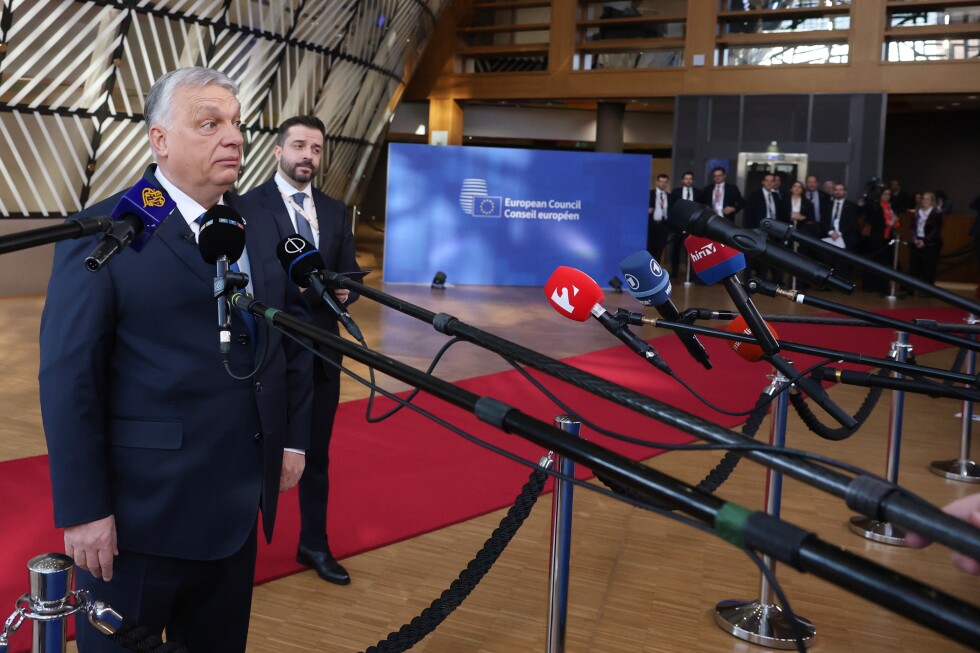
    BUDAPEST, Hungary — In a dramatic shift within Hungarian politics, opposition leader Péter Magyar has launched an ambitious campaign to unseat Prime Minister Viktor Orbán’s longstanding government. Speaking before supporters at a Budapest exposition center on Sunday, Magyar declared his center-right Tisza party stands “ready to govern” just 56 days before the crucial April 12 parliamentary elections.

    Magyar, a former insider within Orbán’s nationalist Fidesz party, has rapidly emerged as the most formidable political challenge to Orbán’s 16-year administration. Following an impressive performance in June’s European Parliament elections where Tisza captured approximately 30% of the vote, the party has maintained a consistent lead in independent polls for over a year.

    The opposition leader has conducted an intensive grassroots campaign across Hungary’s traditionally conservative rural heartlands—regions that have historically supported Orbán. Magyar’s platform centers on economic grievances, highlighting Hungary’s status as one of the EU’s poorest nations despite EU membership. He emphasizes stagnant wages, soaring living costs, and systemic corruption that he claims has enriched a small circle of government-connected oligarchs while ordinary Hungarians struggle.

    Foreign policy represents another critical dividing line. While Orbán recently stated that the European Union—not Russian aggression—poses the primary threat to Hungary, Magyar has positioned himself as pro-European. Following meetings with European leaders at the Munich Security Conference, Magyar pledged to end Hungary’s “drifting out of the European Union” and restore Western alliances, though he maintains certain Fidesz policies including border security measures and opposition to Ukraine’s accelerated EU accession.

    Tisza’s comprehensive 239-page governing program outlines ambitious reforms, including recovering billions in suspended EU funds by addressing democratic backsliding concerns, adopting the euro by 2030, and revitalizing Hungary’s deteriorating healthcare and public transportation systems. The party has recruited political newcomers from professional sectors—entrepreneurs, doctors, economists—with international energy expert Anita Orbán (no relation to the prime minister) slated as prospective foreign policy chief and former Shell executive István Kapitány as senior economy official.

    Magyar concluded his campaign launch with a promise of service-oriented governance: “We don’t plan to dominate this country, but to serve it.”

  • Ukraine’s ex-energy minister detained while attempting to leave country

    Ukraine’s ex-energy minister detained while attempting to leave country

    Ukrainian authorities have apprehended former Energy Minister German Galushchenko while attempting to exit the country, marking the latest development in a sweeping corruption investigation that has shaken President Volodymyr Zelensky’s administration. The detention occurred at a border crossing point as Galushchenko reportedly sought to flee via train, though his intended destination remains unspecified.

    The arrest connects directly to Operation Midas, an extensive 15-month anti-corruption probe conducted by Ukraine’s National Anti-Corruption Bureau (NABU) and the Specialised Anti-Corruption Prosecutor’s Office (SAP). Investigators allege Galushchenko participated in a sophisticated $100 million embezzlement scheme within Ukraine’s energy sector, specifically targeting the state nuclear operator Energoatom. The operation uncovered systematic kickbacks ranging from 10-15% of contract values collected from energy contractors.

    This scandal emerges at a particularly sensitive time for Ukraine, as Russia intensifies attacks on energy infrastructure during winter months. The involvement of high-ranking officials in corrupt practices within the vital energy sector has generated substantial domestic outrage.

    The investigation has already produced significant political consequences, including the resignation of Zelensky’s chief-of-staff Andriy Yermak after his residence was searched, though neither he nor the president face direct allegations. Former Deputy Prime Minister Oleksiy Chernyshov was arrested in November on illicit enrichment charges, while businessman Timur Mindich, co-owner of Zelensky’s former TV studio Kvartal95, reportedly fled Ukraine after being named a suspect.

    International observers note that Ukraine’s persistent corruption problems present major obstacles to European Union integration, with anti-graft measures representing a key requirement for membership talks. The scandal has additionally increased pressure from the United States to resume elections, currently suspended under martial law provisions since Russia’s full-scale invasion began in 2022.

    NABU officials indicate Galushchenko is being transported to Kyiv for intensive questioning, with further updates on the Midas case expected shortly. The former minister, who previously served as justice minister before leading the energy portfolio for three years, has consistently denied wrongdoing and pledged to defend himself against all allegations.

  • Trump says Board of Peace will unveil $5 billion in Gaza reconstruction pledges at inaugural meeting

    Trump says Board of Peace will unveil $5 billion in Gaza reconstruction pledges at inaugural meeting

    WEST PALM BEACH, Fla. — President Donald Trump announced on Sunday that his newly established Board of Peace has obtained commitments totaling $5 billion for the reconstruction of war-torn Gaza, alongside pledges of thousands of personnel for international stabilization and police forces in the territory. The formal announcement is scheduled for Thursday during the board’s inaugural meeting in Washington.

    In a social media statement, Trump proclaimed the board would become “the most consequential International Body in History,” though he withheld specific details regarding contributing nations. However, Indonesia’s military independently confirmed preparations to deploy up to 8,000 troops by June’s end for potential humanitarian and peacekeeping operations in Gaza—marking the first concrete commitment to the Republican president’s initiative.

    The reconstruction challenge remains monumental, with joint estimates from the United Nations, World Bank and European Union projecting costs approaching $70 billion to rebuild the coastal enclave after extensive damage from over two years of Israeli bombardment.

    The ceasefire agreement central to this effort mandates an armed international stabilization force to maintain security and oversee the disarmament of Hamas—a critical condition for Israel. Despite this requirement, few nations have demonstrated willingness to participate in such a force thus far.

    While the U.S.-brokered ceasefire from October 10 has reduced the most intense fighting between Israel and Hamas, intermittent Israeli airstrikes and skirmishes persist along military-controlled zones.

    The Board of Peace, initially conceived as a mechanism to address the Israel-Hamas conflict, has evolved into a broader instrument for global crisis resolution, reflecting Trump’s ambition to reshape the post-World War II international order. This development coincides with apparent efforts to circumvent traditional multilateral institutions like the United Nations.

    Notably, many European allies and other traditional partners have declined participation, expressing skepticism that the board might function as a potential rival to the UN Security Council. Israeli Prime Minister Benjamin Netanyahu, despite recent White House discussions with Trump, is not expected to attend Thursday’s gathering at the recently renamed Donald J. Trump U.S. Institute of Peace—a facility currently embroiled in litigation following the administration’s seizure of the think tank and dismissal of most staff last year.

  • Cautious optimism on China-US relations on display at MSC

    Cautious optimism on China-US relations on display at MSC

    At the Munich Security Conference, senior diplomats from the United States and China articulated a cautiously optimistic yet pragmatic vision for bilateral relations, acknowledging both the potential for cooperation and the persistence of fundamental challenges. Chinese Foreign Minister Wang Yi stated that while the relationship between the world’s two largest economies possesses ‘bright prospects,’ its trajectory remains bifurcated between cooperation and confrontation. Minister Wang emphasized China’s preference for a collaborative path but confirmed the nation’s preparedness to navigate potential risks. He outlined two distinct scenarios: one where the U.S. adopts a more objective and pragmatic policy leading to mutual benefit, and another defined by containment, decoupling, and confrontational actions, particularly regarding Taiwan, which he warned would lead to direct conflict. Concurrently, U.S. Secretary of State Marco Rubio characterized the maintenance of diplomatic dialogue not as a concession but as a strategic necessity, describing a failure to communicate as ‘geopolitical malpractice.’ While acknowledging that American and Chinese national interests ‘will often not align,’ Rubio stressed the obligation of both powers to manage disagreements peacefully to avoid economic or military conflict. The diplomatic exchanges in Munich were bolstered by confirmation of ongoing high-level engagement planning, including a potential visit by the U.S. President to China in April, following a recent telephone conversation between the two heads of state. A meeting between Wang and Rubio on the sidelines of the conference was subsequently described by both sides as positive and constructive, with agreements to implement existing consensus and strengthen dialogue across various fields to stabilize the relationship.

  • Imran Khan’s sister says sons spoke to him for 20 minutes after Pakistan Chief Justice order

    Imran Khan’s sister says sons spoke to him for 20 minutes after Pakistan Chief Justice order

    In a significant development within Pakistan’s ongoing political saga, former Prime Minister Imran Khan has finally connected with his sons through a supervised telephone conversation lasting approximately twenty minutes. This communication occurred following a direct order from Pakistan’s Chief Justice, marking a rare familial interaction since Khan’s incarceration began in August 2023.

    Aleema Khanum, Khan’s sister, confirmed the exchange via social media platform X, stating the former cricket star turned politician expressed immense joy upon hearing his sons’ voices after an extended period of separation. The conversation represents a minor concession in an otherwise stringent detention regime that has drawn international scrutiny.

    The development emerges against a backdrop of escalating tensions regarding Khan’s treatment. His sons, residing in the United Kingdom, have reportedly faced visa denials preventing physical visits to Pakistan. Kasim Khan, Khan’s younger son, has characterized these restrictions as systematic persecution, appealing to global human rights organizations and democratic nations to intervene against what he describes as politically motivated injustice.

    Medical concerns compound the situation. Recent court submissions reveal Khan has been diagnosed with a right central retinal vein occlusion, a serious vascular eye condition. Although prison authorities transferred him to Pakistan Institute of Medical Sciences for a brief surgical procedure on February 6, his family asserts significant treatment delays have exacerbated vision deterioration. They demand immediate specialist care at Shifa International Hospital under supervision of his personal physicians to prevent permanent vision loss.

    Khan, sentenced to 14 years on corruption charges among dozens of cases, maintains these allegations constitute a deliberate campaign by military establishments to eliminate his political influence—a claim the armed forces consistently deny. The Supreme Court initiated review proceedings after lawyer Salman Safdar petitioned for adequate medical access and family visitation rights.

    This episode highlights continuing tensions between Pakistan’s judiciary, military establishment, and political factions, with Khan’s health and treatment conditions becoming a focal point for broader debates about democratic norms and human rights protections in the country.