分类: politics

  • UK police band together to assess Epstein revelations as scandal rocks royals and politics

    UK police band together to assess Epstein revelations as scandal rocks royals and politics

    British law enforcement agencies have initiated a comprehensive nationwide investigation into potential criminal activities uncovered within the recently released Jeffrey Epstein documents. The National Police Chiefs’ Council has established a specialized coordination unit to manage the complex assessment of over 3 million pages of evidence obtained from the U.S. Justice Department’s investigation into the convicted sex offender.

    The extensive documentation contains serious allegations regarding the involvement of high-profile British figures, including the former Prince Andrew—now known as Andrew Mountbatten-Windsor—and Peter Mandelson, the United Kingdom’s former ambassador to Washington. At least eight regional police forces are currently examining evidence ranging from potential sex trafficking operations utilizing Epstein’s private aircraft to accusations that the former prince transmitted confidential government documents to the financier during his tenure as Britain’s international trade envoy.

    Surrey Police confirmed investigating specific allegations of sex trafficking incidents occurring in the village of Virginia Water between 1994 and 1996, while Essex Police are scrutinizing flight records involving private aircraft movements at Stansted Airport. The National Police Chiefs’ Council emphasized the investigation’s complexity, noting the challenges presented by the volume of material and international jurisdictional considerations.

    The Epstein scandal continues to reverberate through Britain’s highest institutions, having already precipitated significant consequences within the royal family. King Charles III formally stripped his brother of all royal titles and privileges in October 2022 in response to the escalating revelations about Andrew’s association with Epstein. Simultaneously, Prime Minister Keir Starmer faces mounting criticism and leadership challenges following disclosures about Mandelson’s previously undisclosed connections with Epstein, which emerged despite Starmer’s appointment of Mandelson to a crucial diplomatic position.

    Law enforcement authorities have encouraged individuals possessing relevant information to come forward, assuring thorough examination of all evidence through coordinated international cooperation with partner agencies.

  • Wave of arrests over killing of French nationalist piles pressure on far left

    Wave of arrests over killing of French nationalist piles pressure on far left

    French authorities have escalated their investigation into the fatal assault of far-right student activist Quentin Deranque in Lyon, detaining two additional suspects and bringing the total number in custody to eleven. The 23-year-old succumbed to severe cranial trauma after being violently attacked during demonstrations adjacent to a conference featuring Rima Hassan, a European Parliament member from the hard-left France Unbowed (LFI) party.

    The investigation has penetrated political circles with the arrest of Jacques-Elie Favrot, parliamentary assistant to LFI politician Raphaël Arnault. Despite Favrot’s legal representation formally denying any involvement in the activist’s death prior to his detention, Arnault confirmed his assistant’s contract termination and cessation of parliamentary duties.

    This incident has ignited fierce political crossfire across France’s ideological spectrum, occurring mere weeks before critical municipal elections. Prime Minister Sébastien Lecornu’s minority government, having recently survived dual no-confidence motions, now confronts escalating political volatility regarded as a crucial barometer for upcoming presidential elections.

    LFI leadership has vehemently rejected associations with the violence. Party coordinator Manuel Bompard reported bomb threats at their Paris headquarters while condemning what he characterized as defamatory media and political narratives. “This absolutely despicable exploitation of tragedy must cease,” Bompard asserted, emphasizing LFI’s non-responsibility for the events.

    Evidence from scene footage depicts three individuals on the ground being assaulted by hooded assailants. Némésis, a feminist anti-immigration organization, identified Deranque as having provided security for their members and accused the Anti-Fascist Young Guard collective—an allegation the group denies.

    The political repercussions continue to reverberate through France’s governing institutions. A National Assembly memorial was conducted for Deranque, while government spokesperson Maud Bregeon demanded Arnault’s suspension from LFI’s parliamentary group due to his connections with the accused organization.

    Criticism has emanated from across political divides, with far-right leader Jordan Bardella attributing “moral and political responsibility” to LFI leader Jean-Luc Mélenchon. Even former LFI parliamentarian Alexis Corbière urged party accountability. Moderate left voices, including ex-President François Hollande, accused LFI of debasing political discourse and creating ideological proximity between extreme political factions.

    Simultaneously, law enforcement agencies face scrutiny regarding their preparedness, as local police received advance warning about Hassan’s event yet deployed no riot control units to the location where the lethal confrontation occurred.

  • Hungary will suspend diesel shipments to Ukraine over interruption to Russian oil supply

    Hungary will suspend diesel shipments to Ukraine over interruption to Russian oil supply

    BUDAPEST, Hungary — In a significant escalation of regional energy tensions, Hungary has announced the suspension of diesel exports to Ukraine until resolution of interruptions affecting Russian oil supplies through the Druzhba pipeline. The announcement came from Hungarian Foreign Minister Péter Szijjártó via social media on Wednesday.

    The diplomatic friction stems from January 27 disruptions to Russian crude deliveries to Hungary and Slovakia via the critical Druzhba pipeline, which traverses Ukrainian territory. Ukrainian authorities attribute the interruption to Russian military strikes that damaged infrastructure, while Hungarian and Slovak officials—without presenting substantiating evidence—have alleged Ukrainian intentional obstruction.

    Minister Szijjártó characterized the oil supply interruption as ‘a political decision made by the Ukrainian president himself,’ a claim vehemently denied by Ukrainian officials. Despite the suspension of diesel exports, Szijjártó emphasized Hungary’s substantial oil reserves, sufficient for over three months, ensuring national energy security.

    This development highlights Hungary’s distinctive position within European energy politics. Unlike most European nations that have drastically reduced or eliminated Russian energy imports since the February 2022 invasion of Ukraine, Hungary—while maintaining membership in both the EU and NATO—has actually increased its procurement of Russian fossil fuels.

    Prime Minister Viktor Orbán’s government maintains that Russian energy remains economically indispensable, warning that alternative sourcing would trigger immediate economic collapse—a position contested by energy experts. Orbán, widely regarded as Moscow’s primary advocate within the EU, has consistently opposed bloc-wide sanctions targeting Russian energy revenues that help finance the war effort.

    The energy dispute coincides with Hungary’s upcoming April elections, described as Orbán’s most challenging electoral contest in his 16-year tenure. His campaign has prominently featured anti-Ukraine and anti-EU rhetoric, positioning neighboring Ukraine as an existential threat and himself as Hungary’s sole protector.

    In response to the pipeline disruptions, Hungary sought alternative supply routes through Croatia’s Adria pipeline system. However, Croatian Economy Minister Ante Šušnjar rejected the proposal, stating there are ‘no technical excuses left for staying tied to Russian crude’ and emphasizing that Russian oil purchases ultimately ‘help fund war and attacks on Ukrainian people.’

  • ‘Difficult’ Russia-Ukraine peace talks end without breakthrough

    ‘Difficult’ Russia-Ukraine peace talks end without breakthrough

    Diplomatic efforts to resolve the ongoing conflict in Ukraine reached another critical juncture this week as trilateral negotiations involving Russian, American, and Ukrainian representatives concluded in Geneva without achieving a substantive breakthrough. The high-stakes discussions, which extended late into Tuesday before concluding after just two hours on Wednesday, highlighted the persistent chasm between Moscow and Kyiv’s fundamental positions.

    Despite initial expressions of optimism from US envoy Steve Witkoff, both Russian chief negotiator Vladimir Medinsky and Ukrainian President Volodymyr Zelensky characterized the dialogue as particularly challenging. In a notable development following the official conclusion of talks, Medinsky returned to the negotiation venue for an additional private meeting with Ukrainian officials that lasted approximately ninety minutes, though details of these closed-door discussions remain undisclosed.

    According to Ukrainian diplomatic sources familiar with the proceedings, limited progress was achieved regarding military considerations, including front line positioning and ceasefire monitoring mechanisms. However, the central issue of territorial control—specifically Russia’s unwavering demand for complete dominion over the eastern Donbas region comprising Donetsk and Luhansk—proved insurmountable. Ukrainian officials have consistently rejected this precondition as unacceptable, equating it to surrendering sovereign territory and creating strategic vulnerabilities against future aggression.

    Medinsky acknowledged the difficult nature of the negotiations while simultaneously characterizing them as businesslike, confirming that additional meetings would occur in the near future. Ukrainian negotiator Rustem Umerov struck a marginally more positive tone, describing the talks as substantive and intensive while cautioning that the complex diplomatic process requires careful alignment among all parties and additional time.

    President Zelensky expressed frustration with the pace of progress, accusing Russia of deliberately prolonging negotiations that he believes should have already reached their conclusive phase. The Ukrainian leader further rejected recent suggestions from US President Donald Trump that Ukraine should accelerate compromise, noting the fundamental inequity of expecting the invaded nation to make territorial concessions.

    Additional complicating factors include the status of the Zaporizhzhia Nuclear Power Plant—Europe’s largest atomic energy facility, which remains under Russian control despite Ukrainian demands for its return. European representation also emerged as a significant consideration, with officials from Britain, France, Germany, and Italy participating in sideline discussions despite their exclusion from the primary US-mediated negotiations. Zelensky emphasized that European involvement remains indispensable for any eventual comprehensive agreement.

    These diplomatic developments occur against the somber backdrop of the approaching fourth anniversary of Russia’s full-scale invasion, a conflict that has resulted in tens of thousands of military and civilian casualties while displacing millions across Ukraine. The continued aerial assaults and humanitarian crisis underscore the urgent need for diplomatic resolution despite the evident challenges in achieving mutually acceptable terms.

  • Sanae Takaichi set to be reelected Japanese prime minister

    Sanae Takaichi set to be reelected Japanese prime minister

    TOKYO – In a decisive political development, Sanae Takaichi has clinched her reappointment as Japan’s Prime Minister following a conclusive parliamentary procedure on Wednesday. The leader of the ruling Liberal Democratic Party (LDP) secured an overwhelming mandate from the powerful lower house of Japan’s Diet, eliminating any requirement for a runoff election.

    The parliamentary endorsement solidifies Takaichi’s position at the helm of Asia’s second-largest economy, granting her continued authority to implement her political agenda. This victory represents a significant consolidation of power for the conservative leader, who has maintained strong support within her party’s ranks despite various global and domestic challenges.

    The appointment process unfolded through a structured vote in the House of Representatives, where the LDP maintains a substantial majority. Political analysts note that this smooth transition indicates both party unity and public confidence in Takaichi’s leadership direction, particularly regarding economic stabilization measures and national security policies.

    This political milestone occurs against a backdrop of regional geopolitical tensions and economic uncertainty, positioning Takaichi to continue her work on international diplomacy and domestic reform initiatives. Her administration faces ongoing challenges including inflation management, demographic shifts, and evolving security concerns in the Asia-Pacific region.

  • S. Korea says 3 civilians send drones to DPRK 4 times

    S. Korea says 3 civilians send drones to DPRK 4 times

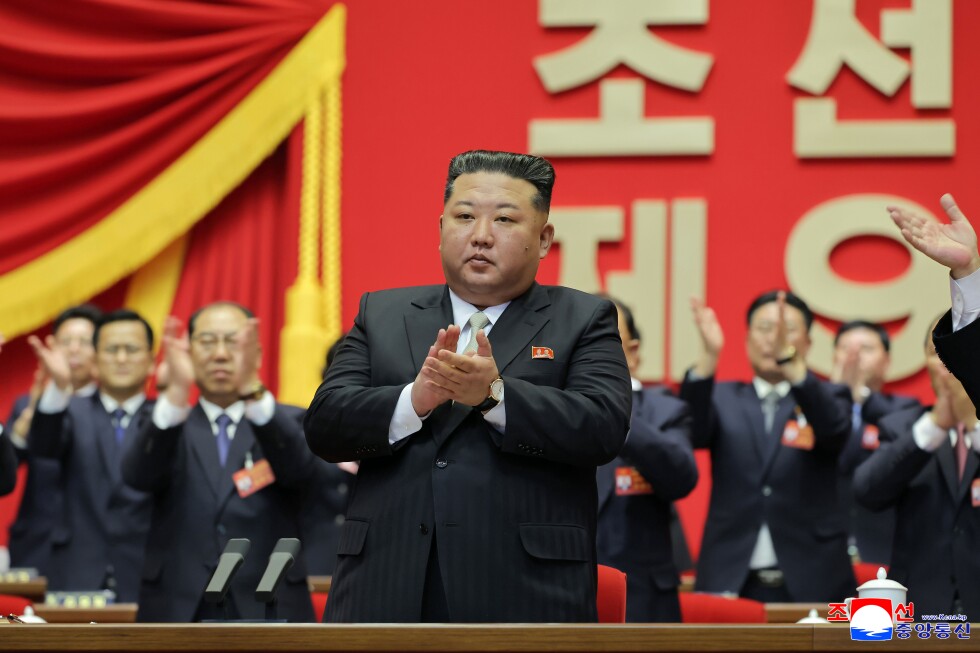
    South Korea’s Unification Minister confirmed on Wednesday that three civilian individuals had conducted four separate unauthorized drone incursions into North Korean airspace. The revelation came during an official briefing, highlighting a significant breach of inter-Korean airspace protocols.

    The unmanned aerial vehicles were dispatched across the heavily fortified border that separates the two nations, though specific details regarding the drones’ capabilities, flight paths, and intended purposes remain undisclosed. Authorities have launched a comprehensive investigation into the motives behind these clandestine operations, examining whether the flights were conducted for reconnaissance, propaganda distribution, or other unauthorized activities.

    This development occurs amid ongoing tensions on the Korean Peninsula, where both nations maintain strict surveillance and security measures along the Demilitarized Zone. The incident raises serious concerns about civilian adherence to national security protocols and the potential for unintended escalation between the two technically-still-warring nations.

    South Korean officials emphasized that such unauthorized crossings violate multiple national security laws and international agreements governing the airspace between the two Koreas. The government has reiterated its commitment to preventing similar incidents through enhanced border surveillance and public awareness campaigns about the legal consequences of such actions.

  • Gabon suspends access to social media as critics accuse its leader of crackdown on dissent

    Gabon suspends access to social media as critics accuse its leader of crackdown on dissent

    LIBREVILLE, Gabon – The Gabonese government has enacted a comprehensive suspension of all social media and digital platforms across the Central African nation, effective immediately and indefinitely. The communications regulatory body, known as the High Authority for Communication, announced the drastic measure during a national broadcast on Tuesday evening.

    Official justification cites the proliferation of what authorities characterize as ‘inappropriate, defamatory, hateful, and insulting content’ circulating on digital networks. The government agency asserts such material poses direct threats to human dignity, national institutions, and overall security. These communications, according to the statement, violate both Gabonese and international laws, alongside the content moderation policies established by major technology platforms.

    Jean Claude Franck Mendome, spokesperson for the regulatory authority, formally declared the immediate implementation of the blackout. The directive has resulted in severe disruptions to popular services including Meta’s suite of applications (Facebook, Instagram, WhatsApp) and TikTok. These platforms represent primary communication channels for Gabonese citizens, with WhatsApp’s calling functionality experiencing particularly significant impairment.

    This development occurs under the leadership of General Brice Clotaire Oligui Nguema, who seized power in 2023 by ousting President Ali Bongo Ondimba amid allegations of irresponsible governance. Although General Nguema’s subsequent electoral victory initially fostered optimism for democratic restoration, his administration faces mounting criticism for increasingly authoritarian tactics. Recent months have witnessed the imprisonment of journalists and trade unionists, signaling what observers describe as a systematic suppression of critical voices and independent media.

  • Turkey’s president rejects Israel’s recognition of Somaliland

    Turkey’s president rejects Israel’s recognition of Somaliland

    Turkish President Recep Tayyip Erdogan has publicly denounced Israel’s formal recognition of Somaliland as an independent state during his official visit to Ethiopia. Speaking at a joint press conference with Ethiopian Prime Minister Abiy Ahmed in Addis Ababa, Erdogan characterized the recognition as potentially destabilizing for the volatile Horn of Africa region.

    The diplomatic development comes after Israel became the first nation to acknowledge Somaliland’s sovereignty in December, three decades after the territory declared independence from Somalia. The move has drawn sharp criticism from Mogadishu, which maintains Somaliland remains an integral part of Somali territory.

    Erdogan positioned Turkey as a advocate for regional self-determination, stating: ‘The Horn of Africa should not become the battlefield of foreign forces. We believe that countries of the region should address their problems through dialogue and cooperation.’

    The visit highlighted Turkey’s growing geopolitical influence in East Africa, with Erdogan having previously mediated tensions between Ethiopia and Somalia in 2024 when Addis Ababa attempted to lease coastline territory from Somaliland for port access.

    Meanwhile, Prime Minister Abiy utilized the diplomatic platform to advocate for Ethiopia’s maritime aspirations, describing the nation’s landlocked status as ‘geographical imprisonment’ for its 130 million citizens. Abiy specifically requested Turkish diplomatic support in securing peaceful access to sea ports, notably referencing Eritrea’s southern port of Assab located approximately 60 kilometers from Ethiopia’s border.

    The discussions occur against a backdrop of escalating tensions in Ethiopia’s northern Tigray region, where reports indicate military buildups and growing civil unrest. The complex regional dynamics are further complicated by shifting alliances and the legacy of the 1998-2000 border war between Ethiopia and Eritrea that resulted in over 100,000 casualties.

  • Police arrest 11 in the beating death of a far-right student in France

    Police arrest 11 in the beating death of a far-right student in France

    French authorities have taken 11 individuals into custody following the fatal assault of Quentin Deranque, a 23-year-old far-right nationalist who succumbed to severe brain injuries in Lyon. The incident occurred during violent clashes between far-left and far-right factions outside a student gathering featuring Rima Hassan, a French-Palestinian European Parliament member from the far-left France Unbowed party.

    Lyon prosecutor Thierry Dran confirmed the autopsy revealed a fractured skull and fatal cerebral trauma, prompting a homicide investigation with potential additional criminal charges. The detainees include a parliamentary aide to France Unbowed lawmaker Raphaël Arnault, who subsequently terminated the aide’s employment contract amid the ongoing probe.

    The tragedy has ignited fierce political recriminations across France’s ideological spectrum, with opponents accusing Jean-Luc Mélenchon’s France Unbowed party of cultivating violence through its confrontational far-left rhetoric. Mélenchon vehemently denied any responsibility, stating his party had “absolutely nothing to do, either directly or indirectly” with Deranque’s death.

    With municipal elections approaching next month and presidential elections looming in 2027, the incident has intensified existing political fractures. Former President François Hollande declared an end to cooperation between mainstream left parties and France Unbowed, emphasizing that the traditional left must distance itself from Mélenchon’s movement. The case highlights the persistent undercurrent of political violence in French society, where ideological conflicts between extremist groups occasionally escalate into physical confrontations, though fatalities remain rare.

  • Turkish lawmakers back PKK peace reforms but tie steps to disarmament

    Turkish lawmakers back PKK peace reforms but tie steps to disarmament

    ANKARA, Turkey — A Turkish parliamentary commission has overwhelmingly endorsed a groundbreaking set of recommendations aimed at revitalizing peace negotiations with the Kurdistan Workers’ Party (PKK), marking a significant development in the four-decade conflict. The National Solidarity, Brotherhood and Democracy Commission approved the comprehensive roadmap on Wednesday, outlining conditional measures for reconciliation while maintaining stringent security prerequisites.

    The commission’s final draft, obtained by journalists, emphasizes that legal reforms for reintegrating former militants must be contingent upon verified disarmament by state security institutions. The framework proposes temporary legal provisions to facilitate the return of PKK members who formally renounce violence, while explicitly avoiding blanket amnesty provisions.

    Among the key recommendations are measures to expand freedom of expression protections, release elderly and ill prisoners, and ensure nonviolent activities are no longer prosecuted under anti-terrorism legislation. The report also advocates for ending the controversial practice of appointing government trustees to replace elected mayors from pro-Kurdish political parties.

    The PKK, designated as a terrorist organization by Turkey, the United States, and European Union, has engaged in armed conflict since 1984 resulting in tens of thousands of casualties across Turkey and neighboring regions. The group initially pursued Kurdish independence before shifting demands toward autonomy and expanded rights within Turkey.

    Parliamentary Speaker Numan Kurtulmuş emphasized that the report does not constitute an amnesty arrangement, characterizing it instead as “a clear expression of the determination to build the future together without denying our suffering.” The recommendations received 47 votes in favor with only two opposed and one abstention.

    The commission, established in August following the PKK’s May announcement of intentions to disarm and disband after an appeal from imprisoned leader Abdullah Öcalan, stopped short of recommending parole for the controversial figure. Instead, it urged compliance with European Court of Human Rights and Turkish Constitutional Court rulings regarding detention conditions.

    President Recep Tayyip Erdoğan welcomed the commission’s work in a televised address, stating it has “put forward a perspective that will give momentum” to reconciliation efforts. The report additionally proposes broader democratization measures including media law reforms to protect legitimate criticism and municipal governance changes that would allow local councils to elect replacement mayors rather than accepting government appointments.

    No immediate response was available from the PKK, which has previously demanded formal legal guarantees from the Turkish government to advance the peace process.