分类: politics

  • Explained: The Israeli measures imposing de facto annexation in the West Bank

    Explained: The Israeli measures imposing de facto annexation in the West Bank

    In a dramatic shift of policy, Israel has enacted comprehensive measures that fundamentally alter the administrative reality for Palestinians in the occupied West Bank. These unprecedented changes, the first of their magnitude since Israel’s 1967 occupation, significantly expand civilian authority over territories previously governed under military law for nearly six decades.

    The reforms effectively extend Israeli administrative control throughout the West Bank, realizing a long-standing objective of right-wing and ultra-nationalist settler movements. Critics characterize these moves as de facto annexation despite the absence of formal declaration, substantially weakening the Palestinian Authority’s limited self-rule and dismantling the foundational structure established by the Oslo Accords.

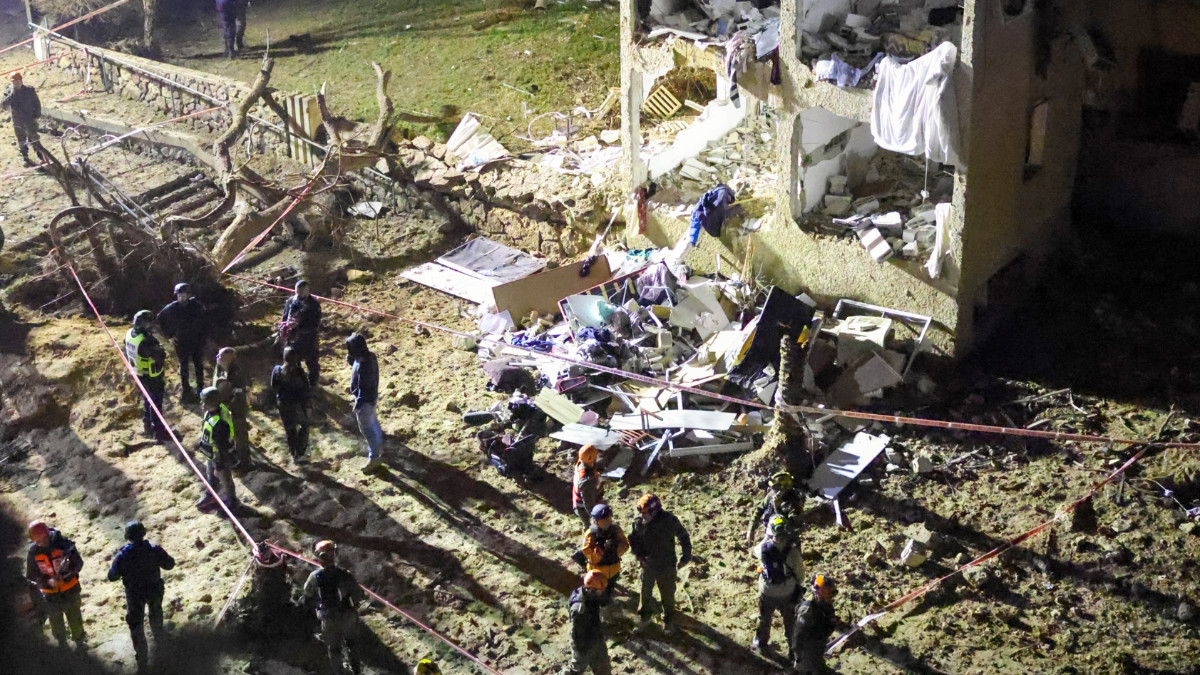
    Key changes announced on February 8th include Israel’s newfound authority to enforce civilian decisions in Areas A and B—regions comprising approximately 40% of the West Bank containing major Palestinian population centers. Previously restricted to security operations in these zones, Israeli forces may now demolish homes, wells, and structures under expanded environmental and heritage protection pretexts.

    Parallel land regulation reforms facilitate mass land seizures and simplify property transfers to settlers by abolishing Jordanian-era restrictions and declassifying previously protected land registries. Subsequent measures authorize the reclassification of unregistered or abandoned territories as “state property,” effectively legalizing widespread land confiscation despite international law prohibitions against such actions by occupying powers.

    Hebron emerges as a particularly sensitive focus, with building permit authority transferred from Palestinian to Israeli military control. This shift enables settlement expansion within urban centers and potential alterations to the Ibrahimi Mosque complex, a site sacred to Muslims since the 1994 massacre by an Israeli settler.

    The transformation deepened with Israel’s approval of a new settlement effectively expanding Jerusalem’s municipal boundaries into the West Bank—the first formal boundary extension since the 1967 occupation. This planned expansion at Adam settlement, presented as a new neighborhood despite lacking physical connection to existing structures, further blurs the Green Line demarcation established by the 1949 armistice agreements.

  • US senators visit key Ukrainian port city as they push for fresh sanctions on Russia

    US senators visit key Ukrainian port city as they push for fresh sanctions on Russia

    A bipartisan delegation of U.S. senators concluded a significant visit to Odessa on Wednesday, marking the first congressional trip to Ukraine’s strategic Black Sea port since Russia’s invasion nearly four years ago. The delegation, comprising Democratic Senators Jeanne Shaheen, Chris Coons, Richard Blumenthal, and Sheldon Whitehouse, aimed to galvanize congressional action on comprehensive sanctions designed to economically pressure Moscow into meaningful peace negotiations.

    The timing of this diplomatic mission coincides with critical U.S.-brokered talks in Switzerland, where both Ukrainian and Russian delegations remain deadlocked on fundamental issues including territorial sovereignty and security arrangements. Senator Shaheen emphasized that Ukrainian officials consistently expressed desire for a peace agreement that preserves their nation’s sovereignty and territorial integrity.

    Legislative efforts to impose robust sanctions have stalled in Congress for months, despite multiple proposals gaining traction. The most comprehensive bill would authorize the Trump administration to implement tariffs and secondary sanctions against nations purchasing Russian energy exports, targeting the financial infrastructure supporting Moscow’s military operations. Additional targeted measures would address China’s military support for Russia, seize frozen Russian assets, and disrupt Moscow’s ‘shadow fleet’ of oil tankers circumventing existing sanctions.

    Senator Lindsey Graham confirmed during the Munich Security Conference that Senate Majority Leader John Thune committed to bringing the sanctions package to vote once it secures the necessary 60-vote threshold. Graham characterized the legislation as a ‘game changer’ that has received President Trump’s endorsement.

    The House of Representatives is considering parallel measures, including bipartisan legislation targeting Russia’s defense industry and financial systems, alongside an $8 billion military aid package for Ukraine proposed by House Foreign Affairs Committee’s top Democrat Gregory Meeks.

    Upon returning to Washington, the senators plan to document attacks on U.S. businesses in Ukraine and increase pressure for enhanced military support. As Senator Blumenthal noted, ‘Putin understands weapons, not words.’ However, the administration’s ambiguous long-term commitment to Ukrainian security presents ongoing challenges, despite bipartisan consensus on the necessity of sustained pressure against Russian aggression.

  • Smotrich says not Israel’s fault Palestinians ‘murder one another’

    Smotrich says not Israel’s fault Palestinians ‘murder one another’

    Israeli Finance Minister Bezalel Smotrich ignited fierce controversy during a parliamentary session on Tuesday by asserting that the government bears no responsibility for the escalating homicide rates within Palestinian communities, claiming Palestinians “murder one another.” The inflammatory comments came during debates concerning his proposed 1.5% property tax on vacant land, which Palestinian lawmakers argue would disproportionately harm Palestinian landowners unable to afford development costs.

    Palestinian parliament members, including Iman Khatib-Yassin, condemned both the tax proposal and the government’s perceived failure to address surging violence in their communities. Smotrich retorted by questioning whether the administration should be held accountable for intra-community killings, prompting immediate outcry with legislators labeling his remarks “disgusting” and “racist.” The finance minister further demanded that Palestinian leaders explicitly condemn terrorism and recognize Hamas as a terrorist organization.

    This political confrontation unfolds against a backdrop of widespread demonstrations across Israel. Recent weeks have seen nearly 100,000 Palestinian citizens of Israel mobilize in Tel Aviv—one of the largest gatherings in years—to protest government inaction regarding rampant violence and organized crime. According to data from the Abraham Initiatives NGO, 51 Palestinian citizens have been killed in Israel since January, continuing a devastating trend that saw 252 fatalities in 2025 alone—a fourfold increase over the past decade.

    Experts and advocates attribute this crisis to systemic neglect. Criminologist Dr. Walid Haddad notes that Israel has never treated this violence as a strategic threat, resulting in no comprehensive governmental response. Human rights lawyer Ahmed Khalifa argues that state policies deliberately enable criminal networks to flourish within Palestinian areas. These concerns are reinforced by historical context: Palestinian citizens, descendants of those who remained after the 1948 Nakba, continue to face discriminatory practices despite comprising 20% of Israel’s population. The community’s longstanding grievances include inadequate policing, socioeconomic marginalization, and institutional bias, as exemplified by former Police Commissioner Kobi Shabtai’s 2023 statement that violence was “in their nature.”

  • UN panel says European calls for resignation of Albanese ‘rooted in disinformation’

    UN panel says European calls for resignation of Albanese ‘rooted in disinformation’

    A United Nations expert panel has issued a stern rebuke to several European nations for their demands that Francesca Albanese, the UN Special Rapporteur on Palestine, resign from her position. The Coordination Committee of the Special Procedures of the Human Rights Council, comprising six independent experts, characterized the campaign against Albanese as fundamentally “rooted in disinformation.”

    The controversy stems from edited video footage circulated by pro-Israel advocacy group UN Watch, which misleadingly suggested Albanese had referred to Israel as “the common enemy of humanity” during her address at the 17th Al Jazeera Forum earlier this month. Foreign ministers from France, Germany, Italy, Austria, and the Czech Republic subsequently called for her resignation based on this manipulated content.

    The UN committee clarified that Albanese’s actual remarks used the phrase “common enemy” in context of criticizing political, military, and economic systems that have enabled Israel’s military operations in Gaza, not referring to Israel itself. In her February 7th remote address, Albanese stated: “We now see that we as a humanity have a common enemy and the respect of fundamental freedoms is the last peaceful avenue that we have to regain our freedom.”

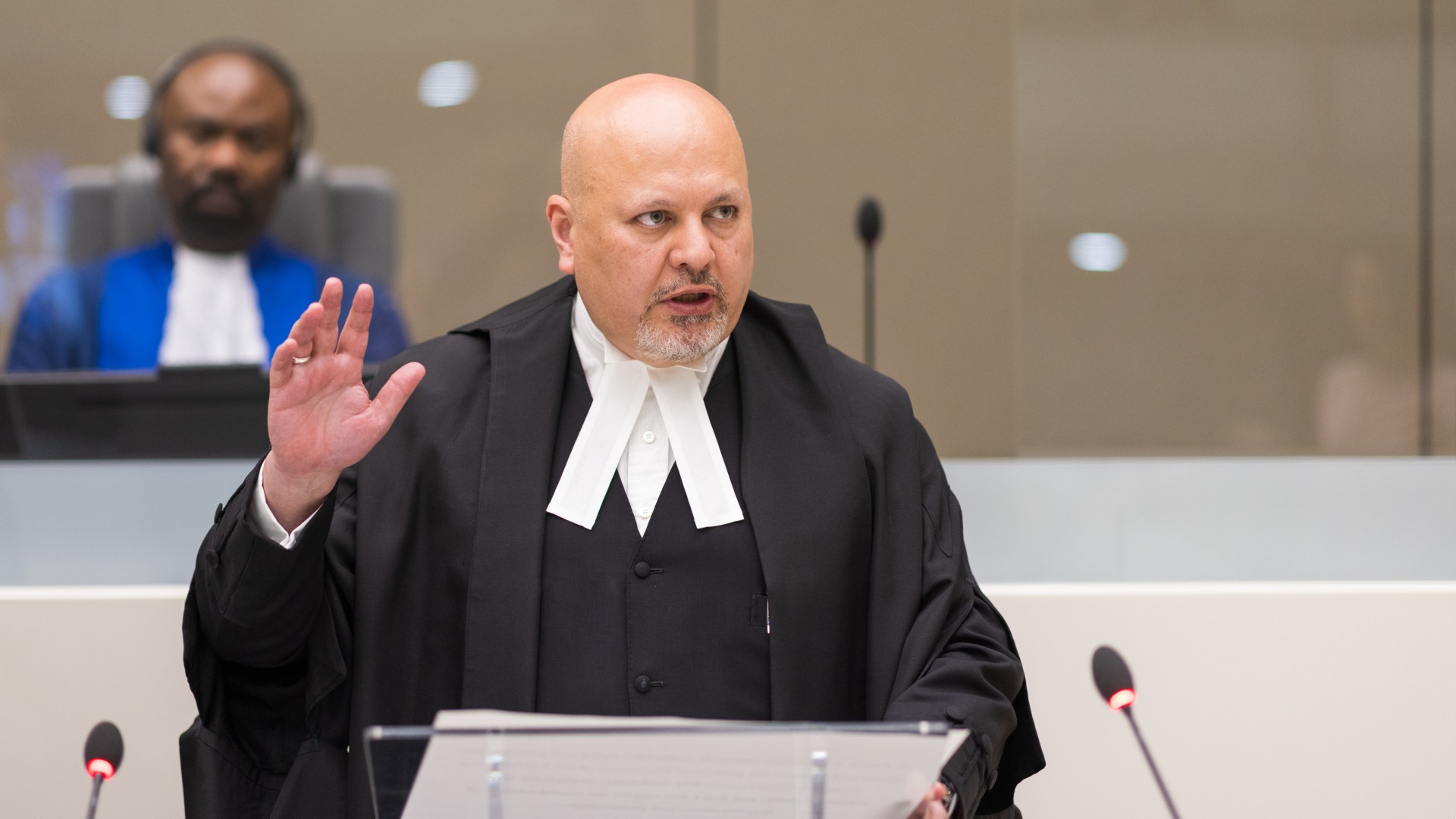
    The expert panel urged European governments to redirect their efforts toward ensuring Israeli accountability under international law rather than targeting Albanese, who faces “persistent intimidation, coordinated personal attacks and unlawful unilateral sanctions” while performing her mandate. The committee specifically called for support of International Criminal Court proceedings against officials accused of committing war crimes in Gaza.

    The situation has escalated to legal dimensions, with a group of French international lawyers filing a formal complaint with Paris prosecutors accusing French Foreign Minister Jean-Noel Barrot of disseminating false information in his calls for Albanese’s resignation.

    This incident represents the latest development in ongoing tensions surrounding Albanese’s work. In July, the United States imposed sanctions against her related to her investigations into potential genocide in Gaza, effectively barring her from entering the US and freezing her assets there. These measures have reportedly disrupted her access to global financial systems and daily transactions.

    Since October 2023, Albanese has produced three major reports characterizing Israel’s military operations in Gaza as genocidal and criticizing global systems supporting these actions. In a November interview, she specifically accused 63 states of enabling Israeli violations of international law, noting that major European powers continue providing diplomatic, military and political cover despite overwhelming evidence of atrocities.

  • Far-right minister says Israel should ‘encourage’ Palestinian migration from occupied West Bank

    Far-right minister says Israel should ‘encourage’ Palestinian migration from occupied West Bank

    In a significant escalation of rhetoric, Israeli Finance Minister Bezalel Smotrich has publicly advocated for the migration of Palestinians from the West Bank and called for the formal cancellation of the Oslo Accords. Speaking at a meeting of his Religious Zionism party with settlement leaders near Ramallah on Tuesday, the far-right minister outlined his controversial vision labeled “Colonisation 2030.”

    Smotrich declared that the Israeli government must “destroy the idea of an Arab terror state” and “encourage migration both from Gaza and from Judea and Samaria,” using the nationalist terminology for the West Bank. He emphatically stated that “there is no other long-term solution” while presenting his agenda at a local vineyard.

    These remarks coincide with Israel’s advancement of plans to effectively extend annexed territories deeper into the West Bank. According to the Israeli anti-settlement organization Peace Now, the government recently approved a project to expand the illegal Adam settlement (also known as Geva Binyamin) northeast of occupied East Jerusalem. Though presented as a new “neighborhood,” the development would have no physical connection to the existing settlement and would instead extend Jerusalem’s municipal boundaries into the West Bank.

    This expansion would mark the first formal extension of Israel’s boundaries deeper into West Bank territory since the 1967 occupation. Additionally, the security cabinet recently announced decisions to dramatically alter land registration and property acquisition procedures in the West Bank, a move condemned by UN Secretary-General Antonio Guterres as “destabilizing” and “unlawful.”

    Peace Now characterized these actions as “de facto annexation” and reported that Israel approved a record 54 settlements for 2025. Under international law, occupying powers are prohibited from undertaking land registration in occupied territories, with such processes widely viewed as tools for asserting sovereignty.

    The recent measures expand Israel’s civil control in Areas A and B, regions that have officially been under Palestinian Authority jurisdiction since the Oslo Accords but contain all major Palestinian cities and towns.

  • ‘Vassalage’: Deepening Tunisia-Algeria ties spark mounting scrutiny and backlash

    ‘Vassalage’: Deepening Tunisia-Algeria ties spark mounting scrutiny and backlash

    A clandestine defense agreement between Algeria and Tunisia has ignited fierce political controversy and accusations of sovereignty erosion. The pact, signed in October by Algeria’s Army Chief of Staff General Said Chengriha and Tunisian Defense Minister Khaled Sehili, remains shrouded in secrecy, fueling widespread speculation and opposition criticism.

    The diplomatic relationship between the North African neighbors has been characterized by increasingly familial rhetoric, with Algerian Foreign Minister Ahmed Attaf delivering President Abdelmadjid Tebboune’s greetings to his Tunisian counterpart in January, emphasizing deepened partnership between “brotherly countries.” However, this official warmth contrasts sharply with growing public skepticism.

    The controversy reached critical mass when a purported seven-page leaked document surfaced in December, containing provocative provisions including permission for Algerian troops to operate 50 kilometers inside Tunisian territory and authorization to intervene should Tunisia’s “institutional stability” be threatened. While both governments swiftly denounced the document as fabricated, the damage to public trust was already done.

    Defense expert Mourad Chabbi from Grenoble Management School notes the agreement essentially updates a 2001 treaty, particularly institutionalizing intelligence-sharing mechanisms. “After securing the Libyan border through significant military deployment and maritime borders through EU agreements, the Tunisian army now seeks to secure its western flank,” Chabbi explained.

    The military cooperation reflects strategic interests for both nations. Algeria, traditionally dependent on Russian military cooperation, gains access to Tunisia’s status as a US major non-NATO ally that regularly hosts international exercises. For Tunisia, it represents another layer of border security in addition to existing arrangements with the EU.

    However, the partnership occurs against a troubling backdrop of democratic backsliding in both countries. President Kais Saied’s concentration of power since July 2021 has been accompanied by crackdowns on opposition figures, while Algeria has imprisoned prominent Hirak movement activists under Tebboune’s administration. The two leaders’ similar profiles—both coming to power after social movements destabilized security apparatuses—have facilitated growing alignment.

    This alignment has manifested in concerning ways, including the extradition of Tunisian opposition figure Seif Eddine Makhlouf from Algeria to Tunisia in January, which Amnesty International condemned as an “international law violation.” Meanwhile, Tunisia has demonstrated increasing willingness to assist Algeria’s crackdown on opponents since 2021.

    The relationship also extends to diplomatic matters, with Saied breaking Tunisia’s traditional neutrality on Western Sahara by hosting Polisario Front leader Brahim Ghali in 2022—a move that signaled clear alignment with Algeria’s position against Morocco.

    Despite the controversy, security sources confirm the leaked document was indeed fake, though the absence of transparency around the actual agreement continues to fuel distrust and speculation about the true nature of Algerian-Tunisian relations.

  • ‘Good luck’: Marcos taunts Duterte after declaring bid to run as Philippine president

    ‘Good luck’: Marcos taunts Duterte after declaring bid to run as Philippine president

    In a dramatic escalation of Philippine political tensions, Vice President Sara Duterte declared her presidential candidacy for the 2028 elections on Wednesday, triggering immediate backlash from President Ferdinand Marcos Jr.’s administration and opposition groups. The announcement comes amid three pending impeachment complaints against Duterte and her father’s impending trial at the International Criminal Court.

    President Marcos’ spokesperson, Claire Castro, delivered a terse response to Duterte’s announcement, stating, “Good luck, that’s all we can say,” in remarks widely interpreted as sarcastic. Castro notably challenged Duterte’s claim of responsibility for Marcos’ 2022 electoral victory, emphasizing that “it was the people who did it” rather than any single individual.

    Opposition groups condemned Duterte’s presidential bid as a calculated diversion tactic. The activist alliance Bagong Alyansang Makabayan (Bayan) characterized the move as “a desperate, shameless, and opportunist act” designed to deflect attention from serious allegations of corruption and misuse of confidential funds. The Makabayan Coalition similarly denounced the announcement as “a cynical and desperate attempt” to control political narratives and evade accountability.

    The timing of Duterte’s declaration coincides with the House of Representatives preparing to refer three impeachment complaints to its Committee on Justice. These complaints allege corruption involving hundreds of millions in public funds that were reportedly disbursed without proper documentation or oversight.

    As the highest-ranking government official in her family following former President Rodrigo Duterte’s imprisonment by the ICC, Sara Duterte now represents the political dynasty’s standard bearer. Her relationship with Marcos has deteriorated significantly since their 2022 alliance, with recorded threats against the president and other officials.

    The announcement has sparked polarized reactions across social media platforms, with overseas Filipinos largely supporting her candidacy while Marcos loyalists predict her potential imprisonment within the year. Prominent voices like stage actor Mae Paner have called for opposition unity to prevent another Duterte or Marcos from assuming the presidency in 2028.

  • Third Conservative Canadian MP defects to Carney’s Liberals

    Third Conservative Canadian MP defects to Carney’s Liberals

    In a significant political realignment, Conservative Member of Parliament Matt Jeneroux from Edmonton has officially crossed the floor to join Prime Minister Mark Carney’s Liberal Party. The announcement, made through Carney’s social media channels, marks the third such defection from the Conservative ranks in recent months and brings the Liberal government to the threshold of majority control in the House of Commons.

    The departure of Jeneroux, who had represented his Alberta constituency since 2015 and secured three consecutive electoral victories, constitutes a substantial blow to the opposition Conservatives. With this development, the Liberal Party now commands 169 seats—merely three short of the 172 required for majority governance. This shift occurs amid three current parliamentary vacancies: two in Toronto following the resignations of Liberal MPs Chrystia Freeland and Bill Blair, and one in Montreal awaiting a by-election after a narrowly contested result.

    Prime Minister Carney welcomed Jeneroux as a ‘strong voice in international engagement and parliamentary diplomacy,’ appointing him as special advisor on economic and security partnerships. Carney emphasized that ‘building a stronger, more resilient, and more independent country will require ambition, collaboration, and occasionally, sacrifice.’

    Jeneroux attributed his decision to ‘further reflection’ during the holiday period and consultations with family, colleagues, and constituents. Notably, he had previously announced his intention to leave the Conservative caucus in November, citing family time considerations without initially revealing plans to join the governing Liberals.

    The defection follows the Conservative Party’s recent overwhelming endorsement of Pierre Poilievre as leader, despite his reported unpopularity in public polls. Poilievre condemned the move, accusing Carney of attempting to ‘seize a costly Liberal majority government that Canadians voted against through dirty backroom deals.’ He asserted that Jeneroux had ‘betrayed the people of Edmonton Riverbend’ who supported Conservative platforms on affordability, public safety, and resource sector strength.

    This pattern of defections echoes earlier moves by Conservative MPs Michael Ma (Ontario) and Chris d’Entremont (Nova Scotia), who similarly cited dissatisfaction with Poilievre’s leadership as contributing factors in their decisions to join the government benches. The political landscape continues to evolve as both parties position themselves for potential parliamentary confrontations and future electoral contests.

  • Air Force One set for makeover paint job with new colours

    Air Force One set for makeover paint job with new colours

    The iconic white and blue livery of Air Force One, unchanged since the Kennedy administration, is being replaced with a new color scheme featuring gold, deep red, and navy blue—a palette personally favored by President Donald Trump. The comprehensive repainting initiative extends beyond the primary presidential aircraft to include the entire executive fleet.

    According to U.S. Air Force officials, the new color specifications are being implemented as aircraft undergo scheduled maintenance and repairs. The transformation affects multiple aircraft: the current Boeing VC-25B used for presidential transport, four C-32 jets typically designated as “Air Force Two” for vice-presidential travel, and a new Boeing 747-8i luxury aircraft donated to the presidential fleet by Qatar.

    The aesthetic shift reflects President Trump’s longstanding preference for gold accents, evident in his hotels and White House decor decisions. During his 2024 campaign, his private aircraft—sometimes referred to as “Trump Force One”—already showcased this distinctive color combination.

    The Air Force emphasized in an official statement that the new paint requirements are “not expected to result in additional delays or costs to the program.” Painting has already been completed on one of the C-32 aircraft, with preparations for retrofitting the Qatari-donated jumbo jet—valued at approximately $400 million—beginning last summer.

    While President Joe Biden canceled broader fleet modernization plans initiated during Trump’s first term, the color transformation represents a continued aesthetic imprint of the current administration on presidential symbols and infrastructure.

  • Lawmakers will elect Peru’s next president after the latest ouster

    Lawmakers will elect Peru’s next president after the latest ouster

    Peru’s fractured Congress is poised to select the nation’s eighth president within a ten-year period on Wednesday, following the abrupt ouster of former leader José Jerí after just four months in office. The extraordinary political turnover underscores a profound governance crisis stemming from legislative fragmentation and the recurrent application of constitutional provisions to remove sitting presidents.

    Four relatively obscure lawmakers have emerged as contenders for the presidency, with the candidate securing majority congressional votes destined to lead until July 28th, when power will transfer to the winner of April’s general election. The frequent presidential changes result from lawmakers’ broad interpretation of constitutional “permanent moral incapacity” clauses, creating what analysts describe as a revolving-door presidency.

    Jerí’s removal came after revelations of undisclosed meetings with Chinese business owners, including a state contractor, which he characterized as coordination efforts for a Peruvian-Chinese cultural festival. The Public Prosecutor’s Office has initiated two preliminary investigations into allegations of illegal sponsorship of private interests and influence-peddling detrimental to state interests.

    The presidential contenders include María del Carmen Alva, a 58-year-old lawyer from the conservative Popular Action party and former congressional speaker with family ties to agro-export businesses. Héctor Acuña, a 68-year-old engineer representing the conservative Honor and Democracy group, brings private sector experience but limited political exposure and connections to his brother César Acuña’s political machinery.

    Completing the candidate roster are José Balcázar, an 83-year-old former judge from the leftist Perú Libre party, and Edgard Reymundo, a 73-year-old sociologist from the leftist Bloque Democrático. The eventual successor will inherit escalating security challenges including surging murder rates and extortion rackets targeting small businesses and working-class citizens, alongside mounting demands for electoral transparency guarantees for the upcoming general election that will also determine composition of Peru’s bicameral legislature.