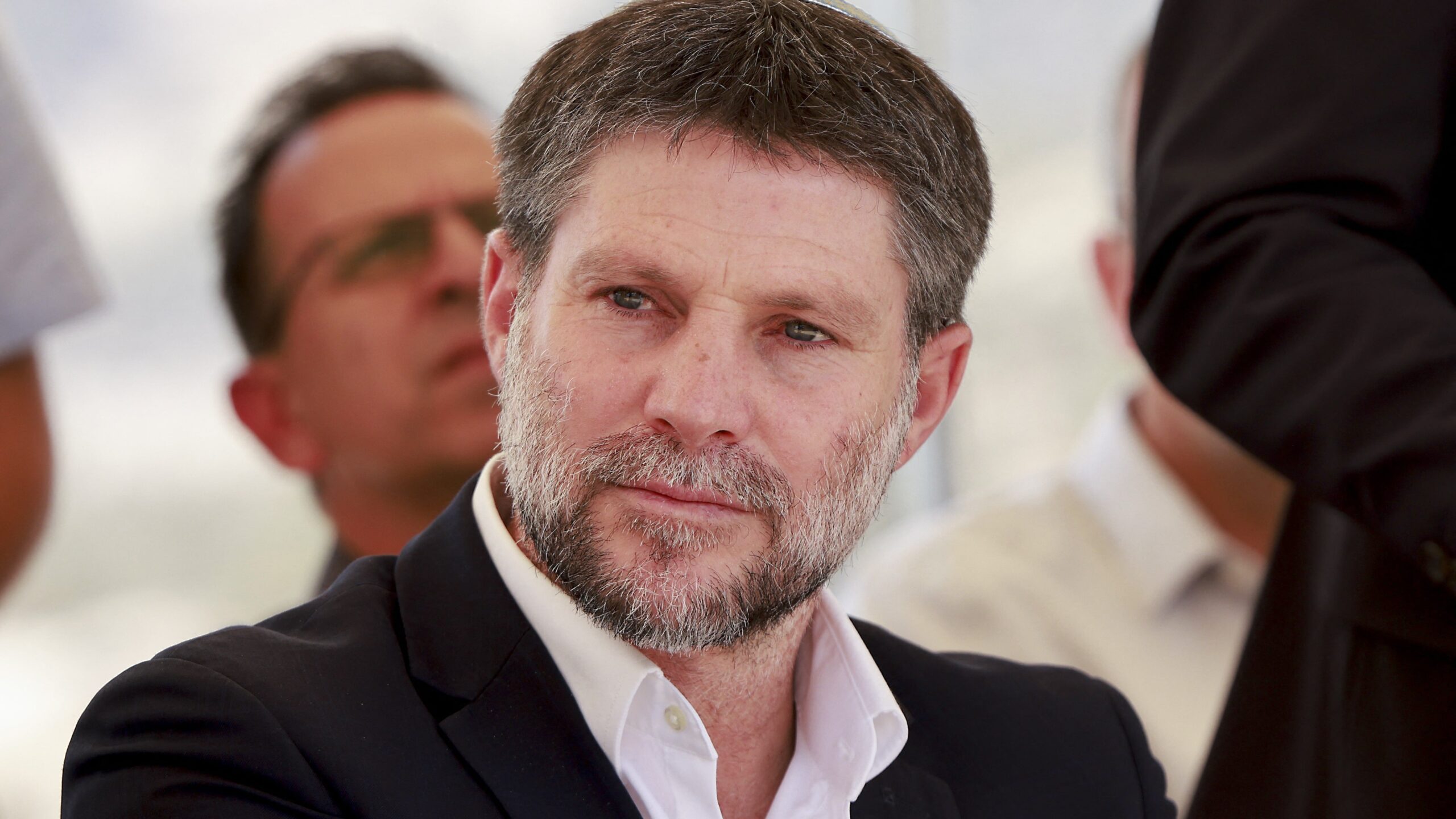
In a bold statement on Thursday, Israeli Finance Minister Bezalel Smotrich dismissed the possibility of normalizing relations with Saudi Arabia if it were contingent on the establishment of a Palestinian state. Speaking at a conference hosted by the Tzomet Institute, Smotrich declared, “If Saudi Arabia tells us that normalization is in exchange for a Palestinian state, then no thank you, my friends.” He further added, “Keep riding your camels in the Saudi desert. We’ll continue to develop our economy, society, and state with all the great things we know how to do.” This statement comes amid heightened tensions in the region, as Israel’s parliament passed a preliminary reading of a bill to annex the occupied West Bank. The move has drawn criticism from Prime Minister Benjamin Netanyahu’s Likud party, which labeled it as an attempt to embarrass the government during US Vice President JD Vance’s visit. The bill, introduced by Avi Maoz of the far-right Noam party, requires three additional Knesset votes to become law. Israel’s repeated threats to annex the West Bank have alarmed Gulf states, including Saudi Arabia and the United Arab Emirates, which view such actions as a “red line.” UAE’s assistant minister for political affairs, Lana Nusseibeh, warned that annexation would undermine the Abraham Accords and regional integration efforts. Saudi Arabia has also conveyed its concerns, with reports indicating that any annexation would have “major implications in all fields.” Despite US efforts to bring Saudi Arabia into the Abraham Accords, the kingdom has consistently maintained that normalization with Israel is contingent on the establishment of a Palestinian state. Last year, Saudi Crown Prince Mohammed bin Salman accused Israel of committing genocide in Gaza, further complicating diplomatic relations.
分类: politics
-
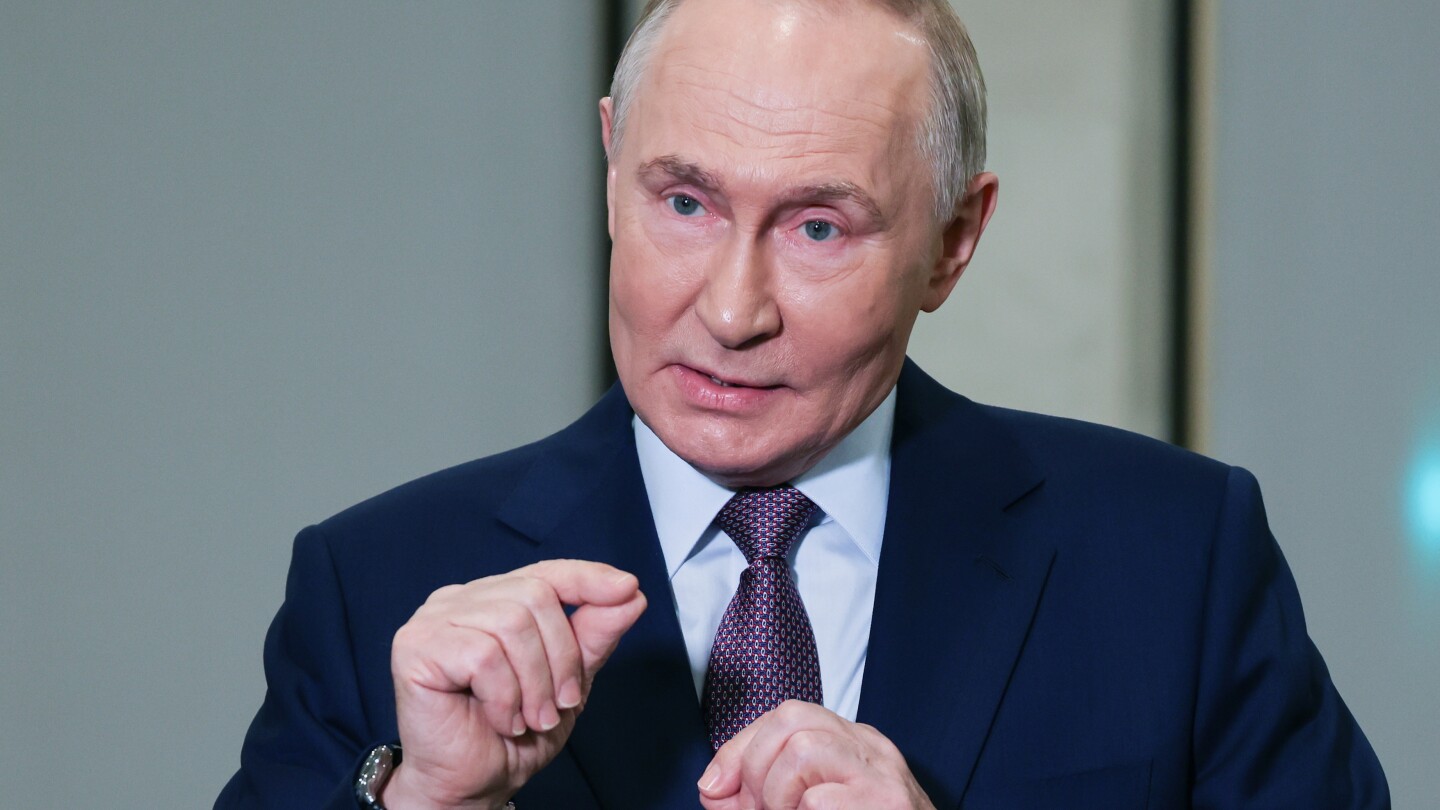
Trump’s turnaround on sanctions targets Russia’s oil companies that fund the war in Ukraine
In a concerted effort to undermine Russia’s financial capacity to sustain its war in Ukraine, the United States and the European Union have unveiled a new wave of sanctions targeting Moscow’s oil and gas sectors. The measures, announced on Thursday, aim to disrupt the revenue streams of Russia’s largest oil companies, Rosneft and Lukoil, which account for roughly half of the nation’s oil exports. These exports, alongside natural gas, have historically contributed 30% to 50% of Russia’s state revenues over the past decade. The sanctions also threaten secondary repercussions for major customers in India and China, potentially exposing their refineries and banks to U.S. penalties if they continue dealings with the sanctioned entities. Maria Perrotta Berlin, a sanctions expert at the Stockholm Institute of Transition Economics, likened the impact of U.S. sanctions to a ‘death penalty’ for the private sector. Meanwhile, the EU is phasing out shipments of Russian liquefied natural gas by the end of next year and targeting cryptocurrency platforms used by Moscow to circumvent financial restrictions. U.S. Treasury Secretary Scott Bessent emphasized that the sanctions are designed to pressure Russian President Vladimir Putin into agreeing to an immediate ceasefire in Ukraine. However, Putin has shown no signs of relenting, dismissing the sanctions as an ‘unfriendly act.’ The measures, which take effect on November 21, provide a grace period for traders to wind down operations but also allow Russia to capitalize on short-term oil sales. Analysts warn that while the sanctions may not immediately halt the war, they could significantly degrade Russia’s economy over time. The EU has also sanctioned 117 additional tankers believed to be part of Russia’s ‘shadow fleet,’ bringing the total to 557. Despite the sanctions, Russia’s economy remains resilient, bolstered by prewar oil and gas earnings stored in a national wealth fund. The U.S. and EU, wary of spiking energy prices, have implemented these measures cautiously, giving Russia time to adapt. Nevertheless, experts argue that continued targeting of Russia’s fossil fuel exports is crucial to maintaining pressure on the Kremlin.
-
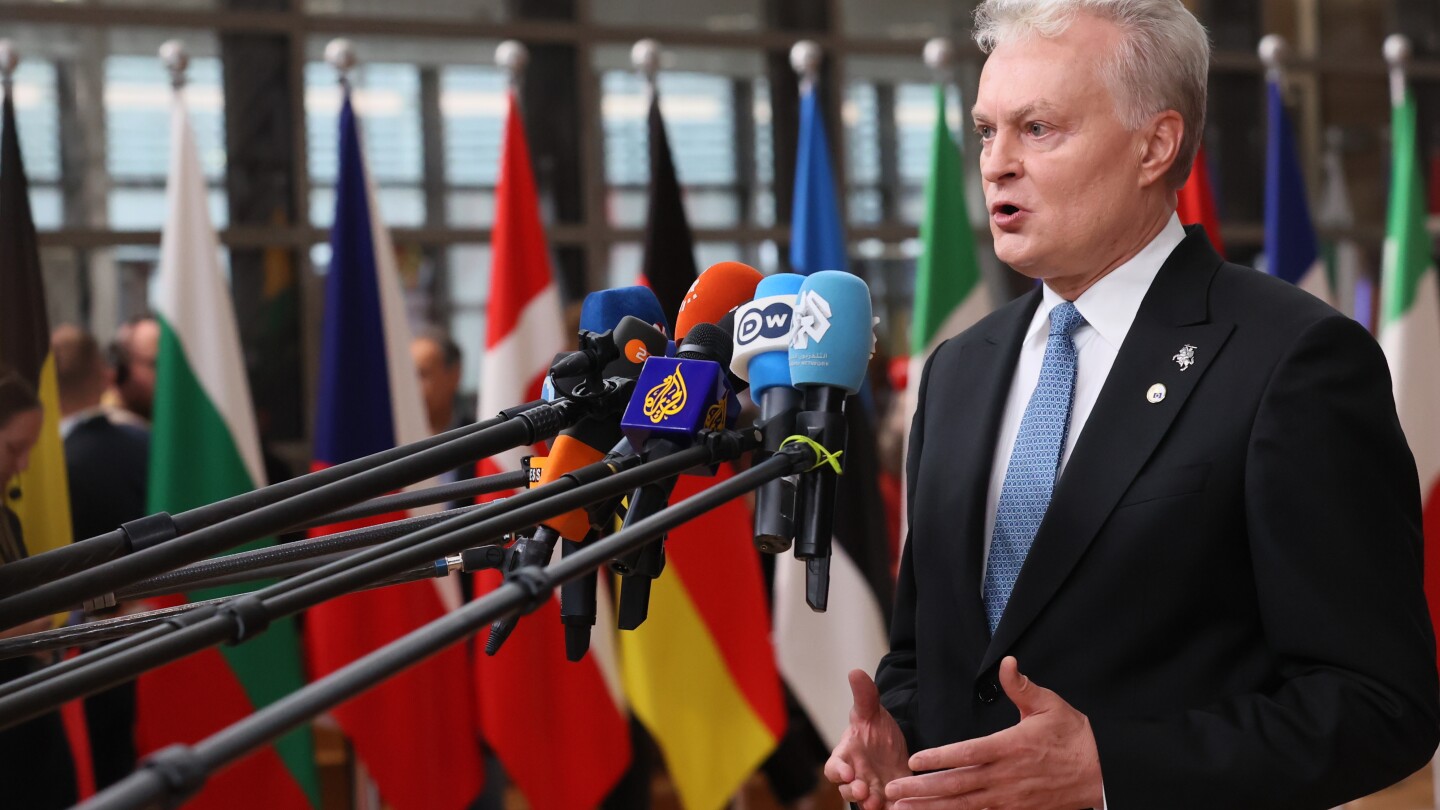
Lithuanian president says Russian military planes violated the Baltic country’s airspace
VILNIUS, Lithuania — Lithuanian President Gitanas Nausėda has strongly denounced the violation of Lithuania’s airspace by Russian military aircraft on Thursday evening, labeling it a flagrant infringement on the territorial integrity of the European Union and NATO member state. In a statement posted on the social media platform X, Nausėda announced that Lithuania’s foreign ministry would summon representatives from the Russian Embassy in Vilnius to formally protest the incident. He emphasized that the breach constitutes a direct violation of international law and underscores the urgent need to bolster European air defense capabilities. The Baltic region has been on high alert following a series of recent drone incidents and airspace violations by Russian warplanes, which have raised fears that President Vladimir Putin may be testing NATO’s resolve. Some European leaders have accused Russia of engaging in a hybrid war strategy, a claim Moscow vehemently denies.
-
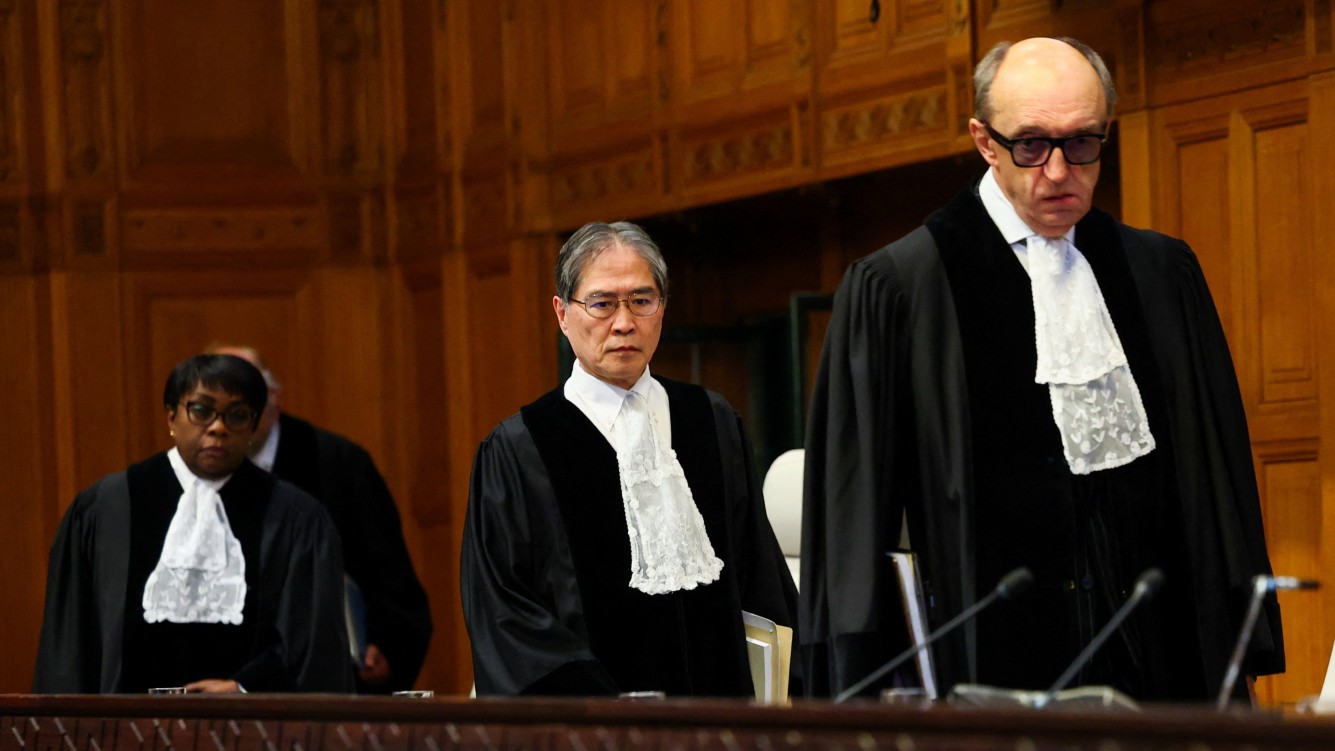
‘Disappointing’: ICJ grants Israel another extension in South Africa genocide case
The International Court of Justice (ICJ) in The Hague has granted Israel a second extension to submit its evidence in response to South Africa’s allegations of genocide in Gaza. In an order dated 20 October and published recently, the ICJ accepted Israel’s request to extend its deadline by two months to 12 March 2026, following an earlier extension to 12 January. The original deadlines for South Africa and Israel to file their written arguments were 28 October 2024 and 28 July 2025, respectively. While South Africa adhered to its deadline, Israel sought a six-month extension in April, which South Africa opposed. The ICJ compromised by granting a five-and-a-half-month extension to 12 January 2026. Israel then requested a second extension of at least five months on 14 October, citing unresolved evidentiary issues related to South Africa’s submission and its focus on the ICJ’s Advisory Opinion on Israel’s humanitarian obligations. South Africa urged the court to reject the request, arguing it contradicted the case’s urgency and the principle of equality between the parties. Gerhard Kemp, a professor of international criminal law, criticized the ICJ’s decision as ‘disappointing,’ emphasizing that Israel had ample time to prepare its response and that the alleged genocide’s structure remains unchanged. The ICJ has previously issued provisional measures against Israel on three occasions, and a recent UN report found Israel responsible for genocide in Gaza. The case, which began with South Africa’s accusation in December 2023, is expected to conclude by early 2028.
-
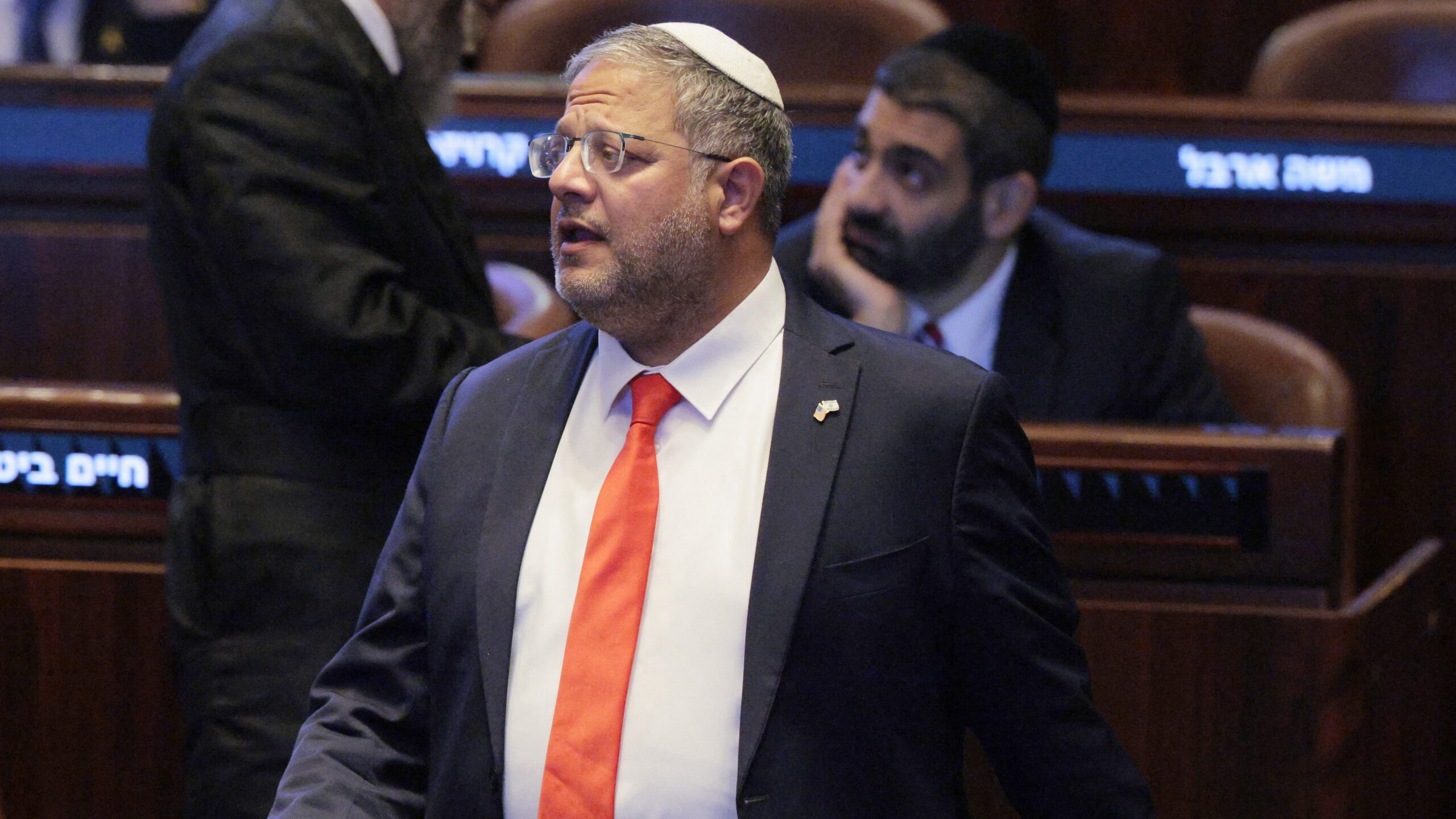
Ben Gvir calls for death penalty as he faces bound Palestinian prisoners
Israeli National Security Minister Itamar Ben Gvir has sparked widespread controversy after being filmed advocating for the execution of Palestinian detainees during a visit to an Israeli prison. In a now-viral video, Ben Gvir, a far-right politician, is seen standing in front of a cell, declaring that Palestinian prisoners ‘deserve a death penalty law.’ The footage also shows several Palestinian detainees shackled and kneeling in stress positions, their backs to the camera. This incident coincides with the Israeli parliament’s preparation to debate a series of contentious bills, including one that would impose the death penalty on individuals convicted of terrorism. Ben Gvir, who oversees prison affairs, has long championed harsher measures against Palestinian detainees, including the death penalty and severe prison conditions. Under his supervision, reports of abuse, torture, starvation, and sexual assault against Palestinian prisoners have surged, particularly since the onset of Israel’s war on Gaza in October 2023. Recent accounts reveal that 80 Palestinians have died in Israeli custody since the conflict began. Despite opposition from Prime Minister Benjamin Netanyahu, Ben Gvir’s death penalty bill received preliminary approval last month. On Saturday, he reiterated his demand, calling for ‘the death penalty law for terrorists – now.’ Palestinian prisoners’ rights groups, including the Commission of Detainees and Ex-Detainees Affairs and the Palestinian Prisoners’ Club, condemned the bill as an ‘unprecedented act of savagery.’ They argue that the legislation aims to legalize the ongoing killing of prisoners, reflecting the ‘unprecedented level of savagery’ practiced by the Israeli occupation system. International human rights organizations have also criticized Israel’s counter-terrorism laws, warning that they are often applied to legitimate human rights and humanitarian work. Former UN High Commissioner for Human Rights Michelle Bachelet emphasized in 2021 that advocating for rights or providing legal aid should not be equated with terrorism. The situation underscores the deepening humanitarian crisis and the escalating tensions in the region.
-
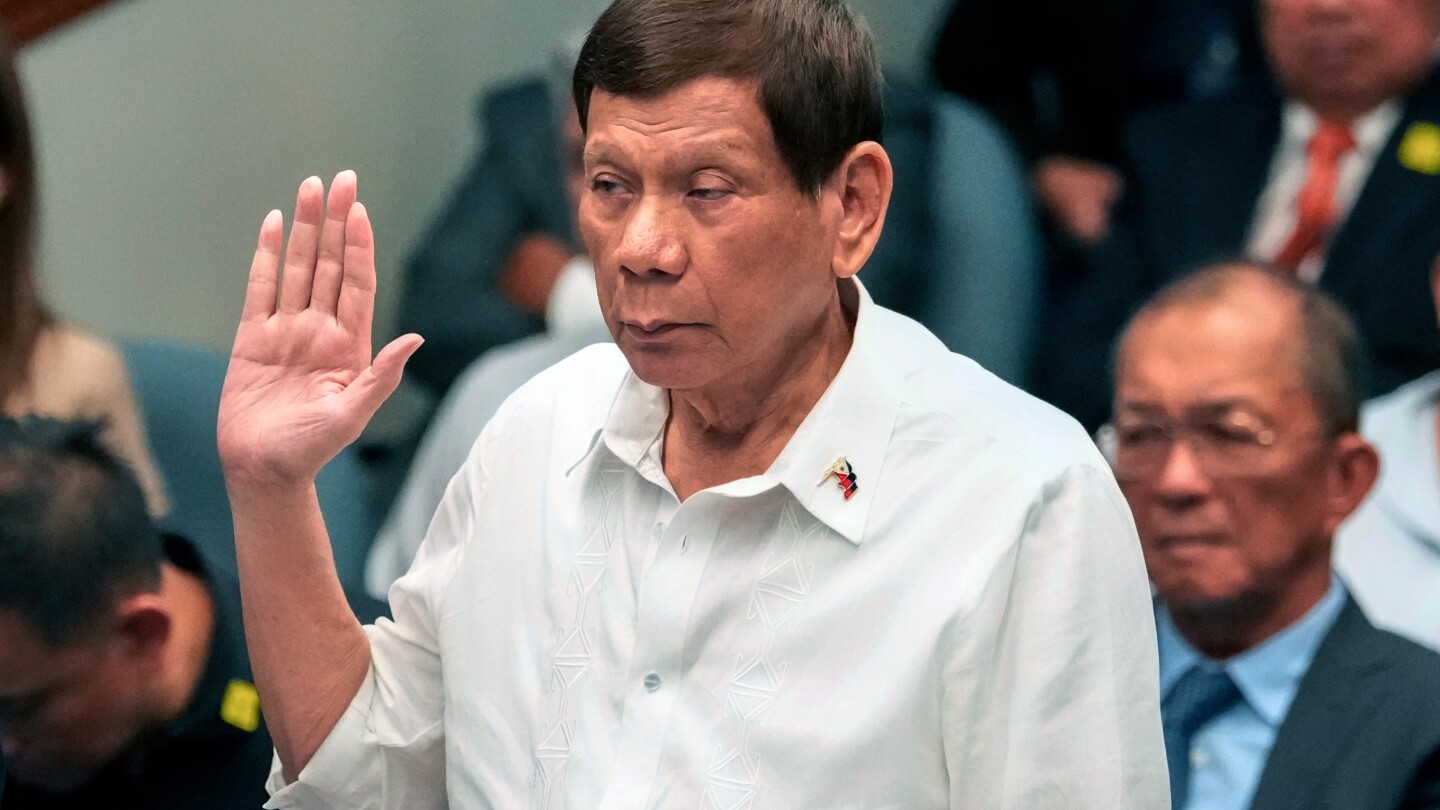
International Criminal Court judges reject jurisdiction challenge in Duterte case
In a significant legal development, the International Criminal Court (ICC) has dismissed a jurisdictional challenge brought forth by former Philippine President Rodrigo Duterte, who faces allegations of involvement in numerous killings during his controversial war on drugs. The 80-year-old Duterte’s defense team contended that the ICC lacked authority to proceed with the case, citing the Philippines’ withdrawal from the court prior to the formal investigation’s initiation. However, a pretrial panel of judges rejected this argument, emphasizing that countries cannot exploit their withdrawal from the Rome Statute to evade accountability for crimes already under scrutiny. The 32-page ruling underscored that such actions would constitute an abuse of the withdrawal mechanism. The ICC’s investigation, which formally commenced in 2021, examines killings linked to Duterte’s anti-drug campaign during his tenure as mayor of Davao and later as president. Estimates of the death toll range from 6,000, as reported by national police, to 30,000, according to human rights groups. Duterte’s legal team, led by Nick Kauffman, has vowed to appeal the decision, maintaining their client’s innocence. The case has been marked by delays, including a recent postponement of a pretrial hearing due to Duterte’s health concerns. Despite these challenges, the court has ruled that Duterte must remain in detention, citing a flight risk. The ICC’s investigation has faced repeated attempts by the Duterte administration to halt it, with arguments that Philippine authorities were already addressing the allegations. However, appeals judges rejected these claims in 2023, allowing the investigation to proceed. Duterte, arrested in March and transferred to The Hague, denies all charges of crimes against humanity.
-
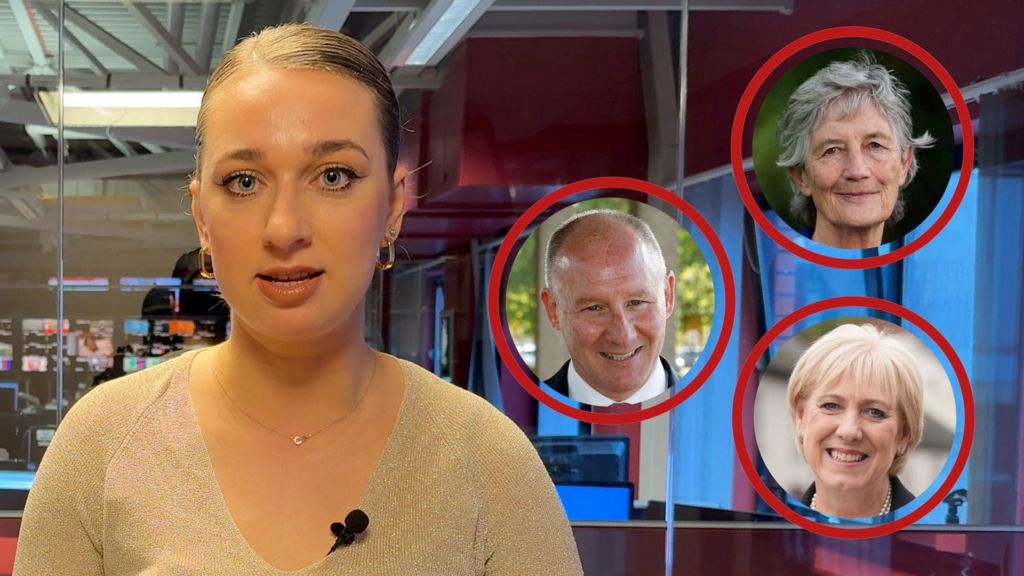
Who’s in the running to become the next president of Ireland?
As Ireland gears up for its presidential election, the political landscape is abuzz with speculation and anticipation. BBC News NI’s Dublin Correspondent Gabija Gataveckaite provides an insightful overview of the key candidates vying for the prestigious role. The election, which is set to determine the next head of state, has drawn a diverse array of contenders, each bringing unique qualifications and visions for the nation’s future. The race is expected to be highly competitive, with candidates from various political backgrounds and independent figures entering the fray. The presidency, largely a ceremonial position, holds significant symbolic importance in Ireland, representing unity and national identity. As the campaign unfolds, voters will be closely scrutinizing the candidates’ platforms, leadership qualities, and commitment to addressing key societal issues. The outcome of this election will not only shape Ireland’s political trajectory but also influence its standing on the global stage.
-
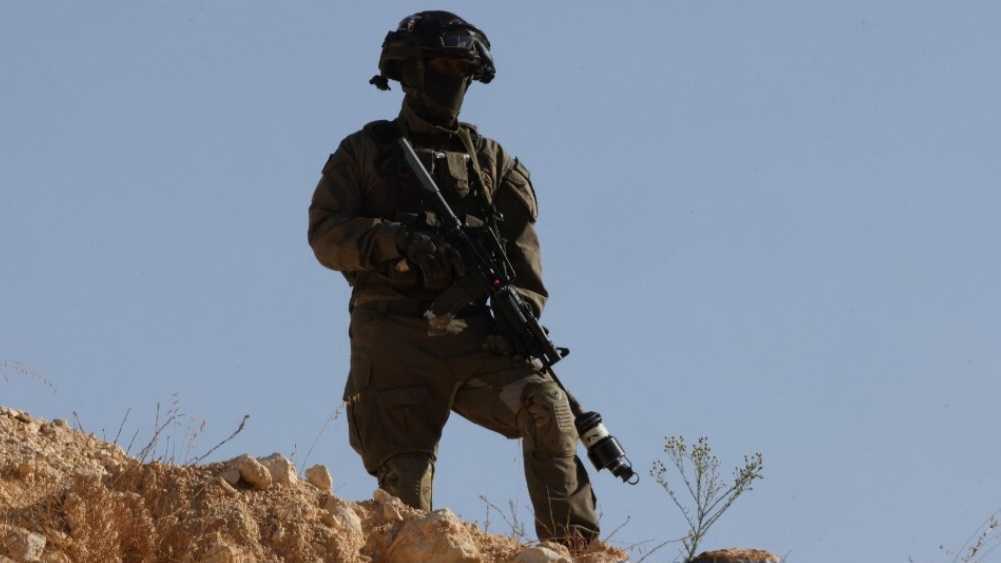
Court summons sought for British citizen accused of serving in Israeli military
A British legal organization has initiated legal proceedings against a British-Israeli individual accused of serving in the Israeli military, marking the first such case since the UK officially recognized Palestine as a state in September. The International Centre of Justice for Palestinians (ICJP) filed court documents on Monday, alleging violations of the Foreign Enlistment Act (FEA), which prohibits UK nationals from enlisting in foreign militaries at war with nations friendly to Britain. The accused, a dual national, reportedly served in Israeli military units along the Lebanese border and in the occupied West Bank. The ICJP’s submission highlights that Palestine, now recognized as a ‘friendly state,’ falls under the FEA’s broader definition of a state, despite differing interpretations under international law. The legal documents argue that the individual’s service was voluntary, as non-resident Israelis are not legally obligated to serve. The case could set a precedent for holding British citizens accountable for involvement in foreign conflicts. Offenses under the FEA carry penalties of up to two years imprisonment. ICJP’s legal head, Mutahir Ahmed, emphasized the importance of domestic jurisdictions in prosecuting suspected war criminals, regardless of where the alleged crimes occurred. The UK government has previously avoided commenting on British nationals serving in the Israeli military, and no arrests have been made on these grounds. This case follows Belgium’s arrest of two Israeli soldiers accused of war crimes in Gaza, based on complaints from human rights groups. The ICJP’s action underscores growing international efforts to address alleged war crimes and hold individuals accountable.
-
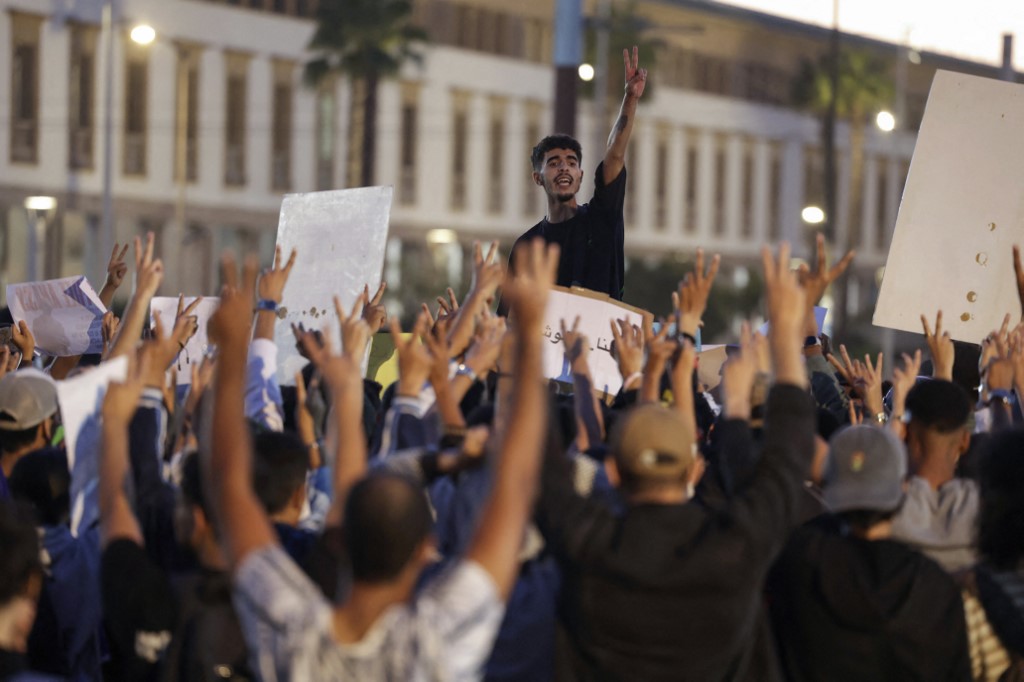
Morocco’s $15bn promise falls short of GenZ 212 demands for real change
In response to widespread protests led by Morocco’s Generation Z, the royal cabinet announced a significant allocation of nearly $15 billion to the health and education sectors by 2026, marking a 16 percent increase from the previous year. The protests, which have shaken the North African nation, were sparked by the tragic deaths of eight women following C-sections in a public hospital in Agadir, as well as concerns over disproportionate investment in football infrastructure ahead of the 2030 World Cup at the expense of public services. The government also pledged to create over 27,000 jobs in these sectors. However, skepticism remains among experts and the GenZ 212 movement, who question the adequacy of the funds and their implementation. In a statement, the movement urged vigilance, emphasizing the need for anti-corruption measures and transparency. Redouane Amimi, a professor at Mohammed V University, described the allocation as a ‘positive political signal’ but stressed that its impact would be limited without structural reforms. Corruption continues to plague Morocco, with Transparency International ranking it 99th out of 180 countries in its 2024 Corruption Perception Index. Critics argue that the sudden budget announcement appears reactive rather than part of a long-term strategy. Insaf Elouard, a GenZ 212 activist, likened the government’s response to its handling of the Arab Spring protests in 2011, suggesting that superficial reforms may not address systemic issues. The protests have been met with harsh repression, with hundreds of young demonstrators arrested and sentenced to lengthy prison terms. Despite the challenges, the youth-led movement represents a historic generational revolt against the Moroccan regime, driven by demands for meaningful change. While King Mohammed VI has called for reforms and greater social impact, the path forward remains fraught with bureaucratic inefficiencies and regional disparities. Separately, the government has proposed measures to encourage youth participation in politics ahead of next year’s general election. The 2026 draft budget will be presented to parliament next week for detailed discussion.
-
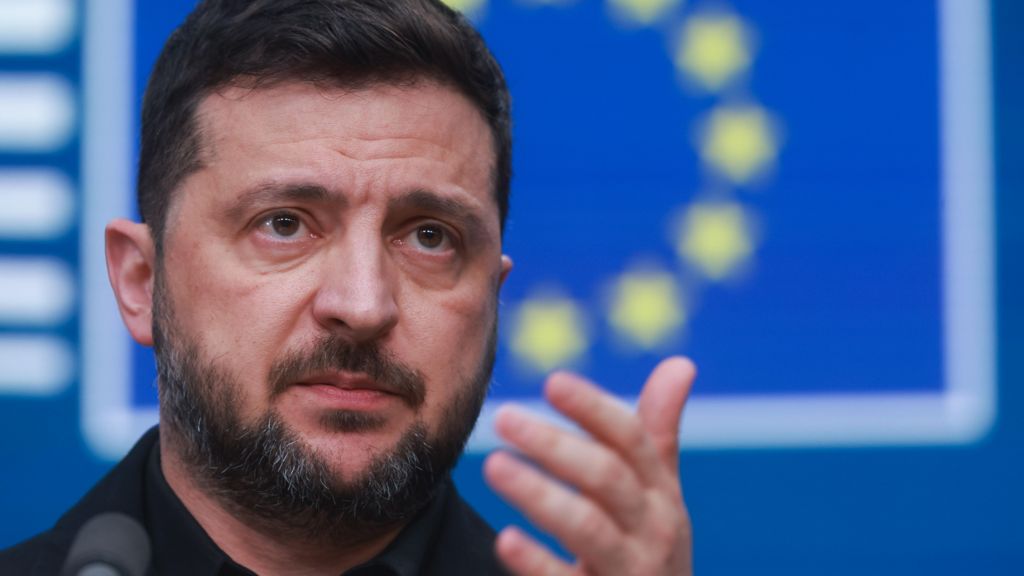
Ukraine urges EU to back loan using frozen Russian cash
Ukrainian President Volodymyr Zelensky has made a compelling appeal to the European Union to support a plan that would release billions of euros in frozen Russian assets to bolster Ukraine’s defense efforts. Speaking during the EU leaders’ summit in Brussels, Zelensky expressed hope for a ‘positive decision’ regarding the utilization of €140 billion (£122 billion) in Russian funds currently held in a Belgian clearing house. This proposal, which has sparked significant debate, would complement the existing sanctions imposed on Russia, including recent measures targeting the Kremlin’s oil revenues. The EU’s latest sanctions, announced on Thursday, follow similar actions by the United States against Russia’s oil industry, marking the first time President Donald Trump has sanctioned Moscow amid growing frustration over President Vladimir Putin’s refusal to end the conflict. Trump also confirmed the indefinite postponement of a planned meeting with Putin in Budapest, citing unproductive discussions. The US sanctions specifically targeted Russian oil giants Rosneft and Lukoil. Meanwhile, European ministers have been deliberating on how to allocate the frozen Russian assets as a ‘reparations loan’ to Ukraine. Zelensky, attending the Brussels summit, emphasized the moral and financial responsibility of Russia, stating, ‘Russia brought war to our land, and they have to pay for this war.’ However, the proposal faces legal and political hurdles, with Belgium expressing reluctance due to potential legal challenges from Russia. EU foreign affairs chief Kaja Kallas acknowledged the complexities but stressed that ‘Russia is responsible for the damages in Ukraine and has to pay.’ Russia has vehemently criticized the plan, with foreign ministry spokeswoman Maria Zakharova warning of a ‘painful response’ to any confiscatory measures. The EU’s latest sanctions also targeted three Chinese businesses involved in purchasing Russian crude oil, a move condemned by China as undermining economic cooperation. The overarching goal of these measures, according to Kallas, is to ‘deprive Russia of the means to fund this war’ and send a clear message that ‘Russia can’t outlast us.’