分类: politics

  • ‘Ultra-wealthy’ land tax could raise $3bn per year to slash stamp duty

    ‘Ultra-wealthy’ land tax could raise $3bn per year to slash stamp duty

    A groundbreaking proposal from Australia’s McKell Institute advocates for a transformative wealth tax targeting the nation’s most affluent landholders to address housing affordability challenges. The ‘Extreme Land Wealth Levy’ would impose annual charges on approximately 4,630 ultra-wealthy Australians possessing land portfolios valued at $20 million or higher—representing the wealthiest one percent of households.

    Under the innovative scheme, landholdings between $20-50 million would face a 0.75% annual levy, while properties exceeding $50 million would incur a 1.25% charge. The institute projects this could generate approximately $3 billion annually, which would then be redistributed to states and territories exclusively for reducing stamp duty costs for new homebuyers, explicitly excluding property investors from benefits.

    McKell Institute Chief Economist Alison Pennington emphasized the proposal addresses systemic inequities: ‘Average workers surrender one-quarter of their income biweekly, while ultra-wealthy landholders accumulate millions in untaxed, unearned gains over decades.’ She noted the levy would be financially negligible to affected landowners but transformative for aspiring homeowners.

    The mechanism would function through Commonwealth administration utilizing existing state valuation systems, applying solely to land value excluding improvements. Principal residences below $20 million land value and genuine agricultural land would be exempt, with build-to-rent developments qualifying for special considerations and development incentives.

    This proposal emerges amidst intensifying national debates surrounding housing accessibility and tax fairness, complementing existing state-level initiatives like NSW’s First Home Buyers Assistance Scheme and federal support programs including the 5% deposit guarantee scheme.

  • Ghana drops coup leader’s name from main airport on putsch anniversary

    Ghana drops coup leader’s name from main airport on putsch anniversary

    In a landmark decision marking the 60th anniversary of Ghana’s first coup, the government has officially removed the name of military leader Emmanuel Kwasi Kotoka from the nation’s primary aviation hub. The facility will revert to its original designation as Accra International Airport, shedding the controversial homage to the officer who overthrew founding president Kwame Nkrumah in 1966.

    The transport ministry defended the move as necessary to project a neutral national image that aligns with Ghana’s democratic values, emphasizing that the change reflects the capital city’s identity rather than memorializing a figure associated with unconstitutional power seizure. Minister Joseph Bukari Nikpe stated the renaming aims to present Ghana as a stable democracy focused on unity rather than divisive historical figures.

    However, the decision has ignited intense debate across Ghanaian society. Kotoka’s family and political representatives from his native Volta Region condemn the erasure of his legacy, arguing it diminishes regional representation in national symbols. Minority Leader Alexander Afenyo-Markin characterized the move as a betrayal of eastern Ghana’s contributions to national history.

    Civil society organizations supporting the change maintain that honoring a coup leader fundamentally contradicts constitutional governance principles. This perspective has gained prominence under President John Mahama’s administration, which returned to power through democratic elections in December 2024.

    The controversy extends beyond historical reinterpretation to practical concerns, with critics questioning the allocation of resources to symbolic changes amid pressing issues like unemployment and living standards. Social media platforms have become arenas for vigorous debate about the legal, social, and political implications of recontextualizing historical figures.

    Authorities assure the public that operational aspects—including safety standards and international travel protocols—remain unaffected by the nomenclature adjustment. The government has called for public cooperation to ensure a seamless transition while acknowledging the complex historical narratives surrounding both Nkrumah’s pan-African visionary leadership and Kotoka’s contested legacy.

    Historical context reveals deeper dimensions: Nkrumah’s 1966 ouster occurred amid allegations of authoritarian tendencies, with historians continuing to debate external influences, including possible CIA involvement in destabilizing Ghana’s first president. The airport itself witnessed Kotoka’s death during a failed counter-coup attempt in 1967, adding layers of historical irony to the naming controversy.

    This decision reflects Ghana’s ongoing negotiation with its post-colonial identity, balancing reverence for independence achievements with critical reassessment of subsequent political turmoil that included multiple coups before establishing stable multiparty democracy in 1992.

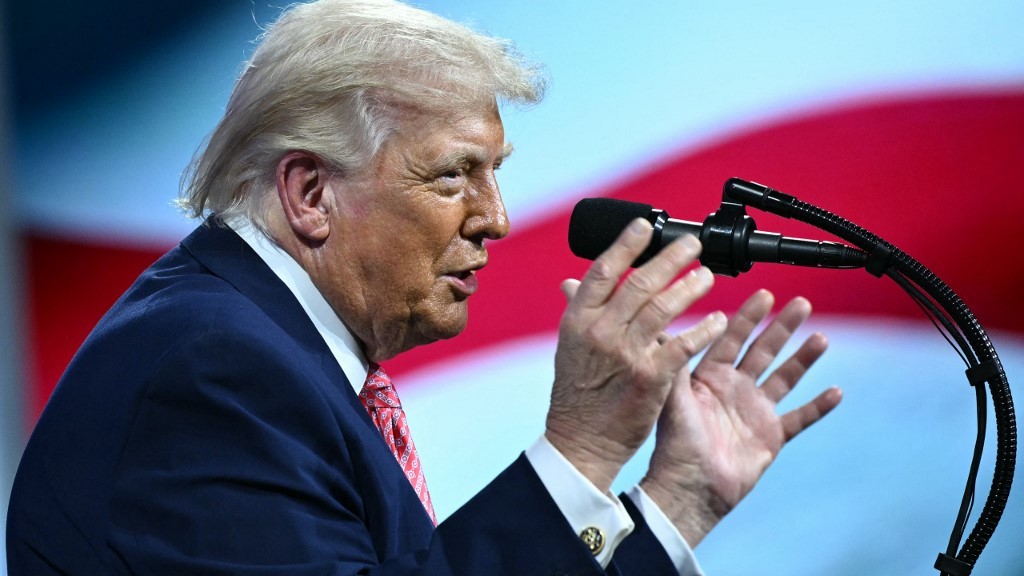
  • Trump to address a changed America at vital moment for his presidency

    Trump to address a changed America at vital moment for his presidency

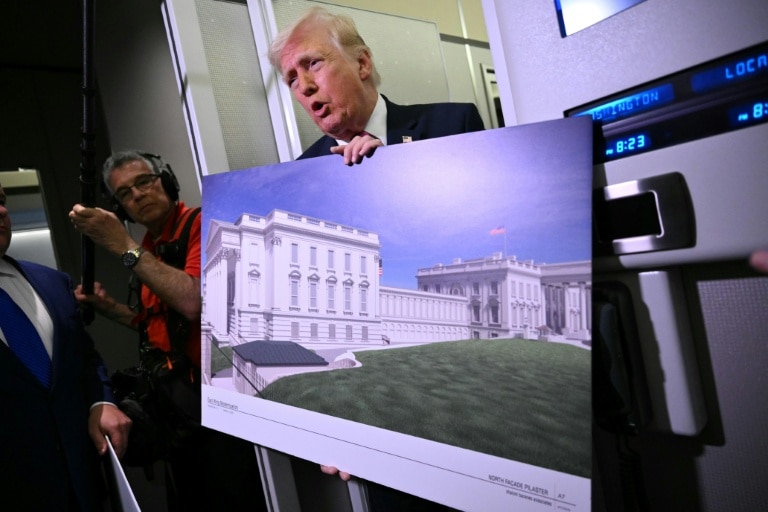
    President Donald Trump approaches Tuesday’s State of the Union address at a critical juncture in his second term, facing mounting political challenges and declining public approval ratings. This nationally televised speech represents his final major opportunity to sway voter sentiment before November’s midterm elections, which could determine whether Republicans maintain congressional control or face Democratic opposition that might lead to legislative gridlock and renewed impeachment threats.

    Throughout the past year, Trump has pursued an aggressive transformation of presidential power, implementing sweeping immigration restrictions, realigning foreign alliances, and challenging fundamental checks and balances within the American political system. While achieving substantive policy victories both domestically and internationally, many initiatives have proven deeply divisive among the American public.

    Recent polling indicates significant erosion in Trump’s popular support, with CNN and Washington Post surveys showing approval ratings of just 36% and 39% respectively. His traditional strongholds—immigration and economic policy—have become particular vulnerabilities. The administration’s hardline immigration tactics, including deploying federal agents to cities like Minneapolis, have faced widespread protests and operational setbacks. Similarly, trade policies featuring aggressive tariffs have been ruled illegal by the Supreme Court, creating economic uncertainty despite stock market highs and low unemployment.

    According to rhetorical scholar Professor Robert Rowland, Trump faces an unusual challenge for this address: broadening his appeal beyond his core supporters rather than employing his characteristic combative style. Historically, State of the Union speeches serve to unite rather than divide, requiring a diplomatic approach that doesn’t come naturally to this president.

    The address may also address national security concerns, including potential military preparations regarding Iran—a foreign policy development that could dramatically reshape the political landscape. Ultimately, Trump’s performance will reveal whether he can demonstrate the humility and conciliatory tone needed to reverse his declining popularity, or whether he will instead double down on controversial positions that have defined his presidency.

  • What to know about Trump’s State of the Union address

    What to know about Trump’s State of the Union address

    Washington D.C. braces for President Donald Trump’s pivotal State of the Union address scheduled for Tuesday evening at 9:00 PM EST. The historic event will unfold in the Capitol’s House chamber before a distinguished assembly comprising Supreme Court justices, military leadership, and lawmakers from both chambers of Congress—though numerous Democratic representatives have announced their intentional absence.

    This constitutionally mandated address represents a critical opportunity for the president to outline his administration’s achievements and future policy objectives. The speech occurs against the backdrop of impending midterm elections, adding significant political weight to its delivery and reception.

    Historical context reveals the evolution of this presidential tradition since George Washington’s first address in 1790. In contemporary times, the event has transformed into a major media spectacle, consistently featuring an opposition rebuttal—a practice institutionalized since 1966.

    Anticipated discussion points include immigration enforcement, where the administration has recorded substantial decreases in illegal border crossings despite controversy surrounding deportation tactics. Trade policy remains another focal area following recent Supreme Court rulings challenging the president’s tariff authority. Additional expected topics encompass overseas ceasefire negotiations, Iranian relations, and the recent apprehension of Venezuelan leader Nicolás Maduro.

    The event’s guest list reveals strategic political messaging, with lawmakers inviting symbolic attendees including immigration reform advocates, law enforcement family members, and victims of high-profile crimes. Notably absent will be the designated survivor—a cabinet member secured at an undisclosed location—and approximately two dozen Democratic lawmakers who plan to counter-program with a “People’s State of the Union” event organized by progressive groups.

    President Trump enters this address having set the record for longest congressional speech during his previous appearance—a remarkable one hour and forty-minute delivery that surpassed President Clinton’s prior record. The address will be broadcast across major networks with BBC providing comprehensive coverage beginning at 8:00 PM EST.

  • France demands explanation from US envoy over ‘surprise’ no-show

    France demands explanation from US envoy over ‘surprise’ no-show

    France’s Foreign Ministry has formally demanded clarification from U.S. Ambassador to France Charles Kushner following his unexpected absence from a scheduled diplomatic meeting. The incident marks the second time Ambassador Kushner has failed to attend a summons from French authorities.

    Foreign Minister Jean-Noel Barrot characterized the ambassador’s absence as a breach of fundamental diplomatic protocols, expressing his ‘surprise’ at the development during a broadcast interview with France Info. The meeting was intended to address U.S. commentary on France’s internal political matters following the death of far-right activist Quentin Deranque in Lyon.

    According to diplomatic sources familiar with the matter, Ambassador Kushner cited ‘personal commitments’ as justification for his non-attendance, instead dispatching a senior embassy official to represent him. This pattern of behavior has drawn criticism from diplomatic professionals, including former U.S. Ambassador to Venezuela Charles Shapiro, who emphasized that responding to foreign ministry summons constitutes a fundamental obligation of diplomatic service.

    The current diplomatic tension originated when the U.S. Embassy in Paris reposted statements from the Trump administration commenting on political violence in France following Deranque’s death during clashes between radical-left and far-right groups. Minister Barrot explicitly stated that France ‘does not accept that foreign countries can come and interfere in, then insert themselves into, our national political debate, whatever the circumstances.’

    Despite the diplomatic friction, French officials have indicated that bilateral relations between the nations remain unaffected. However, Barrot noted that the incident would impact Ambassador Kushner’s operational effectiveness within France. The French government has already implemented measures restricting Kushner’s access to ministerial-level officials.

    Ambassador Kushner, a 71-year-old multimillionaire real estate developer and former attorney, received a presidential pardon from Donald Trump in 2020 after previously pleading guilty to multiple federal charges including tax evasion and witness tampering. His appointment represented Trump’s preference for placing loyalists and family associates in key diplomatic positions, as evidenced by his comment to Paris Match magazine that ‘It’s a great thing because he’s in our family.’

  • S. Korea’s ex-president Yoon files appeal against life sentence for insurrection

    S. Korea’s ex-president Yoon files appeal against life sentence for insurrection

    In a significant legal development, former South Korean President Yoon Suk-yeol has formally appealed the life imprisonment verdict handed down for his role in orchestrating an insurrection during his presidency. The appeal was filed Tuesday with the Seoul Central District Court through Yoon’s legal representatives, according to reports from Yonhap News Agency.

    The case stems from Yoon’s controversial declaration of emergency martial law on December 3, 2024—an action the courts subsequently deemed unconstitutional as it occurred absent any legitimate national emergency, armed conflict, or comparable crisis situation. The extraordinary measures included deploying martial law troops and police forces to block the National Assembly’s efforts to revoke the declaration, alongside attempted detentions of prominent political leaders including parliamentary leadership and major party officials.

    Yoon’s declaration proved remarkably short-lived, with the National Assembly overriding and revoking the martial law order within hours of its implementation. The constitutional crisis culminated in April 2025 when the Constitutional Court upheld impeachment proceedings, resulting in Yoon’s removal from office. His January 2025 indictment while still in office marked an unprecedented moment in South Korean political history, representing the first instance of a sitting president facing arrest and criminal charges.

    South Korean law mandates that individuals convicted of leading an insurrection face only two possible sentences: life imprisonment or capital punishment. The upcoming appellate process will now determine whether the original court’s life sentence will stand or be modified in what has become one of the most consequential political-legal cases in the nation’s modern history.

  • OIC to hold emergency talks on Israel

    OIC to hold emergency talks on Israel

    The Organization of Islamic Cooperation (OIC) has announced an urgent ministerial gathering scheduled for Thursday in Jeddah, Saudi Arabia, responding to escalating tensions in the Palestinian territories. This emergency session comes amid heightened Israeli administrative control measures across the West Bank and controversial statements from senior American diplomatic officials.

    According to the OIC’s Sunday declaration, foreign ministers will address what the organization characterizes as illegal Israeli occupation policies designed to advance settlement expansion and territorial annexation. The meeting specifically targets recent Israeli administrative procedures classifying West Bank territories as ‘state property’—a move perceived as facilitating systematic land appropriation.

    Simultaneously, the OIC joined numerous Arab and Muslim-majority nations in formally condemning remarks by US Ambassador to Israel Mike Huckabee, who during a recent interview endorsed Israeli territorial claims over extensive Middle Eastern regions, including occupied Palestinian territories.

    Professor Ayman Yousef of Arab American University in Jenin described the current situation as ‘exceptionally complex,’ noting ‘unprecedented settlement expansion, land confiscation, and settler violence against Palestinians’ accompanied by institutionalized discrimination. Yousef characterized the Israeli government as ‘the most radical supporter of settler activities’ and labeled Huckabee’s comments as ‘fundamentalist rhetoric.’

    Raed Jarrar, advocacy director at Democracy for the Arab World Now (DAWN), demanded the ambassador’s immediate dismissal, while former UN human rights official Saul Takahashi interpreted Huckabee’s statements as reflective of broader US disregard for Palestinian rights, Middle Eastern sovereignty, and international legal standards.

    Despite planned diplomatic responses, experts expressed skepticism about tangible outcomes. Yousef questioned whether participating nations would demonstrate unified opposition, particularly those engaged in the US-led ‘Board of Peace’ initiative, noting the irony that ‘they have to draw in even their funds.’ Takahashi similarly warned that countries hoping to influence US policy toward Palestinian interests were undertaking ‘a very risky gamble.’

  • Iran, US to resume nuclear talks

    Iran, US to resume nuclear talks

    Geneva prepares to host a critical third round of nuclear negotiations between the United States and Iran, even as significant obstacles threaten to undermine the diplomatic process. The talks resume against a backdrop of intensified US military presence in the Middle East and fundamental disagreements over the core framework of a potential nuclear agreement.

    Omani Foreign Minister Sayyid Badr bin Hamad Al Busaidi confirmed the diplomatic engagement, expressing satisfaction with the progress while urging both parties to exert additional effort toward finalizing a deal. Oman has consistently served as a key mediator between the longstanding adversaries, having previously facilitated indirect discussions and hosted the most recent dialogue in Geneva.

    Iranian leadership conveyed tempered optimism regarding the renewed negotiations. President Masoud Pezeshkian described recent diplomatic exchanges as producing “encouraging signals” through social media channels, simultaneously emphasizing Tehran’s preparedness to confront any potential escalation. Foreign Minister Seyed Abbas Araghchi indicated the possibility of direct discussions with US Special Envoy Steve Witkoff, maintaining that a diplomatic resolution remains achievable.

    The central contention points revolve around Iran’s insistence on maintaining its peaceful nuclear program and securing relief from US sanctions, particularly regarding uranium enrichment rights. Araghchi reaffirmed Tehran’s position that any agreement must recognize these rights while reserving Iran’s ability to respond defensively to potential attacks against American bases in the region.

    The diplomatic landscape has been complicated by provocative rhetoric from US officials. Witkoff publicly questioned why Iran had not yet “capitulated” to American demands regarding nuclear program limitations, comments that prompted a sharp rebuke from Iranian officials who emphasized their nation’s sovereignty.

    Substantial gaps persist between negotiating positions, with Washington seeking additional concessions including limitations on long-range missile development and reduced support for regional militia groups. Iranian officials characterize these demands as challenging to reconcile with national security interests, while simultaneously calling for a realistic timetable for sanctions removal.

    The negotiations represent the latest attempt to revive diplomatic engagement since the US unilaterally withdrew from the 2015 Joint Comprehensive Plan of Action. Previous indirect talks collapsed primarily over disputes regarding uranium enrichment restrictions, which Iran maintains are exclusively for peaceful purposes despite Western suspicions of weapons development.

  • Trade, Ukraine and new world order are top concerns on German leader’s visit to China

    Trade, Ukraine and new world order are top concerns on German leader’s visit to China

    German Chancellor Friedrich Merz commenced a pivotal two-day diplomatic mission to Beijing on Wednesday, marking his inaugural official visit to China amidst escalating economic tensions and shifting global power dynamics. The visit occurs against the backdrop of Germany’s record trade deficit with China and fundamental disagreements regarding Beijing’s stance on Russia’s invasion of Ukraine.

    Merz’s itinerary includes high-level meetings with Chinese Premier Li Qiang and President Xi Jinping, whose reduced international travel has made Beijing the necessary destination for foreign leaders seeking dialogue. The Chancellor’s delegation comprises business executives aiming to bolster commercial ties, even as German manufacturers face unprecedented competition from Chinese electric vehicle makers and other advanced industries.

    Recent trade statistics reveal a concerning imbalance: German imports from China surged by 8.8% to €170.6 billion last year, while exports to China declined by 9.7% to €81.3 billion. This growing deficit has intensified German demands for reduced trade barriers and increased market access for foreign competitors in China.

    The geopolitical dimension remains equally contentious. While China seeks international support against Trump’s challenges to global institutions, Merz has expressed skepticism regarding Beijing’s vision for a 21st century world order. The Chancellor previously stated that Germany should harbor ‘no illusions’ about China’s ambition to define a new multilateral framework according to its own rules.

    This visit follows similar trips by French President Macron and other European leaders, reflecting Europe’s complex balancing act between economic partnership and strategic competition with China. Germany’s approach of ‘de-risking’—reducing dependence on Chinese markets and strategic materials like rare earths—demonstrates this nuanced positioning amid evolving global power dynamics.

  • Australia begins sweeping public inquiry probing antisemitism after Bondi Beach killings

    Australia begins sweeping public inquiry probing antisemitism after Bondi Beach killings

    Australia has initiated a comprehensive federal investigation into rising antisemitism nationwide, prompted by the December 14 Bondi Beach massacre where two Islamic State-inspired gunmen killed 15 people at a Jewish festival. Prime Minister Anthony Albanese established the Royal Commission on Antisemitism and Social Cohesion, the government’s most powerful form of public inquiry, to examine the tragic incident and broader social tensions.

    Commission head Virginia Bell, a retired high court justice, emphasized the delicate balance between her investigation and the ongoing criminal proceedings against alleged shooter Naveed Akram, who faces 15 murder charges and 40 attempted murder counts. “This commission must do its work without risking any prejudice to that criminal proceeding,” Bell stated in her opening address, acknowledging that while evidence of the attack and heroism of responders would be expected, the criminal trial would be the appropriate venue for such details.

    The commission operates under an accelerated timeline, with an interim report due by April’s end examining coordination between federal and state agencies, event organizers, and security preparations for the Hanukkah celebration. The full report must be completed by the massacre’s first anniversary, which Bell acknowledged imposes “a tight time frame” and limitations on the investigation’s scope.

    Despite its focus on antisemitism, Commissioner Bell recognized that multiple religions and ethnicities experience prejudice in Australia. However, she justified the specific focus: “Against the background of the massacre of innocent people who appear to have been targeted simply because they were Jewish, I trust everyone will appreciate why the focus of this commission will be on tackling antisemitism.”

    The inquiry will identify gaps in legal and regulatory frameworks that might impede law enforcement, border control, immigration, and security agencies from preventing and responding to such attacks. It will also examine the nature and prevalence of antisemitism in institutions and society, including drivers such as extremism and radicalization, while reviewing security at Jewish facilities and public events.

    The commission has already issued dozens of document requests to government agencies, though public hearing dates remain unset. The investigation incorporates previous work by retired bureaucrat Dennis Richardson, who now serves as Bell’s special adviser after initially being appointed to examine intelligence and security agency roles following the shooting.

    This inquiry unfolds against a backdrop of significantly increased reports of both antisemitic and Islamophobic behavior in Australia since the Israel-Hamas war began in 2023. Australia’s Jewish community numbers fewer than 120,000 in a population of 28 million, with 85% concentrated in Sydney and Melbourne. The government had previously appointed special envoys to confront both antisemitism and Islamophobia in 2024.