分类: politics

  • China, US in contact over Trump’s possible visit

    China, US in contact over Trump’s possible visit

    China and the United States are currently engaged in diplomatic communications regarding a potential official visit by U.S. President Donald Trump, according to statements from China’s Foreign Ministry. Ministry spokeswoman Mao Ning confirmed the ongoing discussions during a regular press briefing on Tuesday, emphasizing the significance of high-level diplomatic engagement between the two global powers.

    The dialogue follows media reports suggesting President Trump is scheduled to visit China during the late March to early April timeframe. While specific details regarding the itinerary and agenda remain undisclosed, the potential visit represents a continuation of diplomatic exchanges between the world’s two largest economies.

    Mao Ning highlighted the critical importance of head-of-state diplomacy in shaping the strategic direction of Sino-American relations. “Head-of-state diplomacy plays an irreplaceable role in providing strategic guidance for China-US relations,” she stated, underscoring the value both nations place on direct leadership engagement.

    The potential visit occurs against the backdrop of ongoing trade discussions and broader geopolitical considerations that characterize the complex relationship between Beijing and Washington. Both nations have maintained regular diplomatic channels despite periodic tensions across various policy domains.

    The Foreign Ministry’s confirmation indicates mutual interest in maintaining open communication at the highest levels of government, suggesting both capitals recognize the importance of personal diplomacy in managing one of the world’s most consequential bilateral relationships.

  • Arab League and 19 countries condemn Israel’s ‘de facto annexation’ of West Bank

    Arab League and 19 countries condemn Israel’s ‘de facto annexation’ of West Bank

    A formidable coalition comprising the Organisation of Islamic Cooperation (OIC), the Arab League, and nineteen nations—including Spain, Ireland, Norway, and Portugal—has issued a stern condemnation of Israel’s recent policy changes in the occupied West Bank. The collective statement characterizes these measures as a deliberate campaign to alter the territory’s fundamental reality through systematic settlement expansion.

    The diplomatic rebuke specifically targets Israel’s February 8th approval of sweeping administrative reforms affecting land registration and civil control mechanisms. These changes, championed by Finance Minister Bezalel Smotrich and Defense Minister Israel Katz, effectively remove legal barriers to settlement development while enabling direct land purchases by Israeli settlers through the disclosure of previously confidential ownership records.

    International authorities have denounced these policies as flagrant violations of established international law, including relevant UN Security Council resolutions and the 2024 Advisory Opinion of the International Court of Justice. The joint statement emphasizes that such actions constitute ‘unacceptable de facto annexation’ that directly undermines the viability of a future Palestinian state and the foundational principles of the two-state solution.

    The condemnation further highlights the alarming escalation of settler violence throughout the West Bank, documenting 4,723 incidents in 2025 alone according to official Palestinian records. Recent atrocities include the arson attack on the Abu Bakr Al-Siddiq Mosque south of Nablus, where racist graffiti including the words ‘revenge’ and ‘price tag’ accompanied the destruction.

    Palestinian President Mahmoud Abbas has characterized these policies as a violation of the Oslo Accords—the interim agreements that established the current administrative divisions of the West Bank into Areas A, B, and C. The new measures notably empower Israeli military enforcement of regulations in Palestinian-administered areas, potentially facilitating land confiscation and structure demolitions under the pretext of archaeological preservation.

    The international coalition has urgently called for immediate policy reversal, demanding Israel respect its legal obligations and cease all actions that permanently alter the status of occupied territories. The statement additionally demands accountability for settler violence, which has resulted in over 1,000 Palestinian fatalities—including 217 minors—during the past two years.

  • What to know about UK politician Peter Mandelson’s ties to his ‘best pal,’ the late Jeffrey Epstein

    What to know about UK politician Peter Mandelson’s ties to his ‘best pal,’ the late Jeffrey Epstein

    LONDON — Prominent British political figure Peter Mandelson, former UK ambassador to the United States, faces a criminal investigation regarding alleged misconduct in public office connected to his association with convicted sex offender Jeffrey Epstein. The investigation represents a significant development in the ongoing fallout from the release of over three million pages of Epstein-related documents by the U.S. Justice Department.

    Mandelson was apprehended at his London residence near Regent’s Park on Monday, marking the second high-profile arrest in connection with the Epstein case following the detention of Prince Andrew just four days prior. Authorities are examining whether Mandelson improperly shared sensitive government information with Epstein during his tenure as a senior minister in 2009, including confidential discussions about potential asset sales following the 2008 financial crisis and efforts to reduce banker bonus taxes.

    Financial records indicate Epstein may have transferred $75,000 to Mandelson or his husband between 2003 and 2004, though Mandelson claims no recollection of such transactions and questions the authenticity of the documentation.

    After nine hours of interrogation, Mandelson was released early Tuesday without formal charges. His legal representatives from Mishcon De Reya characterized the arrest as predicated on a “baseless suggestion” of flight risk, emphasizing Mandelson’s commitment to cooperating fully with investigators to clear his name.

    The scandal has created substantial political repercussions for Prime Minister Keir Starmer, who appointed Mandelson as Washington ambassador despite prior warnings about his Epstein connections. Starmer dismissed Mandelson in September after evidence emerged of continued communication with Epstein following his 2008 conviction. Mandelson subsequently resigned from the Labour Party and his House of Lords seat to prevent “further embarrassment,” though he retains his Lord title.

    The controversy has also impacted Mandelson’s commercial interests, with his lobbying firm Global Counsel entering bankruptcy proceedings after clients severed ties due to the Epstein association. Opposition figures have called for Starmer’s resignation over his judgment in the appointment, though the Prime Minister has maintained that Mandelson deceived him about the extent of his Epstein connections.

  • Trump seeks to strike back in crucial State of the Union

    Trump seeks to strike back in crucial State of the Union

    President Donald Trump prepares to deliver his first State of the Union address of his second term amid significant political challenges and a crucial midterm election cycle. The White House has indicated the speech will be extensive, with Press Secretary Karoline Leavitt stating Trump will present America as “strong, prosperous and respected” while celebrating the nation’s upcoming 250th anniversary.

    The address comes during a period of political vulnerability for the president, with recent Supreme Court decisions striking down key elements of his economic agenda and approval ratings remaining concerningly low. Despite these setbacks, the administration plans to highlight economic achievements including job creation, manufacturing growth, and inflation reduction, framing this period as a restoration of America’s “Golden Age.”

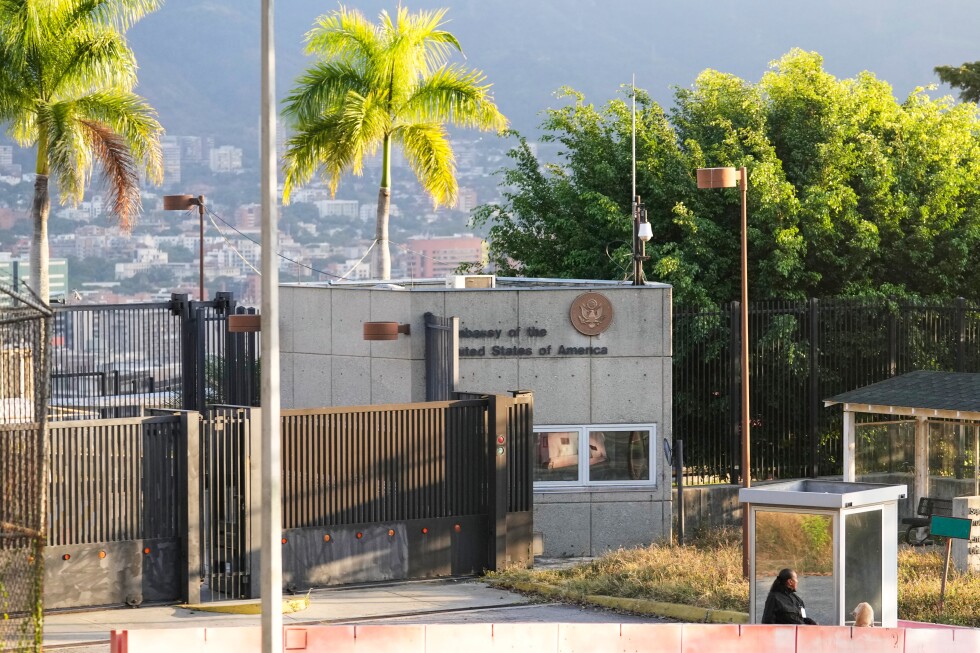
    International observers will be monitoring the address for signals regarding potential military action against Iran, as the United States maintains significant military presence pressing Tehran on nuclear negotiations. The administration’s “peace through strength” foreign policy approach, which has included interventions in Venezuela, is expected to feature prominently in the speech.

    The political atmosphere surrounding the address remains tense, with Democrats organizing various forms of protest and response. The event’s guest list has generated additional interest, with the administration inviting Olympic athletes and families representing various political causes, while some invitees have declined participation.

    With Republicans facing the potential loss of their narrow House majority in upcoming elections, which could jeopardize the remainder of Trump’s term and potentially lead to impeachment proceedings, this address represents a critical opportunity for the president to reshape his political narrative.

  • Netanyahu announces Israel-India ‘hexagon of alliances’ against ‘radical axes’

    Netanyahu announces Israel-India ‘hexagon of alliances’ against ‘radical axes’

    Israeli Prime Minister Benjamin Netanyahu has unveiled a strategic international coalition termed the ‘hexagon of alliances,’ with India positioned as a central partner. This alliance framework, explicitly designed to counter radical axes in the region, was announced ahead of Indian Prime Minister Narendra Modi’s landmark visit to Israel.

    Netanyahu articulated the partnership’s foundation on the social media platform X, stating, ‘The bond between Israel and India is a powerful alliance between two global leaders. We are partners in innovation, security, and a shared strategic vision.’ He characterized the coalition as an axis of nations committed to stability and progress, explicitly opposing both ‘the radical Shia axis’ and an ’emerging radical Sunni axis.’ The alliance is reported to include Israel, India, Greece, Cyprus, and other unnamed Arab, African, and Asian states.

    Modi’s visit agenda includes addressing the Israeli parliament, a solemn visit to the Yad Vashem Holocaust memorial, and engagements with the Indian-Jewish community. In response to Netanyahu’s remarks, Modi affirmed the ‘deep bond’ and ‘multi-dimensional nature’ of bilateral relations, emphasizing a foundation of ‘mutual trust, innovation, and a shared aspiration for peace and progress.’

    Concrete collaborative initiatives were outlined, focusing on infrastructure development in Israel’s Negev region. Netanyahu announced the expedited construction of the Tzklag Airport and a new Israeli settlement, citing a ‘tremendous development momentum.’

    This deepening partnership is underpinned by substantial defense and economic ties. India has emerged as the world’s largest purchaser of Israeli weaponry, including drones, missile systems, and surveillance technology, with arms purchases surging 175% between 2015 and 2019. Recent high-level defense meetings have resulted in memoranda of understanding aimed at strengthening long-term cooperation. A September bilateral investment agreement further solidified economic links, which Israeli Finance Minister Bezalel Smotrich claimed would ‘open new doors for investors.’

    This strategic pivot marks a significant evolution in India’s foreign policy. Historically a supporter of the Palestinian cause at the United Nations, India has recently abstained from a UN resolution calling for a Gaza ceasefire. Concurrently, it has strengthened ties with Israel’s regional allies, notably signing a $3 billion liquefied natural gas deal and a defense agreement with the United Arab Emirates.

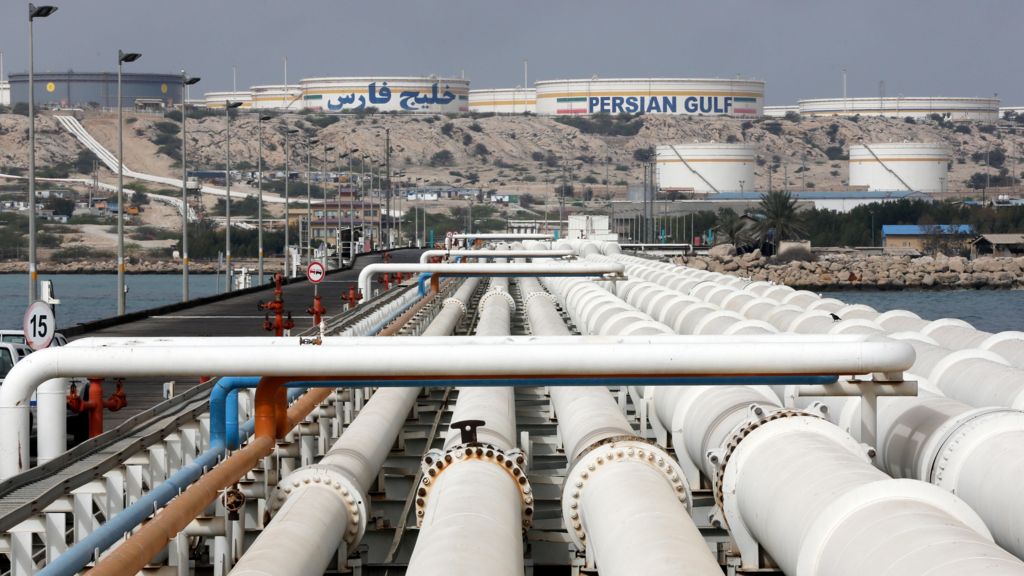
    The alliance’s formation occurs against a backdrop of intensified pressure on Iran. Following a U.S. tariff announcement on nations engaging with Iran, India seized three Iranian-linked oil tankers in the Arabian Sea. Subsequently, India issued an advisory urging all its nationals to depart Iran, signaling a potential recalibration of its historically close strategic ties with Tehran and highlighting the complex geopolitical realignments shaping the region.

  • Kerala to be renamed ‘Keralam’? India’s union cabinet approves name change proposal

    Kerala to be renamed ‘Keralam’? India’s union cabinet approves name change proposal

    In a significant administrative development, India’s Union Cabinet has granted approval for the proposed renaming of the southern state of Kerala to ‘Keralam,’ aligning the official nomenclature with its authentic Malayalam pronunciation. This decision marks a crucial milestone in a longstanding cultural-linguistic movement that has gained substantial political traction.

    The constitutional process, announced by Information and Broadcasting Minister Ashwini Vaishnaw on Tuesday, will now advance to the Kerala State Legislative Assembly for formal consideration. The timing of this development is particularly noteworthy as it precedes the state’s assembly elections scheduled for the first half of 2026.

    According to the established procedural framework, the President of India will formally refer the Kerala (Alteration of Name) Bill, 2026, to the state legislature for consultation as mandated under Article 3 of the Indian Constitution. This legislative mechanism requires the central government to seek state assembly perspectives before proceeding with parliamentary consideration.

    The initiative follows the Kerala Legislative Assembly’s unanimous resolution passed in June 2024, which formally endorsed the name change to better reflect the state’s linguistic heritage. The proposed alteration represents more than mere semantic adjustment—it embodies the preservation of regional cultural identity within India’s federal structure.

    Final implementation will require subsequent presidential recommendation and parliamentary approval through the designated constitutional amendment process. This development underscores the dynamic interplay between linguistic preservation, regional identity, and administrative processes in contemporary Indian governance.

  • US government drops case against Democrats in ‘illegal orders’ video

    US government drops case against Democrats in ‘illegal orders’ video

    In a significant legal development, federal prosecutors in Washington have terminated their prosecution against six Democratic lawmakers who produced a video encouraging military personnel to reject unlawful orders. The decision follows the failure of US Attorney Jeanine Pirro’s office to obtain a grand jury indictment against the defendants, all of whom are veterans with military or intelligence backgrounds.

    The controversy originated in November when the legislators released a 90-second video addressing concerns about American military operations targeting alleged narco-trafficking vessels near South American coastlines. These operations have reportedly resulted in over 130 fatalities since September. The video emphasized servicemembers’ obligation under the Uniform Military Code of Justice to refuse commands that violate U.S. or international law.

    Former President Donald Trump initially denounced the lawmakers as ‘traitors’ and suggested their actions warranted capital punishment, though he later clarified he wasn’t specifically threatening execution. Subsequently, Pirro’s office launched an investigation while the Pentagon initiated proceedings to demote Senator Mark Kelly, a former Navy captain and astronaut, which would have reduced his retirement benefits. A judge temporarily blocked this demotion in early February.

    The justice department had attempted to prosecute the group under statutes permitting up to ten years imprisonment for encouraging ‘insubordination, disloyalty, mutiny, or refusal of duty’ within the military. However, the grand jury declined to endorse the indictment. Legal representatives for Senator Elissa Slotkin had warned prosecutors that continuing the case would prompt claims of ‘vindictive and selective prosecution.’

    While the justice department retains the option to pursue charges in another jurisdiction, there were no indications of such action as of Tuesday. Pirro’s office declined to comment on the development. The accused lawmakers and their supporters have characterized the entire episode as an assault on free speech and an attempt to penalize political opponents.

  • Nigeria denies report it paid ‘huge’ ransom to free pupils in mass abduction

    Nigeria denies report it paid ‘huge’ ransom to free pupils in mass abduction

    The Nigerian government has issued a forceful denial of media reports claiming it paid substantial ransom money to Islamist militant group Boko Haram to secure the release of over 200 students and staff members abducted from St. Mary’s Catholic boarding school last November. Information Minister Mohammed Idris characterized the AFP news agency’s report as “completely false and baseless,” asserting that the allegations undermine the professionalism and integrity of the nation’s security forces.

    The controversial report, citing unnamed intelligence sources, suggested Nigeria had paid approximately 40 million naira ($30,000) per captive, with total payments reaching 2 billion naira ($1.5 million). The report further claimed the ransom was delivered via helicopter to Boko Haram’s enclave in Gwoza, Borno state—an assertion Minister Idris dismissed as “fiction.”

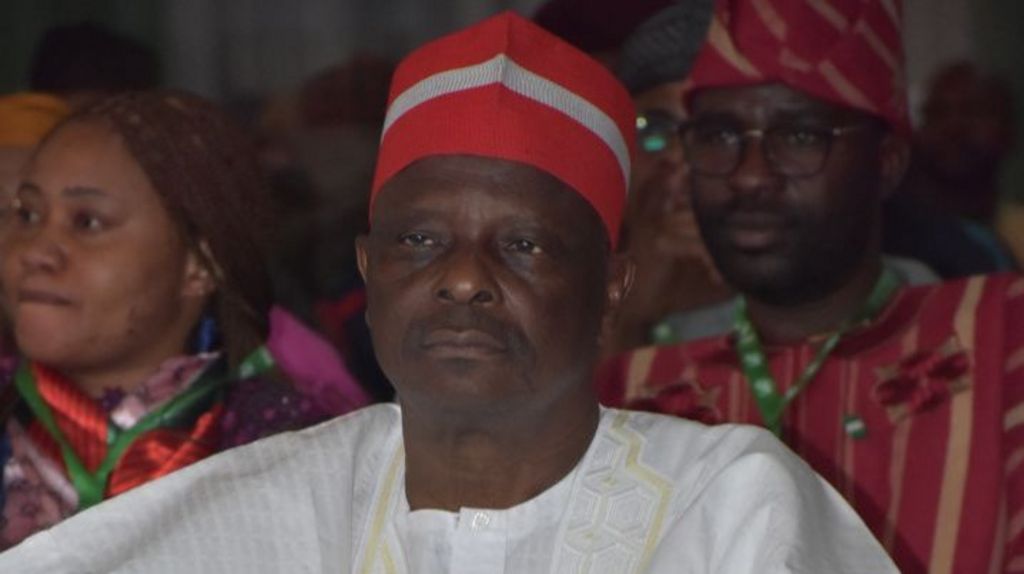
    In a separate security development, Police Chief Kayode Egbetokun, a close ally of President Bola Tinubu, has resigned citing “pressing family considerations” one year before his term expiration. His deputy, Tunji Disu, has been appointed acting chief amid escalating security challenges nationwide.

    The school abduction incident represents part of a broader pattern of kidnap-for-ransom operations that have become increasingly prevalent across Nigeria. Security analysts note that while Boko Haram remains most active in northeastern Borno state, splinter factions and criminal networks now operate extensively throughout Nigeria’s northwestern and north central regions.

    The controversy emerges during a period of heightened diplomatic scrutiny from the United States. A recent congressional delegation report presented at the White House recommended sweeping security and trade measures addressing what it described as “long-running persecution of Christians in Nigeria.” The report called for new bilateral security agreements, targeted sanctions, and legal reforms to protect religious freedom—recommendations the Nigerian government has yet to address publicly.

    Nigeria continues to grapple with the legacy of Boko Haram’s 2014 abduction of over 200 schoolgirls from Chibok, which sparked a devastating trend of mass kidnappings. Despite a 2022 law criminalizing ransom payments, enforcement remains challenging as families and intermediaries frequently negotiate with captors to secure loved ones’ release.

  • What to know about the charge that former Prince Andrew and Peter Mandelson could face

    What to know about the charge that former Prince Andrew and Peter Mandelson could face

    LONDON — Britain’s centuries-old misconduct in public office statute faces mounting scrutiny as two prominent figures—former Prince Andrew (now Andrew Mountbatten-Windsor) and ex-Business Secretary Peter Mandelson—undergo criminal investigations regarding their associations with convicted sex offender Jeffrey Epstein.

    Both individuals, questioned within days of each other by metropolitan police, are being investigated for allegedly leaking sensitive government information to the financier. Though neither has been formally charged, the high-profile cases have exposed fundamental flaws in the medieval-era legal framework governing public officials’ conduct.

    Recently unsealed U.S. government documents suggest Mountbatten-Windsor, during his tenure as UK’s special trade representative (2001-2011), provided Epstein with confidential trade reports. Mandelson, a veteran Labour Party politician and former ambassador to Washington, allegedly shared internal government documents with Epstein and promised to lobby for reduced banker bonus taxes during his ministerial term approximately 15 years ago.

    The Crown Prosecution Service defines misconduct in public office as “serious willful abuse or neglect of the power or responsibilities of the public office held.” Conviction carries a potential life sentence, yet legal experts emphasize the offense remains notoriously difficult to prove due to its vague terminology and high evidentiary thresholds.

    Particular challenges exist in Mountbatten-Windsor’s case, where prosecutors must first establish whether his unsalaried trade envoy role constituted a “public office.” Additionally, investigators must demonstrate willful misconduct rather than mere negligence, and prove actions were so severe they fundamentally abused public trust.

    The Law Commission, an independent legal body, has repeatedly called for reforming what it describes as “unhelpfully vague” legislation. Critics note the offense has historically targeted mid-level officials like police and prison officers rather than senior politicians or high-ranking officials.

    Both subjects were released following questioning, with legal analysts suggesting charges remain distant. Marcus Johnstone of PCD Solicitors noted: “The threshold is high: conduct must be so far below acceptable standards that it affronts the office’s standing. We remain considerably distant from potential prosecution.”

  • Iran says students must respect ‘red lines’ after protests

    Iran says students must respect ‘red lines’ after protests

    Iranian authorities have issued a stern warning to university students participating in renewed anti-government demonstrations, emphasizing the importance of respecting national “red lines” while acknowledging their right to protest. Government spokeswoman Fatemeh Mohajerani stated Tuesday that while student anger is “understandable,” certain boundaries—including respect for the national flag and “sacred things”—must not be crossed even during periods of heightened emotion.

    The comments come as students across Iran began their new semester with protests reviving slogans from earlier nationwide demonstrations that peaked in January. Videos verified by AFP showed students at a Tehran university burning the Iranian flag adopted after the 1979 Islamic Revolution—an act that authorities consider particularly provocative.

    This latest wave of unrest follows massive protests that began in December, initially sparked by economic hardships in the sanctions-hit country but quickly evolving into broader challenges against Iran’s clerical leadership. The previous demonstrations prompted a severe government crackdown that resulted in thousands of casualties. While US-based Human Rights Activists News Agency (HRANA) documents over 7,000 deaths, Iranian officials acknowledge approximately 3,000 fatalities, attributing the violence to “terrorist acts” allegedly fueled by the United States and Israel.

    Meanwhile, tensions between Iran and the United States continue to escalate. Tehran has vowed to retaliate “ferociously” against any American attack, even a limited one, as President Donald Trump publicly considers military options. Despite Trump’s denial of reports that top military officials warned against the risks of engagement with Iran, the US has significantly increased its military presence in the Middle East to pressure Tehran regarding its nuclear program. Indirect negotiations between the two nations are scheduled to resume Thursday in Geneva, with Iran maintaining its nuclear activities are for civilian purposes while Western powers suspect weapons development intentions.