分类: politics

  • Brazil’s Supreme Court begins trial of suspects in Rio councilwoman Marielle Franco killing

    Brazil’s Supreme Court begins trial of suspects in Rio councilwoman Marielle Franco killing

    Brazil’s Supreme Court commenced a historic trial on Tuesday for the high-profile 2018 assassination of Rio de Janeiro councilwoman Marielle Franco and her driver Anderson Gomes. The proceedings mark a pivotal moment in a case that transformed Franco—a Black, bisexual human rights advocate for marginalized communities—into an international symbol of political resistance.

    A five-judge panel will adjudicate charges against five defendants: former congressman Chiquinho Brazão; his brother Domingos Brazão, who served on a Rio government watchdog body; their assistant Robson Calixto Fonseca; police investigator Rivaldo Barbosa; and former police officer Ronald Paulo Alves Pereira. The Brazão brothers, arrested in 2024 as alleged masterminds, have been connected to vigilante militia groups that frequently clashed with Franco’s advocacy work.

    Prosecutorial evidence relies substantially on plea bargain testimonies from former police officers Ronnie Lessa and Élcio Queiroz, who received 78 and 59-year sentences respectively in October 2024 for their direct roles in the drive-by shooting. Investigations suggest the murder was motivated by Franco’s legislative efforts to regulate public housing land—a proposal that allegedly angered Chiquinho Brazão during their simultaneous tenure on the city council.

    The trial commenced with Justice Alexandre de Moraes presenting a case summary, followed by statements from the Attorney General’s office and defense lawyers. A verdict from the judicial panel is anticipated between Tuesday evening and Wednesday morning.

    Despite the trial’s significance, crime expert Chico Otávio, author of a book on Franco’s killing, cautioned that convictions would represent merely symbolic victory rather than substantive progress against Brazil’s powerful militia groups. Meanwhile, United Nations experts issued statements calling for transparent proceedings and comprehensive justice, while Anielle Franco—Marielle’s sister and Brazil’s current racial equality minister—emphasized the trial’s critical importance for strengthening Brazilian democracy against patterns of violence, racism, and misogyny.

  • US told EU it ‘stands’ by tariff deal: trade chief

    US told EU it ‘stands’ by tariff deal: trade chief

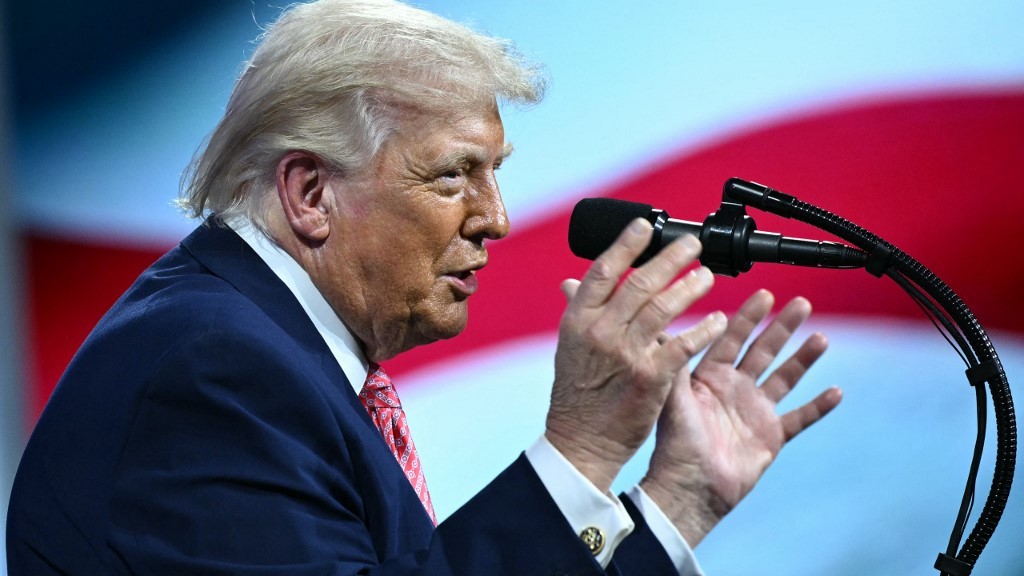
    The European Union is seeking urgent clarification from Washington regarding its commitment to a bilateral trade agreement following a landmark U.S. Supreme Court ruling on presidential tariff authority. EU Trade Commissioner Maros Sefcovic revealed Tuesday that American counterparts have provided reassurances about honoring the existing trade deal, despite fresh tariff measures announced by President Donald Trump.

    The development comes after Friday’s Supreme Court decision that Trump lacked authority to impose levies under a 1977 law. In response, the president announced new 10% tariffs on imported goods, with plans to increase them to 15% – creating potential conflicts with the EU-US agreement that established a 15% tariff ceiling for most European goods.

    Sefcovic informed EU lawmakers that he maintained constant communication with U.S. officials who confirmed their commitment to the bilateral agreement. However, the commissioner acknowledged significant concerns about the newly announced tariffs, describing them as “difficult” for European interests during this “transitional period” as Washington determines how to implement the court’s ruling.

    The trade chief also addressed ongoing tensions regarding Trump’s 50% duties on steel and aluminum imports, which were expanded in August to include hundreds of steel-containing products. Sefcovic suggested potential positive developments, noting that U.S. colleagues recognized this as “a big problem” and were actively reviewing the matter.

    Meanwhile, the European Parliament has temporarily suspended approval of the EU-US deal pending clarification on the tariff situation. Sefcovic urged parliamentary approval by March, contingent on receiving clearer commitments from American authorities. EU member states emphasized that “a deal is a deal,” while expressing concerns that the new flat tariff approach could eliminate the comparative advantage European exporters gained through the bilateral agreement.

  • Trump hits out at reports that top US general warned against attacking Iran

    Trump hits out at reports that top US general warned against attacking Iran

    Tensions between the United States and Iran have escalated dramatically following conflicting reports regarding military strategy discussions within the Trump administration. According to multiple U.S. media outlets, Chairman of the Joint Chiefs of Staff General Dan Caine has expressed significant reservations about potential airstrikes against Iran, warning that such actions could trigger a broader regional conflict and require substantial additional U.S. military deployment.

    President Trump vehemently denied these reports through his Truth Social platform, characterizing them as ‘fake news’ and asserting that General Caine believes any military engagement with Iran would be ‘easily won.’ The president’s statement contradicted earlier reports from Axios and The Washington Post indicating that Pentagon officials had raised serious concerns about the risks of military escalation.

    The geopolitical standoff occurs alongside ongoing diplomatic efforts, with Special Envoy Steve Witkoff and senior advisor Jared Kushner scheduled to meet Iranian negotiators in Geneva. Despite these diplomatic channels, the U.S. has simultaneously orchestrated one of its largest military buildups in the region in decades, deploying substantial naval assets including the USS Gerald R Ford aircraft carrier strike group, which recent tracking data confirms is transiting toward the Middle East.

    President Trump has set an implicit deadline for diplomatic resolution, stating publicly that the world would discover within ‘probably 10 days’ whether the U.S. would reach an agreement with Iran or pursue military action. The administration’s pressure campaign aims to compel Iran to curtail its nuclear program, though Special Envoy Witkoff expressed frustration that Tehran had not yet ‘capitulated’ despite the visible military posture.

    Military analysts note that current U.S. force deployment provides significantly greater operational capacity than during previous engagements, including the January operation against Venezuela and last June’s airstrikes on Iranian nuclear facilities. This enhanced capability includes extensive refueling aircraft, heavy lift assets, and substantial naval firepower positioned throughout the region.

  • Iran says students must respect ‘red lines’ after protests

    Iran says students must respect ‘red lines’ after protests

    Iranian authorities have delivered a measured response to renewed student protests, acknowledging demonstrators’ frustrations while emphasizing the importance of respecting national symbols. Government spokeswoman Fatemeh Mohajerani stated Tuesday that while students maintain the right to protest, they must recognize and honor “red lines,” particularly regarding the Iranian flag adopted after the 1979 revolution.

    The campus demonstrations, marking the beginning of the academic semester, have revived anti-government slogans from the widespread protests that peaked in January. Verified footage shows confrontations at Tehran universities between pro-government supporters waving flags and opposition students chanting criticism of the clerical leadership. In some instances, students burned the Islamic republic’s flag, prompting Mohajerani to describe the banner as a protected symbol that must not be violated “even at the height of anger.”

    The government’s response comes amid ongoing international scrutiny regarding Iran’s handling of previous protests. Human rights organizations report that the earlier crackdown resulted in thousands of deaths and tens of thousands of arrests, with abuses continuing through torture, coerced confessions, and arbitrary executions according to Human Rights Watch researcher Bahar Saba.

    Simultaneously, regional tensions escalate as the United States reinforces its military presence. The USS Gerald R. Ford aircraft carrier group has arrived at a US base in Crete en route to the Middle East, joining the USS Abraham Lincoln carrier group already deployed to the Arabian Sea. This military buildup represents Washington’s pressure campaign regarding Iran’s nuclear program, which the West believes aims to develop atomic weapons despite Tehran’s peaceful claims.

    Iran has vowed fierce retaliation against any US military action, with the Revolutionary Guards conducting demonstration drills featuring missiles, artillery, drones, and special forces along the Gulf shores. Both nations continue indirect negotiations set to resume in Geneva, even as President Trump publicly acknowledges considering military options.

  • Senegal introduces legislation to boost minimum sentence for homosexuality to 5 years

    Senegal introduces legislation to boost minimum sentence for homosexuality to 5 years

    LAGOS, Nigeria — The Senegalese government, led by Prime Minister Ousmane Sonko, has initiated a significant legislative push to intensify penalties for same-sex relations. On Tuesday, Sonko presented a bill to parliament that proposes increasing the minimum prison sentence for homosexuality from one year to at least five years.

    The proposed legislation aims to expand the legal definition of ‘unnatural acts,’ reinforcing a law that has criminalized homosexuality since the nation gained independence from France in 1960. However, the government has opted not to reclassify the offense from its current status as a misdemeanor to a more serious felony. Prime Minister Sonko defended this decision, stating, ‘We can achieve the intended objectives without going so far as to elevate the acts.’

    This legislative action aligns with a key promise from Sonko’s political campaign and arrives amidst reports from domestic human rights organizations of a worsening climate for the LGBTQ community. These groups report a concerning escalation in arrests, with at least a dozen individuals detained in recent weeks on allegations of homosexuality, a trend they say has been ongoing since 2018.

    The bill’s passage now rests with the National Assembly, where Sonko’s ruling PASTEF party holds a majority, signaling a high likelihood of the law being enacted and marking a further tightening of restrictions in the conservative West African nation.

  • Trump considers new national security tariffs after Supreme Court ruling, WSJ reports

    Trump considers new national security tariffs after Supreme Court ruling, WSJ reports

    The Trump administration is actively developing a new series of national security tariffs targeting multiple strategic industries, according to a Wall Street Journal report published Monday. This initiative comes directly in response to last week’s Supreme Court decision that invalidated substantial portions of the President’s second-term tariff program.

    The proposed tariffs would be implemented under Section 232 of the Trade Expansion Act of 1962, which authorizes the imposition of trade barriers based on national security considerations. These measures would represent a separate initiative from the comprehensive 15% global tariff that President Trump announced over the weekend.

    Industry sources familiar with the administration’s planning indicate the new national security tariffs would potentially affect six key sectors: large-scale battery production, cast iron and iron fittings manufacturing, plastic piping systems, industrial chemical production, and critical power grid and telecommunications equipment.

    The Supreme Court’s recent ruling specifically struck down Trump’s previously established tariffs that had been pursued under legislation intended for national emergency situations. In immediate reaction to this judicial setback, the President imposed an interim 10% tariff on all U.S. imports, with plans to increase this blanket tariff to 15% in the near future.

    Neither the White House nor relevant administrative officials have provided official confirmation or commentary regarding these reported tariff plans. Reuters news agency noted that their requests for confirmation remained unanswered at the time of reporting.

  • Jailed Pakistan ex-PM Imran Khan gets eye treatment, is clinically stable: Hospital

    Jailed Pakistan ex-PM Imran Khan gets eye treatment, is clinically stable: Hospital

    Former Pakistani Prime Minister Imran Khan underwent specialized eye treatment at Islamabad’s Pakistan Institute of Medical Sciences (PIMS) on Tuesday, February 24, 2026, while remaining imprisoned on corruption charges. The hospital confirmed Khan received his second dose of eye injections and described his condition as “clinically stable.” This development occurs amidst growing international concern regarding the 73-year-old former cricket star’s deteriorating eyesight, with his legal team reporting he has lost approximately 85% of vision in his right eye.

    Khan’s press adviser, Sayed Zulfiqar Bukhari, immediately raised objections regarding medical access, stating authorities continued to deny visitation rights to Khan’s personal physician and family members. These concerns were amplified last week when more than a dozen international cricket captains jointly appealed to the Pakistani government to ensure adequate medical treatment for the former premier.

    The political context remains deeply contentious. Khan, who served as prime minister from 2018 until his removal via no-confidence vote in 2022, has been incarcerated since 2023. He and his wife were subsequently sentenced to 17 years imprisonment on corruption allegations that both vehemently deny. Khan’s political party, Pakistan Tehreek-e-Insaf, maintains all legal proceedings represent politically motivated persecution orchestrated by the current administration and Pakistan’s powerful military establishment.

    Khan’s son, Kasim Khan, publicly accused authorities of “medical neglect” during his father’s confinement, asserting via social media platform X that “the responsibility lies squarely with the regime in power, the Army Chief and the puppets enabling this cruelty.” Khan’s initial arrest in May 2023 triggered widespread civil unrest throughout Pakistan, with demonstrations frequently turning violent and resulting in hundreds of arrests.

    The former leader’s health crisis has transformed into both a medical and diplomatic issue, drawing attention from international sports figures and human rights observers who question prison conditions and judicial fairness in Pakistan’s ongoing political turmoil.

  • Brazil court tries politicians over hit on Black councilwoman

    Brazil court tries politicians over hit on Black councilwoman

    Brazil’s Supreme Court has commenced a historic trial examining the alleged political conspiracy behind the 2018 assassination of Rio de Janeiro councilwoman Marielle Franco and her driver Anderson Gomes. The proceedings target former federal lawmaker Chiquinho Brazao and his brother Domingos Brazao, a former state legislator, who stand accused of orchestrating the murder that exposed deep-seated connections between political figures and organized crime networks in Rio.

    Marielle Franco, a 38-year-old Black, lesbian activist raised in one of Rio’s favelas, had gained national prominence as an outspoken critic of police brutality and powerful militia groups controlling vast portions of the city. Her political activism directly challenged illegal land seizure operations that these paramilitary organizations profit from.

    The prosecution contends the Brazao brothers ordered the hit in retaliation for Franco’s opposition to legislative measures that would have legitimized illegally occupied territories under militia control. Two former military police officers who carried out the execution have already received substantial prison sentences in 2024.

    Notably, the trial also includes Rivaldo Barbosa, the initial lead investigator accused of deliberately sabotaging the investigation to ensure the perpetrators’ impunity. A former military police officer and an ex-advisor to Domingos Brazao face additional charges.

    The courtroom proceedings commenced under the supervision of Justice Alexandre de Moraes, who recently presided over the conviction of former president Jair Bolsonaro for coup plotting. Moraes emphasized that the prosecution’s case extends beyond the plea agreement with shooter Ronnie Lessa, noting “multiple evidentiary elements, depositions, and documents” corroborate the conspiracy allegations.

    The Brazao brothers maintain their innocence and have contested the validity of Lessa’s testimony, in which the convicted shooter claimed he was “blinded” and “driven crazy” by the promise of a million-dollar payment for the assassination.

    Present during the emotionally charged opening were Franco’s sister Anielle Franco, currently serving as Brazil’s Minister of Racial Equality, and widow Monica Benicio, who recently warned that the “criminal ecosystem that killed Marielle continues to operate and extend its tentacles.”

  • Trump denies top US officer warned of Iran strike risks

    Trump denies top US officer warned of Iran strike risks

    President Donald Trump has publicly disputed media reports suggesting that top U.S. military officials expressed reservations about potential military action against Iran. On his Truth Social platform, Trump declared it “100 percent incorrect” that General Dan Caine, Chairman of the Joint Chiefs of Staff, had opposed military engagement with Tehran.

    Multiple news organizations, including The Washington Post and Wall Street Journal, had reported that General Caine raised significant concerns during White House and Pentagon discussions about the risks associated with striking Iran. These concerns reportedly included munition shortages, inadequate allied support, potential U.S. and allied casualties, and the depletion of U.S. air defense systems. The Axios news outlet further indicated that Caine warned against the United States “becoming entangled in a prolonged conflict.”

    Despite these reported cautions, Trump asserted that General Caine “only knows one thing: how to WIN” and would lead effectively if commanded to engage Iran militarily. The president emphasized his sole authority in making such decisions, stating he would prefer a diplomatic resolution but warning that without a deal, “it will be a very bad day for that country and, very sadly, its people.”

    The context for these developments includes Trump’s previous order to strike Iran’s nuclear facilities last year and his repeated threats of further military action if ongoing negotiations fail to produce a replacement for the 2018 nuclear deal that he abandoned during his first term. Washington has significantly bolstered its military presence in the Middle East with two aircraft carriers, over a dozen additional ships, and numerous warplanes deployed to the region.

    Diplomatic efforts continue despite the heightened tensions, with a U.S. official confirming that the next round of talks with Tehran is scheduled for Thursday.

  • DPRK top leader outlines general economic goals for next five years

    DPRK top leader outlines general economic goals for next five years

    PYONGYANG – North Korean leader Kim Jong-un has delineated a measured economic strategy for the nation’s forthcoming five-year development cycle, emphasizing stabilization, structural consolidation, and incremental qualitative advancement. The announcement was delivered during a pivotal address at the Ninth Congress of the ruling Workers’ Party of Korea (WPK) on Monday, February 23, 2026.

    As General Secretary of the WPK, Kim articulated that the primary objective of the new quinquennial plan is to establish a solid foundation for the national economy. The official Korean Central News Agency (KCNA) reported his statements, which framed the period as a critical phase for reinforcing economic stability before pursuing more ambitious qualitative development.

    Kim underscored the fundamental purpose of the Party Congress, stating its main schedule was to meticulously formulate and subsequently ratify a long-term strategic blueprint. He emphasized that the success of the congress would be measured by its effectiveness in defining the nation’s strategic orientation, establishing precise sector-specific goals, and adopting concrete decisions to achieve them.

    This economic roadmap signifies a continuation of a pragmatic approach, potentially indicating a sustained focus on internal development and self-reliance amid persistent international sanctions and geopolitical pressures. The speech did not elaborate on specific industries or quantitative targets, instead maintaining a broad focus on systemic strengthening and controlled progress.