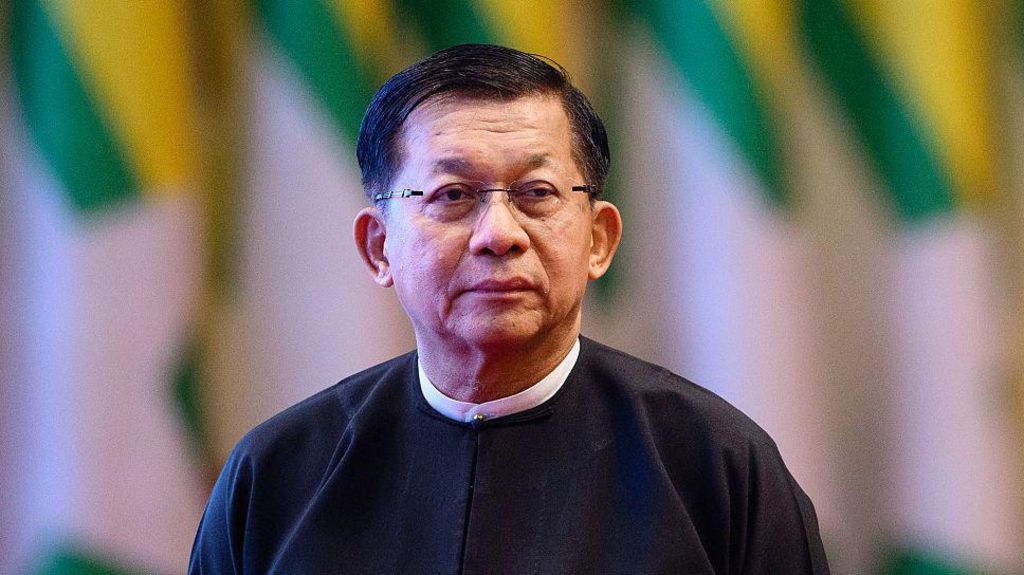
Myanmar’s military commander-in-chief Min Aung Hlaing has been formally nominated for the presidency as the nation’s parliament convened on Monday, marking a significant political transition following elections widely condemned by the international community. The nomination comes after a general election held between December and January that excluded major opposition parties and was dismissed by critics as fundamentally flawed.
Min Aung Hlaing, who faces sanctions from numerous Western nations for orchestrating the military coup five years ago, stands as the certain choice for president. His nomination appears alongside two loyalists who present no substantial challenge for the position. The military establishment has defended the electoral process as legitimate despite widespread allegations of manipulation.
The political landscape reveals approximately 90% of parliamentary members owe direct allegiance to Min Aung Hlaing, comprising both active military officers—guaranteed a constitutional quarter of seats—and elected representatives from the military’s political wing. Parliamentary proceedings this week will focus primarily on presidential selection, though the outcome appears predetermined.
Analysts note Min Aung Hlaing’s longstanding ambition for the presidency, citing his dissatisfaction with the military party’s poor performance in the 2020 elections as a key catalyst for the coup that overthrew Aung San Suu Kyi’s democratically elected government. The constitutional requirement for the president to relinquish military command presents potential vulnerabilities, prompting Min Aung Hlaing to appoint General Ye Win Oo—a known loyalist with a reputation for brutal suppression of dissent—as his military successor.
To mitigate power transition risks, the general has established a new consultative council under his leadership, potentially maintaining influence over both military and civilian governance structures. The emerging administration essentially represents an expanded version of the current military junta adopting civilian political trappings, with no indications of policy changes regarding the violent suppression of opposition movements that has characterized the past five years of military rule.
The country continues to grapple with a devastating civil war that has claimed thousands of lives and displaced millions since the coup, with significant territories remaining under armed opposition control despite the junta’s characterization of elections as a pathway to peace.