分类: politics

  • Nigeria president ‘in great shape’ after falling at Turkey reception

    Nigeria president ‘in great shape’ after falling at Turkey reception

    Nigerian President Bola Tinubu experienced a stumble during an official welcome ceremony in Ankara, Turkey, while being received by his counterpart Recep Tayyip Erdogan. The incident occurred as the 73-year-old leader was walking past a line of soldiers and dignitaries, captured on the Turkish president’s official X account footage.

    The video shows President Tinubu momentarily losing his balance and falling to the ground before the scene cuts to an aerial view. Within 45 seconds, attendants assisted the Nigerian leader, and he subsequently appeared unharmed alongside President Erdogan. According to presidential aide Sunday Dare, Tinubu proceeded with scheduled bilateral meetings without interruption following the incident.

    This marks the second public stumble for President Tinubu within approximately 18 months, following a similar occurrence in June 2024. On that previous occasion, the president humorously addressed the incident by suggesting observers might have mistaken his fall for a popular dance move. His office had then characterized it as a “mild misstep.”

    The current visit to Turkey represents a diplomatic effort to strengthen bilateral relations between the two nations. In response to circulating social media clips of the stumble, Dare issued a statement on X emphasizing that “President Tinubu [is] in great shape as state visit proceeds smoothly” and confirming the continuation of all planned diplomatic engagements.

    Tinubu, who assumed office in 2023 following electoral victory, has previously received sympathy from across the political spectrum for such incidents, with opposition figure Atiku Abubakar previously describing a similar event as “unfortunate” and senator Shehu Sani noting it demonstrated the president’s shared humanity.

  • Carney denies walking back Davos speech in phone call with Trump

    Carney denies walking back Davos speech in phone call with Trump

    Canadian Prime Minister Mark Carney has publicly reaffirmed the substance of his critical Davos speech addressing global power dynamics, despite claims from Trump administration officials that he had retracted his statements. The diplomatic friction emerged after U.S. Treasury Secretary Scott Bessent asserted that Carney had “aggressively walked back” his remarks during a phone conversation with President Donald Trump.

    In a Tuesday press briefing in Ottawa, Carney provided his account of the Monday phone exchange, clarifying that it was Trump who initiated the call. The Prime Minister characterized their discussion as a “very good conversation” covering multiple bilateral issues including Ukraine, Venezuela, Arctic security matters, and Canada’s recent trade arrangement with China.

    The controversy stems from Carney’s World Economic Forum address, where he indirectly criticized Trump’s approach to international relations, suggesting it had caused a “rupture” in the postwar global order. Trump responded during his own Davos appearance with a stark reminder of Canada’s economic dependence on the United States.

    Carney explained that his speech articulated Canada’s recognition of shifting U.S. trade policy and the nation’s adaptive response. He maintained that the President understood Canada’s position despite the subsequent tension.

    The dispute escalated when Bessent used a Fox News interview to criticize Canada’s trade agreement with China, questioning Carney’s judgment and emphasizing the disproportionate importance of north-south trade relations over east-west alternatives. The Treasury Secretary suggested Carney should prioritize Canadian interests over “globalist agendas.”

    This exchange occurred against the backdrop of Trump’s threat to impose 100% tariffs on Canadian goods if China uses Canada to circumvent U.S. tariffs. The recently announced Canada-China agreement will reduce Canadian canola oil tariffs from 85% to 15% by March, while Canada will apply most-favored-nation rates of 6.1% to limited Chinese electric vehicle imports, down from 100%.

    Carney denied pursuing a comprehensive free-trade deal with China, stating Canada has “never” considered such an arrangement. He characterized Trump’s tariff threats as negotiation tactics ahead of the upcoming USMCA review, noting that “the president is a strong negotiator” and such comments should be viewed within broader negotiation context.

  • US sued over deadly missile strikes on alleged drug boats

    US sued over deadly missile strikes on alleged drug boats

    The United States government faces a landmark wrongful death lawsuit following a series of lethal military strikes targeting vessels allegedly involved in drug trafficking. The legal action, initiated by bereaved families from Trinidad and Tobago, represents the first judicial challenge to the Trump administration’s controversial maritime operations in the Caribbean and eastern Pacific waters.

    Filed in Massachusetts federal court, the litigation stems from an October 14 incident that claimed six lives, including those of Chad Joseph (26) and Rishi Samaroo (41). While President Trump characterized the deceased as ‘six male narcoterrorists’ transporting narcotics from Venezuela, the plaintiffs contend the victims were civilian laborers returning from fishing and agricultural work. Notably, no substantiating evidence regarding drug cartel connections or terrorist designations has been publicly disclosed by Washington.

    The complaint leverages the Death on the High Seas Act and Alien Tort Statute, alleging these ‘premeditated and intentional killings’ constitute unlawful extrajudicial executions without legal justification. Represented by the American Civil Liberties Union and Center for Constitutional Rights, plaintiffs Lenore Burnley (Joseph’s mother) and Sallycar Korasingh (Samaroo’s sister) seek punitive damages through jury determination.

    Legal director Baher Azmy condemned the operations as ‘lawless killings in cold blood; killings for sport and killings for theater,’ emphasizing that the suit aims to establish accountability for potential war crimes. The case follows a separate December petition to the Inter-American Commission on Human Rights by relatives of Colombian national Alejandro Carranza Medina, similarly killed in September strikes despite family assertions he was engaged in legitimate fishing activities.

    This developing legal confrontation highlights escalating tensions between counter-narcotics operational protocols and international human rights standards, with implications for extraterritorial use of lethal force and governmental accountability mechanisms.

  • Spain plans to give half a million undocumented migrants legal status

    Spain plans to give half a million undocumented migrants legal status

    In a historic move that sets Spain apart from its European neighbors, the socialist-led coalition government has unveiled a sweeping migrant regularization program expected to grant legal status to approximately half a million undocumented immigrants. The initiative, announced by Minister of Inclusion, Social Security and Migration Elma Saiz, represents the first large-scale regularization effort in two decades.

    Under the program’s provisions, foreign nationals without criminal records who can demonstrate residence in Spain prior to December 31, 2025, for a minimum of five months will qualify for initial one-year residence permits, renewable upon expiration. The application window will open in April and remain accessible through June 2026.

    The decision comes amid staggering statistics from conservative think-tank Funcas, revealing an eight-fold surge in Spain’s undocumented migrant population—from 107,409 in 2017 to 837,938 in 2025. Primary countries of origin include Colombia, Peru, and Honduras, with significant migration flows from Latin American nations.

    Prime Minister Pedro Sánchez’s administration emphasizes the economic rationale behind the measure, characterizing immigrants as catalysts for ‘wealth, development and prosperity.’ Spain’s economy has notably outperformed major EU counterparts, projecting nearly 3% growth for 2025 alongside unemployment rates dipping below 10% for the first time since 2008—achievements partly attributed to migrant contributions to the social security system.

    The policy emerged through negotiations with far-left Podemos party, long-time advocates for migrant rights under the slogan ‘regularisation is rights.’ Former minister Irene Montero celebrated the move as a triumph against racism, though the government bypassed parliamentary procedures by implementing the measure via royal decree.

    Conservative opposition parties have voiced strong objections. People’s Party leader Alberto Núñez Feijóo warned of potential strain on public services and increased migration pull factors, while far-right Vox spokeswoman Pepa Millán condemned the initiative as an attack on national identity, pledging to challenge it before the Supreme Court.

  • US border enforcer set to leave Minneapolis as Trump tries to calm crisis

    US border enforcer set to leave Minneapolis as Trump tries to calm crisis

    Minneapolis is witnessing the withdrawal of certain federal border enforcement personnel following two fatal protester shootings that have ignited nationwide condemnation and placed President Trump’s immigration policies under unprecedented scrutiny. The anticipated departure of Border Patrol Commander Gregory Bovino, recognized for his militarized approach to immigration enforcement, coincides with the arrival of new White House envoy Tom Homan, who is tasked with deescalating tensions through improved communication with local officials.

    The crisis reached a critical point when 37-year-old ICU nurse Alex Pretti was fatally shot multiple times at point-blank range during an altercation with federal agents on an icy road this past Saturday. This incident occurred less than three weeks after another U.S. citizen, Renee Good—a mother of three—was similarly killed inside her vehicle on January 7th. Both shootings involved masked, heavily armed Immigration and Customs Enforcement (ICE) and Border Patrol agents operating under Trump’s aggressive deportation initiative.

    Initially, administration officials falsely characterized Pretti as a ‘domestic terrorist’ intending to harm federal agents, claims that were visibly contradicted by multiple video recordings. Although President Trump initially amplified these allegations on social media, he subsequently adopted a more conciliatory stance as political backlash intensified.

    The repercussions have extended to Washington, where rare bipartisan criticism has emerged. Republican Senator Rand Paul called for the immediate administrative leave of agents involved in Pretti’s shooting, while centrist Democratic Senator John Fetterman demanded the dismissal of Homeland Security Secretary Kristi Noem, citing gross incompetence.

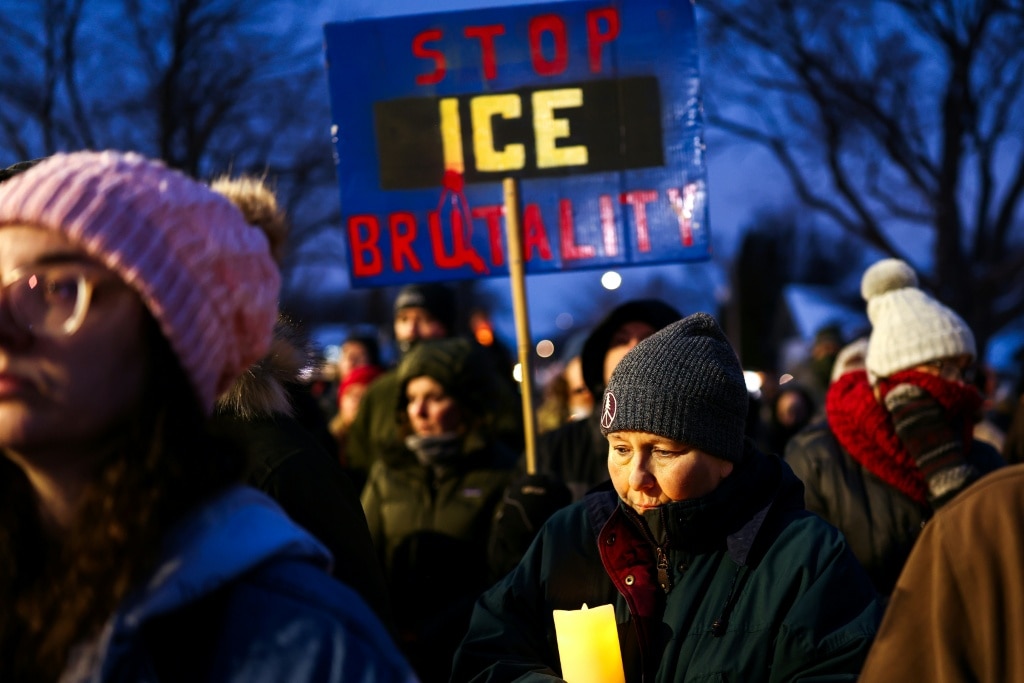
    Meanwhile, Minneapolis protesters braving sub-zero temperatures expressed cautious relief at the partial withdrawal of federal forces. Local demonstrators described months of community trauma and brutality, viewing the reduced presence as both a vindication of their protests and a welcome relief from sustained violence.

    Simultaneously, legal challenges are progressing through Minnesota courts. A federal judge is considering whether the deployment of federal officers violates state sovereignty, and ICE’s acting director has been ordered to appear in court regarding a detention challenge.

  • Trump’s shadow looms over India-EU trade deal

    Trump’s shadow looms over India-EU trade deal

    In a landmark development with profound geopolitical implications, India and the European Union have concluded negotiations on a comprehensive free trade agreement, signaling a strategic realignment in response to global economic uncertainties. The deal, hailed as “the mother of all deals” by both Indian Prime Minister Narendra Modi and European Commission President Ursula von der Leyen, represents a significant breakthrough after two decades of stalled negotiations.

    The agreement emerges against a backdrop of escalating trade tensions and unpredictable US policy under the Trump administration. With the US imposing 50% tariffs on Indian goods—including a 25% penalty for India’s continued purchase of Russian oil—and threatening similar measures against EU countries, both powers have sought to diversify their economic partnerships and reduce strategic dependencies.

    Von der Leyen emphasized the partnership’s significance, stating: “This is the tale of two giants – the world’s second and fourth largest economies – choosing partnership in a true win-win fashion. By combining our strengths, we reduce strategic dependencies at a time when trade is increasingly weaponized.”

    Prime Minister Modi highlighted the agreement’s broader implications, noting that the global order is in “great turmoil” and that the pact would strengthen global supply chains while serving as “a new blueprint for shared prosperity.”

    The deal forms part of a broader pattern of nations seeking alternative alliances amid Washington’s aggressive trade stance. Recent weeks have seen Canada resetting ties with China, the UK pursuing strengthened trade relations with Beijing, and the EU finally concluding a trade accord with Mercosur after 25 years of negotiation—all developments experts attribute partly to the “Trump factor.”

    Michael Kugelman, senior fellow for South Asia at the Atlantic Council, observed: “The Trump factor provided a very strong impetus to the deal because both India and the EU are facing shock US tariffs that they never expected. Trump is a big reason why the EU and India have been able to overcome most of their differences.”

    While the agreement promises enhanced market access for both parties and helps the EU reduce its reliance on China, implementation challenges remain. The deal must undergo months of legal scrutiny before ratification by EU member states and the European Parliament—a process experts warn will be complex given contentious issues around intellectual property, agriculture, and carbon emissions.

    Despite these hurdles, business groups on both sides have welcomed the agreement as a crucial step toward stabilizing trade relations in an increasingly volatile global landscape.

  • Fujian accelerates cross-Strait integration efforts

    Fujian accelerates cross-Strait integration efforts

    Fujian Province has launched an accelerated initiative to establish itself as a premier demonstration zone for cross-Strait integration, marking a significant advancement in China’s national reunification strategy. Governor Zhao Long formally announced this strategic pivot during his government work report at the fourth session of the 14th Fujian Provincial People’s Congress.

    The coastal province, positioned directly opposite Taiwan, will implement comprehensive measures spanning economic, social, and cultural dimensions. Central to this initiative is the creation of a pioneering cross-Strait common market designed to streamline market access for Taiwan-funded enterprises while fostering innovative small-scale trade mechanisms between Fujian and Taiwan.

    Industrial collaboration will prioritize four key sectors: electronic information, mechanical equipment, petrochemicals, and biomedicine. The provincial government plans to establish specialized Taiwan-related industrial parks to facilitate these cooperative ventures, building on the impressive 2025 figures that saw 2,612 new Taiwan-funded enterprises established with actual utilized Taiwan capital reaching $724 million.

    Beyond economic integration, Fujian is developing extensive institutional frameworks to attract Taiwanese compatriots through enhanced education opportunities, internship programs, and employment pathways. The province will expand professional qualification recognition and initiate over thirty joint rural development projects.

    Cultural connectivity forms another critical component of the integration strategy. Fujian will promote the ‘Taiwan Compatriots Root-seeking Platform’ and advance legislative measures concerning cross-Strait family genealogies. Grassroots exchanges will be encouraged through shared sporting activities including baseball, softball, and dragon boat racing, complementing recent cultural successes like the television drama ‘The Silent Glory’ filmed in Fujian that has resonated across the Strait.

    Infrastructure development features prominently in the integration roadmap, with plans to deepen ‘living circles’ between Xiamen-Jinmen and Fuzhou-Matsu. Critical utility projects delivering water, electricity, and gas to Jinmen and Matsu will be expedited, while Xiamen is scheduled to complete its section of the Xiamen-Jinmen Bridge within the year.

    The initiative aligns with the commencement of China’s 15th Five-Year Plan (2026-30), positioning Fujian at the forefront of cross-Strait relations development.

  • Rwanda takes legal action against UK over axed migrant deal

    Rwanda takes legal action against UK over axed migrant deal

    The Rwandan government has formally commenced international legal proceedings against the United Kingdom through the Permanent Court of Arbitration in The Hague, seeking financial compensation for what it claims are unfulfilled commitments under a terminated migration agreement. This development marks a significant escalation in the diplomatic dispute between the two nations following the collapse of the controversial asylum partnership.

    According to documents filed with the Netherlands-based arbitration body, Rwanda contends that the UK failed to honor its financial obligations under the treaty signed by the previous Conservative administration. The agreement, which envisioned relocating certain asylum seekers from Britain to Rwanda, included substantial economic support packages for the African nation.

    The legal challenge emerged after Prime Minister Sir Keir Starmer’s government terminated the arrangement in 2024, declaring the scheme ‘dead and buried’ shortly after Labour’s electoral victory. The Home Office subsequently announced that £220 million in scheduled future payments would not be disbursed to Rwanda.

    A spokesperson for the Prime Minister’s office stated: ‘We will robustly defend our position to protect British taxpayers. The Rwanda scheme was a complete disaster that wasted £700 million of taxpayer money while resulting in the transfer of merely four volunteers.’

    The original agreement, negotiated under Conservative leadership, involved total expenditures of approximately £700 million, including £290 million in direct payments to Rwanda. Additional provisions included £100 million scheduled for fiscal years 2025-26 and 2026-27, plus £120 million contingent upon the transfer of 300 individuals to Rwandan soil.

    Michael Butera, Chief Technical Adviser to Rwanda’s Minister of Justice, explained the nation’s position: ‘Through arbitration, Rwanda seeks a legal determination of the parties’ respective rights and obligations under the treaty, in accordance with international law.’

    The Permanent Court of Arbitration, an established forum for resolving interstate disputes, has acknowledged receipt of the case with its status listed as pending. Arbitration procedures typically involve extended timelines, often spanning multiple years, as parties present detailed arguments according to established timetables.

    Conservative opposition figures have characterized the legal action as ‘yet another catastrophic consequence of Labour’s decision to scrap the Rwanda scheme,’ warning that British taxpayers now face substantial financial liability due to the government’s policy reversal.

    The UK government had previously indicated efforts to recover funds following the agreement’s termination, though Rwandan authorities maintain they are under ‘no obligation’ to refund any payments already received.

  • Israel preparing for talks with Trump administration on new 10-year security deal, FT reports

    Israel preparing for talks with Trump administration on new 10-year security deal, FT reports

    Israel is initiating preparatory discussions with the Trump administration to establish a new decade-long security arrangement, signaling a potential transformation in one of the world’s most enduring defense partnerships. According to exclusive reporting from the Financial Times, these negotiations will focus on transitioning from direct financial assistance to collaborative defense projects as the cornerstone of bilateral security cooperation.

    Gil Pinchas, former chief financial adviser to Israel’s military and defense ministry, revealed that forthcoming talks would prioritize joint military initiatives over traditional cash grants. This strategic pivot emerges despite the current Memorandum of Understanding (2016-2028) that provides Israel with $38 billion in military aid, including $33 billion for weapons procurement and $5 billion for missile defense systems.

    The proposed restructuring aligns with Israeli Prime Minister Benjamin Netanyahu’s recently stated objective of gradually reducing dependence on American military assistance over the next decade. Pinchas characterized the $3.3 billion annual ‘free money’ component as one element that could ‘decrease gradually’ within the new framework.

    Emphasizing the broader strategic significance beyond financial considerations, Pinchas noted that ‘the partnership is more important than just the net financial issue… there are a lot of things that are equal to money.’ The U.S. State Department has not yet responded to inquiries regarding the anticipated negotiations, which are expected to commence in the coming weeks.

  • France invites Chad president in bid to ease troubled relations

    France invites Chad president in bid to ease troubled relations

    In a significant diplomatic overture, French President Emmanuel Macron has formally invited Chadian President Mahamat Déby to Paris, signaling a potential reset of bilateral relations following recent military estrangement. The verbal invitation was conveyed by France’s Ambassador to Chad, Éric Gérard, during a Monday meeting at the presidential palace in N’Djamena.

    This development comes against the backdrop of substantial geopolitical shifts. In November 2024, Chad abruptly terminated its longstanding defense agreement with France, declaring the colonial-era pact ‘obsolete’ for addressing contemporary security challenges. This decision triggered the withdrawal of approximately 1,000 French troops who had been providing intelligence and logistical support from bases across the central African nation.

    The Chadian presidency confirmed Déby’s acceptance of the invitation while withholding specific timing details. Officials characterized the discussion as focusing on ‘renewal of bilateral cooperation’ through ‘dialogue and openness in a spirit of consultation and consideration of the interests of each party.’

    Chad’s recent foreign policy reorientation represents broader regional realignments. Prior to severing military ties with France, N’Djamena had also ordered the departure of US forces, fueling speculation about shifting alliances. While Déby has publicly denied intentions to replace Western partners with alternative foreign powers, Chad recently signed a military cooperation memorandum with Belarus, a close Russian ally.

    This diplomatic maneuvering occurs as France’s influence in the Sahel region continues to diminish following forced withdrawals from Mali, Niger, and Burkina Faso after successive military coups. Chad remains challenged by significant security threats while asserting what it terms ‘sovereign independence’ in defense matters after six decades of nationhood.