分类: politics

  • Tanzanian lecturer arrested over anti-government protests charged with terrorism

    Tanzanian lecturer arrested over anti-government protests charged with terrorism

    A political science lecturer from one of Tanzania’s top public higher education institutions has been upgraded to a terrorism charge following his arrest earlier this month amid a sweeping government crackdown on opposition-linked dissent. Melkisedek Kaijage, a faculty member at the University of Dodoma, was one of more than 130 people taken into police custody after the planned July 7 pro-democracy demonstrations, which were blocked by authorities before they could get underway.

    Kaijage’s case took a sharp turn during a recent bail hearing at a lower magistrate’s court, where prosecutors announced the revised terrorism charge after the lecturer had spent 15 days in initial police detention. The academic was originally arrested one day after the planned nationwide protests, which were organized to demand sweeping democratic reforms and accountability for the hundreds of people killed in a post-election government crackdown that followed the October 2025 general election. Under Tanzanian legal rules, terrorism charges carry an automatic bar to pre-trial bail in nearly all cases, meaning Kaijage will remain behind bars until his full trial proceeds. No plea was requested from the lecturer at Thursday’s preliminary hearing, as terrorism cases fall exclusively under the jurisdiction of the country’s higher courts.

    Prosecutors have now added a new allegation that Kaijage threatened to burn down public government buildings as part of what authorities frame as coordinated intimidation tactics to incite unrest. Tanzania’s penal code treats terrorism-related offenses with extreme severity: convictions for activities including recruiting for terrorist groups, facilitating terrorist activity, harboring suspected terrorists, or supporting terrorist operations carry prison sentences ranging from a mandatory 10 years up to life imprisonment.

    Gerald Shija, head of the University of Dodoma Academic Staff Association (Udomasa), confirmed that Kaijage has been moved from local police holding facilities to Isanga Prison, located in the country’s capital city of Dodoma. Colleagues who work alongside Kaijage describe him as a widely respected educator whose popularity on campus stems entirely from his teaching work in political science and public administration, not from overt political activism.

    Kaijage’s terrorism charge comes amid a broader government campaign targeting opposition figures and government critics under the administration of President Samia Suluhu Hassan. Just last month, authorities issued an indefinite suspension of all political public gatherings across the country, justifying the move as a critical security measure to prevent widespread unrest.

    The ongoing crackdown follows deadly violence that erupted after the October 2025 presidential election, which was formally won by President Samia with an overwhelming 99% of the vote. Official findings from a presidential commission of inquiry confirmed that 518 people died from unnatural causes in the post-election unrest, including 192 people killed by gunshot. The scale of this violence upended Tanzania’s long-held international reputation as a stable, consensus-driven East African nation that had avoided large-scale political conflict for nearly 60 years. The opposition rejected the 2025 election result as a undemocratic sham, after President Samia’s two main political challengers were barred from running. In response, President Samia has maintained the election was conducted fairly and transparently, and has blamed foreign actors for orchestrating the post-election unrest as part of a plot to remove her from power.

  • South Africa halts impeachment against President Cyril Ramaphosa over stolen cash inquiry

    South Africa halts impeachment against President Cyril Ramaphosa over stolen cash inquiry

    In a major legal development that shakes South African political landscape, the Western Cape High Court has issued an order temporarily halting impeachment proceedings targeting President Cyril Ramaphosa, centered on the controversial 2020 theft of more than $580,000 in cash from his private Phala-Phala farm.

    The Friday ruling does not bring the entire impeachment process to a permanent stop, however. The multi-party parliamentary committee tasked with overseeing the inquiry is still permitted to carry out preliminary administrative and preparatory work while the legal challenge plays out in the courts.

    Impeachment proceedings were initially launched by national lawmakers back in June, following the release of a critical parliamentary inquiry report that found Ramaphosa had substantive questions to answer regarding his response to the theft. The report raised multiple pressing points of contention: how such a large sum of cash ended up stashed inside a sofa on his farm, the origin of the funds, whether any foreign currency included in the stolen amount was properly declared to regulatory authorities, and why the burglary was not immediately reported to South African police services.

    Ramaphosa has contested the findings of the parliamentary report through the court system, and filed an application to suspend impeachment proceedings until his legal challenge to the report is fully resolved. On Saturday, Ramaphosa’s office released a statement welcoming the high court’s latest judgment, noting that the president remains committed to upholding institutional accountability.

    “The President reaffirms his respect of judicial independence and separation of powers enshrined in our Constitution,” the statement read, adding that Ramaphosa will “cooperate with and abide by processes of accountability.”

    This long-running controversy, dubbed the Phala-Phala scandal, has been one of the most persistent and damaging political challenges Ramaphosa has faced since he took office as South Africa’s head of state in 2018. The legal battle traces back to earlier this year, when South Africa’s Constitutional Court — the nation’s highest judicial body — upheld the validity of the parliamentary investigation report, clearing the way for impeachment proceedings to move forward. That ruling came after the ruling African National Congress (ANC) party initially secured a parliamentary vote to block the inquiry from advancing.

    The impeachment committee is composed of legislative representatives from every political party represented in South Africa’s national parliament. Following the high court’s order Friday, most party representatives confirmed they would first conduct a full review of the judgment before deciding on whether to file an appeal against the ruling.

  • South Africa’s president wins bid to temporarily halt impeachment inquiry over ‘Farmgate’

    South Africa’s president wins bid to temporarily halt impeachment inquiry over ‘Farmgate’

    South Africa’s political landscape has been shifted by a latest court ruling that has temporarily paused an impeachment probe into President Cyril Ramaphosa tied to the controversial 2020 ‘Farmgate’ cash theft scandal, granting the embattled leader critical breathing room as he fights to clear his name.

    The roots of this saga stretch back to 2020, when burglars broke into Ramaphosa’s private Phala Phala farm in Limpopo province and made off with a cache of undeclared U.S. dollars stuffed inside a sofa. Stolen funds are alleged to total roughly $580,000, but details of the break-in remained hidden from public view until 2022. That year, Arthur Fraser, former head of South Africa’s intelligence service and a close ally of ex-president Jacob Zuma, submitted an explosive dossier to police that exposed the theft, leveling serious accusations against Ramaphosa: that the president deliberately concealed the incident from law enforcement and tax regulators, and potentially violated the country’s foreign exchange control laws by holding the unreported cash. Ramaphosa has repeatedly denied all wrongdoing, asserting the funds were legitimate proceeds from the sale of buffaloes from his farm.

    Following the 2022 revelations, an independent parliamentary panel concluded there was sufficient evidence to open an impeachment inquiry against the president. Initially, lawmakers voted to shelve the probe, but South Africa’s Constitutional Court overturned that decision in May 2024, ruling parliament had acted unlawfully in setting aside the panel’s findings. The ruling cleared the way for the impeachment process to be revived, coming at a time of massive change for South Africa’s legislative branch: Ramaphosa’s long-ruling African National Congress (ANC) lost its parliamentary majority in the 2024 national election, forcing the party to govern as part of a fragile coalition government.

    To block the revived inquiry, Ramaphosa launched a legal challenge, arguing the 2022 independent panel had overstepped its authority, misevaluated evidence, and incorrectly interpreted the four misconduct charges brought against him. He also launched a separate court application to have the panel’s entire findings thrown out, a case set to be heard by the courts in September 2024.

    On Friday, the Western Cape High Court issued its ruling on Ramaphosa’s request to halt the impeachment proceedings pending the outcome of his challenge to the panel’s findings. A three-judge panel split on the decision, with two justices ruling in the president’s favor. Judge Andre le Grange ordered the parliamentary impeachment committee to suspend all hearings and activities “pending the determination by this court of the applicant’s review”. Ramaphosa’s legal team had argued that allowing the inquiry to move forward before his challenge was resolved would cause irreversible damage to his reputation, a harm that could not be corrected even if he was ultimately cleared of wrongdoing.

    The temporary pause effectively gives Ramaphosa several extra months to build his case and shore up political support before the impeachment process can resume. In a public statement released shortly after the ruling, Ramaphosa said he had noted the court’s decision and “respects” the outcome of the legal process.

    This development marks the latest turn in a years-long political scandal that has tested South Africa’s democratic institutions and reshaped the country’s post-election political balance, with ramifications for the stability of the nation’s new coalition government.

  • China slaps export controls on 14 EU entities in retaliation for Russia-related sanctions

    China slaps export controls on 14 EU entities in retaliation for Russia-related sanctions

    BEIJING – In a tit-for-tat response to the European Union’s latest round of Ukraine-related sanctions targeting Chinese firms, China announced new export restrictions on 14 European entities this Friday. The country’s Ministry of Commerce confirmed in an official statement that all Chinese domestic enterprises will be prohibited from shipping dual-use goods – components and technologies that have both civilian and military applications – to the blacklisted European organizations. The restrictions also extend to foreign firms, which are banned from supplying China-manufactured dual-use items to the targeted entities.

    The affected European companies span multiple industrial sectors across the continent, including Tatra Trucks, a well-known Czech vehicle manufacturer; Lafert SpA, an Italian producer of electric motors; Sindlhauser Materials GmbH, a German manufacturing firm; and Cavok UAS, a French drone producer.

    A ministry spokesperson clarified that the countermeasures directly follow the EU’s decision one day prior, when the bloc added 14 Chinese enterprises from mainland China and Hong Kong to its latest round of sanctions targeting Russia over its ongoing military campaign in Ukraine. The EU’s 21st package of sanctions, adopted Thursday, broadens restrictions to cover Russian banks, cryptocurrency firms, military equipment producers, and entities from third countries that the bloc alleges are supplying dual-use goods and technology to Russia to support its war effort. Beyond Chinese firms, entities based in India and Turkey were also included in the latest round of penalties.

    The spokesperson emphasized that China’s newly announced measures are necessary to “safeguard national security and interests, and to fulfill international obligations such as non-proliferation,” in response to what the country calls the EU’s “egregious actions.” The development marks a sharp escalation of trade and diplomatic tensions between Beijing and Brussels, rooted in the EU’s approach to sanction enforcement amid the Ukraine war.

  • Deposed Turkish opposition leader forms ‘New Party’ to challenge Erdogan

    Deposed Turkish opposition leader forms ‘New Party’ to challenge Erdogan

    In a major political shakeup rocking Turkey’s opposition landscape, former chair of Turkey’s main opposition Republican People’s Party (CHP) Ozgur Ozel formally launched a new political bloc Friday, officially registering the self-named “New Party” with Turkey’s Interior Ministry just moments after he and 90 fellow CHP legislators resigned from the decades-old party. The long-awaited formation of the new opposition force comes months after a court ruling removed Ozel from his CHP leadership post, a decision that has deepened divisions in Turkish politics and spurred mass protests in support of the ousted leader.

    The sequence of events that led to this split traces back to May 2024, when an appeals court annulled the results of a 2023 CHP party congress that had appointed Ozel as the party’s new chair. Citing unproven claims of voting irregularities, the court reinstated 77-year-old Kemal Kilicdaroglu, who led the CHP for 13 years. Many political analysts broadly characterize Kilicdaroglu’s tenure as marked by ineffective opposition to long-serving President Recep Tayyip Erdogan. Ozel’s removal from the CHP leadership sparked immediate widespread outrage among the party’s base, with supporters dismissing the court order as a politically motivated maneuver designed to weaken Turkey’s fragmented opposition ahead of key political contests.

    In a social media video posted to X following the formal registration, Ozel signed the document formalizing his exit from Turkey’s oldest established political party and offered a hopeful message for the new movement: “May it be auspicious for our homeland, our nation, and our party.”

    Supporters of Ozel frame his ouster as one piece of a broader two-year crackdown on CHP officials across the country. During that period, hundreds of elected mayors and municipal leaders from CHP-run local governments have been detained as part of criminal investigations, most centered on allegations of corruption. Among the most high-profile detentions is Ekrem Imamoglu, the popular former mayor of Istanbul who was widely viewed as the strongest single challenger to Erdogan. Imamoglu, who remains a CHP member, has been imprisoned since March 2023 and faces charges that could carry decades of prison time if he is convicted. As of Friday, there was no official confirmation on whether Imamoglu would leave the CHP to join Ozel’s new bloc.

    The Erdogan administration has repeatedly pushed back against claims of political interference in the justice system, insisting that Turkey’s courts operate independently and free from government pressure.

    Notably, Ozel led the CHP to one of its most significant electoral gains in recent years during the 2024 municipal elections, where the party delivered a major rebuke to Erdogan’s ruling Justice and Development Party (AKP). Despite that success, Ozel was unable to reverse the court’s annulment of his leadership win, and split from the party after Kilicdaroglu refused repeated calls to hold a new leadership vote to resolve the internal crisis.

    With 91 legislators holding seats in Turkey’s 600-seat national parliament, the New Party is on track to displace the CHP as Turkey’s official main opposition bloc. Following the mass defection, the remaining CHP caucus holds just 44 parliamentary seats. Erdogan’s AKP, an Islam-oriented conservative party that has held power for more than two decades, retains a 277-seat majority in the legislature.

  • UNESCO adds West Bank site and Lebanese castles to World Heritage List despite Israeli objections

    UNESCO adds West Bank site and Lebanese castles to World Heritage List despite Israeli objections

    At a UNESCO World Heritage Committee meeting hosted in Busan, South Korea, global cultural heritage officials have voted to approve two contested site nominations for World Heritage designation, marking a high-stakes decision that comes against fierce opposition from the Israeli government. The two sites in question are the ancient archaeological settlement of Sebastia in the Israeli-occupied West Bank, and a cluster of five medieval fortifications in Lebanon’s Mount Amel region. Both sites have simultaneously been added to the List of World Heritage in Danger following an emergency review pushed by their nominating parties.

    Sebastia, a hilltop outpost located roughly six miles northwest of the Palestinian city of Nablus, holds profound cross-cultural historical significance. Academic experts widely identify the site as the location of ancient Samaria, the original capital of the biblical Kingdom of Israel. Its layered archaeological ruins preserve evidence of continuous human settlement across the Iron Age, Roman, Byzantine, and Islamic eras, and shared Abrahamic tradition holds that John the Baptist is interred on the site, per UNESCO’s official background materials.

    The Palestinian Authority first submitted Sebastia for UNESCO consideration back in 2012. Its nomination argued that World Heritage status is critical to advancing long-term conservation of the site, noting that while Sebastia draws global tourism, much of the settlement remains unexcavated and under-resourced for preservation efforts under ongoing Israeli occupation. The designation comes at an especially tense moment: Israel does not recognize Palestinian statehood, and the Israeli government has recently moved forward with plans to expropriate large tracts of land surrounding the Sebastia site. The move also comes amid mounting international pressure on Israel to rein in escalating violent attacks by Israeli settlers against Palestinian communities in the occupied West Bank.

    For the Lebanese nomination, the five Mount Amel castles were recognized for their unique layered architectural legacy, which blends design elements from Crusader, Ayyubid, Mamluk, and local Levantine building traditions. The cluster documents nearly 900 years of evolution in fortified defensive architecture, making it a site of global cultural significance. This was the second Lebanese site added to UNESCO’s global heritage framework during the Busan meeting; just days earlier, the committee added the ancient Phoenician port city of Tyre in southern Lebanon to the List of World Heritage in Danger.

    Israel had mounted a fierce public campaign ahead of the vote to block both nominations. In a formal statement issued earlier that week, the Israeli Foreign Ministry accused the Palestinian delegation of carrying out a “hostile, one-sided campaign” at UNESCO, claiming the nomination falsely framed Sebastia as facing an imminent conservation emergency. Israeli officials argue the effort is a politically motivated attempt to “erase the site’s profound, well-documented Jewish and Christian history.”

    Israel also extended its opposition to the Lebanese castle nomination, specifically raising objections to the inclusion of Beaufort Castle, one of the five fortifications in the Mount Amel cluster. The Israeli Foreign Ministry claimed that the Iran-backed Lebanese militant group Hezbollah has repurposed the historic castle as a military outpost, constructing underground tunnels beneath the site and using the surrounding area to launch rocket attacks. Israeli officials accused UNESCO of ignoring these security and cultural preservation risks.

    Neither UNESCO leadership nor the Lebanese embassy in South Korea has issued a formal response to Israel’s claims regarding Hezbollah and Beaufort Castle. This conflict over the nominations is not an isolated diplomatic incident: Israel formally withdrew from UNESCO in 2019, citing longstanding claims that the organization is systemically biased against the country and downplays Jewish historical ties to the Holy Land. Ahead of Friday’s vote, Israel had called the nominations an example of “weaponization of cultural heritage” for political gain, framing the entire process as illegitimate.

  • Eight Muslim countries condemn mass Israeli raid on Al-Aqsa

    Eight Muslim countries condemn mass Israeli raid on Al-Aqsa

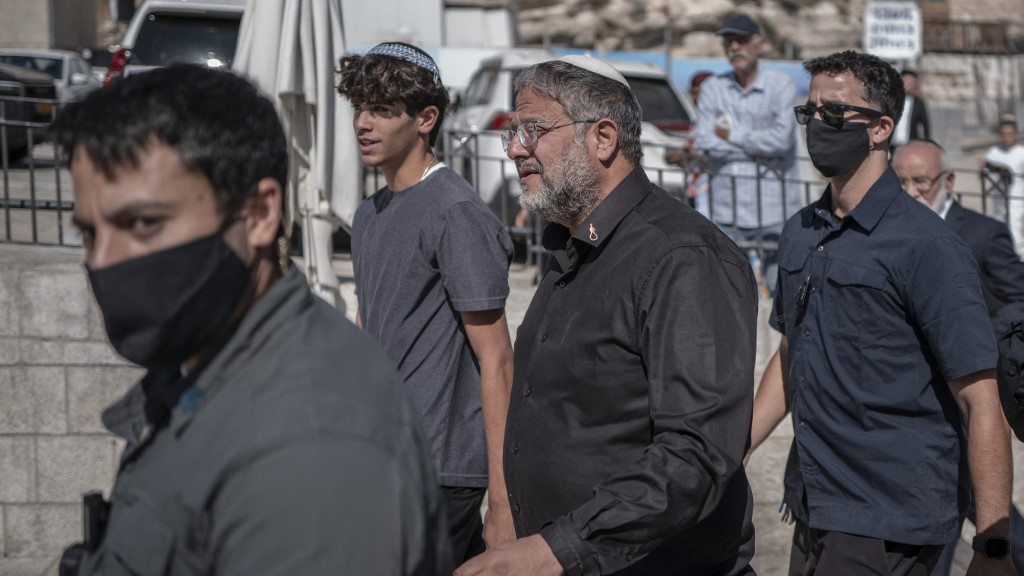
    On Thursday, a coalition of eight foreign ministers from key Arab and Muslim-majority nations issued a harsh rebuke of recent large-scale incursions by Israeli ultranationalist settlers and officials into Jerusalem’s Al-Aqsa Mosque compound, labeling the provocative actions illegal and dangerous extremist acts. The joint statement, shared publicly via Qatar’s Ministry of Foreign Affairs on the social platform X, builds on widespread international outrage over a mass raid staged earlier that same day, which drew thousands of far-right Israeli participants and was openly led by sitting cabinet ministers and members of parliament from Prime Minister Benjamin Netanyahu’s ruling coalition.

    Among the high-profile Israeli figures who took part in the incursion were Itamar Ben Gvir, Israel’s far-right national security minister; Yitzhak Wasserlauf, the minister in charge of the Negev, Galilee and national resilience portfolio; and Amit Halevi, a sitting lawmaker from Netanyahu’s Likud Party. Ahead of the raid, Israeli security forces imposed restrictions that blocked hundreds of Palestinian worshippers from accessing the mosque compound for traditional pre-dawn prayers, forcing many to hold prayer services in adjacent streets outside the holy site.

    The joint statement from the foreign ministers of Qatar, the United Arab Emirates, Jordan, Turkey, Egypt, Indonesia, Pakistan, and Saudi Arabia emphasized that the storming of Al-Aqsa represents a blatant violation of international law, binding United Nations resolutions, and the long-standing historic and legal status quo that has governed the holy site in Occupied East Jerusalem for decades. The group issued its strongest possible condemnation not only of the incursions themselves, but also of the public incitement and mobilization calls that preceded the raid, as well as the ongoing violent provocations carried out by sitting Israeli government ministers and extremist nationalist groups.

    In their warning, the ministers stressed that repeated incursions and provocative actions at the sensitive holy site fuel religious animosity, embolden extremism across the region, and directly undermine ongoing diplomatic efforts to secure a just, lasting peace in the Israeli-Palestinian conflict built on the internationally supported two-state solution. The group also formally called for global recognition of Jordan’s long-standing historic custodianship over the entire Al-Aqsa Mosque compound, and rejected both Israel’s claims of sovereignty over Occupied East Jerusalem and its Islamic and Christian holy sites, as well as ongoing Israeli efforts to forcibly alter the area’s historical, legal, and demographic character.

    The decades-old status quo agreement for the Al-Aqsa compound, a arrangement forged after the 1967 Six-Day War, outlines a clear governing structure: the Jordanian-backed Islamic Waqf, an Islamic charitable trust, retains full authority over all internal religious and administrative affairs of the site, while Israel controls external security access to the compound. Under the terms of this agreement, non-Muslim visitors are permitted to tour the site during scheduled visiting hours, but are strictly prohibited from holding any form of non-Islamic prayer on the grounds. In recent years, however, the site has seen a sharp escalation in settler incursions, most of which are carried out with armed military escort from Israeli security forces.

    This latest diplomatic push comes amid previously unreported plans, first revealed by independent outlet Middle East Eye, that the U.S. and Israel are actively working to strip Jordan of its historic custodianship of the Al-Aqsa compound. According to sources familiar with the proposal, which is championed by former White House advisor Jared Kushner and current U.S. Ambassador to Israel Mike Huckabee, the existing authority of the Jordanian-backed Islamic Waqf would be dissolved entirely, and a new Israeli-government appointed body would reclassify the Al-Aqsa Mosque as a multi-faith site, bringing management of the holy site fully in line with Israeli government interests. U.S. Secretary of State Marco Rubio has denied the existence of such a plan, but has declined to explicitly reaffirm U.S. recognition of Jordan’s long-standing custodianship over the site.

  • German leader Merz reshuffles top posts as he tries to counter far-right advance

    German leader Merz reshuffles top posts as he tries to counter far-right advance

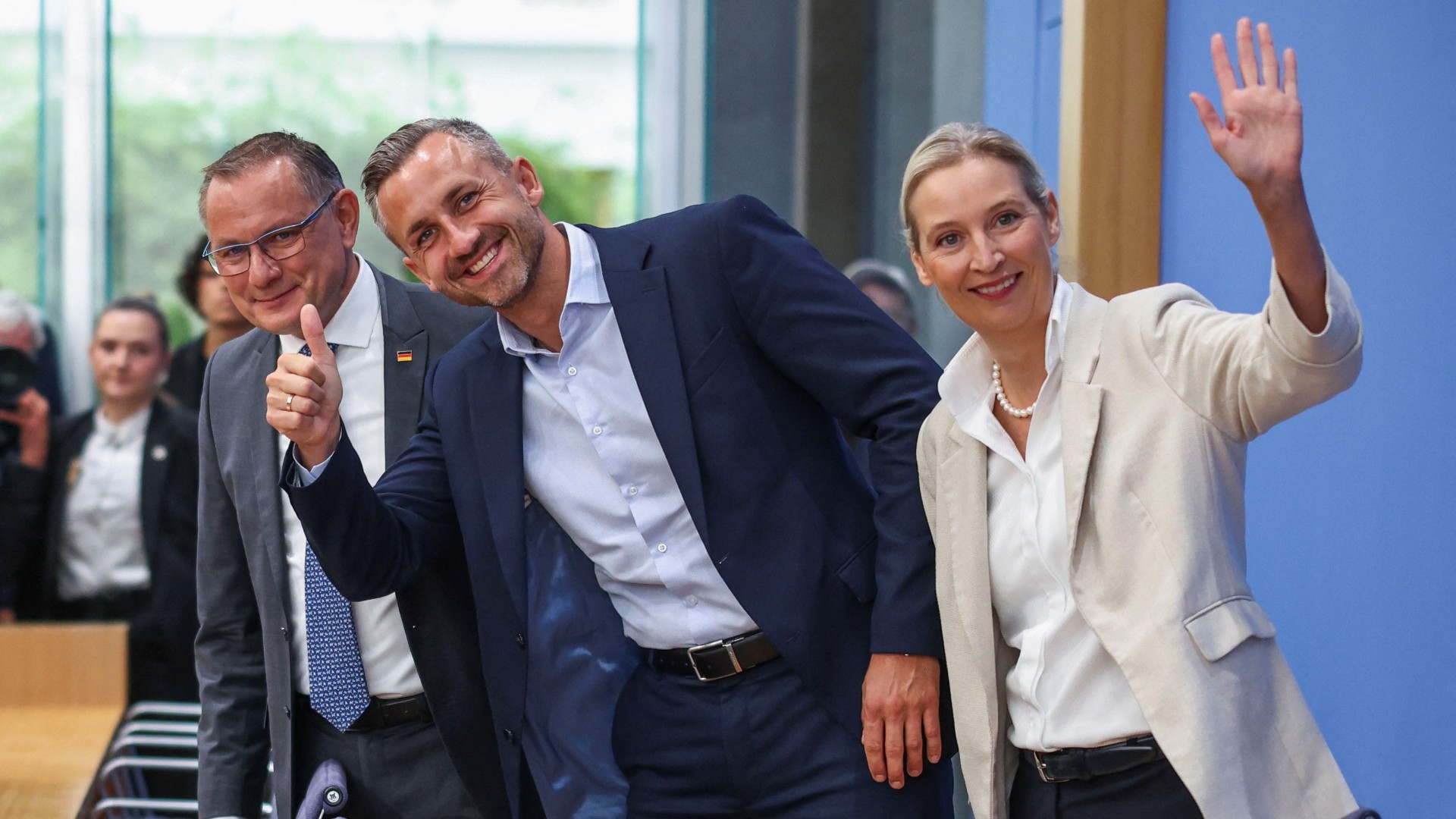
    BERLIN – German Chancellor Friedrich Merz has announced a sweeping overhaul of top government and party leadership posts on Friday, a desperate gambit to revitalize his flagging, deeply unpopular administration ahead of pivotal September regional elections that could see the far-right Alternative for Germany (AfD) claim its first ever state governorship.

    Merz, who took office less than 15 months ago on promises of sweeping economic reform and a recovery for Germany – the largest economy in Europe – after years of prolonged stagnation, has watched his agenda stall. His centrist grand coalition, an unlikely partnership between his center-right Union bloc and long-time rival center-left Social Democrats, has failed to convince voters of its ability to deliver tangible progress, dragging the chancellor’s approval ratings to historic lows. Against this backdrop of widespread public discontent, the far-right AfD has steadily climbed in polling, emerging as a serious contender in the upcoming regional votes.

    The trigger for the reshuffle came last week, when senior Union ally Jens Spahn was forced to resign from his post as leader of the party’s parliamentary group – one of the most powerful positions in the governing coalition – over a damaging credibility scandal. It was revealed that Spahn and his husband had used a commercial surrogate in the United States to welcome a child, a practice that is illegal in Germany and explicitly opposed by Merz’s party, a position Spahn himself had publicly defended for years. The revelation sparked widespread accusations of political hypocrisy, creating an unwanted distraction for the coalition just as it was attempting to roll out its new reform agenda.

    To fill Spahn’s vacant role, Merz has tapped his current chief of staff, Thorsten Frei, a seasoned party operative who previously served as the Union’s parliamentary chief whip during the bloc’s time in opposition, a post political analysts widely consider a better fit for his skill set. Taking Frei’s place as chancellery chief – a critical role responsible for coordinating the daily functions of the federal government – will be current Health Minister Nina Warken, a move that makes her the first woman to ever hold the position. Merz praised Warken for her recent success shepherding the government’s first major reform, a bill to curb soaring costs in Germany’s public health insurance system, through parliament, noting she has already proven she can “push through reforms against resistance.” He added that Warken is also well-versed in core security policy issues, a key priority for the chancellery.

    Warken’s spot at the Health Ministry will go to Carsten Linnemann, current general secretary of Merz’s Christian Democratic Union (CDU) and a staunch conservative who has not previously held national government office. Merz argued that Linnemann’s steadfast commitment to the administration’s reform agenda makes him the right pick to continue overhauling German health policy. The chancellor confirmed that additional cabinet changes are still in the works, but declined to share specific details, saying final decisions would take “a few days yet, and perhaps more time.” He did not address widespread media reports that Transport Minister Patrick Schnieder is also set to be replaced, a change that comes after the coalition’s multi-billion euro infrastructure upgrade fund has failed to resolve persistent public frustration over systemic issues like unreliable national railway service.

    Merz framed the personnel shakeup as a deliberate step to refocus the government on its reform mandate. “The personnel changes follow a clear line,” he said. “We want a government that works with great vigor and pleasure and also represents the personal diversity of our society and politics. We are a reform government and want to continue showing that.”

    Political analysts say the reshuffle is a clear response to the high-stakes electoral calendar this fall. Three critical regional elections will be held in September, with the first taking place on September 6 in the eastern state of Saxony-Anhalt, where the AfD is currently polling strongly enough to win a parliamentary majority that would give it full control of a state government for the first time in the party’s history. For months, the coalition has been dogged by public anger over internal infighting, but in recent weeks Merz’s government has laid out an ambitious slate of potentially controversial policy changes, including a gradual increase in the retirement age to overhaul the country’s strained pension system, income tax cuts for low- and middle-income households, and widespread deregulation to cut bureaucratic red tape. Last week, Merz insisted that “the government has found its rhythm, despite some criticism,” adding that “we have delivered, and we have recognized the dimension of the tasks we face.”

    Uwe Jun, a professor of political science at the University of Trier, told public broadcaster Deutschlandfunk that the reshuffle is intentionally designed to project competence and action ahead of the elections. “Friedrich Merz wants to show that this coalition is capable of acting, that he as chancellor is capable of acting,” Jun explained. “He wants to put it on a faster and stronger path now.”

  • How a new $4.5bn bridge became a symbol of a strained US-Canada relationship

    How a new $4.5bn bridge became a symbol of a strained US-Canada relationship

    After eight years of construction and multiple unplanned delays, the Gordie Howe International Bridge – a C$6.4bn cross-border infrastructure project connecting the North American automotive hubs of Detroit, Michigan and Windsor, Ontario – was meant to stand as a powerful symbol of unity between long-time allies Canada and the United States. Named for the legendary Canadian ice hockey star who spent most of his Hall of Fame career with the Detroit Red Wings, the bridge was set to host a joint inauguration ceremony this week attended by senior dignitaries from both nations. Instead, Canadian organizers have disinvited their American counterparts and will proceed with a solo national celebration on Friday, a dramatic shift triggered by former President Donald Trump’s latest threat to impose new tariffs on Canadian goods.

    The split inauguration is far more than a last-minute scheduling change: it lays bare the increasingly fraught trade relationship between the two neighboring countries, and amplifies mounting domestic political pressure on Canadian Prime Minister Mark Carney to navigate the ongoing standoff.

    The project’s origins stretch back almost 15 years, when Canada agreed to cover the full cost of construction to cut through American political gridlock and move forward with the critical trade artery, which was designed to alleviate dangerous bottlenecks at the existing Windsor-Detroit crossing. Every day, more than C$1bn in goods moves through this border corridor, making the new bridge a high-stakes asset for manufacturers and businesses on both sides of the border. When Canada took on the construction cost, the original agreement stipulated that the bridge would be jointly owned by the Canadian federal government and the state of Michigan, with Michigan gaining access to a share of toll revenues only after Canada recouped its full construction costs.

    That original framework started to unravel early this year, just weeks before a planned ribbon-cutting, when Trump announced he would block the bridge’s opening unless Canada agreed to cede shared authority and ownership to the US. “We should own, perhaps, at least one half of this asset,” Trump stated at the time. According to a New York Times report, the demand came just hours after billionaire Matthew Moroun – head of the Moroun family that owns the adjacent Ambassador Bridge, North America’s busiest privately owned commercial border crossing, and a top Trump donor – held a closed-door meeting with US Commerce Secretary Howard Lutnick.

    By June, Carney had agreed to a US request to delay the bridge’s opening to allow for additional negotiations. In a move that has sparked fierce domestic backlash, Ottawa agreed to split half of all bridge revenues for the next 15 years with an economic development fund controlled exclusively by the US government, a concession designed to unlock the project’s opening. Trump quickly celebrated the deal on social media, calling it “MUCH BETTER” for the United States.

    The latest rift over the inauguration comes as broader trade tensions between the two nations continue to escalate. During his election campaign, Carney vowed to tackle US trade disputes with an “elbows up” approach, a nod to the tough, physical playing style that made Gordie Howe a legend. But today, the prime minister faces growing criticism from political opponents who argue he has conceded too much to a US administration that a large share of Canadians view as acting in bad faith toward their country.

    Colin Robertson, a former Canadian diplomat and senior fellow at the Canadian Global Affairs Institute, told the BBC that working with the current US administration is unlike any previous experience for Canadian negotiators. “They renege on deals. They don’t follow agreements. It’s like dealing with pirates,” Robertson said.

    Beyond the bridge revenue dispute, the Carney government has already made a series of concessions the prime minister’s critics label as unnecessary, including dropping a planned digital services tax opposed by large US tech firms and rolling back some retaliatory tariffs imposed in response to earlier US trade measures. Conservative Member of Parliament Shuvaloy Majumdar argues the entire ordeal proves Canada has negotiated from a position of weakness as it pursues a broader comprehensive trade deal with the Trump administration. “Canadians are sick and tired of being made into a punching bag by President Trump and have the self-respect to fight for their existence and their country,” Majumdar said at a recent press conference. “They deserve a government that is willing to do the same thing.”

    Carney has also faced scrutiny over a lack of public transparency around the terms of the new bridge deal, particularly around how revenue sharing will be structured. During a press availability Thursday, he clarified that the original agreement with the state of Michigan to recoup construction costs remains in place, and the new US-focused revenue sharing arrangement runs “in parallel” to that original framework.

    Not all Canadian political leaders have criticized the deal. Ontario Premier Doug Ford praised Carney for “an excellent job of getting this deal done,” though he has also called Trump a “bully” and urged Ottawa to use Canada’s energy and critical mineral exports as leverage in ongoing trade talks. Robertson acknowledges that the revenue agreement is a clear concession, but argues it was a necessary compromise to protect cross-border commerce. “This new state-of-the-art bridge was done at a great expense, and yes we paid, but it is necessary to keep supply chains intact,” he said, noting that business communities on both sides of the border have pushed for years to get the bridge open.

    The split over how to approach US trade talks has already exposed deep cracks in Canada’s provincial consensus: while Ford pushes for a harder line, Alberta Premier Danielle Smith and Saskatchewan Premier Scott Moe have called for restraint. For Carney, the path forward remains uncertain. Robertson notes that while Gordie Howe played with “elbows up”, his ultimate goal was always to put the puck in the net – a metaphor for getting the critical infrastructure open. Even so, Robertson added, Canada has already reached the limit of what it should concede. “Any further concessions would be problematic and probably not in our interest, given the behaviour of the Trump administration up to now,” he said.

  • Sheikh Hasina ally to step down as Bangladesh’s president

    Sheikh Hasina ally to step down as Bangladesh’s president

    Bangladesh is facing a new wave of political upheaval as President Mohammed Shahabuddin, one of the last remaining allies of ousted former Prime Minister Sheikh Hasina, prepares to step down from his post. The impending resignation comes amid growing speculation that Hasina, who was sentenced to death in absentia last year, will soon return to the country from her exile in India.

    Shahabuddin’s exit from office follows mounting pressure from leaders of the current ruling Bangladesh Nationalist Party (BNP), multiple anonymous sources confirmed to BBC Bangla. The 59-year-old president, who only took office in 2023 with a term scheduled to run through 2028, is expected to formally tender his resignation to Parliament Speaker Hafiz Uddin Ahmad on Friday. Ahmad, who has been receiving medical treatment in Thailand, has cut his trip short to return to Dhaka to receive the resignation, according to insider reports. Sources also indicate Shahabuddin is likely to cite health issues as the official reason for his departure, though political observers widely attribute the move to shifting power dynamics in the country.

    The trigger for Shahabuddin’s sudden decision traces back to recent comments from Hasina herself, who told Reuters earlier this month that she planned to return to Bangladesh to face the death sentence handed down against her by the country’s International Crimes Tribunal. Last year, widespread student-led protests against Hasina’s government erupted across Bangladesh, leaving more than 1,400 protesters dead after security forces used lethal force to suppress the unrest. The chaos ultimately forced Hasina to flee the country for neighboring India, and the tribunal later found her guilty of authorizing the crackdown, sentencing her to death in absentia.

    In the months after Hasina’s ousting, an interim government led by Nobel Peace Prize laureate Muhammad Yunus took power, and her long-ruling Awami League was banned from political activity. Hundreds of the party’s leaders have been arrested, and Hasina has repeatedly condemned what she calls widespread repression of her supporters. “My party leaders and workers are being subjected to tremendous repression,” she told Reuters in her recent interview. “If death comes, I want it to come on my own soil, where my parents are buried and where their blood was shed.”

    Shahabuddin was the only senior ally of Hasina who retained his position in government after the collapse of her administration. For months, he continued carrying out his ceremonial presidential duties under the new interim administration, but he made no secret of his discomfort in the role. In an interview with Reuters last December, he revealed he had felt “humiliated” after the interim government ordered his portraits removed from Bangladeshi embassies and consulates around the world. At the time, he said he would stay in office until general elections were held and allow the new elected government to determine his future.

    That election came in February, when the BNP secured a landslide victory that cemented its hold on national power. Even after the election, Shahabuddin remained in the presidency, but pressure for his resignation grew steadily as Hasina’s comments about returning home reignited tensions across the country.

    Current Home Minister Salahuddin Ahmed struck a measured tone when questioned by reporters on Thursday, noting that the government had not issued any formal demand for Shahabuddin to step down. He added that the Bangladeshi constitution explicitly grants the president the right to resign if he chooses to do so, confirming that the process would follow constitutional protocol.

    Under Bangladeshi law, if Shahabuddin follows through with his resignation, a new presidential election must be held within 90 days to fill the vacant post. Political analysts say the resignation clears the way for the BNP-led government to appoint a new head of state aligned with its policy priorities, as the country continues to navigate its post-Hasina political transition amid ongoing uncertainty over the ousted leader’s planned return.