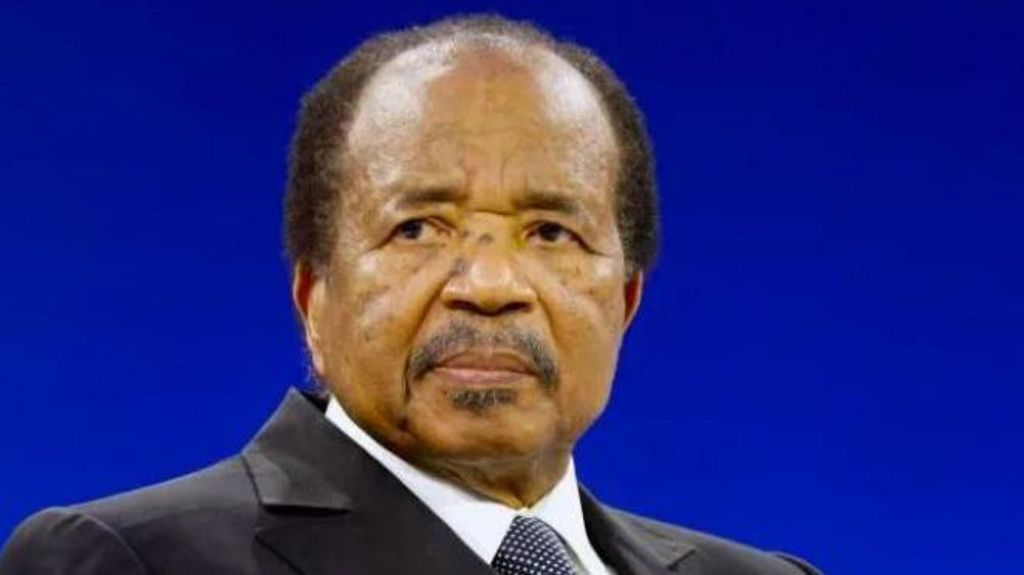
Cameroon’s long-serving President, Paul Biya, aged 92, has been inaugurated for an unprecedented eighth term following a contentious election last month. The swearing-in ceremony took place at the parliament in Yaoundé, marking the continuation of a 43-year reign that began in 1982. Biya, who is currently the world’s oldest head of state, secured 54% of the vote, as per official results, while his closest rival, Issa Tchiroma Bakary, garnered 35%. Bakary has vehemently contested the outcome, alleging electoral fraud, a claim dismissed by the authorities. The announcement of Biya’s victory sparked widespread protests across the nation, reflecting deep-seated divisions and dissatisfaction among the populace. Biya’s campaign was notably subdued, with the nonagenarian addressing only one rally prior to the election. His extended tenure has drawn both domestic and international scrutiny, raising questions about the future of governance in Cameroon.
分类: politics
-
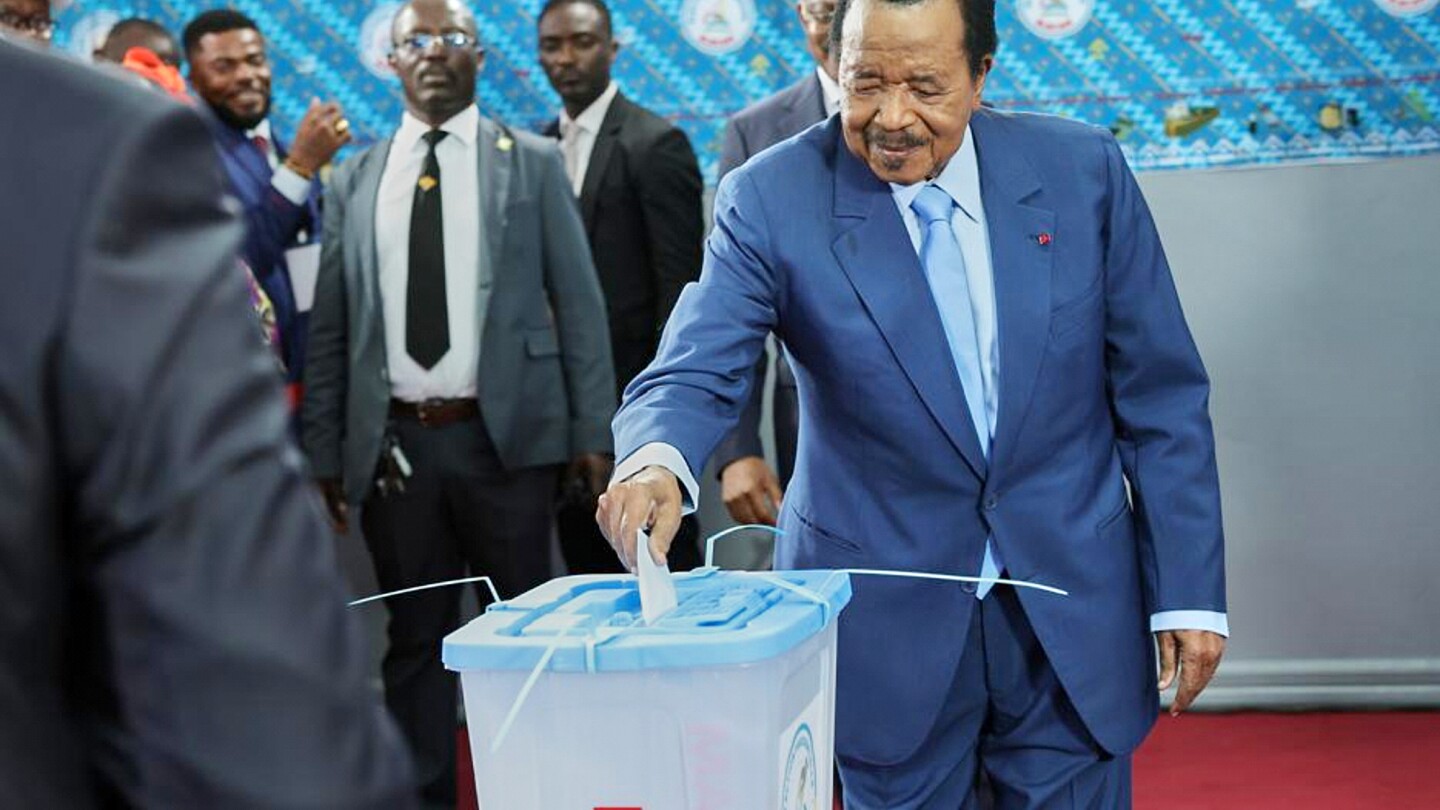
Cameroon’s 92-year-old president Paul Biya sworn in again as opposition cries foul
Cameroon’s President Paul Biya, the world’s oldest head of state, was inaugurated on Thursday for a seventh term following a contentious election marred by allegations of fraud. The 92-year-old leader, who has been in power since 1982, took the oath of office in a heavily militarized Yaounde, the nation’s capital, which residents described as partially deserted. Biya’s victory, declared by Cameroon’s top court on October 27 with 53.66% of the vote, has been labeled a “constitutional coup” by his main rival, Issa Tchiroma Bakary, who secured 35.19% of the vote. In his address to Parliament, Biya pledged to uphold the trust of the Cameroonian people and work towards a “united, stable, and prosperous” nation. However, the ceremony unfolded against a backdrop of deep political divisions, ongoing security challenges in Anglophone regions, and widespread disillusionment among the populace. Protests erupted across the country after the October 19 election, culminating in a three-day lockdown this week. The government confirmed at least five deaths during the unrest, though opposition groups claim the toll is significantly higher. Tchiroma accused Biya of orchestrating “electoral theft,” asserting that the will of the people had been trampled. Biya’s prolonged rule, enabled by a 2008 constitutional amendment abolishing term limits, has left many young Cameroonians disillusioned. With over 70% of the population under 35, his tenure has been marked by economic stagnation and armed insurgencies in the north and west. If he completes this term, Biya will step down at nearly 100 years old, leaving behind a legacy of mixed results and a nation grappling with uncertainty.
-
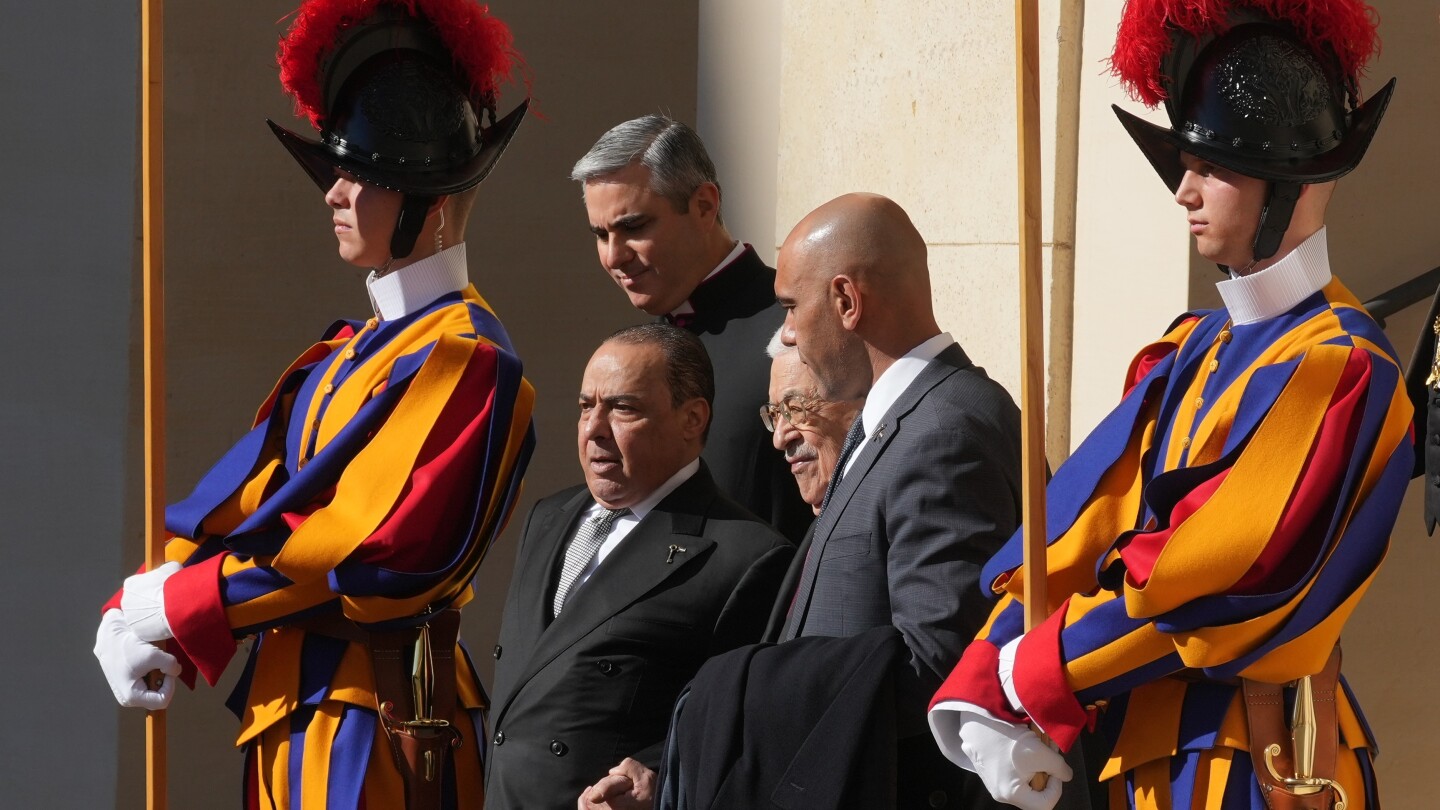
Pope Leo meets Palestinian President Abbas, discuss urgent need for Gaza aid, two-state solution
In a historic meeting at the Vatican, Pope Leo XIV and Palestinian President Mahmoud Abbas convened for the first time on Thursday to address the ongoing crisis in Gaza and the broader Israeli-Palestinian conflict. The hour-long discussion, described as “cordial” by the Vatican, centered on the urgent need to provide humanitarian aid to civilians in Gaza and to advance a two-state solution as a pathway to lasting peace. This meeting marked a significant diplomatic engagement, coming nearly a month after a U.S.-brokered ceasefire took effect in the region. The two leaders had previously communicated over the phone in July, discussing the escalation of violence in Gaza and the West Bank. The Vatican emphasized the shared recognition of the necessity to alleviate the suffering of civilians and to pursue a political resolution to the conflict. Abbas’s visit to the Vatican also commemorated the 10th anniversary of the Comprehensive Agreement between the Holy See and the State of Palestine, underscoring the longstanding diplomatic ties between the two entities. During his stay in Rome, Abbas paid homage at the Basilica of St. Mary Major, honoring the late Pope Francis, with whom he had maintained regular contact, particularly in the aftermath of the October 7, 2023, Hamas attacks and Israel’s subsequent military response in Gaza.
-
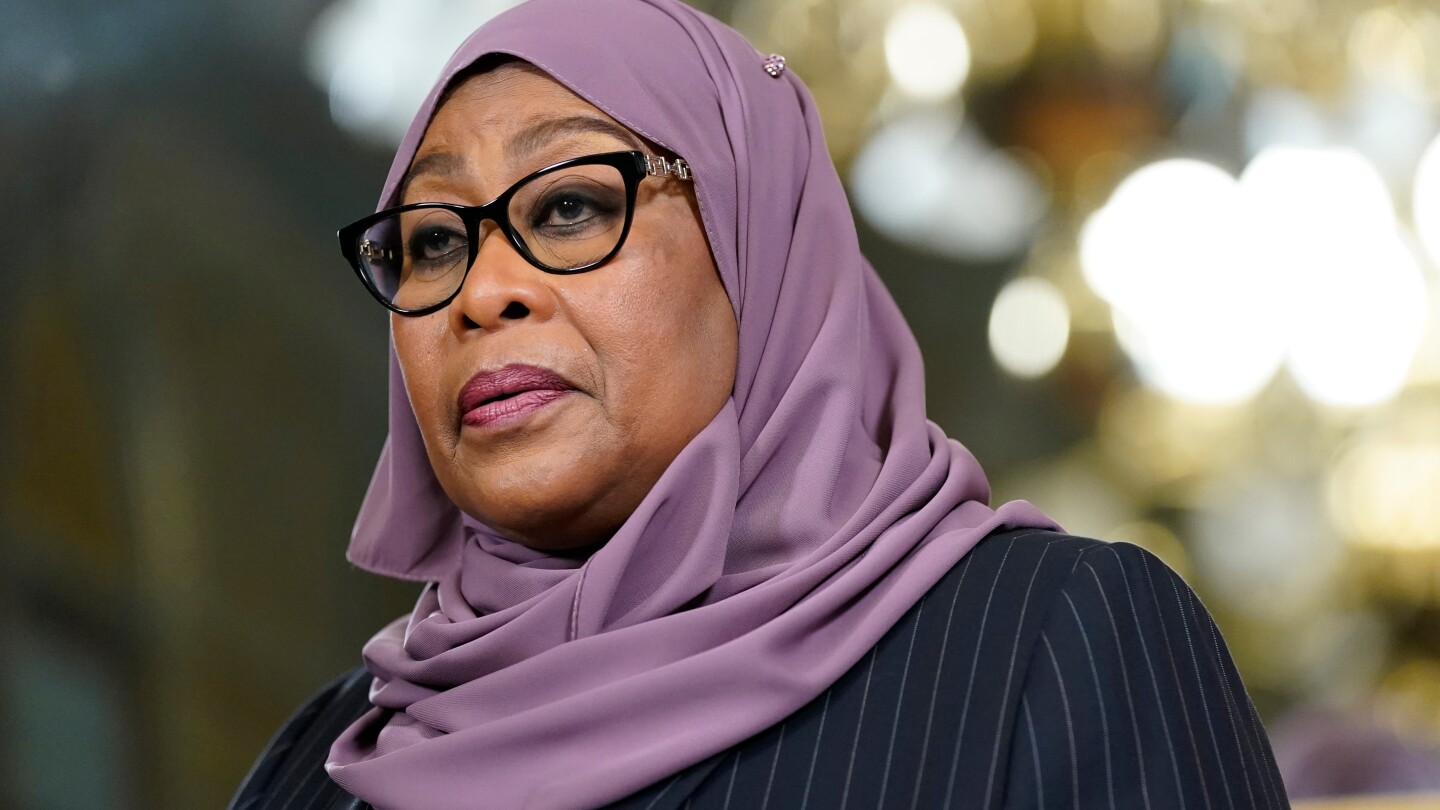
What to know about key political figures in Tanzania after deadly election violence
Tanzania is grappling with widespread unrest following its October 29 elections, which international observers have criticized as neither free nor fair. The violence erupted as security forces attempted to suppress opposition protests, leading to a disputed death toll. The leading opposition party, Chadema, claims hundreds were killed, while the government denies these allegations. President Samia Suluhu Hassan, who assumed office in 2021 after her predecessor’s death, secured over 97% of the vote, according to official results. However, her main rivals, Tundu Lissu of Chadema and Luhaga Mpina of ACT-Wazalendo, were barred from running, amid accusations of repression, enforced disappearances, arbitrary arrests, and extrajudicial killings by Amnesty International.
Hassan, Tanzania’s first female head of state, faces criticism for her administration’s crackdown on political opponents. Critics argue that she is largely a figurehead, with key decisions influenced by loyalists from Zanzibar, her birthplace. This has raised concerns about factionalism within the ruling Chama cha Mapinduzi (CCM) party, which has governed Tanzania since independence in 1961. Analysts, including William Farmer of Africa Practice, note that the Zanzibar clique lacks extensive government experience.
Other prominent figures in Tanzania’s political landscape include former President Jakaya Kikwete, who remains influential and is seen as a behind-the-scenes supporter of Hassan. Vice President Emmanuel Nchimbi, a former interior minister, is considered a potential presidential candidate when Hassan’s term ends in five years. Additionally, Hassan’s son, Abdul Halim Hafidh Ameir, has been accused of orchestrating the recent crackdown, though he holds no formal government role. Former regional commissioner Paul Makonda, a Hassan ally, is also expected to play a significant role in the next administration, despite U.S. sanctions for his alleged involvement in oppressing political opposition.
-
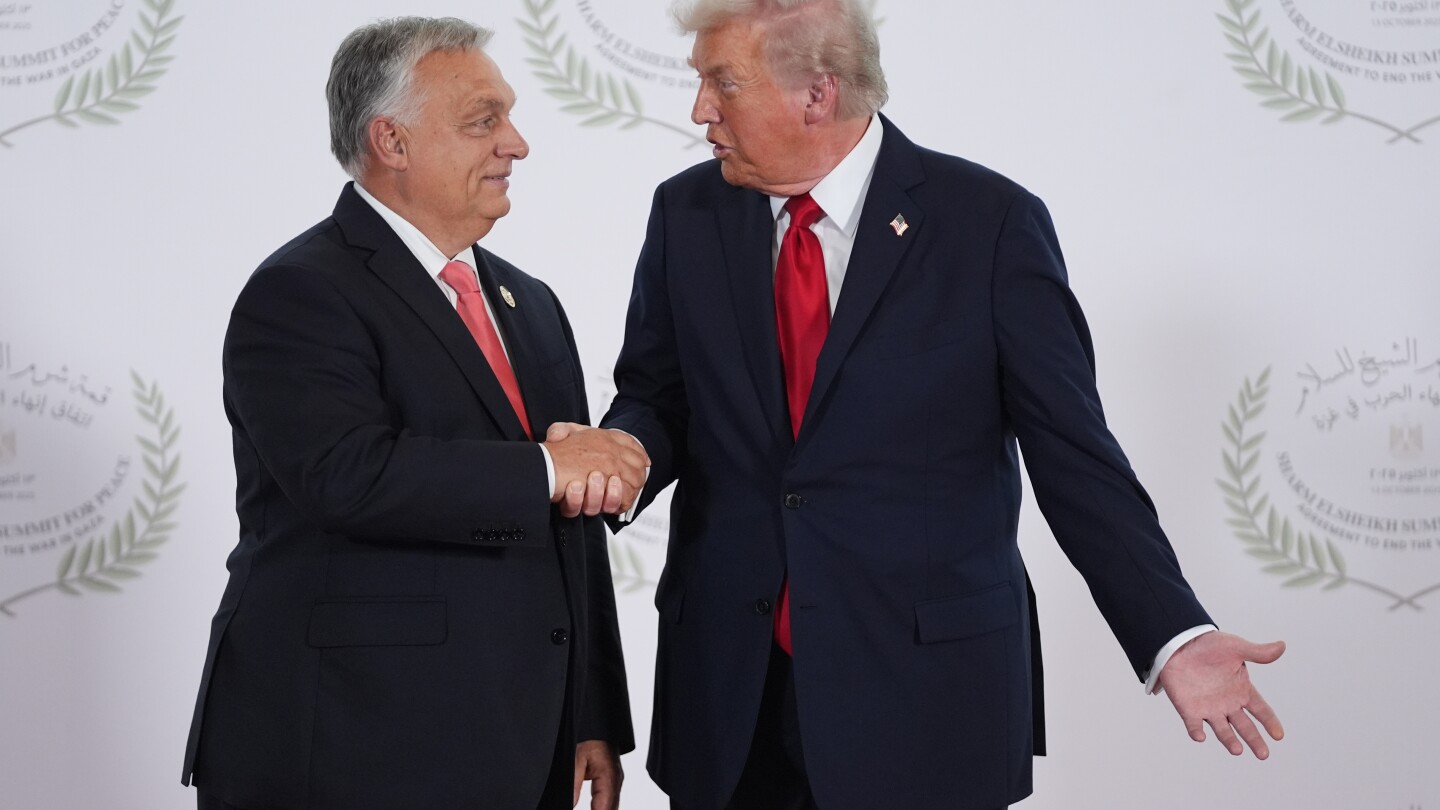
At White House meeting, Hungary’s Orbán to seek Trump’s blessing to keep buying Russian oil
Hungarian Prime Minister Viktor Orbán is set to meet with former U.S. President Donald Trump at the White House on Friday, with a key agenda: securing U.S. leniency for Hungary’s continued reliance on Russian oil. This meeting underscores Orbán’s strategic pivot toward Moscow over the past decade, a shift that has perplexed many of his former allies and critics. Orbán, once a vocal critic of Russian influence during the Cold War, has emerged as one of Russian President Vladimir Putin’s staunchest supporters within the European Union, maintaining warm ties with the Kremlin despite its ongoing war in Ukraine. His alignment with Trump’s MAGA movement has further solidified his image as a conservative nationalist, even as Hungary’s democratic institutions face erosion. However, as Russia’s invasion of Ukraine nears its fourth year, Orbán faces mounting pressure from both Brussels and Washington to sever Hungary’s dependence on Russian oil, a critical revenue stream for Moscow’s war efforts. Last month, the Trump administration imposed sanctions on Russian energy giants Lukoil and Rosneft, potentially exposing Hungary to secondary sanctions. Orbán, however, is banking on his personal rapport with Trump to secure an exemption, arguing that Hungary has no viable alternatives to Russian crude and that cutting off supplies would trigger economic collapse. Critics dispute this claim, pointing to alternative pipelines like the Adria, which delivers non-Russian oil to Hungary. Despite Hungary’s increased reliance on Russian oil—rising from 61% pre-war to 86%—Orbán’s critics accuse him of prioritizing political alliances over energy diversification. The meeting also raises questions about Orbán’s broader geopolitical strategy, as he seeks to position Hungary as a mediator in potential U.S.-Russia peace talks. While a proposed Trump-Putin summit in Budapest was scrapped, Hungarian officials remain hopeful for future negotiations. Orbán’s adversarial stance toward Ukraine and his reluctance to support EU sanctions against Moscow have further isolated him within Europe, leaving him increasingly reliant on Trump’s support.
-
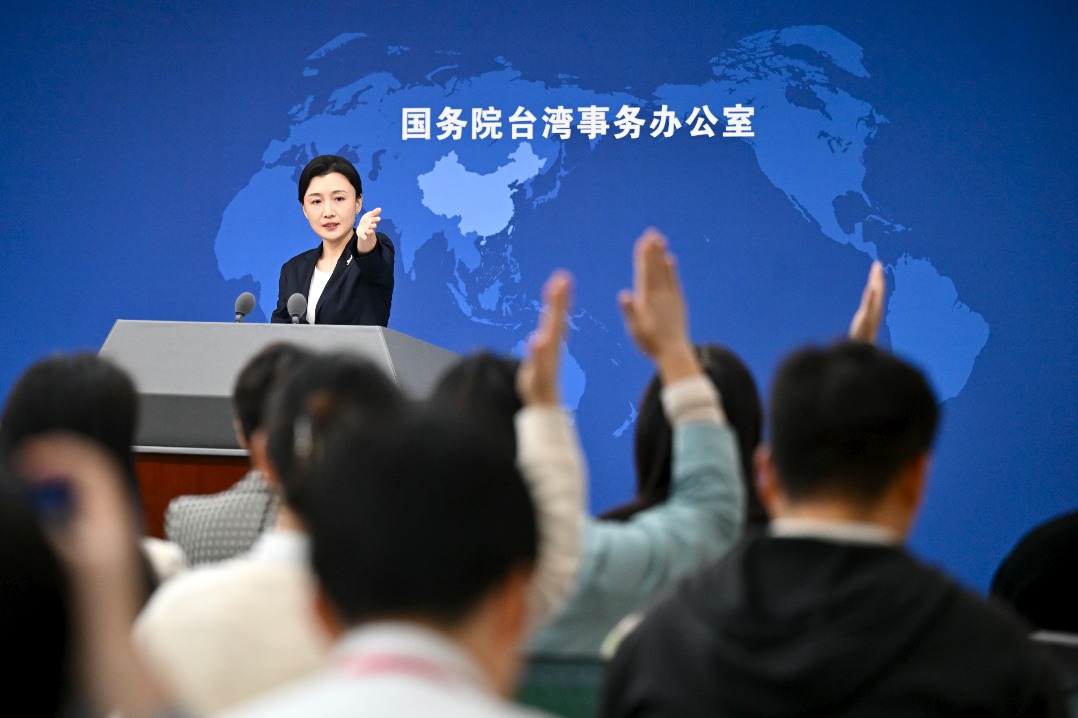
Implementation of 15th Five-Year Plan to offer more opportunities for Taiwan people, businesses: spokesperson
The implementation of the 15th Five-Year Plan (2026-2030) is set to create significant opportunities for individuals and enterprises from Taiwan, according to Zhang Han, spokesperson for the State Council Taiwan Affairs Office. Speaking at a press conference in Beijing on November 5, 2025, Zhang emphasized that the plan, recently adopted by the Communist Party of China (CPC) leadership, prioritizes the peaceful development of cross-Strait relations and the advancement of national reunification. Zhang highlighted the mainland’s robust economic foundation, characterized by a super-sized market, a comprehensive industrial system, and a rich talent pool, which will further enhance its resilience and potential. The mainland plans to establish demonstration zones for cross-Strait integrated development, foster economic collaboration, and implement policies ensuring equal treatment for Taiwan compatriots in education, employment, and daily life. Additionally, efforts will be made to jointly preserve and promote Chinese culture. Zhang also noted that 23 Taiwan enterprises are participating in the eighth China International Import Expo (CIIE) in Shanghai, showcasing products across various sectors, including food, technical equipment, consumer goods, medical devices, healthcare, and service trade. She encouraged individuals from both sides of the Strait to explore business opportunities at the CIIE, which aligns with China’s commitment to expanding openness and fostering innovative trade development. Taiwan businesses are expected to benefit from the mainland’s new development pattern, leveraging the CIIE as a platform to expand sales channels and engage in extensive cooperation.
-
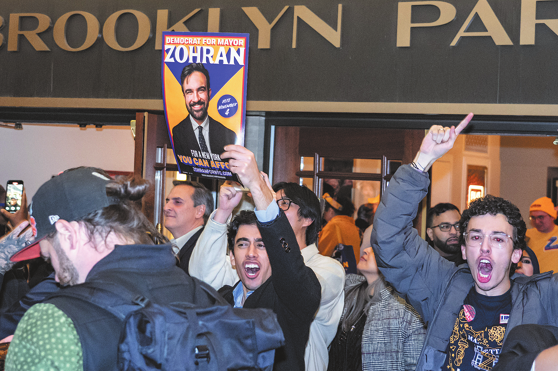
Youth wave lifts Mamdani to NY’s top job
In a historic victory, 34-year-old Democratic socialist Zohran Mamdani has been elected as the youngest mayor of New York City in more than a century. Mamdani, a state assemblyman of Indian descent, is also the first Muslim and South Asian to hold the position. His campaign, centered on taxing the wealthy and prioritizing the needs of working-class citizens, resonated strongly with younger voters, securing his win against seasoned opponents Andrew Cuomo and Curtis Sliwa.
-
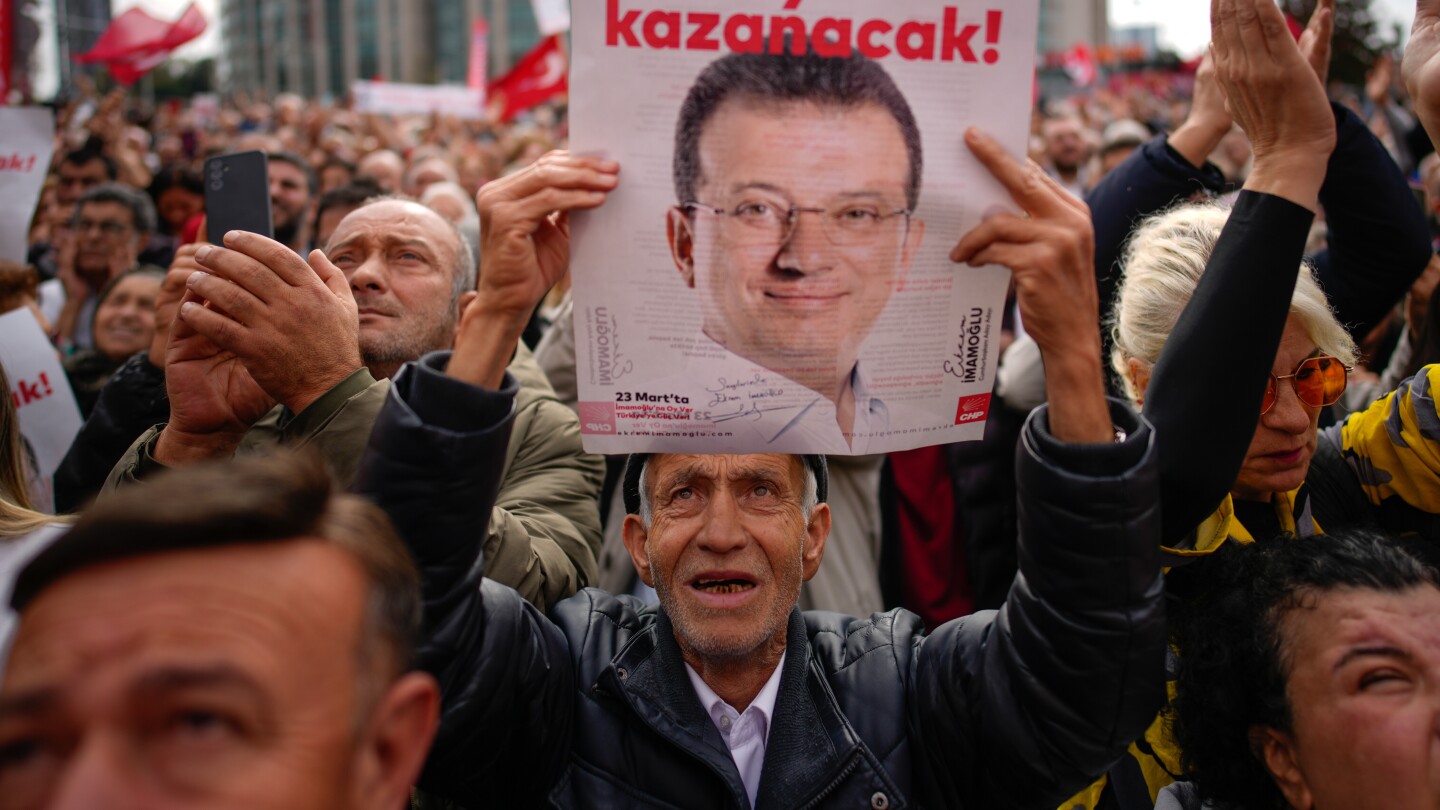
6 Turkish journalists summoned over reports on imprisoned opposition mayor
In a significant development in Istanbul, six prominent Turkish journalists were called in for questioning by police on Thursday. The investigation revolves around allegations that they spread false information regarding reports about the imprisoned opposition mayor, Ekrem Imamoglu. The Istanbul Chief Prosecutor’s Office stated that the journalists were being investigated for “publicly disseminating false information and aiding a criminal organization,” specifically referencing the so-called “Imamoglu criminal organization for profit.” However, it remains unclear whether formal charges have been or will be filed against them. Imamoglu, a key figure in the Republican People’s Party (CHP) and a formidable challenger to President Recep Tayyip Erdogan’s 22-year rule, was arrested in March over corruption allegations and has been detained since. His arrest sparked the largest street protests in Turkey in over a decade. The journalists in question—Soner Yalcin, Saban Sevinc, Asli Aydintasbas, Rusen Cakir, Yavuz Oghan, and Batuhan Colak—have all publicly questioned the legitimacy of the cases against Imamoglu, which many view as politically motivated. Burhanettin Bulut, deputy chairman of the CHP, condemned the police’s early morning raids on the journalists’ homes and the confiscation of their phones, calling it a “de facto detention” aimed at intimidating the opposition and suppressing press freedom. Turkey’s press freedom remains under scrutiny, with Reporters Without Borders ranking the country 159th out of 180 in its 2025 press freedom index.
-
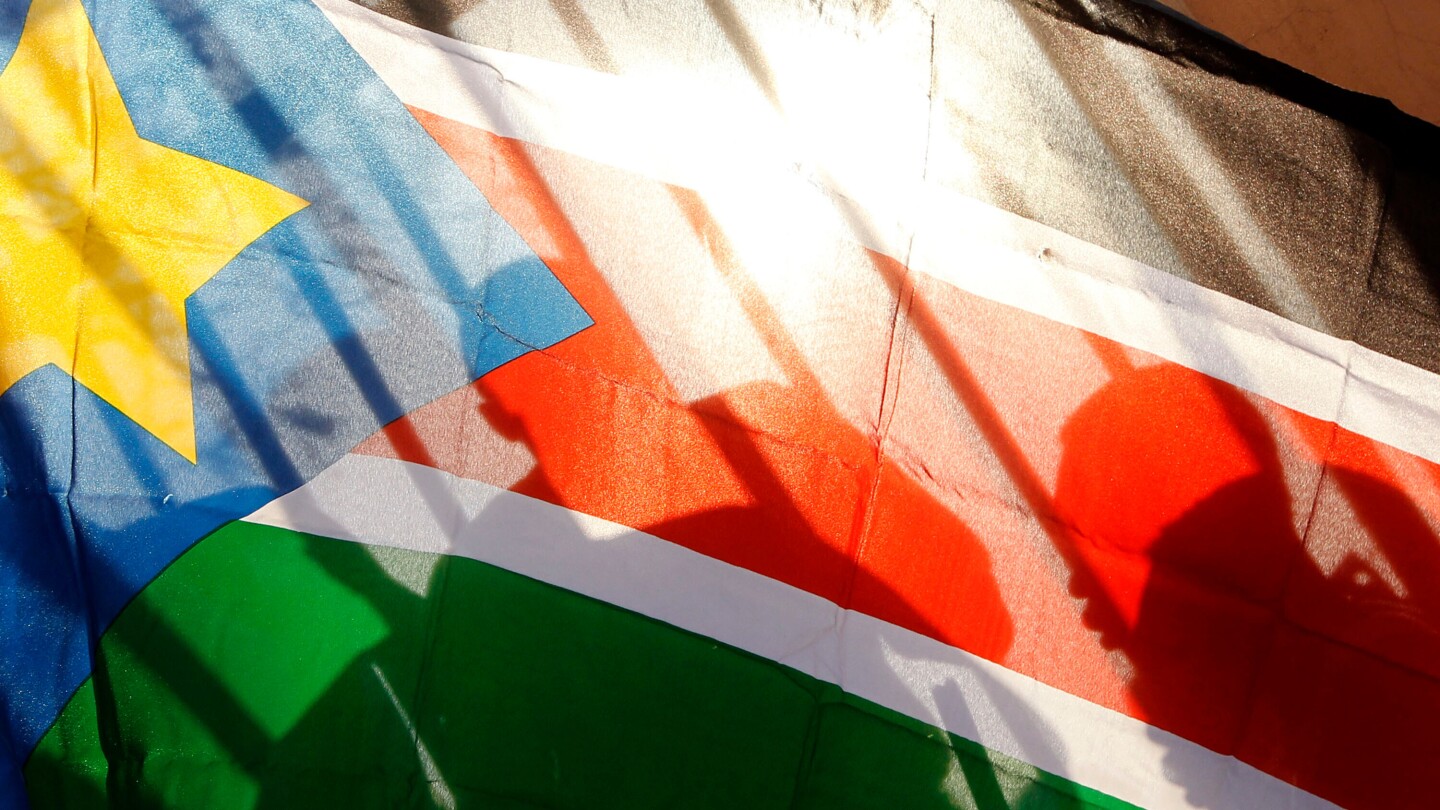
People from South Sudan will lose temporary US legal status
The United States has announced the termination of South Sudan’s Temporary Protected Status (TPS), a program that has allowed South Sudanese nationals to legally reside in the U.S. and escape ongoing armed conflict in their homeland. The decision, effective January 5, was confirmed by the Department of Homeland Security (DHS) in a recent statement. Secretary of Homeland Security Kristi Noem concluded that South Sudan no longer meets the statutory requirements for TPS after consultations with interagency partners. South Sudanese nationals who voluntarily depart the U.S. using the Customs and Border Protection mobile app may receive a complimentary plane ticket, a $1,000 exit bonus, and potential future legal immigration opportunities. This policy shift is a significant setback for South Sudanese refugees, as the country remains politically unstable and continues to produce a large number of displaced individuals seeking safety abroad. Edmund Yakani, a prominent South Sudanese civic leader, suggested that the decision reflects deteriorating U.S.-South Sudan relations, particularly regarding the deportation of foreign nationals. South Sudan has resisted accepting a second phase of U.S. deportees, which reportedly angered the Trump administration. The TPS designation, initially granted in 2011 following South Sudan’s independence from Sudan, has been renewed in 18-month increments. However, the Trump administration has consistently sought to withdraw protections for immigrants, including ending TPS for hundreds of thousands of Venezuelans and Haitians. South Sudan’s government, already struggling to provide basic services, faces additional challenges due to U.S. cuts in foreign aid. The country’s fragile peace deal, signed in 2018 to end conflict between President Salva Kiir and former deputy Riek Machar, is under strain following Machar’s arrest on criminal charges earlier this year.
-
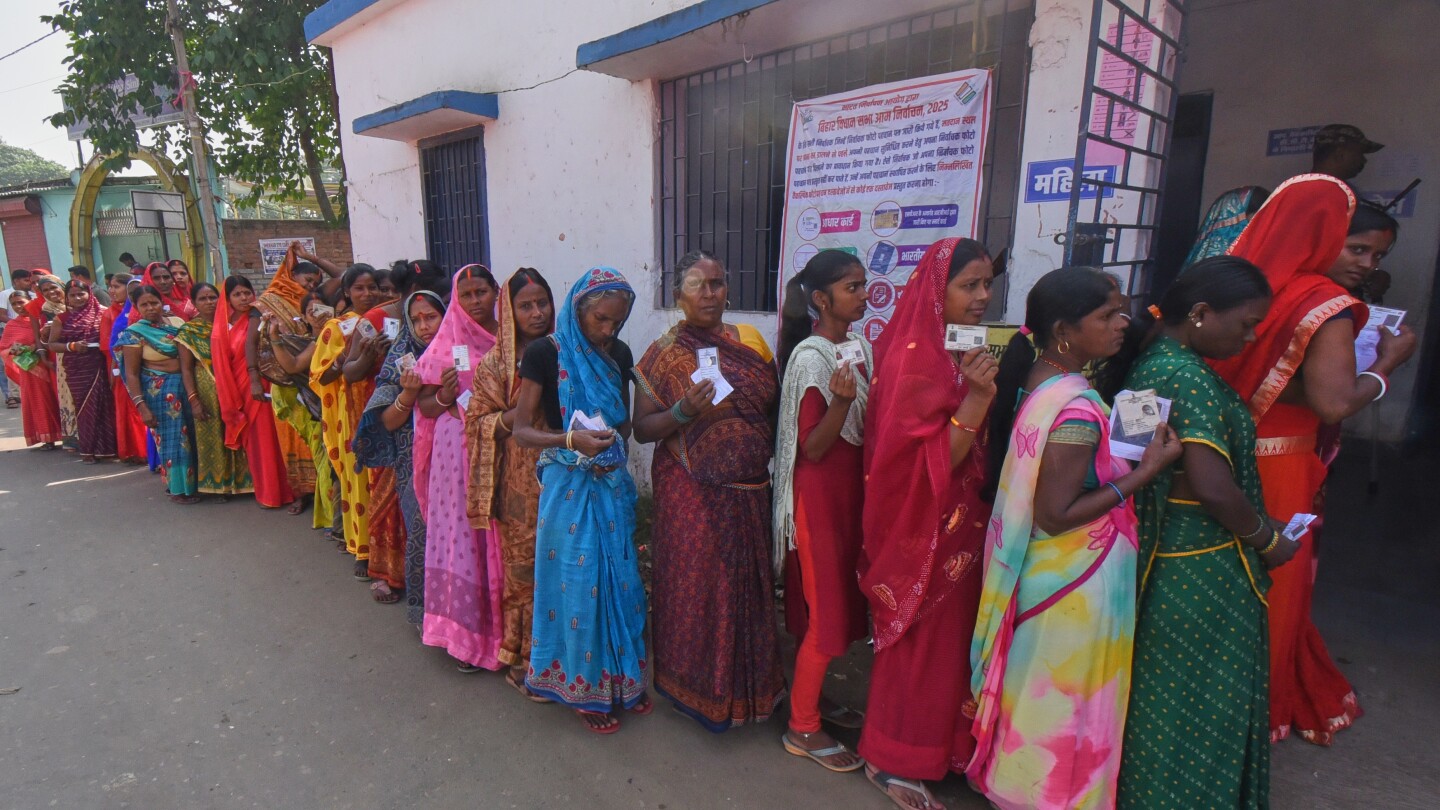
Indians vote in a state election in Bihar seen as key test for Prime Minister Modi
India’s eastern state of Bihar is witnessing a pivotal local election on Thursday, with millions of voters casting their ballots to determine the composition of the state’s 243-seat legislature. This election is widely regarded as a litmus test for Prime Minister Narendra Modi’s popularity and the resilience of his Bharatiya Janata Party (BJP)-led National Democratic Alliance (NDA). The outcome, expected on November 14, will not only shape Bihar’s political landscape but also influence Modi’s broader national strategy ahead of the 2029 general elections and key state polls in Uttar Pradesh, West Bengal, and Assam. Bihar, often considered India’s political bellwether, sends 40 lawmakers to the national parliament, making it a critical battleground for Modi’s coalition. A victory here could bolster his government’s stability, while a setback might embolden the opposition. The election unfolds amid widespread concerns over unemployment, law and order, and allegations of irregularities in the revision of electoral rolls, which saw nearly 10% of Bihar’s 74 million voters removed from the lists. Opposition leaders, including Congress Party’s Rahul Gandhi, have criticized the move as politically motivated, claiming it disenfranchised poor and minority voters. The Election Commission, however, maintains that the revision was necessary due to migration, new voter eligibility, and unreported deaths. The BJP-led alliance, with Chief Minister Nitish Kumar of the Janata Dal (United) at the helm, faces challenges from the opposition Rashtriya Janata Dal (RJD) and a new group, Jan Suraaj, led by Modi’s former poll strategist Prashant Kishor. Kumar, a seasoned politician who has governed Bihar for nearly two decades, is credited with improving infrastructure and addressing law and order issues. However, analysts warn that a loss in Bihar could fracture his party and destabilize Modi’s federal coalition, which relies on 12 of Kumar’s lawmakers. Economically, Bihar remains one of India’s poorest states, with a predominantly agrarian economy and widespread poverty. Both the ruling alliance and the opposition have promised to create millions of government jobs, though economists remain skeptical given the state’s fragile economic conditions. In a bid to appeal to women voters, Modi recently announced cash transfers of 10,000 Indian rupees ($113) each to 7.5 million women as part of an employment program. Women constitute a significant voting bloc in Bihar, as men often migrate to larger cities for work. Despite welfare measures, critics argue that the government has failed to address systemic issues such as landlessness, low wages, and limited employment opportunities. The Bihar election, therefore, is not just a local contest but a barometer of Modi’s political fortunes and the broader challenges facing India’s democracy.