
UK Home Secretary Shabana Mahmood is poised to unveil a significant transformation of the nation’s immigration and asylum system later this month, drawing inspiration from Denmark’s stringent policies. The Danish model, renowned as one of Europe’s toughest, has been under close scrutiny by UK officials, who recently visited Copenhagen to study its implementation. Key aspects of Denmark’s system include stricter family reunification rules, temporary refugee stays, and expedited expulsion of individuals without legal residency rights. Mahmood aims to reduce incentives for migration to the UK while streamlining the removal of unauthorized individuals. However, her plans face opposition within her own party, with some Labour MPs criticizing the approach as overly harsh and reminiscent of far-right ideologies. Mahmood’s strategy aligns with her pledge to regain control of Britain’s borders, a promise she reiterated at the Labour conference in September. Denmark’s success in reducing asylum claims to a 40-year low, excluding pandemic-related restrictions in 2020, has particularly impressed her. The Danish system also includes measures such as financial incentives for asylum seekers to return to their home countries and stricter conditions for acquiring permanent residency. While the UK is unlikely to adopt all aspects of the Danish model, Mahmood is expected to introduce more restrictive family reunification rules, including potential language and financial requirements. Denmark’s Immigration and Integration Minister, Rasmus Stoklund, emphasized the importance of protecting societal norms and ensuring that immigrants contribute positively to the country. The UK’s exploration of the Danish model reflects broader political dynamics, with the Labour Party seeking to counter the rise of Reform UK by addressing voter concerns on immigration. Critics, however, caution against directly transplanting Danish policies, citing differences in political and electoral systems. The debate underscores the challenges of balancing progressive ideals with public demand for stricter immigration controls.
分类: politics
-
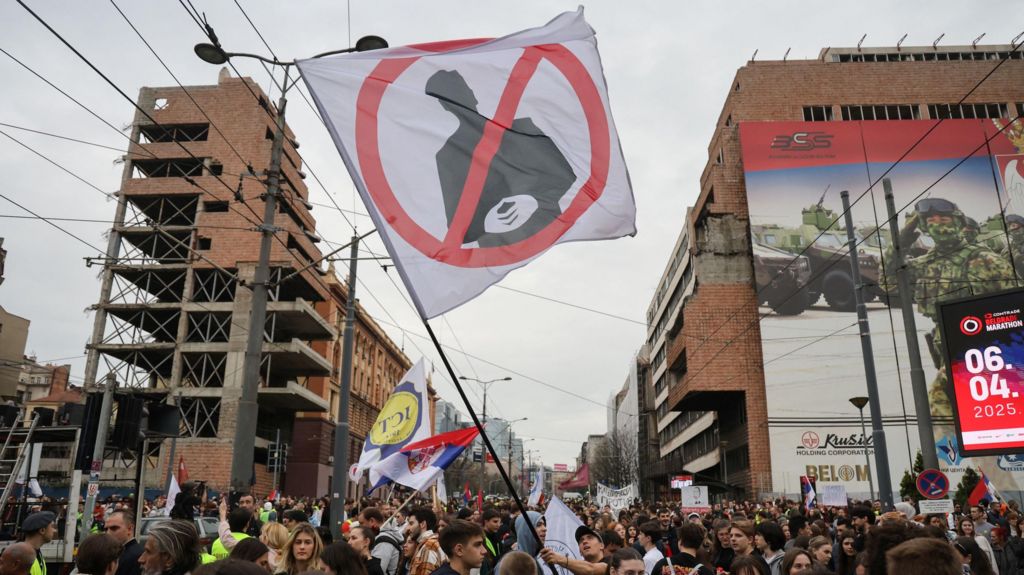
Serbia clears the way for controversial Trump-linked property plan
Serbia’s parliament has enacted legislation enabling a contentious property development project in Belgrade, led by Jared Kushner, son-in-law of former US President Donald Trump. The project, spearheaded by Kushner’s firm Affinity Partners, aims to construct a luxury hotel and apartment complex on the site of the former Yugoslav Army headquarters. This site, bombed by NATO forces in 1999 during the Kosovo conflict, holds significant symbolic value for many Serbians, who view it as a memorial and a symbol of resistance against NATO. Despite widespread protests and legal challenges, Serbian President Aleksandar Vucic, a close ally of Trump, has endorsed the project. Last year, the Serbian government revoked the building’s protected status and granted a 99-year lease to Kushner’s firm, which plans a $500 million development. This decision sparked public demonstrations and prompted an investigation into allegations of forged documentation used to alter the building’s status. In a June interview with the BBC, Vucic defended the project, emphasizing the need to move past the events of 1999 and strengthen ties with the US. The parliamentary vote, pushed through by Vucic’s majority party, has been criticized by opposition politicians, who argue it is unconstitutional and erases national history for the sake of foreign interests. Architectural experts and anti-corruption organizations, including Transparency Serbia, have also voiced concerns. The project’s approval highlights Serbia’s delicate balancing act in maintaining relations with both Washington and Moscow, amid ongoing economic pressures from US tariffs and Russian sanctions.
-
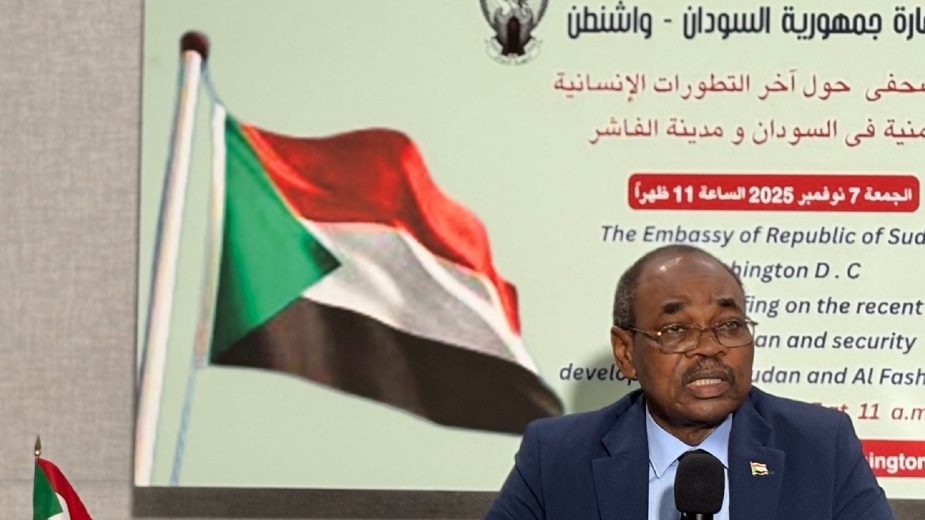
Sudan urges Trump to designate RSF a terrorist entity as it rules out UAE-linked peace proposals
Sudan’s ambassador to the United States, Mohamed Abdalla Idris, has called on the Trump administration to classify the Rapid Support Forces (RSF) as a terrorist organization. Speaking at a press briefing in Washington on Friday, Idris emphasized Sudan’s rejection of a UAE-backed peace proposal to end the ongoing civil war, now in its third year. He criticized Abu Dhabi’s support for the RSF as “destructive” and stated that Sudan cannot accept a peace deal involving the UAE as a mediator, given its role in the conflict. Despite the UAE’s membership in the “Quad”—a coalition including the US, Saudi Arabia, and Egypt—Idris argued that the UAE cannot simultaneously be a party to the conflict and a mediator. The Quad recently unveiled a coordinated roadmap to resolve Sudan’s war, which Idris acknowledged as a positive step but reiterated Sudan’s opposition to UAE involvement. He also urged US President Donald Trump to take a more active role in pressuring the UAE to cease its support for the RSF, which has roots in the Janjaweed militia responsible for the Darfur genocide. The ambassador highlighted bipartisan efforts in the US Senate to designate the RSF as a terrorist organization, citing its ongoing atrocities in El-Fasher. He also called for independent investigations into war crimes committed by both the RSF and the Sudanese Armed Forces. The conflict has resulted in over 150,000 deaths and displaced 12 million people, with 17 countries allegedly involved in the crisis. Sudan has raised these concerns with the Arab League and the African Union, though its AU membership remains suspended.
-
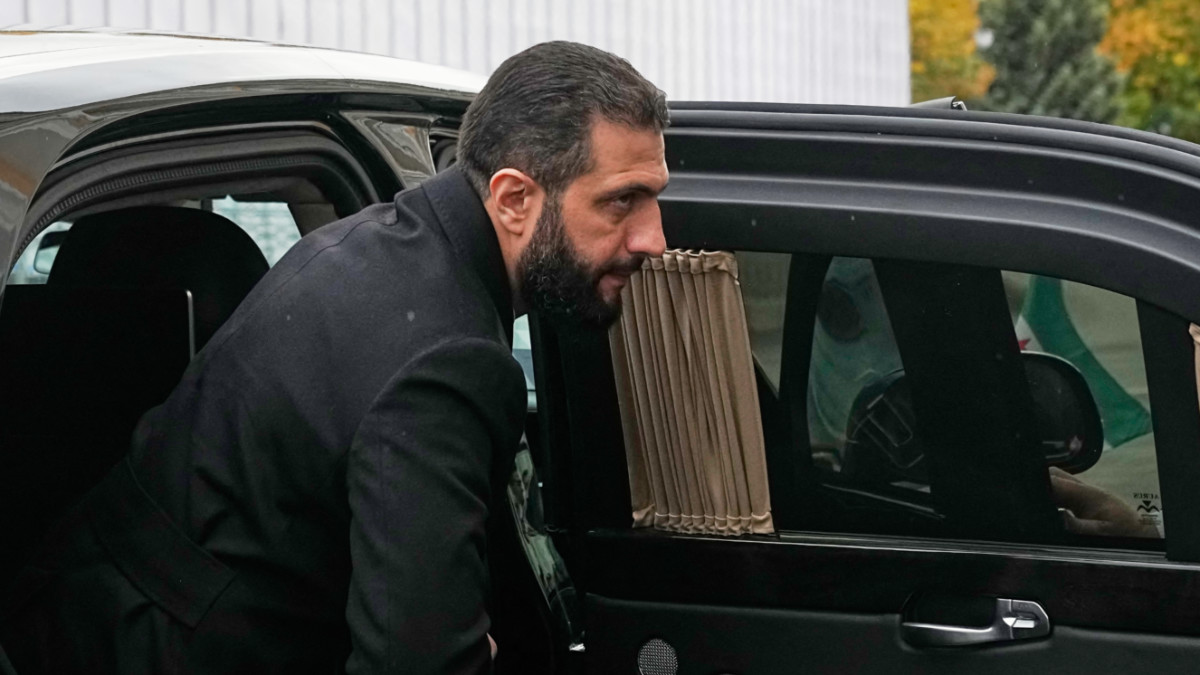
‘Meeting is the message’: On US visit, Syria’s Sharaa eyes boost against Israel, SDF and sanctions
In a historic turn of events, Syrian President Ahmed al-Sharaa, once labeled a terrorist by the United States, is set to visit the White House. This visit underscores a significant realignment in U.S.-Syria relations, as Sharaa prepares to join a U.S.-led coalition against the Islamic State (IS). The move comes amid Syria’s complex challenges, including Israeli occupation in the south, tensions with Kurdish factions in the north, and a struggling economy under sanctions. While these issues are unlikely to be resolved during the visit, the symbolic image of Sharaa in the Oval Office carries profound implications. Former U.S. Ambassador to Syria Robert Ford noted the unprecedented nature of the meeting, likening it to past visits by leaders such as Nelson Mandela and Yasser Arafat. Sharaa’s ability to navigate international skepticism about his past has been a key achievement, even as Syria grapples with internal corruption and sectarian violence. Ahead of the visit, the Trump administration lifted sanctions on Sharaa and his interior minister, signaling a thaw in relations. Sharaa’s government is also strengthening ties with NATO-member Turkey and seeking financial support from Gulf states like Qatar and Saudi Arabia. However, Israel remains a significant threat, with its occupation of southern Syria and strategic moves on Mount Hermon. Experts suggest that while a security agreement between Syria and Israel is possible, a broader peace deal remains unlikely. The visit also highlights the U.S.’s shifting role in the Middle East, as it seeks to reduce its military footprint while deepening security cooperation with Syria. Sharaa’s alignment with the U.S. could marginalize the Kurdish-led Syrian Democratic Forces (SDF), long a U.S. ally in the fight against IS. As Sharaa’s visit unfolds, it is being closely watched by Syrians seeking reintegration into the region and by international stakeholders wary of the geopolitical shifts it may trigger.
-
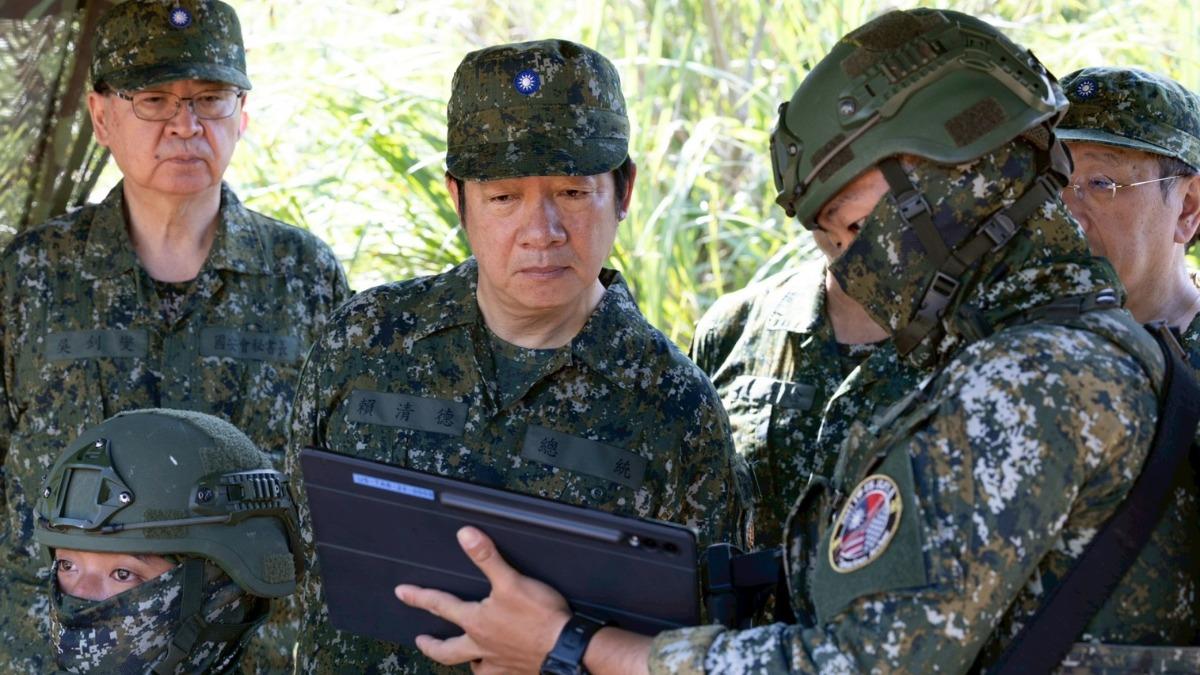
The case for abandoning Taiwan is still weak
The escalating military pressure from China on Taiwan has reignited debates within the United States about whether to intervene militarily if China decides to attack the island. Analysts have long argued that the US should distance itself from Taiwan to preserve its relationship with China. This argument has gained traction as China’s strength and assertiveness grow, raising the potential costs of continued US support for Taipei. Lyle Goldstein, Director of the Asia Program at Defense Priorities, recently highlighted these concerns in an article published in Time magazine, warning of the risks posed by Taiwan’s current president, Lai Ching-te, whom he labels as ‘reckless.’ Goldstein argues that Lai’s rhetoric and actions could inadvertently drag the US into a conflict with China. However, critics note that Lai’s policies largely mirror those of his predecessor, Tsai Ing-wen, and that his statements on Taiwanese sovereignty are consistent with the Democratic Progressive Party’s long-standing position. China’s aggressive posture toward Taiwan is driven not solely by Lai’s leadership but also by its growing military capabilities and the perception of a wavering US commitment to Taiwan’s defense. While some argue that defending Taiwan is not in America’s vital interest, others emphasize Taiwan’s strategic and economic importance, particularly as a global hub for semiconductor manufacturing and a key player in the First Island Chain. The debate underscores the complex dynamics of US-China-Taiwan relations and the high stakes involved in any potential conflict.
-
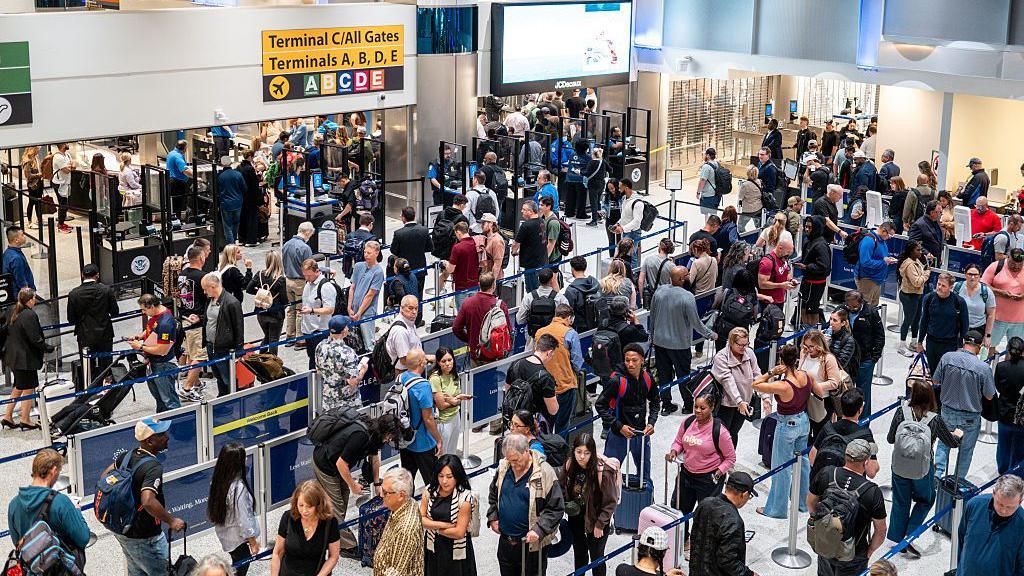
Thousands of US flights cancelled or delayed over government shutdown cuts
The ongoing US government shutdown has triggered widespread disruptions in air travel, with over 5,000 flights canceled or delayed on Friday as new mandates forced airlines to reduce operations. The Federal Aviation Administration (FAA) implemented emergency measures, cutting flights by 4% initially, with plans to increase reductions to 10% by next week. These measures aim to alleviate pressure on air traffic controllers and other federal employees who have been working without pay since the shutdown began last month. The staffing crisis has led to fatigue among controllers, raising safety concerns and prompting unions to voice their frustrations. Transportation Secretary Sean Duffy warned that flight cuts could escalate to 20% if the shutdown persists. Meanwhile, travelers faced significant inconveniences, with many rebooking flights or seeking alternative transportation. The shutdown has also impacted federal workers, including air traffic controllers, who are struggling to make ends meet. On Capitol Hill, negotiations between Republicans and Democrats remain deadlocked, with no clear resolution in sight. President Donald Trump has suggested ending the Senate filibuster to pass a funding bill, but this proposal lacks bipartisan support. The shutdown, now the longest in US history, continues to strain essential services and workers across the nation.
-
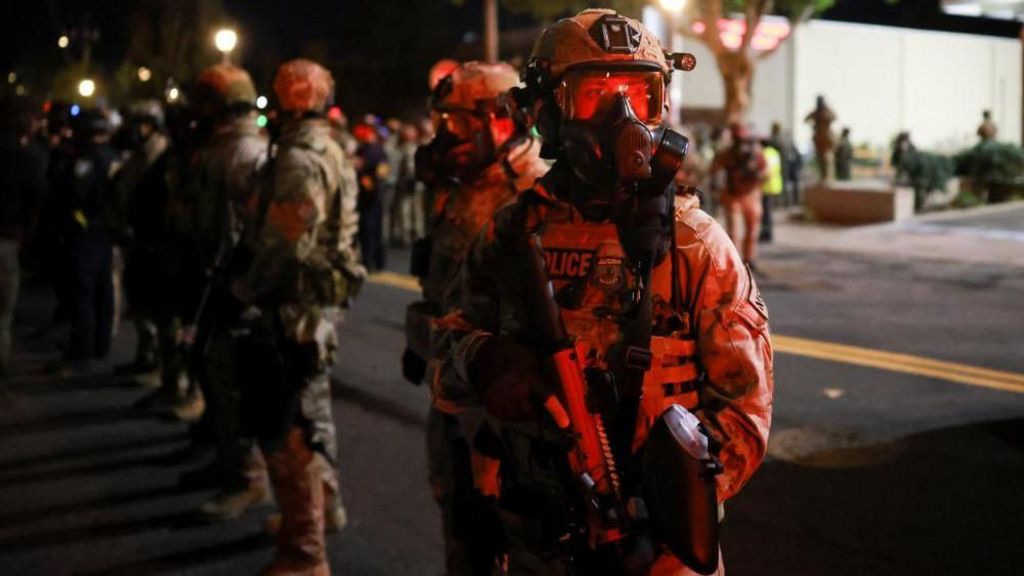
US judge says Trump cannot deploy National Guard to Portland
In a landmark decision, U.S. District Judge Karin Immergut has permanently barred President Donald Trump from deploying National Guard troops to Portland, Oregon. This ruling marks the first instance where the Trump administration has been definitively prevented from sending military personnel to U.S. cities. The decision follows a protracted legal battle over whether Trump violated federal law by dispatching troops despite objections from local officials.
Judge Immergut, a Trump appointee, emphasized that the president lacked a lawful basis to federalize the National Guard in Portland. She clarified that her ruling does not preclude the president from ever using National Guard forces but stressed that in this specific case, there was neither a rebellion nor an imminent threat justifying such action. She also noted that Trump had overstepped his authority under the 10th Amendment, which reserves powers not explicitly granted to the federal government for the states.
The ruling comes amid a broader effort by Trump to quell protests against federal immigration policies in Democrat-led cities, including Chicago, Los Angeles, and Washington, D.C. Earlier this month, Judge Immergut issued temporary restraining orders to halt the deployment of troops from Oregon, California, and Texas. In her 106-page decision, she stated that the administration failed to meet the legal threshold for deploying military forces in American cities.
The Trump administration is expected to appeal the decision, potentially escalating the issue to the Supreme Court. The case has highlighted the ongoing tension between federal and local authorities, with Portland officials and residents disputing the administration’s characterization of the city as ‘war-ravaged.’ Local leaders argue that the violence is limited and effectively managed by Portland police.
Portland’s attorney, Caroline Turco, framed the case as a pivotal test of constitutional governance, stating, ‘This case is about whether we are a nation of constitutional law or martial law.’ The ruling underscores the broader debate over federal overreach and the balance of power between state and federal governments.
-
Nigeria’s army chief promises to step up anti-terror operations
In a decisive address to troops in Maiduguri, the capital of Nigeria’s Borno State, newly appointed Chief of Army Staff (COAS), Lt. Gen. Waidi Shaibu, pledged to escalate military operations against terrorist factions in the country’s volatile northern region. This announcement comes less than a week after U.S. President Donald Trump threatened to intervene militarily if Nigeria failed to curb attacks on its Christian population. Shaibu emphasized that the military’s renewed efforts must succeed, declaring that failure is “not an option” as the nation enters a critical phase in its decade-long conflict with extremist groups. He assured troops that all necessary resources, including new combat platforms, have been deployed to ensure victory. Trump’s recent threats to cut aid and designate Nigeria as “a country of particular concern” for alleged Christian persecution have drawn sharp criticism from Nigerian President Bola Ahmed Tinubu. Experts argue that Trump’s characterization of the conflict oversimplifies the complex dynamics of Nigeria’s security challenges, which include religiously motivated violence, farmer-herder clashes, and ethnic rivalries. While Christians are among the victims, the majority of those targeted by armed groups are Muslims in the predominantly Muslim north.
-
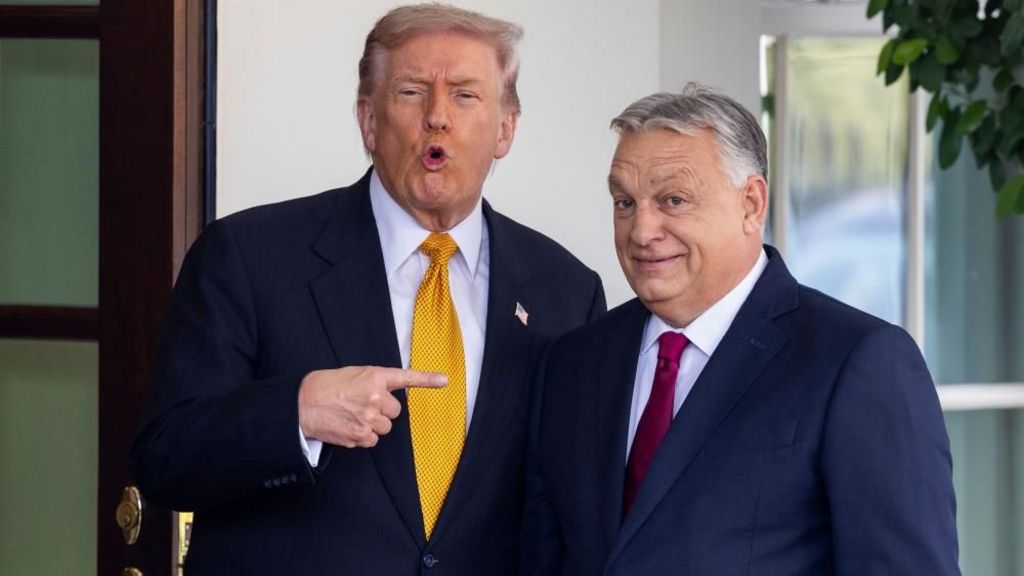
Trump says he may give Hungary an exemption on Russian oil sanctions
In a significant development during Hungarian Prime Minister Viktor Orban’s visit to the White House, U.S. President Donald Trump announced he is considering granting Hungary an exemption from sanctions to allow the purchase of Russian oil. This move, aimed at aiding Hungary’s energy needs, comes despite ongoing U.S. sanctions targeting Russian oil companies. Trump emphasized the logistical challenges Hungary faces, being landlocked and lacking access to alternative oil sources. Orban, a staunch ally of Trump in Europe, has long maintained close energy ties with Russia, citing pipelines as a ‘physical reality’ rather than a political stance. He has also leveraged Hungary’s dependence on Russian energy to bolster his domestic political agenda, promising voters ‘cheap Russian energy’ ahead of next year’s elections. The two leaders also discussed the Ukraine war, with Trump expressing optimism about Orban’s potential role in mediating peace talks with Russian President Vladimir Putin. Orban, however, expressed skepticism about Ukraine’s ability to win the war, suggesting that only Hungary and the U.S. truly seek peace. The meeting also touched on broader economic issues, including the impact of Trump’s tariffs on Hungary’s export-driven car industry. Despite frequent disagreements with EU leaders on issues like migration and democracy, Trump praised Orban as a strong leader on immigration.
-
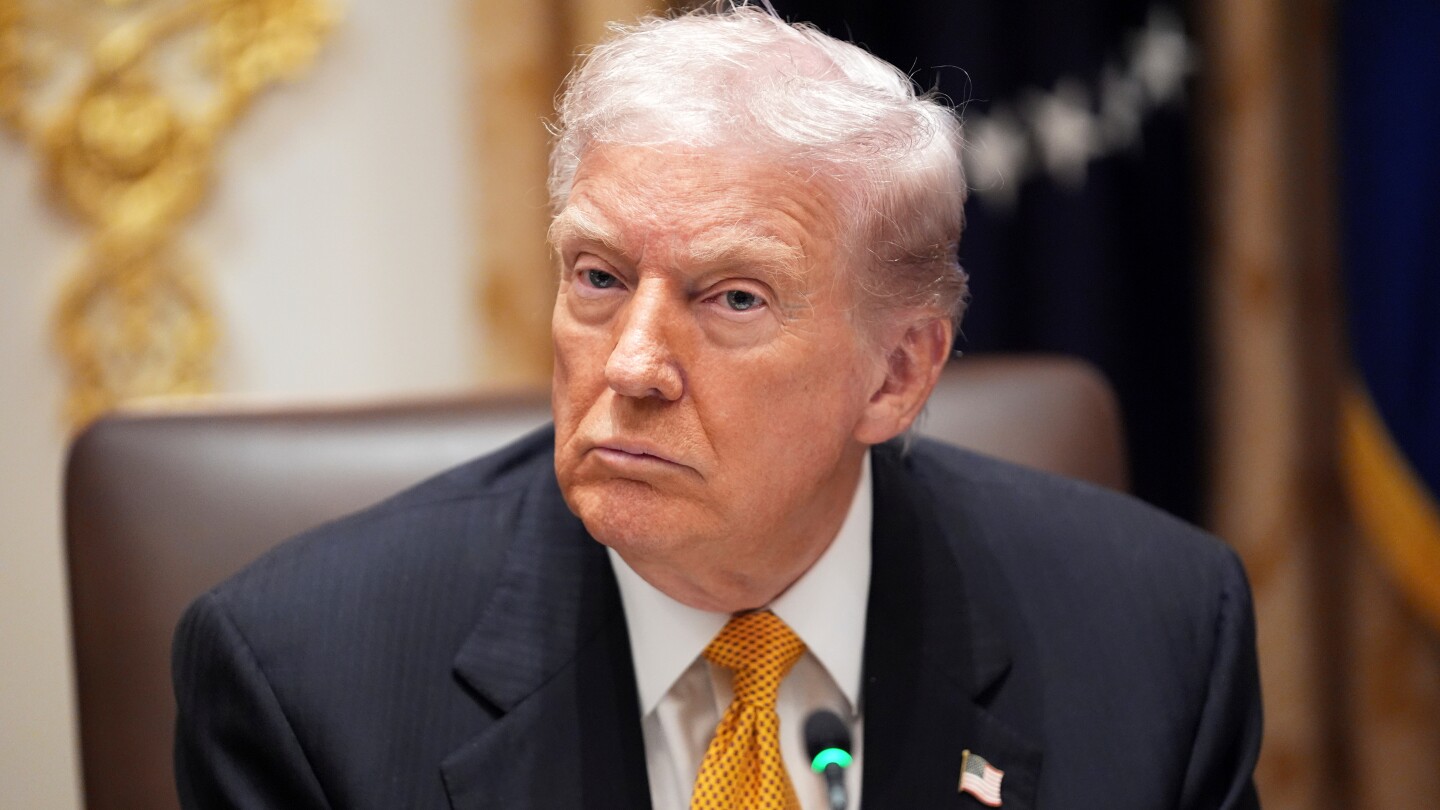
Trump says US to boycott G20 in South Africa, repeating allegations about treatment of white farmers
In a significant diplomatic move, President Donald Trump announced on Friday that no U.S. government officials would attend this year’s Group of 20 (G20) summit in South Africa. The decision stems from allegations of mistreatment of white Afrikaner farmers in the country. Trump, who had previously declared his absence from the annual gathering of global leaders, also revealed that Vice President JD Vance, initially scheduled to represent the U.S., would no longer attend.
Trump expressed his disapproval on social media, labeling the summit’s location as a ‘total disgrace’ and citing alleged abuses against Afrikaners, including violence, land confiscation, and systemic persecution. The Trump administration has consistently accused the South African government of failing to protect its white minority population, particularly farmers, from discrimination and violence.
In a related policy decision, the administration has capped the annual number of refugees admitted to the U.S. at 7,500, with a focus on white South Africans facing alleged persecution. However, South African President Cyril Ramaphosa has dismissed these claims as ‘completely false,’ emphasizing that white citizens generally enjoy a higher standard of living compared to their Black counterparts, decades after the end of apartheid.
The administration’s stance has sparked controversy, with Trump even suggesting during a recent economic speech in Miami that South Africa should be expelled from the G20. This boycott follows a similar move earlier this year when Secretary of State Marco Rubio skipped a G20 foreign ministers’ meeting, criticizing its agenda on diversity, inclusion, and climate change.
The decision underscores the Trump administration’s prioritization of its domestic and international political narratives, even at the cost of diplomatic engagement on the global stage.