分类: politics

  • Trump says ‘everything’s been knocked out’ in Iran

    Trump says ‘everything’s been knocked out’ in Iran

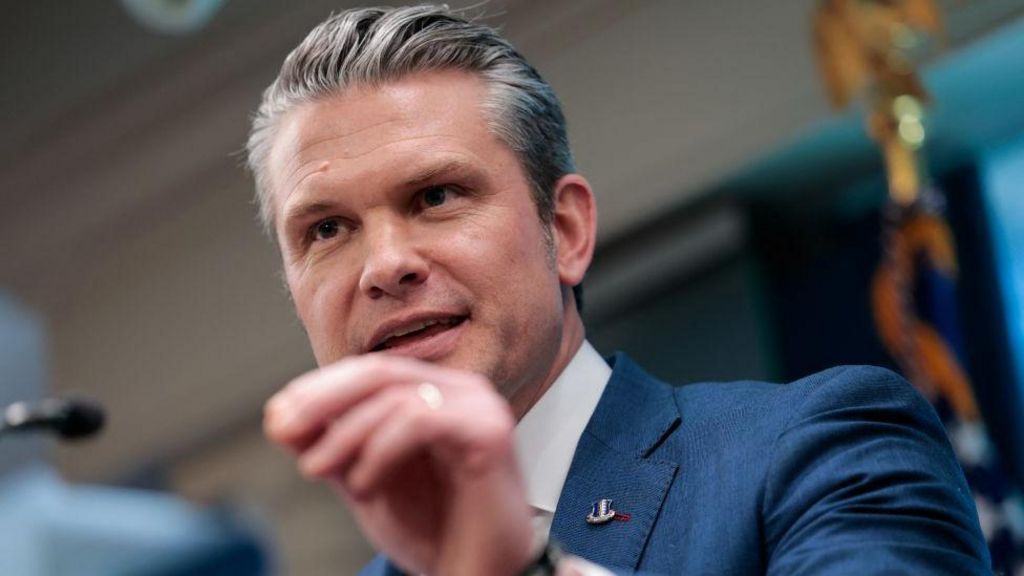
    President Donald Trump asserted widespread devastation across Iranian military infrastructure during his Oval Office meeting with German Chancellor Friedrich Merz on Tuesday, marking his first substantive remarks since the commencement of U.S.-Israel coordinated strikes last Saturday.

    Contradicting earlier administration statements, Trump refuted suggestions that Israel had compelled American military involvement. Secretary of State Marco Rubio had previously indicated that the United States intervened solely upon learning of Israel’s imminent strike plans. The President countered this narrative, stating, ‘Based on the negotiation trajectory, I believed Iran was preparing to initiate an attack. I acted preemptively to prevent that scenario. If anything, I might have influenced Israel’s decision-making process.’

    Addressing mounting criticism regarding post-conflict strategy, Trump conceded uncertainty about Iran’s political future. He expressed concerns about potential leadership succession, noting, ‘The most unfavorable outcome would involve a replacement equally problematic as the previous leadership.’ This commentary followed confirmed reports of Supreme Leader Ayatollah Ali Khamenei’s demise during initial bombardment operations.

    The President revealed that targeted strikes had eliminated numerous figures previously identified as potential successors, including participants in a leadership selection meeting that suffered ‘substantial’ secondary attacks. ‘Most individuals we considered viable alternatives have been neutralized,’ Trump stated. ‘Current intelligence suggests the subsequent group may have suffered similar casualties.’

    Trump additionally advised Iranian protestors to delay demonstrations until stabilization occurs, while simultaneously referencing governmental crackdowns on dissent as partial justification for military intervention.

  • Too early to tell scope of Iran strikes, Trump tells Congress

    Too early to tell scope of Iran strikes, Trump tells Congress

    The White House has formally notified Congress of ongoing military operations against Iran while simultaneously defending the action as necessary to counter an “untenable” threat. In a presidential letter addressed to Senate President Pro Tempore Chuck Grassley, Donald Trump stated that determining the “full scope and duration” of the engagement remains impossible at this early stage.

    The communication emphasized Iran’s status as what the administration considers “one of the largest, if not the largest, state-sponsors of terrorism,” while alleging the nation continues to pursue nuclear capabilities. The letter further asserted that Iran’s missile arsenal presents direct threats to U.S. forces, commercial vessels, civilians, and allied nations.

    This notification comes as lawmakers prepare to vote on a war powers resolution designed to constrain presidential military authority regarding Iran. The measure faces substantial legislative obstacles, and its potential impact on current hostilities remains uncertain. Democratic legislators, joined by some Republican colleagues, have questioned the legality of initiating strikes without congressional authorization, arguing the Constitution requires legislative approval for warfare.

    The administration maintains it has fully complied with legal requirements by briefing the bipartisan “Gang of 8” congressional leaders within mandated timeframes. Secretary of State Marco Rubio confirmed these notifications occurred on March 2nd, though not all 535 members of Congress received advance briefings. Rubio noted that multiple administrations have historically questioned the constitutionality of the War Powers Act while asserting the current operations fall within executive authority.

    The military confrontation began Saturday with joint U.S.-Israel strikes, prompting Iranian retaliation through missile and drone attacks against U.S.-allied nations in the Middle East. The administration emphasizes that no ground troops have been committed and claims operations are designed to minimize civilian casualties.

  • Inside Macron’s new deterrence strategy: 8 European allies, 1 French nuclear button

    Inside Macron’s new deterrence strategy: 8 European allies, 1 French nuclear button

    In a landmark strategic shift, French President Emmanuel Macron has unveiled plans for enhanced nuclear deterrence coordination with European allies while maintaining France’s sovereign authority over launch decisions. Speaking from a classified submarine base in Western France, Macron articulated a vision for ‘forward deterrence’ that marks a significant evolution in continental security architecture.

    The initiative emerges against a backdrop of growing European skepticism regarding American defense commitments and heightened tensions with nuclear-armed Russia. As the European Union’s sole nuclear power since Brexit, France has initiated consultations with eight nations—Britain, Germany, Poland, Netherlands, Belgium, Greece, Sweden, and Denmark—to establish a collaborative security framework.

    Macron’s proposal includes the unprecedented option for temporary deployment of French nuclear-armed aircraft to allied territories and joint participation in deterrence exercises. The president emphasized that while European partners would gain ‘a clearly affirmed link’ to French nuclear capabilities, constitutional authority for any weapons deployment remains exclusively with the French presidency.

    Nuclear experts identify inherent complexities in this approach. Florian Galleri of MIT’s security studies program notes the fundamental contradiction between offering nuclear guarantees while avoiding joint decision-making: ‘Strategic backing intended to integrate French nuclear deterrence into collective European defense necessarily requires coordination and joint planning.’

    The new doctrine also addresses evolving threats through force modernization. Macron announced plans to increase France’s nuclear warhead inventory for the first time since the Cold War’s conclusion, responding to advancements in adversary defenses and regional proliferation risks. France currently maintains an estimated 290 warheads.

    Significantly, Macron positioned the initiative as complementary to NATO’s existing nuclear mission, which France does not participate in directly. Ian Lesser of the German Marshall Fund observed that the proposal reflects Europe’s transformed security environment following Russia’s invasion of Ukraine and uncertainties about America’s commitment.

    The French approach envisions integrating European conventional capabilities—including early warning systems, satellite surveillance, missile tracking, and air defense networks—to support nuclear deterrence operations. This reimagined European security framework represents Macron’s continued advocacy for strategic autonomy while acknowledging NATO’s enduring role in continental defense.

  • Explainer: Virtues of planning ahead: Why five-year plans work for China

    Explainer: Virtues of planning ahead: Why five-year plans work for China

    BEIJING – As Chinese legislators convene for the annual parliamentary sessions, attention focuses on the draft 15th Five-Year Plan (2026-2030), the latest installment in China’s distinctive approach to national development planning. This comprehensive framework continues a seven-decade tradition of strategic economic guidance that has transformed China from an agrarian society into the world’s second-largest economy.

    The forthcoming blueprint, building on recommendations adopted by the Communist Party of China Central Committee in October 2025, aligns with China’s broader vision of achieving substantial progress by 2035 across economic strength, technological capability, national defense, and global influence. The planning process incorporated unprecedented public participation, with over 3.11 million submissions received during a month-long online consultation period – a demonstration of what Chinese officials characterize as ‘whole-process people’s democracy.’

    China’s planning mechanism has evolved significantly since its inception in the 1950s, transitioning from rigid central planning to a flexible system that strategically combines market forces with government guidance. As described by American scholar John Naisbitt in ‘China’s Megatrends,’ the approach effectively ‘frames the forest and lets the trees grow’ – establishing broad national priorities while allowing sectors and enterprises considerable operational freedom.

    This system has demonstrated particular effectiveness in addressing complex, long-term challenges that often elude shorter political cycles in other nations. The successful poverty elimination campaign under the 13th Five-Year Plan exemplifies this capacity, featuring coordinated implementation that deployed over 3 million officials to rural areas, established comprehensive monitoring systems, and directed substantial infrastructure investment to remote regions.

    China’s advances in artificial intelligence further illustrate the planning system’s forward-looking nature. AI development was incorporated into national planning a decade ago, followed by a dedicated next-generation AI strategy in 2017. By 2025, China’s AI sector had grown dramatically, with over 6,000 specialized firms and a core industry projected to exceed 1.2 trillion yuan. Similar strategic planning underpins China’s leadership in electric vehicles, renewable energy, and 5G infrastructure.

    The system provides crucial predictability for businesses and investors, reducing policy uncertainty through consistent long-term direction. This stability is being further institutionalized through forthcoming legislation that will standardize planning processes and implementation mechanisms.

    According to Dong Yu, executive vice dean of the Institute of China Development Planning at Tsinghua University, ‘China’s five-year plans represent a fully integrated system for transforming strategic goals into concrete reality.’ This integrated approach continues to guide China’s development amid global technological disruption, demographic changes, and evolving international relations.

  • US Homeland Security chief grilled over immigration crackdown

    US Homeland Security chief grilled over immigration crackdown

    Homeland Security Secretary Kristi Noem confronted intense congressional scrutiny during a Senate Judiciary Committee oversight hearing on Tuesday, where Democratic lawmakers launched sweeping criticisms against the administration’s immigration enforcement policies. The hearing marked Noem’s first congressional appearance since recent controversial agent-involved shootings during protests.

    Senator Dick Durbin (D-IL) delivered particularly sharp rebukes, accusing the Department of Homeland Security (DHS) of operating “devoid of any moral compass or respect for the rule of law.” Durbin characterized DHS operations as creating widespread havoc through paramilitary-style patrols that allegedly target individuals based on racial profiling and linguistic characteristics.

    The Illinois senator referenced two recent fatal shootings by immigration agents in Minnesota, claiming Noem had subsequently leveled “baseless accusations of domestic terrorism” against the deceased Americans. Noem offered condolences to the families of Renee Good and Alex Pretti while clarifying her previous remarks, stating she had only suggested the incident “appeared to be” domestic terrorism rather than making definitive declarations.

    Secretary Noem staunchly defended her department’s record, highlighting historic achievements including plummeting border crossing numbers and the removal of nearly three million undocumented individuals during the past year. “Our department has delivered historic results and has made our community safer since the start of President Trump’s second term,” Noem testified.

    The hearing revealed stark partisan divisions, with Republican Senator Lindsey Graham praising the administration’s enforcement efforts while blaming the previous Biden administration for creating “absolute chaos” through what he characterized as uncontrolled border policies.

    Democratic Senator Chris Coons raised constitutional concerns, alleging DHS operates under implicit deportation quotas that drive unconstitutional practices including profiling and operations at sensitive locations such as churches, hospitals, and schools. Noem categorically denied operating under any quota system, emphasizing targeted enforcement focused on public safety threats.

    The Secretary additionally addressed the ongoing partial government shutdown, urging lawmakers to reach funding agreements that would restore pay for thousands of furloughed DHS employees. Democrats maintain opposition to funding without significant operational reforms to Immigration and Customs Enforcement (ICE), including curtailed patrols, mask prohibitions for agents, and warrant requirements for private property entries.

  • Germany’s Merz meets Trump for talks eclipsed by Iran war

    Germany’s Merz meets Trump for talks eclipsed by Iran war

    German Chancellor Friedrich Merz convened with U.S. President Donald Trump at the White House on Tuesday, marking the American leader’s first diplomatic engagement with a foreign counterpart since initiating joint military strikes with Israel against Iran—actions that have dramatically escalated into full-scale Middle Eastern conflict.

    Originally intended to address critical issues surrounding the Ukraine war and strained EU-U.S. trade relations, the long-planned bilateral meeting was unexpectedly dominated by the rapidly evolving crisis with Tehran. President Trump’s indication that airstrikes against Iran could extend for several weeks has fundamentally reshaped global priorities, with Iran already launching retaliatory attacks against U.S. bases and regional allies.

    The Chancellor’s arrival notably lacked the customary ceremonial reception typically afforded to visiting leaders, entering through a side entrance without the traditional diplomatic fanfare.

    Merz, who has consistently criticized Iran’s leadership, expressed that Berlin shared the Iranian people’s sense of relief that what he termed the ‘mullah regime is coming to an end.’ However, he deliberately avoided commenting on the legal justification for the U.S.-Israel strikes targeting Iran’s nuclear and missile capabilities.

    This cautious approach reflects Germany’s official position, articulated alongside France and Britain, limiting support to defensive operations only—a stance that has drawn criticism from U.S. officials who characterized the European response to ‘Operation Epic Fury’ as insufficiently robust.

    Despite significant ideological differences between the Christian Democrat leader with multilateral inclinations and the property tycoon turned president, Merz has maintained surprisingly cordial relations with Trump. This rapport stems largely from Germany’s substantial increases in defense spending, fulfilling a key Trump demand regarding NATO commitments.

    Nevertheless, Merz has occasionally challenged the U.S. president, particularly regarding Ukraine policy, while consistently advocating for greater European sovereignty during geopolitical turmoil. During February’s Munich Security Conference, he highlighted the ‘deep rift’ in transatlantic relations and called for joint efforts to ‘repair and revive trust.’

    Beyond security matters, the Chancellor prepared to present the EU’s coordinated position on trade, emphasizing the critical need for predictable business conditions on both sides of the Atlantic. Germany’s Mechanical Engineering industry association specifically urged Merz to leverage his relationship with Trump to secure a comprehensive tariff agreement, despite the current focus on military operations.

  • Shanxi NPC deputies arrive in Beijing

    Shanxi NPC deputies arrive in Beijing

    BEIJING – Delegates from Shanxi province formally arrived in the Chinese capital on Tuesday, March 3rd, 2026, marking their participation in the upcoming Fourth Session of the 14th National People’s Congress (NPC). The arrival signals the commencement of one of China’s most significant annual political events, where legislative agendas and national policies are set for the forthcoming year.

    The delegation, representing millions of constituents from the resource-rich northern province, traveled to Beijing to contribute to deliberations on critical national issues. Their attendance at the NPC, China’s top legislative body, underscores the province’s role in the nation’s governance framework. The session is anticipated to address a comprehensive range of topics, from economic development strategies and environmental initiatives to social welfare enhancements.

    Photographic documentation captured the deputies’ arrival, highlighting the organized and formal nature of the event. The NPC serves as a pivotal platform for integrating regional perspectives into national policy-making, ensuring that local interests from across China, including those of Shanxi, are represented at the highest level of government. The outcomes of this session are expected to have substantial implications for national legislation and the strategic direction of the country’s development.

  • Trump says US-UK relationship ‘not like it used to be’

    Trump says US-UK relationship ‘not like it used to be’

    Former US President Donald Trump has delivered a stark assessment of American-British relations, declaring the historically robust alliance between the two nations is fundamentally diminished. Trump’s criticism directly targets British Prime Minister Keir Starmer, whom he accused of being uncooperative during recent US-Israeli military operations against Iran.

    The diplomatic friction emerged when Starmer initially refused British involvement in Washington’s conflict with Iran, telling Parliament his government rejects the concept of ‘regime change from the skies.’ Though Starmer later authorized limited use of two British military bases for defensive purposes at US request, the hesitation provoked Trump’s ire.

    In an interview with The Sun newspaper, Trump expressed disappointment: ‘This was the most solid relationship of all. I never thought I’d see that from the UK. We love the UK, but it’s just a much different kind of relationship.’

    The tension occurs against a complex geopolitical backdrop. British officials remain haunted by the legacy of the Iraq War, with Government Minister Darren Jones explicitly referencing learned lessons from ‘the mistakes of Iraq.’ Starmer’s government insists any military cooperation must have clear legal basis and serve British national interests.

    Meanwhile, security concerns escalate as Iranian-made drones attacked a Royal Air Force base in Cyprus, though officials confirmed the facility wasn’t being used by US bombers. UK media reports indicate the government is considering deploying HMS Duncan, a Type 45 destroyer recently trained in drone interception, to the region.

    Foreign policy experts suggest Starmer faces a delicate balancing act. Richard Whitman of the University of Kent warned Trump’s comments might signal a ‘new, not-so-special relationship,’ while think tank director Evie Aspinall noted the critical importance of maintaining US cooperation regarding Ukraine and other global issues.

    Despite the tensions, Starmer’s spokesman maintained that ‘the UK and US remain staunch allies,’ emphasizing decades of cooperation on national security and trade. The relationship, historically built on defense cooperation and intelligence sharing since World War II, now enters a potentially transformative phase.

  • UK considers sending Royal Navy warship to Cyprus

    UK considers sending Royal Navy warship to Cyprus

    The British government is actively contemplating the deployment of Royal Navy’s HMS Duncan, a Type 45 Destroyer, to the Mediterranean Sea following heightened security concerns around RAF Akrotiri in Cyprus. This consideration emerges in response to increasing regional instability and recent drone incursions that targeted the British airbase.

    Defense authorities confirm that while no final decision has been formalized, HMS Duncan is undergoing preparatory measures for potential deployment. The Type 45 Destroyer represents one of the Royal Navy’s most technologically sophisticated warships, equipped with advanced air defense capabilities that could significantly enhance the protective perimeter around the Cyprus installation.

    This strategic evaluation follows direct criticism from Cypriot officials regarding inadequate air defense coverage as Middle East conflicts continue to escalate. The urgency was underscored when a drone struck RAF Akrotiri’s runway, though Ministry of Defence reports characterized the damage as minimal.

    Currently, the Royal Navy maintains no major warship presence in the Mediterranean theater. Of Britain’s six Type 45 Destroyers, three remain in various readiness stages while the others undergo maintenance procedures. The potential deployment signals a recalibration of Britain’s defensive posture in the region.

    The discussion of naval reinforcement coincides with France’s announced plans to relocate air defense systems to Cyprus, highlighting multinational concerns about regional stability. French military representatives confirmed their armed forces are adjusting regional deployments in coordination with defense partners, though UK officials declined to comment specifically on allied nations’ military movements.

    Prime Minister’s spokespersons emphasized that Britain has already committed substantial defensive resources to Cyprus, including radar systems, air defense technologies, and F-35 fighter jets. However, questions persist regarding the adequacy of existing protections against evolving threats.

    HMS Duncan recently completed intensive training exercises off the Welsh coast, successfully countering simulated swarm drone attacks and virtual missile threats exceeding 200 mph. These drills demonstrate the vessel’s preparedness for contemporary naval challenges, should deployment orders be issued.

  • What China’s response to the U.S. attack on Iran says about its foreign policy

    What China’s response to the U.S. attack on Iran says about its foreign policy

    As military tensions escalated between the United States, Israel, and Iran, China maintained a characteristically measured diplomatic stance. Following initial hostilities, Beijing’s Foreign Ministry expressed “profound concern” while advocating for immediate ceasefire and renewed dialogue. Foreign Minister Wang Yi subsequently characterized the strikes as “unacceptable” while reinforcing calls for peaceful resolution through diplomatic channels.

    This response pattern reflects China’s established approach to international conflicts—verbal condemnation without direct intervention. Analysts note Beijing’s strategic prioritization of long-term interests over immediate geopolitical engagement. Particularly significant is the anticipated state visit by U.S. President Donald Trump scheduled for early April, which Chinese leadership views as more consequential than Middle Eastern hostilities.

    Despite China’s growing military capabilities—including joint exercises with Iran and its first overseas military base in Djibouti—experts confirm Beijing remains reluctant to project power beyond its immediate periphery. The country has demonstrated diplomatic ambition through mediating the 2023 Iran-Saudi Arabia rapprochement, but avoids military entanglements, viewing U.S. interventions in Afghanistan and Iraq as cautionary examples.

    Energy security considerations further complicate China’s position. As Iran’s largest oil importer (approximately 1.4 million barrels daily, representing 13% of seaborne imports), China has nonetheless developed substantial resilience through diversified suppliers and strategic reserves. Analysts indicate potential disruptions would have marginal short-term impact, with Russian crude offering readily available alternatives.

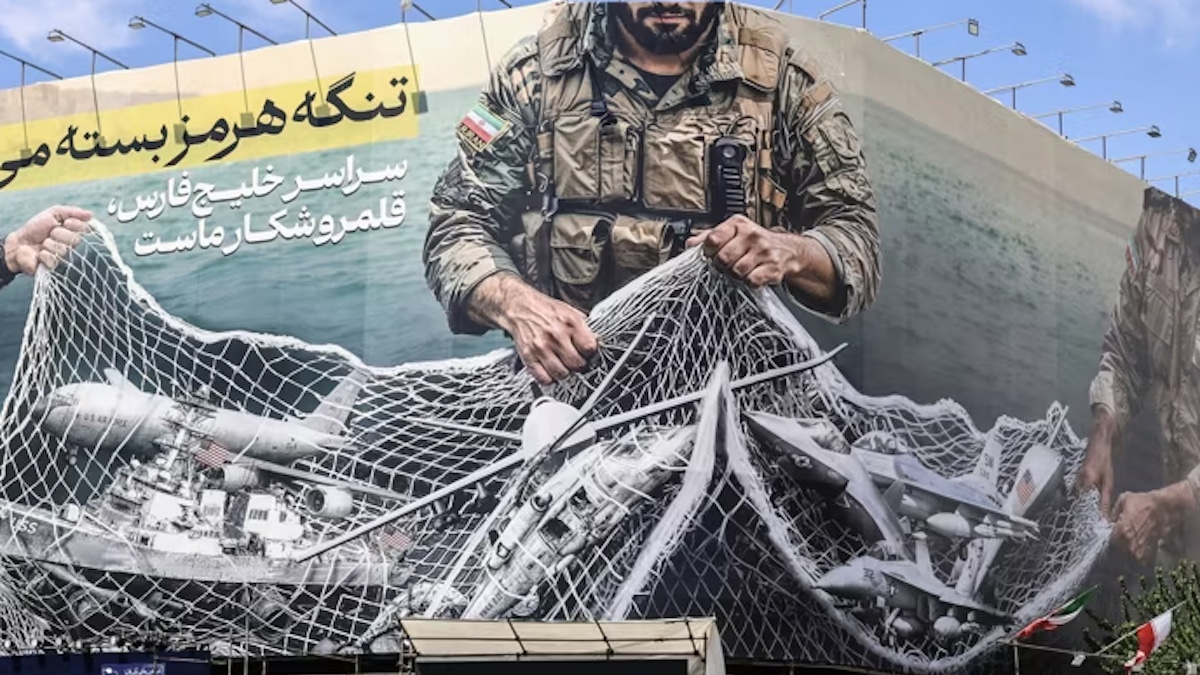
    More concerning to Beijing are potential disruptions to Strait of Hormuz transit routes and attacks on LNG facilities in Gulf states, as demonstrated by QatarEnergy’s production halt following recent attacks. While China possesses defense trade relationships with Iran, including missile technology transfer, experts unanimously dismiss possibilities of direct military assistance, citing Beijing’s overwhelming interest in avoiding confrontation with the United States and its allies.