分类: politics

  • Luxury jets to ‘blanketgate’: Five times Kristi Noem made headlines

    Luxury jets to ‘blanketgate’: Five times Kristi Noem made headlines

    President Donald Trump has terminated Kristi Noem from her position as Homeland Security Secretary following a turbulent tenure marked by bipartisan criticism and multiple scandals. Her dismissal comes after just over a year in office, during which she spearheaded the administration’s aggressive immigration enforcement agenda.

    Noem’s department achieved 675,000 deportations in the president’s first year, falling significantly short of the administration’s publicly stated goal of one million annual removals. Her replacement will be Republican Senator Markwayne Mullin, according to the president’s announcement.

    The most damaging crisis emerged from immigration operations in Minnesota, where federal agents fatally shot two American citizens, Renee Good and Alex Pretti, during confrontations that sparked widespread protests in Minneapolis. Noem’s characterization of the deceased as domestic terrorists was contradicted by mobile phone and body camera footage, leading both Republicans and Democrats to demand her resignation.

    During congressional hearings this week, Noem offered condolences to the families but refused to apologize for her terrorism allegations. The hearings also revealed extensive questionable expenditures, including the acquisition of two Gulfstream G700 luxury jets at taxpayer expense, with plans for a third Boeing 737 aircraft costing approximately $70 million. Noem defended the purchases as necessary for ‘long-range command and control operations’ and deportation missions, though senators presented evidence of lavish accommodations including plush bedrooms aboard the government planes.

    Further controversy emerged regarding a $220 million advertising campaign featuring Noem wearing a cowboy hat while riding horseback through prairies with bison, urging immigrants to self-deport. The commercials reportedly angered President Trump, who told Reuters he ‘never knew anything about it’ despite Noem’s suggestions that he had approved the campaign.

    Additional scrutiny focused on Noem’s de-facto chief of staff, Corey Lewandowski, who will also depart the department. Lewandowski faced allegations of improperly firing a Coast Guard pilot over a misplaced blanket during a flight, an incident media dubbed ‘blanketgate.’ Noem also faced uncomfortable questioning about whether she had ‘sexual relations’ with Lewandowski, which she dismissed as ‘tabloid garbage.’

    Noem’s previous controversies included a visit to El Salvador’s notorious Cecot prison, where she posed for photographs wearing a $50,000 Rolex watch before incarcerated individuals, and inaccurate claims in her memoir about meeting North Korean leader Kim Jong Un. Her account of shooting a family dog named Cricket was confirmed as accurate.

    The departure marks the end of a contentious chapter at the Department of Homeland Security, raising questions about the future direction of the administration’s immigration policies.

  • Hong Kong pro-democracy tycoon Jimmy Lai will not appeal conviction

    Hong Kong pro-democracy tycoon Jimmy Lai will not appeal conviction

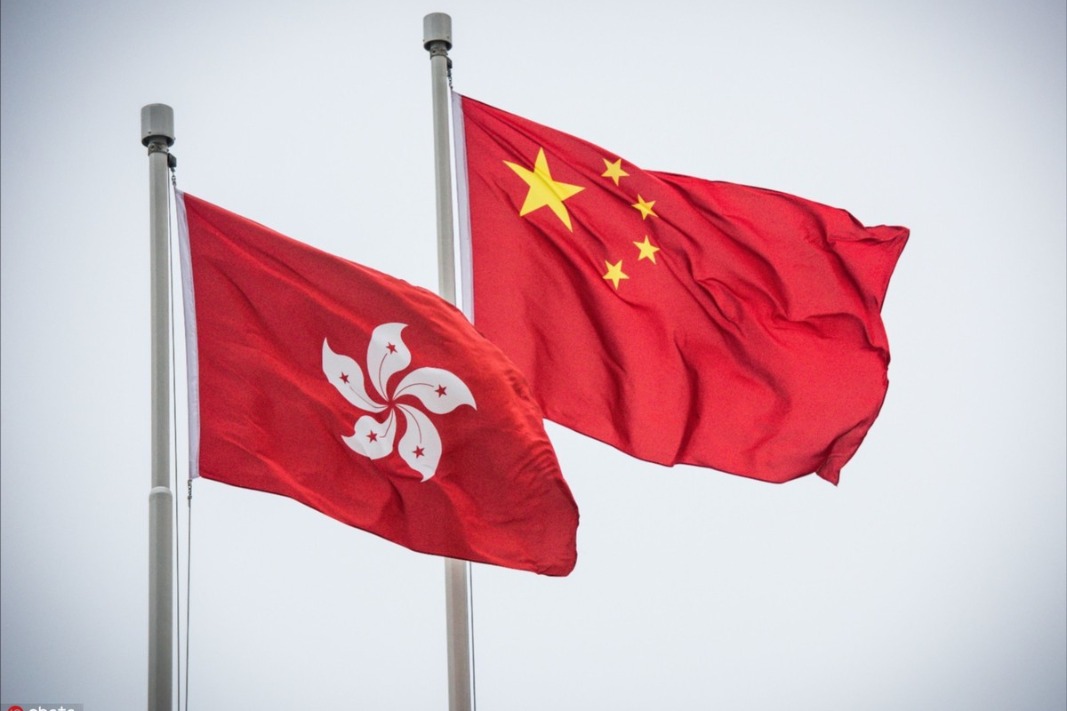
    Imprisoned Hong Kong media magnate and pro-democracy advocate Jimmy Lai has formally declined to appeal his conviction under the territory’s national security legislation. Legal representatives confirmed receiving unequivocal instructions from their client against pursuing further legal challenges, though no specific rationale was provided for this decision.

    The 78-year-old British citizen, detained since 2020, received a twenty-year prison term last month—the most severe punishment issued under the security law—for conspiring to publish seditious materials and colluding with external forces. Lai has consistently maintained his innocence regarding these charges.

    This development follows the successful overturning of a separate fraud conviction last month related to unlawful subletting of office premises. However, Lai’s international legal team emphasizes that this procedural victory remains inconsequential while the primary national security conviction stands.

    The case against Lai substantially relied on his 2019 meeting with senior US officials, including then-Vice President Mike Pence and Secretary of State Mike Pompeo, during widespread pro-democracy demonstrations. Lai contends these discussions merely addressed Hong Kong’s contemporary situation and never involved attempts to influence foreign policy.

    Hong Kong Chief Executive John Lee hailed the sentencing as justified, characterizing Lai’s actions through his Apple Daily newspaper as “evil deeds beyond measure” that misled youth into protest participation. Conversely, United Nations Human Rights Chief Volker Türk condemned the verdict as incompatible with international legal standards, joining widespread criticism from human rights organizations.

    Concerns regarding Lai’s deteriorating health in custody have been raised by family members, who report serious medical issues including dental deterioration and nail loss. Prison authorities vigorously deny these allegations and assert Lai receives appropriate medical care.

    The national security law, implemented by Beijing following the 2019 protests, remains deeply controversial. Critics argue it facilitates political repression and fosters fear, while Chinese and Hong Kong authorities maintain it is essential for preserving stability and does not undermine the region’s autonomy.

  • Xi underlines key role for economic powerhouses

    Xi underlines key role for economic powerhouses

    President Xi Jinping has called upon China’s foremost economic provinces to spearhead the nation’s advancement in developing new quality productive forces and achieving common prosperity. During a deliberation session with deputies from Jiangsu province at the National People’s Congress on Thursday, the president emphasized the critical role of major economic hubs in navigating complex challenges and driving sustainable growth.

    Addressing representatives from China’s second-largest provincial economy, Xi outlined the imperative for these economic powerhouses to pioneer innovative approaches to emerging circumstances and deeply-rooted issues. The president’s remarks came as China prepares to implement its 15th Five-Year Plan (2026-30), with Jiangsu demonstrating robust economic performance—recording 5.3 percent year-on-year growth in 2025 and maintaining the largest absolute economic increase among provincial-level regions.

    Xi highlighted the strategic importance of integrating scientific innovation with industrial development, urging enhanced efforts in core technological breakthroughs and efficient commercialization of research achievements. “The development of new quality productive forces is instrumental in advancing high-quality growth and enhancing economic competitiveness,” Xi stated, designating Jiangsu as a frontrunner in this transformative process.

    The president emphasized that economic resilience depends on strengthening internal capabilities and fully integrating into China’s unified national market. He also advocated for expanded high-standard opening-up policies and proactive engagement with global markets while maintaining vigilance against potential risks.

    Xi further connected economic development with social objectives, noting that Chinese modernization must prioritize common prosperity. He called for addressing key welfare issues including quality employment, increased household incomes, and improved public services. The president concluded by linking effective Party self-governance with guaranteed socioeconomic development, emphasizing the ongoing political education campaign’s role in strengthening governance performance.

  • NPC deputies to deliberate key draft bills

    NPC deputies to deliberate key draft bills

    China’s National People’s Congress (NPC) has commenced deliberations on three pivotal legislative proposals that will significantly shape the nation’s economic, social, and environmental trajectory. The fourth session of the 14th NPC received the draft bills addressing environmental protection, ethnic unity, and national development planning, marking a substantial step in China’s legislative agenda.

    Vice-Chairman Li Hongzhong of the NPC Standing Committee presented comprehensive explanatory remarks on the proposed legislation, emphasizing their critical importance in advancing the rule of law and supporting national development objectives. The environmental code, positioned as China’s second formal statutory code following the 2020 Civil Code, represents a monumental legislative undertaking with 1,242 articles organized across five substantive sections.

    The environmental legislation embodies Xi Jinping Thought on Ecological Civilization, establishing frameworks for pollution control, ecological conservation, and green development initiatives. The draft adopts a human-centered approach designed to promote sustainable development while enhancing public welfare and strengthening China’s distinctive socialist legal system.

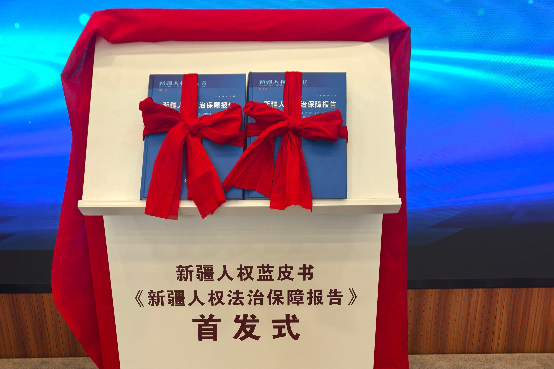
    Simultaneously, the draft bill on ethnic unity and progress comprises 64 articles focused on reinforcing the sense of community among China’s diverse ethnic populations. The legislation outlines specific measures to encourage interaction and integration through educational programs, cultural exchanges, sports activities, tourism development, and digital platforms. It explicitly prohibits violent terrorist activities, ethnic separatism, and religious extremism, establishing criminal liability for violations.

    The national development planning legislation, containing 38 articles, arrives at a strategically significant moment as China initiates its 15th Five-Year Plan (2026-2030) period. This draft standardizes planning procedures while clarifying departmental responsibilities and providing institutional mechanisms for effective implementation within a legal framework. The legislation aims to enhance macroeconomic governance and expand democratic participation in the development process.

    All three drafts have undergone preliminary review by the NPC Standing Committee, following China’s standard legislative procedure requiring three readings before adoption. Measures of particular national significance typically undergo additional scrutiny during plenary sessions of the full NPC assembly.

  • Why India’s Narendra Modi chose to back Israel over Iran

    Why India’s Narendra Modi chose to back Israel over Iran

    In a significant geopolitical development, Indian Prime Minister Narendra Modi’s diplomatic engagement with Israel has sparked intense scrutiny regarding New Delhi’s strategic positioning amid escalating Middle Eastern tensions. The timing of Modi’s visit to Israel, occurring just days before joint US-Israeli military operations against Iran, has raised critical questions about India’s foreign policy orientation and its implications for regional stability.

    The context of this diplomatic maneuver unfolds against the backdrop of devastating conflict in Iran, where approximately 1,000 casualties have been reported alongside widespread disruption throughout the Gulf region. This confrontation represents one of the most consequential Middle Eastern military engagements in recent decades, pitting Iran against what it perceives as Israeli expansionist ambitions.

    During Modi’s high-profile meeting with Israeli Prime Minister Benjamin Netanyahu, bilateral relations were elevated to a ‘Special Strategic Partnership for Peace, Innovation and Prosperity.’ The Indian leader received a specially created Knesset medal recognizing his service to Israel, raising questions about prior knowledge of impending military actions. India’s subsequent response—or lack thereof—to the assassination of Iranian Supreme Leader Ayatollah Ali Khamenei and the torpedoing of an Iranian naval vessel by US forces has drawn criticism from diplomatic circles, with former officials describing these developments as ‘strategic embarrassments’ damaging to India’s regional credibility.

    This geopolitical repositioning reflects deeper ideological transformations within India’s political landscape. Since assuming power in 2014, the Modi administration has progressively advanced the concept of Hindu Rashtra (Hindu state), a vision supported by the ideological framework of the Rashtriya Swayamsevak Sangh (RSS). Analysts observe that this domestic transformation has corresponding international dimensions, particularly in shaping India’s Middle East policy.

    Author and political analyst Suchitra Vijayan notes: ‘New Delhi increasingly frames its interests through a civilizational, anti-terror lens that aligns with US and Israeli security discourses. Islamophobia has become institutionalized in foreign policy, effectively replacing non-alignment with a principle of strategic annihilation of Muslims.’

    This philosophical shift manifests in practical cooperation: Indian delegations frequently study Israeli approaches to governance, dissent management, and security commodification. Israeli tactical methodologies are increasingly visible in India’s domestic security operations, including protest suppression in Haryana, surveillance of political figures in Delhi, and demolition operations in Kashmir.

    India’s stance on Iran must be contextualized within its broader position on Gaza. Over the past thirty months, during which approximately 200,000 Palestinians have been killed or injured, India has provided military equipment (including combat drones), labor replacement for Palestinian workers, and consistent diplomatic protection for Israel at the United Nations. New Delhi initially hesitated to endorse the Gaza ceasefire resolution and declined to support arms embargo measures, citing national interest considerations.

    External Affairs Minister Subrahmanyam Jaishankar defended this orientation: ‘Israel represents a nation with which we maintain robust national security cooperation. It has consistently supported India during periods of national security vulnerability.’

    This alignment carries significant economic implications. With Iran restricting maritime movement through the Strait of Hormuz, India faces energy security challenges given its limited emergency reserves. Approximately nine million Indian workers in Gulf states (particularly UAE, Qatar, Saudi Arabia, and Kuwait) face uncertain prospects, potentially disrupting remittance flows critical to India’s economy.

    Despite these risks, India appears to be hedging its strategic bets. The US recently granted India a 30-day waiver for Russian oil purchases, while New Delhi has gradually distanced itself from initiatives like the Chabahar Port project in Iran following American pressure. Major Indian conglomerates—including those led by Adani, Ambani, and Tata—maintain deep infrastructure, logistics, and defense partnerships with Israel, positioning them to capitalize on potential post-conflict economic opportunities.

    India’s integration into US-Israeli strategic frameworks continues through participation in the I2U2 grouping (India, Israel, UAE, US) and the India-Middle East-Europe Economic Corridor. Prime Minister Netanyahu’s announcement of a ‘hexagon alliance’ against ‘radical axes’ reportedly includes India as a key participant alongside Greece, Cyprus, and unspecified Arab, African, and Asian states.

    While this foreign policy orientation has drawn criticism from opposition parties, independent media, and activist organizations, the absence of robust political challenges to the government’s Hindu nationalist agenda suggests continuity in India’s strategic alignment. As Vijayan concludes: ‘Very few nations demonstrate both governmental and popular anti-Palestinian and anti-Muslim sentiment simultaneously. India represents one such case.’

  • Vote counting begins in Nepal after a peaceful parliamentary election

    Vote counting begins in Nepal after a peaceful parliamentary election

    KATHMANDU, Nepal — Nepal embarked on a critical phase of democratic transition Friday as election authorities commenced meticulous vote counting following Thursday’s landmark parliamentary elections. This electoral exercise represents the first nationwide poll since September’s youth-led uprising that successfully toppled the previous administration.

    The Election Commission confirmed the initiation of tallying processes across 53 of the 165 constituencies by Friday morning, with remaining districts scheduled to commence operations before nightfall. The complex logistical undertaking involves transporting ballot boxes from remote mountain villages—some accessible only through multiday treks—via helicopter to centralized counting facilities.

    Electoral officials project final results will emerge by weekend’s end, with preliminary data indicating approximately 60% voter participation. The electoral mechanism combines direct voting for 165 House of Representatives seats with proportional representation allocating the remaining 110 positions in the 275-member parliamentary body.

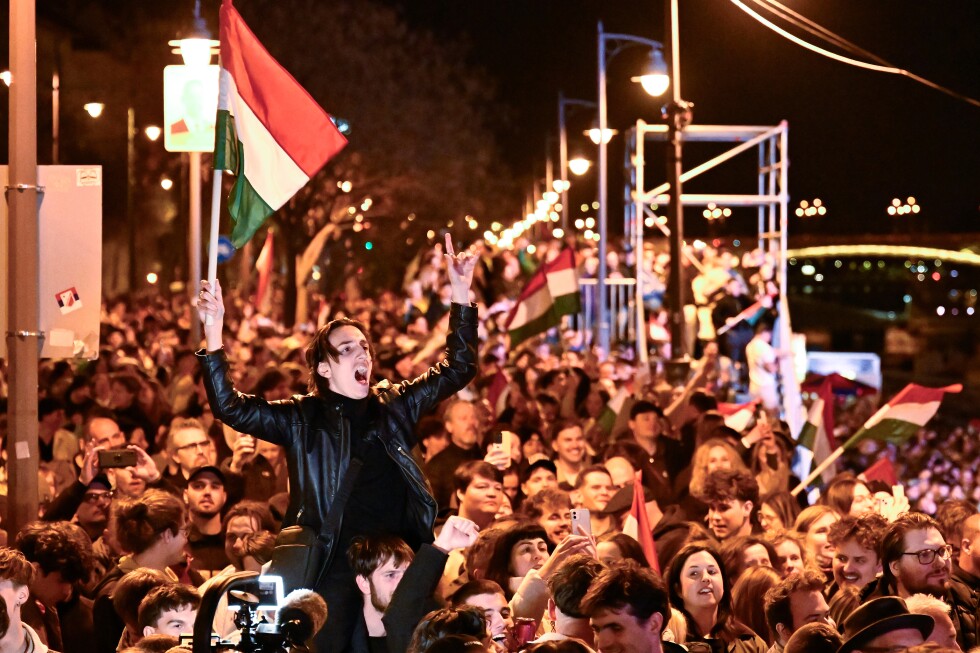
    Outside counting centers nationwide, particularly in the capital Kathmandu, enthusiastic supporters gathered chanting slogans and demonstrating vocal support for their preferred candidates. The election has fundamentally transformed into a triangular contest between the emergent National Independent Party and the traditionally dominant Nepali Congress and Communist Party of Nepal (Unified Marxist–Leninist).

    Political analysts identify the 2022-established National Independent Party as the probable frontrunner, capitalizing on widespread public discontent regarding systemic corruption and demands for enhanced governmental accountability. The party’s prime ministerial candidate, 35-year-old Balendra Shah—a former rapper who secured Kathmandu’s mayoralty in 2022—emerged as a prominent leader during the 2025 uprising that unseated former Prime Minister Khadga Prasad Oli.

    Shah’s campaign strategically emphasized healthcare and educational reforms for underprivileged Nepalis, harnessing substantial public frustration toward established political entities. The 2025 protests originated from opposition to social media restrictions before escalating into comprehensive anti-government demonstrations marked by tragic violence that resulted in numerous fatalities and hundreds injured during clashes between protesters and security forces.

    While traditional parties maintain dedicated voter bases, Shah’s movement has demonstrated superior mobilizing capacity during campaign events, reflecting particularly strong resonance among younger demographics seeking substantive political alternatives.

  • Ukraine accuses Hungary of taking ‘hostage’ bank staff carrying $40 mn

    Ukraine accuses Hungary of taking ‘hostage’ bank staff carrying $40 mn

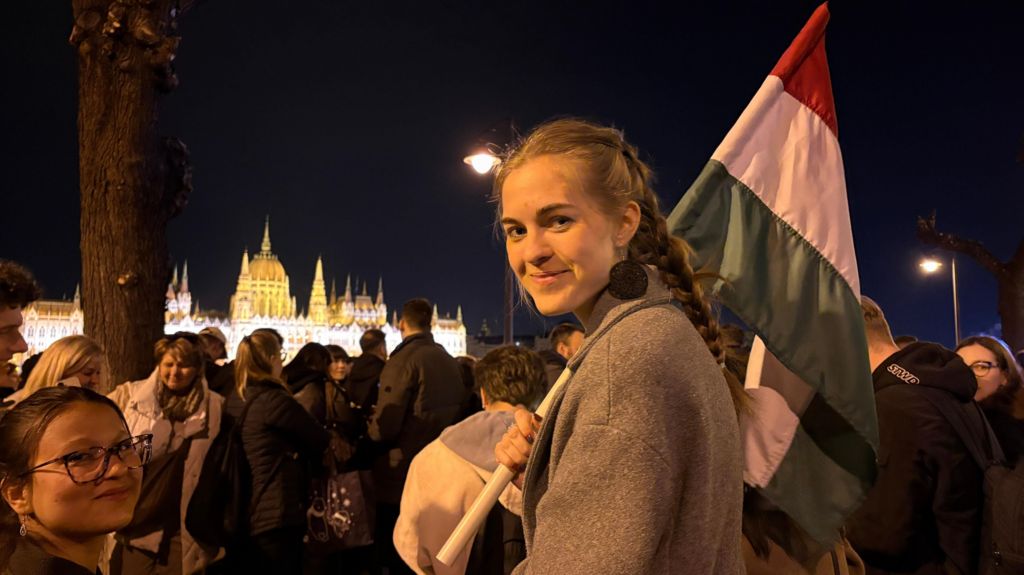
    A significant diplomatic crisis has erupted between Ukraine and Hungary following the detention of seven Ukrainian bank employees in Budapest. The incident, which Ukrainian officials have characterized as an act of ‘state terrorism,’ involves staff from the State Savings Bank of Ukraine (Oschadbank) who were transporting a substantial consignment of $40 million in cash and nine kilograms of gold.

    Ukrainian Foreign Minister Andrii Sybiha publicly accused Hungarian authorities on Friday of taking the individuals ‘hostage.’ In a series of posts on social media platform X, Sybiha detailed that the employees were operating two armored vehicles on a routine transit route between Austria and Ukraine, a standard service between state financial institutions. The minister vehemently denounced the action, stating, ‘We are talking about Hungary taking hostages and stealing money. This is state terrorism and racketeering.’

    The detention occurs against a backdrop of persistently strained relations between the two nations. Hungary has notably distanced itself from broader European Union consensus, maintaining close diplomatic and economic ties with Russia throughout the ongoing conflict in Ukraine. The government of Prime Minister Viktor Orbán has consistently opposed military aid packages for Kyiv and has been critical of EU sanctions imposed on Moscow.

    Oschadbank confirmed the incident but expressed grave concern as the precise location of its employees remains unknown. Data from GPS signals indicates the bank vehicles are stationed in central Budapest, reportedly near a Hungarian law enforcement facility. As of the latest reports, the Hungarian government has not issued an official statement or responded to requests for comment from international news agencies, deepening the mystery surrounding the legal basis for the detention.

  • Texas lawmaker drops re-election bid after admitting affair with aide

    Texas lawmaker drops re-election bid after admitting affair with aide

    Republican Representative Tony Gonzales of Texas has abruptly terminated his congressional re-election campaign following his admission of an extramarital relationship with a staff member who later died by suicide. This dramatic political reversal comes amid mounting pressure from senior House Republican leadership and an impending ethics investigation.

    The married father of six publicly acknowledged his relationship with Regina Santos-Aviles, a married staff member who died in September 2025 after setting herself on fire near her Uvalde, Texas residence. Her death was officially ruled a suicide by medical examiners.

    In a statement posted to social media platform X, Gonzales announced: “After deep reflection and with the support of my loving family, I have decided not to seek re-election.” This confession directly contradicts his previous characterization of the allegations as “blackmail” and a “coordinated” political attack to remove him from office.

    The congressional exit follows a failed bid to secure his party’s nomination in the upcoming mid-term elections and coincides with the House Ethics Committee’s investigation into whether Gonzales “engaged in sexual misconduct” toward an employee.

    House Republican leadership, including Speaker Mike Johnson, Majority Leader Steve Scalise, Majority Whip Tom Emmer, and Congresswoman Lisa McClain, issued a joint statement encouraging Gonzales to “address these very serious allegations directly with his constituents and his colleagues.”

    In a recent interview with conservative podcaster Joe Pags, Gonzales maintained that Santos-Aviles’ death was unrelated to their affair, stating she was “thriving” at work and claiming he was “shocked just as much as everyone else” by her tragic passing.

  • US and Venezuela agree to resume diplomatic ties after Maduro capture

    US and Venezuela agree to resume diplomatic ties after Maduro capture

    In a remarkable diplomatic turnaround, the United States and Venezuela have formally agreed to restore diplomatic and consular relations, signaling a new chapter in bilateral cooperation focused on mineral resource development and economic recovery. The breakthrough follows months of gradually improving relations that began with the controversial capture of Venezuelan President Nicolás Maduro by US forces in January.

    The diplomatic reconciliation was cemented through high-level discussions between Venezuela’s interim president Delcy Rodríguez and US Interior Secretary Doug Burgum, who jointly announced collaborative efforts to develop Venezuela’s extensive mining sector. This partnership extends to Venezuela’s oil industry, with Washington recently permitting sanctioned oil sales under US supervision and Caracas implementing legal reforms to attract foreign investment.

    The US Embassy in Caracas, shuttered since 2019, has already resumed operations with a newly appointed diplomatic contingent. Additional staff from the US Embassy in Bogotá are expected to transfer to Venezuela shortly, facilitating enhanced consular services and direct negotiations between officials.

    While both nations express commitment to advancing political reconciliation, their statements reveal nuanced differences. The Venezuelan government emphasizes “constructive dialogue based on mutual respect” aimed at achieving “social and economic happiness” for its citizens, without explicit mention of political transition or elections. Conversely, the US State Department frames its engagement as a “phased process” designed to create conditions for a “peaceful transition to a democratically elected government.”

    The diplomatic reset occurs against the complex backdrop of Maduro’s impending trial in the United States on weapons and drug charges, which he denies. US officials have previously characterized Maduro’s administration as a criminal organization involved in illegal mining and drug trafficking.

    Secretary Burgum characterized US intervention in Venezuela as a “brilliant strategic move” undertaken before military actions against Iran, noting that ensured “oil will flow to America.” Venezuela’s significance extends beyond petroleum, possessing the world’s largest proven oil reserves alongside substantial deposits of gold, diamonds, and critical minerals essential for technology manufacturing.

  • Iran’s FM says Tehran not seeking ceasefire, sees no reason to negotiate with US

    Iran’s FM says Tehran not seeking ceasefire, sees no reason to negotiate with US

    In a defiant televised interview with NBC News aired Thursday, Iranian Foreign Minister Seyed Abbas Araghchi declared that Tehran is neither seeking a ceasefire nor sees any justification for negotiating with the United States. The minister’s statements come amid escalating military confrontations between the two nations.

    Araghchi explicitly stated Iran’s position regarding diplomatic engagement with Washington: ‘We are not asking for a ceasefire, and we don’t see any reason why we should negotiate with the United States when we negotiated with them twice, and every time, they attacked us in the middle of the negotiations.’

    Regarding potential ground invasion scenarios, the foreign minister issued a stark warning: ‘We are waiting for them because we are confident that we can confront them, and that would be a big disaster for them.’ He emphasized Iran’s military preparedness for all eventualities, asserting that the country’s armed forces remain on high alert for any development.

    The interview coincided with claims from Iran’s Khatam al-Anbiya Central Headquarters that its Islamic Revolution Guards Corps Navy had targeted the USS Abraham Lincoln aircraft carrier with drones approximately 340 kilometers beyond Iranian territorial waters in the Gulf of Oman. According to state-run IRIB TV, the carrier and its accompanying destroyers reportedly retreated to over 1,000 kilometers from the region following the engagement.

    These developments follow joint American-Israeli strikes on Tehran and several other Iranian cities that began last Saturday, which resulted in the death of Iran’s Supreme Leader Ali Khamenei, along with members of his family, senior military officials, and civilians. Iran has responded with multiple waves of missile and drone attacks targeting Israeli positions and US military assets throughout the region.