分类: politics

  • How Trump’s pledge to tackle Sudan atrocities could play out

    How Trump’s pledge to tackle Sudan atrocities could play out

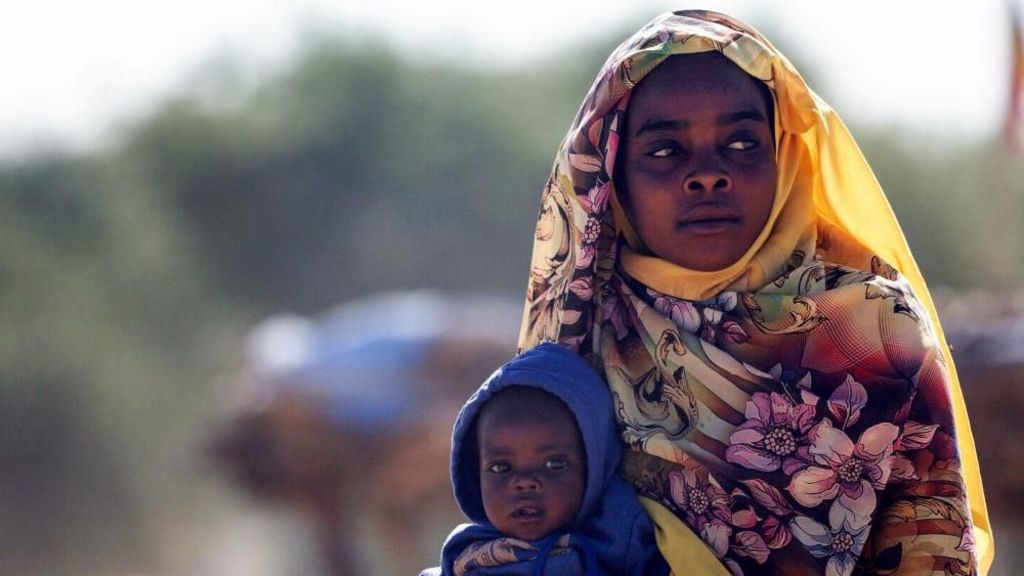
    After enduring thirty months of devastating civil war, Sudan stands on the brink of collapse with previous international peace initiatives failing to achieve breakthrough compromises. The conflict has displaced nearly 12 million people and created famine conditions across multiple regions, leaving citizens questioning whether the global community acknowledges their suffering.

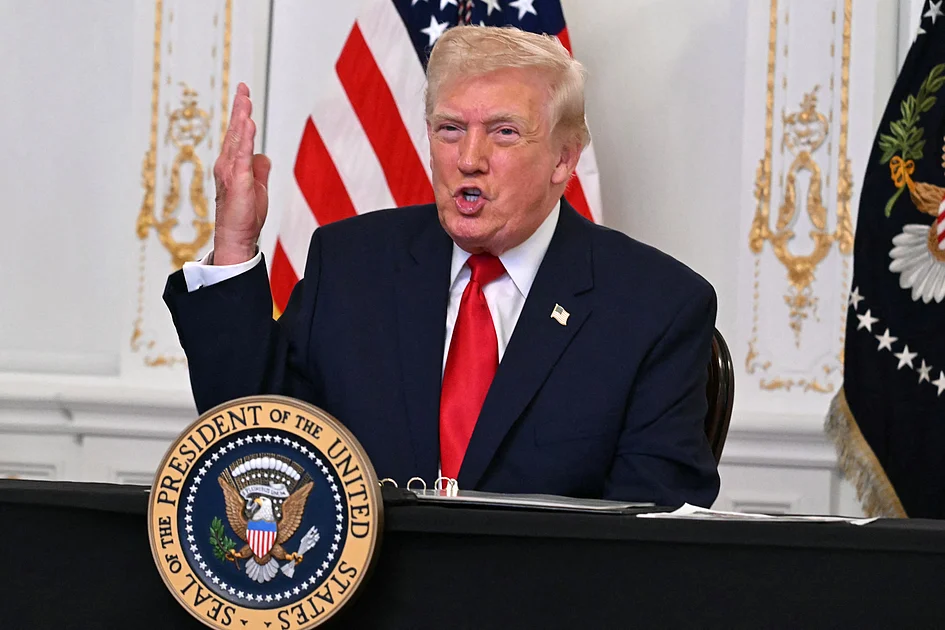
    A potential shift emerged when Saudi Crown Prince Mohammed bin Salman personally briefed U.S. President Donald Trump on the crisis during a White House meeting. Following their discussion, Trump publicly acknowledged the ‘tremendous atrocities’ occurring in Sudan, which he described as ‘the most violent place on Earth,’ and committed to collaborate with Egypt, Saudi Arabia, and the United Arab Emirates to end the violence.

    This development comes amid escalating brutality in the conflict. In late October, paramilitary Rapid Support Forces (RSF) captured el-Fasher, the army’s final stronghold in Darfur, following a 500-day siege. The capture was accompanied by widespread atrocities, including ethnically targeted massacres that claimed over 5,000 lives, with RSF fighters circulating ‘trophy videos’ of their actions on social media.

    The war originated in April 2023 from a power struggle between Armed Forces Chief Gen Abdel Fattah al-Burhan, who leads the UN-recognized government, and RSF commander Gen Mohamed Hamdan Dagalo (Hemedti) over Sudan’s political future. Despite Hemedti’s post-victory ceasefire offers, Burhan’s faction has rejected compromise, particularly the Islamists within his coalition who demand complete defeat of the RSF.

    Regional powers have exacerbated the conflict through weapon supplies: Egypt and Turkey support the regular army, while multiple reports indicate the UAE arms the RSF, though Emirati officials consistently deny these allegations. This external involvement has created a complex geopolitical landscape that peace efforts must navigate.

    For six months, U.S. Secretary of State Marco Rubio and Senior Africa Advisor Massad Boulos have developed a three-point peace framework through the ‘Quad’ mechanism (U.S., Egypt, Saudi Arabia, UAE) featuring: an immediate ceasefire, humanitarian access, and civilian-led transition negotiations. However, the RSF’s assault on el-Fasher undermined these diplomatic efforts.

    Trump’s personal involvement potentially strengthens the Quad initiative, as he maintains unique relationships with regional leaders. However, significant obstacles remain, including the fierce Saudi-Emirati rivalry for influence across the Arab world, differing approaches to Islamist groups, and competing priorities that place Sudan behind issues like Gaza and commercial interests.

    Effective peacemaking would require convincing the UAE to cease its alleged support for the RSF—a challenging proposition given Abu Dhabi’s status as a major U.S. investment partner and architect of the Abraham Accords. The U.S. has avoided public criticism of Emirati actions and shows no appetite for sanctions, preferring quiet diplomacy instead.

    Even if a ceasefire is achieved, humanitarian challenges loom large. Aid organizations require approximately $3 billion for immediate relief, while political solutions must address deep public distrust of military leaders and civilian demands for democracy following the 2019 revolution that ousted longtime ruler Omar al-Bashir. Many Sudanese also fear that Arab-led mediation might reduce their nation to dependency status rather than achieving genuine self-determination.
  • Trump says not inviting South Africa to next year’s G20 in Miami

    Trump says not inviting South Africa to next year’s G20 in Miami

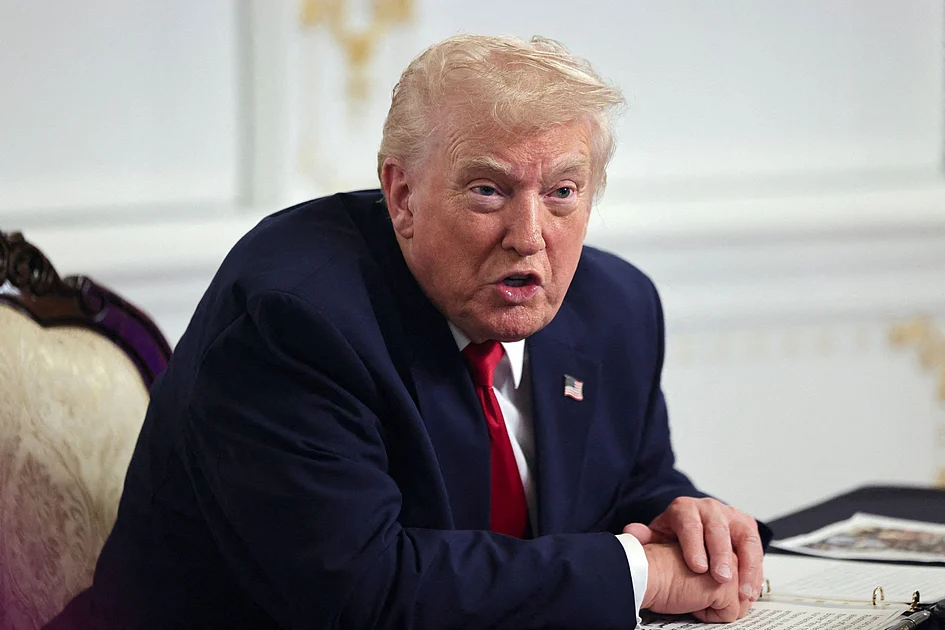
    In a significant escalation of diplomatic tensions, former US President Donald Trump has declared South Africa will be excluded from the 2026 G20 Summit scheduled for his Miami golf resort. The announcement marks the latest development in an ongoing confrontation between Trump’s administration and the African nation.

    Trump justified the exclusion through a post on his Truth Social platform, citing alleged ‘horrific Human Right Abuses’ against white farmers and South Africa’s breach of diplomatic protocol regarding the G20 presidency transition. This decision follows the Trump administration’s boycott of the recent G20 summit hosted in Johannesburg, which concluded without the traditional symbolic handover of presidency to the United States as next host.

    The diplomatic rift deepened when President Cyril Ramaphosa declined to formally transfer the G20 presidency to the United States, breaking with established convention. Trump’s administration has further intensified tensions by propagating controversial claims of ‘white genocide’ targeting Afrikaner communities, allegations that the South African government vehemently denies.

    The confrontation reached a notable point during a May meeting at the White House, where Trump presented President Ramaphosa with a video purportedly documenting these allegations, though the material contained numerous factual inaccuracies according to independent verification.

    The 2026 gathering of the world’s twenty largest economies is set to occur at the Trump National Doral Miami resort in Florida, presenting unique ethical considerations given the former president’s continued ownership of the venue.

  • DHS points to US travel ban list when asked about ‘Third World’ countries

    DHS points to US travel ban list when asked about ‘Third World’ countries

    In a significant policy shift following a fatal shooting incident near the White House, the Trump administration has declared a permanent suspension of migration from all nations classified as ‘Third World Countries.’ The announcement came late Thursday after an Afghan national, identified as 29-year-old Rahmanullah Lakanwal, shot two U.S. National Guard members, resulting in the death of 20-year-old Sarah Beckstrom and critical injuries to 24-year-old Andrew Wolfe.

    The Department of Homeland Security, when pressed for clarification regarding which nations fall under the ‘Third World’ designation, directed inquiries to the existing travel ban list encompassing 19 countries. This policy expansion builds upon the recent suspension of all U.S. immigration applications from Afghan nationals implemented after the Washington shooting.

    President Trump characterized the measure as a necessary security precaution, though the administration provided no specific timeline for implementation or detailed criteria for the ‘Third World’ classification. The policy represents one of the most restrictive immigration measures undertaken by the administration, potentially affecting migration patterns from dozens of developing nations across multiple continents.

    The tragic shooting incident that precipitated this policy change occurred in proximity to the presidential residence, amplifying security concerns and triggering immediate governmental response. The administration’s reference to the existing travel ban list suggests alignment with previously identified countries of concern, though the broader ‘Third World’ terminology implies a potentially much wider scope of affected nations.

  • Why the rich and powerful couldn’t say no to Epstein

    Why the rich and powerful couldn’t say no to Epstein

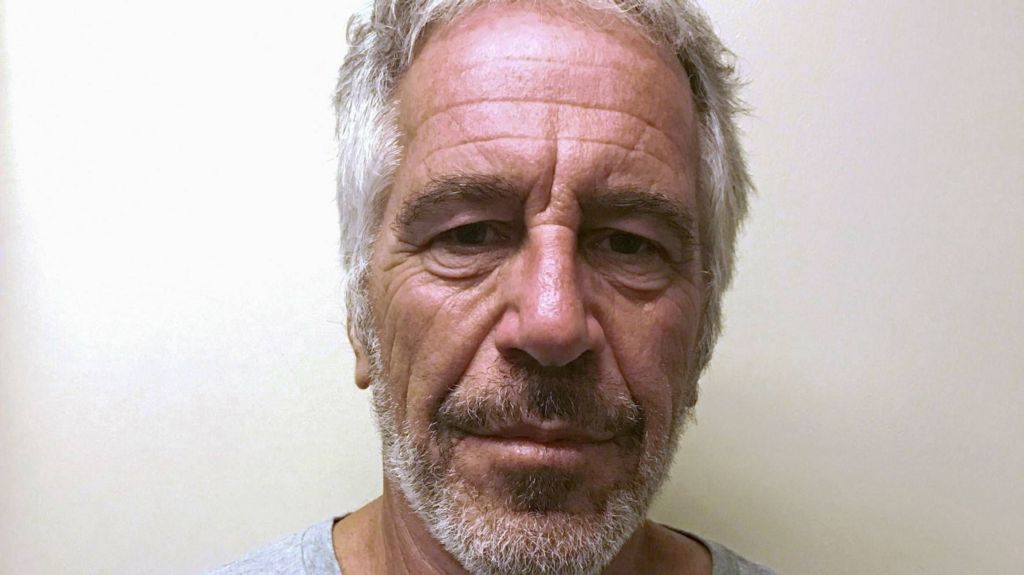
    Newly disclosed court documents have exposed the remarkable persistence of Jeffrey Epstein’s connections within elite political and academic circles long after his criminal conviction for soliciting prostitution. The revelations, drawn from over 23,000 pages of personal correspondence, demonstrate how the convicted sex offender maintained influential relationships despite public scandal and legal condemnation.

    The documents reveal particularly troubling communications between Epstein and sitting officials, including Democratic Congresswoman Stacey Plaskett. During a 2019 House committee hearing featuring testimony from Donald Trump’s former lawyer Michael Cohen, Plaskett exchanged text messages with Epstein, who encouraged specific lines of questioning. Though Plaskett claims Epstein was merely one of many constituents she communicated with that day, the timing—after his 2008 conviction but before his 2019 arrest for sex trafficking—raises questions about the normalization of his presence in powerful circles.

    The extensive document trove illustrates Epstein’s sophisticated strategy of cultivating what author Barry Levine describes as ‘transactional relationships’ with powerful figures. Epstein positioned himself as a ‘people collector’ who leveraged financial expertise and social connections to maintain access to America’s elite. This access persisted despite his 2008 conviction and a damning Miami Herald investigation that detailed allegations of sexual abuse on his private island.

    Among the most significant revelations are continued communications with prominent British politician Lord Peter Mandelson, who maintained contact with Epstein as late as 2016. The disclosures ultimately led to Mandelson’s dismissal as UK ambassador to the United States in September. Similarly, former Harvard President Larry Summers sought romantic advice from Epstein in November 2018—the same month the Herald investigation published—resulting in Summers recently stepping back from public commitments.

    The documents also detail Epstein’s relationships with intellectual figures like linguist Noam Chomsky, who praised Epstein’s intellect in correspondence while acknowledging his criminal record. Notably absent from the communications is former President Donald Trump, who reportedly severed ties with Epstein years before his first arrest.

    The revelations have triggered widespread examination of how social capital and financial influence can override ethical considerations in elite circles. As Levine notes, ‘His credentials among power brokers were extremely high, and many individuals probably just dismissed the conviction against him.’ This case continues to reveal the complex dynamics that allowed a convicted sex offender to maintain standing among the world’s most powerful people.

  • Zelensky top aide resigns after anti-corruption raids

    Zelensky top aide resigns after anti-corruption raids

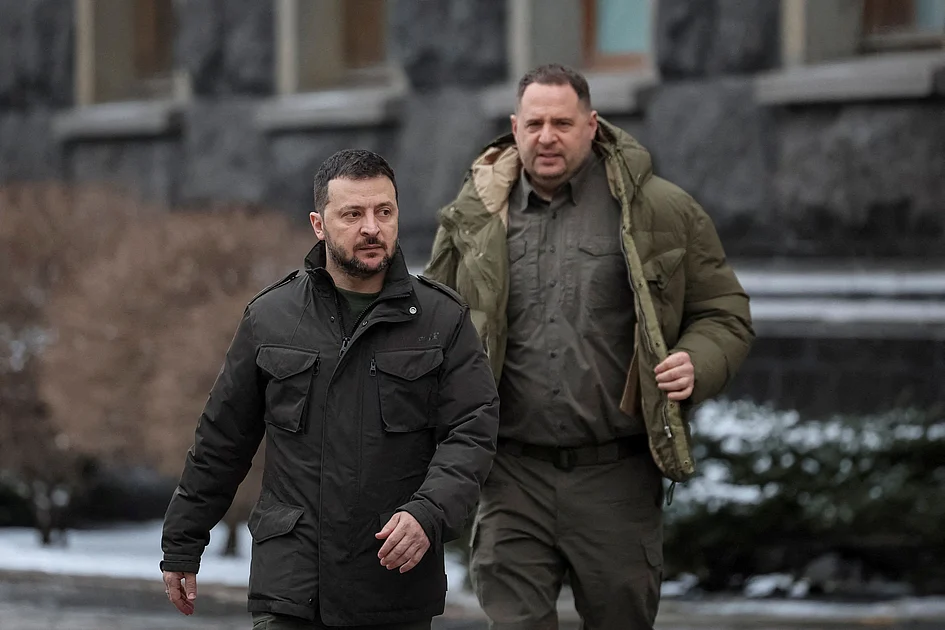
    In a significant development within Ukraine’s political leadership, President Volodymyr Zelensky announced the resignation of his chief of staff Andriy Yermak following coordinated anti-corruption raids targeting the high-ranking official’s residence. The dramatic events unfolded on Friday morning when Ukraine’s specialized anti-corruption agencies conducted searches at Yermak’s private home as part of an extensive corruption investigation.

    President Zelensky revealed the restructuring plans for his presidential administration during a video address to the nation. ‘The Office of the President of Ukraine will be reorganized,’ Zelensky stated, confirming that ‘the head of the office, Andriy Yermak, has submitted his resignation.’ The Ukrainian leader indicated he would conduct consultations regarding potential replacements on Saturday.

    Yermak, who has served as one of Zelensky’s most influential advisors and a key architect of Ukraine’s wartime strategy, maintained full cooperation with investigating authorities throughout the process. The anti-corruption probe represents the latest in Ukraine’s ongoing efforts to combat corruption within its governmental structures, particularly crucial as the country continues its defense against Russian aggression while seeking European Union membership.

    The resignation marks one of the most significant personnel changes in Zelensky’s administration since the beginning of Russia’s full-scale invasion, signaling the government’s commitment to transparency amid international scrutiny of Ukraine’s governance standards.

  • Trump says he will pardon ex-Honduras president convicted of drug trafficking

    Trump says he will pardon ex-Honduras president convicted of drug trafficking

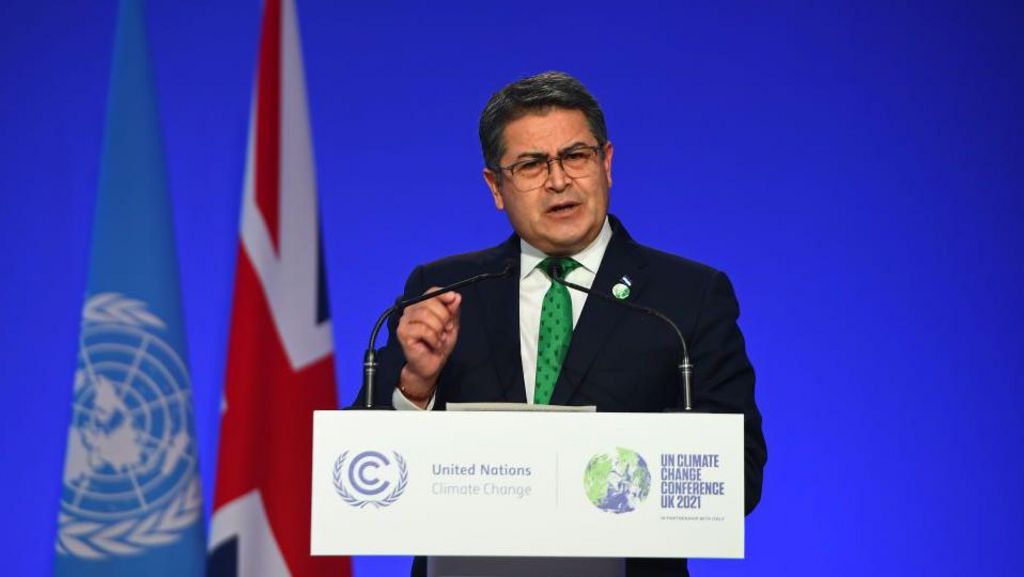
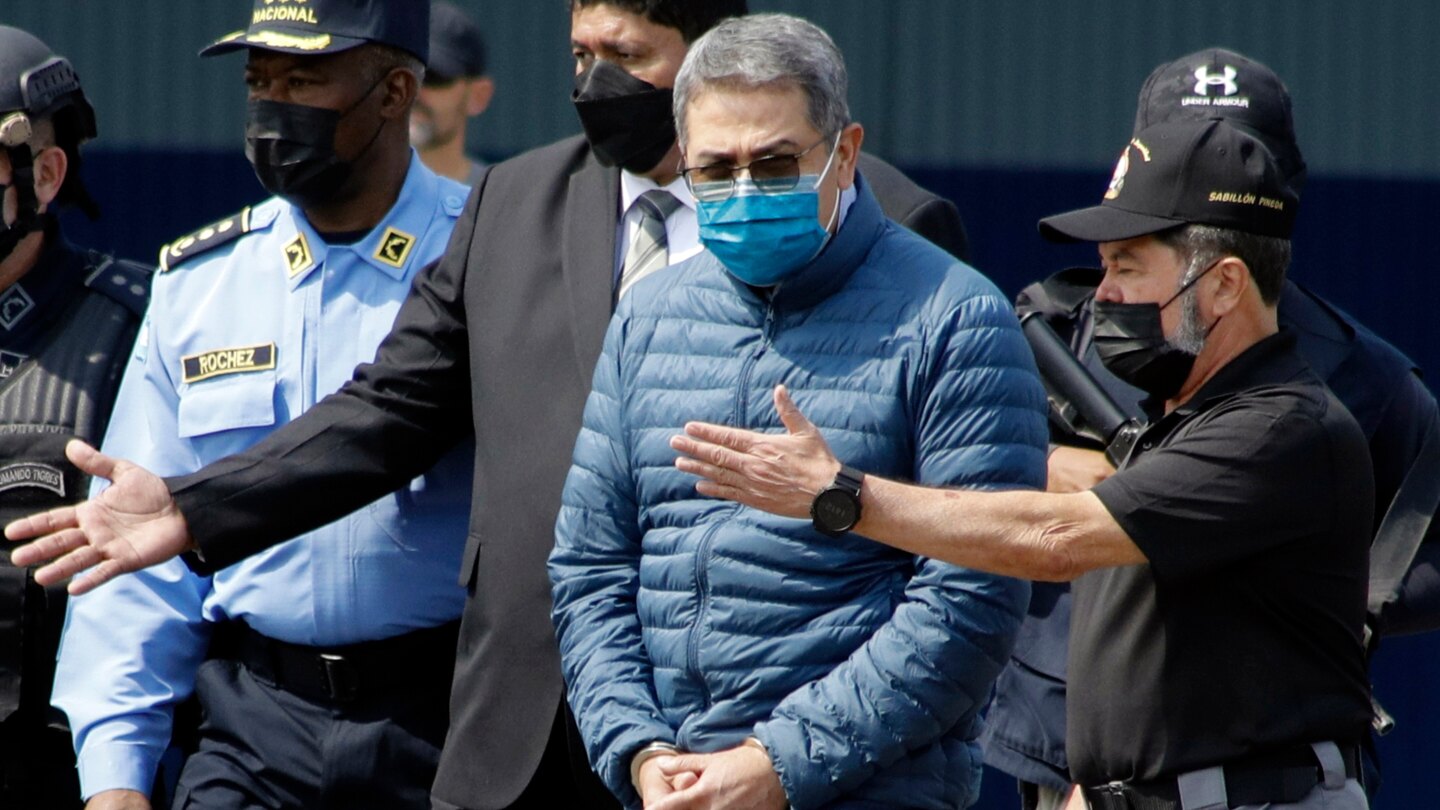
    In a significant development at the intersection of international justice and diplomatic relations, former U.S. President Donald Trump has declared his intention to pardon convicted Honduran ex-leader Juan Orlando Hernández. The announcement came via Trump’s Truth Social platform on Friday, where he characterized Hernández’s treatment as “excessively harsh and unjust.”

    Hernández, who presided over Honduras from 2014 to 2022, was found guilty by a New York jury in March 2024 on charges including conspiracy to import cocaine into the United States and illegal possession of machine guns. Following his extradition to the U.S. in April 2022, the former National Party leader received a 45-year prison sentence for orchestrating a violent drug trafficking network responsible for smuggling hundreds of tons of cocaine into American territory.

    The political context of Trump’s announcement is particularly notable as Honduras prepares for Sunday’s general election. Trump simultaneously expressed strong support for conservative candidate Tito Asfura, the former mayor of Tegucigalpa and current National Party leader. In his social media post, Trump framed Asfura as a champion of democracy standing against what he described as Venezuelan President Nicolás Maduro’s influence.

    Trump’s commentary extended to criticism of other presidential contenders, including Rixi Moncada of the leftist LIBRE Party and centrist candidate Salvador Nasralla, whom he labeled a “borderline Communist” allegedly seeking to split the opposition vote.

    The current Honduran political landscape under LIBRE Party President Xiomara Castro has maintained cooperative relations with the United States despite her government’s ties to Cuba and Venezuela. Honduras continues to host a U.S. military base targeting transnational organized crime and upholds an extradition treaty with Washington.

    This development occurs against the backdrop of heightened U.S. anti-narcotics operations in the region. The controversial “Operation Southern Spear” has resulted in over 80 fatalities from U.S. strikes on vessels suspected of drug trafficking, though legal experts have questioned the operation’s evidentiary standards and legality.

  • Trump applies total immigration ban to ‘Third World Countries’

    Trump applies total immigration ban to ‘Third World Countries’

    In a significant escalation of his immigration policy agenda, former President Donald Trump declared a permanent suspension of migration from numerous countries his administration has classified as posing national security risks. The announcement was made via his Truth Social platform on Thanksgiving, framing the measure as essential for national recovery and security.

    The policy directive specifically targets migration from Afghanistan, Burma, Chad, Congo, Equatorial Guinea, Eritrea, Haiti, Iran, Libya, Somalia, Sudan, Yemen, Burundi, Cuba, Laos, Sierra Leone, Togo, Turkmenistan, and Venezuela. This action is presented as a means to terminate millions of admissions granted under the previous administration and to remove individuals deemed not to be a ‘net asset’ to the United States.

    Further measures outlined include the cessation of all federal benefits and subsidies for noncitizens, the initiation of denaturalization proceedings for migrants accused of undermining domestic tranquility, and the deportation of foreign nationals classified as public charges, security risks, or incompatible with Western civilization. The Department of Homeland Security referenced a June 2025 proclamation as the foundational document for these security-based restrictions.

    The announcement follows a tragic shooting incident in Washington, D.C., where two National Guard members were attacked, resulting in one fatality and one critical injury. The suspect, identified as an Afghan national who had previously collaborated with U.S. government agencies and arrived through a resettlement program, was cited by Trump to bolster his rhetoric on immigration threats.
    In his social media post, Trump criticized what he termed the ‘politically correct’ stance on immigration, attributing social dysfunction and violence to refugee populations and making sweeping allegations about welfare dependency and criminal backgrounds among foreign nationals. The statements also included personal attacks against specific communities and elected officials, repeating previously debunked claims.

  • Tunisia appeal court upholds heavy prison sentences in ‘conspiracy’ trial

    Tunisia appeal court upholds heavy prison sentences in ‘conspiracy’ trial

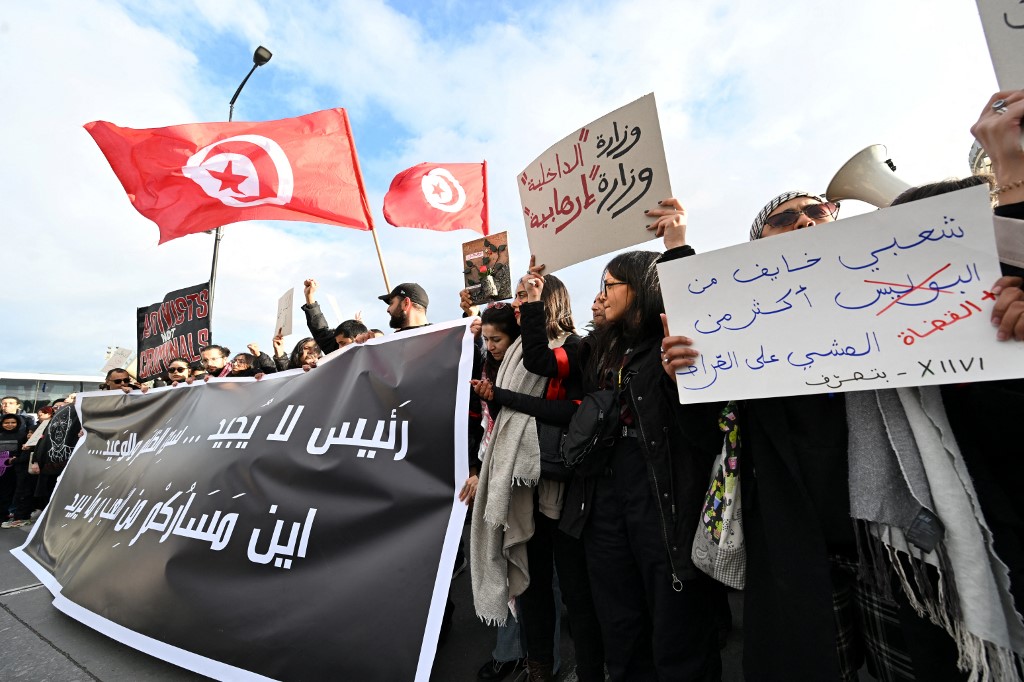
    A Tunisian appellate court has confirmed severe prison sentences ranging from 10 to 45 years for approximately 40 opposition leaders and activists in a highly contentious case alleging conspiracy against state security and terrorist affiliations. The verdicts have drawn sharp international condemnation and raised serious concerns about judicial independence under President Kais Saied’s administration.

    Among the most severe punishments, businessman Kamel Ltaief received a 45-year sentence (reduced from an initial 66 years), while opposition politician Khayam Turki was sentenced to 35 years. Surprisingly, several prominent figures—including Jawhar Ben Mbarek, Ghazi Chaouachi, Ridha Belhaj, Issam Chebbi, and human rights activist Chaima Issa—saw their sentences increased from 18 to 20 years on appeal.

    The legal proceedings have been widely criticized by human rights organizations and international bodies. Volker Turk, the UN High Commissioner for Human Rights, denounced what he characterized as procedural violations and politically motivated prosecutions. Amnesty International’s Sara Hashash condemned the verdicts as ‘an appalling indictment of the Tunisian justice system,’ accusing the government of weaponizing judiciary mechanisms to suppress political dissent.

    The case originated from allegations that defendants held meetings with foreign diplomats, which authorities interpreted as attempts to undermine national security. Most defendants have been detained since their arrests in spring 2023, with the initial trial concluding abruptly after just three hearings without permitting closing arguments.

    In a concerning development, activist Jawhar Ben Mbarek has been on a hunger strike for one month protesting what he describes as arbitrary detention. Meanwhile, the court acquitted two defendants: Noureddine Boutar, director of private radio station Mosaique FM, and lawyer Lazhar Akremi.

    The political context underscores these developments. Since President Saied’s 2021 power consolidation, which many characterized as a constitutional coup, Tunisia has experienced significant democratic backsliding. The European Parliament recently passed a resolution demanding the release of those imprisoned for exercising freedom of expression, which Saied rejected as ‘blatant interference.’

    In a related development, lawyer and columnist Sonia Dahmani was conditionally released after 18 months’ detention under a presidential decree criminalizing ‘false information’ dissemination—a measure rights advocates argue is being applied with excessive breadth to silence critics.

  • Guinea-Bissau’s coup called a ‘sham’ by West African political figures

    Guinea-Bissau’s coup called a ‘sham’ by West African political figures

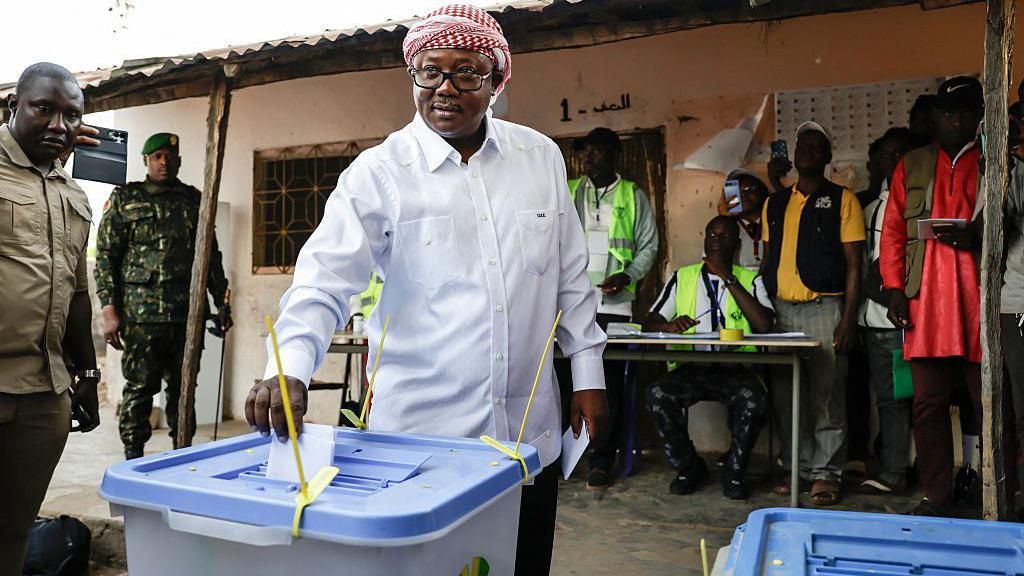
    In a development that has sparked regional controversy, the military intervention in Guinea-Bissau that displaced President Umaro Sissoco Embaló is being characterized as a fabricated coup by prominent West African figures. The political upheaval occurred precisely as the nation awaited official results from its recent presidential election, with military authorities subsequently suspending the electoral process and preventing the release of outcomes.

    Senegal’s Prime Minister Ousmane Sonko and former Nigerian President Goodluck Jonathan have jointly expressed skepticism regarding the nature of the power transition. Jonathan, who headed an election observation mission from the West African Elders Forum, notably described the event as a ‘ceremonial coup’ rather than a genuine military takeover. He highlighted the unusual circumstance of President Embaló personally announcing his own deposition to France 24 television, contrasting this with established patterns of regional coups.

    The ousted leader arrived in Senegal via military transport late Thursday following his release by the armed forces that overthrew his administration. Meanwhile, General Horta N’Tam has been proclaimed transitional president and has appointed former Finance Minister Ilídio Vieira Té as prime minister.

    The military justification centers on claims of preventing a destabilization plot allegedly supported by unidentified politicians and a known drug trafficker. However, these assertions remain unsubstantiated by publicly presented evidence.

    International response has been swift, with both the African Union and ECOWAS regional bloc suspending Guinea-Bissau’s membership in response to the unconstitutional power change. These organizations have concurrently urged military forces to return to their barracks and restore constitutional order.

    Citizen reactions in the capital city of Bissau reflect profound division. While some residents expressed frustration over renewed instability, others cautiously welcomed military intervention as a potential catalyst for improved living conditions in a nation historically plagued by political volatility and drug trafficking influences.

  • Trump says he plans to pardon former Honduran President Hernandez for 2024 drug trafficking sentence

    Trump says he plans to pardon former Honduran President Hernandez for 2024 drug trafficking sentence

    In a politically charged move from West Palm Beach, Florida, former U.S. President Donald Trump announced on Friday his intention to pardon Juan Orlando Hernandez, the former Honduran leader serving a 45-year sentence for drug trafficking and weapons convictions. Trump justified his decision through social media, claiming respected sources indicated Hernandez had received unduly harsh and unfair treatment.

    The convicted former president, who led Honduras through two terms until 2022, was found guilty in U.S. federal court last March for conspiring to import cocaine into the United States. Hernandez had been incarcerated at the U.S. Penitentiary in Hazelton, West Virginia, while pursuing appeals against his conviction.

    His legal representative, Renato C. Stabile, expressed profound gratitude for Trump’s intervention, characterizing it as the correction of a ‘great injustice’ and anticipating Hernandez’s ‘triumphant return to Honduras.’ Another attorney, Sabrina Shroff, declined to comment.

    Trump’s announcement coincided with his explicit endorsement of Nasry ‘Tito’ Asfura, the conservative National Party candidate in Honduras’ upcoming presidential election. Trump framed the election as a critical test for democracy, warning that U.S. support would be contingent on Asfura’s victory. He threatened to withhold American aid if another candidate wins, suggesting Honduras could otherwise fall under the influence of Venezuelan leader Nicolás Maduro.

    Asfura, former mayor of Tegucigalpa, faces competition from Rixi Moncada of the democratic socialist Libre party and Salvador Nasralla of the Liberal Party. The election occurs against the backdrop of heightened U.S. military presence in the Caribbean, with Trump not ruling out potential military or CIA operations against Venezuela despite expressing openness to dialogue with Maduro.

    Current Honduran President Xiomara Castro has maintained pragmatic relations with the U.S. despite her leftist leanings, continuing cooperation on extradition and security matters. The political landscape gained additional international dimension with Argentine President Javier Milei, a Trump admirer, publicly endorsing Asfura as the opposition candidate against ‘leftist tyrants.’