分类: politics

  • Former US soldiers argue Israeli policy is now guiding US interests

    Former US soldiers argue Israeli policy is now guiding US interests

    A coalition of retired U.S. military personnel has issued a stark warning about extensive Israeli influence shaping American military strategy, particularly concerning the ongoing conflict with Iran that has already claimed American lives. The veterans allege this foreign guidance has directly compromised national security and resulted in unnecessary casualties.

    Thirteen U.S. service members have been officially recognized as killed since operations commenced on February 28, though veterans suggest the actual toll may be significantly higher. They point to overwhelmed military hospitals in Germany as indication of unacknowledged casualties. President Trump’s acknowledgment of inevitable wartime losses has been met with criticism, particularly after his administration restricted media access to ceremonies honoring returning casualties.

    The veterans identify a devastating strike on an elementary school in Minab, Iran, as emblematic of problematic intelligence sharing. The attack, which resulted in 165 fatalities predominantly among children, was reportedly conducted based on Israeli intelligence. Former Green Beret Anthony Aguilar confirmed the intelligence origin during a National Press Club address, noting the building had served as a school since 2016.

    Retired Air Force Chief Master Sergeant Dennis Fritz articulated a broader perspective: “We have always been part of the master plan in the taking over of the Middle East on behalf of Israel, starting with Iraq. Our personnel believed they were fighting for America, but were ultimately betrayed into serving another nation’s interests.”

    Analysts suggest dual motivations drive U.S. policy. While Washington maintains independent strategic interests in neutralizing Iranian military capabilities, it operates in close coordination with Israeli objectives. This alliance remains officially prioritized, with Congress consistently recognizing Israel as America’s paramount regional partner.

    The influence of political financing mechanisms, particularly through organizations like AIPAC, has created substantial pressure on policymakers to maintain unwavering support for Israeli interests. This dynamic persists despite growing questioning among conservative factions regarding the special relationship’s strategic value.

    Military culture itself has been shaped by this alliance, with war strategy expert Michael Vlahos noting: “Israeli forces have cultivated a mythic reputation among American officers through cross-training programs that have fundamentally influenced U.S. tactical approaches and institutional attitudes.”

    The veterans concluded that perpetual instability serves strategic objectives, enabling continuous military engagement. As former Marine special operations officer Ivan Ingraham stated: “We require instability to project the power we espouse. This endless cycle ultimately uses our military personnel as pawns in illegal conflicts.”

  • Belarus leader gifts rifle to North Korea’s Kim as they sign friendship treaty

    Belarus leader gifts rifle to North Korea’s Kim as they sign friendship treaty

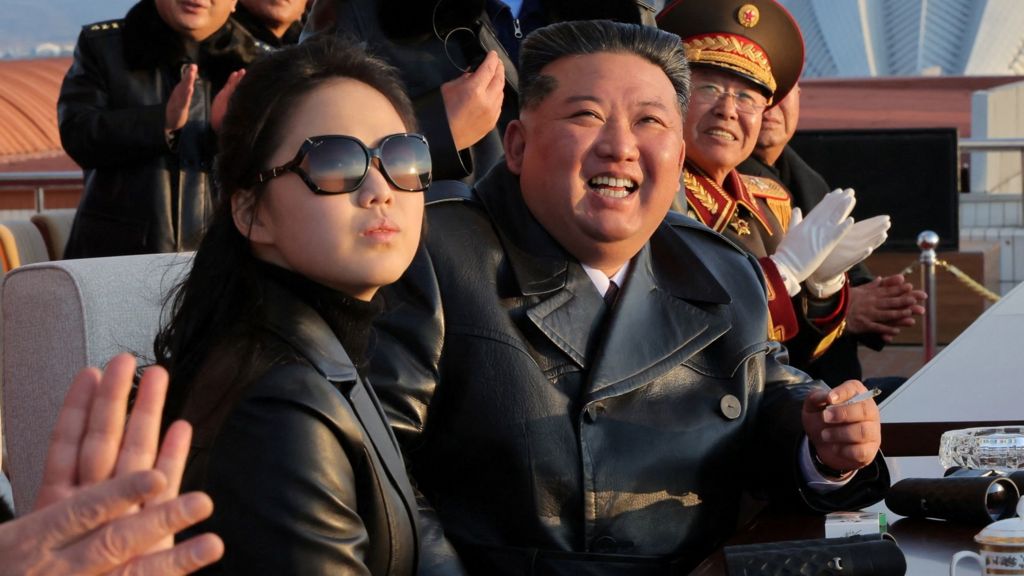
    In a significant diplomatic engagement between two of Russia’s closest allies, Belarusian President Alexander Lukashenko and North Korean leader Kim Jong Un have formalized their strategic partnership through a comprehensive friendship treaty signed during Lukashenko’s inaugural visit to Pyongyang.

    The ceremonial exchange of symbolic gifts underscored the deepening ties between the internationally isolated nations. Lukashenko presented Kim with an automatic rifle, quipping that it was offered ‘just in case enemies appear’ during a moment captured by Belarusian state media. In reciprocal gesture, Kim presented the Belarusian leader with an ornamental sword and a custom vase featuring Lukashenko’s portrait.

    Lukashenko expressed profound admiration for North Korea’s future prospects, stating: ‘I can attest as both a friend and experienced observer: your nation possesses tremendous potential with its exceptionally disciplined and hardworking population.’ Both leaders emphasized the critical importance of bilateral cooperation in safeguarding national sovereignty against external pressures, particularly referencing what they characterized as Western disregard for international norms.

    Beyond symbolic gestures, the treaty establishes concrete frameworks for expanded collaboration across multiple sectors including agricultural development, information technology, and public health initiatives. The agreement, described by both parties as ‘fundamental’ to their relationship, promises to ensure stable development of bilateral relations amid increasing geopolitical tensions.

    The summit occurs against the backdrop of severe international sanctions imposed on both nations. North Korea faces restrictions for its nuclear weapons program and alleged human rights violations, while Belarus confronts sanctions for its support of Russia’s military operations in Ukraine. Intelligence reports indicate North Korea has provided substantial military personnel to Russian forces, with Western officials estimating significant casualties among North Korean troops deployed in Ukraine.

    Kim recently reinforced his commitment to Moscow, declaring that ‘Pyongyang will always be with Moscow’ in a message to Russian President Vladimir Putin. Meanwhile, Ukraine continues to allege Belarus provides strategic military bases for Russian operations against Ukrainian targets.

  • How Pakistan positioned itself at the centre of global crisis management

    How Pakistan positioned itself at the centre of global crisis management

    In a dramatic shift from its traditional role as a regional security concern, nuclear-armed Pakistan has positioned itself as a potential diplomatic bridge between the United States and Iran amid escalating Middle Eastern tensions. The proposal for Islamabad to host direct negotiations between the Trump administration and Iranian leadership represents a strategic reinvention for a nation typically viewed through the prism of economic fragility and political instability.

    This diplomatic initiative emerges from Pakistan’s urgent economic and security imperatives rather than grand geopolitical ambition. The country faces severe economic vulnerabilities under International Monetary Fund conditions, with potential liquefied natural gas shortages threatening its recovery. Regional conflict has already triggered oil price spikes that disproportionately affect Pakistan’s fragile economy.

    Geographic and demographic factors intensify Pakistan’s stake in regional stability. The 900-kilometer border with Iran has historically served as a conduit for militancy and smuggling, while Pakistan’s substantial Shia population (estimated at 15-20% of its 240 million people) creates domestic sensitivity to Iranian developments. Recent protests following the killing of Iranian officials demonstrated how quickly Middle Eastern crises reverberate within Pakistani society.

    Pakistan’s military establishment, particularly Army Chief Field Marshal Syed Asim Munir, has taken a central role in this diplomatic outreach. Munir’s reported close relationship with President Trump and institutional channels with Iran’s Revolutionary Guard Corps provide unique mediation capabilities. Meanwhile, Pakistan’s defense cooperation with Saudi Arabia bolsters its credibility with Western allies while its historical role managing Iranian interests in the US since 1979 maintains baseline trust with Tehran.

    Despite growing media speculation, no formal confirmation of talks has emerged from Washington, Tehran, or Islamabad. Reports suggest discussions have involved potential sanctions relief, nuclear program rollbacks, and guarantees for Strait of Hormuz shipping lanes. Iranian authorities have articulated their own conditions, including war reparations and recognition of sovereign authority over Hormuz.

    Even if this diplomatic initiative fails to produce comprehensive settlement, it marks a significant transformation in Pakistan’s international standing—from perceived security liability to potential architect of de-escalation in one of the world’s most dangerous conflicts.

  • Quagmire fears surge as Trump weighs ‘final blow’ Iran options

    Quagmire fears surge as Trump weighs ‘final blow’ Iran options

    The Trump administration is actively evaluating unprecedented military escalation strategies against Iran, including potential ground invasions and naval blockades, according to insider reports. These considerations have raised alarms about plunging U.S. forces into a protracted conflict without clear objectives, legal authorization, or withdrawal plans.

    Axios reveals that Pentagon strategists are contemplating operations to invade Kharg Island—Iran’s primary oil export terminal—and deploying special forces deep into Iranian territory to seize enriched uranium stockpiles. These extreme measures are reportedly viewed within administration circles as potential ‘final blow’ options, contradicting President Trump’s public assertions of having already secured decisive victory.

    This development follows the recent deployment of 2,000 soldiers from the Army’s 82nd Airborne Division to the Middle East, with additional reports indicating Naval Special Warfare teams and elite operators receiving deployment orders. Current estimates show over 50,000 American troops already engaged in operations against Iran.

    The potential escalation faces mounting opposition from both sides of the political aisle. Representative Nancy Mace (R-SC), who previously supported military action, publicly declared she ‘will not support troops on the ground in Iran’ following classified briefings. Representative Mike Rogers (R-Ala.) expressed concerns about the administration’s Friday night escalation patterns, noting ‘we want to know more about what’s going on, what the options are, and why they’re being considered.’

    Experts warn that a full-scale invasion would constitute the largest U.S. military undertaking since World War II. Brandan Buck of the Cato Institute projects such an operation would require approximately 1.6 million troops, rivaling or exceeding the scale of Vietnam or the 1991 Gulf War.

    House Democratic leaders face criticism for delaying votes on war powers resolutions until mid-April, despite the administration’s apparent momentum toward ground operations. This timeline creates a dangerous window for potential escalation during congressional recess, particularly given the administration’s history of Friday night military announcements.

    The White House maintains that the president is ‘keeping options available,’ while Iranian officials deny ongoing negotiations despite Trump’s claims of diplomatic progress. The situation presents a critical juncture in U.S.-Iran relations, with potential consequences extending throughout the global political and economic landscape.

  • Trump orders airport security paid as travellers face hours-long queues

    Trump orders airport security paid as travellers face hours-long queues

    Amid the longest airport security queues in U.S. aviation history, President Donald Trump has announced an unprecedented executive intervention to pay Transportation Security Administration (TSA) agents who have been working without salaries during a partial government shutdown.

    The crisis stems from a congressional deadlock over Department of Homeland Security (DHS) funding that began in February, creating a domino effect that has paralyzed air travel nationwide. With approximately 50,000 TSA agents classified as essential personnel required to work without pay, hundreds have resigned, creating critical staffing shortages at security checkpoints.

    The situation reached a breaking point this week as wait times exceeded four hours at major hubs including Houston’s George Bush Intercontinental Airport, where nearly 40% of security staff failed to report for duty. Similar disruptions were reported at airports in New York, New Jersey, and Illinois, with security lines extending into parking areas and across multiple terminal levels.

    President Trump announced via Truth Social on Thursday that he would invoke executive authority to instruct newly-confirmed Homeland Security Secretary Markwayne Mullin to “immediately pay our TSA Agents in order to address this Emergency Situation.” The president acknowledged the legal complexity of such action, stating “It is not an easy thing to do, but I am going to do it!”

    Legal experts immediately questioned the move’s validity. Georgetown University law professor Josh Chafetz told the BBC that the proposal “seems to me pretty clearly a violation of the Antideficiency Act, which prohibits spending money that has not been appropriated by Congress.”

    The political standoff centers on Democratic demands for immigration enforcement reforms as a condition for DHS funding, while the Trump administration has blamed opposition parties for the impasse. As a temporary measure, hundreds of Immigration and Customs Enforcement (ICE) agents—whose funding remains intact under separate legislation—have been deployed to 14 airports to alleviate security bottlenecks.

    White House spokesperson Karoline Leavitt emphasized that “the best and easiest way to pay TSA Agents is to fund DHS,” indicating that the executive order represents an emergency measure rather than a permanent solution. President Trump has additionally floated the possibility of deploying National Guard troops to airports if the crisis persists.

  • ‘Higher than it normally would be’: Energy Minister Chris Bowen reassures Australia’s fuel supply secure, extra oil shipments ordered

    ‘Higher than it normally would be’: Energy Minister Chris Bowen reassures Australia’s fuel supply secure, extra oil shipments ordered

    In a hastily convened media briefing, Energy Minister Chris Bowen and Prime Minister Anthony Albanese addressed mounting concerns regarding Australia’s fuel security amidst global supply disruptions. The ministerial appearance followed widespread reports of fuel shortages across the nation, with hundreds of service stations experiencing depleted reserves.

    The current energy crisis stems from severe disruptions in global oil shipments triggered by geopolitical tensions involving the US-Israel coalition and Iran. Tehran’s imposition of a de facto blockade through the Strait of Hormuz—a critical maritime passage handling approximately 20% of global oil shipments—has created significant supply chain complications worldwide.

    Minister Bowen presented a detailed assessment of Australia’s strategic response, confirming that six previously canceled oil shipments had been successfully replaced through alternative sourcing arrangements. Additionally, refiners and importers have secured at least three supplementary cargoes beyond regular requirements. ‘For the coming weeks,’ Bowen stated, ‘Australia’s supply of petrol, diesel, and oil will be consistent with, if not exceeding, normal inventory levels.’

    The government simultaneously addressed aviation fuel anxieties ahead of the Easter travel period. Bowen verified that six jet fuel cargoes are currently en route to Australian ports, representing standard shipment volumes for this seasonal period, with none experiencing cancellations.

    Prime Minister Albanese characterized the situation as part of a broader global crisis requiring coordinated national response. ‘This conflict is generating real consequences for Australians, mirroring impacts felt worldwide,’ Albanese remarked. ‘Our approach involves structured, mature collaboration with industry and governmental partners to mitigate supply challenges and address resultant cost-of-living pressures.’

    While ruling out immediate emergency measures like rationing, the government confirmed that Monday’s national cabinet meeting will develop a unified national strategy to address prolonged supply challenges should geopolitical tensions persist.

  • UK judge orders home secretary to explain opposition to Hamas de-proscription appeal

    UK judge orders home secretary to explain opposition to Hamas de-proscription appeal

    A British judge has issued a stern directive to the UK Home Secretary, demanding expedited explanations for the government’s opposition to Hamas’s legal challenge against its terrorist organization designation. Justice Jonathan Swift, presiding over the independent Proscribed Organisations Appeal Commission (POAC), criticized governmental delays during Thursday’s proceedings, ordering official responses by May 20th with clear justifications for any postponements.

    The case originates from Hamas’s formal appeal against its 2021 proscription by then-Home Secretary Priti Patel, which extended the existing ban on its military wing (Qassam Brigades) to the entire organization. Represented by pro bono legal counsel Franck Magennis and Daniel Grutters, Hamas contends this designation impedes political negotiation capabilities and unjustly criminalizes ordinary Palestinians.

    Justice Swift expressed particular frustration with the Home Office’s procedural approach, noting seven months had lapsed since the appeal filing without substantive progress. The court session faced operational delays due to difficulties appointing a special advocate for handling classified evidence, ultimately canceling scheduled testimony from Hamas foreign relations head Mousa Abu Marzouk via video link.

    Hamas’s legal submission includes expert testimony from Oxford academic Avi Shlaim advocating for UK adoption of a ‘more nuanced position’ through delisting. The organization argues that under Section 4 of the Terrorism Act, which permits banned groups to appeal their designation, the government has exceeded the standard 90-day response period while simultaneously seeking to dismiss the case entirely rather than address its merits.

    Magennis accused the government of employing delay tactics to avoid judicial scrutiny of its decision-making process, suggesting this reflects broader challenges to counterterrorism policies in legal venues. The Home Office maintains discretion to modify proscribed lists for organizations engaged in armed conflict, though must provide justification when challenged through proper legal channels.

  • Nepal to swear in ex-rapper as new prime minister

    Nepal to swear in ex-rapper as new prime minister

    In an unprecedented political transformation, Balendra Shah—the former rapper known as Balen—has ascended to Nepal’s highest office following a landslide electoral victory. The 35-year-old’s rise from underground music sensation to prime minister represents a seismic shift in the nation’s political landscape, signaling a decisive rejection of entrenched corruption and elite dominance.

    Shah’s journey from Kathmandu’s Naradevi neighborhood to the prime minister’s office reads like a political fairytale. After earning engineering degrees in Nepal and India, he first captured national attention in 2013 by winning a popular rap battle with verses that articulated the frustrations of a generation feeling marginalized and unheard. His music career flourished with hits like ‘Balidan’ (Sacrifice), which amassed 14 million YouTube views while critiquing systemic corruption and inequality.

    Shah’s political ascent began in 2022 when he won Kathmandu’s mayoral race as an independent candidate, defeating established political parties that had dominated for decades. His three-year tenure as mayor was marked by aggressive anti-corruption measures, heritage preservation initiatives, and controversial urban cleanup campaigns that included bulldozing illegal structures—a move that drew both praise and criticism.

    The recent general elections saw Shah partner with the four-year-old Rastriya Swatantra Party (RSP) as their prime ministerial candidate. His campaign broke conventional norms by largely avoiding media interviews and instead connecting directly with voters through social media. This strategy proved remarkably effective, with the RSP securing a decisive victory that even unseated former Prime Minister KP Sharma Oli in his long-held constituency.

    Shah’s inauguration follows last year’s youth-led protests that resulted in 77 fatalities, during which his song ‘Nepal Haseko’ (Smiling Nepal) became a protest anthem. The unrest, initially triggered by social media restrictions, evolved into a broader movement against corruption, unemployment, and economic stagnation.

    Despite widespread enthusiasm for his leadership, questions remain about Shah’s governing approach. Human rights organizations have expressed concerns about his heavy-handed tactics against street vendors during his mayoral term. Additionally, his controversial social media presence—including an expletive-laden post naming global powers and Nepali political parties—has drawn scrutiny.

    The new administration faces formidable challenges: managing Nepal’s relations with regional powers India and China, addressing chronic unemployment, revitalizing a struggling economy, and determining how to implement recommendations from the investigation into last year’s deadly uprising. With millions of Nepalis working in conflict zones like the Middle East, foreign policy decisions carry significant economic implications.

    As Shah prepares to implement his ambitious agenda—including anti-corruption measures, judicial reform, and creating 1.2 million new jobs—the nation watches to see whether this political outsider can translate his activist rhetoric into effective governance.

  • US lawmaker makes direct plea to Sarah Ferguson to testify over ‘close Epstein ties’

    US lawmaker makes direct plea to Sarah Ferguson to testify over ‘close Epstein ties’

    In a significant escalation of the Jeffrey Epstein investigation, U.S. Congressman Suhas Subramanyam has formally requested Sarah Ferguson, the former Duchess of York, to provide testimony regarding her extensive connections to the convicted sex offender. The congressional demand, issued through an exclusive letter obtained by the BBC, marks the most direct pressure applied to Ferguson since the Epstein scandal emerged.

    Democratic Congressman Subramanyam, serving on the House Oversight Committee, has given Ferguson a two-week deadline to respond to his request for cooperation. The letter specifically references recently unsealed Department of Justice documents that allegedly reveal “close personal and business ties” between Ferguson and Epstein, including financial assistance requests and personal correspondence.

    Notably, the congressional inquiry seeks information beyond Ferguson’s direct involvement, explicitly requesting any knowledge she might possess regarding her ex-husband Andrew Mountbatten-Windsor’s potential connections to Epstein’s operations. While Mountbatten-Windsor has consistently denied wrongdoing, his association with Epstein has previously drawn significant scrutiny.

    The released documents portray Ferguson as maintaining contact with Epstein during his 2008-2009 incarceration for soliciting prostitution from a minor, including allegedly describing him as “the brother I have always wished for” shortly after his conviction. Additional records suggest she brought her daughters to meet Epstein in Miami shortly following his prison release.

    Although no legal mechanism exists to compel testimony from foreign nationals, political pressure continues mounting. Democratic Congresswoman Melanie Stansbury has joined Subramanyam’s calls for cooperation, while the family of prominent Epstein accuser Virginia Giuffre has publicly stated they “strongly believe” Ferguson should provide testimony.

    The development occurs alongside Ferguson’s ongoing fall from grace within British institutions. Recent months have seen multiple charities sever ties with the former duchess, followed by the revocation of her honorary Freedom of the City of York title in a unanimous council vote. These consequences stem directly from the continuing revelations about her association with Epstein, demonstrating the far-reaching impact of the scandal beyond American borders.

  • Three charts that are warning signs flashing for Trump on Iran war

    Three charts that are warning signs flashing for Trump on Iran war

    President Donald Trump’s second-term administration faces mounting political headwinds as economic pressures and military engagement in Iran trigger declining approval ratings. Since returning to the White House in January 2025, Trump has witnessed a steady erosion of public support, particularly regarding economic management—a concerning trend for Republicans approaching midterm elections.

    Current polling data reveals a pronounced deterioration in economic confidence. Ipsos metrics indicate Trump’s economic approval plummeted from 43% at his second-term inauguration to 35% by June 2025, with subsequent declines pushing this figure to a concerning 29%—below any approval rating recorded during Joe Biden’s presidency despite post-pandemic inflation challenges.

    The Iran conflict has dramatically exacerbated economic strains, with gasoline prices surging to nearly $4 per gallon within three weeks of military engagement. This economic-pressure catalyst has contributed to Trump’s overall approval rating drop from 52% to 40% according to Nate Silver’s polling average, placing the administration in precarious territory seven months before congressional elections.

    At the Conservative Political Action Conference in Texas, Republican leaders expressed urgency about protecting their agenda. Michael Whatley, North Carolina Senate candidate and former RNC chairman, warned attendees: ‘We cannot let the left win this election cycle and take away this agenda we are fighting for every single day.’

    Despite broader public skepticism, Trump maintains strong support within his base. A Quinnipiac poll shows 86% of Republicans endorse military action in Iran, with 80% approving of Trump’s handling of the conflict. This contrasts sharply with the general electorate, where support drops to 39% and 34% respectively.

    Independent voters—crucial to Trump’s 2024 victory—now show signs of defection. This shifting political dynamic, combined with Democratic overperformance in special elections (averaging 13% better than 2024 results according to The Downballot analysis), suggests potential challenges for Republican congressional majorities in the upcoming midterms.