分类: politics

  • Australia set for biggest overhaul of gun laws in decades

    Australia set for biggest overhaul of gun laws in decades

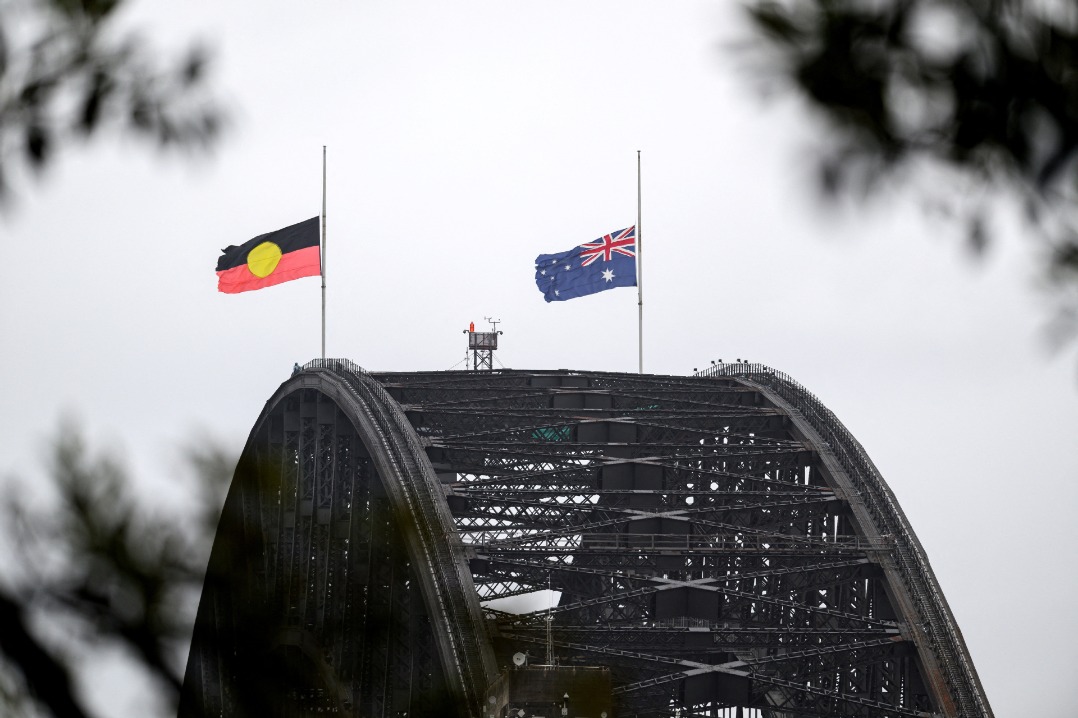
    In the wake of the devastating Sydney Bondi Beach massacre that claimed 15 lives, Australian Prime Minister Anthony Albanese has announced the most significant firearms law overhaul in decades. The federal cabinet convened Monday afternoon to initiate immediate reforms following Sunday’s horrific shooting during Hanukkah celebrations.

    Prime Minister Albanese declared that “strong, decisive and focused action was needed on gun law reform as an immediate action” in response to the tragedy. The national government has mobilized a coordinated effort with state and territory leaders, tasking police ministers and attorneys-general with developing comprehensive policy options.

    The proposed measures include implementing strict limits on the number of firearms any individual may possess, eliminating open-ended firearms licensing, restricting legal firearm categories, and enhancing the use of criminal intelligence in administrative licensing decisions. These reforms aim to address critical gaps in the existing system, which failed to prevent the Bondi Beach attack despite Australia’s established National Firearms Register created after the 1996 Port Arthur massacre that killed 35 people.

    The urgency of these reforms is underscored by the revelation that the Bondi Beach shooter, Sajid Akram, had been deemed “fit and proper” to hold an A/B category gun license a decade earlier. Akram and his son subsequently used six legally owned firearms to carry out Sunday’s attack on beachgoers, exposing fatal flaws in the current regulatory framework.

  • China denounces Japan for hyping up regular military training

    China denounces Japan for hyping up regular military training

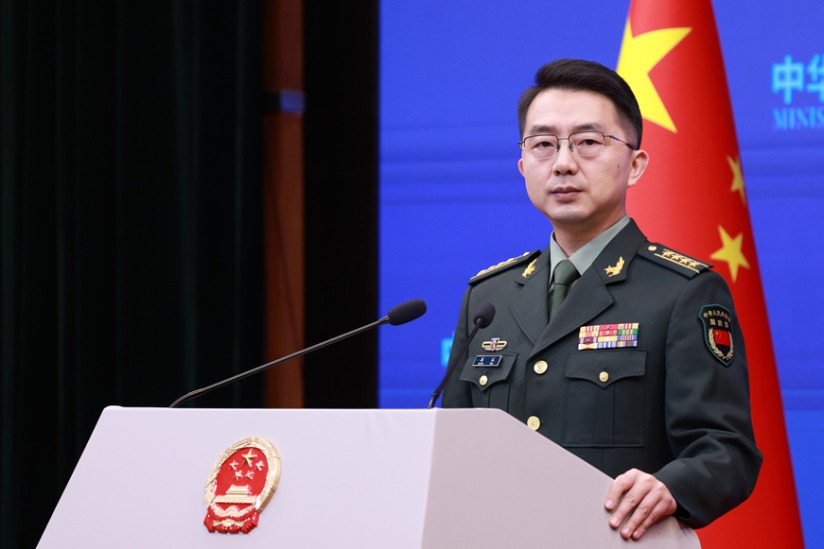
    BEIJING — China’s Ministry of National Defense has issued a firm rebuttal to Japanese officials regarding their portrayal of Chinese military exercises as threatening regional security. Defense Spokesperson Jiang Bin addressed the matter on Monday, December 15, 2025, characterizing Japan’s comments as a deliberate diversion tactic.

    The diplomatic response came following Japanese statements concerning recent flight operations conducted by Chinese carrier-based aircraft. Jiang emphasized that these activities represent standard military training procedures that fall entirely within China’s sovereign rights. The spokesperson further asserted that such routine exercises should not be misrepresented as provocative actions.

    Jiang Bin explicitly stated that attempts to redirect attention from substantive issues through what he termed ‘baseless allegations’ would prove unsuccessful. The defense official’s remarks underscore growing tensions between the two Asian powers regarding military transparency and regional security perceptions.

    This exchange occurs amid ongoing regional discussions about military modernization and operational patterns in East Asian waters. China maintains that its military activities serve purely defensive purposes and conform to international norms governing naval operations.

  • Trinidad and Tobago to open its airports to US military as tensions with Venezuela escalate

    Trinidad and Tobago to open its airports to US military as tensions with Venezuela escalate

    The government of Trinidad and Tobago has officially authorized United States military forces to utilize its national airports for logistical operations in the coming weeks, a decision announced Monday amid escalating geopolitical tensions between the U.S. and neighboring Venezuela. The Caribbean nation’s Ministry of Foreign Affairs characterized the arrangement as supporting routine logistical functions including supply replenishment and personnel rotations, while explicitly denying any offensive military purposes.

    This development follows the recent installation of advanced radar systems at Tobago’s ANR Robinson International Airport by U.S. military personnel. Trinidad and Tobago officials maintain these systems are solely intended for combating domestic criminal activities, asserting the twin-island nation will not serve as a strategic launch point for attacks against any sovereign state.

    The decision has sparked significant political controversy within the country. Opposition Senator Amery Browne, who previously served as foreign minister, condemned the agreement as transforming Trinidad and Tobago into “complicit facilitators of extrajudicial killings” and advancing a “might is right philosophy.” Browne argued this represents a dangerous departure from decades of balanced regional cooperation.

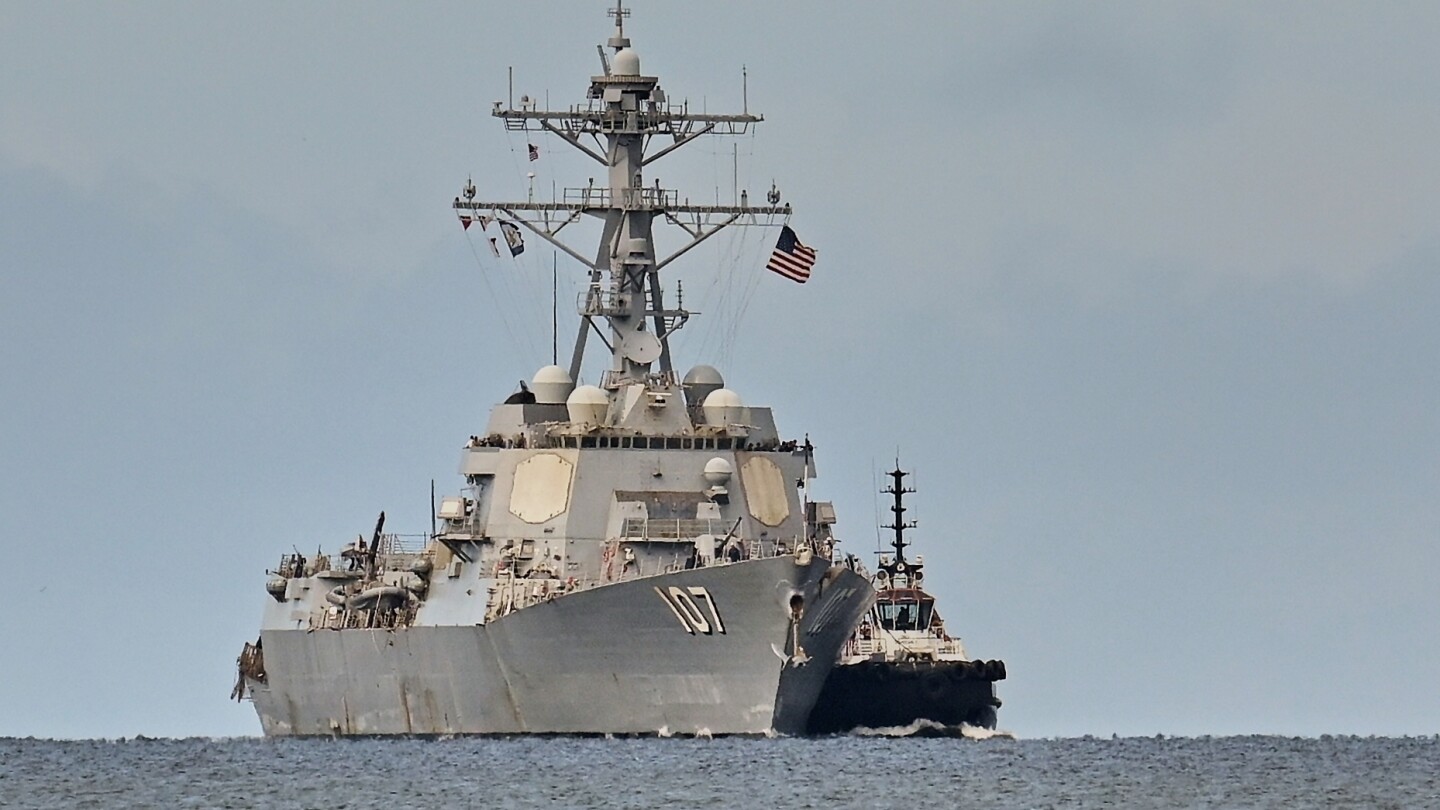
    The authorization occurs against the backdrop of intensified U.S. naval operations in the Caribbean, where American warships have conducted strikes against alleged drug trafficking vessels since September, resulting in over 80 casualties. The U.S. Navy has significantly expanded its presence near Venezuelan waters, deploying its largest aircraft carrier alongside additional warships. In October, a U.S. vessel docked in Port-of-Spain, Trinidad’s capital, demonstrating increased military coordination.

    U.S. lawmakers have raised constitutional concerns regarding the legality of maritime strikes in Caribbean and eastern Pacific waters, prompting announced congressional reviews of these operations. The proximity of Trinidad and Tobago to Venezuela—separated by merely seven miles at their closest point—adds strategic significance to these military developments.

  • What Trump’s National Security Strategy means for Israel

    What Trump’s National Security Strategy means for Israel

    The Trump administration’s 2025 National Security Strategy marks a transformative recalibration of American engagement in the Middle East, creating both challenges and opportunities for Israel that extend far beyond the document’s limited direct references to the nation.

    While Israeli media has focused on the strategy’s mere six mentions of Israel, the substantial implications lie in its broader philosophical framework. The document explicitly prioritizes disengagement from “forever wars” while maintaining core security commitments—a delicate balancing act that signals reduced day-to-day regional involvement without abandoning fundamental alliances.

    This strategic reorientation presents Israel with a dual reality: continued American security guarantees coupled with expectations of greater self-sufficiency. The strategy rationalizes this reduced footprint by asserting that Iranian capabilities have been significantly degraded through both Israeli military actions since October 2023 and the controversial “Operation Midnight Hammer” in June 2025, though these claims remain unverified by independent sources.

    The administration’s approach embraces “transactional realism,” accepting regional governments as they exist without demanding democratic reforms while pursuing mutual interests. For Israel, this means expanded Abraham Accords remain a priority, with Saudi-Israeli normalization apparently high on the agenda. A proposed “Core 5” forum including the US, China, Russia, India, and Japan would initially focus on Middle East security and normalization efforts.

    However, this transactional approach also suggests American support may become more conditional, requiring Israel to demonstrate concrete benefits for US interests. The strategy emphasizes burden-sharing with allies, expecting wealthier nations to assume greater regional responsibility—likely translating to expectations of increased Israeli defense spending despite already substantial military expenditures.

    Perhaps most significantly, the strategy establishes a high threshold for American intervention, rooted in narrowly defined national interests rather than expansive commitments. This creates new constraints for Israeli military planning, as major operations against Hamas, Hezbollah, or Iran cannot assume automatic US support or protection from international consequences.

    The document’s harsh criticism of Europe—claiming the continent faces “civilizational erasure”—adds another layer of complexity, potentially affecting Israel’s relationships with European powers and EU positions on Palestinian issues.

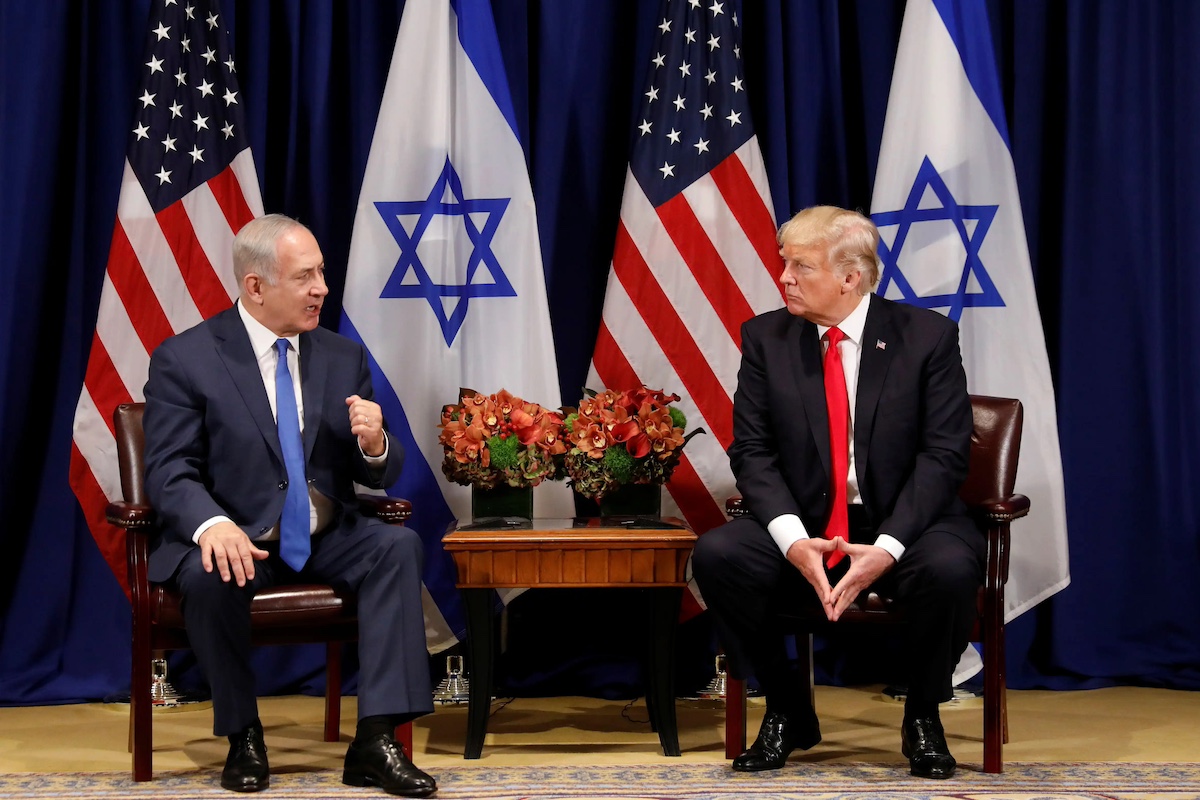
    Beneath the surface, personal dynamics between Trump and Netanyahu remain strained, with reported frustration over Netanyahu’s congratulation of Biden after the 2020 election and skepticism about Palestinian negotiations. This suggests Israeli influence in Washington may be less assured than in previous administrations.

    The strategy presents Israel with several imperatives: enhancing self-reliance, investing in regional partnerships, emphasizing technological and economic cooperation over aid models, and more effectively articulating how Israeli actions serve American interests. With 69% of Israeli weapons originating from the US, the nation faces limited options if American priorities diverge significantly.

    Ultimately, the 2025 strategy maintains Israeli security as a core American interest while fundamentally redefining engagement terms. The transition demands Israeli adaptation to an era of more conditional, transactional support explicitly tied to demonstrable US benefits, marking the end of unconditional commitment—if it ever truly existed.
  • EU targets Russia’s shadow fleet with new sanctions, hitting businessmen and companies

    EU targets Russia’s shadow fleet with new sanctions, hitting businessmen and companies

    In a significant escalation of economic pressure against Moscow, the European Union has imposed targeted sanctions on five prominent businessmen affiliated with Russian state-controlled oil giants Lukoil and Rosneft. The measures, ratified during a meeting of the bloc’s foreign ministers in Brussels, specifically address elaborate sanction-evasion schemes involving aging oil tankers operating as part of Russia’s shadow fleet.

    These newly designated individuals are accused of controlling vessels that deliberately obscure the Russian origin of crude oil and petroleum products while engaging in irregular and high-risk maritime practices. Additionally, four shipping companies based in the United Arab Emirates, Vietnam, and Russia found themselves subject to EU restrictions for their roles in owning or managing these sanction-busting tankers.

    This strategic move directly targets the lifeblood of Russia’s war economy. Oil revenues provide the Kremlin with essential financial resources to sustain military operations in Ukraine without triggering domestic inflation or currency instability. Member states, with France taking a particularly assertive stance, have committed to dismantling this shadow network estimated to exceed 400 vessels. Diplomatic efforts are underway to secure cooperation from flag states to facilitate vessel inspections and enforcement.

    The sanctions package extends beyond energy networks to include members of Russia’s military intelligence agency (GRU) and the hacking collective Cadet Blizzard, citing their involvement in cyber attacks against Ukraine, EU entities, and NATO allies. Several foreign policy analysts and influencers propagating pro-Russian disinformation and conspiracy theories were also added to the sanctions list. These measures primarily involve asset freezes and travel bans within EU jurisdiction.

    This development occurs alongside increased physical pressure on Russia’s shadow fleet, notably through Ukrainian naval drone strikes on sanctioned tankers in the Black Sea, signaling a multi-front effort to constrain Moscow’s energy revenue streams.

  • Farmers and politics threaten to put EU’s free-trade deal with South America on ice

    Farmers and politics threaten to put EU’s free-trade deal with South America on ice

    BRUSSELS — A landmark trade agreement between the European Union and Mercosur nations, representing nearly two decades of negotiation, now confronts formidable opposition from France just days before its anticipated ratification. The comprehensive pact linking the 27-member EU with Brazil, Argentina, Uruguay, Paraguay, and Bolivia would establish one of the world’s largest free trade zones, encompassing 780 million consumers and accounting for a quarter of global GDP.

    The agreement, which would progressively eliminate tariffs on most goods over a 15-year implementation period, has encountered vehement resistance from European agricultural sectors. French Prime Minister Sébastien Lecornu declared the current terms “unacceptable” and formally requested postponement of Thursday’s critical vote until 2026 or beyond. This eleventh-hour intervention threatens to derail plans for European Commission President Ursula von der Leyen and European Council President António Costa to formally sign the agreement in Brazil on December 20.

    Agricultural concerns form the core of the opposition, with France, Poland, Austria, and the Netherlands expressing apprehension that Mercosur producers might undercut European farmers through less stringent labor, environmental, and pesticide regulations. Despite recent European Commission proposals to strengthen import inspections and implement safeguard mechanisms for agricultural products, French officials maintain these measures remain insufficient.

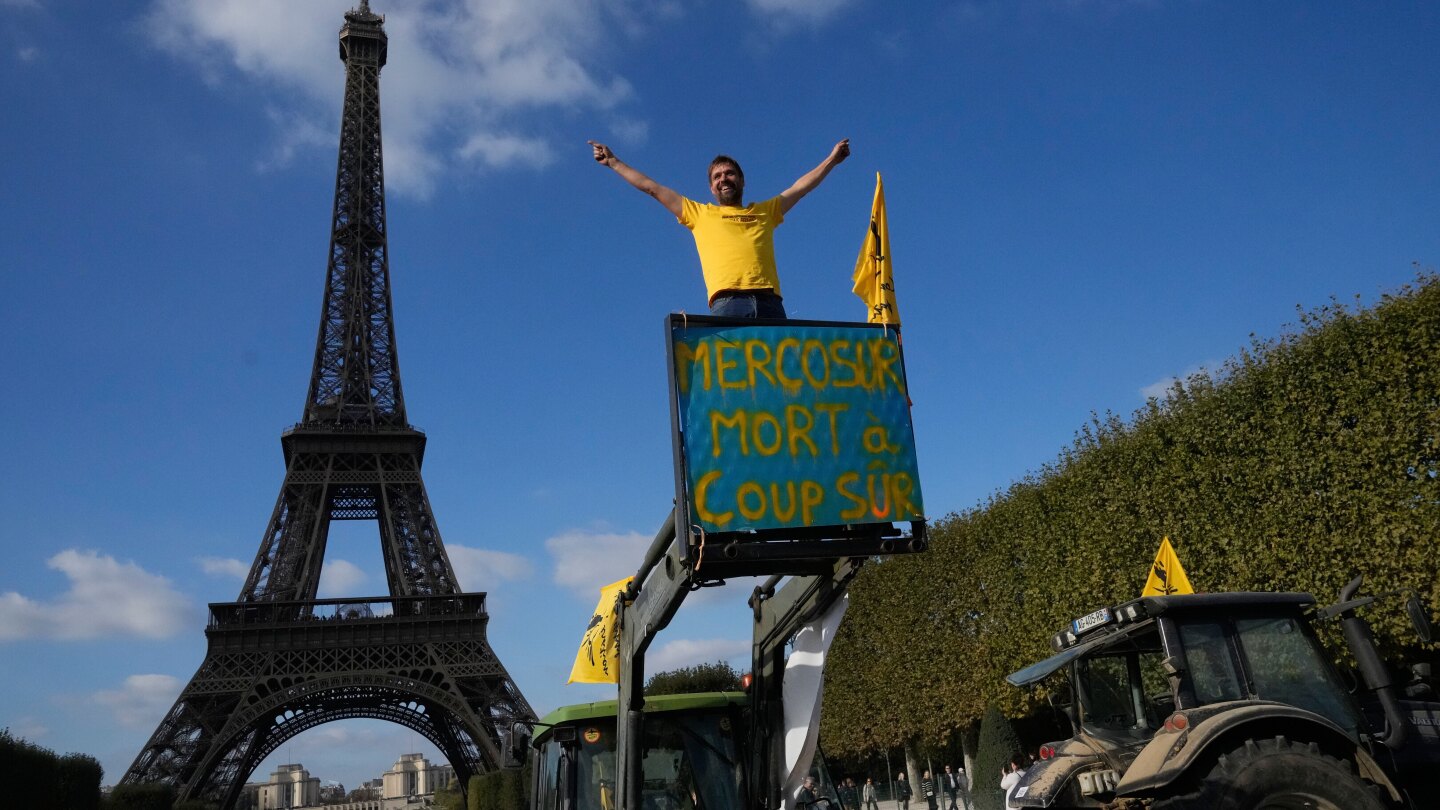
    The political dimension has intensified as disgruntled farmers, whose tractor protests previously paralyzed European capitals, prepare renewed demonstrations in Brussels. Their mobilization, which gained traction with far-right parties during the 2024 EU elections, adds pressure on leaders already grappling with geopolitical considerations.

    European Commission spokesperson Olof Gill emphasized the agreement’s strategic importance, stating it would create “a platform based on trust, based on rules” during times of rising global uncertainty. Proponents argue the pact would save businesses approximately €4.26 billion annually in duties while facilitating trade across diverse sectors including French wines, German pharmaceuticals, and Brazilian rare earth minerals.

    The standoff highlights broader challenges in EU trade policy as the bloc seeks to counter aggressive trade tactics from both the United States and China. As Alicia Gracia-Herrero of the Bruegel Institute noted, the impasse raises questions about the EU’s geopolitical credibility regarding ongoing negotiations with other major economies including India and Indonesia.

  • Iran hosts regional talks on Afghanistan but Kabul stays away

    Iran hosts regional talks on Afghanistan but Kabul stays away

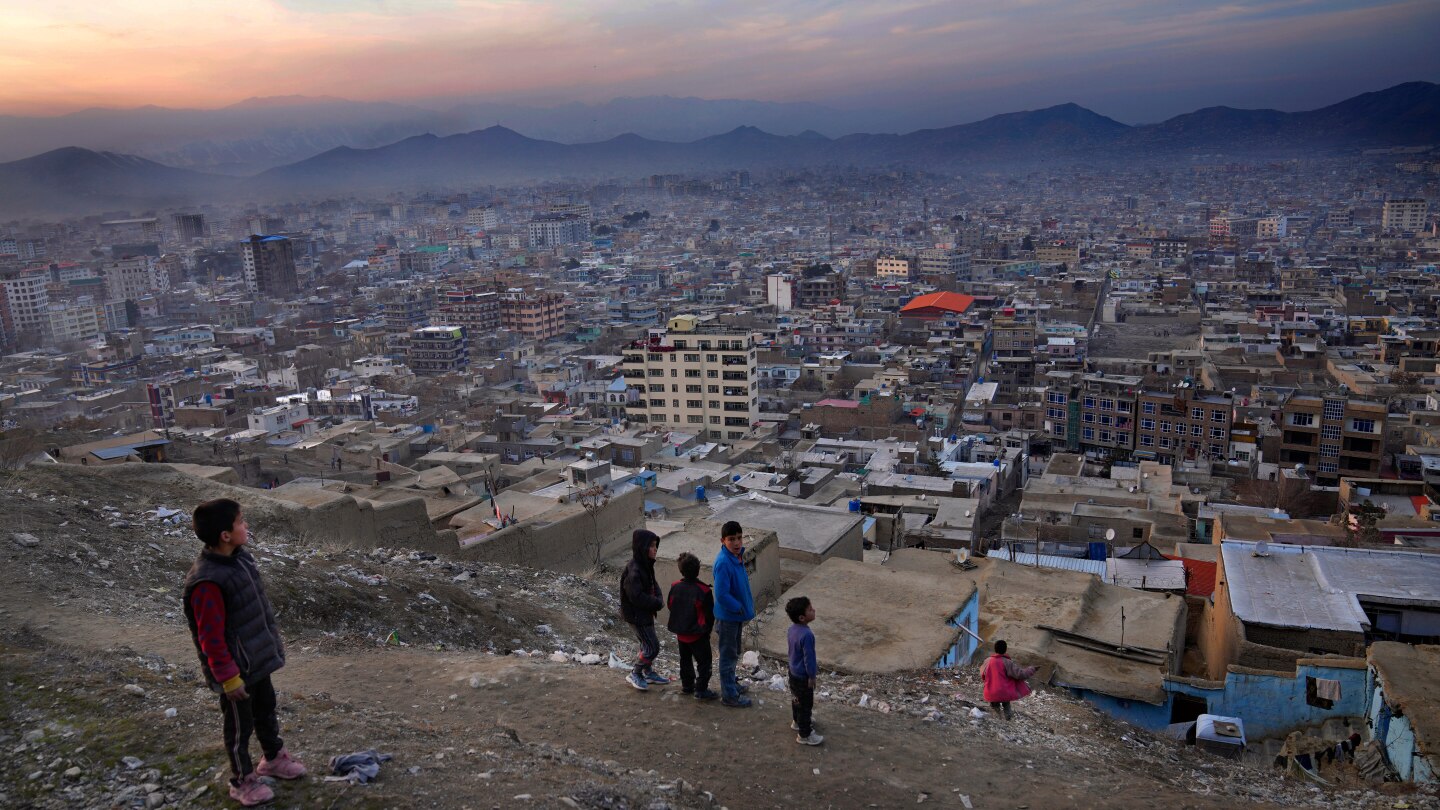
    TEHRAN, Iran — In a significant diplomatic gathering that notably excluded its central subject, Afghanistan’s neighboring nations convened in Tehran to strengthen regional cooperation addressing the multifaceted challenges facing the war-torn country. The meeting, orchestrated by Iran and attended by China, Pakistan, Tajikistan, Uzbekistan, Turkmenistan, and Russia, produced a consensus on enhancing coordination across political, economic, and security domains while advocating for the removal of international sanctions against Afghanistan.

    The Taliban-led government, though invited, opted against participation, offering limited explanation through its foreign ministry. Officials indicated that Kabul prefers to maintain its existing regional engagement channels through established organizations, claiming substantial progress through these formats.

    Despite Afghanistan’s conspicuous absence, participating nations emphasized the critical importance of sustaining economic and trade relationships with Kabul to alleviate deteriorating living conditions. The collective statement urged Afghanistan’s integration into regional political and economic frameworks while addressing shared security concerns including terrorism, narcotics trafficking, and human smuggling. Participants unanimously opposed any foreign military presence in Afghan territory.

    The conference particularly highlighted the international community’s responsibility to lift crippling sanctions and release frozen Afghan assets, with additional calls for humanitarian organizations to support the dignified repatriation of refugees from neighboring countries. Attention also turned to reducing tensions between Afghanistan and Pakistan, where recent border clashes have resulted in numerous casualties among civilians, soldiers, and suspected militants.

    While the Taliban government has developed diplomatic relationships since retaking power in August 2021 and now generates billions in annual tax revenues, Afghanistan’s economy remains in critical condition. Millions depend on international aid for survival, with natural disasters and refugee flows exacerbating humanitarian needs. The country’s economic struggles are compounded by the international community’s refusal to formally recognize the Taliban regime following the chaotic withdrawal of U.S.-led forces.

    Pakistani representatives expressed disappointment with Kabul’s absence, with former special representative Asif Durrani characterizing the decision as demonstrating ‘lack of political maturity’ and reinforcing concerns about the Taliban’s unwillingness to negotiate regional solutions. Participants agreed to convene foreign ministers in Ashgabat, Turkmenistan, and hold special envoys’ talks in Islamabad this March, continuing efforts to engage Afghanistan despite its current reluctance.

  • Fear of crime and migration fuels Chile’s swing to the right

    Fear of crime and migration fuels Chile’s swing to the right

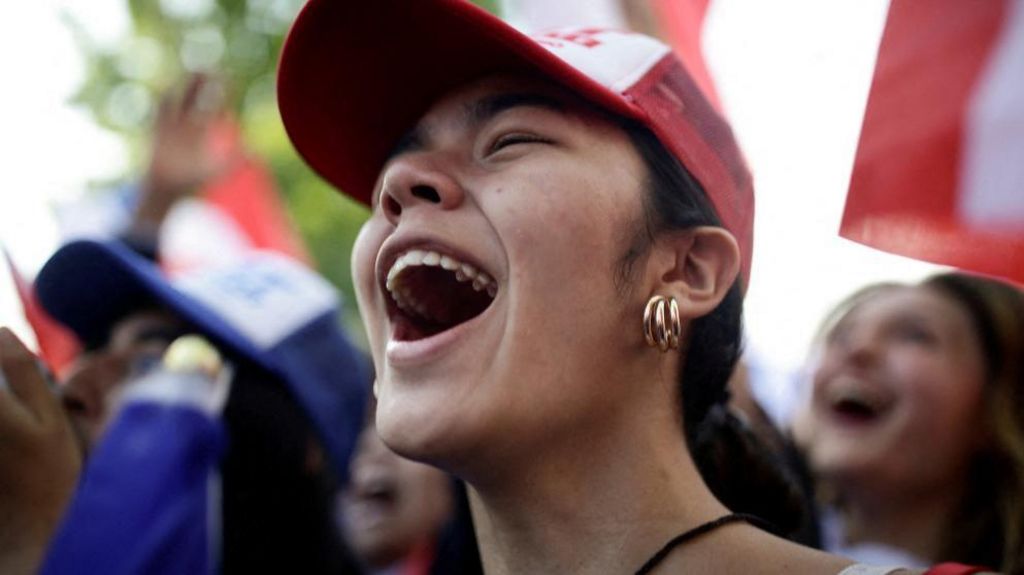
    Chile has elected hardline conservative José Antonio Kast as its next president, marking a dramatic political shift that aligns the nation with a growing bloc of right-wing governments across Latin America. The election outcome reflects profound voter anxieties over security, immigration, and crime that have unraveled Chile’s traditional image as a regional bastion of stability.

    Kast, a 59-year-old conservative who has drawn both criticism and support for his family’s connections to Chile’s authoritarian past, secured victory by promising an “emergency government” approach to the nation’s challenges. His campaign rhetoric emphasized strict immigration controls, including proposed border walls and mass deportations of undocumented migrants, while simultaneously pledging to avoid authoritarianism despite his admiration for former dictator Augusto Pinochet.

    The president-elect’s victory places Chile alongside Argentina, Bolivia, Costa Rica, Ecuador, El Salvador, and Panama in a continental trend that has seen nations swing decisively from left to right governance. This political realignment is largely driven by widespread concerns over economic instability, corruption within previous leftist administrations, and escalating security issues.

    Kast’s messaging particularly resonated with voters concerned about Chile’s rapidly changing demographic landscape. Government statistics reveal a 46% increase in the foreign-born population since 2018, with approximately 336,000 undocumented migrants now residing in the country—many fleeing Venezuela’s economic collapse. This rapid transformation has created social tensions and fears about crime, despite data showing murder rates have actually declined since 2022.

    While Kast promises to implement Trump-style “iron fist” policies, including military deployment to borders and aggressive social media promotion of his crackdowns, practical implementation faces significant hurdles. Venezuela currently refuses to accept deportees from Chile, and the nation’s economy relies heavily on migrant labor in sectors ranging from agriculture to hospitality.

    Business owners like Carlos Alberto Cossio, a Bolivian national operating in Chile for 35 years, warn that mass deportations would severely impact economic productivity and increase costs. Meanwhile, migrants like Venezuelan waiter Gabriel Funez describe living in legal limbo, fearing both deportation and rising xenophobia validated by Kast’s rhetoric.

    The new president will also face political challenges, as his party lacks a congressional majority, requiring compromise on proposals for tougher sentencing and maximum-security prisons. Ultimately, Kast’s victory represents how perceptions of control may matter as much as actual policy results for voters across a continent grappling with interconnected crises of security, migration, and economic uncertainty.

  • Ukraine ceasefire talks continue as US says ‘progress was made’

    Ukraine ceasefire talks continue as US says ‘progress was made’

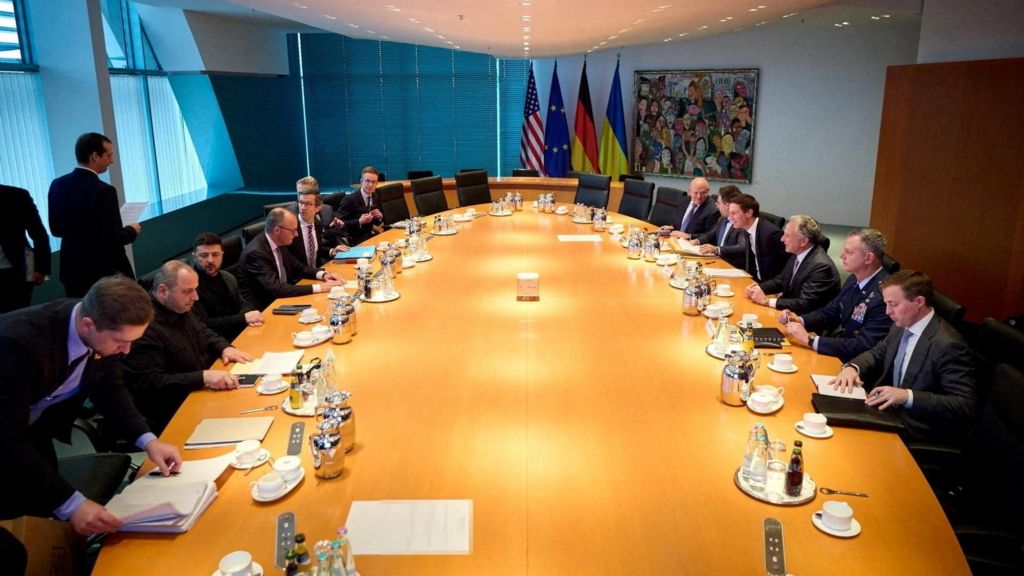
    BERLIN – Critical peace negotiations between Ukrainian and American delegations extended into a second day in Germany’s capital on Monday, following intensive five-hour discussions on Sunday that included German Chancellor Friedrich Merz and notable U.S. figures.

    The high-stakes diplomatic engagement marked the first face-to-face meeting between President Volodymyr Zelensky and U.S. envoy Steve Witkoff, who has previously engaged with Russian President Vladimir Putin in Moscow. The American delegation also included Jared Kushner, son-in-law of former President Donald Trump, while military representation came from NATO Supreme Allied Commander Europe General Alexus Grynkewich.

    In a significant strategic shift, Zelensky indicated readiness to abandon Ukraine’s NATO membership aspirations in exchange for robust security guarantees modeled after NATO’s Article 5 mutual protection clause. ‘This is already a compromise on our part,’ Zelensky stated, acknowledging opposition from ‘some partners from the US and Europe’ regarding NATO accession.

    The talks center on a 20-point peace proposal submitted by Ukraine to counter an initial American plan perceived as disproportionately favoring Russian interests. While details remain confidential, Zelensky characterized the points as a ‘foundation’ for reconstruction and security arrangements.

    The Donbas region’s status emerged as another critical negotiation point, with Zelensky expressing openness to freezing conflict along current frontlines but insisting any withdrawal arrangement must be symmetrical. ‘For it to be fair, Russia would have to withdraw the same distance,’ he emphasized, describing the matter as ‘extremely sensitive and heated.’

    The negotiations occur amid deteriorating humanitarian conditions in Ukraine, where over one million households suffered power outages following Russian attacks on energy infrastructure. Meanwhile, EU members prepare to vote on transferring €90 billion in frozen Russian assets to support Ukraine’s economy, though legal and diplomatic challenges persist with countries like Belgium and Italy expressing reservations.

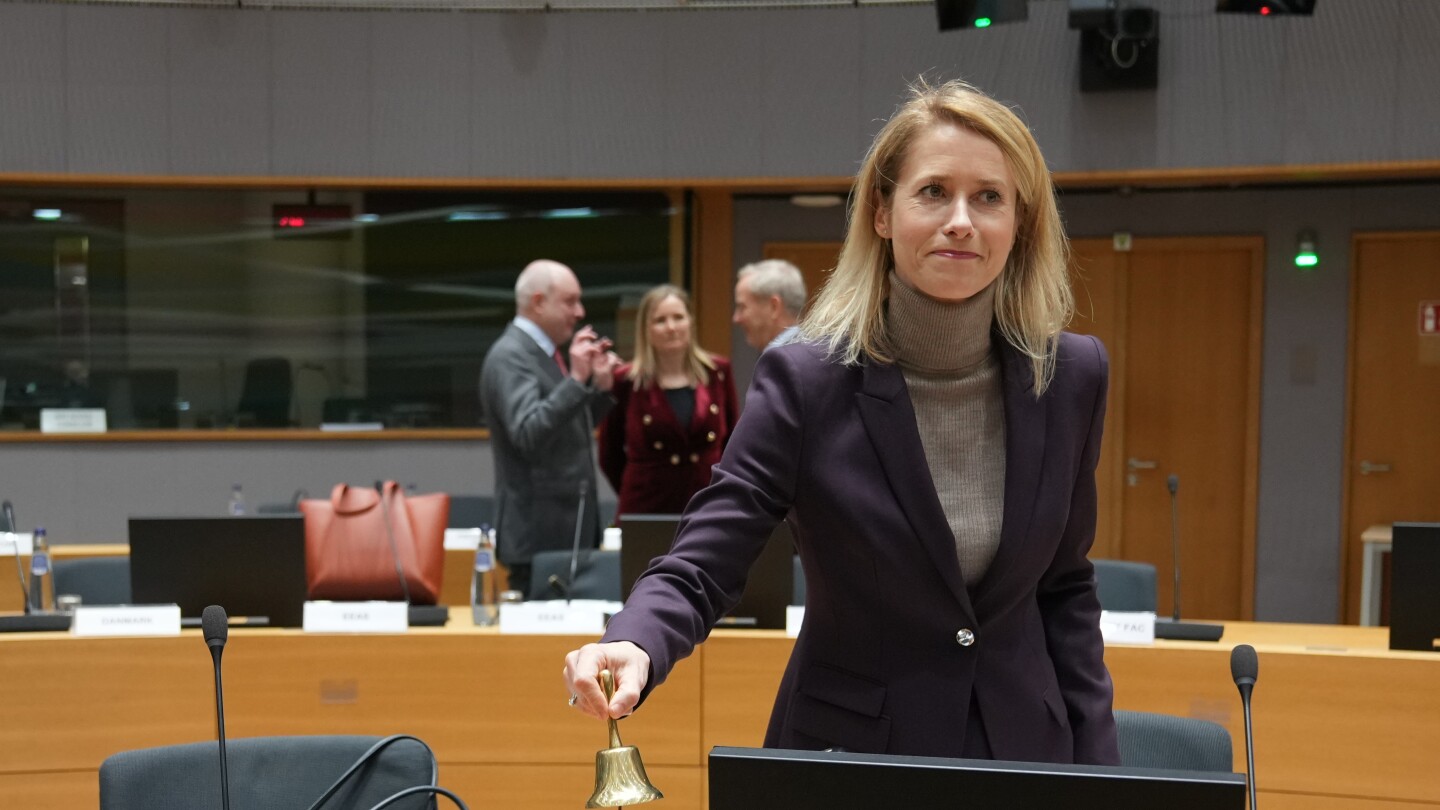
    EU foreign policy chief Kaja Kallas acknowledged the ‘increasingly difficult’ discussions but affirmed continued efforts toward resolution. The Kremlin stated it expects to receive the negotiated concept from U.S. officials, maintaining that Ukraine’s NATO membership remains an absolute ‘red line.’

  • Serbia organized crime prosecutors charge minister, others in connection with Kushner-linked project

    Serbia organized crime prosecutors charge minister, others in connection with Kushner-linked project

    Serbia’s Organized Crime Prosecutor has formally indicted Culture Minister Nikola Selaković and three other officials for abuse of power and document falsification related to a controversial real estate development connected to Jared Kushner, former senior advisor to U.S. President Donald Trump.

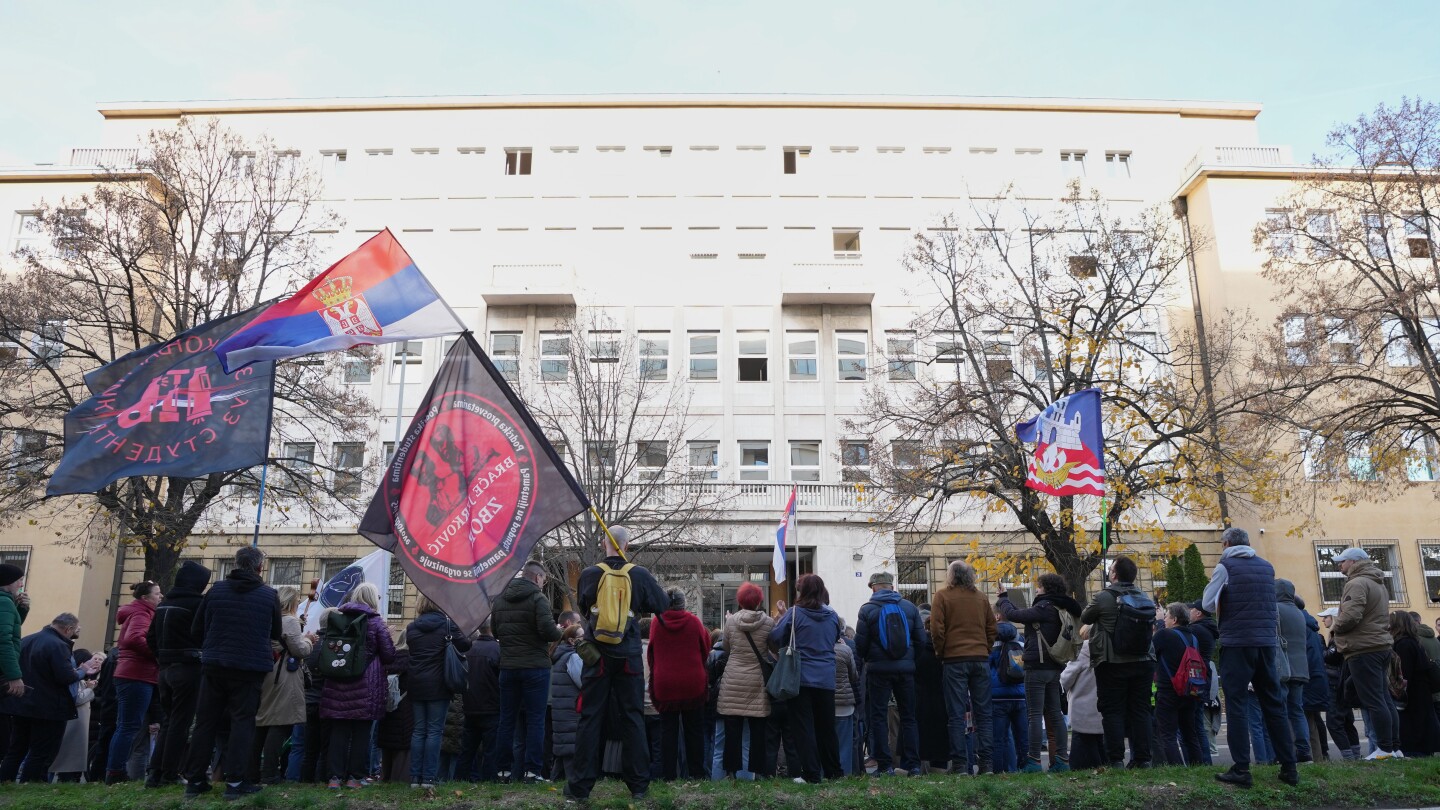
    The charges center on the alleged illegal removal of protected cultural status from a historic military complex in central Belgrade that was heavily damaged during NATO’s 1999 bombing campaign. The site, considered an architectural monument and symbol of Serbian resistance, had been designated as protected cultural heritage until the defendants allegedly forged documentation to enable its commercial redevelopment.

    Last year, the Serbian government signed a 99-year lease agreement with Affinity Global Development, a U.S. firm associated with Kushner, who confirmed his company’s involvement in the $500 million luxury complex project. The development plans include a high-rise hotel, luxury apartments, office spaces, and retail establishments.

    Despite ongoing investigations, Serbia’s parliament passed special legislation last month to authorize the construction. President Aleksandar Vučić, a close ally of Minister Selaković, has openly endorsed the project, stating it would benefit Serbia’s relations with the United States. In a remarkable statement, Vučić declared he would pardon any officials convicted in the case, claiming personal responsibility for wanting to “modernize Serbia” and attract major foreign investment.

    The project has generated significant domestic and international opposition from preservationists and cultural experts who view the military complex as an important example of mid-20th century Yugoslav architecture. The development is particularly sensitive given the site’s symbolic association with NATO’s 78-day bombing campaign, which remains a deeply contentious chapter in Serbian-American relations.

    The case unfolds amid ongoing trade tensions between the two countries, with the U.S. maintaining 35% tariffs on Serbian imports and imposing sanctions on Serbia’s Russian-controlled oil monopoly.