分类: politics

  • Zelenskyy and some 30 countries to approve compensation body for Ukraine damages

    Zelenskyy and some 30 countries to approve compensation body for Ukraine damages

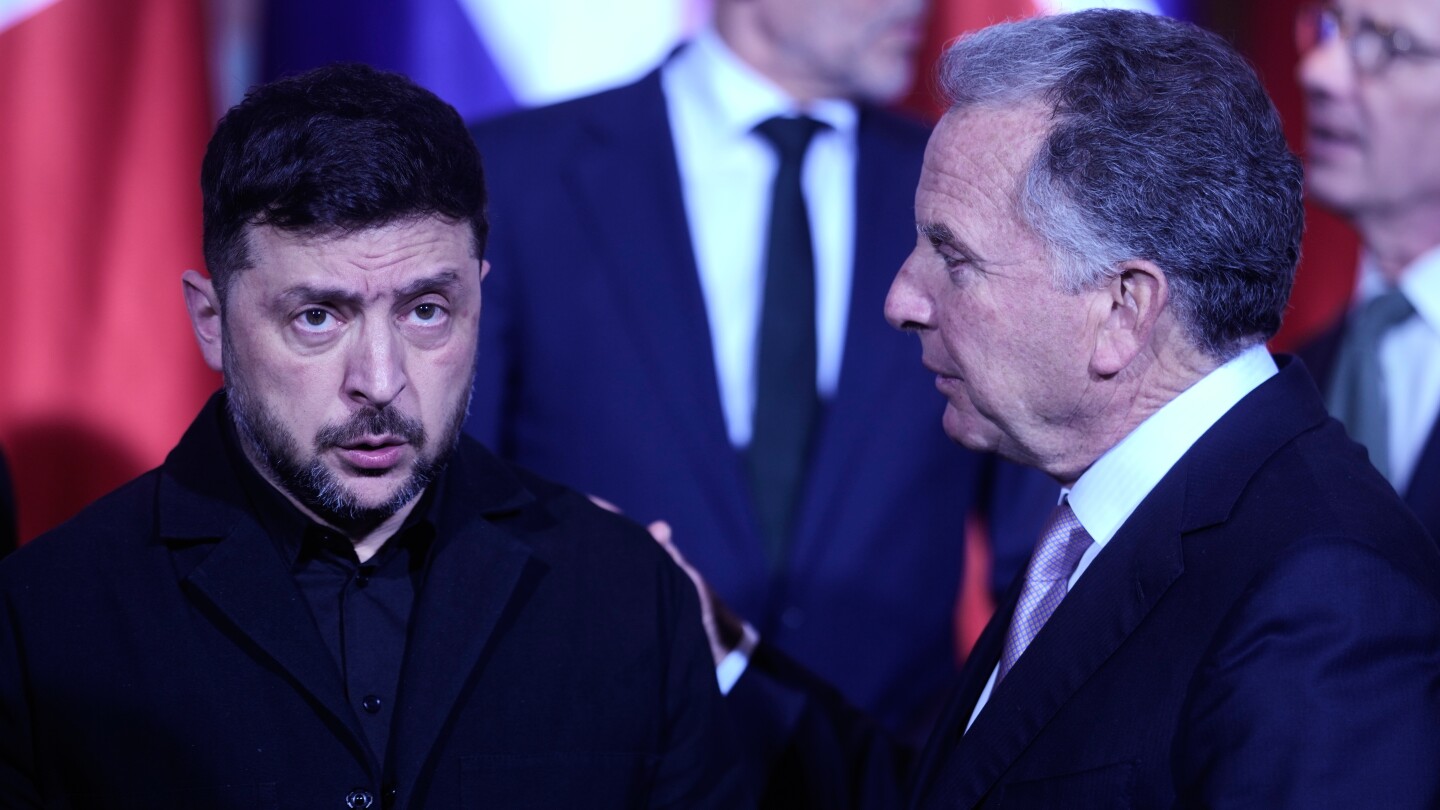
    THE HAGUE, Netherlands — In a significant multilateral development, Ukrainian President Volodymyr Zelenskyy alongside representatives from approximately thirty nations is poised to formally establish an international compensation body to address damages resulting from Russia’s invasion of Ukraine. The ceremonial signing in The Hague occurs amidst complex diplomatic maneuvers, including recent peace discussions involving U.S. special envoy Steve Witkoff, Jared Kushner, and German Chancellor Friedrich Merz.

    President Zelenskyy demonstrated strategic flexibility by expressing willingness to suspend Ukraine’s NATO membership aspirations in exchange for concrete Western security guarantees, though he firmly rejected territorial concessions to Russia. “These security arrangements represent a viable mechanism to deter future Russian aggression,” Zelenskyy stated during a press interaction. “This position itself constitutes a substantial compromise from our perspective.”

    The newly formed International Claims Commission, operating under the auspices of the Council of Europe’s human rights framework, will process Ukrainian claims for compensation regarding damages, losses, or injuries sustained since Russia’s full-scale invasion commenced in February 2022. This mechanism builds upon the existing Register of Damage for Ukraine established during the 2023 Council of Europe summit in Iceland, which has already cataloged approximately 80,000 claims.

    Despite the political consensus, critical funding questions remain unresolved. While the Council of Europe maintains that Russia should ultimately bear financial responsibility, no clear enforcement mechanism exists to compel Moscow’s compliance. One prominent proposal involves utilizing frozen Russian assets worth tens of billions of dollars currently held in European jurisdictions.

    The commission requires ratification from twenty-five nations to become operational, though over thirty countries—including European nations, Mexico, Japan, and Canada—are expected to participate initially, representing unprecedented support for a Council of Europe treaty initiative. The European Union has additionally indicated its intention to join the compensation framework.

    Parallel to these reparations efforts, many participating nations have endorsed the establishment of a specialized international court under Council of Europe jurisdiction to prosecute senior Russian officials alleged to have committed crimes during the invasion. President Zelenskyy’s diplomatic agenda in the Netherlands further includes addressing the Dutch parliament and meeting with King Willem-Alexander.
  • UN envoy calls on Japan to retract Taiwan comments

    UN envoy calls on Japan to retract Taiwan comments

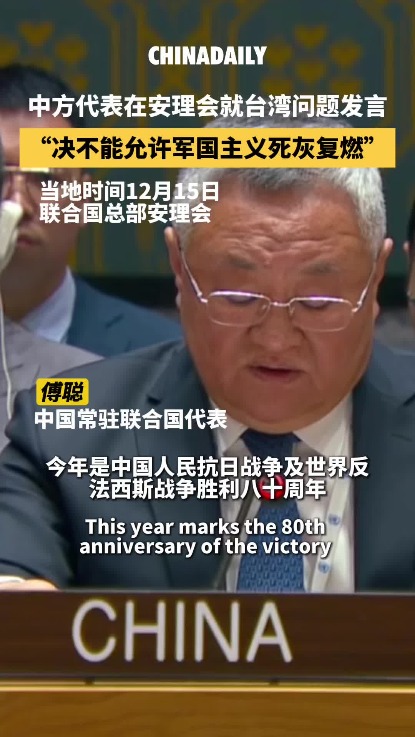
    China’s Permanent Representative to the United Nations, Ambassador Fu Cong, has issued a stern rebuke of Japanese Prime Minister Sanae Takaichi’s recent characterization of Taiwan as a potential military contingency for Japan. During Monday’s UN Security Council debate on Leadership for Peace, Fu demanded immediate retraction of these statements and warned Japan against persisting on this “wrong path.”

    The diplomatic confrontation stems from Prime Minister Takaichi’s unprecedented declaration to the Japanese parliament last month that a “Taiwan contingency” could constitute a “survival-threatening situation” for Japan, potentially justifying military intervention. This marked the first explicit threat of force toward China by a postwar Japanese leader.

    Ambassador Fu framed these comments within historical context, noting the international community’s ongoing reflection on World War II lessons. “Militarism and fascism once brought unprecedented catastrophes to humanity,” Fu stated, adding that any attempts to “whitewash or overturn the history of aggression challenge the bottom line of human conscience.”

    The Chinese envoy emphasized the necessity of upholding the postwar international order and UN Charter principles, including sovereign equality of states and opposition to unilateralism. His remarks coincided with former UN Secretary-General Ban Ki-moon’s criticism of the Security Council’s dysfunctionality, particularly citing the repeated use of veto power to shield allies from accountability.

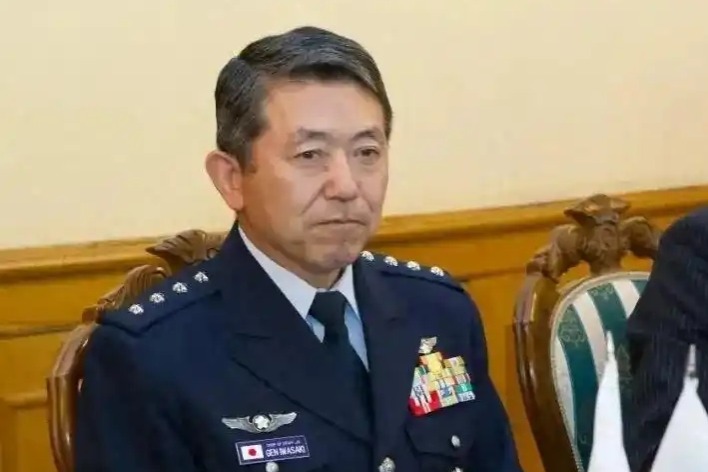
    In parallel developments, China announced immediate sanctions against Shigeru Iwasaki, former chief of Japan’s Self-Defense Forces Joint Staff, for colluding with Taiwan independence forces. The measures include freezing all his assets in China, responding to his March appointment as a “political consultant” for Taiwan authorities.

    The diplomatic exchange highlights escalating tensions in East Asia, with China reinforcing its position that Taiwan represents an absolute “red line” in international relations that must not be crossed.

  • Sanctions on Japan’s former senior official announced

    Sanctions on Japan’s former senior official announced

    China has enacted comprehensive sanctions against Shigeru Iwasaki, former Chief of the Joint Staff of Japan’s Self-Defense Forces, for his alleged collusion with Taiwanese separatist elements. The measures, announced by China’s Foreign Ministry on Monday, December 15, 2025, took immediate effect following the release of an official decree.

    The sanctions package includes the freezing of all movable and immovable properties and assets held by Iwasaki within Chinese territory. Additionally, Chinese organizations and individuals are expressly prohibited from engaging in any transactions or cooperative endeavors with the former Japanese official. Iwasaki will also be denied Chinese visas and entry into the country.

    Foreign Ministry spokesman Guo Jiakun articulated China’s position during a press briefing in Beijing, emphasizing that Taiwan represents a fundamental core interest and an inviolable red line in Sino-Japanese relations. The sanctions were implemented pursuant to China’s Anti-Foreign Sanctions Law, with authorities asserting that Iwasaki’s activities constituted serious violations of the one-China principle and the foundational political documents governing China-Japan relations.

    Official statements characterized Iwasaki’s acceptance of a political advisory role with Taiwan’s administration as a provocative act that amounts to blatant interference in China’s internal affairs. Despite multiple diplomatic protests to Japanese authorities, Iwasaki reportedly persisted in his engagements with Taiwanese separatist factions, ultimately necessitating the punitive measures.

  • India charges Pakistan-based militant groups in Pahalgam attack

    India charges Pakistan-based militant groups in Pahalgam attack

    India’s National Investigation Agency (NIA) has formally charged two Pakistan-based militant organizations and six individuals for orchestrating the April tourist massacre in Pahalgam, Indian-administered Kashmir, that resulted in 26 fatalities and brought nuclear-armed India and Pakistan to the brink of war.

    The comprehensive 1,597-page chargesheet, submitted to a special court in Jammu on Monday, names Lashkar-e-Taiba (LeT) – designated as a terrorist organization by the United Nations – and The Resistance Front (TRF) with planning, facilitating, and executing the attack. The document also identifies six individuals, including three who were eliminated by security forces shortly after the incident.

    Among those charged is Sajid Jatt, whom the NIA describes as a ‘Pakistani terrorist handler,’ along with two other suspects who have been in NIA custody since June. According to agency statements, interrogation of these individuals revealed that the three armed assailants were Pakistani nationals affiliated with the banned LeT network.

    The accused face multiple charges under India’s criminal code and stringent anti-terrorism legislation, including waging war against the nation. The NIA’s extensive eight-month investigation has traced the conspiracy back to Pakistan, with further inquiries ongoing.

    The April 22 attack transformed the popular tourist meadow of Baisaran, approximately 7km from Pahalgam town, into a killing field. Militants specifically targeted and executed 25 male Hindu tourists, along with a local Muslim pony handler who attempted to assist the victims.

    This incident represents one of the deadliest militant attacks in Indian-administered Kashmir since 2019 and triggered significant diplomatic consequences. India subsequently revoked the 1960 Indus Waters Treaty, while Pakistan responded by withdrawing from the 1972 Simla Agreement on bilateral dispute resolution. These actions precipitated a four-day conflict involving missile and drone exchanges between the neighboring nations, ultimately concluding with a fragile ceasefire.

    The Kashmir region remains a persistent flashpoint between India and Pakistan, with both nations asserting full claims over the territory while controlling only portions of it. The countries have engaged in two major wars over the disputed region throughout their history.

  • Pakistani court sentences cleric from banned party to 35 years for inciting violence

    Pakistani court sentences cleric from banned party to 35 years for inciting violence

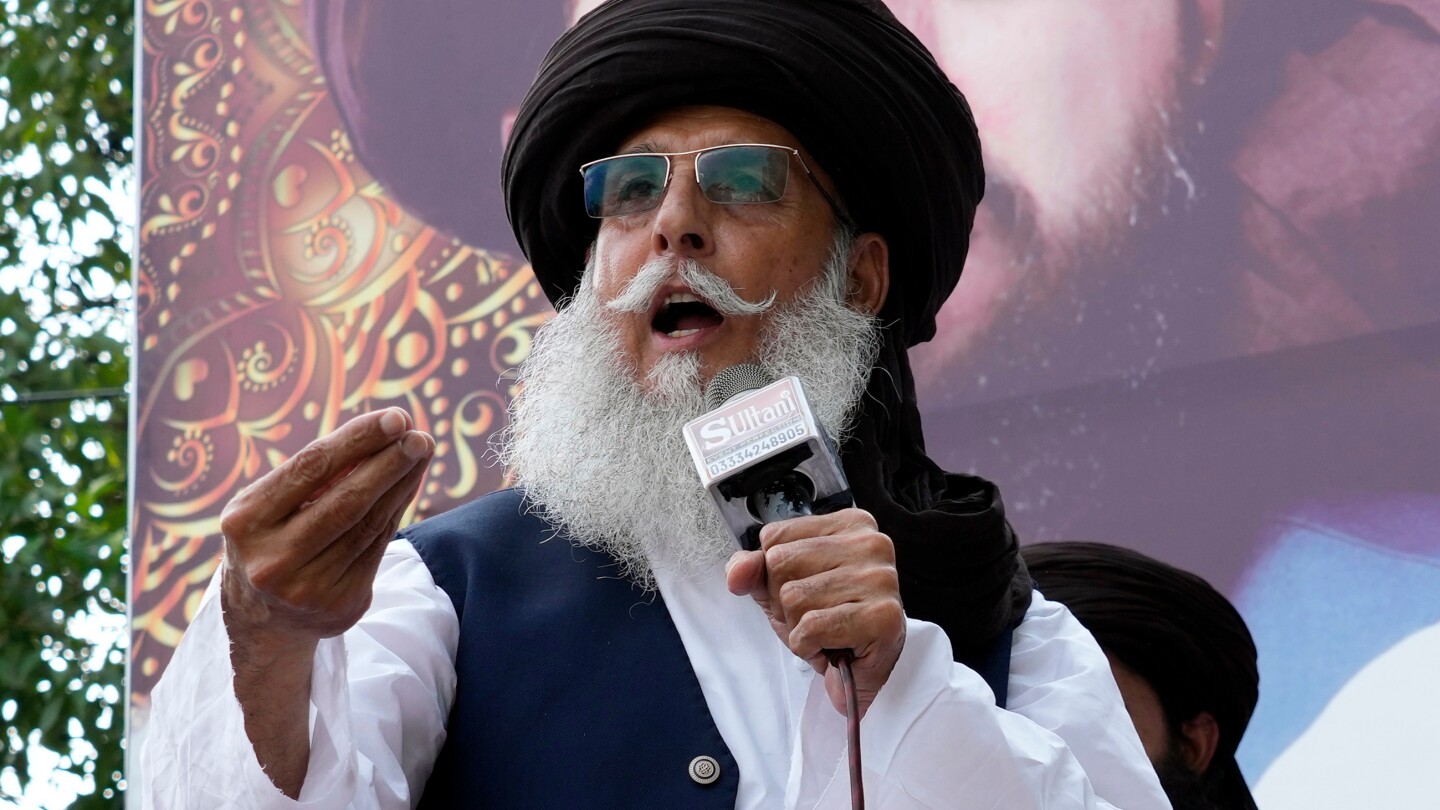
    A senior figure within the banned Tehreek-e-Labbaik Pakistan (TLP) party has received a substantial 35-year prison sentence from an anti-terrorism court in Lahore for openly inciting violence against Pakistan’s judiciary. Zaheerul Hassan Shah was convicted Monday for offering a financial bounty targeting then-Chief Justice Qazi Faez Isa in 2023.

    The case originated from a social media video that circulated widely last year, showing Shah promising 10 million rupees (approximately $36,000) to anyone who would execute the beheading of Chief Justice Isa. The conviction represents a significant judicial response to religious extremism within Pakistan’s political landscape.

    Background context reveals the sentencing connects to broader tensions between Pakistan’s judiciary and hardline religious groups. Justice Isa had previously drawn criticism from these factions after granting bail to a member of the Ahmadi religious minority in a blasphemy case. The Ahmadi community, officially declared non-Muslim by Pakistan’s parliament in 1974, frequently faces persecution and violence from Sunni militant groups who consider them heretical.

    This development occurs within a larger governmental crackdown on TLP, which was officially banned two months ago following deadly clashes between party supporters and police during pro-Gaza demonstrations. The party’s current leader, Saad Rizvi, remains missing since the October unrest, with police alleging he fled to Pakistan-administered Kashmir during the violent protests that erupted during a planned march from Lahore to Islamabad.

  • How divides emerged at the heart of Trump’s Maga world

    How divides emerged at the heart of Trump’s Maga world

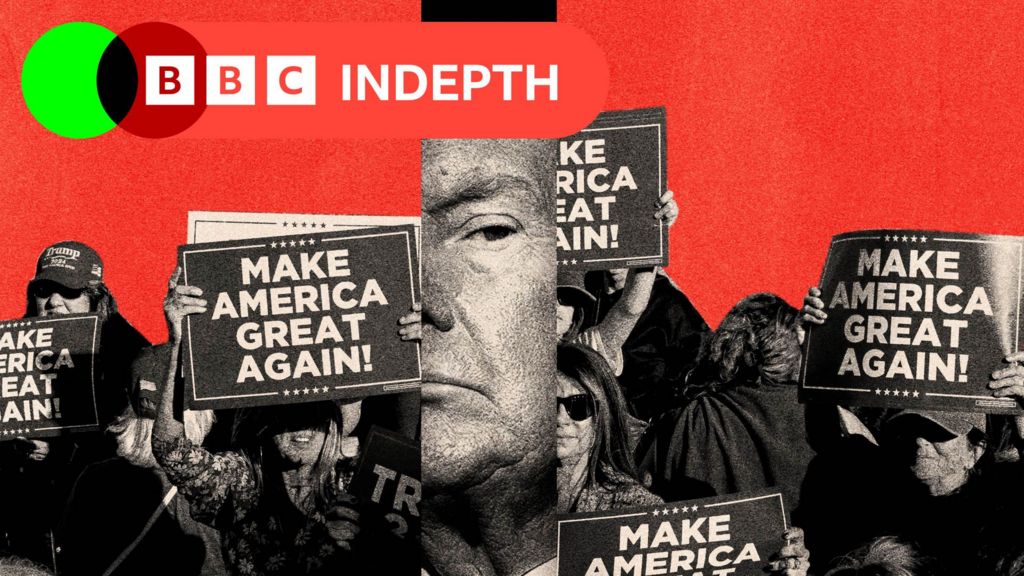
    A profound transformation is underway within the Republican Party as potential successors to former President Donald Trump begin positioning themselves to inherit the Make America Great Again (MAGA) movement. During a recent White House cabinet meeting, Trump openly speculated about his political heirs, suggesting multiple contenders sat around the table despite constitutional term limits preventing his own future presidential runs.

    The MAGA coalition, which returned Trump to power in 2024, now shows signs of strain as internal fractures emerge. Recent Republican electoral setbacks have revealed vulnerabilities among minority and working-class voters crucial to Trump’s victories. Notable defections include Congresswoman Marjorie Taylor Greene, who has publicly criticized Trump for losing touch with his base.

    Three prominent figures have emerged as potential standard-bearers for the post-Trump era: Vice President JD Vance, widely considered the heir apparent favored by Trump’s family and Silicon Valley libertarians; Secretary of State Marco Rubio, who has undergone a remarkable transformation embracing Trump’s America First agenda; and Secretary of Health Robert F. Kennedy Jr., whose vaccine skepticism has disrupted federal health bureaucracy.

    A comprehensive survey by the Manhattan Institute reveals the complex composition of Trump’s coalition. While 65% are ‘core Republicans’ who have supported party nominees since at least 2016, 29% are ‘new entrant Republicans’—younger, more diverse, and holding views that frequently break with traditional conservative orthodoxy. These new entrants show concerning tendencies, with over half believing political violence is sometimes justified and demonstrating greater tolerance for racist or antisemitic speech.

    The challenges facing Trump’s successors extend beyond demographic shifts. Recent months have witnessed high-profile fractures within the movement, including conflicts over Middle East policy, economic approaches featuring tariff disputes with former ally Elon Musk, and internal conservative battles over extremist figures like Holocaust denier Nick Fuentes.

    Despite these challenges, Trump’s impact on the Republican Party appears foundational rather than temporary. His movement builds upon decades of populist strains in American politics, from Barry Goldwater’s 1964 campaign to the Tea Party protests. As one analyst noted, ‘The Trump movement is here to stay and there’s no real likelihood of the old establishment returning with any sort of clout.’ The struggle to control this transformed political landscape will define Republican politics for years to come.

  • After a year of Trump, EU leaders begrudgingly learn to live with the reality of an unreliable ally

    After a year of Trump, EU leaders begrudgingly learn to live with the reality of an unreliable ally

    BRUSSELS — European leaders convened for a critical year-end summit facing a transformed geopolitical landscape, as the United States under President Donald Trump has systematically eroded transatlantic alliances throughout 2025. The two-day gathering in Brussels represents a watershed moment for European unity, with leaders attempting to formulate a cohesive response to what they perceive as American hostility toward EU interests.

    The immediate challenge involves securing Ukraine’s financial stability through a proposed reparations loan package, designed to sustain Kyiv’s military and economic needs for the coming two years. This decision comes alongside last week’s indefinite freeze on Russian assets within European jurisdictions, creating a complex financial framework to counter Russian aggression.

    Danish Foreign Minister Lars Løkke Rasmussen, representing the EU’s rotating presidency, emphasized the high stakes: “This summit represents a crucial test of European resolve. Our decisions must simultaneously stabilize Ukraine’s economy and demonstrate to global observers—including Washington—that Europe stands as an autonomous geopolitical force.”

    European officials have grown increasingly alarmed by the Trump administration’s overtures to far-right political movements across the continent, its sympathetic posture toward Vladimir Putin, and its public criticism of EU migration and security policies. A recently circulated U.S. National Security Strategy document explicitly questioned Europe’s reliability as an American partner and warned of “civilizational erasure” due to migration policies.

    The administration’s 28-point peace proposal for Ukraine—reportedly drafted with Russian input—has further strained relations by incorporating Kremlin-friendly terms that European leaders find unacceptable. Russian Foreign Minister Sergey Lavrov praised Trump as “the only Western leader” showing “understanding of the reasons that made war in Ukraine inevitable.”

    Economic tensions have simultaneously escalated, with Trump imposing sweeping tariffs under national security grounds before negotiating a 15% tariff framework with the EU. European leaders have reluctantly accepted these terms as the cost of maintaining limited U.S. support for Ukraine while pursuing new trade partnerships throughout Asia.

    In response to security concerns, NATO members have committed to raising defense spending to 5% of GDP by 2035—a dramatic increase from the previous 2% target—while the EU aims to achieve operational autonomy against external threats by 2030. Intelligence assessments suggest Russia could attempt attacks elsewhere in Europe within three to five years if successful in Ukraine.

    As EU Council President António Costa prepared to chair the summit, he warned leaders might remain sequestered for days until reaching consensus on Ukraine funding, underscoring the critical nature of European unity in America’s shifting foreign policy landscape.

  • Trump says US to investigate Israel’s assassination of Hamas official as ceasefire violation

    Trump says US to investigate Israel’s assassination of Hamas official as ceasefire violation

    The United States has initiated an examination into whether Israel’s targeted killing of a senior Hamas military official constitutes a violation of the ongoing Gaza ceasefire agreement, according to statements from President Donald Trump on Monday.

    The operation in question resulted in the death of Raad Saad, a high-ranking member of Hamas’s armed wing, the al-Qassam Brigades. Israeli forces targeted Saad’s vehicle near al-Nabulsi square in western Gaza City on Saturday, eliminating what Reuters described as the second-highest ranking official within Hamas’s military hierarchy, subordinate only to current military chief Izz al-Din al-Haddad.

    This incident represents one of at least 738 documented violations of the October 10th ceasefire agreement, which was internationally guaranteed by Egypt, Qatar, and the United States. According to Gaza’s Government Media Office, these violations have resulted in over 350 Palestinian fatalities since the ceasefire took effect.

    Complicating the fragile truce further, Israel has implemented severe restrictions on humanitarian aid entering Gaza and maintained the closure of the critical Rafah border crossing with Egypt. The assassination of Saad presents particular complications for the Trump administration’s Middle East strategy, which had previously remained largely silent on Israel’s ceasefire violations.

    The administration’s diplomatic efforts have included unusual backchannel communications, with Middle East Eye reporting in October that US envoy Steve Witkoff and Presidential son-in-law Jared Kushner met senior Hamas officials, including Khalil al-Hayya, at Egypt’s Sharm el-Sheikh resort. During these discussions, American representatives allegedly provided personal guarantees regarding war termination to Hamas leadership.

    Concurrently, the Trump administration has advanced a controversial proposal to partition Gaza through the establishment of “Alternative Safe Communities” in the Israeli-occupied portion of the territory. This plan, developed by Kushner allies dispatched to Tel Aviv, has raised concerns among key regional powers including Qatar, Saudi Arabia, Indonesia, Egypt, and Turkey.

    These nations’ support is crucial for the deployment of an international stabilization force to Gaza, which received United Nations Security Council approval in November but remains non-operational. While US officials project a 2026 readiness date, President Trump asserted the force is already active, claiming “more and more countries are coming into it” and would provide troops upon his request. This assertion contradicts accounts from Western and Arab officials and analysts consulted by Middle East Eye, none of whom were aware of any operational international force in Gaza.

  • US contractor behind ‘Alligator Alcatraz’ was frontrunner for Gaza aid project: Report

    US contractor behind ‘Alligator Alcatraz’ was frontrunner for Gaza aid project: Report

    A Florida-based contractor previously responsible for constructing a migrant detention facility nicknamed ‘Alligator Alcatraz’ had been positioned to oversee a massive $1.7 billion aid distribution operation in Gaza, according to investigative reporting. Gotham LLC, the company behind the controversial Everglades detention center, held an advantageous position in the bidding process to become the ‘Master Contractor’ for humanitarian and commercial shipments into the Palestinian territory.

    The proposal, orchestrated by political appointees within an initiative led by Jared Kushner and his Gaza liaison Rabbi Aryeh Lightstone, envisioned supplying 600 truckloads of aid daily. The contractor would have charged substantial fees—$2,000 per humanitarian load and $12,000 for commercial shipments—though the funding source remained unspecified in project documents.

    Gotham’s owner, Matt Michelsen, who has extensively profited from government contracts including COVID-19 lockdown initiatives, abruptly withdrew from the bidding process following media inquiries. The company’s detention facility in Florida’s Big Cypress National Preserve, constructed in just eight days amidst python and alligator-inhabited marshlands, featured rows of bunk beds enclosed by chain-link fencing before being ordered shut by a federal judge in August.

    The aid management plan notably excluded career diplomats and humanitarian experts, instead relying on former members of Elon Musk’s ‘Department of Government Efficiency’ (Doge) team. These officials, including a 25-year-old Princeton graduate and conservative Jewish-American activist, operated from luxury beachfront hotels in Tel Aviv while developing plans for Gaza housing compounds termed ‘Alternative Safe Communities.’

    This approach echoes previous US intervention models in Iraq and Afghanistan, relying on private contractors funded by taxpayer dollars to execute large-scale international initiatives.

  • Trump sues BBC for defamation over Panorama speech edit

    Trump sues BBC for defamation over Panorama speech edit

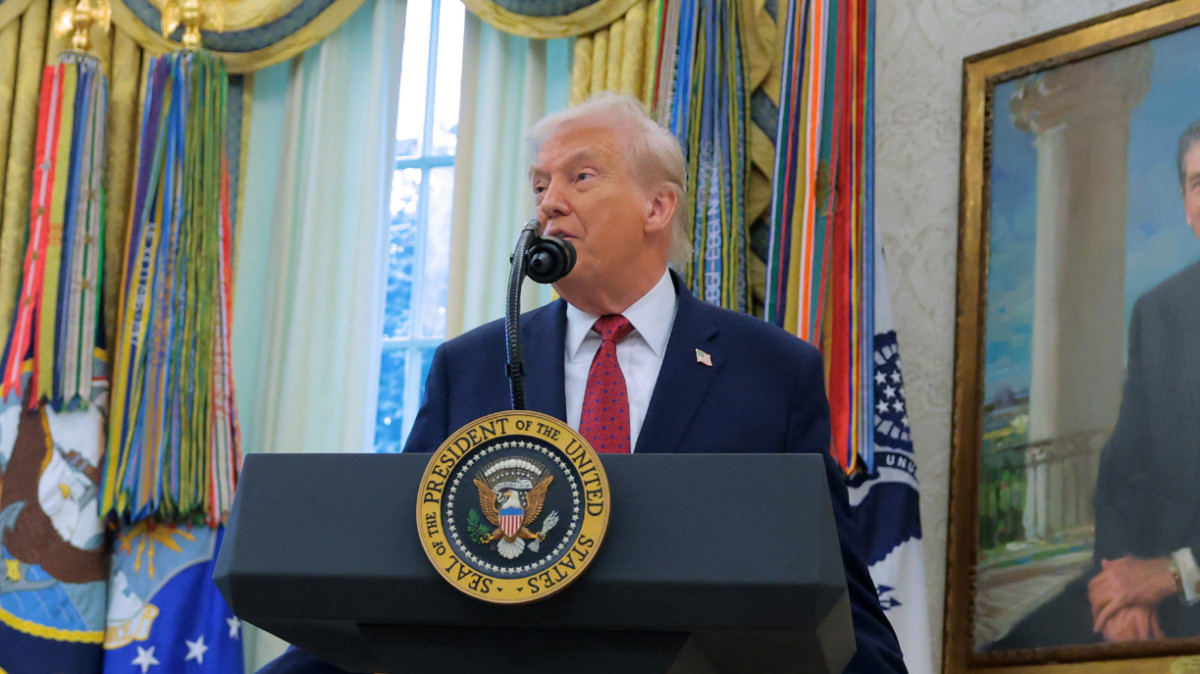
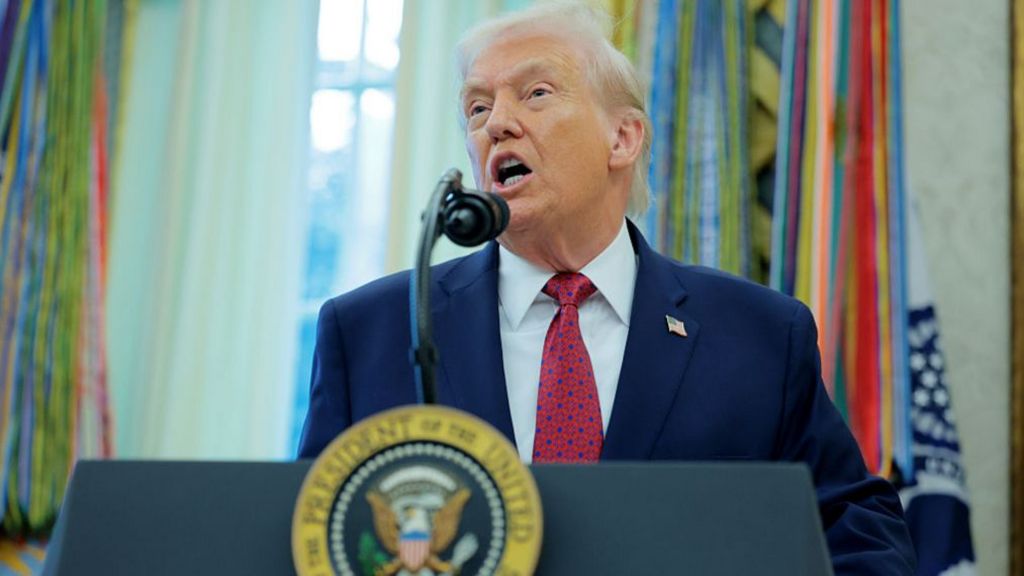
    Former U.S. President Donald Trump has initiated a high-stakes legal battle against the British Broadcasting Corporation (BBC), filing a defamation lawsuit in Florida federal court. The lawsuit centers on the broadcaster’s editing of Trump’s January 6, 2021 address in a Panorama documentary, which Trump alleges deliberately misrepresented his statements to suggest he incited violence.

    The legal filing asserts two distinct claims: one for defamation and another for violation of trade practices laws, with Trump seeking $5 billion in damages for each count, totaling $10 billion. The former president’s legal team contends the BBC “intentionally, maliciously, and deceptively doctored” his speech with specific editorial decisions that created false implications about his conduct preceding the Capitol riot.

    While the BBC issued an apology in November 2023 acknowledging the edited sequence had created “the mistaken impression” that Trump had directly called for violent action, the broadcaster has firmly rejected compensation demands and any legal basis for the defamation claim. The controversial documentary aired in the United Kingdom shortly before the 2024 U.S. presidential election, timing that Trump’s legal team suggests was strategically motivated.

    In public statements last month, Trump characterized the editing as deliberate deception, telling reporters: “They cheated. They changed the words coming out of my mouth.” The original speech contained the phrases “We’re going to walk down to the Capitol, and we’re going to cheer on our brave senators and congressmen and women” and, approximately 50 minutes later, “And we fight. We fight like hell.” The Panorama program edited these segments to appear consecutively, creating the impression of immediate incitement.

    The BBC has not yet issued a formal response to the specific lawsuit filing, which represents one of the largest defamation claims ever brought against a media organization. This case intersects significant legal questions about media editing practices, political speech protection, and international jurisdiction in defamation cases involving foreign media entities and U.S. political figures.