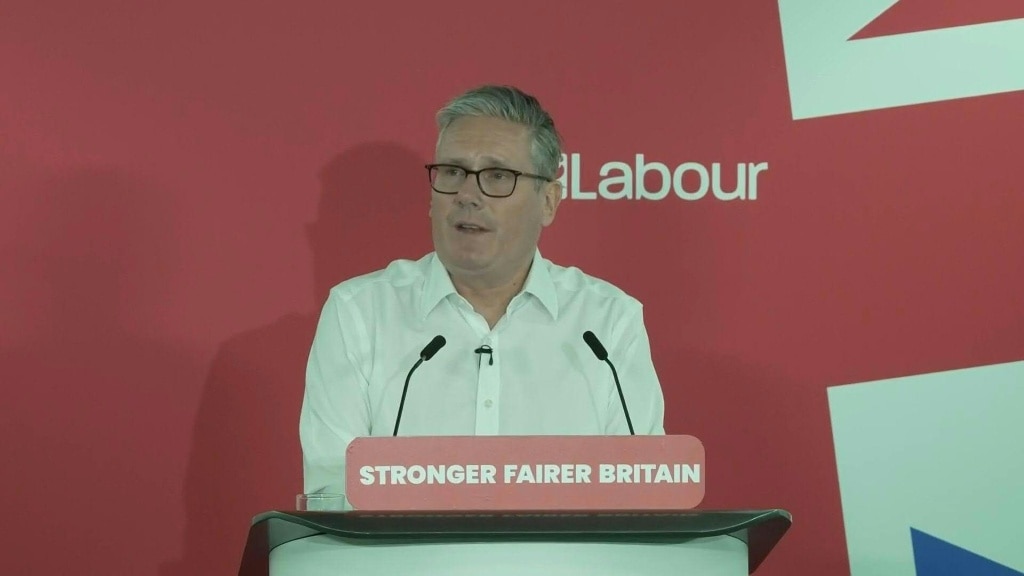
Just 22 months after sweeping to power in a historic landslide that ended 14 years of Conservative rule, UK Prime Minister Keir Starmer is facing the most severe crisis of his premiership, as growing numbers of ruling Labour Party lawmakers demand his resignation in the wake of catastrophic local and regional election outcomes. The 63-year-old leader, who took office in July 2024 on a promise of systemic change after years of Conservative austerity, Brexit infighting and mismanaged COVID-19 response, doubled down on Monday on his pledge to hold his position and reframe his agenda to win back disillusioned voters.
However, his vows to deliver bolder policy action have failed to calm internal dissent. More than 60 of Labour’s 403 sitting members of Parliament have now publicly called for Starmer to step down, including four junior government aides who resigned from their posts over the weekend to register their no confidence. Joe Morris, former parliamentary private secretary to Health Secretary Wes Streeting, a figure long rumored to be considering a leadership bid, wrote on social media platform X that it was “now clear that the prime minister no longer has the trust or confidence of the public to lead this change”.
Tom Rutland, a former aide to Environment Secretary Emma Reynolds, argued Starmer had “lost authority” among the parliamentary party and would never be able to rebuild that credibility. Melanie Ward, former assistant to Deputy Prime Minister David Lammy, acknowledged Starmer’s early work reshaping the Labour Party before the 2024 general election, but said the public’s verdict in last week’s polls was unambiguous. “The message from last week’s elections was clear; the Prime Minister has lost the confidence of the public to lead this change,” she wrote on X. Naushabah Khan, a former Cabinet Office aide who also resigned, added that new leadership was the only way to rebuild public trust and deliver the progressive agenda British voters backed at the 2024 general election.
Under Labour Party rules, any potential challenger needs the backing of 81 MPs – 20 percent of the party’s parliamentary caucus – to trigger an official leadership contest. A leadership battle would almost certainly plunge the party into crippling internal infighting, with factions on the left and right of the party scrambling to elevate their preferred candidates or shore up Starmer’s remaining support.
Since taking office, Starmer’s premiership has been marked by a string of missteps. He was recently embroiled in major controversy after the sacking of his appointed UK ambassador to Washington Peter Mandelson, following the exposure of long-concealed ties between Mandelson and convicted sex offender Jeffrey Epstein. Critically, Starmer has also failed to deliver tangible economic growth to ease the ongoing cost of living crisis that has left millions of British households struggling financially, though he has earned cross-party praise for taking a firm stance against former US President Donald Trump’s policy on Iran.
Last week’s local and regional elections delivered a damning judgment on Starmer’s tenure. Labour hemorrhaged seats to the hard-right Reform UK and left-wing Green Party, both of which recorded historic gains at Labour’s expense. For the first time since the devolved Welsh parliament was established in 1999, Labour lost control of the legislature to Welsh nationalist party Plaid Cymru. The party also failed to cut into the Scottish National Party’s dominant position in the Scottish Parliament, leaving Labour’s ambition for UK-wide unity unfulfilled.
In a make-or-break speech to the party on Monday, Starmer acknowledged the widespread public frustration with his leadership and the current state of national politics. “I know I have my doubters, and I know I need to prove them wrong, and I will,” he said. He abandoned his previous incremental policy approach, promising a far more ambitious agenda focused on accelerating economic growth, rebuilding closer ties with the European Union, and overhauling UK energy policy. In a major break from years of muted political discussion on Brexit, Starmer admitted for the first time that the 2020 UK departure from the EU has left the country “poorer, weaker and less secure”. He also announced plans to fully nationalize British Steel, a significant shift from his previously cautious industrial policy. He launched a scathing attack on Reform UK leader Nigel Farage, whose party was the biggest beneficiary of Labour’s election collapse, calling Farage a “chancer” and “grifter” who deceived the British public during the 2016 Brexit referendum. Starmer warned that if the Labour Party failed to reset its course, the UK would slide toward “a very dark path” under far-right leadership.
Despite the speech, internal dissent has not abated. Senior Labour MP Catherine West, who previously threatened to trigger a leadership challenge this week, announced after the address that she was now collecting signatures from MPs calling on Starmer to outline a formal timetable for a leadership election to be held in September. Starmer has hit back, pledging to fight any challenge and warning that voters would never forgive Labour if it repeated the chaotic turnover of Conservative governments, which saw five different prime ministers take office between 2010 and 2024, including three in just four months in 2022.
Speculation has long centered on Health Secretary Wes Streeting and former deputy prime minister Angela Rayner as the most likely candidates to oust Starmer. However, neither figure commands universal support across the divided parliamentary party. Rayner, who has not yet explicitly called for Starmer’s resignation, echoed the mood of frustration in her own remarks on Monday, saying “what we are doing isn’t working, and it needs to change.”