分类: politics

  • US Army pilots who flew near Kid Rock’s home suspended and then reinstated within hours

    US Army pilots who flew near Kid Rock’s home suspended and then reinstated within hours

    A recent incident involving two U.S. Army Apache helicopter crews and a high-profile conservative entertainer has sparked new debate over military conduct and political alignment, after Defense Secretary Pete Hegseth abruptly reversed a temporary suspension of the personnel just hours after it was announced. The controversy began on March 28, when two AH-64 Apache helicopters from the 101st Combat Aviation Brigade, stationed at nearby Fort Campbell, hovered low over the Tennessee property of Kid Rock, a renowned musician and outspoken supporter of President Donald Trump.

    Kid Rock, born Robert Ritchie, shared a video of the encounter on social media over the weekend. The clips show the artist standing poolside beside a mini Statue of Liberty replica, saluting the passing aircraft at his sprawling estate, which he has nicknamed the “Southern White House.” His social media caption combined a patriotic message honoring fallen U.S. service members with a verbal jab at California Democratic Governor Gavin Newsom, who has had public conflicts with both Kid Rock and Trump.

    After the video spread widely online, the U.S. Army announced Tuesday morning that it had temporarily pulled the two flight crews from active duty pending an investigation into whether the flyby violated federal flight regulations and military operating standards. “The Army takes any allegations of unauthorized or unsafe flight operations very seriously and is committed to enforcing standards and holding personnel accountable,” Army Major Montrell Russell told the BBC in an early statement.

    But within hours of the suspension announcement, Defense Secretary Hegseth stepped in to reverse the decision, announcing on social media that the crews would face no punishment and no formal investigation. “No punishment. No Investigation. Carry on, patriots,” Hegseth wrote. Kid Rock told local Nashville outlet WKRN-TV that low-altitude flights near his property are far from unusual, noting he has a long history of entertaining troops at Fort Campbell and on overseas deployments. “I think they know this is a pretty friendly spot,” he said. “I’ve talked to some of these pilots. I’ve told them, ‘You guys see me waving when you come by the house?’ I’m like, ‘You guys are always welcome to cruise by my house, any time.’”

    When asked about the incident during a White House press interaction Tuesday, President Trump struck a mixed tone, at first joking that “maybe they were trying to defend him.” He acknowledged that the unapproved flyby likely violated military rules: “probably shouldn’t have been doing it. You’re not supposed to be playing games,” he told reporters in the Oval Office. The president added, however, that he shares the crews’ positive view of the entertainer: “They like Kid Rock. I like Kid Rock.” Kid Rock has long held a high profile in conservative politics, most recently headlining an alternative Super Bowl halftime event for the right-wing organization Turning Point USA and speaking at the 2024 Republican National Convention. The BBC has reached out to the U.S. Army for additional comment following Hegseth’s reversal of the suspension.

  • At gas stations, Americans say they’re ‘paying the price’ of Iran war

    At gas stations, Americans say they’re ‘paying the price’ of Iran war

    Across U.S. gas stations from the Washington suburbs to New Jersey, American drivers are grappling with the immediate, painful domestic fallout of the ongoing conflict with Iran, as skyrocketing fuel costs squeeze already strained household budgets and send ripples of uncertainty through the broader national economy.

    On Tuesday, industry data from the American Automobile Association (AAA) confirmed that the national average price for a gallon of regular unleaded gasoline breached the widely watched $4.00 threshold. The figure marks a staggering 35% jump in fuel costs since the outbreak of hostilities following U.S.-Israeli strikes on Iran, leaving everyday consumers reeling from the sudden spike.

    At the Liberty gas station located along a busy commercial corridor in Falls Church, Virginia — just steps from an Anglican church, a local auto repair shop, and a dental practice — prices already start at $3.79 per gallon for customers paying with cash, with premium rates adding an extra surcharge for debit and credit card users. A short distance down the same road, some stations are charging as much as $4.25 per gallon.

    Eighty-three-year-old Jeanne Williams, a retired civil servant in active cancer treatment who drove 100 miles from Richmond, Virginia to visit her older sister, voiced shock at the prices displayed on the station’s LED billboard. “That is horrible,” she said, describing her reaction to the new rates. “I’m not angry. I’m just bewildered, confused, unhappy, because we didn’t ask for this war.” Though Williams calls her pension “fairly decent”, persistent U.S. inflation and rising fuel costs have forced her to draw down personal savings to cover basic expenses. “Luckily, I have no children, I don’t have a spouse, so it’s just me — and whatever I have, I share to help my sister,” she explained.

    While U.S. inflation has cooled from its 9.1% pandemic-era peak, core prices have remained stubbornly elevated, and economists warn the world’s largest economy has yet to achieve sustained price stability. Years of above-trend price growth have already eroded household purchasing power across the country, and the sudden fuel surge threatens to deepen that financial pressure.

    Eliza Winger, a U.S. economist at Bloomberg, noted that higher pump prices extend far beyond immediate pain at the station: they drag down overall consumer spending, creating cascading risks for economic growth. “We estimate that a 10% increase in oil prices reduces real consumer spending by approximately 0.2 percent,” Winger explained. Since the outbreak of the Iran conflict, U.S. fuel prices have risen more than three times that 10% threshold, pointing to a potentially significant hit to consumer activity in coming months. Fresh consumer confidence data released Tuesday underscored this unease, showing that U.S. inflation expectations surged in March to levels not seen in seven months.

    Twenty-six-year-old Luis Ramos, a New York City resident who spoke to AFP at a New Jersey gas station, said the new price hikes come on top of already unsustainable cost of living increases. “It’s ridiculous, honestly. Seeing these gas prices skyrocket, it’s incredible. The cost of living is already skyrocketing,” he said.

    For David Lee, a 39-year-old anesthesiologist who fills up his tank twice a week near Washington, every stop now costs roughly $10 more than it did just weeks ago. Though his income allows him to absorb the extra cost, he says many of his friends have already changed their behavior to cut costs. “I’ve seen a lot of my friends complaining about it that they’re not gonna drive as much as they used to,” he noted.

    Seventy-seven-year-old Joseph Crouch, a Vietnam War veteran who uses a cane, is among those who have scaled back driving to manage expenses. “It’s ridiculous. The prices are so high. I don’t think government is knowing what it is doing,” he said. Echoing a sentiment shared by many consumers interviewed, he argued, “We are paying the price of the war. They are trying to say it’s something else, but it’s definitely a war.” Seventy-eight-year-old Fred Koester echoed that frustration, calling the conflict a “stupid war” that was “totally unnecessary.”

    Not all perspectives aligned on public frustration, however. Kristen, a 36-year-old teacher who declined to share her last name, acknowledged that higher fuel prices cause real hardship, but argued it is “selfish” for Americans to only protest the conflict once it begins impacting their personal finances. “We should have cared long before it affects our pocket,” she said.

  • Iranian missiles don’t pose a threat to the US, Pete Hegseth admits

    Iranian missiles don’t pose a threat to the US, Pete Hegseth admits

    In his first press briefing held on Tuesday, more than a month after the United States and Israel launched their military campaign against Iran, US Secretary of Defense Pete Hegseth made a striking admission that undermines the White House’s repeated claims of an “imminent threat” from Tehran: Iran’s ballistic missiles do not have the range to strike the US mainland.

    Hegseth explained that Washington’s military commitment in the region is focused on protecting US regional assets and its Middle Eastern allies from Iran’s capabilities, and it is now time for European allies to pull their weight in the conflict. Speaking to reporters Tuesday, he argued, “These are missiles that don’t even range the United States of America. They range allies and others. And yet, when asked for additional assistance… we get questions or roadblocks or hesitations.” He added that President Donald Trump has emphasized that alliances lose meaning when member states refuse to stand together when their support is needed.

    Hegseth’s comments came in direct support of a post Trump published earlier that day on his Truth Social platform, where the president publicly demanded the United Kingdom “build up some courage, go to the Strait [of Hormuz], and just TAKE IT”, adding that US allies “You’ll have to start learning how to fight for yourself.”

    Defending the administration’s military strategy, Hegseth asserted that since the US-Israeli offensive began on February 28, Washington has dictated the terms of engagement, leaving Iran unable to mount an effective military response to the campaign. This claim, however, leaves a critical question unanswered: if the US holds the clear upper hand in the conflict, why is Trump pushing NATO allies to contribute more support to the operation?

    A key domestic pressure shaping the administration’s push for allied support comes from surging US energy prices. On Tuesday, the national average price of gasoline in the US spiked above $4 per gallon, piling additional financial strain on American households that lack accessible alternative transportation options. Lowering gas prices was a central campaign promise for Trump, who has repeatedly criticized his predecessor Joe Biden for high energy costs during his term.

    Currently, Iran is blocking the Strait of Hormuz, a critical global oil chokepoint, to oil tankers linked to the US and Israel, banking on the resulting energy price shock to erode domestic support for the conflict in the US and weaken Washington’s resolve. Hegseth issued a blunt warning to Tehran on Tuesday: “Open it for business, or we have options, and we certainly do.” He declined to elaborate on what those potential options might be, noting that “Don’t tell your enemy what you’re willing to do or not do, and don’t tell your enemy when you’re willing to stop.”

    When questioned about the “ongoing negotiations” Trump has referenced that Iranian officials have repeatedly denied, Hegseth claimed that Iran’s original ruling regime has been entirely destroyed, a second iteration is largely defunct, and the current third governing body has been far more open to talks. This shift, he claimed, is purely a result of overwhelming US military pressure. He also told reporters that the past 24 hours had seen the lowest volume of Iranian missile and drone launches, arguing that US airstrikes “are damaging the morale of the Iranian military, leading to widespread desertions, key personnel shortages, and causing frustrations amongst senior leaders”.

    That assessment directly contradicts the findings of independent security experts tracking Iranian military activity. These analysts confirm that Iran has maintained a steady rate of drone and missile strikes consistent with the pace recorded over the past 20 days, and that launch volumes have actually increased in recent days compared to early March. Experts also note that Iranian strikes have grown more precise in target selection in recent weeks.

    On Tuesday, Iran’s Revolutionary Guard Corps issued a new warning, stating that it will target 18 US-based corporations operating in the Middle East, labeling these entities as “institutions involved in terrorist activities” tied to Washington’s military campaign.

    This report was published by Middle East Eye, a media outlet that provides independent, in-depth coverage of the Middle East, North Africa and surrounding regions.

  • Judge temporarily halts construction of Trump’s White House ballroom

    Judge temporarily halts construction of Trump’s White House ballroom

    A landmark federal court ruling has temporarily paused a high-profile construction project to build a new presidential ballroom at the White House, after judge Richard Leon found the Trump administration skipped legally required approval processes before breaking ground. The case was brought by the National Trust for Historic Preservation, a congressionally chartered non-profit dedicated to protecting America’s historic landmarks, which argued the White House violated multiple federal laws by launching the project without mandatory review.

    In a forceful 35-page ruling published Tuesday, Leon left little room for ambiguity about his decision: “Unless and until Congress blesses this project through statutory authorization, construction has to stop!” he wrote, emphasizing that while the U.S. president serves as a steward of the White House for future generations, he does not hold personal ownership of the iconic property. Leon concluded the preservation group was likely to prevail in the full trial, noting no existing federal statute grants the president the authority he claims to alter the White House grounds without congressional approval. The temporary halt will go into effect in 14 days, giving the administration time to file its planned appeal.

    The project, which was launched last October after the 1902-built East Wing was demolished, has grown substantially from its original plan: what was first proposed as a 500-person ballroom is now designed to hold 1,350 guests. The White House estimates the total cost will hit $400 million, all covered by private donations rather than taxpayer funds. Last week, Trump confirmed the project also includes a large underground military complex, saying the above-ground ballroom would effectively serve as a cover for the classified subterranean structure. Demolition and foundation work have already been completed, with above-ground construction scheduled to start next month.

    In its lawsuit, the National Trust laid out three core legal grievances: the White House failed to submit construction plans to the National Capital Planning Commission, skipped a required environmental impact assessment, and never obtained explicit congressional authorization for the project. The group also argued the project violates the U.S. Constitution, which reserves authority over federal property to the legislative branch. Following the ruling, National Trust president Carol Quillen called the decision a victory for all Americans. “This is a win for the American people on a project that forever impacts one of the most beloved and iconic places in our nation,” Quillen said in an official statement.

    Shortly after the ruling was released, former president (current U.S. president) Donald Trump pushed back aggressively against the decision on his Truth Social platform and in comments to reporters. Trump denied he needs congressional approval for the project, and vowed to appeal the ruling to a higher court. He defended the project as being under budget, ahead of schedule, and entirely funded by private donors, claiming it will become the finest event space of its kind in the world. He also argued the current temporary event space, a tented arrangement, is inadequate for upcoming high-profile events, including the upcoming state visit of Britain’s King Charles III next month. “We don’t want him to sit in a pool of water” if it rains, Trump told reporters, adding the existing facilities cannot properly host visiting world leaders.

    The Trump administration had previously attempted to justify rushing the project by claiming delays would threaten U.S. national security, a argument Leon rejected outright. Calling the claim “grasping at straws,” Leon wrote sarcastically, “The existence of a ‘large hole’ beside the White House is, of course, a problem of the President’s own making!” Trump also hit out at the National Trust for opposing a separate renovation project at the Kennedy Center, which he recently renamed to honor himself. He claimed the performing arts center had fallen into disrepair over decades, and his project is only meant to restore and improve the space. The ruling marks a major constitutional check on executive authority to alter the White House grounds, setting up a high-stakes legal battle over separation of powers as the project nears its next construction phase.

  • Treasurer Jim Chalmers warns states to ‘follow through’ over GST

    Treasurer Jim Chalmers warns states to ‘follow through’ over GST

    As Australian households grapple with persistent cost-of-living pressures amplified by global market volatility tied to the Middle East conflict, Federal Treasurer Jim Chalmers has issued a clear call for state and territory governments to deliver on the national cabinet agreements they signed, putting behind ongoing disagreements over goods and services tax (GST) revenue sharing.

    The latest push for coordinated relief comes out of a recent national cabinet gathering held this week, where sub-national leaders reached two key consensus points. First, they committed not to pocket unexpected GST windfalls generated by higher fuel prices across the country. Second, they agreed to roll out targeted measures to ease household cost burdens. Already, two jurisdictions have moved forward: the Labor-led Victorian government and Liberal-governed Tasmania have both launched temporary free public transport initiatives, a development Chalmers described as a positive step forward. New South Wales, however, has opted not to follow suit with the same public transport policy.

    At the federal level, the Albanese government has already passed legislation to cut the fuel excise by 50 percent, though implementation of the reform is still pending. Chalmers emphasized on Wednesday that the Commonwealth has held up its end of the bargain, and now expects the same from state and territory governments. “When they signed up to this at the national cabinet, the Prime Minister did a good job making sure that the states and territories signed up to this commitment,” he told reporters. While the Treasurer said he had no intention of publicly criticizing sub-national governments, he stressed that timely action is critical to get relief into the hands of consumers as quickly as possible. “We don’t want to see this drag out forever. We don’t want to see the states and territories at war over this. We want to see the relief flow to motorists,” he added.

    The current dispute traces back to the structure of Australia’s fuel pricing system: the 10 percent GST is applied to the full cost of petrol, including the federal excise. When the excise is cut, total pump prices fall, which in turn reduces total GST revenue collected for the states and territories. The national cabinet agreement requires states to return the foreseen GST windfall that would otherwise result from the lower excise back to motorists, through tax cuts or other targeted relief. Chalmers noted that the reduction in overall GST revenue from lower fuel prices is a intentional outcome of the relief policy, and urged states to reach a quick agreement on how to pass the savings to consumers, calling on them to “get their skates on” to avoid unnecessary delays.

    Leaders of New South Wales, the nation’s most populous state, have acknowledged the administrative complexity of the GST arrangement. NSW Premier Chris Minns said on Tuesday that more time is needed to work through the details, but expressed confidence that a practical, common-sense solution can be found. He suggested one potential pathway would be matching the federal excise cut with a proportional state tax cut equal to the GST windfall the state receives. NSW Treasurer Daniel Mookhey added that the state government is aiming to mirror the federal government’s excise cut approach, which would deliver an additional 7 to 10 cent per liter reduction on top of the federal cuts.

    This call for action comes amid already simmering tensions between states over the broader GST carve-up, which flared up again last month when the Commonwealth Grants Commission released its 2026-27 financial year GST sharing recommendations. The total national GST pool is projected to grow from roughly $97 billion to $103 billion in the coming financial year. Under a 2018 legislated GST floor designed to protect less populous states from revenue losses, Western Australia is set to gain an extra $1.3 billion compared to last year’s allocation, bringing its total share to $9.3 billion. Queensland, which has repeatedly criticized the existing sharing model, will see a larger proportional reduction in its share in 2026-27 than in the previous year, though guaranteed no-worse-off payments will offset the cut, bringing the state’s total GST revenue to $18.4 billion, an increase of $1.68 billion from 2025-26 – the largest nominal increase of any state. By contrast, NSW is only projected to gain an additional $316 million, for a total share of $26.1 billion. In response to the recommendation, Mookhey last month called on the Productivity Commission to shift to an equal per capita distribution model for GST grants, with any required top-ups funded by the federal government from outside the existing GST pool.

  • How English-only condolences undid one of Canada’s top CEOs

    How English-only condolences undid one of Canada’s top CEOs

    A fatal collision at New York’s LaGuardia Airport last month that claimed two Air Canada pilots’ lives has unexpectedly ignited a national firestorm over linguistic policy in Canada, culminating in the announcement that the airline’s long-serving CEO will step down earlier than planned. On March 22, an Air Canada flight originating from Montreal crashed into an emergency vehicle while attempting to land, killing the two pilots and injuring dozens of passengers. The incident marked Air Canada’s first fatal crash in more than 40 years, a devastating milestone that put the airline under immediate public scrutiny.

    The controversy did not stem from the crash itself, however. It erupted 24 hours after the collision, when Air Canada published a four-minute condolence video from CEO Michael Rousseau on its social media channels. While the video included dual-language subtitles, Rousseau delivered his entire address exclusively in English. The public backlash was swift and intense: Canada’s Office of the Commissioner of Official Languages received dozens of formal complaints within hours, and a parliamentary committee voted unanimously to summon Rousseau to testify and explain his choice to speak only English.

    Quebec, Canada’s majority French-speaking province, led the calls for Rousseau’s resignation. Provincial lawmakers passed a non-binding resolution calling for his departure, with politicians accusing the CEO of a “gross lack of respect” for the Quebecois family of one of the fallen pilots, Antoine Forest. Canadian Prime Minister Mark Carney joined the criticism, saying the unilingual video demonstrated a clear “lack of compassion” for grieving French-speaking communities. Prominent Canadian author Jack Jedwab wrote in French-language daily La Presse that Rousseau’s admitted weakness in French sends a harmful message to Air Canada staff that national bilingualism is “a constraint, not a value,” adding that Rousseau was unfit to serve as the national carrier’s public face.

    Three days after the original video sparked public outrage, Rousseau released a formal apology, acknowledging that his choice had diverted attention from the families mourning the victims and admitting that despite years of language classes, his French proficiency remains limited. Less than a week later, the 68-year-old CEO announced he would retire from his position by September this year.

    Air Canada has attempted to frame Rousseau’s departure as a natural transition: a company spokesperson told the Wall Street Journal that the CEO had reached standard retirement age and that his exit was unrelated to the language controversy. But the timing of the announcement, coming directly on the heels of the national backlash, has led many political observers and members of the public to question that official narrative.

    For international observers unfamiliar with Canada’s linguistic history, the intensity of the reaction to Rousseau’s unilingual address may seem surprising. The controversy is rooted in Canada’s unique cultural and legal framework for bilingualism, as well as Air Canada’s specific status as Canada’s iconic national carrier. Originally a federally owned and operated crown corporation, Air Canada has always been bound by Canada’s Official Languages Act, which guarantees all Canadians access to federal services in both English and French. Although Air Canada was privatized in 1988, the federal government passed special legislation requiring the airline to retain its full bilingual obligations, because it has long been viewed as a central symbol of Canadian national identity that represents the country across the globe. As François Larocque, research chair in language rights at the University of Ottawa, explained, this means bilingual communication is not optional for the airline’s top leadership.

    This is not the first time Air Canada has run afoul of its bilingual mandate, nor is it the first time Rousseau’s unilingualism has sparked controversy. In 2019, the airline was fined after a French-speaking couple complained that in-flight signage on a domestic route was only available in English. When Rousseau first took the CEO position in 2021, after decades of living and working in Montreal, his inability to answer a reporter’s question in French made national headlines. At the time, he attributed his lack of progress in French to the heavy demands of his work schedule; five years later, his failure to improve his language ability became the final straw for many critics.

    The controversy has also exposed deep divides across the country over the place of bilingualism in Canadian public life. While anger ran high in Quebec, many commentators and members of the public in other English-majority provinces have questioned the intensity of the backlash. Toronto-based National Post columnist Chris Selley argued that the expectations placed on Rousseau are unique to Canada’s political context, while others have accused Quebec politicians of manufacturing outrage to pander to French-speaking voters ahead of upcoming elections. “Two young men died. Be heartbroken, be respectful, but do not exploit this tragedy to advance political popularity,” Joanne O’Hara, a resident of Oakville, Ontario, wrote in a letter to the editor of the Globe and Mail.

    Scholars of Canadian politics note that bilingualism is far more than a cultural preference: it is a core foundation of Canadian national unity. As Larocque explained, as a country formed from both French and British colonial territories, bilingualism is “intimately tied to the history of Canada,” and there is very little chance Quebec would remain part of the Canadian federation if French were not recognized as an equal official language. This has created an unspoken rule that all senior national leaders, from the prime minister onward, must be proficient in both languages. Even current Prime Minister Mark Carney, an anglophone from western Canada, spent years improving his French before launching his leadership campaign, and his language ability was a key point of public scrutiny during the election.

    In the wake of Rousseau’s announcement, Air Canada confirmed it launched an external search for a new CEO back in January, well before the LaGuardia collision, and that proficiency in French will be a required qualification for the role.

  • Nevada lithium mine clears major hurdle despite conservationists’ worries for rare wildflower

    Nevada lithium mine clears major hurdle despite conservationists’ worries for rare wildflower

    In a landmark ruling that has split opinions on clean energy development and endangered species protection, a Nevada-based federal judge has rejected a legal challenge from environmental groups seeking to halt construction of the Rhyolite Ridge Lithium/Boron Project, a mine that conservationists warn threatens the survival of the only existing population of rare Tiehm’s buckwheat wildflower.

    The 11-square-mile Rhyolite Ridge development, located in Esmeralda County between Reno and Las Vegas, is led by Australian mining firm Ioneer. The site hosts the world’s largest known deposit of lithium and boron outside of Turkey, positioning it as a key component of U.S. plans to build a domestic supply chain for critical minerals. The project would be only the third lithium mine in Nevada and one of the rare operations that processes extracted minerals on-site, a capability that significantly reduces reliance on overseas processing. Lithium is a non-substitutable core input for electric vehicle (EV) batteries, making the project a high-priority asset for the United States’ clean energy transition.

    On Friday, U.S. District Judge Cristina Silva, a nominee of the Biden administration, ruled that the federal government followed proper procedure in approving the development and conducted a rigorous, legally sufficient assessment of the project’s impact on the rare wildflower. Tiehm’s buckwheat grows exclusively across just 10 acres within the mine’s project boundary. The judge found Ioneer’s proposed mitigation measures—including fenced protection for the wildflower’s habitat and dedicated buffer zones separating mining activity from the plant’s range—meet the standards required under the Endangered Species Act. Silva noted that only 4.9% of the species’ designated 1.4-square-mile critical habitat would be lost to project development.

    Despite the ruling, the Center for Biological Diversity, the lead conservation group behind the lawsuit, has pledged to continue its fight. The organization secured federal endangered species status for Tiehm’s buckwheat in 2022, and leaders confirm they are actively preparing an appeal to the Ninth Circuit Court of Appeals. Patrick Donnelly, Great Basin Director for the Center for Biological Diversity, argues the case carries far-reaching implications for all protected species and habitats across the country under the Endangered Species Act.

    Donnelly warned that erosion of protections for this small wildflower sets a dangerous precedent for future rollbacks of endangered species safeguards. Standing just a few inches tall, Tiehm’s buckwheat is found only in the Silver Peak Range, where its 10-acre range is roughly the size of seven American football fields. Every spring, the plant blooms with bright yellow pom-pom-shaped flowers that form the center of a unique, localized pollinator ecosystem. Donnelly says incremental habitat losses have already brought the species to the brink, and mine development would deliver a fatal “death blow,” increasing extinction risk and damaging regional biodiversity. He also cast doubt on the effectiveness of Ioneer’s proposed fencing, arguing the measure cannot fully protect the wildflower from mining-related disruption.

    For the project’s backers, the ruling represents a critical legal victory that paves the way for advancing a development they say will deliver wide-ranging economic and national security benefits. Rowe, Ioneer’s Managing Director, says the $2 billion mine would operate for more than 77 years and produce enough lithium carbonate annually to supply roughly 400,000 electric vehicles. Alongside lithium, the mine will produce boric acid, a material used in pest control, flame retardants, and a range of medical and personal care products. In a formal statement, Ioneer Vice President of Corporate Development and External Affairs Chad Yeftich emphasized the project will create hundreds of domestic manufacturing jobs, cut U.S. dependence on foreign mineral imports and processing, and establish a reliable domestic supply of two strategically critical minerals.

    The project has drawn bipartisan support from recent U.S. administrations, aligned with goals to expand domestic critical mineral production. Rhyolite Ridge first received federal approval during the Biden administration as part of the president’s clean energy transition agenda, while the Trump administration also publicly backed lithium development in Nevada as a strategy to strengthen domestic critical mineral manufacturing. In January 2025, the U.S. Department of Energy finalized a nearly $1 billion loan to support the project. Ioneer still aims to break ground by the end of 2025, with commercial production on track to launch in 2029, though the firm is still seeking a new financial partner after major backer Sibanye Stillwater withdrew from the project last year, citing unfavorable financial projections. The U.S. Interior Department declined to provide comment on the recent ruling.

  • Trump criticizes European allies for not helping fix the damage his war against Iran has caused

    Trump criticizes European allies for not helping fix the damage his war against Iran has caused

    In the aftermath of a unilateral U.S. war of choice against Iran launched without prior consultation with global allies, President Donald Trump is now demanding international partners step in to resolve the unforeseen fallout of the conflict, as he signals he is poised to wind down American military operations soon.

    The president’s frustration has mounted in recent days over Europe’s refusal to back the U.S.-Israeli war effort, with Trump launching a blistering public attack on two of America’s closest transatlantic allies—France and the United Kingdom—via social media on Tuesday. Even as Iran has effectively choked off most oil traffic through the strategic Strait of Hormuz, a development that has roiled global energy markets, Trump has continued to claim Iran’s military and infrastructure have been “decimated.”

    In his social media posts, Trump targeted the U.K. first, which had declined to participate in direct offensive operations against Iran. He suggested countries facing jet fuel shortages from the closed strait should turn to U.S. oil supplies, and challenged European nations to “build up some delayed courage, go to the Strait, and just TAKE IT.” Minutes later, he accused France of being “very unhelpful” for denying overflight rights to U.S. military planes carrying weapons bound for Israel.

    Trump’s sharp rebuke of NATO members for failing to join the war effort and address its spillover effects has been echoed by top officials in his administration, amplifying longstanding questions about the future of the transatlantic alliance—an institution whose core value Trump has openly questioned since taking office. Top Cabinet members including Secretary of State Marco Rubio, Treasury Secretary Scott Bessent, and Defense Secretary Pete Hegseth have all ramped up anti-NATO rhetoric in recent days, indicating the administration’s skeptical posture toward the alliance is hardening, even as Trump hints at an early exit from the Iran conflict.

    Speaking at a Pentagon press briefing Tuesday, Hegseth argued the U.S. had already done the “heavy lifting on behalf of the free world” to counter the Iranian threat. He stressed that securing the Strait of Hormuz, a waterway critical to global oil trade, should not fall exclusively to Washington, noting that other dependent nations, including the U.K. with its historic Royal Navy, must contribute to security efforts. “There are countries around the world who ought be prepared to step up on this critical waterway as well,” he said.

    Later that day, during an Oval Office meeting with reporters, Trump confirmed the timeline for U.S. offensive operations, estimating that American strikes on Iran would wrap up within two to three weeks. He made clear that securing the strait long-term would be the responsibility of other nations that rely on the shipping lane. “That’s not for us,” he said. “That’ll be for France. That’ll be for whoever’s using the strait.” The president added that while he is not yet prepared to withdraw the thousands of U.S. troops massed near the strait, that move will come soon.

    Despite the sharp diplomatic friction between the U.S. and its European allies, U.S. investors reacted positively to Trump’s timeline for ending the conflict. The S&P 500 jumped 2.9% to notch its largest single-day gain since the previous spring, while the Dow Jones Industrial Average climbed more than 2.5%, as Wall Street shifted from uncertainty over prolonged conflict to renewed optimism for a quick de-escalation.

    Even so, weeks of sustained criticism of NATO have left European capitals on edge about the alliance’s future, already strained by Trump’s earlier cuts to U.S. military support for Ukraine and his open threat to seize Greenland from Denmark. Multiple NATO members, including France and Spain, have already banned or restricted U.S. use of their airspace and joint military facilities for operations related to the Iran conflict. While these nations have signaled willingness to join an international coalition to secure the strait once the war ends, the details of their participation and the coalition’s overall stability remain unresolved.

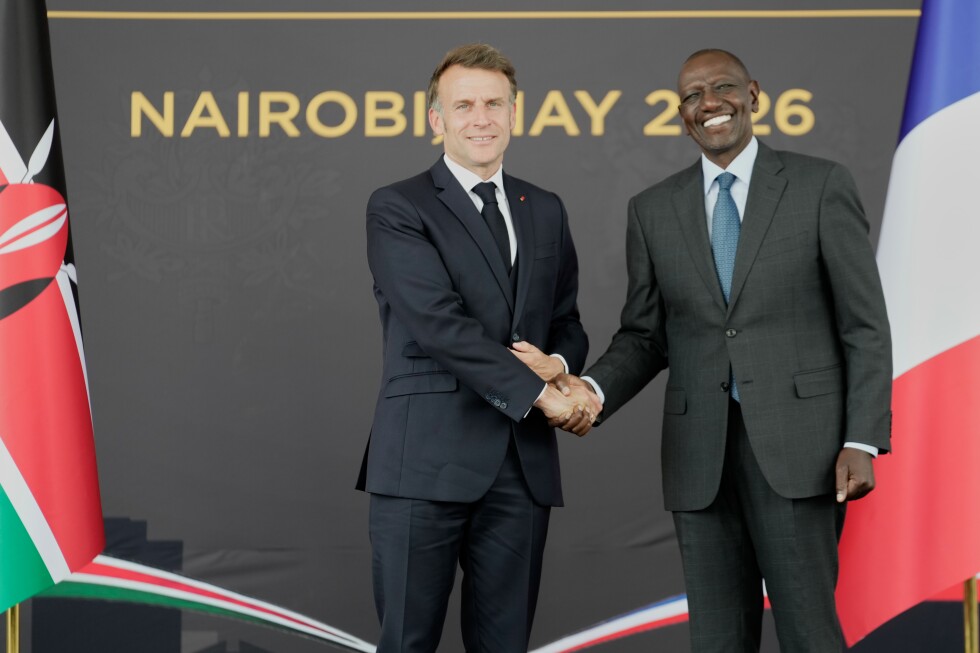
    On Tuesday, both France and the U.K. sought to downplay Trump’s verbal attacks. A spokesperson for French President Emmanuel Macron expressed surprise at the criticism, noting “France has not changed its position since day one.” British Defense Secretary John Healey acknowledged the U.S. remains a critical ally despite the rebuke, and outlined steps the U.K. is already taking to support Gulf security. During a visit to Qatar, Healey announced the U.K. would deploy additional missile and air defense systems to Bahrain, Kuwait, and Saudi Arabia, and extend the deployment of Royal Air Force Typhoon fighter jets to Qatar. “The U.S. is a uniquely close ally to the U.K.,” Healey said. “We do things as two nations that no other militaries or intelligence services do.”

    Analysts note that while European nations have distanced themselves from the offensive, they have strong incentives to remain engaged and push for a quick end to the conflict to prevent broader regional escalation. More than a decade of civil war in Syria already pushed over 5 million people to flee their homes, with hundreds of thousands seeking asylum in Europe and generating lasting social and political disruption across the continent. More recently, Yemen’s Iran-aligned Houthi movement launched its first direct missile attacks on Israel over the weekend and has threatened to disrupt shipping through the Red Sea—a major trade artery for European economies.

    Yasmine Farouk, Gulf and Arabian Peninsula Project director at the International Crisis Group, argued the moment presents a key opportunity for Europe to cement its role as a regional security partner. “I think this is a true opportunity for Europe to show the Gulf that it can be a partner,” she said. “And I think they have already been showing that in the defense (weapons they’ve provided to Gulf nations), they need now to make it more into the diplomatic side in terms of offering offramps and working on a deal.”

    Jeremy Shapiro, U.S. programs director of the European Council on Foreign Relations, wrote in a Tuesday analysis that European negotiators can advance their goals by focusing on the war’s economic costs, pushing for a ceasefire tied to a maritime security mission, and crafting an exit that aligns with Trump’s political priorities. “Trump will claim victory no matter how this war ends,” Shapiro wrote. “Europeans should want that to happen sooner rather than later.”

  • ‘A million things could go wrong’ – why seizing Iran’s uranium would be so risky for the US

    ‘A million things could go wrong’ – why seizing Iran’s uranium would be so risky for the US

    A dramatic, high-stakes ground incursion to seize Iran’s cache of enriched uranium — material that could be refined into nuclear weapons — may seem like a plot pulled from a military thriller, but multiple sources confirm it is among the options under active consideration by the Trump administration as it pursues its core war aim: halting Iran’s nuclear weapons development program. Military analysts and former senior U.S. defense officials who spoke with the BBC warn that any such mission would be one of the most complex and dangerous special operations in modern history, requiring a large deployment of ground troops and potentially stretching on for days or even weeks to complete.

  • FT: Hegseth broker tried to invest in weapons just before Iran war

    FT: Hegseth broker tried to invest in weapons just before Iran war

    Financial Times has revealed that a broker representing US Defense Secretary Pete Hegseth attempted to arrange a substantial multimillion-dollar investment in defense industry stocks just weeks before the United States and Israel initiated military operations against Iran. According to three anonymous sources, the broker from Morgan Stanley contacted BlackRock in February regarding the Defense Industrials Active ETF, which includes major contractors like RTX, Lockheed Martin, Boeing, and Northrop Grumman.

    The timing of the investment inquiry—weeks before the February 28 bombing campaign began—has raised significant ethical concerns, particularly given Hegseth’s role as the most prominent advocate for military action against Tehran within the Trump administration. The investment ultimately did not proceed because the fund was unavailable to Morgan Stanley clients at the time.

    The Pentagon has vehemently denied the allegations, with spokesperson Sean Parnell calling the report “entirely false and fabricated” and demanding an immediate retraction from the Financial Times. Despite these denials, the newspaper reported that BlackRock internally flagged the broker’s inquiry due to the high-profile nature of the potential client.

    Market analysts note the proposed investment would not have yielded immediate returns, as the defense ETF has declined over 12% in the past month. However, the allegation has sparked concerns about potential insider knowledge and market manipulation among administration officials seeking to profit from military conflicts.

    Richard Nephew, former anti-corruption coordinator at the State Department, commented that such behavior would have been considered a clear ‘no no’ in previous administrations that prioritized anti-corruption measures. Economist Justin Wolfers suggested that in a functional democracy, Hegseth would offer his resignation over the allegations.

    The controversy emerges as President Trump revealed that Hegseth was initially disappointed about the prospect of the conflict ending quickly, indicating the Defense Secretary’s hawkish stance on continuing military engagement with Iran.