
Three months is all it took for 30-year-old Abhijeet Dipke to rise from obscurity to national fame – a level of public recognition that most grassroots Indian activists and politicians spend a lifetime chasing, and many never achieve at all. Today, Dipke is the public face of India’s viral Gen Z ‘cockroach protests’, a grassroots movement that has already forced a high-profile government concession and emerged as one of the most significant challenges to Prime Minister Narendra Modi’s administration in recent years.
分类: politics
-

Jimmy Kimmel says interview with Democrat won’t air on TV, cites regulator ‘threats’
A growing clash between the Trump administration and mainstream broadcast media has reached a new flashpoint, after late-night talk show host Jimmy Kimmel announced that a planned television interview with Democratic U.S. Senate candidate James Talarico would not air on linear TV, blaming direct threats from the Trump-aligned Federal Communications Commission. Kimmel made the revelation during his Wednesday broadcast of ABC’s *Jimmy Kimmel Live!*, outlining that the agency, which is currently led by a Trump appointee, had issued threats against his show, network, and local affiliate stations over the booking — a standard editorial decision the administration disapproves of.
Talarico is locked in a high-stakes 2026 midterm election race against Trump-endorsed Republican Ken Paxton for Texas’ open Senate seat. The result of this competitive contest will play a decisive role in determining whether Democrats can flip control of the U.S. Senate for the final two years of Trump’s first term. This is not the first time Kimmel has clashed with the current FCC: the host noted he has interviewed dozens of political candidates throughout his career, including Trump himself during his 2016 first presidential campaign, but the regulatory environment has shifted dramatically since Trump took office.
“Now that he’s president, his FCC has threatened me, threatened our show, threatened our network, ABC, our affiliates, our local stations, based on simple, traditional editorial decisions, guest bookings it would seem they don’t like,” Kimmel told his audience Wednesday. Out of concern for ABC’s local affiliate stations, particularly those based in Texas, Kimmel confirmed the Talarico interview would not run on scheduled Thursday linear TV, and would instead be released exclusively on the show’s YouTube channel.
The White House has forcefully denied all allegations of regulatory intimidation. Spokesman Davis Ingle dismissed Kimmel’s claims as a manufactured performance designed to push a false narrative about the Trump administration’s policies. “FCC Chairman Brendan Carr has not threatened him regarding interviewing James Talarico, or any other candidate,” Ingle said in a formal statement to the BBC. The BBC has also reached out to the FCC directly for additional comment on the matter, which is still pending.
This latest dispute is the culmination of months of escalating tension between ABC, its parent company Disney, and the Trump-led FCC. In September 2026, Kimmel was temporarily pulled from the broadcast schedule after comments he made regarding the shooting of conservative activist Charlie Kirk. That blackout came just hours after Carr threatened regulatory action against ABC and Disney over the remarks. Earlier this year, Donald Trump and First Lady Melania Trump called on ABC to discipline Kimmel over a joke he made about the first lady. Shortly after that public call-out, the FCC ordered an accelerated review of Disney’s national broadcast television licenses — a move ABC pushed back against aggressively with a lawsuit filed last month, arguing the network is being specifically and unfairly targeted because of its independent editorial choices that have at times been critical of the Trump administration.
Trump has openly raised the possibility of revoking FCC broadcast licenses for major U.S. networks that run content critical of his presidency on multiple occasions. This is also not the first time a late-night host has alleged the FCC’s political pressure is shaping interview coverage of the 2026 midterms. Back in February, fellow late-night host Stephen Colbert of CBS claimed the network refused to air his own interview with Talarico over fears of regulatory retaliation from the FCC. CBS rejected the claim of a ban, stating it had only issued standard legal guidance related to the segment.
As the independent regulator that issues broadcast licenses and oversees all radio, television, and satellite airwaves across the U.S., the FCC’s actions have drawn growing scrutiny from press freedom advocates who warn the agency is being weaponized to stifle dissenting political speech ahead of the critical November midterm elections.
-

From JFK to Biden, Trump joins well-trodden path to the Emerald Isle
When former U.S. President Donald Trump touches down in Dublin this Saturday, he will carry forward a long-standing, well-documented tradition of high-frequency U.S. presidential visits to Ireland — a small European nation that has become an outlier for how often it hosts sitting and former U.S. heads of state.
The deep connection between the United States and Ireland was first forged by 19th and early 20th century mass emigration, strengthened by decades of growing economic integration, and permanently cemented by Washington’s central role in advancing the Northern Ireland peace process. Historians estimate that roughly five million Irish people relocated to the U.S. during that period of mass migration, creating what Dr. Peter McLoughlin, a history and politics lecturer at Queen’s University Belfast, describes as an “enormous ethnic link” between the two nations. As of the 2024 U.S. census, more than 32 million Americans — nearly 10 percent of the total U.S. population — identify as having Irish ancestry, a demographic reality that has long made connecting with Irish heritage a politically strategic move for U.S. presidents.
The tradition of in-office U.S. presidential visits to Ireland began with John F. Kennedy in 1963, when the nation’s first Irish Catholic president traveled to his ancestral homestead in County Wexford, the departure point of his great-grandfather during the 1848 Irish potato famine. In his landmark address to the Irish Parliament, Kennedy praised Ireland’s outsized global influence despite its small size and historical lack of wealth or power. In the decades that followed, Ireland evolved into a wealthy, high-growth economy, driven in large part by major U.S. tech and pharmaceutical firms including Apple, Pfizer and Meta, which all house their key European operational hubs on Irish soil.
This wave of 1990s U.S. investment aligned perfectly with the breakthrough Northern Ireland peace process. Bill Clinton made three trips to the island, visiting both the Republic of Ireland and Northern Ireland, and played an instrumental role in brokering the 1998 Good Friday Agreement, the landmark deal that ended three decades of violent conflict in the region. “It’s one of the examples where you can see U.S. power being used in a successful way to get a peaceful settlement,” McLoughlin, who has extensively researched U.S. involvement in the peace process, noted. Though George W. Bush took a less hands-on approach to Northern Ireland than his predecessor, his administration remained critical to ensuring the full implementation of the Good Friday Agreement.
Beyond formal presidential trips, the two countries have nurtured a unique annual diplomatic ritual: each St. Patrick’s Day, Irish political, civic and business leaders travel to Washington, where the taoiseach (Irish prime minister) traditionally presents the U.S. president with a bowl of shamrock, Ireland’s national symbol. Former Irish Ambassador to Washington Dan Mulhall (2017-2022) described this regular high-level access as “pretty unique.” “I remember some of my European colleagues were kind of puzzled as to how Ireland had pulled this off, given that some of them also have large diaspora communities in the U.S., but they don’t seem to have the same impact or lasting connection with their ancestral homeland as the Irish Americans undoubtedly have,” Mulhall explained.
In recent years, the tradition of ancestral exploration has continued: Barack Obama traveled to his great-great-great grandfather’s home village of Moneygall in County Offaly during his 2011 visit, while Joe Biden, the last sitting U.S. president to visit Ireland, called the nation “part of his soul” during his 2023 trip, which marked the 25th anniversary of the Good Friday Agreement.
Trump’s upcoming two-day visit breaks sharply from this long-running pattern. Unlike most of his predecessors who have visited Ireland, Trump has no documented Irish ancestry, and his itinerary will center on golf rather than ancestral tourism: he will attend the Irish Open, hosted at his own resort in Doonbeg, County Clare. While in Dublin, he is scheduled to meet Taoiseach Micheàl Martin and Irish President Catherine Connolly, whose role is largely ceremonial but who has long been a vocal critic of U.S. foreign policy, particularly in the Middle East. Earlier this year, Connolly condemned a U.S. attack on Iran as “a brutal assault on international law”; in response, Trump incorrectly referred to her as male and stated “He’s lucky I exist.”
Tensions have already been simmering between Washington and Dublin over Irish legislation passed this year banning the import of goods from Israeli settlements in occupied Palestinian territory. The U.S. Embassy in Dublin has warned the law “risked real unintended consequences, particularly for nearly 1000 U.S. companies and the hundreds of thousands of Irish jobs tied to them.” This weekend, protests are planned in both Dublin and County Clare focused on U.S. foreign policy; earlier this week, activist group Uplift carved the message “No kings – Gaza Iran Ice” into sand on a Dublin Bay beach to signal opposition to the visit.
U.S. trade policy has also long been a point of note in bilateral relations, as Trump has previously expressed dissatisfaction with the scale of U.S. pharmaceutical manufacturing based in Ireland, though no major tariffs have been imposed on the sector to date. Mulhall noted that the bilateral economic relationship remains “as strong as it’s ever been,” and he expects the Irish government to adopt a stance of “prudent realism” for the visit. “It’s not possible to expect that a small country, any country in fact, can deflect Donald Trump from any of his purposes or policies,” he explained. “Most countries have adopted the strategy of simply trying to ride out the Trump term and hope for more predictable days ahead. So I think the government will play it safe and will be above all else, be wanting to avoid any kind of tension or difficulty between themselves and Donald Trump.”
McLoughlin draws clear parallels between Trump’s upcoming visit and Ronald Reagan’s 1984 trip to Ireland, which faced widespread opposition over U.S. foreign policy in Latin America. At the time, the influential Catholic Church refused to let senior clergy meet Reagan, as many Irish families had relatives working as priests and nuns in Latin America who shared firsthand accounts of harm linked to U.S.-backed right-wing paramilitaries. Even so, McLoughlin noted, the Irish government still sought to court Reagan for economic benefits and progress on Northern Ireland, and photos of Reagan exploring his own Irish heritage ultimately helped frame the visit as a success for both sides.
As a nation long accustomed to hosting the U.S. head of state, Trump’s upcoming visit — with all its diplomatic complexities and points of tension — marks just the latest chapter in a cross-border relationship that has been evolving for more than a century.
-

Watch: Three times Trump has promised money to Americans
Following former President Donald Trump’s recent pledge that he would distribute $5,000 direct payments to U.S. adult citizens if Republicans secure control of Congress in the upcoming midterm elections, BBC correspondent Samira Hussain has launched a retrospective look at three major unfulfilled monetary promises Trump has made to the American public throughout his political career.
The examination comes as Trump’s latest commitment has dominated early midterm campaign discourse, with observers questioning whether the new pledge follows a pattern of unmet outreach to voters. Over the years, Trump has positioned himself as a champion of working-class Americans, often tying his policy proposals to direct financial benefits that would reach households across the country. But Hussain’s reporting tracks how those past commitments never came to fruition, leaving voters to question the credibility of his latest announcement.
As the midterm campaigns ramp up across the nation, control of the House and Senate hangs in the balance, and Trump remains the most influential figure in the modern Republican Party. His latest monetary pledge is seen as a key push to energize his base ahead of election day, but the scrutiny of his past promises has underscored ongoing debates about his track record of delivering on policy commitments to American voters.
-

‘Slow it down’ – Bernie Sanders speaks to the BBC about proposal to ban AI superintelligence
In a wide-ranging interview with the British Broadcasting Corporation, longtime US progressive Senator Bernie Sanders has laid out a bold, precautionary policy agenda for the rapidly expanding artificial intelligence sector, headlined by a call to halt the race to develop advanced superintelligence systems.
The call comes amid growing bipartisan and expert concern over the unregulated pace of AI advancement, with many leading figures in the technology itself warning that ungoverned development of systems that can outperform human cognition across most domains poses existential and widespread economic risks. Sanders used the platform to amplify these warnings, urging policymakers to rein in the breakneck speed of innovation that prioritizes corporate profit over public safety and equity. His core message to the industry and regulators alike was straightforward: “Slow it down.”
Beyond the call for a ban on AI superintelligence, Sanders has put forward a groundbreaking structural economic proposal to reshape how the United States engages with the AI boom. The plan would establish a new federal sovereign wealth fund that grants the U.S. government a 50% equity stake in major artificial intelligence companies. The senator argues that this model would ensure that the massive economic gains generated by AI innovation are not concentrated solely in the hands of a small group of corporate executives and wealthy shareholders, but instead are shared broadly across the American public. Proponents of similar models suggest the revenue generated from the stake could fund social programs, infrastructure development, and support for workers displaced by AI-driven automation.
The proposal marks one of the most aggressive federal policy frameworks for AI governance put forward by a sitting elected official in the U.S., setting up a potential new debate over regulation, public ownership, and equitable distribution of tech sector gains in the lead-up to future congressional policy debates.
-

London university lifts suspension of pro-Palestine student Usama Ghanem
After 12 months of sustained legal challenge and widespread public advocacy, King’s College London (KCL) has reversed its disciplinary suspension of Egyptian student activist Usama Ghanem, who was penalized by the institution for his public pro-Palestine organizing. The outcome marks a landmark turning point for student activists across the United Kingdom who have pushed back against institutional crackdowns on Palestine-related political speech and protest. Ghanem, a former political refugee who fled Egypt after being imprisoned with his father and brother for opposing the Egyptian government in 2020, framed the ruling as a broader victory rather than a personal win. In an interview with Middle East Eye, he emphasized that the win extends beyond his own case. “After a year-long legal and public battle, I can now say that we took on a 200-year-old institution and we won,” Ghanem stated. “This sets a new precedent that university crackdowns on pro-Palestine speech and protest ought to be overturned.” The activist stressed that the reversal of his suspension is a victory for the dozens of other KCL students who have risked their academic standing to participate in pro-Palestine advocacy, as well as for student organizers across the UK and Western nations who have opposed restrictions on Palestine-focused activism. “But this is not a win for me. It is a win for the 25 other students who have put their degrees on the line,” he said. “This is their win, and the win of every single student at KCL, in London, across the UK, the West and beyond who campaigned against this crackdown.” Ghanem’s case carried uniquely high stakes due to his fragile immigration status in the UK. As someone who already faced persecution and imprisonment in his home country for political dissent, the suspension threw his right to remain in the UK into question, with Ghanem facing the imminent threat of deportation to Egypt, where he risked torture and further persecution. Documents included in his original KCL admissions application outlined the history of persecution his family faced at the hands of Egyptian security forces, meaning university leadership was fully aware of the risks his suspension posed to his safety, Ghanem confirmed. The reversal of Ghanem’s suspension unfolds against a backdrop of growing national controversy over the treatment of pro-Palestine student activists on UK university campuses, a conversation that intensified after Israel launched its military offensive in Gaza in October 2023. Student organizers and human rights campaigners have repeatedly accused UK higher education institutions of enacting disproportionate, politically motivated restrictions on speech and protest related to Palestinian rights, while university administrations have defended their disciplinary actions as necessary enforcement of existing institutional policies. Data collected last year by Liberty Investigates confirmed that KCL has disciplined more students for pro-Palestine activism than any other university across the United Kingdom. Activists have long argued that the wave of disciplinary action at the institution has created a chilling effect, discouraging students from exercising their right to peaceful protest and political expression. Middle East Eye has reached out to KCL for official comment on the reversal of Ghanem’s suspension, with no response released as of yet.
-
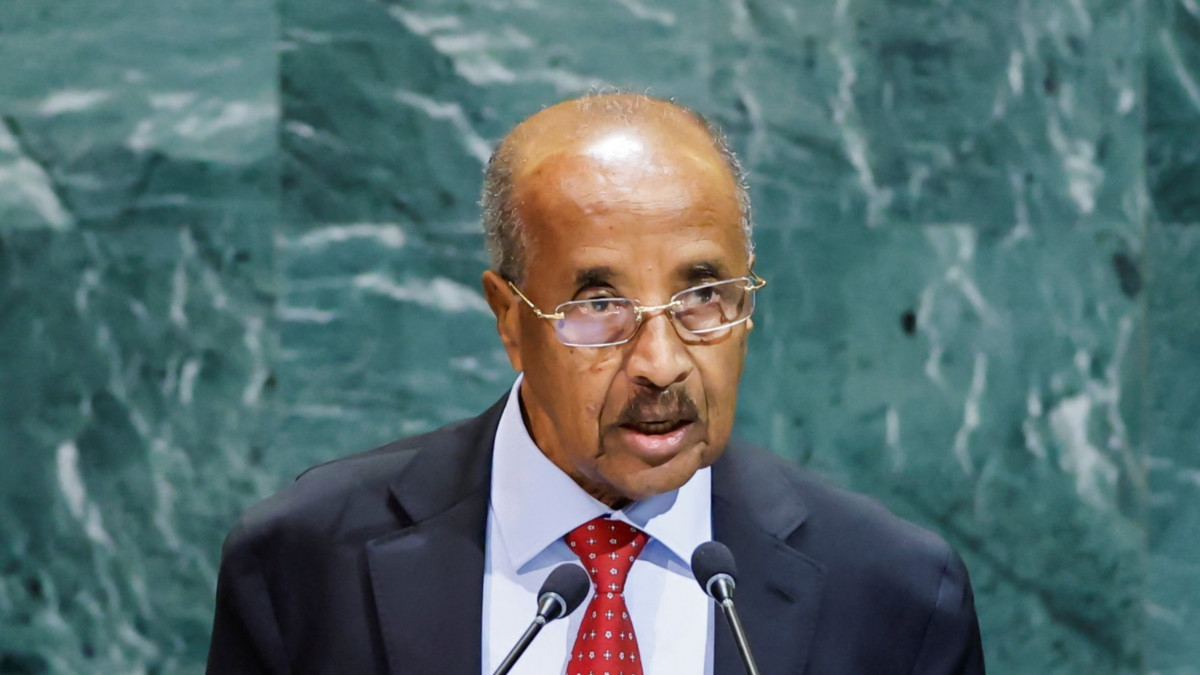
Exclusive: UAE pursuing ‘port imperialism’ across Africa, Eritrean foreign minister says
In an exclusive interview with Middle East Eye held in Eritrea’s capital Asmara, Eritrean Foreign Minister Osman Saleh has leveled a sharp accusation against the United Arab Emirates, claiming the Gulf state is pursuing a strategy of “port imperialism” across the African continent, particularly in the strategic Horn of Africa region.\n\nThe UAE’s two major state-linked port operators, DP World and AD Ports Group, currently hold stakes in or manage port infrastructure across multiple East African locations: Egypt, Tanzania, the self-declared independent Republic of Somaliland (recognized only by Israel), and Puntland, a semiautonomous region of Somalia that defied the central Somali government’s order to sever ties with Abu Dhabi earlier this year. While UAE investment in regional ports has drawn welcome from some host nations, Abu Dhabi’s push to secure port access along East Africa’s Indian Ocean and Red Sea coastlines has faced growing pushback from a number of regional governments. Djibouti terminated DP World’s operating concession for its main container terminal in 2018, and Sudan’s transitional government canceled a 2022 deal that would have allowed AD Ports to build a $6 billion new port on Sudan’s Red Sea coast. The UAE has been widely documented as a key backer of Sudan’s Rapid Support Forces (RSF), a paramilitary group facing international accusations of perpetrating genocide and mass atrocities in its ongoing war against Sudan’s regular military.\n\nEritrea itself, a strategically positioned Red Sea nation with more than 700 miles of coastline, offers a clear case study in the wariness many regional states hold toward UAE expansion, even as Abu Dhabi has repeatedly denied any imperial ambitions in Africa. The UAE first established a military base at Eritrea’s southern Assab port in 2016, which it used to launch military operations against the Houthi movement in Yemen as part of the Saudi-led coalition. But relations between the two nations quickly deteriorated after the base was established.\n\nWhile Eritrea’s independence movement maintained historically warm ties with Zayed bin Sultan Al Nahyan, the founding father of the UAE, current Eritrean leadership has clashed repeatedly with UAE President Mohamed bin Zayed Al Nahyan. A senior unnamed Eritrean official confirmed to Middle East Eye that Asmara rejected a 2016 UAE request to build a shared military base for the UAE and Israel on one of the islands in Eritrea’s Dahlak Archipelago — a proposal that came nearly five years before the US-brokered Abraham Accords formalized public diplomatic ties between the two nations.\n\nUnlike the commercial port operation the UAE runs in Tanzania’s Dar es Salaam, many of Abu Dhabi’s other port acquisitions across the region have come paired with a permanent military presence, most notably at the Berbera port in Somaliland. When asked about DP World’s efforts to enter Eritrea, Saleh made Eritrea’s position clear: “We do not want any foreign power to have a ‘hub’ in Eritrea.”\n\nEritrea and the UAE now find themselves at odds across multiple regional theaters. In Sudan, the UAE backs the RSF, while Eritrea has hosted Sudanese army chief Abdel Fattah al-Burhan twice in the two months prior to the interview; the Sudanese military is also backed by Egypt, Turkey, and Saudi Arabia.\n\nIn the Horn of Africa’s broader power dynamics, Eritrea has found itself increasingly opposed to the growing alliance between the UAE, Ethiopia, and Israel. Eritrea and Ethiopia formed a temporary tactical alliance to fight the Tigray People’s Liberation Front (TPLF) during Ethiopia’s 2020–2022 Tigray War, a conflict that saw widespread allegations of mass atrocities and war crimes committed by all sides. That alliance has since collapsed entirely, and the two nations are now openly hostile to one another. Ethiopia has accused Eritrea of supporting remnant TPLF factions, a charge Eritrea has repeatedly denied. Tensions have been further exacerbated by Ethiopian Prime Minister Abiy Ahmed’s open claims to Eritrea’s Red Sea coastline. While Eritrea says it is open to negotiating a commercial access agreement for landlocked Ethiopia, Abiy has frequently framed his claims in expansionist, revisionist terms.\n\nIn recent years, Ethiopia has emerged as one of the UAE’s closest partners in the Horn of Africa. Abiy maintains a close personal relationship with Mohamed bin Zayed, Addis Ababa has deployed Emirati-built drones and other weapons systems in its internal conflicts, and multiple independent media outlets including Middle East Eye have confirmed Ethiopia hosts RSF training bases on its territory.\n\nEritrean officials in Asmara say they have observed growing military and political cooperation between the UAE and Israel in Ethiopia. For Eritrea, this alignment echoes a historical pattern: Israel provided military arms to Ethiopia’s Marxist Derg regime in the 1970s and 1980s, weapons that were used to suppress Eritrea’s independence struggle.\n\nSaleh emphasized that Israel and the UAE have already formalized their cooperation in Somaliland, where breakaway regional officials have openly stated they are seeking a permanent Israeli military presence. He drew a parallel between Abiy’s regional ambitions and Israeli expansionism, noting: “[Abiy Ahmed] has a two-waters strategy like Israel. Only for him it is from the Nile River to the Red Sea.”\n\nEven after establishing diplomatic relations immediately following Eritrea’s 1993 independence, and a pivotal 1993 incident where Israel provided life-saving medical treatment to Eritrean President Isaias Afwerki when he fell ill with cerebral malaria, relations between Asmara and Jerusalem have cooled dramatically in recent years. In response to growing regional alignment against Eritrea, Saleh said Asmara made the decision to expel the Israeli embassy and cut formal relations: “We are not antagonistic to Israel, but we just decided we didn’t want any relations.”\n\nSaleh closed by questioning the broader intentions of outside powers in the strategically critical Horn of Africa, asking: “We have to ask why Israel is running to control the Horn of Africa? Why do they need a base in Somaliland?”
-

Algeria suspends diplomatic relations with ‘dwarf state’ UAE
In a major escalation of long-simmering bilateral discord, Algeria formally announced Thursday it is severing all diplomatic relations with the United Arab Emirates, a decision that came after Algiers said it had exhausted every possible avenue to preserve cooperative ties between the two nations.
The Algerian Ministry of Foreign Affairs outlined the break in an official public statement, noting that the country had repeatedly issued warnings to the UAE over what it describes as persistent hostile actions against Algerian interests. According to the statement, Algeria invested extensive diplomatic effort into drawing Abu Dhabi’s attention to the severe fallout that could stem from its “regrettable and unjustified behavior.”
“Despite these numerous warnings, the United Arab Emirates has persisted in these actions, which have reached a point where they can no longer be considered acceptable or tolerable within the framework of relations between two sovereign states, or remain unanswered,” the statement continued. The ministry confirmed it has formally notified the UAE’s ambassador to Algeria of the decision and issued a 48-hour deadline for the envoy to leave the country.
Tensions between the two North African and Gulf nations have built steadily over recent years, driven by growing Algerian concern over what regional analysts frame as the UAE’s increasingly destabilizing interventionist role across the broader Middle East and North Africa region. As far back as 2023, prominent Algerian daily newspaper Le Soir d’Algerie labeled the UAE a “pyromaniac state” in a scathing headline, condemning what it called the UAE’s harmful meddling along Algeria’s borders.
Over the past decade, the UAE has poured significant funding into authoritarian factions and breakaway movements across the Sahel and North Africa, according to regional security researchers. In war-torn Libya, Abu Dhabi has long backed eastern-based military strongman Khalifa Haftar, a sponsorship that deepened fragmentation within Libya and ripple instability into neighboring Chad, Sudan and Niger.
The UAE has also leveraged its presence in Libya to funnel military and political support to Sudan’s Rapid Support Forces (RSF), a militia that has faced widespread international accusations of perpetrating genocide amid the ongoing Sudanese civil war. As early as April 2024, Algerian President Abdelmadjid Tebboune made public comments widely interpreted as a direct rebuke of the UAE, saying: “Wherever there is conflict, the money of this state [the Emirates] is there – in Mali, Libya, and Sudan.”
Tebboune has also made veiled, disparaging references to the UAE as a “dwarf state” that attempts to interfere in regional affairs from which Algeria has already blocked much larger global powers. He notably declined to name the country in those earlier remarks, choosing instead to criticize it indirectly for months before the formal diplomatic break.
Andreas Krieg, an associate professor of security studies at King’s College London, told Middle East Eye that the break was a long time in the making, and that its true significance extends far beyond the severing of ties itself to reveal how Algeria now views the UAE’s regional ambitions.
“Algiers has effectively concluded that Abu Dhabi’s regional playbook – cultivating what I call an ‘axis of secessionists,’ from Haftar in Libya to the RSF in Sudan to the southern movement in Yemen – was being turned toward Algeria itself,” Krieg explained.
Algeria has spent much of 2024 signaling its growing dissatisfaction with Abu Dhabi’s actions. Back in February, Algiers moved to cancel its bilateral air services agreement with the UAE. While no formal official explanation was issued for that decision, most regional analysts agree it was a direct response to the UAE’s continued intervention in territories along Algeria’s periphery.
Krieg noted that Algeria’s sharpest concern stems from suspected contact between the UAE and the Movement for the Self-Determination of Kabylie (MAK), an autonomy movement that Algiers has designated a terrorist organization and views as an existential threat to national unity. That suspected contact crosses a clear red line for Algerian leadership, he added.
Earlier this year, when the UAE announced its early withdrawal from OPEC+, Tebboune publicly downplayed the move as a “non-event,” noting that Saudi Arabia remained the core pillar of the oil producers’ bloc, and adding that “the book is closed” on the UAE’s role in the grouping.
“The foreign ministry’s wording is the tell,” Krieg said. “It says the decision came ‘after exhausting all means’ to save the relationship, and it pointedly names no single trigger. That’s deliberate: this wasn’t one incident but an accumulation – the suspected outreach to separatists, the UAE’s military footprint in Libya and the Sahel, and Abu Dhabi’s backing of Morocco on Western Sahara, which for Algeria is the most sensitive file of all.”
“President Tebboune had spent the better part of a year railing against a ‘small state’ bent on stirring trouble; today he just stopped pretending it was anonymous,” Krieg added.
-

Trump promises to send $500 to nearly 1 million Americans for Obamacare ‘overcharges’
More than three years after his first failed attempt to overturn the Affordable Care Act (ACA), widely known as Obamacare, former and returning U.S. President Donald Trump has unveiled a new direct policy move targeting the landmark 2010 health care law: one-time $500 rebate checks totaling close to $500 million to nearly 1 million Americans who purchase unsubsidized health plans through the federal ACA insurance marketplace. The Trump administration says the payments represent refunds for what it labels as excessive “overcharges” levied during Joe Biden’s prior presidential term, with mailed checks set to begin reaching eligible households starting this October.
Per White House guidance released Thursday, the rebates will only go to consumers in 30 states that rely on the federal government to operate their ACA insurance marketplaces, and exclude any buyers who receive income-based premium subsidies to lower their monthly plan costs. Eligible recipients are consumers who pay 100% of their own plan premiums, which can often climb to several hundred dollars per month for unsubsidized coverage. The administration argues that a so-called “user fee” added to monthly marketplace premiums was over-collected under the Biden administration, amassing a surplus far larger than what is actually required to cover operating costs for the federal exchange.
Notably, the administration’s public fact sheet does not disclose the total size of the alleged surplus, nor does it lay out any concrete plans to permanently lower user fees or overall premium costs for marketplace consumers moving forward. This new rebate promise comes on top of an earlier Trump pledge to send $5,000 one-time payments to Americans if the Republican Party secures majority control of both chambers of Congress in the upcoming November legislative elections.
First enacted in 2010 under the Obama administration, the ACA expanded health insurance access to millions of previously uninsured Americans by creating standardized public insurance marketplaces where private health plans can be purchased, and introduced new federal rules requiring minimum coverage standards for most individual market plans. The law also made available income-based tax subsidies that cut monthly premium costs for the majority of marketplace enrollees, and expanded the Medicaid public insurance program for low-income households. State-by-state operation of marketplaces varies, with some running their own state-level exchanges and others opting to let the federal government manage plan enrollment and pricing.
Most Democratic lawmakers have not yet issued public responses to Trump’s rebate announcement, but the party has long defended the ACA as a critical pillar of affordable health coverage for U.S. households. Trump first made a full repeal of the law a top priority during his first presidential term, coming within one vote of passing repeal legislation in 2017 before the effort collapsed. Since returning to office for his second term, Trump has continued to push for structural changes to the ACA and repeatedly called for a full replacement of the law, though he has yet to release a detailed alternative health care proposal to replace it. This rebate plan marks the most direct, concrete action the Trump administration has taken on the ACA since returning to the White House.
Official enrollment data shows that total ACA marketplace and Medicaid enrollment tied to the law has dropped by roughly 8 million people since Trump’s return to office. The administration’s broader changes to the ACA, included as part of the One Big Beautiful Bill Act (OBBA), have not yet gone into full effect, with the full implementation timeline expected to stretch over multiple years. Eligible rebate recipients are concentrated in key 2026 swing states including Florida, Texas, North Carolina, Ohio, Michigan, and Wisconsin, all of which rely on the federal ACA exchange.
-

‘Kahanist’ figure poised to enter Israeli parliament on Ben Gvir’s party list
As Israel prepares for its snap parliamentary elections scheduled for October 27, a radical far-right figure with deep ties to a banned terrorist organization is on the cusp of securing a seat in the Knesset, according to reporting from Israeli outlet Haaretz. Tzachi Eliyahu, an avowed adherent of the Kahanist ideology, has secured the eighth spot on the candidate list of Otzma Yehudit, the far-right party led by current Israeli National Security Minister Itamar Ben Gvir.
Eliyahu’s open alignment with the racist Kach movement is impossible to miss: he carries a tattoo of the movement’s logo on his arm. Kach was founded by Meir Kahane, a radical Jewish supremacist rabbi who was assassinated in New York in 1990. The movement was formally outlawed across Israel and classified as a terrorist organization due to its explicitly racist agenda targeting Palestinians, which included open calls for the forced expulsion of all Palestinians from historic Palestine. The ban came into force in 1994, after Kach supporter Baruch Goldstein carried out a mass shooting that killed 29 Palestinian Muslim worshippers at Hebron’s Ibrahimi Mosque.
This is not Eliyahu’s first attempt to enter the Knesset. In 2023, when a vacancy opened up following the resignation of Noam party chairman Avi Maoz, Ben Gvir blocked Eliyahu from taking the seat. At the time, Ben Gvir – who has himself been previously convicted on charges of supporting the banned Kach movement – argued that Eliyahu’s visible Kach tattoo would harm the party’s public image, political sources familiar with the decision told Israeli outlet Srugim. A source told Srugim at the time that Eliyahu represented an older, unapologetic strain of Otzma Yehudit’s ideology, describing him as “that kind of Kahanist.”
Current polling, however, points to a strong performance for Otzma Yehudit, with projections showing the party winning between eight and 10 Knesset seats. If the polls hold, Eliyahu’s eighth place slot on the list will guarantee him a parliamentary seat. After the party formally submitted its full candidate list to Israel’s Central Elections Committee earlier this week, Ben Gvir publicly praised the slate, claiming he was “proud that we have the most diverse list in Israel.” Ben Gvir added that all Otzma Yehudit members carry “a lot of love for the people of Israel in our hearts.”
Beyond Eliyahu’s Kahanist ties, he has a long record of controversial and extremist actions. He has publicly expressed support for Elor Azaria, a former Israeli soldier convicted of manslaughter for the 2016 extrajudicial killing of an unarmed, wounded Palestinian man lying incapacitated on the ground in Hebron. In a social media post, Eliyahu called Azaria “the child of us all,” and claimed the soldier was right to “eliminate a terrorist at the scene.”
Eliyahu has also been repeatedly linked to violent clashes with anti-government protesters during Israel’s 2023 mass demonstrations against the Netanyahu government’s controversial judicial overhaul plan, with multiple reports documenting him personally attacking demonstrators. He has also targeted Palestinian journalists: he called for a confrontation with Palestinian Haaretz reporter Hanin Majadli at her home after she expressed support for an Israeli teacher fired for criticizing the Israeli military, writing, “Haaretz won’t fire her, but let’s make sure the police pay her a visit at home.”
Just months ago, in June 2024, Eliyahu joined other far-right activists to raise Israeli flags at the entrance to Kafr Kanna, a Palestinian-majority town in northern Israel. On social media platform Facebook, he spelled out his core political goal: “Our top mission as a government and as a people is to Judaise the Galilee and ensure the Jewish majority in the Land of Israel.”
Ben Gvir’s Otzma Yehudit has already placed the so-called “voluntary emigration” of Palestinians from the Israeli-occupied West Bank and Gaza Strip at the top of its election platform, a term widely recognized as a euphemism for forced displacement and mass expulsion of Palestinian people from their land.