分类: politics

  • Israel to pour $730m into propaganda as Gaza genocide, Iran war turns it into pariah

    Israel to pour $730m into propaganda as Gaza genocide, Iran war turns it into pariah

    Against a backdrop of mounting international fury over its military campaign in Gaza and expanding hostilities across Western Asia, Israel has greenlit a near three-quarters-of-a-billion-dollar surge in state-funded propaganda spending, a dramatic bid to reverse its rapidly collapsing global standing. The allocation, approved by Israeli lawmakers as part of the 2026 national budget in March, sets aside $730 million for hasbara – the official term for Israel’s state-directed public diplomacy and influence operations. This marks an extraordinary five-fold jump from the previous year’s $150 million allocation, which itself was already 20 times higher than pre-2023 spending levels.

    The scale of the budget increase, first revealed by the *Jerusalem Post* earlier this week, lays bare the urgency of Israel’s push to contain growing global condemnation and its rapid slide toward pariah status in international affairs. The PR overhaul comes as Israel grapples with a cascading series of crises that extend far beyond the Gaza conflict: rising global recognition of its apartheid regime in the occupied West Bank, intensifying scrutiny over long-rumored links between Israeli intelligence agency Mossad and convicted sex offender Jeffrey Epstein, and widespread anger over allegations that Israel pushed the United States into a confrontation with Iran that has triggered global economic instability and humanitarian ripple effects far beyond the Middle East.

    Israel currently faces diplomatic and public opinion isolation at depths unmatched since the country’s founding, according to a recent analysis from Tel Aviv’s Institute for National Security Studies (INSS). This worsening isolation comes as Israeli Prime Minister Benjamin Netanyahu is the subject of an arrest warrant from the International Criminal Court, charged with war crimes and crimes against humanity stemming from operations in Gaza, while the state of Israel is defending itself against formal genocide accusations at the International Court of Justice.

    A core target of the new propaganda push is shifting public sentiment in the United States, Israel’s most critical long-standing ally, where polling shows support for the country is eroding rapidly across demographic and political lines. A Pew Research Center survey released in April found that 60 percent of Americans now hold unfavorable views of Israel – a sharp uptick over just 12 months – while positive approval has dropped to 37 percent. This shift cuts across every major demographic: a majority of Republicans under 50 now view Israel negatively, while support has fallen among Black Protestants, Catholics, religiously unaffiliated Americans, and even among American Jewish communities, where backing has slipped below two-thirds.

    To implement the expanded influence campaign, Israel’s Foreign Ministry has dramatically expanded its messaging infrastructure. Under Foreign Minister Gideon Sa’ar, a new dedicated unit has been created specifically to shape global narratives about Israel’s actions. The government has earmarked tens of millions of dollars for targeted digital outreach, including a $50 million push for social media advertising across major global platforms, and roughly $40 million to host hundreds of foreign delegations ranging from sitting politicians and religious leaders to social media influencers and university presidents. A centralized “media war room” now monitors coverage from hundreds of international news outlets and tracks thousands of daily mentions of Israel across global media and social platforms.

    The campaign also extends to political consulting and AI-driven targeted outreach: the Foreign Ministry signed a $1.5 million per month contract with a firm linked to former Donald Trump campaign strategist Brad Parscale to deploy artificial intelligence tools to shape online discourse. Additional funds have been directed to evangelical Christian networks and influencer campaigns managed through private public relations firms.

    The surge in hasbara spending aligns with growing alarm within Israel’s national security and policy establishment over the country’s deepening international isolation. The recent INSS paper warns that Israel is facing diplomatic and public opinion isolation “not seen since its establishment”, highlighting the emergence of a “creeping economic boycott” as businesses and academic institutions around the world increasingly cut formal ties with Israeli partners. To counter this trend, INSS researchers have called on the Israeli government to ramp up engagement with diaspora Jewish communities and Christian Zionist networks. Proposals put forward include expanding youth travel programs to bring tens of thousands of young Jews and Christians to Israel annually, and a renewed push to build influence within global higher education. The report also recommends creating a $100 million fund to support Israeli research and launching a program to invite leaders of top global universities to visit Israel, with the goal of shoring up institutional partnerships.

  • Trump says he’ll place 25% tariff on autos from the EU, accusing it of not complying with trade deal

    Trump says he’ll place 25% tariff on autos from the EU, accusing it of not complying with trade deal

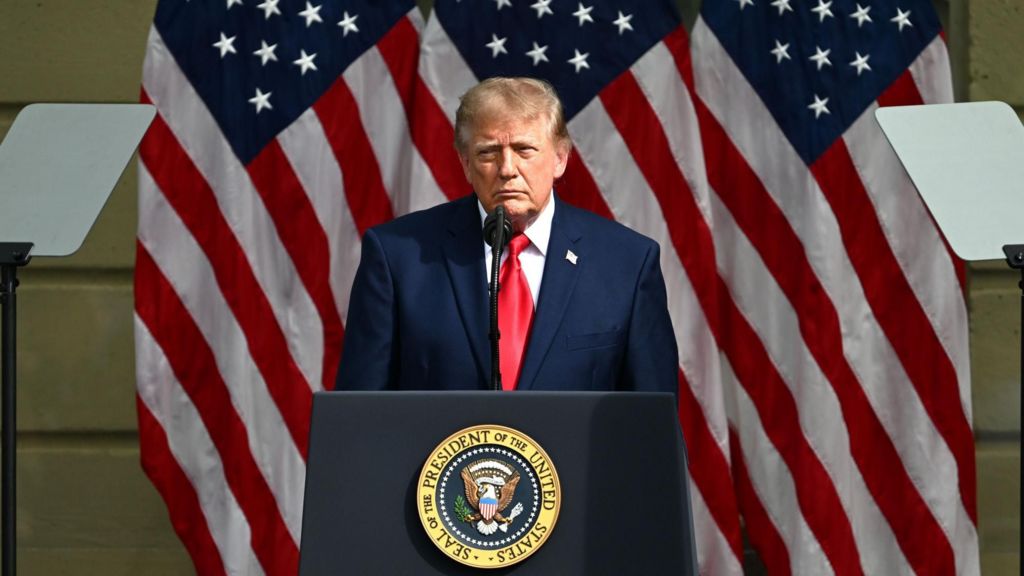
    WASHINGTON — In an unexpected announcement that has sent ripples through global markets already grappling with multiple crises, former and returning U.S. President Donald Trump revealed Friday that he will raise import tariffs on European-manufactured cars and trucks to 25% starting next week. The policy shift arrives at a moment of unprecedented vulnerability for the global economy, threatening to exacerbate already mounting pressures on growth and inflation.

  • Former Miami Congressman David Rivera is convicted of secretly lobbying for Maduro’s Venezuela

    Former Miami Congressman David Rivera is convicted of secretly lobbying for Maduro’s Venezuela

    MIAMI — After a high-profile seven-week federal trial that pulled back the curtain on hidden foreign influence operations targeting U.S. Latin America policy, former Republican U.S. Representative David Rivera has been found guilty on all charges connected to a covert $50 million lobbying campaign on behalf of Venezuela’s Nicolás Maduro government during the first Donald Trump presidential term.

    Jurors delivered the guilty verdict Friday against Rivera, a decades-long close personal friend of U.S. Secretary of State (and former Florida U.S. Senator) Marco Rubio, and his co-defendant, political consultant Esther Nuhfer. All 11 counts against the pair, including conspiracy to commit money laundering and failing to register as agents of a foreign government with the U.S. Department of Justice, resulted in conviction. Rivera remained stoic and expressionless as the verdict was read, a demeanor he maintained throughout the entire course of the trial.

    Though Rivera had been released on bond ahead of the verdict, U.S. District Judge Melissa Damian immediately ordered him to be taken into federal custody. Damian ruled Rivera qualifies as a substantial flight risk, citing his access to large unreported assets, the potential for a decades-long prison sentence, and additional pending federal foreign lobbying charges linked to this scheme that he already faces in Washington, D.C.

    The trial, one of the few high-profile public proceedings to examine foreign influence operations centered in Miami, offered an unprecedented look at the city’s unique role as a hub for cross-border lobbying campaigns designed to shift U.S. policy toward Latin America. Miami’s large Venezuelan exile community, deep political connections to Washington, and concentration of regional power players have long made it a magnet for both anti-Communist advocacy and foreign corruption operations, a dynamic laid bare by the proceedings.

    The case even drew testimony from top Washington political figures, including Rubio and Texas Congressman Pete Sessions, both of whom told jurors they had no idea Rivera held a secret consulting contract with PDV USA, the U.S.-based affiliate of Venezuela’s state-owned oil giant PDVSA. Both said they were shocked when the scheme came to light.

    Prosecutors first unsealed the 11-count indictment against Rivera and Nuhfer in 2022. The case alleges that Venezuela’s then-Foreign Minister Delcy Rodríguez — who now serves as Venezuela’s acting president — personally tapped Rivera to leverage his Republican connections built during his time in Congress to convince the first Trump administration to drop its hardline opposition to Maduro and roll back crippling economic sanctions that had gutted Venezuela’s economy.

    Prosecutors argued that the pair manipulated high-profile political contacts including Rubio and Sessions like “pawns on a chessboard” as part of the lobbying push, all to advance Maduro’s goal of normalizing relations with the Trump administration at a time when the Venezuelan government faced widespread global condemnation for gross human rights violations. In his closing arguments to the jury, lead prosecutor Roger Cruz emphasized that the defendants prioritized large payments over ethical or legal obligations, saying “As long as the money kept coming in, they didn’t care from where.”

    Per prosecution arguments, Rivera and Nuhfer concealed their work to protect Rivera’s public image as a leading anti-Communist voice in Florida Republican politics; keeping the “massive secret” hidden was the only way to avoid ending his political career, prosecutors said. To hide communications from authorities, Rivera set up an encrypted chat group codenamed MIA (for Miami) with Raúl Gorrín, a Venezuelan media tycoon who served as the main liaison to the Maduro government and has since been charged by U.S. authorities with bribing senior Venezuelan officials. Chat members used coded language to obscure their activities: Maduro was referred to as the “bus driver,” Sessions as “Sombrero,” Rodríguez as “The Lady in Red,” and multi-million dollar payments were called “melons.” Prosecutors added that payments from the Maduro government were consistently referenced in chats using the Spanish word for light, “La Luz.”

    The defense pushed back aggressively against the prosecution’s narrative. Attorneys for both defendants argued their clients acted in good faith and had no legal obligation to disclose the consulting contract, which they claimed focused exclusively on commercial efforts to convince oil major ExxonMobil to return to its operations in Venezuela. Commercial work of this nature is typically exempt from foreign agent registration requirements under U.S. law. The defense further contended that Rivera’s later meetings with Rubio and Sessions, which occurred after the consulting contract expired, were focused on promoting a transition to a new Venezuelan government less hostile to U.S. interests, rather than normalizing Maduro’s rule.

    “He was working every possible angle to get Nicolás Maduro out,” defense lead attorney Ed Shohat said in closing arguments. “There was not a word in the chats about normalizing relations.” Nuhfer’s attorney, David Oscar Markus, drew a controversial comparison between the government’s case and the 17th-century Salem Witch Trials, arguing the prosecution presumed guilt on thin, insubstantial evidence that did not prove malicious intent. “My client does not have a dark heart,” Markus told the jury.

    Prosecutors rejected the defense’s framing, arguing the ExxonMobil-focused contract was just a cover for illegal political lobbying on behalf of the Maduro government. Once the scheme began to unravel, prosecutors said, Rivera and Nuhfer fabricated documents, backdated agreements, and created sham contracts to hide the flow of illegal funds. One example presented to the jury was a fake agreement created to justify a $3.75 million wire transfer to a South Florida company that maintained Gorrín’s luxury yacht.

    The political lobbying operation included arranging private meetings for Rodríguez across multiple U.S. and Latin American cities, including New York, Washington, Caracas and Dallas. The pair recruited Sessions to help broker a meeting between Rodríguez and ExxonMobil’s CEO, a position previously held by Trump’s first Secretary of State Rex Tillerson. Sessions also agreed to carry a personal letter from Maduro to Trump after holding a secret meeting with the Venezuelan leader in Caracas.

    The outreach effort ultimately collapsed within six months of Trump taking office. The Trump administration imposed sweeping sanctions on Maduro, labeled him a dictator, and launched a “maximum pressure” campaign aimed at forcing him from power. A decade later, however, Rodríguez has emerged as a key trusted partner for the second Trump administration following a U.S. military operation that ousted Maduro from power.

    Before his election to Congress in 2010, Rivera built his political career as a senior Republican leader in the Florida state legislature, where he shared a home in Tallahassee with a young Marco Rubio, who later rose to become Speaker of the Florida House of Representatives, a U.S. Senator, and most recently U.S. Secretary of State. Rivera has a long history of political controversy: in 2012, he was accused of secretly funding a Democratic spoiler candidate in his congressional re-election race, though federal prosecutors dropped the case last year after an appeals court struck down a large fine imposed by a lower court. He was also previously investigated for alleged campaign finance violations and a $1 million no-bid contract with a gambling company while serving in the Florida legislature, but never faced criminal charges in either case.

  • King Charles III wins praise for deft handling of Trump on his US state visit

    King Charles III wins praise for deft handling of Trump on his US state visit

    LONDON — Following King Charles III’s high-stakes four-day state visit to the United States this week, former U.S. President Donald Trump has heaped praise on the British monarch, announcing a rollback of select tariffs on Scotch whisky as a goodwill gesture tied to the royal tour. The trip, which brought the King and Queen Camilla to Washington D.C., New York and Virginia, was crafted as a carefully calibrated diplomatic mission to patch growing rifts between the Trump administration and the U.K. government, timed to coincide with the 250th anniversary of U.S. independence.

    Against a backdrop of deep trans-Atlantic divisions over Washington’s push for military action against Iran — divisions that have left U.S. relations with Prime Minister Keir Starmer’s government severely strained — the King delivered a performance widely hailed as a masterclass in quiet diplomacy. He balanced warm overtures to his U.S. host with carefully measured, implicit criticism of Trump’s policy priorities, leaving experts debating whether the visit can deliver long-term improvement to an alliance already frayed by policy disagreements.

    Kristofer Allerfeldt, an American history professor at the University of Exeter, assessed that while the trip was unlikely to resolve long-running trans-Atlantic tensions in the long run, it had successfully reaffirmed the British monarchy’s standing at home. “He’s done us proud,” Allerfeldt noted, crediting the King’s confident performance for restoring much of the institution’s prestige.

    The mission unfolded against significant political friction even before the King arrived in the U.S. Trump has repeatedly lambasted Starmer, whom he once praised, for refusing to join U.S. military strikes on Iran, dismissing the British prime minister as unfit to bear the legacy of Winston Churchill — the World War II leader who coined the phrase “special relationship” to describe the U.K.-U.S. bond. This criticism is part of a broader rift between Trump and NATO allies, whom he has publicly labeled “cowards” and “useless” for declining to join the Iran campaign. That tension, however, has not eroded Trump’s long-standing admiration for the British monarchy, a sentiment he says was deepened during his unprecedented second state visit to the U.K. last September.

    Some British opposition lawmakers had even called for the reciprocal U.S. visit to be canceled entirely, warning that unpredictable statements or actions from Trump could leave the monarch in an awkward, embarrassing position. In the end, though, the four-day tour was marked by widespread warmth and very few awkward moments — with one notable exception: Trump broke with long-standing convention that private conversations with the monarch remain confidential, sharing unprompted remarks attributed to Charles during a white-tie state dinner at the White House.

    In those public remarks Tuesday, Trump claimed Charles “agrees with me, even more than I do” that Iran must never be permitted to acquire nuclear weapons, and added that “if that were up to him,” the King “would have followed the suggestions we made with respect to Ukraine.” Buckingham Palace responded calmly to the disclosure, noting only that “the king is naturally mindful of his government’s longstanding and well-known position on the prevention of nuclear proliferation.”

    Publicly, the King left no ambiguity about his policy priorities — and the differences between his position and that of the Trump administration. In the centerpiece address of his visit, a speech to a joint session of the U.S. Congress, Charles stressed the need for “unyielding resolve” in supporting Ukraine’s defense against Russian invasion, a sharp implicit rebuke of Trump’s “America First” agenda that has cast doubt on long-term U.S. support for Kyiv. The speech was packed with subtle, regal pushback on Trump administration priorities: the King reaffirmed the indispensable role of NATO, emphasized the critical value of checks on executive power, highlighted the urgent threat of climate change, and celebrated the strength of “vibrant, diverse and free societies.” He also referenced his own service in the Royal Navy, a branch of the British military that Trump has previously disparaged.

    Historian Anthony Seldon told *The Guardian* that the King could not have struck a better balance in his remarks. “It’s difficult to imagine he could have gone much further in what he said and what he didn’t say,” Seldon said. “He judged it incredibly well: very brave, very smart, very clever.”

    Allerfeldt pointed to the unusual cross-partisan reception the speech received, with multiple standing ovations from both Democratic and Republican lawmakers. “Apart from the section on the natural world and the environment, both Republicans and Democrats stood up and applauded,” he noted. In a lighter moment at the White House state dinner, the King even won laughs from the crowd with a self-deprecating joke about British troops burning down the White House during the 1812 war.

    Organizers judged the trip a notable success even with the lingering shadow of Prince Andrew, the King’s younger brother who has been stripped of his royal titles, exiled from public royal life, and is currently under investigation over his long-standing ties to disgraced convicted sex offender Jeffrey Epstein. Andrew has repeatedly denied any wrongdoing connected to Epstein’s crimes. Victims of Epstein had publicly called on the King to meet with them during the visit; while the King did not hold a formal meeting, he referenced their experience indirectly in his congressional speech, noting the need to “support victims of some of the ills that, so tragically, exist in both our societies today.” Andrew Lownie, author of the Andrew biography *Entitled*, called the address “the best defense of the monarchy in years.”

    Shortly after the royal couple departed the U.S. to return to the U.K., Trump made the surprise announcement that he would lift select tariffs on imported Scotch whisky, framing the move as a tribute “in honor of the King and Queen of the United Kingdom.” Buckingham Palace welcomed the decision, saying in a statement that the King “sends his sincere gratitude for a decision that will make an important difference to the British whisky industry and the livelihoods it supports.”

    Trump doubled down on his praise for the monarch in an interview with Sky News after the visit, calling Charles “a phenomenal representative” for the United Kingdom, before returning to his familiar criticism of Starmer. “Your prime minister has to learn to deal the way he deals, and he’ll do a lot better,” Trump told the outlet.

  • Watch: Supporters and critics react as Trump visits retirement ‘utopia’

    Watch: Supporters and critics react as Trump visits retirement ‘utopia’

    As former President Donald Trump traveled to central Florida this week, all eyes turned to The Villages — a sprawling, 20,000-acre master-planned community marketed as a retirement utopia for active seniors, and one of the most reliably Republican voting blocs in the critical swing state of Florida. For decades, this massive retirement hub, which boasts more than 150,000 permanent residents and a dense network of golf courses, recreation clubs, and social gathering spots, has delivered lopsided victories for GOP candidates in every major election. But ahead of Trump’s highly anticipated visit, new divides have emerged within the community that signal a potential political shift, a BBC on-the-ground investigation found.

    During the visit, Trump was met with raucous, enthusiastic crowds of loyal supporters, many of whom lined the streets hours in advance to catch a glimpse of the former president, waving campaign flags and voicing strong support for his 2024 presidential comeback bid. Longtime residents who align with the GOP told reporters that Trump’s policy agenda, particularly his stances on Social Security, healthcare costs, and cultural issues, align closely with the priorities of most retirees in The Villages. Many emphasized that they see Trump as the only candidate capable of pushing for the changes they want to see in Washington.

    But contrary to the community’s reputation as a uniformly conservative stronghold, a growing group of local residents — including some who have voted Republican for most of their lives — have emerged as vocal critics in the lead-up to the visit. These critics raised concerns about Trump’s past policy decisions that have impacted senior citizens, as well as his ongoing legal battles and polarizing political style that many say has divided the country. Some local residents even organized small, peaceful protests ahead of the visit to make their opposition visible, breaking with the longstanding unbroken support for GOP candidates that has defined The Villages for generations.

    Political analysts note that any shift in voting sentiment in The Villages could have major implications for the 2024 general election. Florida is widely expected to be one of the most competitive battleground states in the nation, and senior voters make up a disproportionately large share of the electorate in communities across the state. The growing divide within this traditionally solid GOP base suggests that even the most loyal Republican strongholds are not immune to shifting attitudes toward Trump, adding a new layer of uncertainty to the upcoming presidential race.

  • Turkish police fire tear gas, arrest hundreds at Istanbul May Day rallies

    Turkish police fire tear gas, arrest hundreds at Istanbul May Day rallies

    On Friday, thousands of workers and activists across Turkey took to the streets for annual May Day demonstrations, with the most intense confrontations unfolding in Istanbul, where security forces deployed tear gas and detained hundreds of participants seeking access to a iconic protest site.

    Taksim Square, a public space that has long been a flashpoint for anti-government demonstrations in Turkey, was locked down by police overnight ahead of the planned rallies. Two groups of protesters had explicitly announced their intention to march to the sealed square on the city’s European side, triggering a swift, heavy-handed response from law enforcement.

    AFP journalists on the ground confirmed that riot police used vehicle-mounted tear gas launchers to disperse crowds gathered in Istanbul. Data collected by the CHD Lawyers’ Association, which had legal observers present at the demonstrations, puts the number of arrests in the city at a minimum of 370 as of 11:00 GMT, a figure that approaches the 400+ detentions recorded at 2023’s Istanbul May Day protests. Footage broadcast by opposition broadcaster HALK TV showed Turkish Workers’ Party leader Erkan Bas directly targeted with pepper spray during the clashes.

    Speaking before the confrontation, Bas emphasized the core purpose of the demonstration: “Those in power already speak 365 days a year, so let workers talk about the hardships they face at least one day a year.”

    Shortly after publicly condemning the closure of Taksim Square to demonstrators, Basaran Aksu, a senior union official, was taken into custody by police. In remarks before his arrest, Aksu criticized the unequal access to the central public space, saying “You can’t close off a square to the workers of Turkey. Everyone uses Taksim, for official ceremonies, for celebrations. Only the labourers, the workers, the poor find the square closed to them.”

    May Day protests have drawn heavy police deployment in Turkey for years, with authorities routinely sealing off large swathes of central Istanbul around Taksim Square to prevent unauthorised gatherings. On Friday this year, the city’s central neighbourhoods were blocked off by metal barricades, with thousands of officers in full riot gear positioned to block access.

    In Istanbul’s Mecidiyekoy district, AFP reporters witnessed police use tear gas against a group that included members of the leftist HKP party, who attempted to break through police lines while chanting anti-government and anti-American slogans. In the Besiktas neighbourhood, officers surrounded demonstration zones and intervened violently whenever protesters began chanting, with multiple demonstrators seen being tackled and thrown to the ground by security forces.

    The 2024 demonstrations were organized by a coalition of trade unions and civil society groups under the unifying slogan “Bread. Peace. Freedom”, a call rooted in the country’s ongoing severe cost-of-living crisis. Official data puts Turkish inflation at 30 percent, but independent economic analysts estimate the real rate is closer to 40 percent, squeezing working-class households across the country.

    In the capital city of Ankara, around 100 coal miners joined the May Day march after staging a nine-day hunger strike to demand payment of long-overdue wages. The march in Ankara drew a notably large, young crowd, and was also closely monitored by a heavy police deployment, an AFP correspondent reported.

    The crackdown on Friday came days after Turkish authorities issued arrest and search warrants for 62 people, 46 of whom include working journalists, trade union leaders, and opposition figures. Authorities labeled the group “likely to carry out attacks” ahead of the May Day demonstrations.

  • UN troubled by rejected appeal of Cambodian opposition leader

    UN troubled by rejected appeal of Cambodian opposition leader

    In a move that has sparked widespread international condemnation from global human rights bodies, Cambodia’s appellate court has upheld a decades-long treason conviction for prominent opposition leader Kem Sokha, drawing sharp rebuke from the United Nations’ top human rights official.

    Seventy-two-year-old Kem Sokha, a co-founder of the now-banned Cambodia National Rescue Party (CNRP), was first found guilty of treason in 2023 on allegations that he plotted to overthrow the government of long-serving former prime minister Hun Sen — who remains a powerful, behind-the-scenes political figure despite handing the top leadership role to his son. The conviction carried a 27-year sentence, though Kem Sokha has been allowed to serve the term under court-supervised house arrest in Phnom Penh since the original ruling. He has continuously denied all charges against him, which date back to a 2013 speech delivered during a trip to Australia, four years before his initial 2017 arrest.

    On Friday, United Nations High Commissioner for Human Rights Volker Türk confirmed he was deeply troubled by the Phnom Penh Appeals Court’s decision Thursday to reject Kem Sokha’s appeal and leave the conviction intact. The UN human rights chief also raised urgent alarms over a separate court ruling handed down Wednesday that convicted 33 additional Cambodian nationals, including opposition activists, independent human rights defenders and social media commentators.

    According to the Office of the United Nations High Commissioner for Human Rights (OHCHR), the Phnom Penh First Instance Court handed down sentences ranging from 18-month suspended terms to two years of imprisonment. The charges stemmed from public comments the 33 individuals made in 2024 regarding the Cambodia-Laos-Vietnam Development Triangle Area, a regional cross-border infrastructure and development project.

    OHCHR spokesperson Jeremy Laurence told reporters at a Geneva press briefing that the rulings in both cases directly contradict established international human rights law. He warned that the convictions risk amplifying what is already a severe chilling effect on open discourse across Cambodia, brought by broad, vaguely worded national criminal statutes that are frequently enforced in an arbitrary manner targeting civil society members, independent journalists and ordinary citizens.

    “Kem Sokha and the other 33 individuals were all exercising their internationally protected rights to freedom of expression,” Laurence said. “Their trials also raise serious, well-founded concerns about widespread violations of due process and fundamental fair trial rights.”

    Türk has called on Cambodian authorities to enact meaningful reforms to bring the country’s legal practices in line with international human rights standards, urging the government to protect legitimate political criticism and free expression rather than criminalizing dissenting viewpoints. He also called for safeguards to protect judicial independence, preserve open civic space and guarantee fair trial protections for all defendants.

    Laurence reiterated the UN body’s core demand: Cambodian officials should immediately overturn the latest convictions and sentences, and unconditionally release Kem Sokha along with all other individuals detained arbitrarily for exercising their fundamental human rights.

    Global human rights organizations have long documented patterns of the Cambodian government using politicized legal proceedings to silence opposition voices and quash legitimate political dissent. OHCHR confirmed it has repeatedly raised these systemic concerns directly with Cambodian authorities, highlighting broader patterns of repression targeting core rights including freedom of speech, freedom of expression, freedom of association and freedom of peaceful assembly across the country.

  • Hegseth says clock paused on deadline to seek approval for Iran war

    Hegseth says clock paused on deadline to seek approval for Iran war

    A high-stakes legal and political battle has erupted in Washington over the Trump administration’s interpretation of long-standing war powers law, after US Defence Secretary Pete Hegseth claimed the 60-day congressional approval deadline for US military involvement in the US-Israeli conflict with Iran has been paused amid an ongoing ceasefire.

    Hegseth made the argument Thursday during a Senate questioning session, just one day ahead of the 60-day mark, which falls Friday. The clock began ticking March 2, when President Donald Trump formally notified Congress of the strikes against Iran that launched the open conflict. Under the 1973 War Powers Resolution — a law passed to rein in executive war authority after the Vietnam War — any president must end US military involvement within 60 days of formal notification unless Congress explicitly approves an extension or formally declares war.

    Top Trump administration officials have pushed back against suggestions the deadline will be breached, asserting that active hostilities against Iran have already ended. A senior anonymous administration official confirmed that no exchanges of fire between US and Iranian forces have occurred since April 7, after a ceasefire took effect in early April that has since been extended. Per the administration’s position, the existing ceasefire means the 60-day clock mandated by the War Powers Resolution is either paused or stopped entirely. Hegseth doubled down on this reading during Thursday’s hearing, telling senators “We are in a ceasefire right now, which our understanding means the 60-day clock pauses or stops in a ceasefire.”

    That interpretation has been rejected out of hand by Democratic Senator Tim Kaine, who led the questioning on the issue. Kaine pushed back immediately, arguing “I do not believe the statute would support that. I think the 60 days runs maybe tomorrow, and it’s going to pose a really important legal question for the administration there.”

    The conflict itself began in late February, when US and Israeli forces launched wide-ranging strikes on Iran that killed the country’s supreme leader. Iran responded with coordinated attacks on Israel and US-aligned Gulf states, raising tensions across the entire Middle East. The US and Israel have justified their military action by claiming Iran is actively pursuing a nuclear weapons capability — a charge Tehran has repeatedly and forcefully denied. Even after more than a month of ceasefire, no permanent peace deal has been reached through ongoing talks, and the strategic Strait of Hormuz, one of the world’s most critical energy shipping chokepoints, remains effectively closed, sending ripples of economic disruption through global energy markets that have pushed up fuel prices for consumers around the world, including in the United States.

    CBS News, the US partner of the BBC, has reported that White House and Pentagon officials are already holding active discussions with congressional members from both parties to secure formal authorization for continued military involvement. To date, every Democratic-led attempt in both the House and Senate to constrain Trump’s military action against Iran has failed, thanks to unified Republican opposition in most cases. Democratic lawmakers have vowed to continue pushing for votes and procedural actions, saying their efforts force lawmakers to put their positions on the record for constituents. While most Republican lawmakers have stood with the administration so far, some have signaled they may reconsider their stances once the 60-day deadline passes.

    The debate over the War Powers Resolution deadline comes one day after Hegseth faced sharp questioning during a House hearing on the conflict, where a top Pentagon official disclosed that US military operations in Iran have already cost taxpayers $25 billion, equivalent to roughly £18.5 billion. During that House hearing, many Republican committee members reiterated their support for the administration’s campaign. Florida Congressman Carlos Gimenez argued that Iran poses an existential threat to the US, saying “When someone tells me for 47 years that they want to kill us, I think I am going to take them at their word. I support our efforts to make sure that Iran never has a nuclear weapon.”

    US media have so far published conflicting reports about what options the Trump administration is currently weighing if Congress refuses to grant an extension, leaving the ultimate path forward for US military involvement in the region uncertain.

  • Pickleball and protests: How a Trump visit is roiling the world’s largest retirement community

    Pickleball and protests: How a Trump visit is roiling the world’s largest retirement community

    Nestled across 30,000 acres of sun-drenched central Florida, spanning three counties and four zip codes, the Villages is widely known as the world’s largest retirement community. Often nicknamed “Disney without the rollercoasters,” this meticulously landscaped, age-restricted haven for adults over 55 draws transplants from across the country with its endless recreational opportunities, vibrant social scene, and leisurely resort-style lifestyle.

    Residents themselves gush about the community’s one-of-a-kind appeal. “It’s like being at a resort on a full-time basis,” says 79-year-old Betty Brock, who relocated from North Carolina. “If you get bored here, it’s not the Villages’ fault—it’s yours.” Sixty-two-year-old Terri Emery puts it even more simply: “The bottom line is, it’s kind of like utopia.” On any given day, residents can be found dancing to live cover music at one of the community’s five public squares, cruising the sprawling network of paths in colorful, customized golf carts—the neighborhood’s preferred mode of transport—or gathering for meals at local restaurants. “You move here to be young; you don’t move here to die and become old,” Emery explains.

    But even this seemingly perfect retirement paradise is not immune to the deep political divides roiling the United States. Following Donald Trump’s return to the presidency last year, political tensions have simmered across the community, and the former president-turned-commander-in-chief’s upcoming rally speech this Friday, part of his midterm election push to promote his economic policies to voters, has thrown those rifts into sharp relief.

    While Trump’s supporters in the Villages have scrambled to secure tickets and celebrate the presidential visit, local Democrats and Trump critics have organized counter-protests. What unites both sides, however, is a widespread unwritten agreement: discussing politics across party lines is best avoided.

    “Everybody does still try to get along,” says 63-year-old Maddy Bacher, a Democrat who moved to the Villages from Connecticut. “You want to at least be able to say good morning and how are you and how’s the dog. But… I find you don’t socialize as much, and it’s kind of difficult, because everything you do move to talk about might have a political consequence.” Brock echoes that sentiment, noting that while politics occasionally comes up in casual conversation, “not as much as you think, because you don’t ever know where that line is.”

    Political friction during the COVID-19 pandemic pushed divisions to a breaking point for many residents, prompting Bacher to launch a Democratic-only pickleball team. Her husband followed suit, starting a separate golf group for liberal residents after many reported feeling uncomfortable with the right-leaning views common on the community’s public greens. The Villages is home to more than 3,000 niche hobby clubs catering to every interest from female fly fishing to parrot ownership, and Bacher recalls one member quitting a local clay arts club entirely over clashing views on COVID-19 booster shots.

    Long a reliable Republican stronghold that backed Trump in all three of his presidential campaigns, the Villages has seen a surge in Democratic organizing in recent years. Last month, nearly 7,000 local residents turned out for two simultaneous “No Kings” protests against Trump—a turnout that stunned even long-time liberal activists. “Nothing turns out Democrats like Trump,” says Bill Knudson, president of the Villages Democratic Club, who moved to the community with his wife four years ago. Knudson says he was “kinda stunned” at how many new members showed up to a club meeting held just weeks after Trump’s inauguration, with many going out of their way to seek out the group to get involved.

    As of this week, Knudson and other Democratic organizers have been busy crafting protest signs and finalizing plans for Friday’s demonstration. Traffic gridlock and safety concerns have kept some partisans on both sides at home: the community is so large that Knudson says it would take him an hour of driving 20 miles per hour in his golf cart just to reach the rally site.

    Even with the rising tensions, many cross-party friendships persist. Retired lawyer Dorothy Duncan, a Democrat who participated in the “No Kings” protest and is preparing to join this week’s demonstration, still meets regularly for coffee with staunch Trump supporter Tom Samson. The 81-year-old Pittsburgh native and retired pest control business owner says what draws him to Trump is his unfiltered style: “He doesn’t have a filter and says whatever’s on his mind, and he’s not a politician.”

    Duncan and Samson’s friendly, civil cross-aisle chat is far from the norm, residents agree. Bob Carberry, who moved to the Villages 14 years ago, recalls the community was once almost entirely apolitical—until Trump entered national politics. “The emotional level of politics is something that’s emerged probably more so in the last five years with Trump,” he says.

    For Trump’s backers, Friday’s rally is the most anticipated community event of the year. “He’s a man that does do what he says he’s going to do, and he may not be diplomatic, and he may not be charming, may not be politically correct, but he’s doing what every president before him has promised to do when they’re out there campaigning but have never done,” says Sharlene, a supporter who declined to share her last name. Though she will miss the speech due to work, local Republicans have organized watch parties and are discussing golf cart parades for shut-out supporters.

    Seventy-nine-year-old Phil Montalvo, a retired lawyer who launched a second Republican club in the Villages three years ago to cut down on commute times for conservatives on opposite ends of the sprawling community, says nearly all local GOP members are “jazzed” for Trump’s visit. Montalvo notes that Trump’s “America First” message has resonated deeply with the Villages’ conservative majority, with Trump serving as a unifying figure for local Republicans. Citing voter registration numbers from Sumter County—one of the three counties that host the Villages—Montalvo points out that out of all registered voters, there are just 23,000 Democrats compared to 77,000 Republicans. While he acknowledges that Democratic visibility has grown, he says conservatives are not intimidated: “It’s great that they express themselves. We think they have the wrong message, but that’s their prerogative.”

    Some Trump supporters are less welcoming of opposing views. Emery, who has secured a ticket to Friday’s rally, calls the anti-Trump protests “absolutely disgusting,” going so far as to label protesters communists. “The only king is the Lord. Trump is not a king. He’s our president, and if you like him or not, he’s still your president at the end of the day.” She recounts a recent story of a local Trump supporter who called police after a neighbor took down his pro-Trump flag—one of dozens of small, bitter conflicts that have become more common since 2016, when Trump was first elected.

    Democratic golfer Thomas Bacher says that even casual neighborhood traditions have fallen victim to polarization. “We’d have a block party and things like that, and then… some of the people started putting up Trump flags. And that just caused a big rift. We didn’t have block parties anymore. People wouldn’t talk to each other anymore.”

    Longtime resident Roy Irwin, who moved to the Villages in 2012, says the community has become a perfect microcosm of the entire country’s political divide. “I try to talk gently with everybody, no matter what their belief—respect their opinion,” he says. “It’s just like anywhere else—there’s people feeling very strongly on both sides.”

    Not all residents fit neatly into one political camp, though these ideologically flexible voters are rare. Seventy-seven-year-old lawyer Edward Hannan, who describes himself as “not fixated ideologically,” says he will skip Friday’s rally mostly to avoid hours of waiting and strict security screenings. Hannan says he disagrees with Trump on many issues but admires his organizational skill, a trait he says has been lacking in many previous U.S. presidents—though he criticizes Trump’s aggressive style. “You should not denigrate people who disagree with you; you should reason with them,” he says. Hannan laments that open political dialogue has all but disappeared in the Villages, with most residents either avoiding politics entirely or only discussing it with like-minded friends. “So that’s a negative, because getting diverse ideas in a small group is difficult.” When asked if his moderate views make him an anomaly in the community, he answers immediately: “Yes.”

    Home to more than 150,000 residents over the age of 55, the Villages’ growing political rifts offer a clear window into how national partisan divides are reshaping even the most insulated, leisure-focused American communities.

  • Victorian drivers tipped to save hundreds as government slashes vehicle rego costs by 20 per cent

    Victorian drivers tipped to save hundreds as government slashes vehicle rego costs by 20 per cent

    Household budgets across Victoria, Australia, are set to receive targeted relief, as the state’s Labor government has rolled out a new $750 million one-off rebate program that will cut car registration costs by 20 percent for eligible vehicle owners ahead of the 2025/26 registration period. The new support comes as global economic volatility, amplified by the ongoing conflict in the Middle East, continues to push up everyday living costs for Australian families, prompting state leaders to roll out immediate, targeted relief measures. The 20 percent rebate marks the latest in a series of transport-focused cost cuts the government has introduced in recent weeks, following an earlier announcement that public transport fares would remain free for all users through the end of May, and capped at half price for the remainder of the calendar year. That existing initiative has already provided significant savings for commuters, and the new registration rebate expands that support to private vehicle owners across the state. Starting June 1, eligible vehicle owners will be able to submit applications for the rebate, which covers up to two passenger and light commercial vehicles registered under their name. The program applies exclusively to registration renewals or new registrations completed between July 1, 2025, and June 30, 2026, with the application window closing July 31 of the same year. Eligible vehicles include standard passenger cars, motorcycles, utes, vans, and light trucks with a gross vehicle weight under 4.5 tonnes. For a single vehicle that currently costs a maximum of $930 to register, the 20 percent cut brings the total registration cost down to $744, translating to an annual saving of $186 per vehicle. Owners with two qualifying vehicles can claim the rebate on both, earning a maximum total saving of $372 — the top benefit outlined by the government. Victoria Premier Jacinta Allan defended the large $750 million investment, framing it as a targeted, one-off intervention to ease immediate cost-of-living strains hitting regional and metropolitan families alike. “Like cheaper public transport, this won’t fix everything, but it’s immediate action I can take to make a difference,” Allan said, confirming that the state budget can accommodate the one-time expenditure without long-term fiscal strain. The program builds on the state government’s broader strategy to offset global cost pressures that have pushed up household expenses across Australia, delivering tangible savings directly to Victorian motorists while continuing to support affordable public transport for commuters.