分类: politics

  • Trump pulls surgeon general pick after nomination stalls

    Trump pulls surgeon general pick after nomination stalls

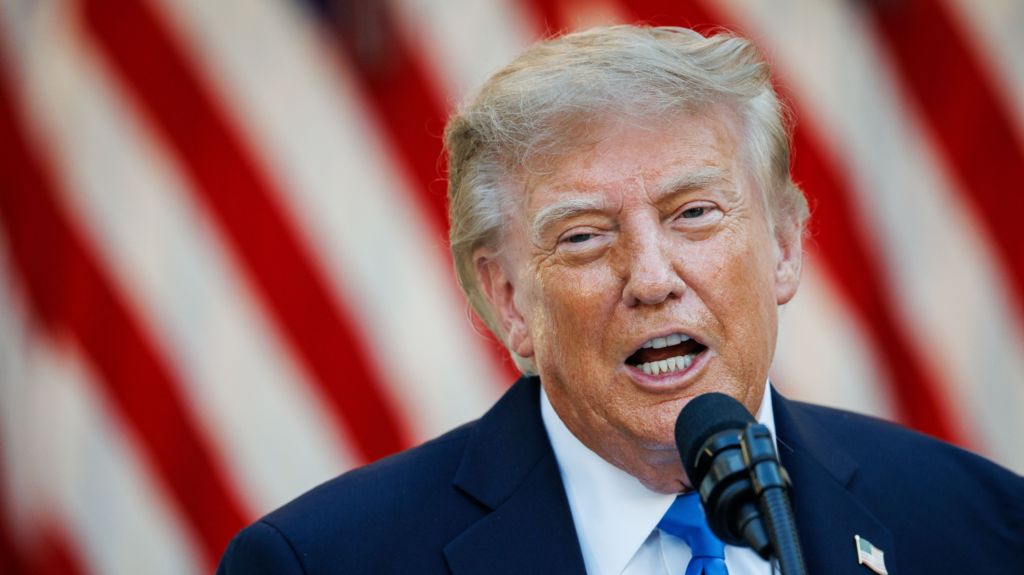
    In a development that roils Washington’s latest health leadership nomination fight, former President Donald Trump has pulled the nomination of Casey Means for U.S. Surgeon General after the controversial pick failed to secure the minimum Senate support required for confirmation.

    Trump made the announcement of the withdrawal Thursday via his social media platform Truth Social, adding that he would instead nominate Nicole Saphier, a cancer radiologist and regular contributor to conservative media outlet Fox News, for the role that leads the U.S. Public Health Service.

    Means, a Stanford-trained physician, entrepreneur and prominent online health influencer, faced fierce cross-partisan skepticism from lawmakers throughout the nomination process largely over her history of controversial statements on vaccine safety. Critically, Means does not hold an active medical license to practice in any U.S. state, a detail that amplified concerns about her suitability to lead the nation’s top public health agency.

    Means’ nomination stalled out immediately after her February Senate confirmation hearing, where she declined to answer a direct question on whether infants should receive routine childhood vaccines, and refused to reject the long-debunked conspiracy theory that links routine childhood vaccines to autism. While she told lawmakers at the hearing that she agrees “vaccines save lives” and are a core component of infectious disease public health strategy, she repeatedly emphasized prioritizing patient autonomy over public health guidelines throughout her testimony.

    Policy analysts also connected Means’ nomination to the wider vaccine skepticism that has gained traction in conservative politics, noting that Means was widely viewed as an ideological ally of Health Secretary Robert Kennedy Jr., who has faced widespread alarm from lawmakers across both parties over his own long history of anti-vaccine activism.

    In his Thursday Truth Social post, Trump did not blame his own party’s internal divisions for the failed nomination, and instead placed full blame on Louisiana Republican Senator Bill Cassidy, a trained physician who led opposition to Means’ confirmation. Trump lambasted Cassidy for what he called “intransigence and political games” that blocked Means’ path to confirmation, and explicitly called on Louisiana voters to remove Cassidy from office in the next election cycle.

    Turning to his new pick, Trump offered glowing praise for Saphier, framing her as a highly qualified, public-facing leader on cancer care. “She is a STAR physician who has spent her career guiding women facing breast cancer through their diagnosis and treatment while tirelessly advocating to increase early cancer detection and prevention, while at the same time working with men and women on all other forms of cancer diagnoses and treatments,” Trump wrote. He added that Saphier is “also an INCREDIBLE COMMUNICATOR, who makes complicated health issues more easily understood by all Americans.”

    Saphier currently practices radiology at Memorial Sloan Kettering Cancer Center Monmouth. Beyond her clinical work, she has a high public profile: she published the 2020 book *Make America Healthy Again: How Bad Behavior and Big Government Caused a Trillion-Dollar Crisis*, and hosts a popular wellness-focused podcast titled *Wellness Unmasked*.

    This nomination marks the third time Trump has put forward a candidate for surgeon general, the top role overseeing the 6,000-person U.S. Public Health Service. His first pick, Janette Nesheiwat, another former Fox News contributor and physician, withdrew from consideration after facing criticism from a senior Trump administration adviser over her public positions on COVID-19 policy and questions raised about her professional credentials.

  • Brazil’s Congress overrides Lula’s veto of a bill to reduce Bolsonaro’s sentence

    Brazil’s Congress overrides Lula’s veto of a bill to reduce Bolsonaro’s sentence

    SAO PAULO — In a high-stakes political upset that has reshaped Brazil’s political landscape months ahead of October’s presidential election, Brazil’s National Congress voted Thursday to override a presidential veto and enact a controversial sentencing reform bill that will slash former President Jair Bolsonaro’s 27-year prison term for his conviction on coup plotting charges. The legislative move marks a major political blow to incumbent leftist President Luiz Inácio Lula da Silva, Bolsonaro’s long-time rival, and signals a notable erosion of Lula’s governing power in Congress ahead of his reelection bid.

    The new legislation, which immediately faces planned legal challenges in Brazil’s Supreme Court, revises sentencing rules for defendants convicted of multiple political crimes. Under the new policy, when a defendant is found guilty of multiple offenses including crimes against democratic rule of law and leading a coup attempt, their final sentence will only reflect the single count carrying the maximum penalty, rather than an aggregate of all convictions. While the exact remaining sentence for Bolsonaro has not yet been finalized, political and legal analysts project the reform could cut as much as 20 years off the former right-wing leader’s original 27-year sentence. Bolsonaro, who was convicted and began his sentence in November 2024, is currently serving time under house arrest.

    Conservative opposition lawmakers successfully rallied centrist senators and federal deputies to secure a comfortable majority to override Lula’s veto of the bill, which was originally passed by Congress in 2024. Bolsonaro’s supporters had openly predicted the outcome before voting got underway, and many framed the move as a stepping stone to broader political pardons. “This is a first and much awaited step by those who are afflicted. The next stage is full amnesty,” said Sen. Espiridião Amin, a prominent Bolsonaro ally.

    Senate leaders claimed ahead of the vote that the reduced penalties would only apply to cases directly connected to the convictions of Bolsonaro, his allies, and supporters charged in connection with the 2023 coup attempt. But legal experts have already signaled they will challenge this narrow framing in court, noting the legislation’s wording applies broadly to eligible cases.

    Pedro Uczai, congressional whip for Lula’s Workers’ Party in the Chamber of Deputies, confirmed the party will file an appeal with the Supreme Court to have the legislation annulled, arguing the reform violates Brazil’s constitution. As of Thursday evening, the court had not yet received the formal complaint.

    Bolsonaro’s congressional allies have been open that the bill will benefit not just the former president, but also hundreds of his supporters convicted for their role in the January 8, 2023 riot that destroyed multiple government buildings in Brazil’s capital Brasilia. The attack, which sought to overturn Lula’s 2022 election victory, was widely compared to the 2021 assault on the U.S. Capitol.

    Alexandre Knopfholz, a lawyer and legal scholar, told the Associated Press the bill’s wording could also reduce penalties for offenses committed by large crowds, extending legal leniency to dozens of rioters already charged in connection with the Brasilia attack. Knopfholz emphasized that even if the Supreme Court upholds the new legislation, Bolsonaro will not be released from detention automatically, and additional legal proceedings will be required to adjust his sentence.

    Thursday’s vote marks the second high-profile congressional defeat for Lula in 24 hours, capping a rough week for the incumbent ahead of his campaign for a fourth non-consecutive term. On Wednesday evening, the Senate rejected Lula’s nominee for a Supreme Court seat — the first time a sitting president’s Supreme Court pick has been rejected in 132 years.

    “They want to release Bolsonaro, his jailed generals and stop federal police investigations that implicate them,” said Lindberg Farias, a lawmaker and Lula ally, calling Thursday’s vote “a day of infamy.”

    The legislative battle has already spilled over into the upcoming presidential campaign. Lula, who narrowly defeated Bolsonaro in 2022 to return to the presidency, will face Sen. Flávio Bolsonaro, the former president’s eldest son, as his main challenger in October. During Thursday’s vote, Flávio Bolsonaro laid out his campaign pitch to voters: “If it is God’s will, I will govern this country. I will hug you and take care of you, no matter what your political view is.”

    As of Friday morning, Lula had not issued any public comment on the back-to-back congressional defeats. Political analysts say the vote is a clear warning sign for Lula’s reelection prospects, though many note there is still five months until election day, and public attention could shift to other events including the upcoming men’s soccer World Cup.

    “This vote is another sign that Bolsonaro is not finished as a political actor, his son will be competitive against Lula,” said Carlos Melo, a political science professor at Insper University in Sao Paulo.

  • US Congress votes to end record government shutdown

    US Congress votes to end record government shutdown

    After 75 days of gridlock that made it the longest partial government shutdown in U.S. history, Congress passed a last-minute funding bill Thursday to reopen most of the Department of Homeland Security (DHS), bringing an end to weeks of disrupted critical public services and unpaid federal work. However, the core political clash over immigration enforcement that triggered the shutdown remains unresolved, setting the stage for a new round of partisan conflict later this year.

    The bipartisan funding package, which was first approved by the Senate and cleared the House via voice vote just hours before emergency funding set aside to cover employee salaries was set to expire, will keep key DHS agencies fully funded through the end of the 2025 fiscal year on September 30. Agencies restored to full operations include the Federal Emergency Management Agency (FEMA), the U.S. Coast Guard, the Transportation Security Administration (TSA) and the U.S. Secret Service.

    Notably, the bill excludes funding for two agencies at the heart of the partisan standoff: Immigration and Customs Enforcement (ICE) and U.S. Border Patrol. The shutdown first began on February 14, when Senate Democrats refused to back full immigration enforcement funding without new restrictions on controversial enforcement tactics, such as workplace raids in sensitive community locations and the routine use of unmarked uniforms and masks by officers. Congressional Republicans rejected these conditions, calling for full, unconditional funding for all border and immigration agencies.

    House Speaker Mike Johnson had blocked the Senate-approved compromise from a floor vote for more than five weeks, arguing the deal failed to address critical national security needs by leaving immigration enforcement agencies unfunded. But mounting pressure from the White House, centrist House Republicans, and senior DHS officials warning of imminent payroll shortfalls that would force widespread furloughs forced Republican leadership to schedule the vote. The 75-day shutdown already outstripped all previous partial funding lapses by a wide margin, and deep internal rifts within the House Republican conference were laid bare throughout the impasse: hardline conservatives rejected any partial funding deal that excluded ICE and Border Patrol, while moderates warned that prolonged disruption to critical security agencies would trigger severe political backlash ahead of the upcoming midterm elections.

    “After Republicans spent months blocking disaster relief and funding for the TSA, Coast Guard, and our cyber defense agency, it is a very good thing that this bill is finally on track to be signed into law to fund these agencies,” said Senate Democratic funding chair Patty Murray, who also criticized Johnson for dragging out the impasse for no substantive reason: “Speaker of the House Mike Johnson extended the DHS shutdown for over a month for no reason at all. This is the same bill the Senate unanimously passed five weeks ago.”

    Following the vote, Republican Congressman Nick Langworthy, who had publicly urged Johnson to move the bill forward, celebrated the progress: “Thank you to (President Donald Trump) for agreeing and demanding action. Not another day should go by with our safety and security at risk.”

    The prolonged shutdown already caused measurable harm to federal operations and the workforce. Thousands of DHS employees worked without pay for more than two months, and reports indicate that over 1,000 TSA frontline staff have quit their roles amid the financial uncertainty. Planning for major upcoming events, including 2026 FIFA World Cup matches hosted across U.S. cities this summer, was also thrown into jeopardy due to lost agency preparedness funding.

    With the bill now headed to Trump’s desk for his expected signature, the underlying partisan divide over immigration policy remains fully intact. House Republicans are now moving forward with a plan to approve up to $70 billion in separate funding for ICE and Border Patrol through the budget reconciliation process, a procedural move that would allow the measure to pass the Senate without Democratic support.

    Lawmakers have departed Washington for a scheduled recess, and all eyes now turn to the next phase of the funding fight. The standoff underscores just how deep partisan polarization over immigration remains just months before midterm elections that will decide which party controls Congress for the next two years, and it highlights the ongoing challenges House Republican leadership faces in balancing the demands of hardline faction members and moderates while advancing the White House’s policy agenda. The question of whether Congress can avoid a second shutdown when current partial funding expires later this year remains unanswered.

  • US House votes to end government shutdown over immigration operations

    US House votes to end government shutdown over immigration operations

    After more than two months of disrupted federal operations tied to a bitter partisan standoff over immigration policy, U.S. lawmakers have passed a funding package for the Department of Homeland Security, bringing an end to the longest partial government shutdown in the agency’s 20-year history.

    The House of Representatives signed off on the Senate-approved bipartisan measure via a voice vote on Wednesday, immediately restoring operating funds to most DHS components after the 76-day funding lapse that impacted millions of federal workers and critical border and security operations. President Donald Trump has publicly backed the legislation, which now heads straight to the Oval Office for his final signature before it takes effect.

    Notably, the stop-and-go funding package does not allocate new money for two of DHS’s highest-profile immigration enforcement arms: Immigration and Customs Enforcement (ICE) and the U.S. Border Patrol. The omission comes after months of fierce pushback from congressional Democrats, who have demanded sweeping changes to the Biden (correction: Trump-era) immigration enforcement policies before approving additional funding for the agencies. Republican leadership has already signaled that it will pursue standalone funding legislation for ICE and Border Patrol in the coming weeks, separating that contentious fight from the broader DHS funding deal to end the shutdown.

    This is an ongoing developing breaking news story. Additional details on the legislative timeline for separate immigration enforcement funding and the implementation of the DHS funding package will be added as they become available. Readers can refresh this page for the full updated version, or access real-time breaking news alerts through the BBC News mobile app, or by following @BBCBreaking on the X platform.

  • Argentine workers mark May Day with protests over Milei’s labor-law overhaul

    Argentine workers mark May Day with protests over Milei’s labor-law overhaul

    On Thursday, thousands of Argentine working people gathered in the streets of Buenos Aires for annual May Day demonstrations, turning the traditional celebration of labor rights into a mass show of opposition to President Javier Milei’s sweeping rollback of decades-old worker protections. The march was organized by the General Confederation of Labor (CGT), Argentina’s largest union federation, which framed the action as a fight to preserve “decent employment” in the face of Milei’s transformative changes to the country’s 50-year-old national labor code.

    Argentina’s labor regulations, first enshrined in 1974, have long provided Argentine workers with extensive legal protections and benefits. For decades, however, economists and business leaders have argued that these rigid rules created prohibitive operational costs for companies, driving away much-needed foreign direct investment and pushing nearly half of the country’s workforce into the informal, off-the-books sector where workers receive no legal protections or benefits. Successive administrations spanning multiple political ideologies attempted to liberalize the labor market to address these issues, but every reform effort collapsed in the face of fierce pushback from Argentina’s historically powerful labor unions, which have been a core political force in the country since the rise of Peronism in the 1940s.

    Despite widespread union opposition that included weeks of rolling protests and a full nationwide strike, Milei, who swept to power on a libertarian free-market agenda, successfully pushed his labor reform package through congress in February, securing one of the most significant legislative wins of his young presidency. The new legislation makes sweeping changes to the country’s labor rules: it expands the maximum legal workday from eight hours to 12, extends the probation period for new hires, simplifies the process for companies to dismiss workers, reduces legal protections for striking workers, and caps judicial discretion for severance pay awards. Proponents argue the changes will encourage formal sector hiring and make Argentina more competitive for global investment, but critics say they erode hard-won labor rights and leave working people vulnerable.

    Opponents of the reform have turned to the courts to block the new law, launching a constitutional appeal to challenge its legality. Last week, a court overturned an earlier injunction that had suspended the law’s implementation at the unions’ request, clearing the way for the reforms to take effect. Union leaders have announced they will file a new legal challenge, and the dispute is now on track to reach Argentina’s Supreme Court for a final ruling.

    The political clash over labor reform comes at a fragile moment for Milei’s presidency. His flagship policy promise to curb Argentina’s decades-long sky-high inflation has made little progress in recent months, while national unemployment has begun to climb. For Argentina’s labor movement, which was a foundational pillar of the Peronist movement that dominated Argentine politics for nearly 80 years, the labor overhaul represents an existential threat to both worker rights and the movement’s long-held political influence.

    Ahead of Thursday’s protest, CGT leader Jorge Sola told local radio that widespread social discontent has built up across the country, driven by more than just falling household consumption. “It is due to family debt, job losses and worse working conditions than what we had before,” Sola said, capturing the simmering anger that brought thousands of workers onto the capital’s streets for the May Day demonstration.

  • Mills quits Maine Senate race leaving Democrat novice in running

    Mills quits Maine Senate race leaving Democrat novice in running

    In a surprise but widely foreshadowed development, 78-year-old Maine Governor Janet Mills announced Thursday morning she is withdrawing from the 2026 Democratic Senate primary, ending national Democrats’ high-stakes bid to unseat incumbent Republican Susan Collins with a tested, well-known statewide leader.

    Mills, a two-term popular governor with a decades-long career in Maine politics, was handpicked by national Democratic establishment figures, including Senate Majority Leader Chuck Schumer, who actively recruited her to run. Party leaders viewed Maine’s open-seat contest ( framed as Collins’ final campaign ) as one of their best chances to flip a Republican-held seat and retake control of the U.S. Senate in this year’s midterm elections. But from the early stages of her campaign, structural and demographic headwinds undermined her bid.

    In an official statement announcing her exit, Mills framed her decision as rooted in a modern political reality: “While I have the drive and passion, the commitment and experience, and above all else – the fight – to continue on, I very simply do not have the one thing that political campaigns unfortunately require today: the financial resources.”

    Mills’ exit clears a nearly unobstructed path to the Democratic nomination for 41-year-old Graham Platner, a first-time candidate, Marine Corps veteran, and small-business oyster farmer who has upended Maine’s Democratic primary in recent months. When Platner launched his grassroots campaign last August, he quickly tapped into a nationwide hunger for new working-class progressive leadership, raising $3 million in just his first seven weeks in the race. He has earned high-profile endorsements from across the Democratic ideological spectrum, including progressive standouts Senators Bernie Sanders of Vermont and Elizabeth Warren of Massachusetts, as well as centrist Arizona Senator Ruben Gallego, alongside widespread backing from national progressive activist groups and major trade unions.

    Platner’s populist message, which blames billionaires and entrenched corrupt politicians for eroding working-class living standards and damaging the environment, has resonated deeply with primary voters, even amid high-profile controversy. Critics have unearthed old social media posts they call homophobic and misogynistic, and revealed that Platner previously had a skull tattoo, since covered, that resembles the Nazi SS Totenkopf insignia. Platner has forcefully disavowed his past comments, explaining the tattoo was chosen impulsively during a night of drinking with fellow Marines while deployed to Croatia, and he had no knowledge of its white supremacist history at the time. Voters have largely shrugged off the scandals, leaving Platner’s polling lead intact.

    Long before her exit, Mills had been dogged by questions about her age that set up a stark generational contrast with her much younger challenger. If elected, Mills would have become the oldest first-term senator in U.S. history, and her age became a unavoidable political liability coming on the heels of 82-year-old President Joe Biden’s 2025 decision to abandon his re-election bid and the recent deaths of several senior Democratic members of Congress. Local political observers also noted that even voters who approved of Mills’ tenure as governor largely expressed a desire for new generational leadership in the Senate race.

    “ I’ve been struck by how many voters I’ve talked to who really liked Janet Mills, who think she’s been a great governor, but think it’s time for some new voices, ” Josh Keefe, political reporter for *The Maine Monitor*, told BBC’s *Americast*. “ They think it’s time to sort of turn it over to the younger generation. ” Keefe added that Mills also misread the mood of the primary electorate, running a campaign centered heavily on opposition to Donald Trump, while Maine Democratic voters were seeking a broader, forward-looking vision for the party’s future. By contrast, Keefe noted, Platner’s message addresses the root economic grievances that have fueled the rise of Trumpism, rather than just focusing on opposition to the former president.

    Mills’ exit now sets up a general election showdown between Platner and three-term incumbent Susan Collins, the only remaining Republican member of Congress representing a New England state. Collins, first elected to the Senate in 1996, has already proven notoriously difficult for Democrats to unseat, holding her seat in 2020 by a 9-point margin. At 73, Collins has confirmed this will be her final campaign, and a pro- Collins political group has already launched a $2 million advertising assault on Platner, kicking off what is projected to be one of the most expensive Senate races of the 2026 cycle.

    For national Democrats, the stakes could not be higher: the party needs to flip four Republican-held seats to retake Senate control, and Maine remains one of their most competitive pickup opportunities. Early head-to-head polling shows Platner holding a narrow lead over Collins, but local observers warn that Collins remains a formidable political force in Maine, while Platner is a completely untested outsider who presents a new kind of challenge for the long-serving incumbent. “ Susan Collins is kind of a juggernaut in Maine, ” Keefe said. “ Platner is just a complete anomaly in Maine politics, however, and certainly she’s never faced anyone like him. ”

  • Myanmar ex-leader Aung San Suu Kyi moved to house arrest, military says

    Myanmar ex-leader Aung San Suu Kyi moved to house arrest, military says

    Nearly five years after a military coup ousted Myanmar’s democratically elected government, the country’s state-controlled media has made a bombshell announcement: detained former leader Aung San Suu Kyi, the 80-year-old Nobel Peace Prize laureate, has been transferred from military detention to house arrest.

    Since the February 2021 takeover, Suu Kyi has been held in an undisclosed location, widely reported to be a maximum-security military facility in the capital Nay Pyi Taw. In an official statement released through state channels, junta leader Min Aung Hlaing — the general who orchestrated the coup — confirmed that he had ordered Suu Kyi’s remaining prison sentence to be served at a designated residential compound instead of a military lockup. State television further publicized the move by broadcasting an image of Suu Kyi seated alongside two uniformed officials.

    This is not the first time Suu Kyi has experienced house arrest. A towering figure in Myanmar’s pro-democracy movement, she spent more than 15 years confined to her Yangon family home during decades of military rule prior to 2010. Her unwavering nonviolent resistance to authoritarian rule during that period cemented her global reputation as a human rights icon, earning her the 1991 Nobel Peace Prize and widespread admiration across the world. She would go on to lead her National League for Democracy to a historic electoral victory in 2015, becoming Myanmar’s de facto leader after the country introduced sweeping democratic reforms.

    Not everyone has accepted the junta’s announcement at face value, however. Suu Kyi’s youngest son, Kim Aris, has openly cast doubt on the claim, saying he has no independent proof that his mother is even alive, let alone that she has been moved to house arrest. Aris told the BBC that the image broadcast by state media is meaningless, because it was originally captured in 2022, not after the reported transfer. “I hope this is true,” Aris said. “I still haven’t seen any real evidence to show that she has been moved. So, until I’m allowed communication with her, or somebody can independently verify her condition and her whereabouts, then I won’t believe anything.”

    Prior to this announcement, there had been no verified updates on Suu Kyi’s health or living conditions for years. Aris told reporters in December last year that his family had not received any contact from her since the coup. Suu Kyi’s legal team also confirmed to Reuters that they have not received any official direct notification about the reported transfer to house arrest.

    After the 2021 coup, Suu Kyi was convicted on a sprawling series of charges including corruption, election fraud, and violating state secrecy laws that her political allies have universally denounced as politically motivated fabrications. She was originally sentenced to a total of 33 years in prison, but this is not the first time her sentence has been reduced by the junta.

    Suu Kyi’s international standing shifted dramatically following the 2017 military crackdown on the Rohingya Muslim minority, when she chose to defend Myanmar’s military against genocide charges at the International Court of Justice, a decision that severely tarnished her reputation as a global human rights icon.

  • Myanmar coup-leader turned president orders Suu Kyi to house arrest

    Myanmar coup-leader turned president orders Suu Kyi to house arrest

    Five years after ousting Myanmar’s democratically elected government in a military coup, the junta leader who has now rebranded himself as a civilian president has ordered that deposed national leader Aung San Suu Kyi be moved from prison to house arrest.

    In an official statement released Thursday, the office of Min Aung Hlaing confirmed that the 80-year-old former state counselor’s remaining prison sentence will now be served at a “designated residence” instead of a prison facility. At the time of publication, neither the exact location of the new place of detention nor the length of Suu Kyi’s remaining sentence has been disclosed to the public. A senior anonymous source from Suu Kyi’s banned National League for Democracy (NLD) party told Agence France-Presse that the ousted leader will likely be held in seclusion at a property in Myanmar’s capital Naypyidaw, but the source stressed that the precise address remains unknown.

    The order marks another step in Min Aung Hlaing’s ongoing push to legitimize his rule after he was sworn in as civilian president earlier this month. The election that paved the way for his new civilian role was tightly controlled by the military, completely excluded the NLD from participation, and barred any public criticism or opposition under penalty of up to 10 years imprisonment. The vote was not even held in large swathes of the country currently controlled by anti-junta rebel forces, a detail that has led independent democracy monitors to dismiss the entire electoral process as little more than a cosmetic rebranding of military rule, which has dominated Myanmar’s political landscape for most of the country’s post-independence history.

    Suu Kyi, who remains widely popular among Myanmar’s population, was first taken into custody by Min Aung Hlaing’s military forces when the 2021 coup toppled her democratically elected government. She was subsequently convicted on a series of charges that human rights organizations widely condemn as entirely fabricated, created solely to remove her permanently from Myanmar’s political scene. The coup sparked a widespread, ongoing civil conflict that has killed more than 10,000 people and displaced millions across the Southeast Asian nation, which is home to roughly 50 million people.

    Along with Suu Kyi’s transfer, the junta leadership has rolled back a small number of post-coup restrictions and issued a series of prisoner amnesties. Independent analysts have described these moves as empty public relations gestures designed to improve the administration’s image globally. This skepticism is shared by Suu Kyi’s family: in a phone interview with AFP, her son Kim Aris dismissed the decision to move her to house arrest as just another of the junta’s familiar political tactics.

    “[The military leadership is] trying to legitimise themselves in the eyes of the international media and governments around the world,” Aris said. He added that if the transfer is fully carried out, he hopes his mother will finally be granted permission to communicate with him, her legal team and other contacts, noting that no junta official has reached out to him with any updates about her status. Suu Kyi has been held almost completely incommunicado since the coup, and her family has repeatedly raised alarms over her declining and ailing health in recent years.

    In one of his first official actions after taking office as civilian president this month, Min Aung Hlaing also granted a pardon to Win Myint, Suu Kyi’s top aide and the ceremonial president of her ousted government.

  • Britain’s King Charles honors fallen US troops on last day of visit

    Britain’s King Charles honors fallen US troops on last day of visit

    On the final day of his landmark four-day state visit to the United States, King Charles III paid solemn tribute to America’s fallen service members at Arlington National Cemetery, capping a trip designed to mend bilateral strains sparked by the conflict in Iran. The visit, which wrapped Thursday, has been widely hailed as a diplomatic success, with former U.S. President Donald Trump extending a warm, ceremonial welcome as host, opening the royal stay with a spectacular formal greeting and an extravagant white-tie state banquet at the White House.

    As Charles and Queen Camilla arrived for a brief farewell gathering under clear, sunny skies Thursday morning, Trump told reporters, “He’s a great king — the greatest king, in my book.” After handshakes and informal conversation, as the royal motorcade departed, Trump added, “Great people. We need more people like that in our country.”

    Following the White House ceremony, the royal couple traveled to Arlington National Cemetery, just outside Washington D.C., to lay a ceremonial wreath and fresh flowers at the hilltop Tomb of the Unknown Soldier, a memorial honoring unidentified American service members killed in war. They stood in solemn silence as a bugler performed the traditional military tribute “Taps,” before touring a nearby exhibition hall featuring military artifacts and historical displays.

    The day’s remaining agenda included a community block party celebrating the 250th anniversary of American independence from British rule, and a meeting with Indigenous American leaders at a national park, before the pair departed for the British Atlantic territory of Bermuda.

    The undisputed centerpiece of the packed visit was Charles’ address to a joint session of the U.S. Congress on Tuesday, marking the first appearance by a British monarch before the legislative body since Queen Elizabeth II’s 1991 speech. The address earned a warm reception from lawmakers, even as Charles touched on a range of polarizing issues for Trump’s Republican Party: from urgent action on climate change and checks on executive branch power, to unwavering support for NATO and the defense of Ukraine. At 77 years old, the monarch carefully navigated existing tensions between Trump and British Prime Minister Keir Starmer sparked by the UK’s refusal to join military action against Iran, framing the bilateral relationship as one “born out of dispute, but no less strong for it.”

    On Wednesday, the royal tour brought Charles and Camilla to New York City, where they paid their respects at the 9/11 Memorial and met with city mayor Zohran Mamdani. Charles, a lifelong advocate for environmental stewardship and sustainable gardening, toured a community-led urban sustainable farming project in Harlem, while Camilla marked the 100th birthday of beloved children’s character Winnie the Pooh at the New York Public Library.

    Heavy security measures were in place for the entire visit, which came just one week after an alleged assassination attempt targeting Trump at a Washington D.C. media gala. Despite underlying diplomatic tensions, the trip included multiple warm, casual moments between Charles and Trump, including a lighthearted joke from the former president about his Scottish-born mother having had a childhood crush on a young Charles, when he was still heir to the British throne.

  • Mali holds funeral for key junta figure killed in militant assaults

    Mali holds funeral for key junta figure killed in militant assaults

    DAKAR, Senegal — On Thursday, thousands gathered to honor the life of former Malian Defense Minister General Sadio Camara, the central architect of Mali’s ruling military junta’s controversial security partnership with Russia, just one week after he was killed in the largest coordinated militant assault the West African nation has seen in more than 10 years. Camara’s unexpected death, which comes on the heels of a string of major military setbacks for Malian government forces and their Russian mercenary allies, has sparked new analysis of potential internal rifts within the junta and raised widespread questions about the future of the country’s close alignment with Moscow.

    Following two days of official national mourning declared by the junta, the funeral ceremony was led by junta leader General Assimi Goita and aired live across Malian national television to allow citizens across the country to pay their respects. Camara’s casket was wrapped in the national flag of Mali — its iconic green, yellow, and red stripes on full display — while large, formal portraits of the late general lined the walls of the ceremony venue for attendees to view.

    Born in 1979 in Kati, a garrison town located just outside Mali’s capital Bamako, Camara died in the same community Saturday when a militant car bomb detonated outside his personal residence. His military career began decades earlier: in the late 2000s, he served as a field officer deployed to northern Mali, where rising insurgent activity led by armed factions with ties to Al-Qaeda had plunged the region into instability. After graduating from Mali’s national military academy, Camara traveled abroad for advanced military training, including a posting at a prestigious Russian military academy — a formative experience that would shape the trajectory of his later political career.

    Mali’s general public first gained widespread recognition of Camara in August 2020, when he appeared as a colonel on national television alongside four other senior military officers who had just successfully overthrown democratically elected President Ibrahim Boubacar Keita. The group of coup leaders accused Keita of being overly reliant on French political backing and failing to address the growing wave of militant attacks that had devastated large swathes of the country. They campaigned on a promise to restore national security and stability, a pledge that resonated with many Malians frustrated by years of unaddressed insurgency.

    In the wake of the 2020 coup, the new military government quickly pivoted away from Mali’s long-standing Western security partnerships, turning toward Russia as its primary alternative security ally, and moving to expel French counterterrorism troops and United Nations peacekeeping forces from the country. Camara emerged almost immediately as the most central figure in forging this new relationship, serving as defense minister in both of Mali’s successive military governments — first after the 2020 coup, and then being reappointed to the role following a second coup in May 2021 that brought Goita to full executive power.

    Ulf Laessing, head of the Sahel program at the Germany-based Konrad Adenauer Foundation, described Camara as the undisputed “architect of cooperation with Russia.” According to Laessing, it was Camara who first proposed the 2021 deployment of Russian mercenary forces to Mali and pushed for the expulsion of the U.N. peacekeeping mission MINUSMA, a long-standing international presence in the country. Frequent trips to Moscow to meet with Russian defense officials solidified his role as the main bridge between the Malian junta and the Kremlin, and even as the country’s security situation deteriorated steadily under his tenure, Camara remained an irreplaceable leader for the ruling military faction, Laessing noted.

    Recent weeks have brought major new setbacks for the Russian-Malian alliance. Just days before Camara’s assassination, the newly formed Russian Africa Corps — a regular Russian military unit that answers directly to Moscow’s defense ministry, estimated to have roughly 2,000 troops deployed across Mali — announced it had withdrawn its forces from the key northern city of Kidal. The withdrawal came just two days after separatist insurgent groups declared they had seized full control of the strategic city.

    Rida Lyammouri, a senior fellow at the Morocco-based Policy Center for the New South, argues that Camara’s death, combined with growing frustration among both ordinary Malians and senior military leaders over the failure of Russian forces to curb the ongoing insurgency, could push the junta to open a formal review of its partnership with Moscow. Even before Camara’s killing, discontent over Russian strategy had been quietly building within military circles, Lyammouri said.

    Adding to speculation about a potential policy shift, Laessing noted that Goita met with Russia’s ambassador to Mali on Tuesday this week, but has also signaled he is “open to collaboration with some Western countries, such as the United States” going forward. For now, the future of Mali’s security alliances remains uncertain, as the junta navigates the loss of its most prominent pro-Russia leader and growing pressure to reverse years of deteriorating security.