分类: politics

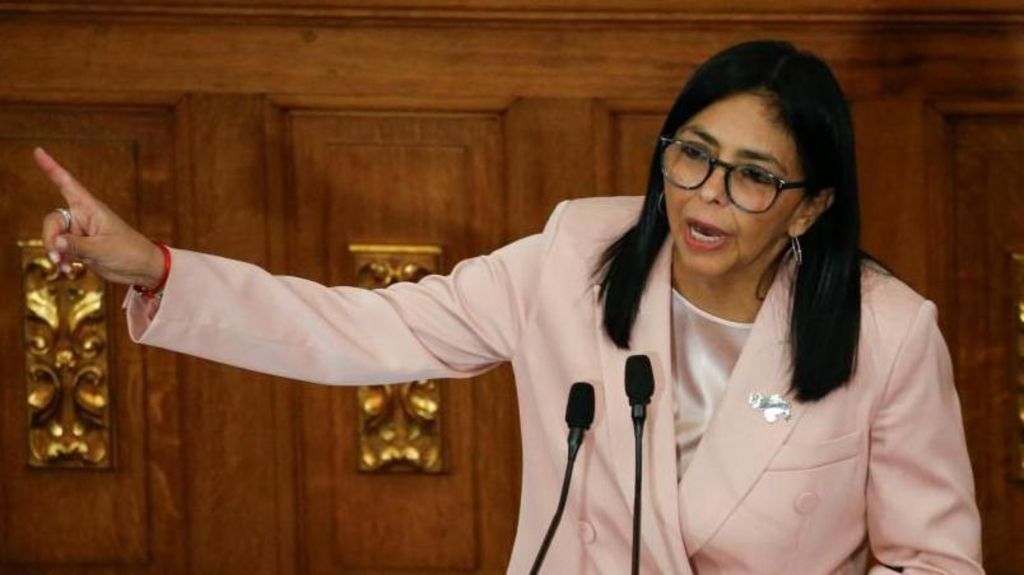
  • Delcy Rodriguez: From Maduro’s ‘tigress’ to acting Venezuelan president

    Delcy Rodriguez: From Maduro’s ‘tigress’ to acting Venezuelan president

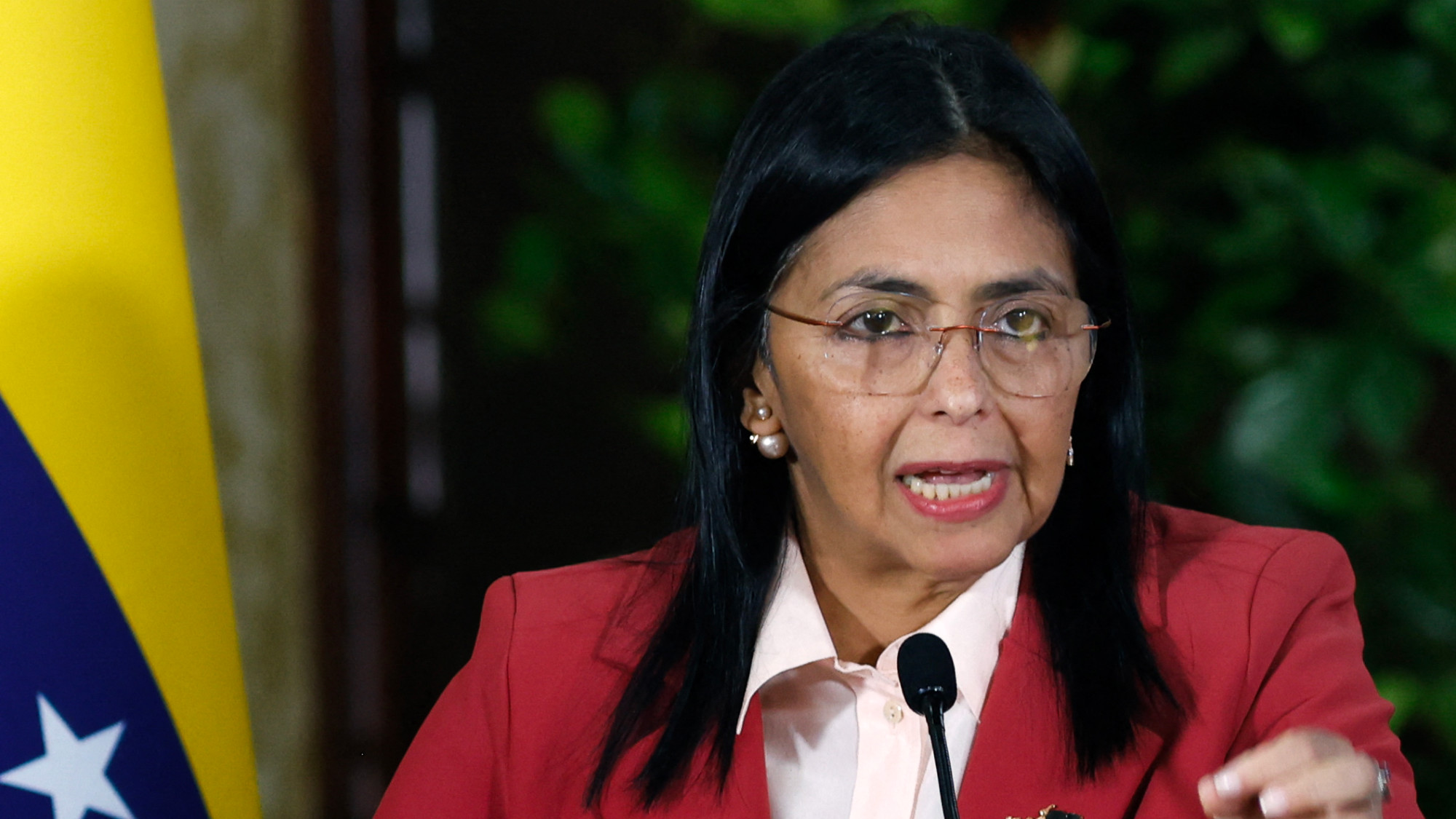
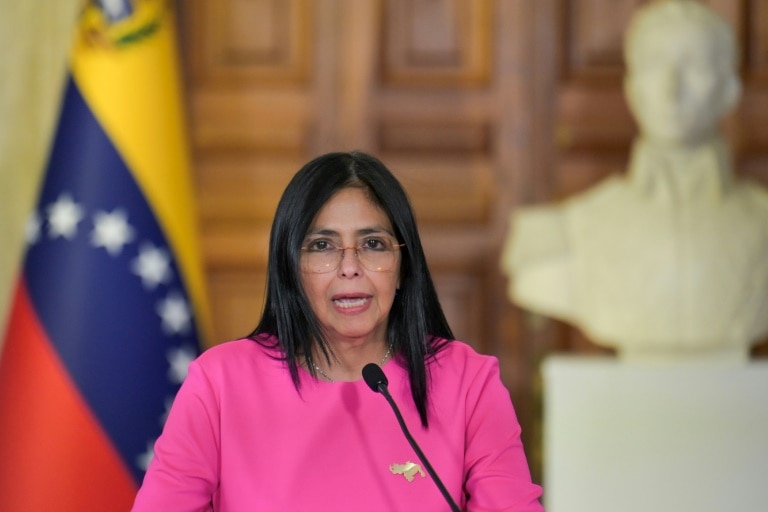
    Following the dramatic capture of Nicolás Maduro by US forces, Delcy Rodríguez has ascended to the role of Acting President of Venezuela, marking an unprecedented moment as the first woman to hold executive power in the nation. The Venezuelan Supreme Court formally authorized her assumption of presidential duties in an acting capacity, a move subsequently endorsed by the country’s military establishment.

    Rodríguez, a 56-year-old lawyer by training, has been a central figure in successive administrations led by both Maduro and his predecessor, Hugo Chávez. Her political trajectory includes significant roles as Foreign Minister, Vice President since 2018, and most recently, Minister of Hydrocarbons—a position of critical importance in an economy fundamentally reliant on oil exports.

    Known for her staunch anti-imperialist stance and once dubbed ‘the tigress’ by Maduro himself, Rodríguez now faces the complex task of navigating Venezuela’s political transition while maintaining cohesion within the Chavista movement. Her immediate response to Maduro’s capture was to assert that he remains the ‘only president’ and to demand his unconditional release, simultaneously positioning herself as a stabilizing force.

    Her political lineage is deeply intertwined with Venezuela’s socialist movement. Her brother, Jorge Rodríguez, currently leads the National Assembly, and their family history is marked by political activism—their father, a Marxist activist, died in government custody in 1976. Analysts suggest this personal history has profoundly influenced her political motivations and leadership style.

    In recent years, Rodríguez demonstrated pragmatic governance by moderating her rhetoric and engaging with Venezuela’s business community—a sector historically criticized by socialist leadership. As Economy Minister from 2020 to 2024, she implemented eased trade controls and accommodated dollarization, earning cautious approval from economic stakeholders despite facing international sanctions herself for alleged democratic undermining and human rights violations.

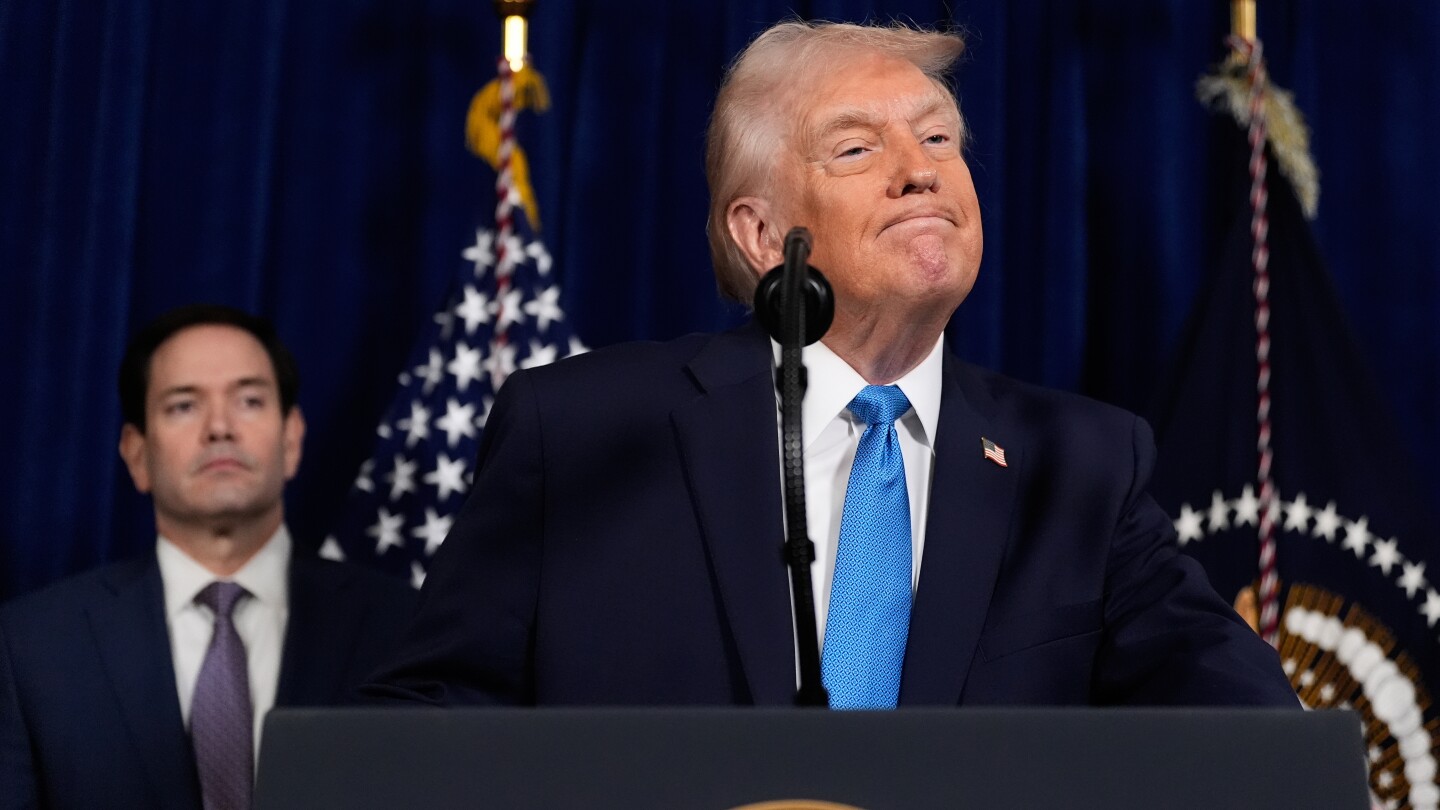
    The international response remains cautiously observant. Former US President Donald Trump indicated that Rodríguez had expressed willingness to collaborate with Washington, though he issued stern warnings should she fail to meet US demands regarding policy reforms and oil access. Secretary of State Marco Rubio stated that the US would evaluate potential cooperation based on actions rather than declarations, explicitly downplaying the prospects of opposition leader María Corina Machado.

    Political analysts note that while Rodríguez requires formal swearing-in, she effectively operates as de facto president. Her challenge lies in balancing internal party expectations, international pressures, and the management of the world’s largest proven oil reserves amidst profound national and geopolitical uncertainty.
  • Can Maduro’s trusted lieutenant now work for Trump?

    Can Maduro’s trusted lieutenant now work for Trump?

    Venezuela plunged into a constitutional crisis following the dramatic capture of President Nicolás Maduro by U.S. forces, with conflicting power claims creating international uncertainty. While the Venezuelan Supreme Court declared Vice President Delcy Rodríguez acting president per constitutional protocol, the situation took unexpected turns when U.S. President Donald Trump announced America would “run” Venezuela during transition proceedings.

    The complexity deepened as Trump revealed Secretary of State Marco Rubio had been negotiating with Rodríguez, whom he described as “essentially willing to do what we think is necessary.” This apparent cooperation contrasted sharply with Rodríguez’s subsequent public statements where she denounced Maduro’s capture as “a kidnapping” and vowed Venezuela would “never again be a colony of any empire.

    The political vacuum follows years of disputed leadership. Maduro’s 2024 election victory was widely condemned as rigged, with the Carter Center’s analysis of opposition-obtained voting tallies suggesting opposition candidate Edmundo González had actually won by a landslide. The United States and numerous other nations consequently recognized González as legitimate president-elect, though he and prominent opposition leader María Corina Machado—who won the Nobel Peace Prize for her democratic efforts—were forced into exile and hiding respectively.

    Trump’s dismissal of Machado as lacking “support or respect” to lead surprised observers, as did his administration’s alignment with Maduro’s inner circle. Rodríguez appeared alongside powerful regime figures including her brother Jorge Rodríguez (National Assembly president), Defense Minister Vladimir Padrino, and armed forces commander Domingo Hernández Lárez, suggesting their continued influence.

    Secretary Rubio indicated the U.S. would assess Rodríguez based on actions rather than words, emphasizing retained leverage including oil quarantines. He called for “realism” in expecting delayed elections given Venezuela’s institutional challenges, acknowledging that organizing credible elections would require significant time amid entrenched Maduro loyalists in key institutions.

    The emerging arrangement potentially disappoints opposition supporters who expected immediate power transfer to González and Machado. Rodríguez now faces the formidable challenge of balancing U.S. demands against the expectations of Maduro’s power base, finding herself in an increasingly precarious political position.

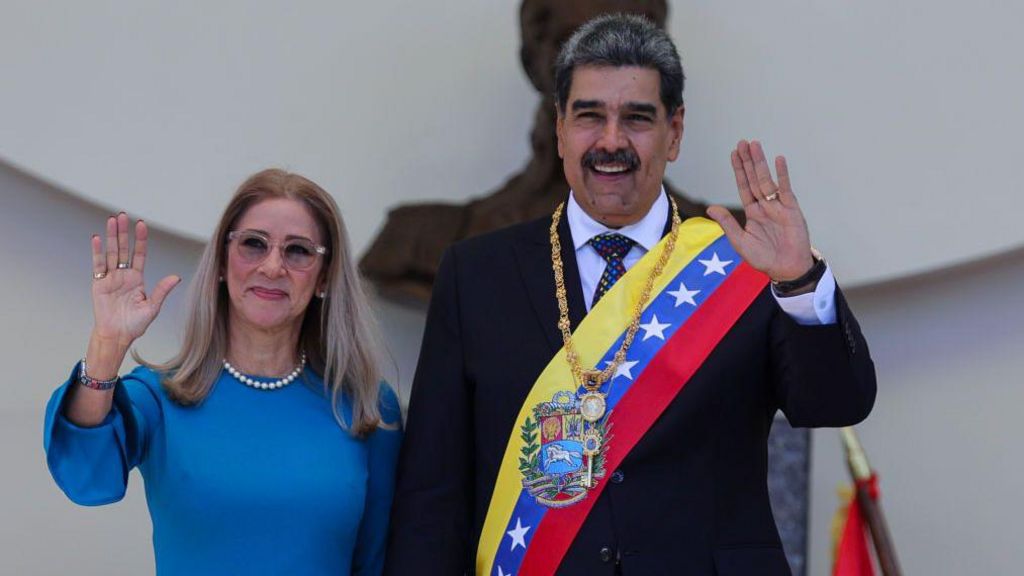
  • Who is Cilia Flores, Venezuela’s once-powerful first lady?

    Who is Cilia Flores, Venezuela’s once-powerful first lady?

    In an unprecedented military operation, United States forces have captured Venezuelan President Nicolás Maduro and First Lady Cilia Flores, transporting them to New York to face serious criminal charges. The nighttime raid in Caracas resulted in the detention of both political figures, who now confront allegations spanning drug trafficking and weapons offenses in American courts.

    Cilia Flores, 69, has operated as a central architect of Venezuela’s political landscape for decades. Initially gaining prominence as a defense attorney for Hugo Chávez following his failed 1992 coup attempt, Flores transitioned from legal advocacy to becoming one of Venezuela’s most influential power brokers. Her political trajectory saw her ascend to leadership of Venezuela’s National Assembly in 2006, where she presided over a virtually unilateral parliament for six years as opposition parties boycotted elections they deemed illegitimate.

    Though publicly presenting a family-oriented image through her television program “Con Cilia en Familia” and occasional salsa dancing appearances with her husband, Flores operated as Maduro’s crucial behind-the-scenes adviser. Her strategic guidance proved instrumental in consolidating Maduro’s presidency after Chávez’s death in 2013 and sustaining his politically embattled regime.

    The First Lady’s career has been shadowed by persistent corruption allegations. In 2012, unions accused her of nepotism for influencing the appointment of approximately 40 relatives to government positions. More seriously, her nephews were convicted in US courts in 2015 for attempting to smuggle 800kg of cocaine into the United States—a case that implicated Flores directly in international narcotics operations.

    Recently unsealed court documents allege Flores accepted substantial bribes in 2007 to facilitate meetings between drug traffickers and Venezuelan anti-drug officials. These charges emerge amidst escalating tensions between Washington and Caracas, with the Trump administration implementing fresh sanctions against Flores’ family members last month.

    Flores’ journey from Chávez’s lawyer to Venezuela’s “First Warrior” represents a remarkable political evolution that now reaches its dramatic culmination in a New York courtroom, marking one of the most significant confrontations between the US and Venezuelan leadership in modern history.

  • Over 100 US cities protest against US strikes on Venezuela

    Over 100 US cities protest against US strikes on Venezuela

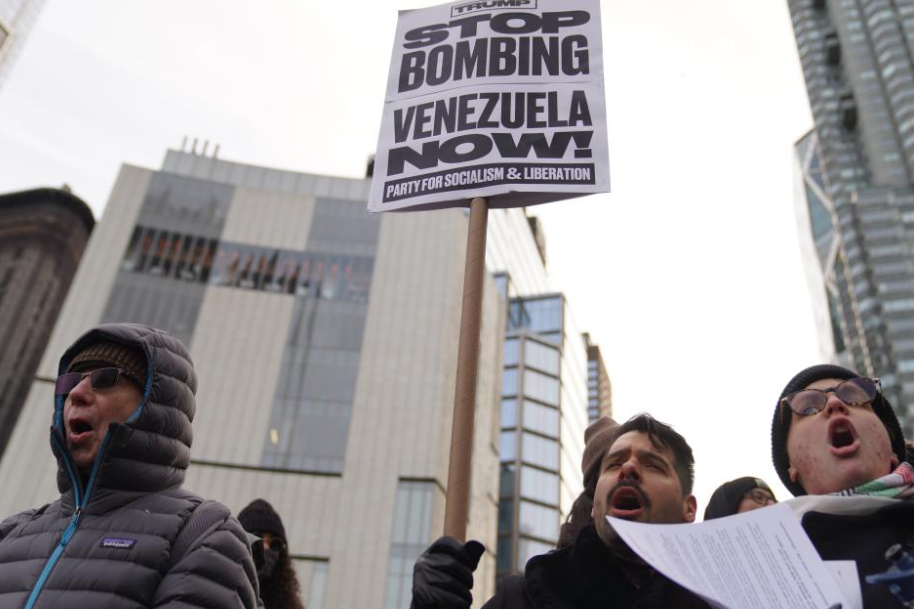
    A significant wave of dissent swept across the United States as coordinated demonstrations unfolded in over 100 cities, including New York, Washington D.C., and Los Angeles. The protests, organized under the banner “No War on Venezuela,” were a direct response to the recent U.S. military operation that resulted in the capture of Venezuelan President Nicolas Maduro.

    In the heart of Manhattan’s Times Square, hundreds of activists gathered on Saturday, brandishing placards with messages such as “Hands Off Venezuela,” “US Out of Caribbean,” and “No War for Venezuelan Oil.” The crowd’s chants of “Defend Venezuela, Free Maduro” reverberated through the iconic urban landscape, creating a powerful visual and auditory statement against American foreign policy.

    Protest participants expressed strong condemnation of what they characterized as imperialist aggression. Karen, a middle-aged New Yorker among the demonstrators, articulated a common sentiment: “This war is not about drugs—it is about Venezuela’s oil. How do you have the right to step in Venezuela, to attack Venezuela? It feels like we act as criminals.”

    International perspectives joined the chorus of criticism. Hassan, a college student from Pakistan, observed that while U.S.-led regime change efforts were not novel, the current operation represented a departure from previous justification narratives. “At least it wore a mask, like in the name of restoring democracy in the Middle East,” Hassan noted. “However, today it takes the mask off. This is quite nakedly about oil and natural resources.”

    The protest movement gained organizational support from the Answer Coalition (Act Now to Stop War and End Racism), which issued a statement condemning the bombing of Caracas and Maduro’s capture. The anti-war group emphasized the human and economic costs of military intervention, stating: “A US war would cause death and destruction to the people of Venezuela. The war machine consumes an unimaginable amount of our tax dollars while working families struggle to make ends meet.”

    Speakers at the rallies directly challenged President Trump’s announcement that the United States would “run” Venezuela until a “safe, proper and judicious transition” could be implemented. One Times Square speaker denounced this approach as arrogance, referencing Trump’s statement about claiming Venezuelan resources: “The Venezuelan people will not accept the United States running their country or stealing their oil, gas, gold, or any resources. There will be strong resistance. No, that age is over.”

  • Denmark urges ‘respect’ after Trump aide’s wife posts on Greenland

    Denmark urges ‘respect’ after Trump aide’s wife posts on Greenland

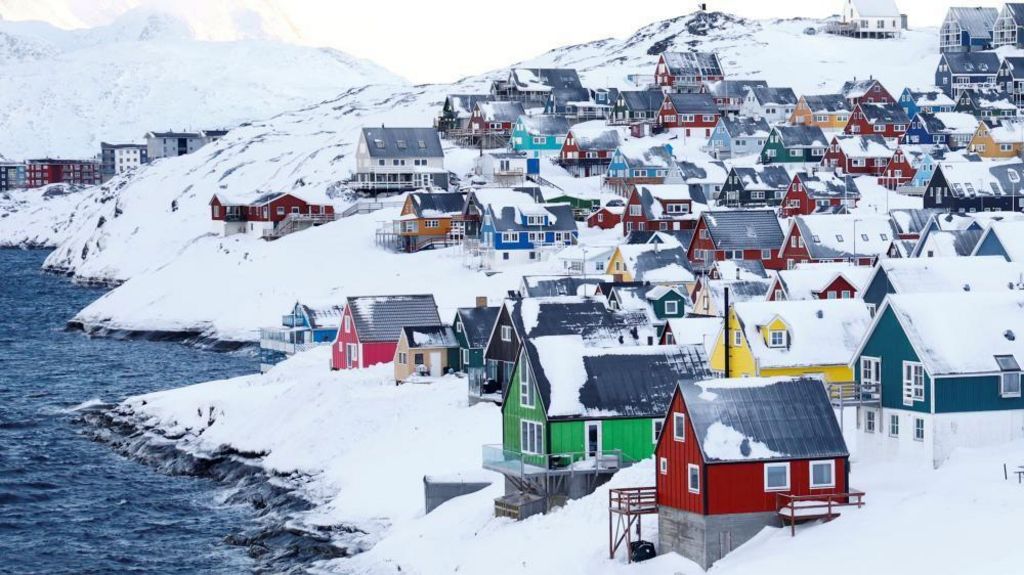
    Denmark has formally called upon the United States to honor its territorial sovereignty following a provocative social media post by Katie Miller, wife of Donald Trump’s deputy chief of staff. Miller shared an altered image of Greenland depicted in American flag colors on her X platform account, accompanied by the caption “SOON.”

    The incident prompted Danish Ambassador to the United States Jesper Moeller Soerensen to issue a diplomatic response emphasizing the nations’ close defense alliance while asserting Denmark’s territorial claims. “We expect full respect for the territorial integrity of the Kingdom of Denmark,” Soerensen stated in his official reply.

    This diplomatic friction occurs against the backdrop of former President Trump’s repeated expressions of interest in annexing Greenland, citing its strategic Arctic positioning and substantial mineral resources. The Trump administration previously stirred diplomatic tensions by appointing a special envoy to Greenland, a move that drew strong criticism from Danish officials.

    Ambassador Soerensen highlighted the existing security cooperation between the NATO allies, noting Denmark’s significant $13.7 billion defense budget allocation for 2025, partially dedicated to Arctic and North Atlantic security operations. “US security is also Greenland’s and Denmark’s security,” Soerensen emphasized, referencing Greenland’s established NATO membership through its association with Denmark.

    The social media exchange coincided with reported US military operations in Venezuela, raising questions about the consistency of US foreign policy approaches toward territorial sovereignty matters. Greenland, while autonomous in domestic affairs since 1979, remains under Danish jurisdiction for defense and foreign policy matters. Despite some local movements toward independence from Denmark, polling indicates minimal support among Greenland’s 57,000 residents for incorporation into the United States.

  • Venezuela’s acting president says US attack had ‘Zionist undertones’

    Venezuela’s acting president says US attack had ‘Zionist undertones’

    Venezuela’s interim President Delcy Rodríguez has characterized the United States’ military operation to capture Nicolás Maduro as possessing distinct ‘Zionist undertones.’ During a nationally televised address, Rodríguez asserted that the international community expressed profound shock over the armed aggression targeting the Bolivarian Republic of Venezuela. She issued a stark warning, declaring that history and justice would ensure accountability for the extremists responsible for promoting the attack.

    The operation, executed by US special forces in the early hours of Saturday, resulted in the seizure of the ousted president from the capital city of Caracas. The assault was supported by American fighter jets conducting strikes on critical military installations throughout the country. Following the operation, the Venezuelan Supreme Court formally decreed Rodríguez, previously Maduro’s vice-president, to lead the nation on an interim basis.

    The specific intent behind Rodríguez’s reference to Zionist elements remained initially unclear, yet it occurs against a backdrop of persistently strained relations between Venezuela and Israel. This diplomatic friction was highlighted in November when Maduro himself accused ‘far-right Zionists’ of conspiring to deliver his nation to ‘devils.’

    In a notable contrast to widespread international condemnation, Israel emerged as a prominent supporter of the US-led mission. Israeli Foreign Minister Gideon Saar publicly commended the operation on social media, praising US leadership and expressing solidarity with the Venezuelan people whom he described as suffering under Maduro’s ‘illegal tyranny.’

    The US military intervention faced sharp criticism from numerous South American nations, including Brazil, Colombia, and Chile, alongside key Venezuelan allies such as Russia, China, and Iran. While several European countries welcomed Maduro’s removal from power, they simultaneously raised serious concerns regarding the operation’s compliance with international law. Spanish Prime Minister Pedro Sánchez captured this ambiguous stance, noting Spain’s non-recognition of the Maduro regime while refusing to endorse an intervention that violates international legal standards. The operation also drew condemnation from US Democratic lawmakers, who labeled it as illegal.

  • US raid in Venezuela sparks global outcry

    US raid in Venezuela sparks global outcry

    The international community has erupted in widespread condemnation following a controversial US military operation in Venezuela that resulted in the capture and extradition of President Nicolas Maduro and his wife to New York. The Saturday operation has triggered diplomatic shockwaves across global capitals, with multiple nations characterizing the action as an unprecedented violation of sovereign state principles.

    Multiple governments have issued formal protests against what they describe as a flagrant breach of international law. The operation has particularly strained relations between Washington and several allied nations, while drawing fierce criticism from traditional US adversaries. Regional analysts note that this development represents one of the most significant escalations in Western Hemisphere relations in recent decades.

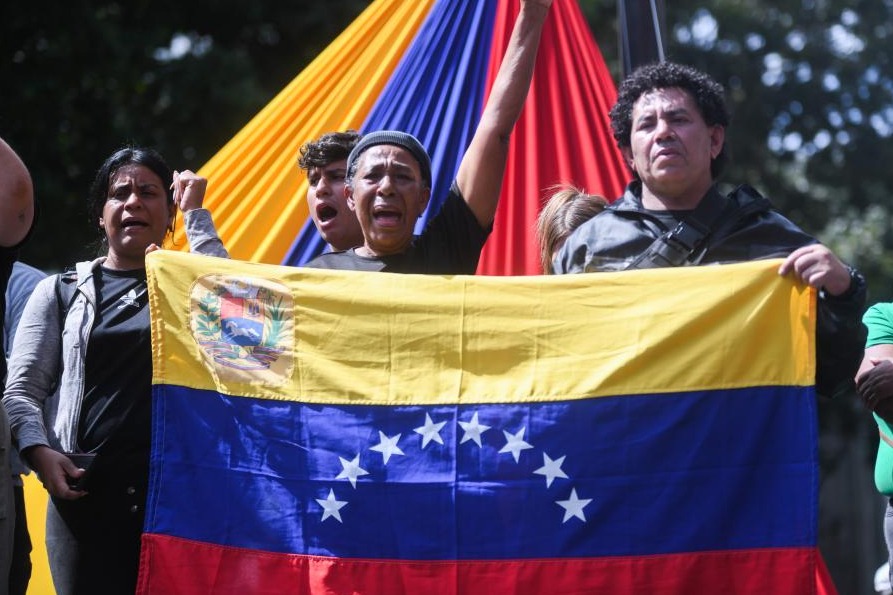
    Across Latin America and the Caribbean, political leaders have expressed grave concerns about the implications for regional stability. The operation has sparked immediate protests in several capitals, including demonstrations outside US embassies in Mexico City and Bogotá. In Caracas, Venezuelan citizens gathered in significant numbers to denounce what they perceive as foreign intervention in their nation’s sovereignty.

    Meanwhile, the Russian government has officially denied reports that Venezuelan Vice President Delcy Rodríguez has sought refuge in Moscow, dismissing such claims as misinformation. The Kremlin has joined other nations in condemning the US operation while calling for an emergency session of the United Nations Security Council.

    The Biden administration faces mounting domestic criticism from both political parties, with legislators questioning the legal justification and strategic wisdom of the operation. Legal experts are debating whether the extraction violates extradition treaties and international norms regarding sovereign immunity for sitting heads of state.

  • US intervention in Venezuela could test Trump’s ability to hold GOP together in an election year

    US intervention in Venezuela could test Trump’s ability to hold GOP together in an election year

    WASHINGTON — President Donald Trump’s military operation in Venezuela has emerged as a critical test of his capacity to maintain cohesion within an increasingly restive Republican coalition during a challenging election cycle. Although most party members initially rallied behind the administration following the audacious capture of Venezuelan leader Nicolás Maduro, discernible fractures have begun to surface across the GOP spectrum.

    The president’s remarks regarding potential U.S. management of Venezuela have triggered particular concern among lawmakers, appearing to contradict the “America First” doctrine that has fundamentally defined Trump’s political identity. Representative Marjorie Taylor Greene (R-Ga.), a former Trump ally, expressed sharp criticism on NBC’s “Meet the Press,” characterizing the intervention as part of a “Washington playbook that serves big corporations, banks, and oil executives rather than American citizens.”

    These reservations extend beyond the party’s far-right faction. Moderate Representative Brian Fitzpatrick (R-Pa.), facing a competitive reelection battle, emphasized that “the only country the United States of America should be ‘running’ is the United States of America.”

    The Venezuela operation highlights delicate political dynamics as Republicans confront the possibility of losing congressional control in November. While Trump remains the dominant force within the GOP, his previously unassailable influence has encountered unusual resistance in recent months regarding various issues including the Jeffrey Epstein files and affordability concerns.

    This intervention strikes at the core of Trump’s political brand, which has consistently emphasized avoiding foreign entanglements that divert attention from domestic priorities. The president’s recent declaration that he is “not afraid of boots on the ground” and his framing of the Venezuela mission as essential for American security mark a significant evolution from his previous critiques of the Iraq War as a “big, fat mistake.”

    Secretary of State Marco Rubio attempted to moderate expectations by suggesting a more limited U.S. role, specifically denying Washington would handle day-to-day governance while enforcing existing oil sanctions.

    Despite these concerns, no organized opposition to Trump’s Venezuela policy has materialized within Republican ranks. Lawmakers including Senators Susan Collins (R-Maine), Rand Paul (R-Ky.), and Mitch McConnell (R-Ky.) have offered measured support while advocating for congressional oversight and expressing cautious optimism regarding the operation’s eventual outcome.

  • Former senior provincial political advisor of Hubei expelled from CPC, public office

    Former senior provincial political advisor of Hubei expelled from CPC, public office

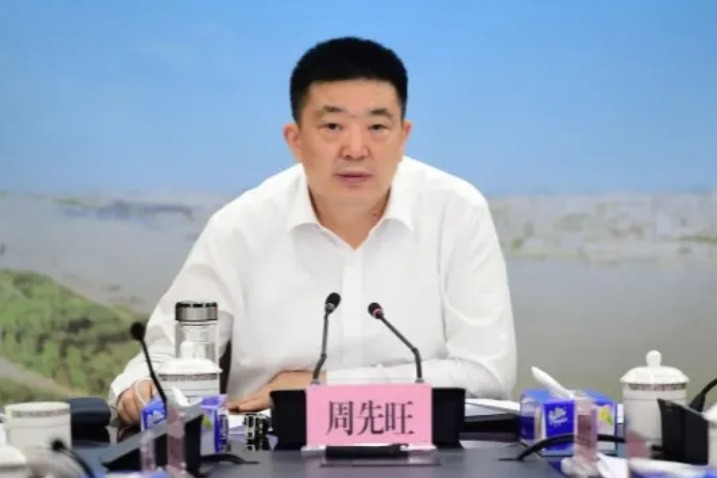
    In a significant move against corruption, Chinese authorities have announced the expulsion of Zhou Xianwang, a former high-ranking political advisor from Hubei province, from both the Communist Party of China and public office. The decision follows an extensive investigation into serious disciplinary and legal violations conducted by China’s top anti-graft bodies.

    Zhou previously served as a key member of the leading Party members group within Hubei’s provincial committee of the Chinese People’s Political Consultative Conference (CPPCC) and held the position of vice chairperson. The investigation, authorized by the CPC Central Committee and executed by the Central Commission for Discipline Inspection (CCDI) and the National Commission of Supervision (NCS), uncovered multiple breaches of Party regulations.

    The comprehensive probe revealed that Zhou had committed severe infractions against political and organizational discipline, in addition to violating standards of integrity in both professional and personal conduct. The official statement indicated that Zhou engaged in serious job-related misconduct and is suspected of accepting bribes, constituting criminal offenses under Chinese law.

    In accordance with established Party protocols and legal statutes, authorities have determined to strip Zhou of his Party membership and governmental position. The ruling includes confiscation of all illicit assets acquired through his unlawful activities and refers his case to judicial authorities for criminal prosecution. This development represents another milestone in China’s ongoing campaign against corruption within its political system.

  • US says ready to work with new Venezuelan authorities

    US says ready to work with new Venezuelan authorities

    In the wake of a dramatic military operation that resulted in the capture of Venezuelan President Nicolas Maduro, the United States has moved to clarify its strategic objectives in the Latin American nation. Secretary of State Marco Rubio stated on Sunday that the Trump administration is prepared to work with the existing Venezuelan leadership under acting President Delcy Rodriguez, contingent upon their adherence to U.S. demands, signaling a more nuanced approach than initial statements suggested.

    The operation, which unfolded on Saturday, involved U.S. commandos supported by aerial and naval assets conducting a precision raid in Caracas. Maduro was subsequently transported to New York, where he is detained awaiting a court hearing on narcotrafficking charges. Video footage released by the White House showed the deposed leader in custody, handcuffed and offering a casual ‘Good night, happy new year’ in English.

    Despite the successful extraction, the mission has sparked both domestic and international scrutiny. While exiled Venezuelans celebrated in global plazas from Madrid to Santiago, Democratic leaders in Congress questioned the operation’s legality. Senate leader Chuck Schumer expressed that Americans were left ‘scratching their heads in wonderment and in fear,’ and House Representative Hakeem Jeffries characterized the raid as an act of war requiring congressional authorization.

    The administration’s broader motivations appear centered on Venezuela’s massive crude reserves—the world’s largest proven oil deposits. President Trump has vowed substantial U.S. investments to revitalize the crippled industry, which has suffered under international sanctions and chronic underinvestment. Secretary Rubio emphasized that future development would likely involve Western companies rather than Russian or Chinese interests, provided appropriate guarantees are established.

    Meanwhile, Caracas has remained unexpectedly calm, with residents queuing for groceries and police presence diminished. The Venezuelan military has recognized Rodriguez’s interim leadership and urged a return to normalcy. The U.S. has maintained pressure through an ongoing oil export embargo enforced by Navy ships in the Caribbean, which Rubio described as providing ‘tremendous leverage’ in shaping Venezuela’s political and economic future.