分类: politics

  • Japan nuclear agency worker loses phone with confidential data in China

    Japan nuclear agency worker loses phone with confidential data in China

    A significant security breach has occurred within Japan’s Nuclear Regulation Authority (NRA) after an employee lost a government-issued smartphone containing highly sensitive information during a personal visit to China. The incident took place on November 3rd when the official misplaced the device while undergoing security screening at Shanghai Airport.

    The missing phone stored confidential contact details of personnel directly involved in Japan’s nuclear security operations, including those responsible for protecting nuclear materials against potential threats such as theft and terrorism. Despite realizing the device was missing three days later and conducting searches with airport authorities, the phone remains unrecovered.

    This security lapse comes at a particularly sensitive time for Japan’s energy sector as the country attempts to revitalize its atomic energy program, which has remained largely dormant since the 2011 Fukushima nuclear disaster. The NRA itself was established following that catastrophe to oversee nuclear safety standards and reactor restarts.

    In response to the incident, the NRA has formally reported the breach to Japan’s Personal Information Protection Commission and implemented stricter protocols prohibiting employees from bringing work phones overseas. The agency cannot confirm whether the sensitive data has been compromised, but the potential implications for national security are considerable.

    This event marks the latest in a series of security failures within Japan’s nuclear establishment. Previous incidents include the mishandling of confidential documents at the Kashiwazaki-Kariwa Nuclear Power Plant—the world’s largest nuclear facility—and recent revelations that Chubu Electric Power may have used selectively chosen data during safety assessments. The NRA has consequently suspended its review process for Chubu’s reactor restart applications due to what officials have termed ‘fabrication of critical inspection data.’
  • UN members denounce US attack

    UN members denounce US attack

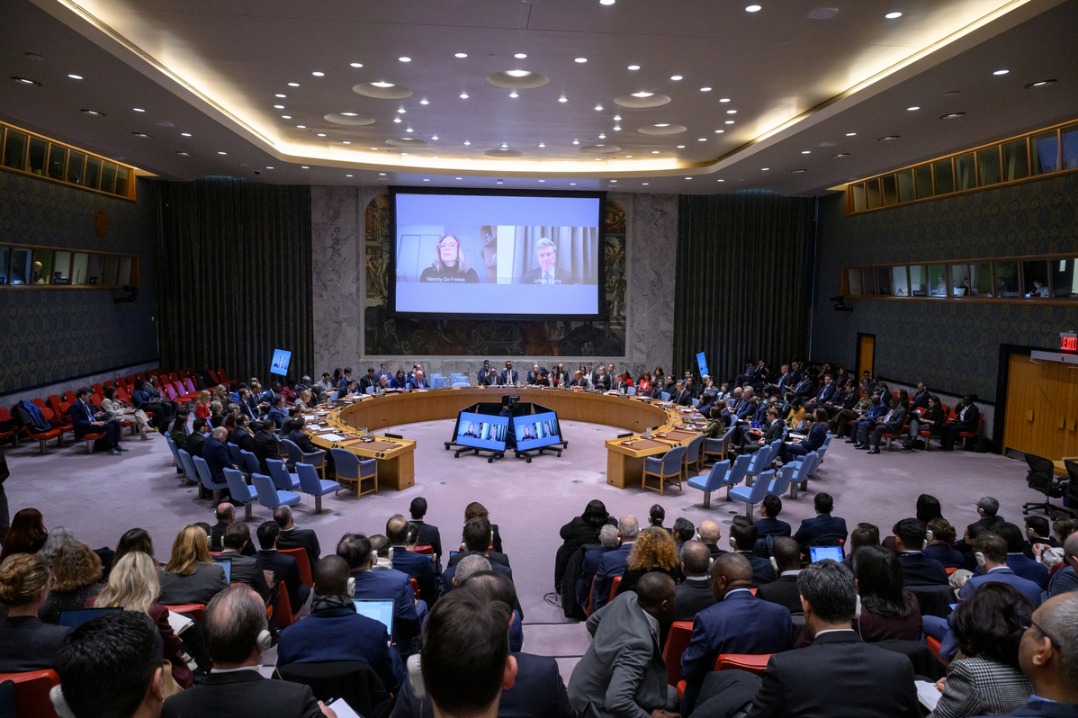
    The United Nations Security Council convened its inaugural 2026 session amidst unprecedented diplomatic turmoil, as numerous member states delivered scathing condemnations of the United States’ military operation in Venezuela. The emergency meeting witnessed a remarkable display of international unity against what multiple diplomats characterized as a flagrant violation of established international law and the UN Charter.

    China’s Deputy Permanent Representative to the UN, Sun Lei, articulated the position of many nations when he denounced the American strike as “unilateral, illegal and bullying acts” that represented a dangerous escalation in hemispheric relations. The Chinese diplomat emphasized that Washington had effectively “placed its own power above multilateralism and military actions above diplomatic efforts,” creating grave implications for regional stability throughout Latin America and the Caribbean.

    The controversy stems from Saturday’s large-scale US military operation that resulted in the capture and extradition of Venezuelan President Nicolas Maduro, who subsequently appeared in a New York federal court facing narco-terrorism charges. While US representatives defended the action as a “surgical law enforcement operation,” the overwhelming majority of Security Council members rejected this characterization.

    Russia’s UN Ambassador Vassily Nebenzia joined China in demanding Maduro’s immediate release, labeling the American intervention a “crime cynically perpetrated” that signaled a return to an era of “lawlessness.” This perspective found support across geographical blocs, with representatives from Mexico, Chile, Spain, Brazil, South Africa, Pakistan, and the A3 group (Democratic Republic of Congo, Somalia, and Liberia) all expressing variations of the same fundamental objection: that democracy cannot be imposed through military coercion.

    Notably, US economist Jeffrey Sachs provided expert testimony condemning the operation as violating Article 2, Section 4 of the UN Charter. Sachs contextualized the intervention within a historical pattern of American “covert regime change” operations, citing documentation of approximately 70 such operations between 1947 and 1989 alone.

    The emergency session revealed a stark division between the United States and its few supporters—including Argentina, which framed the operation as anti-narco-terrorism enforcement—versus the majority of international community that viewed the action as establishing a dangerous precedent for unilateral military interventions against sovereign nations.

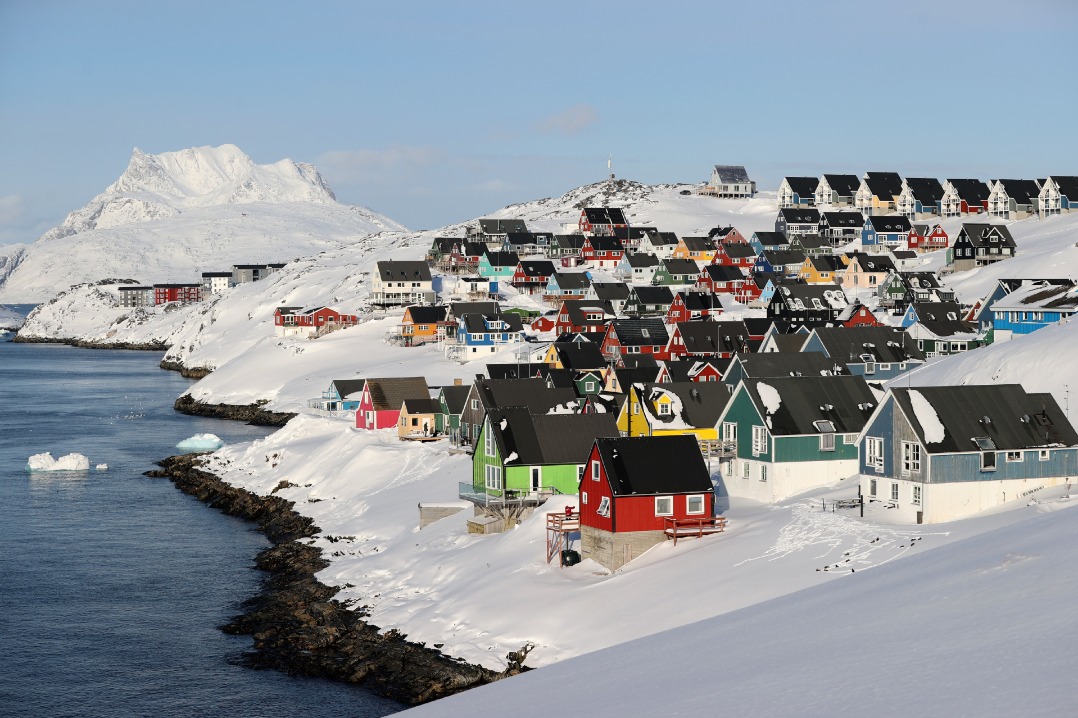
  • Trump weighs options to acquire Greenland including use of US military: White House

    Trump weighs options to acquire Greenland including use of US military: White House

    The White House has officially acknowledged that the Trump administration is conducting a comprehensive assessment of potential mechanisms to acquire Greenland from Denmark, with Press Secretary Karoline Leavitt confirming the evaluation includes the possible utilization of U.S. military resources. This unprecedented territorial consideration represents one of the most unconventional geopolitical maneuvers in recent American foreign policy.

    The strategic evaluation, which Leavitt described as encompassing “a range of options,” signals a serious governmental exploration rather than mere speculative discussion. The inclusion of military considerations within this assessment framework suggests the administration views Greenland’s acquisition as a matter of national security significance, potentially relating to its strategic Arctic positioning and abundant natural resources.

    This development emerges against the backdrop of increasing global competition for influence in the Arctic region, where melting ice caps are opening new shipping routes and access to previously inaccessible mineral deposits. Greenland’s geographical location offers substantial strategic advantages for whichever nation controls its territory, particularly as Arctic resources become increasingly viable for extraction.

    The confirmation from the White House press secretary elevates what might otherwise be considered diplomatic speculation to the level of formal policy consideration, indicating the administration’s serious commitment to exploring all avenues for expanding U.S. territorial holdings through unconventional means.

  • Trump’s Venezuela oil gambit depends on a ‘swashbuckling’ attitude the market lacks

    Trump’s Venezuela oil gambit depends on a ‘swashbuckling’ attitude the market lacks

    The geopolitical strategy currently being deployed by the Trump administration toward Venezuela reflects a distinct fusion of two pivotal historical moments that transformed global oil markets: the dissolution of the Soviet Union in the 1990s and the U.S. invasion of Iraq in 2003. President Trump’s approach to seizing control of Venezuela’s substantial oil reserves demonstrates an attempt to synthesize elements from both eras while crafting a new foreign policy doctrine.

    Historical analysis reveals that following the Soviet collapse, American energy corporations, speculators, and diplomats aggressively pursued oil wealth in newly independent Caspian states like Kazakhstan and Azerbaijan. These nations, governed by former communist insiders, offered favorable terms to Western companies. The Trump administration appears to envision a similar scenario in Venezuela, proposing that U.S. energy firms would invest billions to rehabilitate the country’s crippled oil infrastructure while generating substantial profits.

    However, energy experts and industry analysts express significant skepticism about this strategy. Steve LeVine, author of ‘The Oil and the Glory,’ notes that major petroleum companies show little enthusiasm for returning to the high-risk adventurism that characterized the post-Soviet era. Despite Venezuela possessing the world’s largest proven oil reserves, the complex political reality presents formidable obstacles unlike the relatively welcoming environment that followed the Soviet disintegration.

    The administration’s plan reportedly involves collaborating with remnants of President Maduro’s government, particularly Vice President Delcy Rodríguez, to maintain stability and resume oil production. This approach notably diverges from the Iraq model where the U.S. dismantled the existing power structure through de-Baathification, which resulted in prolonged instability.

    Technical challenges further complicate Venezuela’s oil potential. The country’s heavy crude requires expensive, labor-intensive extraction and specialized refining capacity—contrasting sharply with Iraq’s light, easily accessible oil. Venezuela’s production has plummeted from approximately 3 million barrels daily in the late 1990s to just 800,000 barrels currently, following decades of underinvestment, mismanagement, and sanctions.

    Financial analysts estimate that revitalizing Venezuela’s oil sector would require approximately $100 billion in investments—a substantial commitment at a time of conservative oil demand projections and low global prices. The emergence of U.S. shale production has additionally reduced the imperative for American companies to pursue risky international ventures, as domestic opportunities offer more stable returns with fewer geopolitical complications.

    Market realities further undermine the strategy’s viability. With OPEC members increasing production and global markets well-supplied, the necessity for massive Venezuelan output remains questionable. Industry experts suggest that rather than dramatically boosting production, the administration’s primary objective may be establishing control over Venezuela’s resources as a strategic asset, with modest production increases representing a more plausible outcome.

  • Trump leaves Venezuela’s opposition sidelined and Maduro’s party in power

    Trump leaves Venezuela’s opposition sidelined and Maduro’s party in power

    In an unprecedented military operation, U.S. forces have extracted Venezuelan authoritarian leader Nicolás Maduro from his Caracas residence, transporting him to New York to face drug trafficking charges. However, the anticipated democratic transition has stalled as President Donald Trump unexpectedly endorsed Maduro’s vice president, Delcy Rodríguez, to assume control rather than supporting the internationally recognized opposition.

    The development represents a devastating setback for Venezuela’s opposition movement, which had spent years preparing for Maduro’s removal with bipartisan U.S. support. Instead of installing opposition leadership, the Trump administration has chosen to work with Rodríguez, a key figure from Maduro’s repressive regime.

    Most prominent opposition leaders, including Nobel Peace Prize laureate María Corina Machado, remain either imprisoned or in exile. Machado, despite being the legitimate winner of the 2024 presidential election according to detailed tally sheets and international recognition, was barred from running by Maduro’s government and ultimately represented by proxy candidate Edmundo González Urrutia.

    Trump publicly expressed skepticism about Machado’s leadership capabilities, stating she lacks sufficient domestic support and respect. Ironically, Machado’s consistent praise for Trump—including dedicating her Nobel Prize to him and supporting aggressive U.S. policies toward Venezuelan migrants—has diminished her popularity at home.

    Constitutional uncertainties cloud Venezuela’s political future. While the constitution mandates elections within 30 days when a president becomes permanently unavailable, Maduro loyalists in the Supreme Court have declared his absence temporary, allowing Rodríguez to assume power for up to 90 days, extendable to six months with legislative approval.

    Secretary of State Marco Rubio attempted to clarify Trump’s controversial statement about the U.S. “running” Venezuela, emphasizing instead that Washington would leverage control over Venezuela’s oil industry—home to the world’s largest proven crude reserves—to force policy changes.

    The opposition now faces monumental challenges: both Machado and González remain in exile, while Rodríguez consolidates power among ruling party factions. Experts warn that bypassing the legitimate opposition movement risks damaging Venezuela’s democratic spirit and humiliating citizens who voted overwhelmingly for change.

  • Protest-hit Iran warily watches the US after its raid on Venezuela

    Protest-hit Iran warily watches the US after its raid on Venezuela

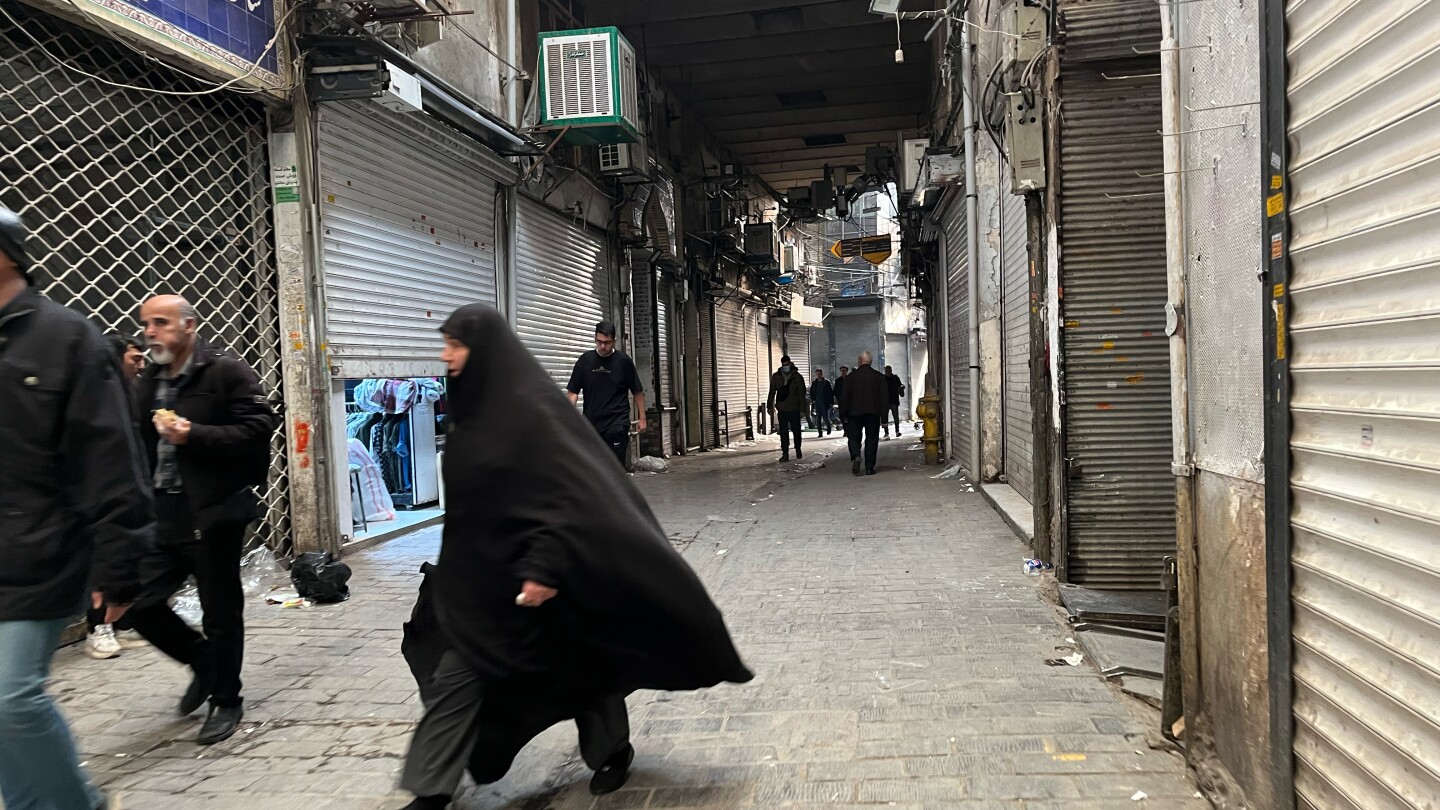
    DUBAI, United Arab Emirates — A palpable sense of anxiety has permeated Iran’s political landscape following the United States military’s seizure of Venezuelan President Nicolás Maduro. While Tehran has officially condemned the operation against its longstanding ally, unofficial conversations reveal growing apprehension that similar tactics could be employed against the Islamic Republic’s leadership, including 86-year-old Supreme Leader Ayatollah Ali Khamenei.

    This heightened paranoia intersects with existing concerns among Iranians regarding potential Israeli military actions, reminiscent of June’s 12-day conflict that resulted in significant losses including high-ranking military officials and nuclear scientists. The memory of Operation Eagle Claw—the failed 1980 U.S. special forces mission to rescue hostages in Tehran—further compounds these security anxieties.

    Analysts note crucial distinctions that complicate any potential intervention scenario. Iran possesses roughly double Venezuela’s territorial size, maintains more robust military capabilities, and operates under a complex political structure where the paramilitary Revolutionary Guard answers directly to Khamenei. Farzin Nadimi, senior fellow at the Washington Institute for Near East Policy, warns that hardliners could respond with assassinations, cyberattacks, and assaults on Middle Eastern shipping routes if threatened.

    The international community has responded with mixed reactions. Israeli opposition leader Yair Lapid suggested Iran’s regime should ‘pay close attention’ to Venezuela’s developments, while Prime Minister Benjamin Netanyahu acknowledged the protest movements within Iran. President Donald Trump previously warned that the U.S. would ‘come to their rescue’ if Iran violently suppressed protests.

    Meanwhile, U.S. politicians have openly speculated about regime change possibilities. Representative Marjorie Taylor Greene connected the Venezuela operation to potential oil supply control ahead of ‘the next obvious regime change war in Iran,’ while Senator Lindsey Graham publicly donned a ‘Make Iran Great Again’ hat during a Fox News segment.

    Even regional rivals are monitoring the situation closely. Ghassan Charbel, editor-in-chief of Saudi-owned Asharq Al-Awsat newspaper, described Maduro’s capture as a ‘brutal message’ to Tehran’s leadership, suggesting the psychological impact on Khamenei would be particularly devastating.

  • Turkey edges closer to leading Black Sea mission under Ukraine security guarantees

    Turkey edges closer to leading Black Sea mission under Ukraine security guarantees

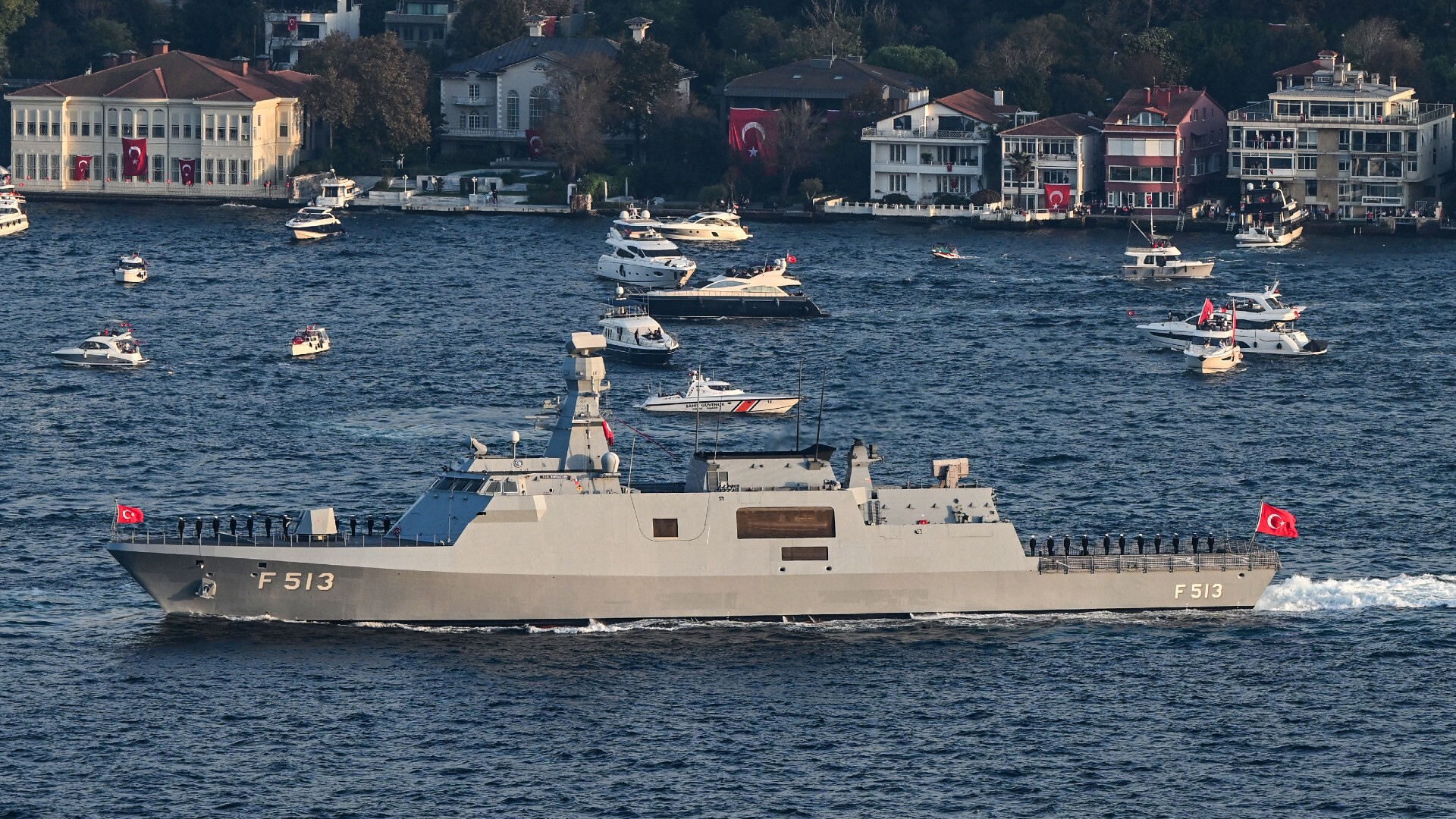
    Turkey is positioned to assume a pivotal naval leadership role in Black Sea security operations as a core component of international security assurances for Ukraine. The announcement came from Turkish Foreign Minister Hakan Fidan following a high-level Coalition of the Willing summit convened in Paris on Tuesday.

    Minister Fidan articulated that the Turkish Armed Forces have consistently advocated for assuming responsibility for any naval framework established during peacetime. ‘Considerable progress has been made on this,’ Fidan confirmed to journalists, emphasizing the natural fit for NATO’s predominant Black Sea naval power to oversee maritime security operations.

    The Paris summit yielded significant advancements in constructing robust security guarantees for Kyiv, designed to activate following a prospective ceasefire in the Russia-Ukraine conflict. French President Emmanuel Macron corroborated Turkey’s willingness to undertake this critical security role during his press conference remarks.

    According to summit agreements, the United States would spearhead a ceasefire monitoring mechanism while Britain and France formalized a declaration of intent through a trilateral agreement with Ukrainian President Volodymyr Zelensky. This arrangement envisions potential troop deployments and establishment of ‘military hubs’ on Ukrainian territory contingent upon a peace agreement.

    This strategic development follows Ankara’s diplomatic recalibration last year after Moscow’s firm opposition to NATO troop presence in Ukraine. Instead, Turkey has concentrated on leading a prospective naval mission encompassing deterrent operations, maritime demining initiatives, and supporting Ukrainian naval reconstruction.

    German representatives adopted a more circumspect approach, suggesting potential NATO-area presence while acknowledging the necessity for compromises given Russia’s staunch opposition to NATO troop deployments in Ukraine.

    Minister Fidan revealed that both conflict parties have neared potential agreement more than at any previous point, with detailed discussions addressing the region’s postwar architecture. He characterized the emerging framework as ‘a comprehensive agreement that would go on to define Russia’s regional policies as well,’ serving as a long-term structure for Russo-European peace modalities.

    Beyond military commitments, Turkey expressed strong interest in leading Ukraine’s reconstruction efforts. Fidan highlighted Turkey’s unique capabilities in economic revitalization, business expertise, and infrastructure development, positioning the nation as a primary driver of regional economic recovery post-conflict.

  • ‘Spectacle of empire’: US has no day-after plan for Venezuela, experts say

    ‘Spectacle of empire’: US has no day-after plan for Venezuela, experts say

    A panel of foreign policy experts convened by the Quincy Institute for Responsible Statecraft has sharply criticized the Trump administration’s military operation in Venezuela, characterizing it as a poorly conceived spectacle that violates international norms without strategic justification.

    According to University of Chicago political science professor John Mearsheimer, the abduction of Venezuelan President Nicolás Maduro constitutes a violation of international law that makes no strategic sense for the United States. ‘Venezuela posed no threat to the US,’ Mearsheimer stated, noting that if narcotics were the genuine concern, Mexico would represent a more logical target.

    The operation, conducted by US special forces with aerial support that reportedly killed approximately 80 security forces and civilians, has left the administration embroiled in precisely the type of nation-building exercise that President Trump previously pledged to avoid. Maduro and his wife now face trial in New York City, where he has pleaded not guilty to all charges.

    Curt Mills of The American Conservative suggested President Trump appears ‘addicted to these sort of special operations as a way of looking like a wartime commander in chief’ without calculated risks. Meanwhile, Pomona College Professor Miguel Tinker Salas described the operation as ‘performative’ and emblematic of ‘the spectacle of empire,’ noting the apparent absence of any coherent plan for Venezuela’s future governance.

    The administration has assigned Secretary of State Marco Rubio, a long-time advocate for regime change in Venezuela and Cuba, to oversee Venezuela’s administration. Surprisingly, Trump has sidelined opposition leader Maria Corina Machado, suggesting she lacks sufficient institutional support. Interim leadership has been assumed by Delcy Rodríguez, Maduro’s former vice president, who has adopted a conciliatory stance toward US cooperation.

    Experts raised multiple concerns about the operation’s broader implications. Despite Trump’s transparent interest in Venezuela’s oil reserves—the world’s largest—Mills questioned the economic rationale, noting current low oil prices and the absence of extraction plans. Geopolitically, Mearsheimer warned the intervention represents ‘manna from heaven’ for China and Russia, as US resources become diverted from Asian priorities to Western hemisphere nation-building.

    The panel further expressed alarm about deteriorating relations with European allies, particularly given Trump’s simultaneous threats to forcibly acquire Greenland from Denmark. The experts noted Europe’s ‘dramatic’ silence on Venezuela, potentially reflecting fears about abandoned Ukrainian support or retaliatory tariffs.

    Mearsheimer concluded with a stark assessment: ‘Watching the Trump administration in action, I think that they are a rogue operation. They’ve turned the United States into a rogue state.’

  • NSW Labor MP Anthony D’Adam accuses Israel of sureviling Australians, ‘foreign interference’

    NSW Labor MP Anthony D’Adam accuses Israel of sureviling Australians, ‘foreign interference’

    A New South Wales Labor parliamentarian has formally accused the Israeli government of potentially engaging in foreign interference activities on Australian soil. Anthony D’Adam, a member of the NSW Legislative Council, raised these concerns after discovering his inclusion in a controversial dossier compiled by Israel’s Ministry of Diaspora Affairs in September.

    The document, which purports to track ‘anti-Semitism and anti-Zionism’ within Australia, identified D’Adam as ‘an advocate of Palestinian rights’ within the Labor Party and referenced his parliamentary statements characterizing Israel’s war for independence as containing ‘acts of terrorism.’ In a January 5 correspondence to Home Affairs Minister Tony Burke, D’Adam urged an official investigation into whether the dossier’s creation and distribution might constitute foreign interference under Australian law.

    The situation has created diplomatic ripples as Israeli Minister for Diaspora Affairs Amichai Chikli has maintained an active presence in Australia following the Bondi Beach terror attack. Last week, Chikli sent his own letter to Minister Burke criticizing the Australian government’s response to security matters while offering counter-terrorism training for Australian police forces.

    The controversial dossier designates NSW, Victoria, and Queensland as primary hotspots for alleged anti-Semitic content, with Canberra reporting the highest per capita incidence. It further identifies several pro-Palestine organizations including the Palestine Action Group, BDS Australia, and Students for Palestine USYD as ‘anti-Semitic/anti-Israel generators and influencers.’ Multiple politicians across party lines were named, including Senators Fatima Payman and Mehreen Faruqi, alongside Lidia Thorpe and Adam Bandt.

    D’Adam vehemently denies any anti-Semitic rhetoric, asserting the document deliberately conflates legitimate criticism of Israeli policies with religious prejudice. ‘The dossier does not provide any examples of anti-Semitism or criticism of Jewish people generally based on racial, ethnic, or religious identity,’ he stated in his letter.

    The controversy emerges against a backdrop of internal Labor Party tensions regarding Palestinian solidarity. D’Adam previously claimed he was silenced during party conference debates on Palestine and faced significant backlash after criticizing Premier Chris Minns’ handling of related issues, including the Sydney Harbour Bridge protest. While Minns acknowledged ‘tough debates’ occur within party rooms, he denied allegations of bullying behavior.

    Minister Burke’s office confirmed that correspondence containing allegations of unlawful conduct would be forwarded to appropriate agencies per standard procedure. The Israeli government has yet to provide official comment on these allegations.

  • Chris Mason: Greenland and Ukraine point to Trump’s head-spinning unpredictability

    Chris Mason: Greenland and Ukraine point to Trump’s head-spinning unpredictability

    Europe finds itself navigating two simultaneous diplomatic challenges with the United States, testing the continent’s ability to anchor Washington to its strategic priorities amid profound policy unpredictability from the Trump administration.

    The dual focus on Ukraine’s security and Greenland’s sovereignty emerges against a backdrop of growing skepticism in Washington about Europe’s geopolitical significance and defense commitments. These parallel developments illustrate what European officials describe as the ‘mesmerizing unpredictability’ of President Trump’s foreign policy approach.

    This week revealed particularly contradictory signals. Seven European leaders, including Britain’s Sir Keir Starmer, issued a joint statement diplomatically but firmly rejecting U.S. interest in Greenland as “absurd and counterproductive.” Their message emphasized that Greenland’s future belongs solely to its people, marking a rare unified European front against American ambitions.

    Simultaneously, European diplomats express cautious optimism about securing American commitment to Ukraine’s long-term security. The unprecedented presence of Trump envoys Steve Witkoff and Jared Kushner at Paris meetings of the ‘Coalition of the Willing’ signaled potential Washington alignment with European peace efforts.

    The emerging framework envisions a “US-led ceasefire monitoring and verification mechanism” leveraging advanced American intelligence, surveillance, and reconnaissance capabilities—including drones and satellites. This represents a significant evolution from Washington’s previous resistance to formal security guarantees for Kyiv.

    However, substantial uncertainties remain. Critical questions persist about Ukraine’s willingness to compromise on territory and the feasibility of securing sustainable peace. For European nations, including the UK, the commitment implies potential ground troop deployments raising questions about duration, public support, and defense budget implications.

    Whitehall sources characterize these developments as defining Europe’s security architecture for decades ahead, transcending current political leadership. As one official noted: “A secure Ukraine is a secure Europe and a secure Europe is a secure UK.”

    The fundamental question European capitals now confront is whether Trump’s unconventional approach represents a temporary deviation or a permanent transformation of transatlantic relations—with implications reaching far beyond this week’s headlines on Greenland and Ukraine.