分类: politics

  • US, Ukraine teams tackle ‘most difficult issues’ in Russia war talks: Zelensky

    US, Ukraine teams tackle ‘most difficult issues’ in Russia war talks: Zelensky

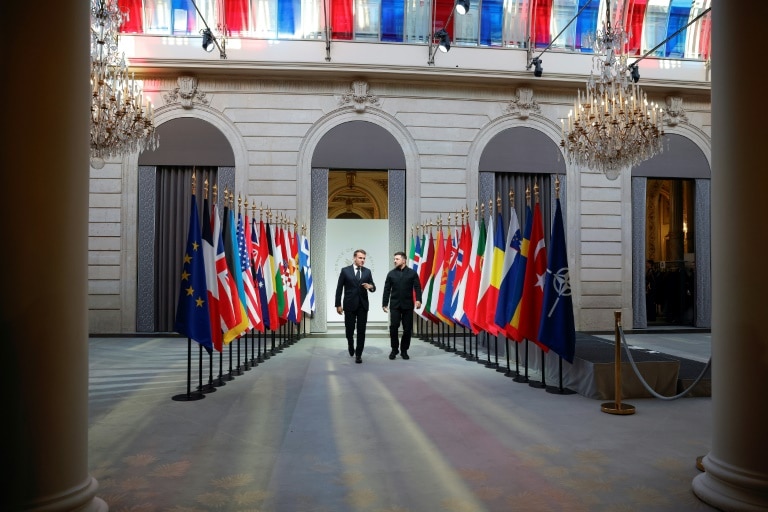
    High-stakes diplomatic negotiations between Ukrainian and United States delegations entered a critical phase in Paris on Wednesday, with both sides preparing to address the most contentious obstacles to ending Russia’s military invasion. Ukrainian President Volodymyr Zelensky confirmed that discussions would focus specifically on the status of Russian-occupied territories in eastern Ukraine and the precarious situation surrounding the Zaporizhzhia Nuclear Power Plant.

    The talks follow a significant breakthrough on Tuesday when European leaders and American envoys announced consensus on key security guarantees for Kyiv. The agreement includes a US-monitored oversight mechanism and a proposed European multinational stabilization force that would deploy following a ceasefire implementation. This development represents a notable display of Western unity despite underlying tensions regarding Venezuela and previous controversies surrounding former President Donald Trump’s geopolitical interests.

    The American delegation features Special Representative Steve Witkoff and senior advisor Jared Kushner, underscoring the White House’s direct engagement in resolving the nearly four-year conflict that has become Europe’s deadliest military confrontation since World War II. President Zelensky emphasized the necessity of continued Western pressure on Moscow, stating that ‘peace must be dignified’ and contingent upon Russia’s genuine commitment to ending hostilities.

    Kyrylo Budanov, Zelensky’s newly appointed chief of staff and former intelligence director, indicated that concrete progress has already been achieved though certain details remain confidential. The expanded negotiations now include diplomatic representatives from France, Germany, the United Kingdom, Italy, and Turkey, creating a broader international framework for potential resolution.

    Despite these diplomatic advances, military confrontations continue unabated across conflict zones, with Moscow’s official negotiating position remaining ambiguous. Russian President Vladimir Putin has consistently opposed NATO troop presence in Ukraine, presenting a significant complication for proposed international security arrangements.
  • Trump discussing how to acquire Greenland, US military always an option, White House says

    Trump discussing how to acquire Greenland, US military always an option, White House says

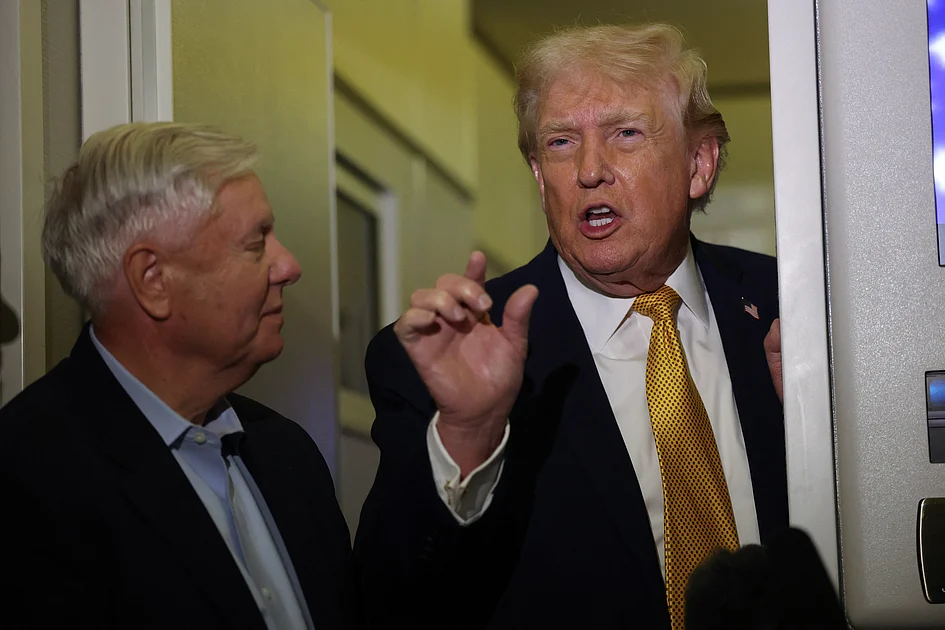
    The White House has officially confirmed that President Donald Trump is actively exploring avenues to acquire Greenland, with administration officials acknowledging that military force remains among the potential options under consideration. This revival of Trump’s territorial ambitions has sparked immediate international concern and diplomatic tensions.

    According to White House statements released Tuesday, the administration views control of Greenland as a critical national security priority essential for countering adversarial interests in the increasingly strategic Arctic region. While emphasizing that diplomatic solutions remain the preferred approach, officials explicitly noted that “utilizing the US military is always an option at the commander-in-chief’s disposal.”

    The administration’s considerations include two primary approaches: an outright purchase of the territory from Denmark or establishing a Compact of Free Association that would stop short of full incorporation into the United States. Senior officials, speaking anonymously about internal deliberations, characterized Trump as fundamentally a dealmaker who would prefer negotiated acquisition.

    This initiative has encountered immediate resistance from multiple fronts. Greenland itself has consistently expressed no desire to become part of the United States, while European powers and Canada have rallied behind the Arctic territory’s right to self-determination. The suggestion of military action against Denmark, a longstanding NATO ally, has raised concerns about potential shock waves through the alliance and further deterioration of US-European relations.

    Congressional leaders from both parties have expressed opposition, with the Senate NATO Observer Group co-chairs emphasizing that the United States must respect Danish sovereignty when Greenland clearly indicates it is not for sale. The administration maintains that Greenland’s mineral resources, crucial for high-tech and military applications, justify the pursuit despite political and diplomatic challenges.

    The renewed interest in Greenland follows Trump’s recent foreign policy actions in the Western Hemisphere, including the capture of Venezuelan President Nicolas Maduro, which has apparently emboldened the administration’s approach to territorial matters. Officials indicate that acquiring Greenland remains a persistent goal for Trump’s remaining term in office.

  • Maduro pleads not guilty in US court

    Maduro pleads not guilty in US court

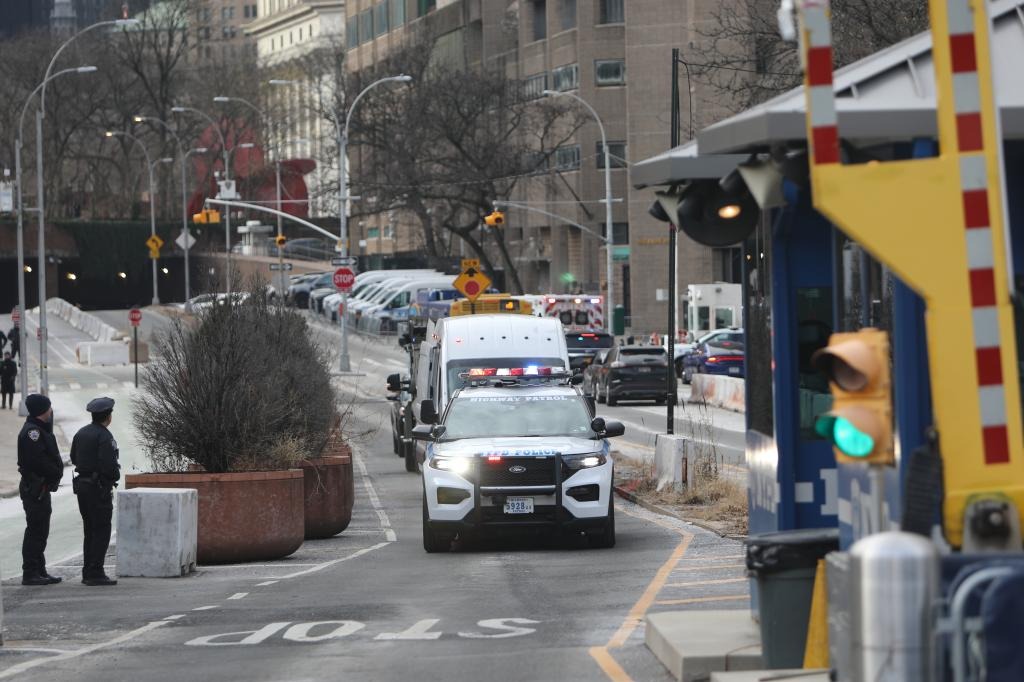
    In an extraordinary legal proceeding that has drawn international condemnation, Venezuelan President Nicolás Maduro and First Lady Cilia Flores appeared before a federal court in New York on Monday, marking their first judicial hearing since being forcibly extracted from their Caracas residence by US military operatives in a nighttime operation on January 3rd.

    The Venezuelan leader, speaking through a court-appointed interpreter, asserted his innocence before being interrupted by the presiding judge. “I was captured,” Maduro declared in Spanish, later adding during formal arraignment: “I am innocent. I am not guilty. I am a decent man, the constitutional president of my country.”

    The operation, characterized by US President Donald Trump as a “large-scale strike,” involved the abduction and subsequent aerial transportation of the presidential couple to US territory. Both individuals are currently detained at the Metropolitan Detention Center in Brooklyn pending further judicial proceedings.

    Flores similarly entered a plea of not guilty to all charges. The court has ordered both defendants remanded in custody, scheduling their next hearing for March 17th.

    Barry Pollack, Maduro’s legal representative, indicated plans to challenge the legality of what he termed a “military abduction”—a move that legal experts suggest could establish unprecedented jurisprudence regarding the extraterritorial apprehension of foreign heads of state.

    Outside the courthouse, substantial demonstrations erupted as protestors condemned Washington’s interventionist actions. Placards bearing messages such as “USA hands off Venezuela,” “No US war on Venezuela,” and “US hands off Venezuela oil” reflected growing public outrage.

    Rae Lee, an early arrival at the protest site, characterized the operation as an “international crime” during remarks to journalists. Having recently visited Venezuela, she challenged mainstream media narratives about the nation’s conditions, noting: “They’ve been building their resilience through the years, and economically they have grown really powerfully.”

    Many demonstrators expressed conviction that economic motivations rather than judicial concerns drove US actions. Imani Henry, another protest participant with firsthand experience in Venezuela, stated unequivocally: “It’s about oil. As with Iran, Afghanistan—it’s about oil. Steal a sovereign president and declare to run their country, and declare that we are gonna steal oil reserves.”

    The case has ignited intense debate regarding sovereignty, international law, and the resurgence of power politics in global affairs, with critics warning of dangerous precedents being established through unilateral military actions against elected foreign leaders.

  • China announces another new trade measure against Japan as tensions rise

    China announces another new trade measure against Japan as tensions rise

    BEIJING — China has intensified its trade confrontation with Japan by initiating an anti-dumping investigation into imported dichlorosilane, a specialized chemical gas vital for semiconductor manufacturing. This move comes just one day after Beijing imposed restrictions on exports of dual-use technologies with potential military applications to Japan.

    The Chinese Commerce Ministry announced Wednesday that domestic producers had formally petitioned for the probe, citing a substantial 31% price decline for Japanese dichlorosilane between 2022 and 2024. According to the ministry’s statement, ‘The dumping of imported products from Japan has severely undermined the production and operational stability of our domestic industry.’

    These economic measures reflect Beijing’s growing dissatisfaction with Tokyo’s political positioning regarding Taiwan. Tensions intensified following recent remarks by Japanese Prime Minister Sanae Takaichi suggesting potential military intervention should China take action against Taiwan, which Beijing considers a breakaway province.

    The diplomatic rift widened further when Japanese legislator Hei Seki (also known as Yo Kitano) visited Taiwan on Tuesday and publicly referred to it as an independent nation. China had previously sanctioned Seki for disseminating what it termed ‘fallacies’ about Taiwan and other disputed territories. Chinese Foreign Ministry spokesperson Mao Ning dismissed Seki’s comments as ‘the nasty words of a petty villain.’

    Amid the escalating tensions, speculation mounts that China might impose restrictions on rare earth exports to Japan, mirroring previous measures implemented during its trade dispute with the United States. China dominates global production of heavy rare earths essential for manufacturing high-strength magnets used in defense systems and electric vehicles.

    While no official announcements have been made regarding rare earths, China Daily—considered a government mouthpiece—quoted anonymous sources indicating Beijing is evaluating tighter export controls on certain rare earth materials to Japan.

    Japan’s Foreign Ministry has urged China to revoke the trade restrictions, with Masaaki Kanai, head of Asia Oceanian Affairs, calling measures exclusively targeting Japan ‘unacceptable deviations from international practice.’ Tokyo has not yet announced retaliatory actions.

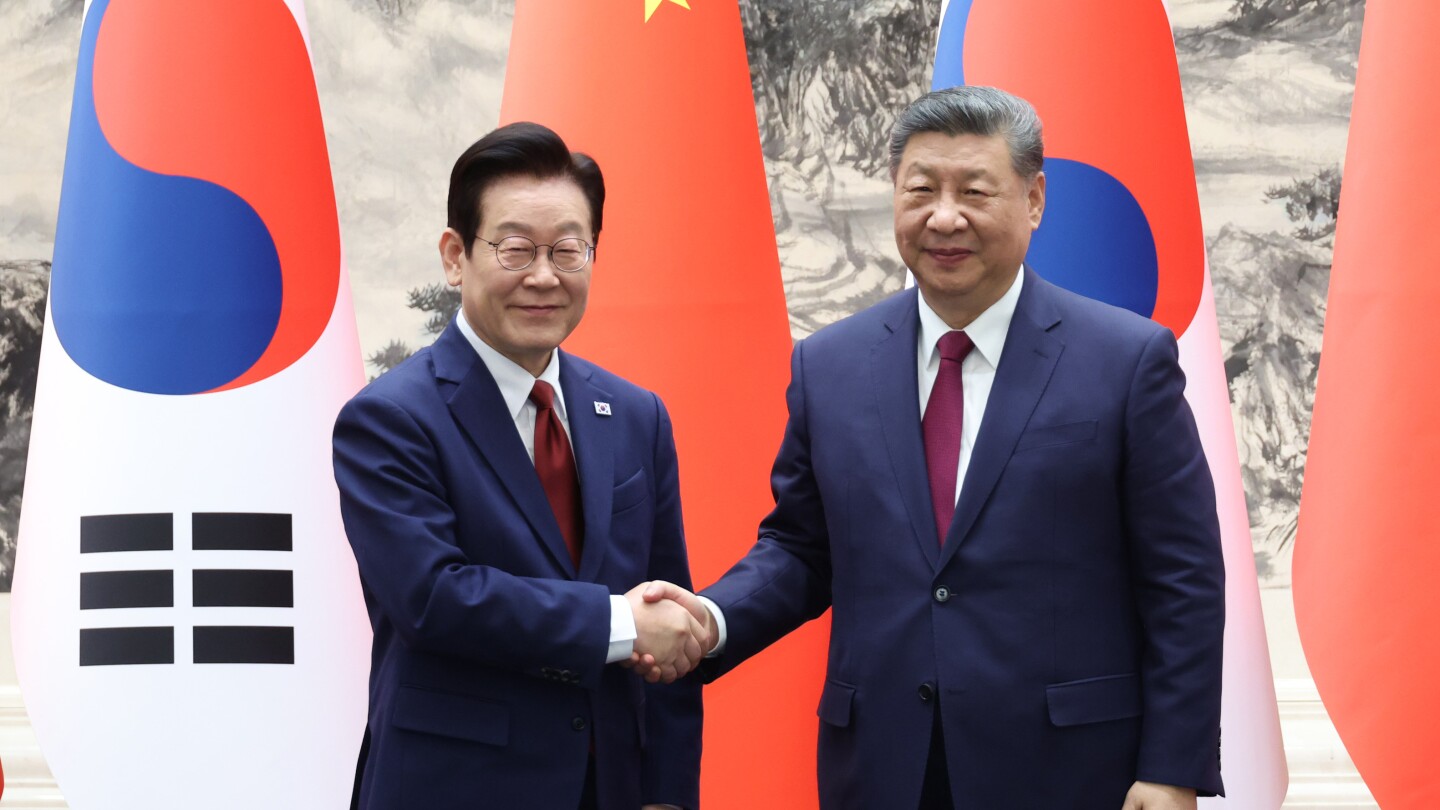
    Notably, as relations with Japan deteriorate, China has actively strengthened ties with South Korea. South Korean President Lee Jae Myung concluded a four-day visit to China on Wednesday, during which both nations signed 24 cooperation agreements valued at $44 million across technology, trade, and environmental sectors. Chinese media highlighted that South Korea has surpassed Japan as the top destination for outbound flights from mainland China, amid official travel advisories warning of safety risks for Chinese citizens in Japan.

  • Plot to kill Burkina Faso leader foiled, says junta

    Plot to kill Burkina Faso leader foiled, says junta

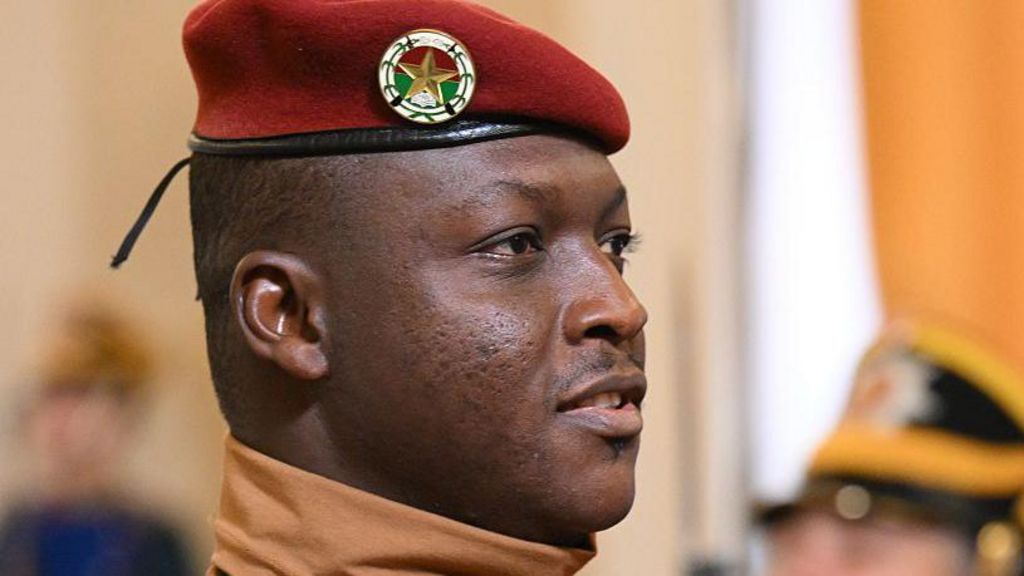
    Burkina Faso’s security forces have successfully disrupted a sophisticated assassination attempt targeting the nation’s military leader, Captain Ibrahim Traoré, according to an official government announcement. Security Minister Mahamadou Sana revealed in a late-night national broadcast that the elaborate scheme was orchestrated by Lieutenant Colonel Paul Henri Damiba, the military officer whom Captain Traoré had previously ousted from power in September 2022.

    The minister detailed that intelligence operatives intercepted the operation during its final planning stages, preventing what would have been a coordinated attack on the nation’s leadership. “Our intelligence services intercepted this operation in the final hours,” Sana stated. “They had planned to assassinate the head of state and then strike other key institutions, including civilian personalities.”

    Authorities allege the plotters intended to execute Captain Traoré either through close-range assassination or by detonating explosives at his residence around 23:00 local time on January 3rd. Following the planned assassination, the conspirators allegedly intended to target additional senior military and civilian figures in a broader destabilization campaign.

    Minister Sana further asserted that the plot received significant foreign funding, particularly highlighting approximately 70 million CFA francs (equivalent to $125,000) allegedly transferred from neighboring Ivory Coast. The minister claimed Damiba had mobilized both military personnel and civilian supporters while planning to neutralize the country’s drone-launch base before foreign forces could potentially intervene.

    “We are carrying out ongoing investigations and have made several arrests. These individuals will be brought to justice soon,” Sana announced during his television address, while reassuring citizens that the situation remained under control. He urged the public “not to be misled, out of naivety, into dangerous schemes.”

    This incident marks at least the third known coup attempt against Captain Traoré since he seized power. The 37-year-old leader maintains significant popular support despite growing criticism from both local and international observers regarding his government’s authoritarian tendencies, including allegations of suppressing dissent through arbitrary arrests of military officers and media restrictions.

    The ongoing internal power struggles occur against the backdrop of escalating jihadist violence that has displaced millions of Burkinabe citizens, further complicating the nation’s security landscape. These developments are likely to exacerbate existing regional tensions in West Africa.

    Neither Colonel Damiba nor Ivorian officials have responded to the allegations at this time. This is not the first instance where Burkina Faso’s junta has accused Ivory Coast of interfering in its internal affairs, highlighting the complex geopolitical dynamics within the region.

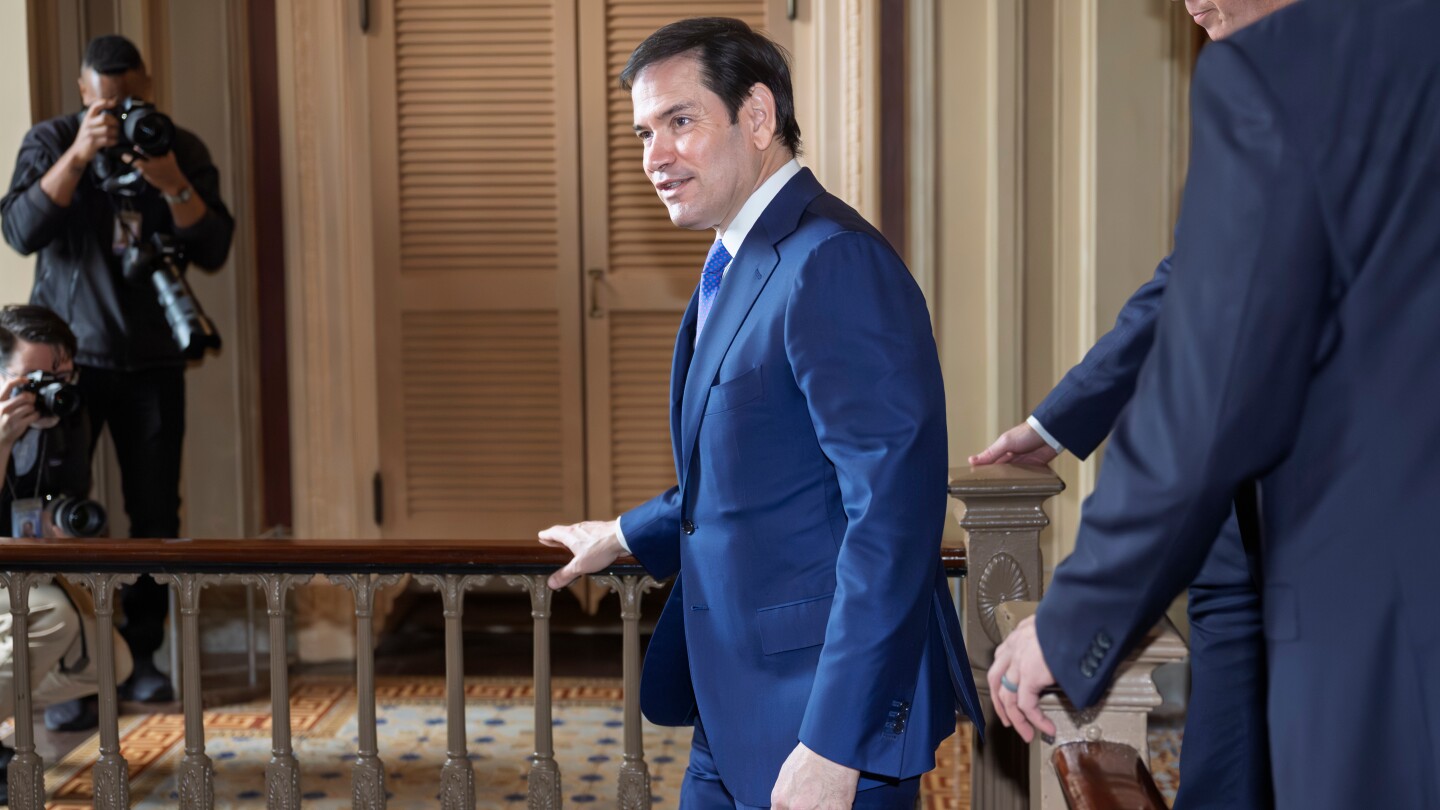
  • Rubio plans to meet with Danish officials next week to talk about US interest in Greenland

    Rubio plans to meet with Danish officials next week to talk about US interest in Greenland

    Diplomatic relations between the United States and Denmark have entered a precarious phase as Secretary of State Marco Rubio prepares to meet with Danish officials following the Trump administration’s renewed interest in acquiring Greenland. The strategic Arctic territory, currently a self-governing Danish territory, has become the focal point of escalating geopolitical tensions.

    The administration’s position, reportedly discussed in classified briefings with select lawmakers, emphasizes Greenland’s critical importance to U.S. national security amid growing Russian and Chinese influence in the Arctic region. While previous meeting requests between Danish and Greenlandic officials with Secretary Rubio were unsuccessful, the upcoming dialogue signals a potential de-escalation of rhetoric.

    European leaders have responded with unusual unity, with France, Germany, Italy, Poland, Spain, and the United Kingdom joining Danish Prime Minister Mette Frederiksen in affirming Greenland’s right to self-determination. The collective statement emphasized that the mineral-rich island ‘belongs to its people,’ while Frederiksen warned that any U.S. takeover could effectively mean ‘the end of NATO.’

    Defense analysts note the extraordinary nature of such a coordinated Nordic response. Maria Martisiute of the European Policy Centre observed, ‘The Nordics do not lightly make statements like this. But it is Trump whose very bombastic language bordering on direct threats and intimidation is threatening the fact to another ally.’

    The administration appears divided on approach, with White House press secretary Karoline Leavitt acknowledging military options while emphasizing diplomatic preference. Republican senators expressed mixed reactions, with some seeing strategic value but distancing themselves from military action suggestions. Alaska Senator Lisa Murkowski characterized the rhetoric as ‘very, very unsettling,’ while bipartisan NATO advocates emphasized the importance of honoring treaty obligations to Denmark.

    Military experts question the strategic necessity of annexation, noting existing U.S. military access through agreements with Denmark. Thomas Crosbie of the Royal Danish Defense College stated, ‘The United States will gain no advantage if its flag is flying in Nuuk versus the Greenlandic flag. They already enjoy all of the advantages they want as a trusted ally.’

    The situation remains fluid with the upcoming diplomatic meetings potentially determining whether this escalates into a full-scale NATO crisis or finds resolution through diplomatic channels.

  • ‘Right-wing network’ marked by inherent fragmentation, experts say

    ‘Right-wing network’ marked by inherent fragmentation, experts say

    A concerted effort by the United States to forge a cohesive global right-wing political network is encountering fundamental structural challenges, according to international relations experts. Since President Donald Trump’s return to power in January 2025, the administration has pursued an aggressive strategy of supporting pro-US conservative movements worldwide through economic measures, diplomatic engagements, and military posturing.

    The initiative has been particularly visible across Latin America, where longstanding US support for conservative forces has evolved into a coordinated campaign. Recent actions include imposing steep tariffs on Brazil during former president Jair Bolsonaro’s trial and sanctioning Colombian President Gustavo Petro over alleged drug ties. The most dramatic escalation occurred with US strikes against Venezuela and the abduction of President Nicolas Maduro, drawing condemnation from multiple Latin American leaders.

    According to Jin Xiaowen, associate professor at Renmin University of China’s School of International Studies, these moves demonstrate that political motivations frequently outweigh economic logic in US foreign policy. The strategy extends beyond the Western Hemisphere, with the US National Security Strategy explicitly endorsing European far-right parties’ opposition to immigration and climate policies. This document, framed by officials as the ‘Trump corollary’ to the Monroe Doctrine, has been embraced by right-wing figures in Germany, Poland, and Hungary as a form of recognition.

    However, experts highlight inherent fragmentation within this emerging network. Yan Shaohua, deputy director of Fudan University’s Center for China-Europe Relations, notes that the coalition functions primarily as an opposition force united against common targets but lacks a constructive shared agenda. Fundamental divisions emerge on critical issues like the Russia-Ukraine conflict, where Hungary’s pro-Russia stance conflicts with Poland’s support for Ukraine.

    The network’s structural fragility becomes apparent when ‘America First’ policies collide with national priorities of other members. Trade protectionism, including US tariffs on allies, creates economic strain and friction. As Yan observes, when concrete policy action is required, right-wing actors inevitably prioritize domestic political agendas over coalition solidarity, revealing the network’s fundamental limitations as a sustainable international alliance.

  • 2025 in review: A year of shifting horizons

    2025 in review: A year of shifting horizons

    The year 2025 witnessed a profound transformation of global politics as conservative ideologies gained unprecedented momentum across multiple continents. This rightward shift manifested through protectionist policies, nationalist agendas, and a fundamental reorientation of international relations that challenged established norms of global cooperation.

    The political transformation originated in Washington DC with the new U.S. administration declaring the commencement of ‘America’s golden age,’ promptly implementing aggressive tariff measures against trading partners. This protectionist stance triggered a chain reaction of retaliatory economic policies and inspired similar movements worldwide.

    By February, the political wave had crossed the Atlantic as European far-right movements gained prominence. The ‘Patriots for Europe’ coalition convened in Spain, explicitly endorsing the American protectionist model while advocating their own ‘Make Europe Great Again’ platform. This gathering signaled a significant consolidation of right-wing influence within European politics.

    The conservative momentum reached critical mass in East Asia by October when Japan elected Sanae Takaichi as its 104th prime minister. Her administration immediately prioritized constitutional revision and military expansion, marking a decisive departure from Japan’s traditional pacifist stance and representing the most significant security policy shift in decades.

    By December, the political transformation extended to South America with right-leaning candidate José Antonio Kast defeating the left-wing incumbent in Chile’s presidential election. His victory, coupled with similar right-wing successes in Ecuador and Bolivia, completed a comprehensive conservative realignment across Latin America.

    Analysts observe that this global movement represents a new political paradigm transcending regional boundaries. The U.S. administration’s policy approach has served as an ideological template for right-wing movements worldwide, with localized adaptations of populist slogans and strategies. Japan’s ‘Sanseito’ party exemplifies this trend, employing nationalist rhetoric and social media strategies inspired by American political tactics to transform from a fringe movement to a significant parliamentary force within five years.

    Experts note that coordinated digital campaigns and inflammatory rhetoric have proven effective in mobilizing support, though they warn that this rightward network remains inherently fragmented and could create new geopolitical tensions in the coming years.

  • Countries slam US interference in Venezuela at UN

    Countries slam US interference in Venezuela at UN

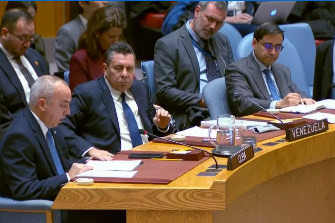
    A wave of international criticism targeted United States policies toward Venezuela during an emergency session of the UN Security Council convened Monday at UN Headquarters in New York. The meeting, focused on the ongoing political situation in Venezuela, became a platform for numerous nations to voice strong opposition to American intervention in the South American country’s internal affairs.

    Diplomatic representatives from multiple countries delivered statements condemning what they characterized as destabilizing interference by the US government in Venezuela’s sovereign matters. The emergency session highlighted growing global concern over external involvement in Venezuela’s political crisis, with several nations emphasizing the fundamental principles of national sovereignty and non-intervention established in the UN Charter.

    The meeting occurred amid heightened tensions surrounding Venezuela’s political leadership and economic challenges. While the US has maintained its position regarding the Venezuelan government, the Security Council discussion revealed significant international resistance to American approaches, suggesting a diplomatic divide within the global community regarding appropriate engagement with Venezuela.

    The coordinated criticism at the UN’s most powerful body represents a notable challenge to US foreign policy in Latin America and demonstrates the complex geopolitical dynamics surrounding the Venezuelan situation. The emergency session underscored how Venezuela’s internal affairs have become a flashpoint for broader debates about sovereignty, intervention, and international law within global governance institutions.

  • South Korean leader says he asked China’s Xi to act as mediator on North Korea issues

    South Korean leader says he asked China’s Xi to act as mediator on North Korea issues

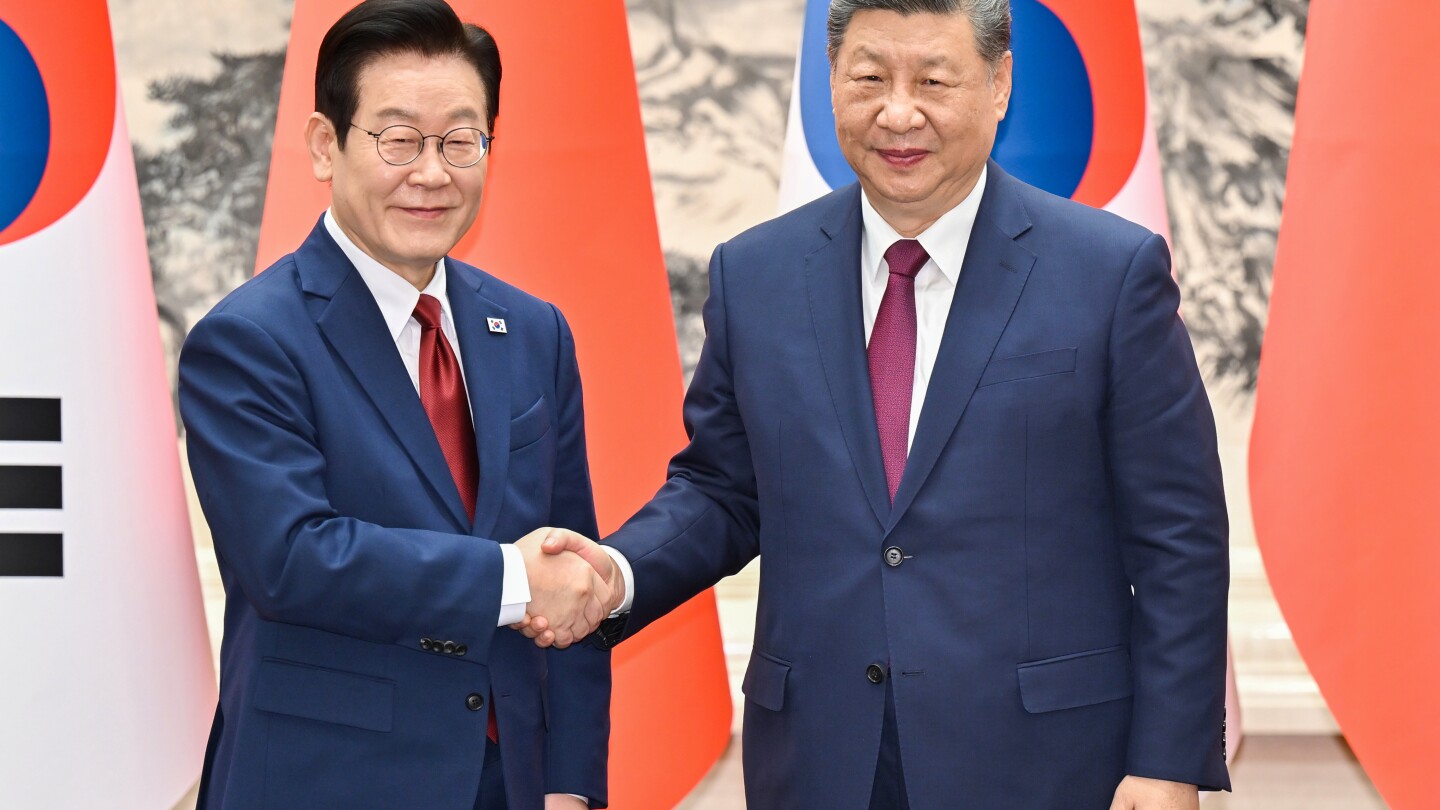
    During his official visit to China this week, South Korean President Lee Jae Myung formally requested Chinese President Xi Jinping to act as a diplomatic intermediary in resolving the protracted nuclear standoff with North Korea. The appeal came during bilateral talks held in Beijing on Monday, where President Lee emphasized the complete breakdown of communication channels between Seoul and Pyongyang.

    President Xi responded by emphasizing the necessity of patience in addressing North Korean matters while acknowledging South Korea’s ongoing efforts. The Chinese leader’s cautious stance reflects Beijing’s complex position as North Korea’s primary economic partner and diplomatic ally. This development occurs amid Pyongyang’s continued refusal to engage in denuclearization discussions since the collapse of negotiations with former U.S. President Donald Trump in 2019.

    Since assuming office in June, President Lee’s administration has pursued renewed dialogue with North Korea through a phased denuclearization approach involving reciprocal benefits. However, these overtures have been consistently ignored by North Korean leadership, with Kim Yo Jong—influential sister of Kim Jong Un—recently criticizing Seoul’s reliance on its U.S. alliance.

    During separate discussions with Chinese Premier Li Qiang, South Korean officials received similar counsel regarding diplomatic patience. President Lee specifically proposed initial steps to freeze North Korea’s nuclear and missile programs to prevent further arsenal expansion and potential proliferation risks. Chinese officials reportedly expressed alignment with this perspective, recognizing the ongoing nuclear development as detrimental to regional and global security.

    Despite these diplomatic exchanges, significant obstacles remain. North Korea has explicitly removed denuclearization from future negotiations, while experts caution that limited concessions might enable Pyongyang to secure sanctions relief without meaningful progress toward disarmament.