分类: politics

  • America’s ironclad bond with Israel is starting to crack

    America’s ironclad bond with Israel is starting to crack

    For decades, a familiar ritual has played out between Washington and Jerusalem following every regional crisis, ceasefire agreement, and tense high-stakes conversation between U.S. presidents and Israeli prime ministers. Phrases like “The bond is unshakeable” and “Our commitment to Israel’s security is ironclad” have been repeated across every sitting U.S. administration so many times that they have devolved into diplomatic liturgy: familiar and reassuring on the surface, but largely disconnected from the practical reality of how U.S. policy actually unfolds. The essay argues that Israel’s strategic leadership would benefit from a far more honest examination of this longstanding gap than it has been willing to conduct in the past.

    Since Israel’s founding in 1948, the country has occupied a recurring paradox: it is a militarily powerful state that remains deeply diplomatically dependent on its closest, indispensable ally, the United States. For generations, this dynamic has created a persistent gap between what Israel deems critical to its national survival and what Washington is willing to allow. Today, a critical, rarely openly discussed question looms: are shifting structural trends in U.S. domestic politics and grand strategy widening that gap further?

    To contextualize this dynamic, look back to a defining moment from 1973. During the Yom Kippur War, after Israeli armored forces had encircled Egypt’s Third Army and the Israeli government was poised to deliver a decisive, war-ending military blow, the Nixon administration intervened to stop the offensive, setting a pattern that would repeat for decades. Henry Kissinger brokered a ceasefire that saved Anwar Sadat’s battered Egyptian forces, cemented Washington’s role as the indispensable regional mediator, and left Israel with a hard lesson it has had to relearn repeatedly: when U.S. and Israeli strategic priorities diverge, Israel is always the side expected to defer.

    Operation Nickel Grass, the large U.S. airlift that resupplied Israeli forces during the war, was a meaningful and consequential show of support. But it also locked in a relationship of dependency: a state cannot accept critical military resupply from a patron and then reject the political terms that come attached to that aid. This is not an inherent critique of U.S. statecraft, but rather a straightforward observation of how great-power patronage has always functioned. Ancient Athens relied on client states, Rome governed through client kings, and modern Washington maintains a network of allies that ultimately advance the patron’s core interests, not the other way around.

    What has shifted dramatically in recent decades is the strategic context in which U.S. patronage is offered. Washington’s current grand strategy is focused on great-power competition with China, requiring that it redirect the vast majority of its military resources and diplomatic attention to the Indo-Pacific, rather than remaining entangled in open-ended conflicts in the Middle East. This shift is not tied to a single ideological stance or political administration; it is a fiscal and strategic reality that has persisted across changes in partisan control of the White House. Every recent Pentagon planning framework, regardless of who occupies the Oval Office, prioritizes potential flashpoints in the Indo-Pacific: the Taiwan Strait, the South China Sea, and the broader arc of competition with Beijing. What was once the central, consuming obsession of U.S. foreign policy, the Middle East, has been reclassified as a secondary distraction from the primary great-power competition.

    Even among proponents of a close U.S.-Israel relationship, Israel’s value as a strategic partner is increasingly being questioned by pragmatic, realist analysts who note that core U.S. interests in the region—from energy security to counterterrorism to great power competition—can often be advanced more effectively through alliances with Arab states that do not carry the same domestic political baggage that comes with the U.S.-Israel relationship. This line of thinking is expected to gain more traction in coming years, regardless of which party controls power in Washington.

    Beyond the shifts in global strategy, deep domestic political changes in the U.S. are also reshaping the alliance, and these shifts may prove the most consequential of all. For decades, U.S. support for Israel rested on a solid bipartisan consensus that has now fractured visibly. American public opinion, particularly among younger generations of voters and racial minority groups, has grown increasingly skeptical of unconditional, blank-check support for any foreign nation, Israel included. In democratic politics, demographic change drives long-term political outcomes, and the demographic cohorts most skeptical of unwavering support for Israel are the groups that will shape the future of both major U.S. political parties.

    Currently, the U.S. provides Israel with $3.8 billion in annual military aid under a bilateral memorandum of understanding that expires in 2028. When the agreement comes up for renegotiation, it will take place in a domestic political environment dramatically different from the one that produced the original deal. While the current aid package remains politically untouchable in today’s Washington, it is exactly the type of foreign spending that America First-aligned voters and political movements have increasingly called into question.

    None of these shifts mean that the United States is on the verge of a sudden, complete break with Israel. The relationship is too deeply embedded in U.S. institutional, cultural, and political structures to collapse overnight. The U.S. will remain Israel’s closest ally for the foreseeable future, and its support remains a core pillar of Israel’s national security, granting access to advanced weapons systems, intelligence sharing, defense technology cooperation, and critical diplomatic protection at the United Nations Security Council.

    But a guarantee that the U.S. will not abandon Israel is not equivalent to a guarantee of unconditional support on every issue. Israel’s leaders must recognize this critical distinction and adjust their long-term strategic planning accordingly. The lesson from every past crisis is clear: Washington will support Israel up to the point that support conflicts with its own broader national interests. At that juncture, calls from the U.S. Secretary of State grow more insistent, military resupply shipments come with new strings attached, and the so-called “ironclad commitment” is revealed to have practical limits.

    What conclusion should clear-eyed Israeli strategists draw from this analysis? It does not mean the alliance is worthless—on the contrary, it remains enormously valuable to Israel. But its value is contingent, transactional, and subject to change driven by forces outside of Jerusalem’s control: shifts in U.S. electoral politics, changing generational attitudes toward foreign policy, intensifying great-power competition, and the enduring U.S. ambition to act as the primary Middle Eastern mediator, a role that often requires concessions from Israel.

    For Jerusalem, every ceasefire ultimately brings a morning of reckoning. What strategic gains did Israel secure? What critical goals were left unmet? What long-term costs will stem from the terms Washington imposed? These are the questions that outlast any immediate crisis.

    Israel’s long-term security cannot be built on the assumption that any U.S. administration will always prioritize Israeli needs over its own core national calculations. A clear, unsentimental reading of the historical record offers no support for that assumption. The uncomfortable, unavoidable answer to the question of whether Israel can count on U.S. support over the long run is this: yes, as a reliable partner—but never as an unconditional guarantor.

    This distinction carries enormous stakes for Israeli national strategy. The sooner Israel’s strategic establishment internalizes this reality, the sooner it can prioritize the critical work of building alternative strategic foundations: deeper diplomatic and economic ties with regional partners, greater strategic self-sufficiency, and a more diversified foreign policy that does not rely on a single patron whose top priorities will always be its own.

  • EU releases 3 billion-euro loan package for Ukraine’s recovery as part of 2-year commitment

    EU releases 3 billion-euro loan package for Ukraine’s recovery as part of 2-year commitment

    GDANSK, Poland — A landmark conference focused on Ukraine’s post-war reconstruction and long-term recovery opened Thursday in Poland, marking a major milestone in Western financial backing for Kyiv as the European Union disbursed the first 3 billion euro ($3.4 billion) installment of its massive 90 billion euro ($101 billion) multi-year macrofinancial loan package to Ukraine, Ukrainian Prime Minister Yulia Svyrydenko announced at the event. The gathering, which brings together top European leaders including German Chancellor Friedrich Merz and European Commission President Ursula von der Leyen, serves a dual purpose: it acts as a global forum to secure pledges and investments for Ukraine’s war-ravaged economy, while sending a unified message to Moscow that Kyiv’s Western allies remain committed to supporting Ukraine for the long term.

    Opening Ukraine’s membership negotiations with the EU just last week, von der Leyen used the conference to reaffirm the bloc’s unwavering commitment to Ukraine. She noted that since Russia launched its full-scale invasion in February 2022, EU member states have already provided 200 billion euros ($225 billion) in combined economic, financial, and military assistance to Ukraine. The newly approved 90 billion euro loan package spread over the next four years builds on that existing support. Von der Leyen added that the second 6 billion euro ($6.7 billion) tranche of the new package, earmarked specifically for expanding Ukrainian drone production, will be disbursed to Kyiv in the coming days.

    Alongside the coordinated macrofinancial support, European leaders launched a new European equity fund designed to drive private investment into strategic sectors of Ukraine’s economy. The initiative, which grew out of 2023’s recovery conference in Rome, counts backing from the EU, Germany, Poland, Italy, and France, with an initial public seed capital allocation of up to 220 million euros. Merz explained that the fund is structured to create the confidence and risk-sharing framework private investors require to enter Ukraine’s market amid ongoing conflict. While public funding alone cannot cover the full cost of rebuilding Ukraine, Merz emphasized that the early investment and long-term capital commitment sends a clear signal: Europe believes in Ukraine’s future as part of the European family.

    Svyrydenko, who leads the Ukrainian delegation after President Volodymyr Zelenskyy pulled out of the conference just days before it began, said Ukrainian officials expect to sign 160 bilateral and multilateral agreements totaling more than 10 billion euros ($11.2 billion) over the course of the conference. Addressing attendees, she framed Ukraine’s adaptation amid ongoing invasion as a unique strength: “We are forced to innovate to survive and this has become our superpower,” adding that the Ukrainian people remain deeply grateful for the support extended to their war-battered nation.

    Zelenskyy’s last-minute withdrawal stems from a growing bilateral dispute between Kyiv and Warsaw over contested World War II history that has strained relations in recent weeks. The dispute erupted after Polish President Karol Nawrocki stripped Zelenskyy of Poland’s highest state honor, the Order of the White Eagle, over Zelenskyy’s decision to name a Ukrainian military unit after the Ukrainian Insurgent Army (UPA), a mid-20th century paramilitary group that fought for Ukrainian independence against Nazi Germany and the Soviet Union. Poland accuses the UPA of carrying out the genocide of tens of thousands of Polish civilians in the Volhynia and Eastern Galicia regions during World War II, a classification Kyiv disputes. Following Nawrocki’s announcement, Zelenskyy returned the honor to Poland, with other senior Ukrainian officials following suit.

    Polish Prime Minister Donald Tusk noted that Zelenskyy’s absence may actually create space to reduce the current tensions between the two nations. Svyrydenko did not reference the bilateral dispute in her opening remarks at the conference. In his own address, Tusk emphasized the shared path forward: “We can only build the future on the basis of truth, mutual respect and understanding the past.” The conference proceeds amid a recent string of Ukrainian long-range strikes on strategic Russian infrastructure, including a major natural gas plant, satellite facilities, and a key railway bridge connecting the Russian-held Crimean Peninsula to mainland Russia, with Kyiv reporting that Russian military command has shifted air defense assets away from frontline positions to protect Moscow and other key Russian territory. The Associated Press contributed reporting from Kyiv and Berlin.

  • Police seal off key roads in Nairobi as Kenya braces for Gen Z protests

    Police seal off key roads in Nairobi as Kenya braces for Gen Z protests

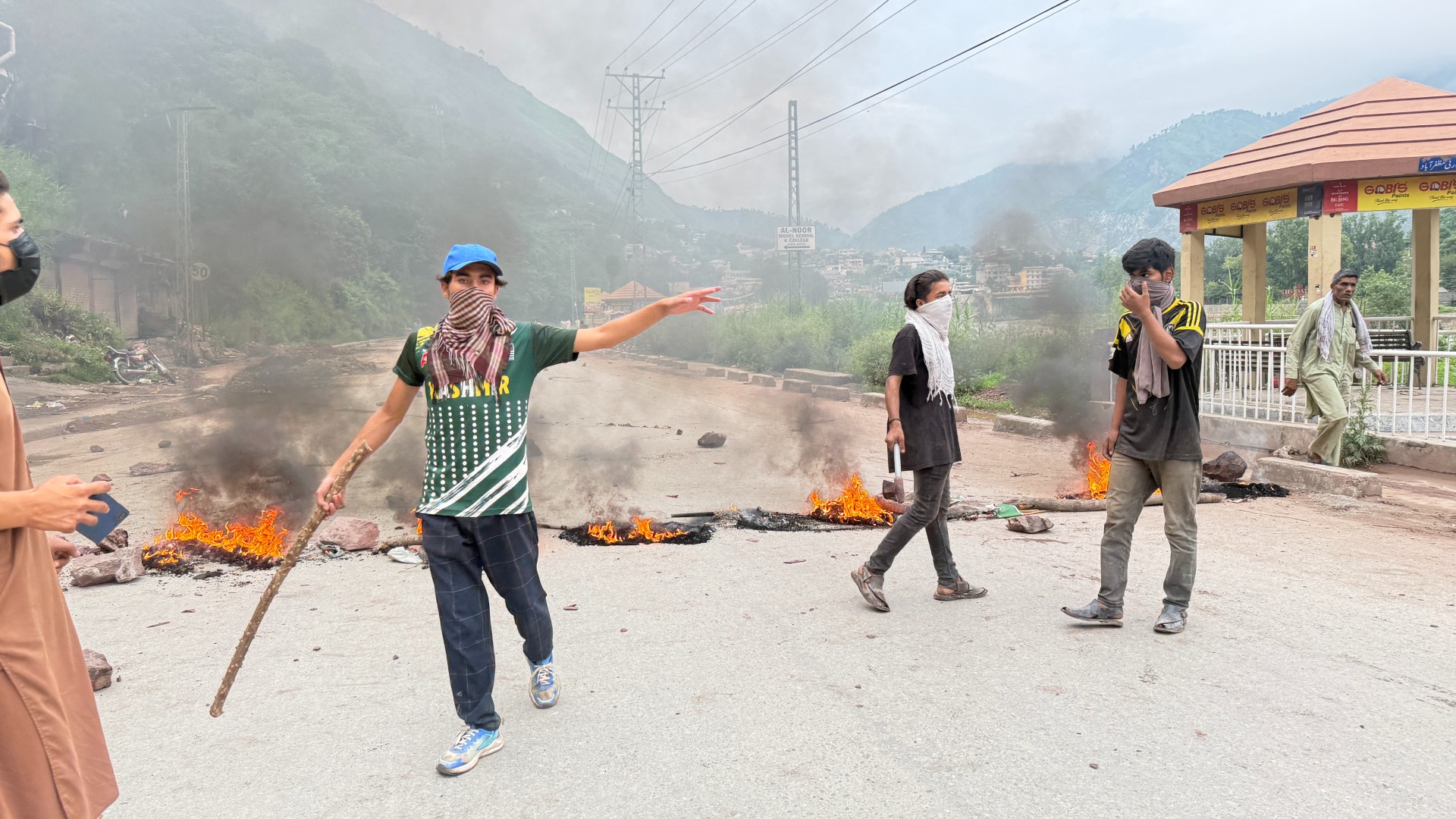
    Nairobi, Kenya – As the second anniversary of the 2024 Gen-Z-led anti-government protest approaches, Kenyan authorities have implemented a sweeping security lockdown on major arteries leading into central Nairobi, triggering widespread disruption to daily life across the country ahead of planned nationwide demonstrations.

    The original 2024 unrest was a defining moment for Kenyan politics: thousands of young people poured into the streets to oppose a controversial proposed finance bill that included steep new tax hikes. The demonstrations grew increasingly heated, culminating in protesters storming the national parliament building, and ultimately forcing the government to withdraw the unpopular legislation. But the crackdown that followed left a bitter, unresolved legacy: more than 80 people were killed and dozens more injured during the 2024 protests and last year’s anniversary gatherings. This year’s demonstrators say their core demand is simple: justice for those killed and harmed.

    By early Thursday morning, security forces had already erected concrete and vehicle roadblocks across key routes into the city centre, including the busy Thika Super Highway, Mombasa Road, the Nairobi-Namanga Highway in Athi River, Kenyatta Avenue, Waiyaki Way, and Jogoo Road. The lockdown left thousands of commuters stranded, unable to reach their workplaces or homes. In response to the security deployment and expected unrest, dozens of businesses and schools across Nairobi and other major urban centres opted to close for the day.

    Organisers have mobilised the new wave of protests largely through social media platforms, and demonstrations are planned in major population centres across the country, including the coastal hub of Mombasa and multiple regions in central Kenya. Security agencies have heightened digital and physical surveillance across all major urban areas, with a heavy, visible police deployment planned for central Nairobi and critical state infrastructure installations.

    The run-up to the protests has exposed deep political and social divisions across the country. President William Ruto, who took office in 2022, has acknowledged that Kenyans hold a constitutional right to peaceful assembly, but issued a stern warning last week that any person “mobilised to destroy property or cause chaos” would face the full force of the law. Authorities have also issued a formal appeal to demonstrators to refrain from violence, looting, and the destruction of public or private property.

    In a surprise move ahead of the anniversary, Ruto announced last week a nearly $15 million compensation fund for almost 2,000 victims of protest-related human rights abuses that occurred between 2017 and 2025, a list compiled by independent Kenyan rights groups. Ruto stressed that the fund was not intended to act as a “price for life, pain or loss,” nor should it be interpreted as a reward for violence or criminal activity. Despite this gesture, the plan has been widely rejected by domestic human rights organisations, which cite critical flaws: the exclusion of dozens of known victims, inadequate individual compensation amounts, and a total lack of transparency around how the fund will be administered.

    Political factions are also split on the protests. Multiple opposition political leaders, domestic civil society coalitions, and regional and international human rights groups have publicly expressed support for peaceful demonstrations, framing the gatherings as a legitimate exercise of democratic expression explicitly protected under Kenya’s constitution. But Rigathi Gachagua, Ruto’s former deputy who is now one of the president’s most high-profile bitter rivals, has taken an unusual stance: he has urged Gen Z activists to avoid taking to the streets, warning of a high risk of the protests descending into violence. Instead, Gachagua has called on Kenyans to stay home as a quiet, symbolic act of dissent against the government.

    With the 2027 general election just over a year away, Ruto is facing growing public discontent over his administration’s performance. Critics across the political spectrum accuse the president of failing to deliver on the majority of key campaign promises that got him elected. Ruto has forcefully rejected these claims, insisting that his government has delivered on most of its pledges, and that he is prepared to defend his administration’s record as he seeks a second term in office.

  • Thousands gather for the Great American State Fair

    Thousands gather for the Great American State Fair

    Thousands of attendees have converged on Washington D.C.’s National Mall for the Great American State Fair, a public gathering organized by former President Donald Trump as part of a broader slate of events commemorating the 250th anniversary of the United States’ independence. The high-profile gathering adds to a series of public activities being rolled out by Trump, tying national patriotic celebrations to his ongoing political engagement ahead of a critical election cycle. Located at the heart of the U.S. capital, the National Mall has long served as a venue for large-scale national celebrations and political gatherings, making it a symbolic choice for the event marking the country’s historic milestone. Organizers have framed the fair as a tribute to American heritage, drawing crowds from across the country who gathered to mark the semiquincentennial in what has become a politically charged patriotic event. The Great American State Fair stands as one of the most visible events in the lineup of celebrations planned by Trump, which are designed to highlight national identity and rally supporters around themes of American exceptionalism. As the U.S. marks 250 years since the Declaration of Independence, this gathering illustrates how major national anniversaries have become intertwined with contemporary political activity in the country.

  • Kenyan police block roads around the country’s capital ahead of anti-government protest

    Kenyan police block roads around the country’s capital ahead of anti-government protest

    NAIROBI, Kenya – Two years after a wave of deadly anti-government unrest left at least 60 people dead and saw protesters storm Kenya’s national parliament, authorities have sealed off the capital Nairobi ahead of a planned demonstration demanding accountability and fair compensation for victims’ families.

    The June 2024 protests erupted when thousands of young Kenyans marched on parliament to push legislators to reject a controversial finance bill that would have raised new taxes amid a sustained cost-of-living crisis. Security forces responded with live fire outside the legislative building, killing dozens of unarmed demonstrators. Today, families of those killed still say they are waiting for justice, and are criticizing the national government for rampant delays and a lack of transparency in its promised victim compensation program.

    Last week, Kenyan President William Ruto sought to balance competing priorities, stating that demonstrators would be allowed to exercise their constitutional right to protest, but warning that the government would not allow action that disrupts daily life, including children’s access to school and workers’ ability to reach their jobs. He explicitly cautioned against any attempt to “shut down the country.” Ruto also framed the ongoing compensation initiative as a formal acknowledgment by the state that harm was done to civilians, but clarified it does not constitute a legal admission of government guilt, and should not be interpreted as a reward for unrest.

    A day before the scheduled protest, Interior Minister Kipchumba Murkomen added that police would provide a formal escort for peaceful demonstrators, but pledged to block any criminal elements that attempt to infiltrate the march to damage or raid private businesses. By early Thursday morning, those security measures had transformed the capital: police had erected concrete and vehicle roadblocks on every major highway leading into Nairobi, cutting off vehicle access to the city center. Parliament buildings remained heavily barricaded, and most private businesses across the capital chose to close their doors for the day ahead of the demonstration.

    Opposition political leaders have publicly thrown their support behind the protest, joining calls for full transparency in how the government allocates compensation to families of victims of human rights abuses committed during the 2024 unrest. For many families, the frustration runs deep: two years on, most have yet to receive any form of payout, even after submitting all required documentation to the Kenya Human Rights Commission.

    Edith Wanjiku, a mother whose 19-year-old son Ibrahim Kamau was killed by two gunshot wounds to the neck during the 2024 unrest, described the devastating emotional toll the loss and ongoing delay have had on her family. “We’ve really suffered emotionally for the last two years,” Wanjiku told the Associated Press. She confirmed that her family completed all required paperwork months ago, but has received nothing from the compensation fund. “Only two out of 10 families whose children were shot that day near Parliament have been compensated and we are wondering what criteria the government is using,” she said.

  • Trump describes Burnham as ‘the mayor of a town’ and ‘extremely liberal’

    Trump describes Burnham as ‘the mayor of a town’ and ‘extremely liberal’

    Former U.S. President Donald Trump has publicly shared his first assessment of the possibility that Andy Burnham, the well-known British politician, could ascend to the position of UK Prime Minister. In his remarks, Trump sought to frame Burnham through two distinct descriptors, downplaying the UK politician’s profile by dismissing him as “the mayor of a town” while also attaching a strong ideological label by calling him “extremely liberal”.

    This comment marks the first time that Trump has spoken on record about Burnham’s potential bid for the country’s top political job, bringing a surprising cross-Atlantic perspective into British domestic political discourse. Currently, Andy Burnham serves as the Mayor of Greater Manchester, a major metropolitan region in northern England that oversees a population of millions — a role that carries far more responsibility and public influence than the small-town implication of Trump’s phrasing. Political analysts have noted that the former U.S. leader’s characterization appears to be a deliberate attempt to minimize Burnham’s standing among potential conservative-aligned voters who may be skeptical of left-leaning policy platforms.

    The intervention comes amid ongoing speculation within UK political circles about potential future leadership bids, with Burnham emerging as a prominent figure within the Labour Party often cited as a possible contender when the question of a leadership change arises. Trump’s unsolicited commentary has already sparked debate across British political spaces, with supporters of Burnham pushing back against the former American president’s framing of the mayor’s role and ideological positioning, while conservative commentators have echoed Trump’s description to criticize Burnham’s policy agenda.

  • King Charles III is expected to reveal his personal tax bill in a bid to boost transparency

    King Charles III is expected to reveal his personal tax bill in a bid to boost transparency

    LONDON — In a landmark step for royal accountability that comes amid growing public and political demands for openness around the British monarchy’s finances, King Charles III is set to become the first reigning British monarch to publicly release details of his personal tax bill this Thursday. The unprecedented move follows months of negative headlines centered on the king’s disgraced younger brother, Andrew Mountbatten-Windsor, the former Prince Andrew stripped of all royal titles amid an ongoing misconduct investigation.

    Multiple British media outlets confirmed over the weekend that the tax details will be made public as part of Buckingham Palace’s annual briefing on the Sovereign Grant, the public funding mechanism that covers the monarchy’s official operational costs. Last year’s annual report ran 159 pages, detailing how the palace allocated the £86.3 million ($113.7 million) it received from British taxpayers, including a multi-million pound portion allocated to the extensive ongoing renovation of Buckingham Palace itself.

    While Charles previously published his tax payment details when he held the title of Prince of Wales, this release marks the first time he has shared this information since ascending to the throne following Queen Elizabeth II’s death in September 2022. His eldest son and heir, Prince William, the current Prince of Wales, has announced he will mirror this new level of transparency with a separate public briefing of his own tax records.

    The push for greater institutional openness gained momentum after a series of damaging revelations about Andrew Mountbatten-Windsor, who was stripped of his royal patronages and titles in 2025. Mountbatten-Windsor, who has longstanding ties to convicted sex offender Jeffrey Epstein, is currently under active investigation by UK police for potential misconduct in public office. Recent reports have also uncovered that he generated personal income by subletting cottages on a sprawling royal estate he occupied rent-free for years, prompting further public anger over royal privilege and lack of accountability.

    Citing anonymous palace sources, the BBC reported that the decision to release tax records was a personal choice made by King Charles, part of a broader push to “encourage wider understanding and accountability” for the monarchy. Long before the Andrew scandal erupted into public view, Charles had already pledged to streamline the monarchy, reduce unnecessary operational costs, and modernize the 1,000-year-old hereditary institution as public debate grows over the role of a monarchy in 21st-century British democracy.

    Unlike ordinary British citizens, the reigning monarch is not legally required to pay income tax, but Charles voluntarily pays tax on all his private income. This precedent was first set by his mother, Queen Elizabeth II, who began voluntarily paying taxes in 1993 following widespread public outrage over the use of public funds to restore Windsor Castle after a devastating 1992 fire. The voluntary tax arrangement is formalized through a confidential memorandum of understanding between the British government and the Crown, which still guarantees Charles the same personal privacy protections for his tax affairs that any other British taxpayer receives, outside of the details being released voluntarily this week.

    Charles ranks 230th on the Sunday Times’ 2025 list of Britain’s richest people, with an estimated personal net worth of £680 million ($896 million). His private income draws from two major privately owned royal estates — the 50,000-acre Balmoral Estate in Scotland, home to the king’s traditional summer retreat Balmoral Castle, which operates public tourism offerings including guided tours, hospitality and golf courses, and the 20,000-acre Sandringham Estate, a coastal country retreat in eastern England where much of the land is managed for commercial farming by the estate or tenant farmers. Charles also draws private income from personal savings and investment holdings. The upcoming release will only cover taxes paid on this private income; no tax will be reported for funds from the Sovereign Grant or other revenue allocated exclusively to official royal duties, as these are not taxed under the existing agreement.

    For Prince William, the primary source of private income is the Duchy of Cornwall, a centuries-old trust holding a portfolio of land and investments that passes to the current reigning Prince of Wales. The Duchy controls roughly 130,000 acres of land across the UK, and reported a net profit of £22.9 million ($30.2 million) in its last fiscal year. The Duchy is overseen by an independent board of directors, and all major strategic decisions require formal approval from the UK Treasury.

  • Australian woman and daughter to return from Syrian camp for IS families under strict conditions

    Australian woman and daughter to return from Syrian camp for IS families under strict conditions

    MELBOURNE, Australia — Australia’s federal government has confirmed that the final Australian woman detained in a Syrian camp for family members of deceased Islamic State fighters will be allowed to repatriate to her home country, subject to unprecedented strict national security conditions, Home Affairs Minister Tony Burke announced in a press briefing Thursday.

  • Independent MPs launch new Australian centrist political party

    Independent MPs launch new Australian centrist political party

    Australia’s political landscape is set for a structural shift after two high-profile independent federal MPs made a groundbreaking announcement in Canberra Thursday: the official launch of a new centrist political entity, Community Strong Australia, built to challenge the long-dominant two-party system and push back against rising polarisation across the country.

    The new party is the brainchild of Zali Steggall and Allegra Spender, both Sydney-based independent MPs part of the so-called “teal independent” movement — a bloc of socially liberal candidates united by demands for more ambitious climate action, who have targeted traditionally safe Liberal Party seats in recent election cycles. Breaking from the standard hierarchical structure of most Australian political parties, Community Strong Australia will operate without a single formal leader, and allow all elected party members to vote freely on policy according to their constituents’ interests, rather than being bound by strict party whip rules. Steggall and Spender frame the new party as a deliberate alternative to the current political status quo, promising voters “unity over division and reason over rage” amid growing public anger at partisan gridlock.

    For more than a century, Australian federal politics has been defined by the duopoly of two major blocs: the centre-left Australian Labor Party, currently in national government, and the conservative Liberal-Nationals Coalition. That long-standing order has already begun to crack in recent years: Labor secured a landslide re-election victory in last year’s federal contest, delivering the Coalition its worst electoral defeat in modern history, which sparked months of bitter internal infighting that has yet to fully resolve. More recently, far-right party One Nation, led by Pauline Hanson, has seen a sharp surge in national opinion polling — including one survey that named Hanson as an alternative preferred prime minister, stoking concern over growing traction for the party’s hardline anti-immigration rhetoric.

    When asked whether One Nation’s rising popularity and its polarizing messaging pushed them to formalize their new party, Steggall and Spender emphasized their decision grew directly from feedback they received from their own constituents. Spender, who first won her Sydney seat in the 2022 federal election, acknowledged widespread public frustration with the existing political system. “We absolutely hear those grievances,” she said, adding that “People are frustrated and tired of the status quo… if I wasn’t in politics, I wouldn’t know who to vote for.” The new party, she explained, aims to amplify the voices of communities across the country that feel unrepresented by the major parties, building a political home for voters who want their views genuinely reflected in policy.

    Steggall, a former Winter Olympic athlete and barrister who first entered federal parliament in 2019 after unseating former Liberal Prime Minister Tony Abbott in a seat the party held for over 100 years, said the new movement rejects the partisan infighting and blame-shifting that has come to define modern Australian politics. “We don’t want the in-fighting, we don’t want the blame game. We want solutions that will make a difference to us,” she said. Steggall framed the launch as an open invitation to all voters: “The new party offers unity over division and reason over rage, and it is an invitation to voters to come and build the kind of Australia we want.”

    Community Strong Australia has outlined a clear policy agenda centered on top voter priorities: addressing housing affordability and cost-of-living pressures, alongside advancing meaningful climate action, improving childcare access, strengthening public education, and upgrading national healthcare services. The pair confirmed to local media that Climate 200, the prominent funding body that has backed successful teal independent campaigns against sitting Liberal MPs in recent elections, is not involved in the new party’s operations.

    The launch comes amid changes to Australia’s electoral funding rules that grant registered political parties far larger campaign budgets than individual independent candidates — a change that many sitting independents say puts unaligned candidates at a structural disadvantage. To date, several other sitting independent MPs have already ruled out joining the new party, while a small number of other teal independents are still weighing their options. Community Strong Australia has already submitted its registration application to the Australian Electoral Commission, with a final decision on registration expected by October 2025.

  • The ICE raids are over, but some Minnesotans say they still live in fear

    The ICE raids are over, but some Minnesotans say they still live in fear

    More than four months after the official drawdown of Operation Metro Surge, a high-profile federal immigration crackdown launched by the Trump administration in Minneapolis and surrounding areas of Minnesota, the scars of the intensive enforcement action remain deeply etched into the state’s immigrant and refugee communities.

    The operation, launched last December, was framed by the White House as a targeted effort to remove undocumented immigrants with criminal convictions, tied to a sprawling federal fraud probe into Minnesota’s childcare sector that the administration claimed disproportionately involved members of the state’s large Somali community. But what was billed as a targeted law enforcement action quickly spiraled into widespread public backlash after federal agents shot and killed two U.S. citizens, Renee Good and Alex Pretti, both 37, during separate anti-operation protests in January. By the end of February, facing growing cross-party condemnation, the administration pulled hundreds of deployed agents out of the region.

    For many asylum seekers and green card holders who built new lives in Minnesota after fleeing conflict and persecution, the sudden surge of masked Immigration and Customs Enforcement (ICE) and Customs and Border Protection (CBP) agents upended every part of daily life. Aliah, a 20-year-old Afghan asylum recipient and college student who requested partial anonymity over safety fears, thought her 2021 resettlement would bring stability focused on education and work. Instead, she and her family now live in constant fear the large-scale raids will resume.

    “We don’t have anywhere to go if we go back to my country,” Aliah told reporters. “We’re still a little scared. Months after the operation ended, its effects still haven’t gone away.”

    That persistent anxiety is echoed across communities. Fatima, a 19-year-old Somali refugee who only returned to in-person high school classes in April after months of virtual learning out of fear of raids on campus, says the uncertainty never fades. “I ask myself every day… if they come back, what are you going to do? I’m scared still if they come back,” she said.

    Michelle Eberhard, director of refugee services at the International Institute of Minnesota, explained that the collective trauma of the large-scale enforcement action has had long-lasting psychological impacts. “When you have an invasion like this, people continue to experience the ramifications of that for a long time,” she said. “People are still living through that trauma. Even as the situation has shifted out of open chaos, we’re now in a very big period of ongoing uncertainty.”

    That uncertainty extends beyond the threat of sudden raids. In January, U.S. Citizenship and Immigration Services announced it would re-vet 5,600 Minnesota refugees who had not yet secured green cards, deeming the prior administration’s vetting process “wholly inadequate” and planning to expand the program nationally. Eberhard says some refugees have already been transferred to out-of-state ICE detention for re-interviews without access to legal counsel, while others have received formal notices that the government intends to revoke their refugee status, and many more have heard nothing at all, left in limbo.

    Local educators also report lasting damage to student populations. Katie, a Minneapolis public school teacher who organized community aid for impacted students during the height of the operation, says many families kept children home from school for months to avoid potential encounters with ICE. While the school wrapped up its formal aid program in April, it continues to distribute remaining emergency funds, and some students have dropped out entirely after family members lost their jobs during the crackdown.

    Even for U.S. citizens like Katie, the impact remains inescapable. “The city is just this minefield of ghosts,” she said. “Even when you forget about it, it just pops up again when you pass the memorials for Pretti and Good. What these children have witnessed will affect our city for generations – it’ll shape what they vote for, what they believe in, what they think of our government.”

    While official data confirms the bulk of deployed agents have left, the enforcement apparatus has not been fully withdrawn. Court filings from the ACLU of Minnesota show that as of March, 482 federal agents remained in the state, compared to just 190 assigned to ICE’s St. Paul office before the operation launched. Border Czar Tom Homan has confirmed that ICE will continue conducting targeted enforcement actions across the state, a practice the agency has maintained for decades.

    Morgan Budiandri, of the Minnesota Immigrant Rights Action Committee (MIRAC), says the operation has just shifted its approach, becoming less visible in urban centers with heavy public scrutiny but continuing unabated in suburban and rural areas. “The deportation machine has kind of turned more surgical, so to speak. There’s less activity in the cities where there’s a lot more prying eyes,” Budiandri explained. “But out in the suburbs, we still have reports of officers coming to businesses demanding to see rosters of all employees.”

    Data from Human Rights First, an international human rights nonprofit, also shows ICE deportation flights out of Minneapolis continue, with roughly 100 flights recorded so far this year, most heading to processing centers in El Paso, Texas.

    Analysis of government data obtained by the Deportation Data Project undermines the administration’s framing of the operation as a crackdown on criminal undocumented immigrants: more than 60% of those arrested during the surge had no prior criminal convictions or pending criminal charges. The Department of Homeland Security (DHS) has defended the operation, releasing a list of 23 arrested immigrants facing charges or convictions for serious offenses including murder, rape, domestic violence, and theft, and calling the operation a necessary success to remove “vicious criminals, including murderers, rapists, gang members, and terrorists” from the country.

    While some Minnesota Republicans supported the crackdown, even state Representative Joe McDonald, a backer of the policy, acknowledged earlier this year that “mistakes were made. We’re not perfect.” The backlash over the deaths of Good and Pretti ultimately led the Trump administration to remove Greg Bovino, the official leading the operation in Minneapolis, in January.

    Beyond the psychological and personal harm, the operation has inflicted severe lasting damage to Minnesota’s local economy. The Lake Street corridor in south Minneapolis’ predominantly Hispanic Phillips neighborhood, home to hundreds of immigrant-owned small businesses, was hit particularly hard: during the height of the surge, at least half of all corridor businesses closed, according to the Lake Street Council, leading to an estimated $30 million in monthly lost revenue.

    “The economic devastation to Lake Street businesses because of Operation Metro Surge was immediate and severe,” said Theresa Swaney, the council’s director of operations. “The terror inflicted on this community was significant, and its effects on Minneapolis and Lake Street in particular will be long-lasting.”

    Widespread fear of detention kept thousands of workers home from their jobs, leading to massive wage losses across the Twin Cities. The U.S. Immigration Policy Center estimated in March that Minneapolis and St. Paul workers lost roughly $240 million in total wages during and after the surge, while local businesses lost a combined $610 million in total revenue. Statewide, eviction filings in 2026 are already up 8% compared to 2025, according to data from Princeton University’s Eviction Lab.

    When asked to comment on the economic harm, DHS responded that “The cost of American lives saved is incalculable,” pointing to the arrests of convicted criminal immigrants. But immigration advocates say the long-term social and economic costs of the surge will shape Minnesota for years to come, as immigrant communities continue to grapple with fear, uncertainty, and the lingering fallout of the largest immigration crackdown in recent state history.