分类: politics

  • Former EU vice president Borrell accuses body of abandoning Kaja Kallas over Israel spat

    Former EU vice president Borrell accuses body of abandoning Kaja Kallas over Israel spat

    A sharp new rift has opened within European Union diplomatic circles after former European Union Vice President Josep Borrell publicly accused the bloc of abandoning its current High Representative for Foreign Affairs Kaja Kallas to curry favor with Israel. The controversy ignited last week when leaked details of a confidential May meeting between Kallas and Mexican officials emerged, revealing the EU’s top diplomat had drawn a parallel between Israel’s governance of Palestinians in Gaza and the occupied West Bank and the apartheid regime that ruled South Africa between 1948 and the early 1990s.

    According to multiple sources including Euractiv, which first broke details of the closed-door talks held during Kallas’ May 20–22 trip to Mexico City as part of a senior EU delegation, Kallas referenced her 2023 visit to Johannesburg’s apartheid museum to frame the comparison. The revelation immediately sparked fierce backlash from Israeli officials, with Israeli Foreign Minister Gideon Saar announcing he would suspend all diplomatic contact with Kallas over the remarks.

    Just days after Israel’s punitive move, the EU confirmed it would send Dubravka Suica, the bloc’s Commissioner for Mediterranean and Demographic Affairs, on a scheduled visit to Tel Aviv. It is this decision that drew Borrell’s scathing rebuke in a post to the social platform X on Wednesday. In his critique, Borrell pointed out that after Israel declared Kallas persona non grata over claims of antisemitic sentiment, a fellow EU official traveled to Tel Aviv just one day later, exchanged cordial pleasantries with Saar, and failed to issue any public rebuke of Israel’s actions against Kallas. “What a fine display of ‘solidarity and coordination’ in the EU,” Borrell wrote, his words laced with biting irony.

    The leak of Kallas’ private comments has also laid bare a stark contradiction in her public approach to international affairs: while Kallas’ private remarks aligned her with critics who label Israel’s treatment of Palestinians as apartheid, she has repeatedly and publicly backed Israel’s claim to “self-defense” amid the ongoing military campaign that has left Gaza under deadly bombardment, crippling siege, and mass displacement. This duality has drawn accusations of selective application of international law from critics, who note Kallas has taken an uncompromisingly hard line on Russia’s full-scale invasion of Ukraine, pushing for sweeping, harsh sanctions against Moscow.

    The controversy also amplifies long-simmering discontent among progressive factions in the European Parliament, who have already attacked the EU’s response to the Gaza crisis as weak and hypocritical when compared to the bloc’s swift, forceful reaction to Russia’s invasion of Ukraine. These progressive lawmakers have ramped up calls for sweeping action from Brussels, including the imposition of tougher sanctions on Israeli officials, the formal suspension of the EU-Israel Association Agreement, and an end to the bloc’s longstanding political protection of Israel on the international stage.

  • Israeli police detain Palestinian community leader over 2022 speech

    Israeli police detain Palestinian community leader over 2022 speech

    On Tuesday, Israeli police detained and interrogated a long-serving prominent Palestinian community leader, a move that has drawn widespread condemnation as the latest escalation in a sweeping crackdown on political organizing among Palestinian citizens of Israel.

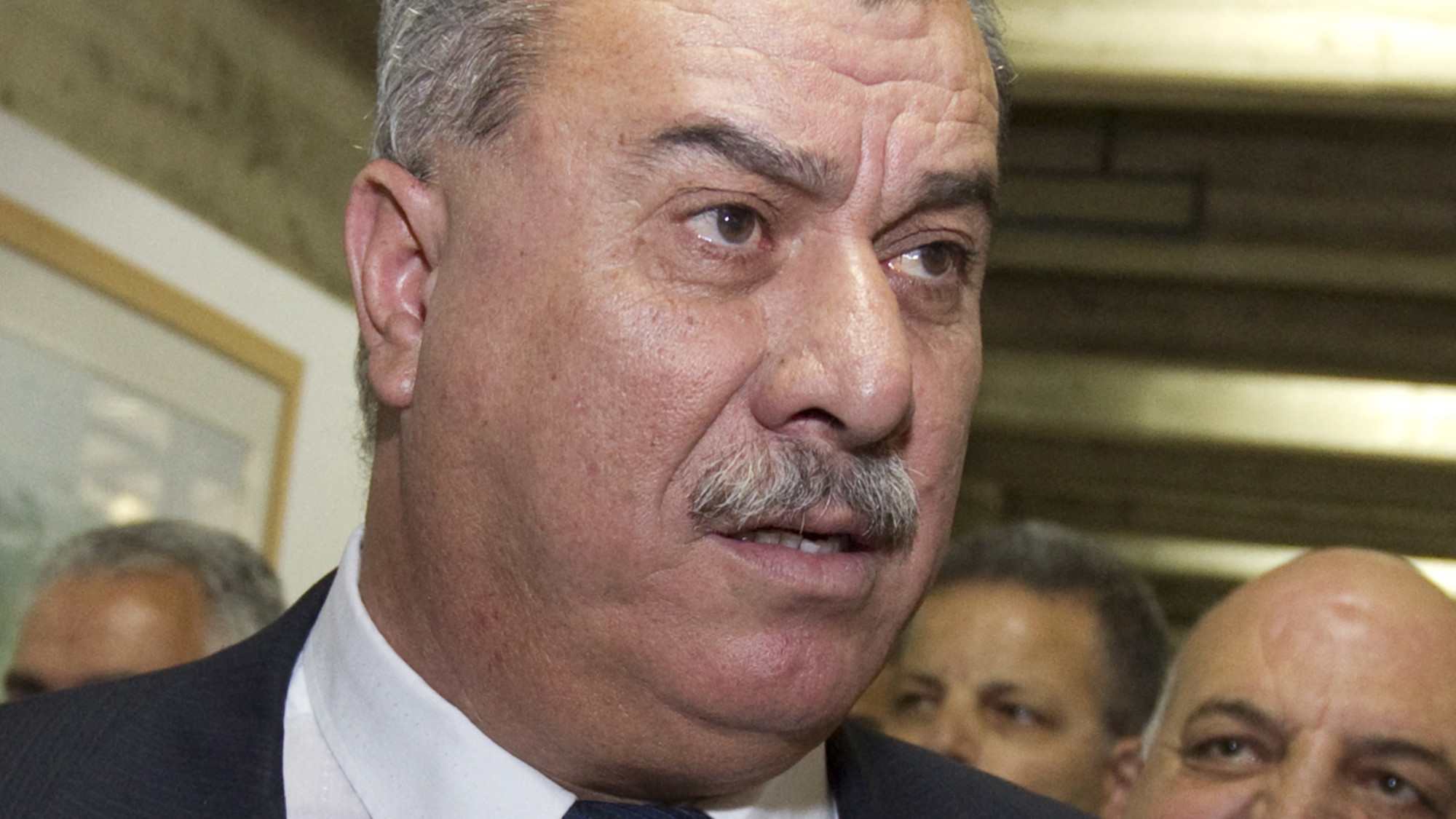
    Mohammad Barakeh, who previously led the High Follow-Up Committee for Arab Citizens of Israel — the leading umbrella group representing Palestinian citizens of Israel operating outside of formal parliamentary structures — was taken into custody from his residential home in the northern Israeli town of Shefa-Amr, the committee confirmed. Despite Barakeh’s formal objections, Israeli authorities forced him to attend the interrogation at a police station located in Ariel, an Israeli settlement built on illegally occupied land in the West Bank. The committee has labeled the choice of this interrogation location as a deliberate and calculated provocation.

    Barakeh, who represented Palestinian interests as a member of the Israeli Knesset from 1999 to 2015, spent roughly four hours in questioning over a public speech he delivered in Ramallah, the administrative capital of the Palestinian territories, in 2022. As of Tuesday, Israeli authorities had not publicly specified what portion or claim of the speech they are investigating. During processing, Barakeh was fingerprinted and photographed before being released by a court, which attached a series of restrictive bail conditions to his release.

    In an official statement following the detention, the High Follow-Up Committee framed the action as an attempt to intimidate the entire Palestinian community within Israel. The organization called the case “another dangerous episode in a series of political persecutions aimed at intimidating our Arab community and deterring it from its political activity and legitimate struggle against occupation, racism and political repression.”

    After the interrogation concluded, Barakeh appeared before the Petah Tikva Magistrates’ Court, which issued a set of binding restrictions: a ban on all domestic and international travel through the end of October, an order to surrender his passport, and a 30-day ban on any entry to the occupied West Bank. Israeli law enforcement also seized two of Barakeh’s personal mobile phones, with investigators claiming the devices are required for ongoing case work.

    Barakeh’s legal counsel, Khaled Zabarqa, confirmed that his client rejects the legitimacy of the majority of the court-imposed restrictions. Adalah, the leading Israeli rights organization focused on protecting minority rights for Palestinian citizens of Israel, is currently preparing a legal appeal to challenge both the bail conditions and the unlawful seizure of Barakeh’s personal devices. Adalah representatives also noted that Barakeh previously declined to attend interrogation at the Ariel location, and police have yet to provide a clear legal justification for holding the questioning inside the occupied West Bank settlement.

    Multiple Palestinian political parties inside Israel have issued formal condemnations of the detention. Hadash, a long-standing Palestinian-led political party, called the interrogation a deliberate “political and security interrogation” that forms part of a broader coordinated campaign targeting Palestinian citizens of Israel and their elected political leadership. The party warned of “a fascist push to tighten the grip on the Arab public in the country and on its representative institutions, foremost among them the High Follow-Up Committee, to silence the national democratic voice opposing occupation, settlement expansion and racism.”

    Balad, another prominent Palestinian-led political party in Israel, also joined in condemnation, noting that the detention reflects sustained and ongoing efforts to suppress all forms of legitimate Palestinian political activity within Israel’s borders. In a statement, the party said: “The targeting of Muhammad Barakeh is a targeting of the Arab public and its right to organise, engage in political activity and pursue democratic struggle. These policies will not succeed in silencing our people or deterring them from continuing to defend their national and civil rights in the face of occupation policies, racism, and the escalating incitement from the mouthpieces of the fascist right in Israel.”

  • Hong Kong police arrest booksellers on suspicion of selling seditious publications

    Hong Kong police arrest booksellers on suspicion of selling seditious publications

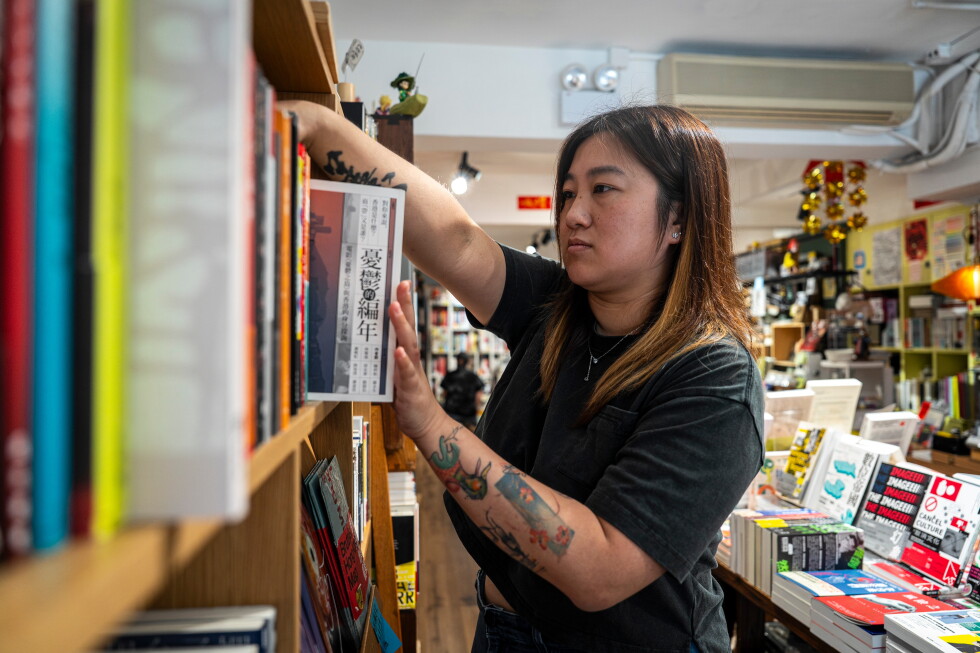
    HONG KONG – Less than one week ahead of the 29th anniversary of Hong Kong’s handover from British to Chinese rule, local authorities have arrested two people on charges tied to the city’s national security legislation, with a well-known pro-democracy activist and independent bookstore owner linked to the detention. The operation marks the latest enforcement action targeting dissident voices in the Asian global financial center, escalating long-running international scrutiny of Beijing’s commitments to civil liberties in the semi-autonomous region.

    Hong Kong police launched the operation Wednesday, with the city’s government releasing an official statement early Thursday confirming the arrests but withholding the identities of the two detainees. Multiple local media outlets, including prominent Chinese-language newspaper Ming Pao, have cited unnamed police and government sources identifying one of the arrested as Leticia Wong, owner of Hunter Bookstore and a former pro-democracy district councilor. The Associated Press has not been able to independently confirm this identification, and police have not responded to requests for comment; attempts to reach Wong directly by phone have also been unsuccessful.

    The government statement confirms the detained pair operate a retail outlet in Sham Shui Po, the same district where Wong’s Hunter Bookstore is located. They face two core allegations: engaging in seditious activity under the 2024 Hong Kong National Security Law, and handling assets linked to the proceeds of indictable offenses under separate local legislation. Per official investigative findings released by the government, the pair are accused of displaying and selling publications with seditious content that incites public hatred toward the Hong Kong government, the city’s judiciary, and local law enforcement agencies. They also stand accused of accepting financial remittances from foreign political organizations, though authorities have not publicly named the specific publications or external groups involved in the case.

    Wong has long been a high-profile dissident voice in Hong Kong, remaining publicly active even after dozens of leading pro-democracy activists were imprisoned in a widespread crackdown that followed the large-scale 2019 anti-government protests. Her bookstore has been a focal point of official scrutiny for more than two years. In 2024, a pro-Beijing Hong Kong newspaper accused the independent book fair hosted at Hunter Bookstore of promoting so-called “soft resistance” against authorities, specifically calling out the store’s plan to sell a biography of Jimmy Lai, the jailed founder of the pro-democracy outlet Apple Daily.

    In a 2024 interview with the Associated Press, Wong detailed the sustained pressure her business has faced from government authorities. She told AP that between July 2022 and June 2024, Hong Kong officials took more than 90 separate enforcement actions against her store, ranging from routine in-person inspections and high-visibility external patrols to formal warning letters citing potential regulatory violations. She also added that an anonymous threatening letter sent to a group that planned to host an event at her bookstore ultimately forced the organization to cancel its booking.

    This latest arrest is not the first targeting independent booksellers in Hong Kong in 2025. Just three months ago, Hong Kong police detained the owner and multiple staff members of another independent bookstore on nearly identical allegations of selling seditious publications, including the same biography of Jimmy Lai. All of those detained were subsequently released on bail following their arrest.

    Critics of the national security enforcement argue that these repeated arrests of dissident figures and independent booksellers represent the erosion of the civil liberties and autonomy Beijing promised to preserve in Hong Kong for 50 years following the 1997 handover. They call Wednesday’s arrests the latest step in a systematic campaign to suppress all remaining dissent in the city. Hong Kong government officials, however, maintain that the existing national security laws are an essential pillar of the city’s social and political stability, and have repeatedly emphasized that all legally protected rights, including freedom of speech, remain firmly guaranteed under the city’s current legal framework.

  • Nigeria’s Senate passes bill to allow creation of state police to tackle insecurity

    Nigeria’s Senate passes bill to allow creation of state police to tackle insecurity

    LAGOS, Nigeria — In a historic step toward restructuring Nigeria’s national security architecture, the Nigerian Senate voted Wednesday to approve a constitutional amendment bill that would permit each of the country’s 36 states to establish and operate their own independent police forces. The bipartisan, president-backed legislation marks the end of decades of heated debate over police decentralization, a policy long proposed as a solution to the West African nation’s spiraling insecurity crisis.

    For decades, Nigeria has relied on a fully centralized policing system, with all law enforcement authority held exclusively by the federal government. As insurgencies, intercommunal violence, kidnapping, and organized crime have spread across the country over the past 15 years, this centralized structure has grown increasingly overstretched. Analysts have repeatedly pointed out that the lack of sustained, local police presence in vast rural and marginalized areas has allowed armed militant groups, criminal networks, and jihadist factions to operate with near-impunity. U.N. data estimates that these security threats have claimed the lives of tens of thousands of Nigerians since the early 2010s.

    Under the terms of the approved bill, the new state police forces will operate in parallel with the existing federal police force, with a clear division of responsibilities. State units will be required to meet uniform national operational standards to maintain public accountability, while the federal police will retain exclusive jurisdiction over high-stakes national security matters including counterterrorism operations, border security, and transnational organized crime investigations.

    The push for reform has gained new urgency since President Bola Ahmed Tinubu took office, as insecurity has expanded beyond Nigeria’s traditional conflict zones in the northeast. Armed militants have now launched regular operations in the country’s southern regions, a shift that has brought new waves of violence and abduction. As of the Senate vote, at least 80 schoolchildren remained in captivity after separate mass kidnappings by militants in both northern and southern states.

    Ikemesit Effiong, partner at Lagos-based risk advisory firm SBM Intelligence, noted that the recent wave of high-profile abductions amplified public and political pressure for change. “The sluggish federal response to these mass kidnappings is partially rooted in deep structural flaws of Nigeria’s centralized policing framework,” Effiong explained. “That failure has made the call for decentralized policing impossible to ignore any longer.” Currently, state governors are legally designated as the top security officials for their jurisdictions, but hold no operational command over law enforcement assets within their borders.

    Despite broad bipartisan support for the bill, the reform has drawn meaningful criticism from opponents. Critics warn that granting states control over their own police forces creates significant risk of institutional abuse, arguing that sitting governors could weaponize local law enforcement to advance personal political interests, suppress opposition voices, and intimidate critics.

    Before the amendment can take effect, it must complete the national constitutional change process: two-thirds of Nigeria’s 36 state assemblies must vote to approve the bill. For now, the Senate’s vote represents the most significant step forward for police reform in Nigeria in modern history, opening a new chapter in the country’s efforts to address its deepening security crisis.

  • Colombia’s vote may reshape the Amazon’s future as political winds shift across Latin America

    Colombia’s vote may reshape the Amazon’s future as political winds shift across Latin America

    Across Latin America, a series of unfolding 2026 election results have triggered urgent global debate over the future of the Amazon rainforest, the world’s largest tropical carbon sink and a critical bulwark against accelerating climate change. The most recent shift came in Colombia, where businessman and lawyer Abelardo de la Espriella — a Trump-endorsed populist from the opposition Defenders of the Motherland movement — has secured a narrow victory in the country’s presidential runoff, defeating progressive candidate Iván Cepeda by just 1 percentage point, or roughly 251,000 votes. Cepeda formally conceded the race last Wednesday, confirming de la Espriella’s status as Colombia’s next head of state.

    The Colombian election outcome follows a broader regional political swing that puts new pressure on Amazon conservation. Just to the south, Peru appears on track to elect Keiko Fujimori to the presidency, while Brazil prepares for a critical upcoming presidential contest that could oust incumbent progressive leader Luiz Inácio Lula da Silva in favor of Flávio Bolsonaro, son of former right-wing President Jair Bolsonaro. Combined, Colombia, Peru, and Brazil hold more than 90% of the world’s Amazon rainforest, meaning policy shifts across these three nations could reshape the entire biome’s fate.

    For decades, scientists have warned that continued deforestation driven by extractive industries could push large swathes of the Amazon past an irreversible tipping point, where damaged ecosystems can no longer regenerate as functioning rainforest. Under outgoing Colombian President Gustavo Petro, the country emerged as a global leader in Amazon protection, championing ambitious climate action and moving away from new fossil fuel development. De la Espriella’s policy platform marks a stark departure from this agenda: the president-elect, nicknamed “The Tiger,” has pledged to revitalize Colombia’s oil sector, approve hydraulic fracking, and prioritize expanded natural resource extraction to drive national economic growth. Environmental advocates warn that this shift could undermine global emissions reduction efforts and open up environmentally sensitive Amazon lands to irreversible damage.

    The pattern of pro-extractive policy priorities repeats across the region. Like de la Espriella, Fujimori has signaled she will expand mining development to boost Peru’s economy, a move that has sparked alarm among environmental groups and Indigenous communities who face displacement and ecosystem destruction. In Brazil, the upcoming election follows a clear example of how political leadership directly impacts deforestation rates: during Jair Bolsonaro’s presidency, Amazon deforestation spiked dramatically as environmental enforcement was gutted, while Lula’s current administration has cut forest loss through stricter regulation. Cristiane Mazzetti, zero deforestation lead at Greenpeace Brazil, noted that presidential priorities directly shape regulatory outcomes for the rainforest.

    “The elected administration sets budgetary priorities, fills government positions and shapes regulations to either facilitate or hinder predatory exploitation and environmental crimes,” Mazzetti explained. “The result of this is measurable, as evidenced by the rate of deforestation in the Brazilian Amazon.”

    U.S. President Donald Trump’s endorsement of de la Espriella aligns with the incoming Colombian leader’s pro-fossil fuel agenda; the current U.S. administration has already rolled back domestic climate policies, expanded domestic oil and gas production, and withdrawn the U.S. from the 2015 Paris Agreement, the global pact designed to limit dangerous global warming.

    Sergio Guzmán, director of Colombia Risk Analysis, noted that economic priorities are increasingly outcompeting environmental concerns across the region. “Many of the concerns from environmentalists on emissions and fracking are going to take a second place to some of the economic concerns about energy self-sufficiency, investment and foreign direct investment in oil, gas and mining,” Guzmán said.

    Beyond legal extractive projects, the rise of right-leaning governments across the region has also placed a renewed focus on cracking down on illegal gold mining, one of the single largest drivers of Amazon deforestation. Illegal mining clears old-growth forest, contaminates critical river systems with toxic mercury, and generates billions of dollars in annual revenue for transnational criminal networks. While nearly all regional governments agree that illegal mining must be addressed, experts say current policy approaches have failed to target the root of the problem.

    “There’s an interesting alignment, particularly across the Andes region and the broader Amazon basin,” said Elizabeth Dickinson, deputy director for Latin America at the International Crisis Group. “It’s very hard to disagree with the idea of going after illegal mining, one of the most detrimental industries for the Amazon basin. What we really haven’t reached is an ability to tackle the intellectual authors of these operations,” she added, noting that most current efforts focus on seizing equipment and clearing mining camps rather than dismantling the criminal and financial networks that enable the activity.

    Indigenous communities, who govern large swathes of intact Amazon territory, are already preparing for increased pressure on their lands. Across the basin, Indigenous territories overlap with most areas targeted for new mining, oil, and infrastructure development, and Indigenous leaders have long criticized governments for failing to consult communities before approving high-impact projects. Julio Cusurichi, a prominent Indigenous leader from Peru’s Amazon region, said Indigenous communities will continue to organize to secure a seat at the decision-making table.

    “Our biodiversity, our territories, our knowledge and our wisdom can contribute greatly to addressing climate change,” Cusurichi said. “In our territories, we have shown that we can provide governance not only for our peoples, but for the planet.”

    Analysts point to Indigenous policy as one clear early indicator of the new Colombian administration’s environmental approach: how de la Espriella handles required consultation processes, environmental licensing, and approval for new extractive projects in sensitive ecosystems will set the tone for his presidency’s impact on the rainforest. De la Espriella’s plans to increase military pressure on criminal groups and resume aerial fumigation of coca crops, a policy long controversial in Colombia, could also bring unintended harm to Amazon communities and ecosystems. Critics note that fumigation damages native vegetation, contaminates drinking water, and pushes coca growers to clear new forest areas deeper in the Amazon to continue production.

    Still, some analysts caution against assuming widespread weakening of environmental protections is inevitable. In Colombia, independent courts, Congress, well-established environmental institutions, and powerful Indigenous advocacy groups remain influential. In addition, modern satellite monitoring technology has made it far easier to track and expose illegal deforestation, making it harder for bad actors to hide environmental damage.

    Even so, many residents of Amazon communities remain deeply concerned about the coming policy shifts. Arnaldo Rufino, an Indigenous Ticuna resident in the Colombian Amazon city of Leticia, said political leaders should prioritize the rainforest’s long-term health over short-term economic gains from extraction. “It means cutting down the trees that allow humanity to breathe,” Rufino said.

    This coverage of climate and environmental issues is supported by private philanthropic funding, with The Associated Press retaining full editorial control over all content.
  • ‘Constant targeting’: Pro-Israel legal group slammed for reporting Oxford Union president to police

    ‘Constant targeting’: Pro-Israel legal group slammed for reporting Oxford Union president to police

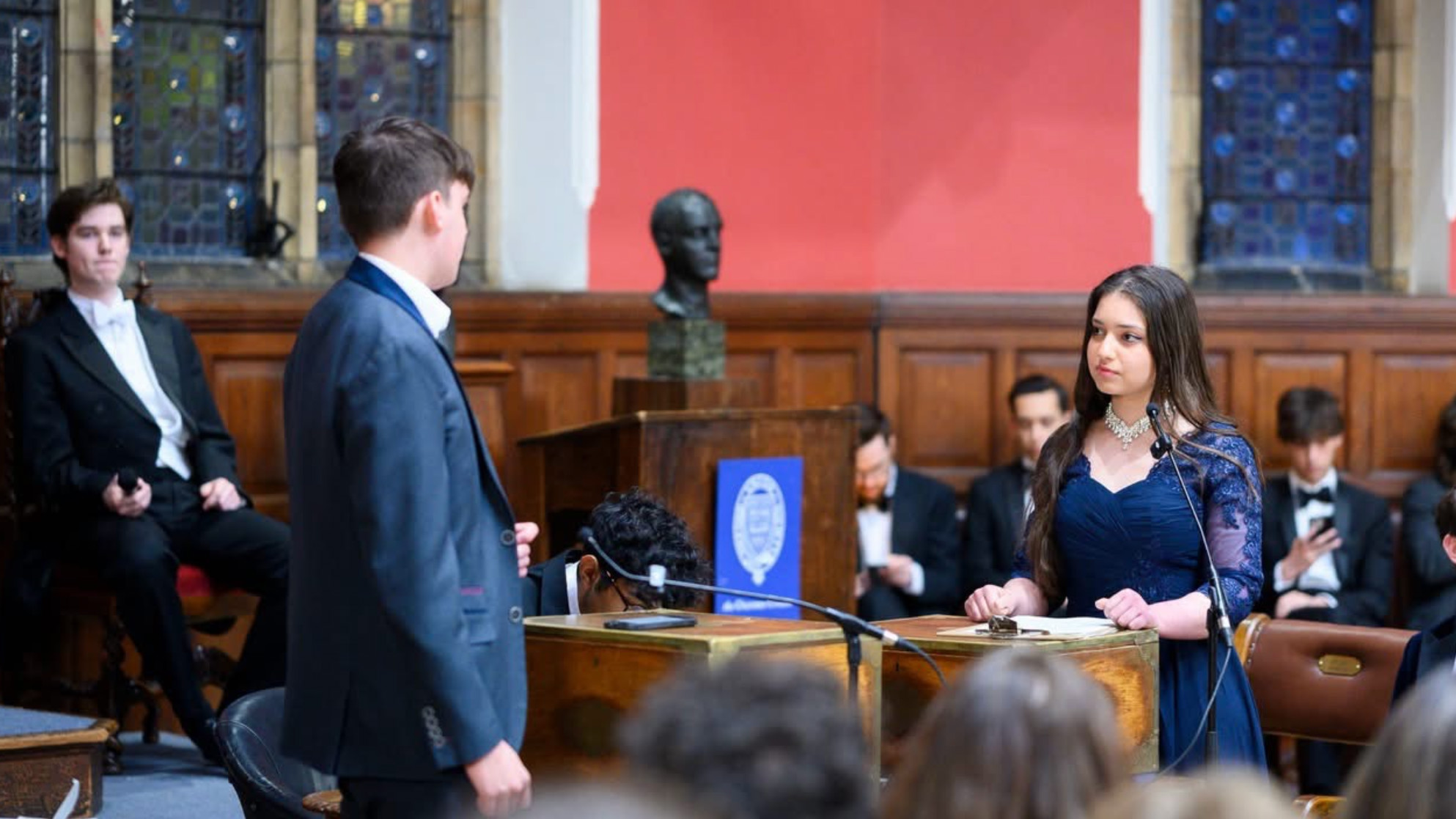
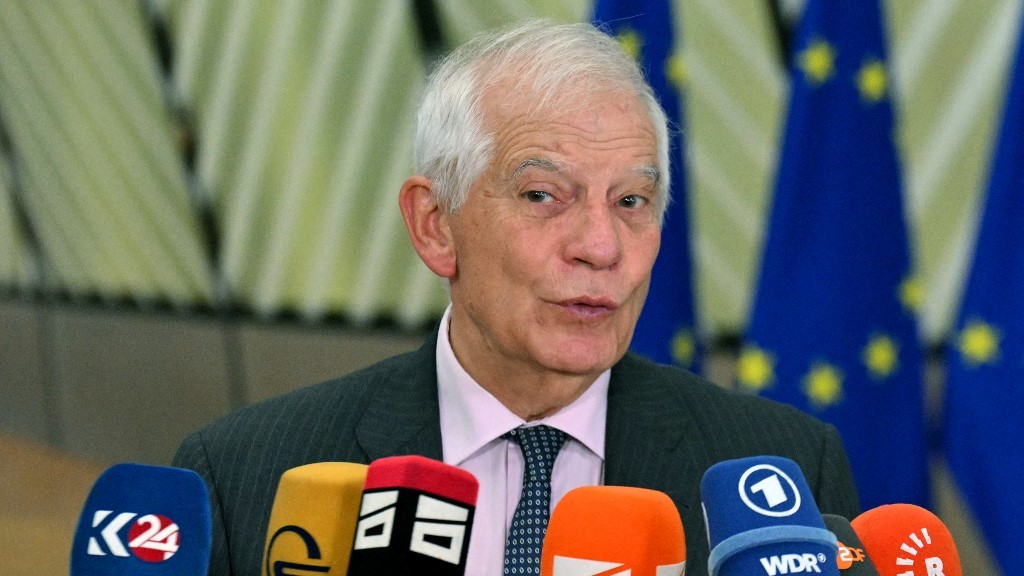
    A heated free speech and political controversy has erupted at the University of Oxford, where the president of the world-famous Oxford Union debating society, Arwa Elrayess, has publicly condemned pro-Israel advocacy group UK Lawyers for Israel (UKLFI) after the organization reported her to British police over comments she made about Palestinian resistance that Elrayess says were deliberately taken out of context.

    The 20-year-old president, who has Palestinian heritage and spent part of her childhood in the Gaza Strip, has only held the leadership role of the prestigious student society for two months when the controversy unfolded. The incident traces back to private messages Elrayess exchanged in a WhatsApp group chat last September, which were leaked to mainstream media and published widely earlier this month.

    Following the leak, Elrayess faced widespread public accusations that she had voiced support for Hamas, which is listed as a proscribed terrorist organization under United Kingdom law. A close reading of the full conversation, however, shows Elrayess never endorsed Hamas’ actions. In her messages, she explicitly pushed back against claims that she was justifying the group’s violence, offering a broader historical analysis of how resistance movements are framed by Western powers. She noted that “any resistance group will inevitably be deemed a ‘terrorist’ organisation by the West until they achieve their liberation (by which time, they’ll be lauded as heroes, as history has repeatedly proven),” pointing to the example of Nelson Mandela and the African National Congress, which was labeled a terrorist group by Britain during the apartheid era before being embraced as a legitimate liberation movement after apartheid’s collapse.

    When another group chat member argued that Hamas’ actions were too excessive to qualify as a liberation struggle, Elrayess responded that “the severity of resistance is often proportional to the severity of oppression.” She observed that numerous nonviolent Palestinian resistance efforts over decades had resulted only in massacres and no political progress, clarifying, “This is not to justify anything but just to point out that it’s quite rich to allow for decades of oppression and massacres, only to be shocked when the resistance movement responds with proportional severity.” After being challenged on the use of “proportional” to describe the group’s actions, she added that “some would argue it’s less than proportional. Have you seen what Israel has put Palestinians through for decades?” before stressing, “Proportional does not mean right by the way.”

    Elrayess has repeatedly issued a clear public condemnation of violence against all civilians: “I condemn Hamas’ targeting of innocent civilians, just as I condemn the targeting of innocent civilians by the IDF or any other actor,” she stated earlier this month, emphasizing this has been her consistent position. Under UK law, supporting or glorifying a proscribed terrorist organization is a criminal offense, and a full review of Elrayess’ comments confirms she never advocated for or glorified Hamas.

    Despite this, UKLFI filed a police complaint against Elrayess, claiming her remarks could radicalize other students and amounted to normalizing and legitimizing a banned terrorist group. A spokesperson for Thames Valley Police confirmed the force is aware of the complaint and is currently assessing the allegation in coordination with Counter Terrorism Policing South East. As of her latest statement, Elrayess says she has not been contacted by any law enforcement officials.

    The leak of Elrayess’ private messages coincided with another recent free speech controversy at the Oxford Union, after the 20-year-old invited progressive American political commentators Cenk Uygur and Hasan Piker to address the society. The UK government blocked the pair from entering the country, widely reported to be over their public criticism of Israeli policy. In response, Elrayess upheld her commitment to open debate by allowing the pair to speak to the union via live stream. Just last week, she again defended the principle of free speech by agreeing to debate far-right activist Tommy Robinson on the motion “Should the West be suspicious of Islam?” despite large protests from left-wing student groups; Elrayess won the debate, defeating Robinson’s position.

    In an interview with Middle East Eye, Elrayess accused UKLFI and allied pro-Israel voices of coordinating with sympathetic UK media outlets to run sensationalized, false stories that paint her as an extremist, terrorist sympathizer, and antisemite. “These are slurs, directed at a young politically active Palestinian woman who chooses to use her platform to spotlight issues that matter to my family and my community, and that I believe should matter to the public at large,” she said. “In my opinion, this is nothing more than an attempt to suppress voices like mine and to deny me the right to express my views – a strategy that groups like UK Lawyers for Israel have deployed for some time because they know they cannot successfully challenge the facts of the matter.”

    Data from the European Legal Support Centre backs up Elrayess’ claims about UKLFI’s long-standing strategy targeting Palestine solidarity activists. Founded in 2011, UKLFI has led efforts to discredit and pressure individuals and organizations that criticize Israeli policy or express support for Palestinian rights. The group is listed 128 times in the center’s Britain Index of Repression database, which tracks the systematic suppression of Palestine solidarity activism across the UK. The center finds that UKLFI has helped create a “chilling environment” where activists and organizations scale back or abandon entirely lawful pro-Palestine work out of fear of legal retaliation. In most cases, UKLFI acts as an initiating or escalating actor against Palestine solidarity activity, using complaint letters, legal threats, and public pressure to push universities, schools, employers, and public bodies to launch disciplinary investigations or cancel planned events.

    Earlier this month, Elrayess defeated a motion of no confidence tabled against her presidency of the Oxford Union. Speaking from the union’s debating chamber, she pushed back against what she described as constant, unfair targeting of Palestinian voices: “it was disappointing that at every stage of my existence as a Palestinian there seems to always be this post-mortem vilification of Palestinians in any way shape or form,” she said. “Our very existence is something that is scary and something that needs to be criticised and something that needs to be vilified. They attribute things to us that are false and defamatory. And it is non-stop, it is never ending and I am sick of it. I have had to grow up with this idea in the back of my mind that I have to be so careful about every single little thing I say… because God forbid someone takes something out of context and puts it in the Telegraph.”

    Middle East Eye has reached out to UKLFI to request comment on the complaint against Elrayess.

  • New York’s Democratic primaries show Mamdani’s win was no fluke

    New York’s Democratic primaries show Mamdani’s win was no fluke

    On a consequential primary election day Tuesday, a political earthquake rippled through New York City’s Democratic Party, reshaping the future of progressive politics and exposing deep ideological rifts that threaten to roil the party ahead of November’s midterm elections.

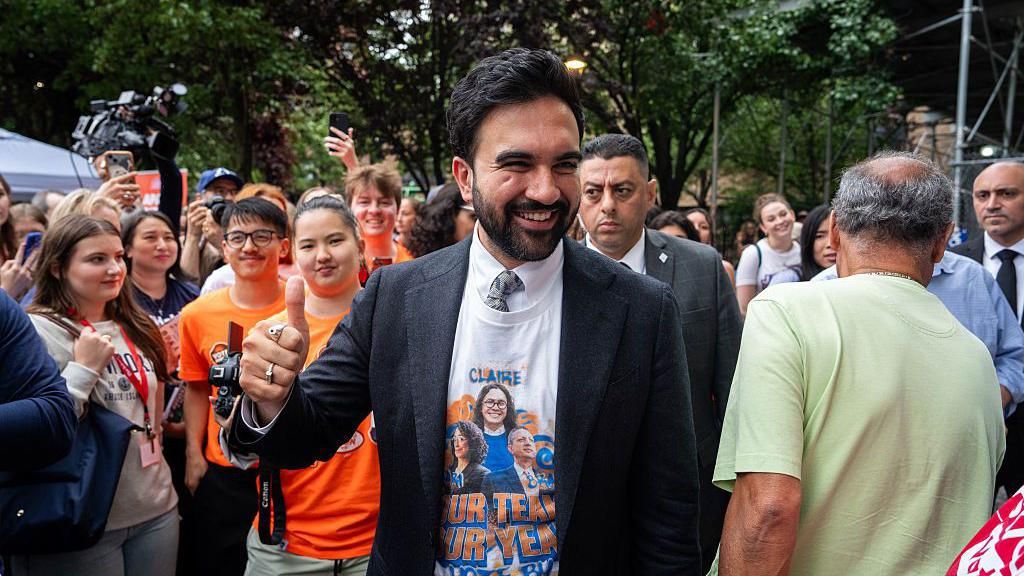
    Just seven months ago, Zohran Mamdani stunned the political establishment by defeating former Governor Andrew Cuomo to become New York City’s youngest mayor in 100 years. That historic upset was dismissed by many centrist Democrats as a one-off fluke. On Tuesday, Mamdani proved his movement is here to stay, as every left-wing congressional candidate he endorsed pulled off shocking primary victories against incumbent and establishment-backed opponents.

    Two of the three candidates ousted sitting Democratic House members. The first, New York City Comptroller Brad Lander, defeated Dan Goldman – a high-profile Democrat who gained national fame as lead counsel for Donald Trump’s first impeachment, and who enjoyed massive financial backing from the American Israel Public Affairs Committee (AIPAC), the powerful pro-Israel lobbying group. The second, community activist Darializa Avila Chevalier, unseated five-term incumbent Adriano Espaillat, who led the Congressional Hispanic Caucus. In the third race, state assemblywoman Claire Valdez defeated an opponent supported by most of New York’s Democratic Party leadership.

    At post-election victory celebrations, all three candidates highlighted Mamdani’s influence, crediting his grassroots coalition for their wins. Valdez called the sweep a proof of progressive movement’s staying power, saying: “Tonight we have not just won an election, but we have proved that this movement is durable.”

    With New York City’s heavily Democratic voter base making the three nominees all but guaranteed to win their House seats in November, Mamdani’s populist socialist movement – which pushes for government-funded universal healthcare, higher taxes on the top earners, and expanded affordable housing – is no longer confined to city hall. It is now set to reshape national partisan politics in Washington.

    If Democrats retake the House majority in November, the party’s caucus will include a larger, more vocal progressive bloc that presents a major challenge to party leader Hopen Jeffries, the New York Congressman who is expected to seek the House speaker’s position if Democrats take control. Notably, neither Chevalier nor Valdez have committed to supporting Jeffries for speaker, adding to intra-party tension.

    Political analysts have already drawn comparisons between Tuesday’s anti-incumbent, anti-establishment progressive wave and the right-wing Tea Party movement that rose in 2010, ousting dozens of long-serving Republican incumbents and creating an uncompromising conservative bloc in Congress. Lander pushed back on that comparison in a Wednesday television interview, arguing the progressive movement’s goal is constructive, not disruptive. “We’re joyful about what it looks like to deliver,” he said. “That is very different energy than what the Tea Party brought. We want to build something, not just break something.”

    Even so, the results have already sparked fierce pushback from across the political spectrum. Congressional Republicans have seized on the wins to argue the entire Democratic Party is shifting sharply left, with former President Trump leading the attack. In a series of late-night social media posts, Trump falsely labeled the three candidates “Communists,” writing that “America the beautiful will never be [a] communist country.” He also complained that mainstream media outlets fail to acknowledge his own endorsement record.

    Republicans have also amplified controversial past comments by Chevalier, a 32-year-old community organizer who previously called for open borders, the elimination of prisons and police, used an expletive to criticize former Vice President Kamala Harris, and falsely accused former President Joe Biden of rape. Chevalier has since disavowed those remarks, which were made between 2018 and 2022, saying she has grown and changed as a person.

    The criticism isn’t limited to Republicans. Some top centrist Democrats have also publicly pushed back against Chevalier’s victory. Former Democratic National Committee chair Jaime Harrison wrote on social media platform Bluesky: “If you hate the Democratic Party, then please don’t run for our nomination. Don’t use our resources. Don’t rely on our volunteers. Don’t use our infrastructure. Don’t ask Democrats to invest their time, money, and energy in your campaign.”

    Chevalier’s win is not an isolated incident. Just two weeks prior, Democratic voters in Maine nominated Graham Platner for Senate, despite his history of inflammatory social media posts, a Nazi-linked tattoo, and allegations of abusive behavior toward former partners. That said, Tuesday’s primary results across the country were mixed: centrist, establishment-aligned Democrats claimed victory in multiple key races. In Utah, Democrats backed former Congressman Ben McAdams, a moderate, over more progressive challengers for a newly drawn Democratic-leaning House seat. In a Maryland district outside Washington, D.C., Democratic voters chose a moderate candidate who supports continued U.S. military aid to Israel – a stark contrast to the pro-Palestinian positions held by New York’s victorious progressive candidates.

    The mixed results underscore a core challenge for Democrats ahead of November: to win a House majority, the party needs to carry competitive battleground seats across the country, many of which are in suburban areas far less liberal than New York City, where moderate candidates are far more likely to win general elections. The ideological gap between these battleground candidates and the new progressive bloc from New York will force the party to grapple with its core identity and political direction heading into November, and ahead of the 2028 presidential election – a race Mamdani has already signaled he intends to influence.

    Speaking to supporters Tuesday night as he moved between victory parties, Mamdani framed the wins as a rejection of old-line politics that led to the country’s current crises. “The old politics that got us into this crisis is not the politics that’s going to get us out of this crisis,” he said. For one election night, at least, the Democratic Party’s old guard in Washington was left scrambling to respond to a progressive movement that is quickly gaining national power.

  • Likud minister says Turkey and Syria ‘far more concerning than Iran’

    Likud minister says Turkey and Syria ‘far more concerning than Iran’

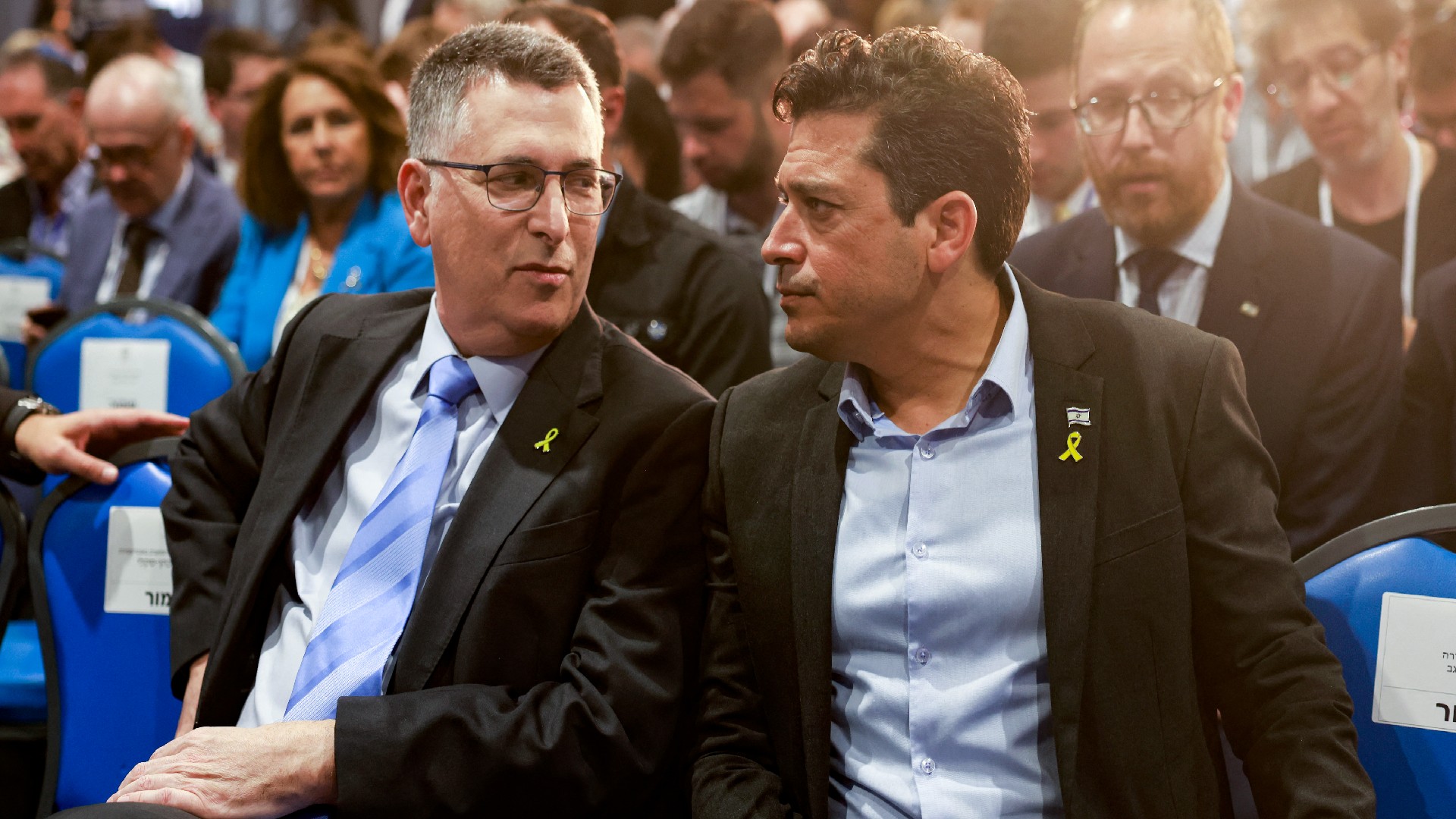
    In a stark warning delivered at the Jerusalem-based JNS International Policy Summit on Tuesday, Amichai Chikli, Israel’s Diaspora Affairs Minister and a senior member of Prime Minister Benjamin Netanyahu’s right-wing Likud party, upended long-standing regional threat framing by declaring that Turkey under Recep Tayyip Erdogan and the new Syrian government led by Ahmed al-Sharaa pose a far greater danger to Israeli security than Iran.

    Chikli argued that the long-feared regional bloc of Iran’s Shiite-led government, Bashar al-Assad’s former Syrian administration and Lebanese militant group Hezbollah has reached the end of its operational dominance. In its place, he claimed, a new coordinated “Muslim Brotherhood axis” has emerged, linking Turkey, Syria and Qatar. “It is better to open your eyes now to this shifting threat,” Chikli told the summit audience.

    The far-right politician doubled down on his earlier bellicose rhetoric against the new Syrian leadership, which grew out of a former al-Qaeda affiliate that seized control of Damascus in late 2024. “There is no path to peace between Israel and a jihadist regime rooted in the ideology of Islamic State and al-Qaeda, whose core goal is the seizure of unified Jerusalem,” he said. This marks a continuation of Chikli’s prior warnings, in which he labeled the bloc a “radical Sunni axis of evil” that included Pakistan alongside Turkey and Qatar, and predicted an inevitable future war between Israel and Syria.

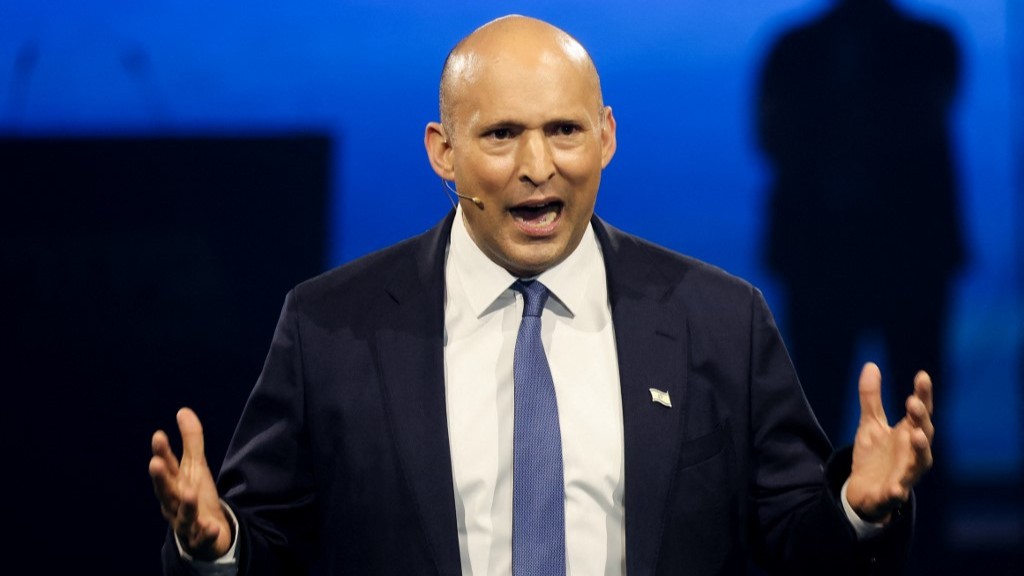
    Chikli’s comments are not an isolated outburst; they reflect a growing hardening of Israeli official rhetoric toward Ankara, amid escalating bilateral tensions between the two regional powers. In recent months, multiple high-profile Israeli politicians across the governing coalition and opposition have moved to classify Turkey as a hostile actor. Earlier this June, fellow Likud lawmaker Ariel Kellner formally labeled Turkey an “enemy state.” Last month, Culture and Sports Minister Miki Zohar called on the Israeli government to adopt an official enemy designation for Ankara, warning that Turkey would face devastating military damage in any future conflict with Israel. Even former Israeli Prime Minister Naftali Bennett, a leading opposition figure, echoed this framing back in February, arguing that “Turkey is the new Iran.”

    The shifting threat assessment also echoes analysis from mainstream Israeli media. In an editorial published the same day as Chikli’s summit address, the major Israeli newspaper Maariv concluded that Turkey now represents a more significant long-term challenge to Israeli national security than Iran. The outlet cited Turkey’s rapidly expanding military capabilities, booming domestic defense industry and growing regional influence across the Middle East as key factors driving this re-evaluation, noting that Israeli security policymakers are increasingly prioritizing Ankara’s growing power alongside long-standing traditional threats from Iran and its former allies.

    The remarks come as bilateral tensions between Turkey and Israel have surged in recent weeks. Erdogan himself recently warned that Israeli military strikes in Syria and Lebanon pose a direct national security threat to Turkey, raising fears of an unintended direct confrontation between the two countries.

  • Former Israeli prime minister says he smuggled Starlink receptors into Iran

    Former Israeli prime minister says he smuggled Starlink receptors into Iran

    In a bombshell revelation at the JNS International Policy Summit held in Jerusalem on Tuesday, former Israeli Prime Minister Naftali Bennett has publicly confirmed that he orchestrated a covert operation to smuggle tens of thousands of Starlink internet receivers into Iran. The operation, Bennett explained, was specifically designed to support anti-government demonstrators in the country, who repeatedly face state-ordered internet shutdowns during periods of unrest.

    Bennett laid out the core logic behind the initiative, noting that Iranian authorities uniformly cut off digital communications every time large-scale protests erupt. By getting Starlink receivers into the hands of activists, the project aimed to guarantee uninterrupted access to the internet and social media platforms even during shutdowns, allowing protest organizers to coordinate their actions and, ultimately, challenge the ruling Islamic Republic.

    However, Bennett made scathing accusations against the current administration led by Prime Minister Benjamin Netanyahu, claiming the program was halted due to what he called the government’s incompetence. When large-scale anti-government protests swept Iran starting in late December, the pre-positioned communications infrastructure that Bennett’s team had worked to deploy was never put in place, he said.

    The unrest, which began in Tehran’s Grand Bazaar as a response to soaring inflation, rapidly escalated in January, evolving into a nationwide movement expressing broad anger at the Islamic Republic’s governance. Thousands of people lost their lives during the crackdown on demonstrations. While most fatalities have been linked to violent crackdowns by Iranian police and the Islamic Revolutionary Guard Corps (IRGC), separate allegations have circulated claiming that Israeli operatives infiltrated the protests and that anti-government activists were responsible for the deaths of Iranian security personnel and civilians.

    Bennett’s remarks come at a pivotal diplomatic moment, as U.S. and Iranian negotiators continue talks aimed at ending the ongoing conflict that broke out in February, when joint Israeli-U.S. military strikes killed Iran’s supreme leader, Ayatollah Ali Khamenei. Over the weekend, the U.S. took a significant step forward in negotiations, temporarily suspending sanctions on Iran during a new round of talks. U.S. Vice President JD Vance described the recent discussions as yielding “good progress.”

    U.S. Treasury Secretary Scott Bessent announced that the Treasury Department has issued a 60-day general license that temporarily lifts sanctions through August 21, authorizing Iranian oil production and commercial sales for the duration of the truce talks. All transactions completed under this license must be conducted in U.S. dollars, according to the official announcement.

  • Trump cancels signing of landmark bipartisan bill aimed at lowering housing costs

    Trump cancels signing of landmark bipartisan bill aimed at lowering housing costs

    In a stunning last-minute disruption to a rare display of bipartisan cooperation, former U.S. President Donald Trump has announced the cancellation of a planned signing ceremony for what experts call the most sweeping federal housing policy reform in the 21st century, tying his approval of the cost-cutting bill to the passage of a strict new voter ID law he has prioritized.

    The legislation, formally titled the 21st Century ROAD to Housing Act, earned approval from both chambers of Congress after weeks of cross-party negotiations, a rare outcome in an era of deeply polarized Washington politics. The overwhelming bipartisan support underscores just how urgent the nation’s ongoing housing affordability crisis has become for voters across every ideological spectrum.

    In a social media post made public just hours before he was set to sign the bill into law, Trump stated: “Today’s Housing News Conference and Signing is hereby cancelled until such time as we pass the desperately needed SAVE AMERICA ACT, which I consider to be a National Emergency.” Under longstanding U.S. legislative rules, the bill will automatically become law within 10 days if Trump does not issue a formal veto and Congress remains in session.

    The bipartisan bill is crafted to address two root causes of America’s housing crisis: skyrocketing housing costs and a persistent national shortage of available units, packing more than 40 distinct provisions that target everything from bureaucratic bottlenecks to institutional investor buying sprees that have squeezed supply. Policy analysts and housing advocates have widely framed the package as the most comprehensive congressional action on housing in decades.

    Polling from the Bipartisan Policy Center, conducted earlier this spring, confirms that housing affordability is a top voter priority: 89% of respondents across all political affiliations want Congress to take immediate action to bring down housing costs. David Gonzalez Rice, a policy advisor at the National Low Income Housing Coalition (NLIHC), praised congressional negotiators for their work, noting “Legislators and their staff really did their homework here to try to put together a package that was going to try to address a lot of concerns at once.”

    Core provisions of the bill include streamlined regulatory processes to speed up new home construction and new federal limits on how many single-family homes large institutional investors can purchase nationwide. Industry estimates from Realtor.com put the current national housing shortage at more than 4 million units, a gap that has been the primary driver of rising home and rental prices for years. “Everyone can understand the idea that the more supply you build, the more it’s going to exert downward pressure on prices in your community,” explained Jared Grigas, Legislative Director at the National Association of Counties (NACO). Grigas added that the bill empowers local governments to expand supply rather than imposing top-down mandates, cutting through bureaucratic red tape to speed up projects.

    With November’s midterm elections rapidly approaching, lawmakers from both major parties have already attempted to claim credit for the rare bipartisan policy win. Francis Torres, housing and infrastructure director at the Bipartisan Policy Center, called the bill’s passage a landmark in itself. “It’s an achievement in terms of bipartisan policymaking in Washington, which is itself a recognition of how important this issue of housing affordability has become for the American public,” Torres said. He added that there is now broad consensus across the political divide that a chronic undersupply of housing is the core driver of affordability challenges across the country.

    Data from the Federal Reserve Bank of St Louis underscores the severity of the crisis: the median U.S. home price has climbed to roughly $403,000, up from just $223,000 in 2010. Analysis from real estate firm Redfin finds that a household needs an annual income of approximately $117,000 to afford a median-priced U.S. home — a figure that is nearly $30,000 higher than the median U.S. household income, per U.S. Census Bureau data. Compounding the strain, high inflation and elevated mortgage interest rates have pushed homeownership entirely out of reach for millions of working- and middle-class Americans.

    Congressional Republicans, many of whom are locked in competitive re-election battles as they fight to retain control of both chambers, have centered their messaging on the bill’s provisions to speed up home construction and lower costs, framing the bill as a step forward for the “American dream of homeownership.” South Carolina Senator Tim Scott, a co-sponsor of the legislation, explained the bill’s incentive framework on the Senate floor: “If you don’t build more housing, you should lose those incentives, and they should go to the places where you’re building more housing.” Under the bill, local governments that approve more new housing units gain access to additional federal funding.

    For their part, Democratic co-sponsors including Massachusetts Senator Elizabeth Warren have highlighted the bill’s restrictions on institutional investor purchases of single-family homes, a practice that has driven up prices and reduced supply for individual buyers. “Rent’s too high, homes are too expensive and for too long the federal government (has been) totally asleep at the switch, and we changed that today,” Warren said after the Senate approved the bill.

    Beyond the high-profile provisions that have drawn the most attention, experts note that smaller measures included in the bill will deliver tangible support to often-overlooked communities. One provision expedites funding for housing reconstruction in areas hit by natural disasters, while another preserves access to affordable housing in rural parts of the country.

    Torres of the Bipartisan Policy Center emphasized that the bill represents a meaningful, incremental step toward solving the nation’s decades-long housing crisis, rather than an immediate fix. “It’s an accumulation of ideas, each of which moves the needle a little bit, but together they make up something meaningful,” he said. “This bill is not going to be the thing that will change your rent cost in the summer of 2026 necessarily, but it is a crucial first step at the federal level to facilitate some important actions to add housing supply.”