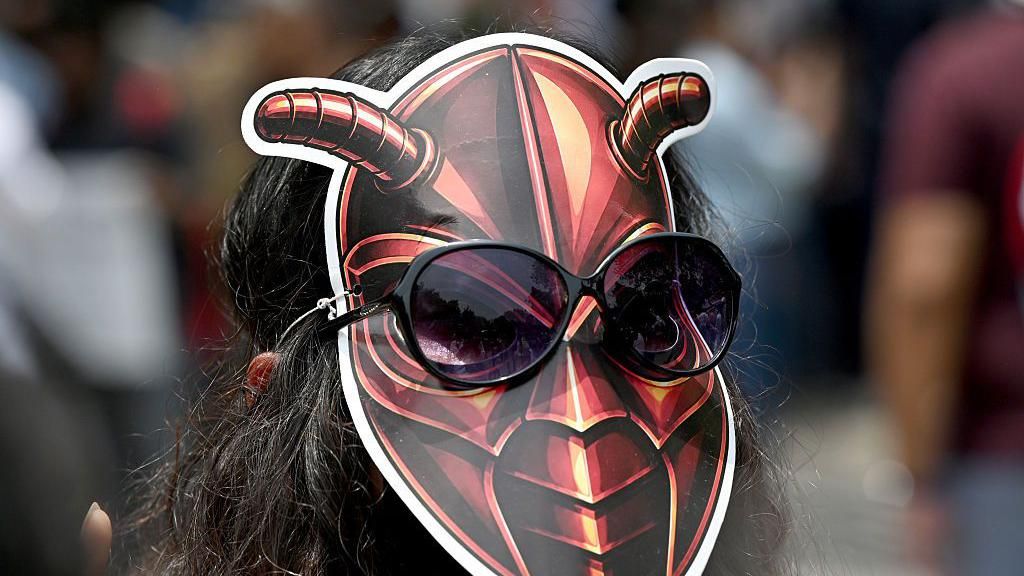
In one of the largest anti-government mobilizations India has seen in recent years, a youth-led grassroots movement called the Cockroach Janta Party (CJP) successfully leveraged social media to organize demonstrators, galvanize public support and ultimately push India’s federal education minister to step down. What began as a hybrid movement of in-person marches and Instagram content quickly turned ordinary young women into some of the movement’s most visible faces – but their participation has come at a devastating personal cost, with dozens facing sustained, gendered online harassment, violent threats and privacy violations, a new BBC investigation has found.
CJP’s defining strategy blended traditional street protest with digital activism: short-form satirical videos, meme content and on-the-ground first-person posts spread across Instagram, drawing hundreds of thousands of views and turning casual content creators and student participants into movement leaders. The movement’s peak demonstration, held July 20, saw thousands of protesters attempt to march to India’s parliament to demand policy changes, before security forces intervened with tear gas and baton charges. Official Delhi police figures put the total injured at 60 protesters and 118 police personnel, but CJP has disputed this count, claiming far more demonstrators were harmed than the government has acknowledged. In the aftermath of the demonstration, police have opened formal criminal cases against dozens of identified movement participants. But for many of the women who posted protest content online, a separate, unregulated campaign of abuse has unfolded far from official police channels.
The BBC spoke with four anonymous female activists who participated in the protests, reviewing hundreds of pages of screenshots of abusive messages, edited deepfake images and threatening communications to document the scope of the harassment. All four requested anonymity out of safety concerns for themselves and their families.
One 20-something content creator, who attended her first protest on July 20 and shared first-person accounts of the baton charge to her Instagram followers after the protest site’s internet was cut off, described unrelenting slut-shaming and personal attacks after she publicly questioned Prime Minister Narendra Modi’s post-protest comments – in which Modi claimed he “forgave” young demonstrators and urged society not to harshly punish them. “I thought I was just helping organize aid and share what I saw, I didn’t even think of it as political,” she told the BBC. She estimates she has deleted thousands of abusive messages and blocked hundreds of accounts, but harassment continues. For her, the abuse has amplified a constant fear that is familiar to many women in India: “As a woman here, you grow up with fear. It follows you online when you speak out, too,” she said, adding that her mother has refused to read comments on her posts for months, unable to bear the vitriol directed at her daughter.
A 20-year-old first-time protester, who regularly posts light-hearted fit-check videos, shared a quick joke clip ahead of the July 20 march saying she was “going to get beaten by cops” – a clip that was picked up by national television and spread widely across social media, leading doxxers to identify her home college and flood her inbox with threats. “I was just recording what happened around me, I never thought it would go that far,” she said. Abusers sent her anonymous messages threatening to report her to police for arrest and assault, called her degrading sexual slurs, and issued threats that “your turn will come.” The pressure extended far beyond online spaces: relatives contacted her parents demanding she delete all her protest content, and she has now archived nearly all of her protest-related posts out of fear for her family’s safety. “I worry less about what happens to me than what they might do to my parents,” she explained.
A Muslim student activist, who has long shared outspoken political content online, described a sharp uptick in targeted abuse after the CJP protests, amid India’s growing religious polarization. She has since made her Instagram account private and muted most other social platforms, but offensive content about her continues to circulate. Abusers edited her photos to falsely depict her in sexually suggestive situations to shame her, morphed her image to label her an “anti-national terrorist”, and used anti-trans slurs to insult her while falsely claiming she was a paid protester. Her father, a working journalist, has pleaded with her to stop speaking out, warning that her Muslim identity makes her an easy target for state action. “My parents have watched other Muslim activists arrested and investigated, and we live in constant dread,” she said. Despite the harassment, she remains firm: “I still believe going to the protest was the right thing to do. I just understand the cost far better now.”
A West Bengal-based student activist who helped organize supply drives and an Instagram fundraiser for protesters said the abuse began after police started detaining demonstrators in her state in late July. Abusers flooded her fundraiser post with spiteful comments and sent her sexual threats in private messages, forcing her to delete the post entirely. She changed her public social media name, locked her account and blocked messages from strangers to avoid being doxxed. What has shocked her most is the clear gender double standard: her male peers expressed the same political views online, but none faced the gendered, sexualized abuse she endured. “When women speak up, the attack always turns to our gender. I just keep asking why women can’t hold the same opinions as men online without being targeted,” she said.