分类: politics

  • MP urges UK government to take action on English football ties to Israeli occupation

    MP urges UK government to take action on English football ties to Israeli occupation

    A cross-party independent British Member of Parliament, Iqbal Mohamed, has launched a formal call for urgent government intervention to cut ties between English football and corporations accused of complicity in Israel’s illegal occupation, apartheid policies, and reported war crimes against the Palestinian people.

    In an official letter addressed to UK Culture Secretary Lisa Nandy dated Wednesday, and shared publicly via his social media channels on June 24 2026, Mohamed laid out his case that top-flight English football is being used to ‘sportswash’ grave human rights violations against Palestinians. He argued that the English Premier League (EPL), its 20 member clubs, and the Football Association (FA) — the governing body of English football — have no business maintaining commercial partnerships with firms linked to documented abuses of Palestinian human rights.

    Mohaved’s appeal draws heavily on a new investigative report released by UK-based pro-Palestinian campaign group War on Want, titled *Red Card: English Premier League Sportswashing of Israel’s Atrocities against the Palestinians*. According to the MP, the investigation identifies 16 major sponsoring companies that the United Nations and other leading international authoritative bodies have linked to complicity in Israeli violations. The named firms include global brands Alphabet/Google, AXA, BP, Canon, Carlsberg, Cisco, Coca-Cola, Expedia/Hotels.com, Eurobank, Evelyn Partners, HPE, HSBC, Meta, Oracle, Sony, and Standard Chartered.

    The report further finds that at least 10 top-flight clubs — Arsenal, Aston Villa, Chelsea, Crystal Palace, Everton, Fulham, Liverpool, Manchester City, Manchester United, and Tottenham Hotspur — maintain direct sponsorship deals with one or more of these companies. Five clubs — Liverpool, Arsenal, Tottenham, Manchester City, and Manchester United — were named as the most deeply connected to firms that facilitate Israeli atrocities, while Arsenal, Fulham, both Manchester clubs and Newcastle United were also flagged for potential implication through the activities of their majority owners.

    Mohamed also noted that every EPL club receives indirect backing from Barclays, the league’s headline sponsor. While Barclays ended its practice of underwriting Israeli wartime bonds in 2024, other major sponsors maintain active operations in occupied territories. Coca-Cola, for example, holds subsidiaries and licensing agreements in Israel that operate facilities including agricultural vineyards in occupied East Jerusalem, the occupied West Bank, and the occupied Syrian Golan Heights, all territories held by Israel in violation of international law.

    “I am very concerned that our country’s great football institutions are sportswashing Israel’s atrocities,” Mohamed wrote in the letter. He added: “Our beautiful game must not be used to sportswash such grave injustice. I ask that you ensure that the EPL must not be a profitable safe haven for companies complicit in atrocities.”

    Mohamed is calling on Nandy to facilitate coordinated action between the UK government, the EPL, the FA, individual clubs, and other relevant stakeholders to end all sponsorship and advertising partnerships with linked companies as rapidly as possible. He also urged the government to enforce a policy that ensures no UK entity, public or private, provides material aid or assistance to Israel’s illegal occupation and apartheid regime.

    Beyond commercial ties, the War on Want report also documents alleged restrictions on pro-Palestinian expression within top English football. It found that four EPL clubs — Arsenal, Brighton, Burnley and Everton — have disciplined pro-Palestinian staff and supporters in ways that may violate the right to freedom of expression and constitute unlawful discrimination.

    One high-profile case highlighted in the report is that of Mark Bonnick, an Arsenal kitman with 22 years of service at the club. Bonnick posted online criticism of Israel’s military campaign in Gaza, and following what the report describes as a coordinated smear campaign led by politically motivated individuals who falsely accused him of antisemitism, he was abruptly terminated from his role on Christmas Eve 2024.

    Following an internal investigation by the FA, no misconduct was found. Arsenal’s own internal review also confirmed there was no evidence of antisemitism, a conclusion backed by independent Jewish anti-racism campaigners. Despite this, Arsenal dismissed Bonnick on the grounds that his social media activity had brought the club “into disrepute”.

    War on Want said of the case: “Arsenal appears to have prioritised seemingly prejudiced and racist views of those who targeted him online rather than its staff’s livelihood, wellbeing and rights – including the right to freedom of expression in support of people suffering genocide, illegal occupation and apartheid.”

    As of publication, no response has been issued from the Department for Digital, Culture, Media and Sport, the Culture Secretary’s office, the EPL, the FA, or any of the named clubs or companies in response to Mohamed’s request.

  • Carney says Canada should reopen embassies in Iran and earthquake-stricken Venezuela

    Carney says Canada should reopen embassies in Iran and earthquake-stricken Venezuela

    TORONTO – In a sharp break from decades of previous policy put in place by prior Canadian administrations, Prime Minister Mark Carney has publicly called for Canada to reverse course and reopen its long-closed diplomatic missions in Iran and Venezuela, arguing that the current lack of on-the-ground presence undermines core Canadian government responsibilities to its citizens and global humanitarian response efforts.

    Speaking to reporters on Thursday, Carney emphasized that even as Ottawa maintains sharp, fundamental disagreements with the governments of both nations, the absence of formal diplomatic posts creates unnecessary barriers that hurt both Canadian travelers and residents abroad, as well as Canada’s ability to respond quickly to unfolding emergencies. “Engagement is not endorsement,” Carney clarified. “Maintaining an embassy and delivering consular services within a country does not equate to our approval of that government’s policies.”

    The closure of Canada’s diplomatic footprint in the two countries dates back more than a decade for Iran, and five years for Venezuela. In 2012, former Conservative Prime Minister Stephen Harper severed full diplomatic ties with Iran, closed the Canadian embassy in Tehran, and expelled all Iranian diplomats from Canada, labeling the Islamic Republic the single most significant threat to global peace at the time. For Venezuela, Canada suspended embassy operations in Caracas in 2019, after the government of then-president Nicolás Maduro refused to renew work visas for Canadian diplomatic staff.

    Carney pointed specifically to recent events in Venezuela to illustrate the costs of the current policy. When a major earthquake struck the country, Canada was unable to deliver rapid, on-the-ground assistance that an active embassy would have enabled, he said. Beyond the immediate disaster response, Carney noted that the lack of diplomatic representation puts Canada at a structural disadvantage when it comes to supporting its own citizens who are living or traveling in these countries.

    “There are a number of countries where, to put it mildly, we do not see eye to eye on policy, and we currently have no official representation on the ground,” Carney said. “This situation puts us at a disadvantage, first and foremost when it comes to assisting Canadians who are present in these countries.”

    While Carney stressed that no final formal decision to reopen the embassies has been issued, he made clear that the status quo is untenable for his administration. “In my judgement, moving toward this, making a decision to reopen, is exactly what we need to do,” he said. Carney added that the current arrangement, while rooted in understandable policy differences, means Canada is failing to live up to a core basic responsibility of sovereign government. “There is an ongoing severe humanitarian crisis in Venezuela, and there is a need for rapid action, so in my view we have to change how we are approaching this,” he said.

    In a separate announcement Thursday, Carney revealed that U.S. President Donald Trump held a phone call with him on Wednesday to discuss a range of pressing international topics, including the upcoming NATO summit scheduled for next month, as well as ongoing tensions and developments involving Iran and the broader Middle East region. U.S. Defense Secretary Pete Hegseth and other senior U.S. administration officials joined the call, Carney confirmed.

  • Erdogan applauds Iraqi Kurds’ neutrality during Iran war

    Erdogan applauds Iraqi Kurds’ neutrality during Iran war

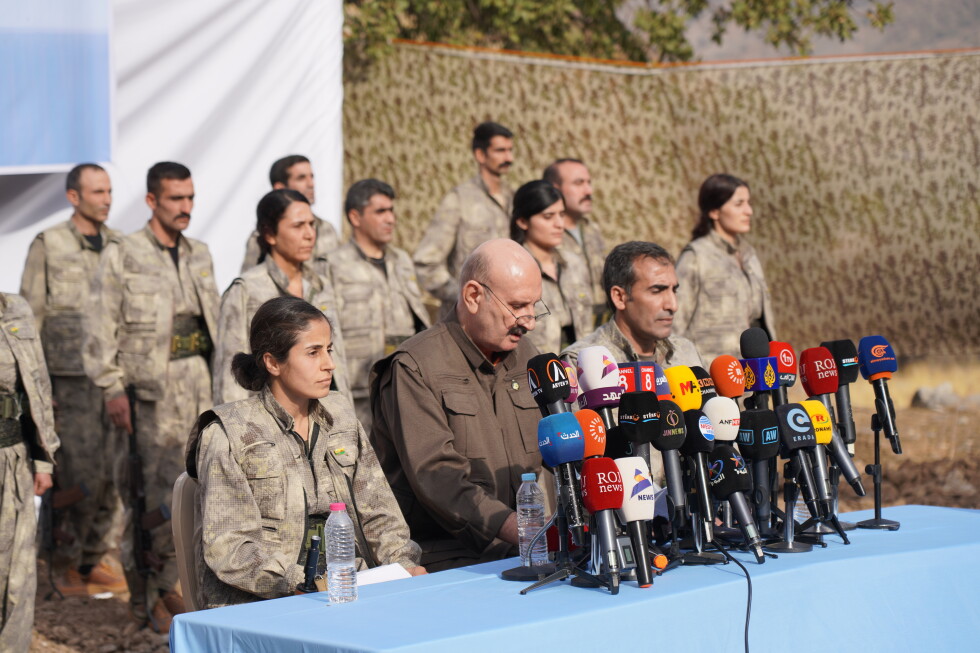
    In a public address delivered in Ankara on Wednesday, Turkish President Recep Tayyip Erdogan has publicly commended Iraqi Kurdish authorities for their deliberate decision to steer clear of participation in the US-Israeli military campaign against Iran. The Turkish leader highlighted that the refusal of the Kurdistan Regional Government (KRG) to allow their sovereign territory to be utilized as a staging ground for strikes against neighboring Iran played a critical role in de-escalating broader regional tensions. Erdogan emphasized that this responsible choice prevented a cycle of violence that would have directly threatened the safety and stability of Kurdish communities across the region. “Greater strife that could have harmed our Kurdish brothers and sisters has been prevented,” he stated, adding that in the coming months, it will become increasingly evident how dangerous a coordinated plot the regional actors — including Turks, Kurds, Arabs, and Iranians — managed to foil together. This praise from Erdogan comes after months of sustained regional tensions, during which Kurdish leadership consistently distanced itself from the US-Israeli offensive, repeatedly warning that any form of involvement would drag the already volatile Iraqi Kurdish region into widespread chaos. This stance was maintained even amid a steady stream of cross-border attacks targeting Kurdish positions carried out by Iran and Iran-aligned Iraqi armed factions. The sequence of events dates back to early March, just days after the US and Israel formally launched their military campaign against Iran. At that time, former US President Donald Trump told news agency Reuters that he would openly support Kurdish forces launching a ground offensive against the Iranian government. Trump’s announcement coincided with widespread media reports claiming the Central Intelligence Agency (CIA) was secretly supplying weapons to Kurdish factions to aid in such an offensive. Weeks later, in an interview with Middle East Eye, a top Iraqi Kurdish military commander Sirwan Barzani pushed back against these Western media narratives, denying outright that Iraqi Kurdish forces were facilitating Iranian Kurdish opposition fighters crossing the shared border to launch attacks inside Iran. Barzani made clear that despite frustration over the hundreds of Iranian strikes on Iraqi Kurdish military outposts, his forces have no intention of launching any incursion into Iranian territory. Multiple leaders of Iranian Kurdish political parties have also issued public denials to Middle East Eye, rejecting claims that they have received US-supplied weapons through Iraqi Kurdish intermediaries, following Trump’s assertion that Washington was funneling arms to Iranian anti-government protesters via Kurdish groups. For decades, Turkey has viewed independent armed Kurdish movements across the Middle East as a core national security threat, and has repeatedly issued stern warnings against foreign attempts to mobilize Kurdish factions in regional conflicts to advance geopolitical goals. Ankara has long prioritized maintaining regional stability along its southern borders and has consistently opposed any actions that could expand the scope of the Iran conflict to neighboring states.

  • US Supreme Court strikes down Hawaii limits on guns in public

    US Supreme Court strikes down Hawaii limits on guns in public

    In a decision that marks another major win for gun rights advocates across the United States, the U.S. Supreme Court has invalidated a longstanding Hawaii regulation that prohibited permit-holding gun owners from bringing concealed handguns onto privately owned land open to the general public. The 6-3 ruling, issued Thursday, aligned the court’s conservative majority with gun owners who argued that the geographic restriction on legal firearm carry violated the Second Amendment’s protection of the right to keep and bear arms.

    Writing for the majority, conservative Justice Samuel Alito rejected the lower court’s reasoning that Hawaii had the authority to ban concealed-carry permit holders from entering common public-facing private spaces including shopping malls and dine-in restaurants unless they obtained explicit permission from the property owner. Alito emphasized that the regulation placed unreasonable, crippling limits on law-abiding Hawaii residents who had already completed the state’s strict screening and qualification requirements to receive a carry permit. “This regime hobbles what the Second Amendment protects: the right of Americans to carry arms for self-defense as they go about their daily lives,” Alito wrote in the opinion, concluding that “we hold that the law is unconstitutional.”

    Critically, the court’s ruling only overturns the broad private property carry ban. It leaves intact all of Hawaii’s other existing gun restrictions, including prohibitions on carrying firearms in sensitive locations such as schools, government buildings, bars, public beaches, and public parks, according to reporting from CBS News, a media partner on the case’s coverage.

    The legal challenge originated in 2023, when three Hawaii residents and the Hawaii Firearms Coalition filed suit against the regulation, arguing it violated Second Amendment rights. A federal district court initially ruled in the challengers’ favor, finding the rule most likely contravened the constitutional right to bear arms. But Hawaii state officials appealed the ruling, and the U.S. Court of Appeals for the Ninth Circuit later upheld the challenged law, setting the stage for the Supreme Court to take up the appeal.

    The Hawaii regulation, often derisively called the “vampire rule” by gun rights supporters, required permit holders to request explicit permission from every private property owner before entering their land with a firearm. Even a routine stop to refuel a car or pick up groceries at a supermarket could leave a permit holder facing misdemeanor charges, which carried a maximum penalty of up to one year in prison. The former Trump administration threw its support behind the gun owners in the case, echoing arguments that the rule put legally authorized permit holders at unnecessary risk of criminal penalty for ordinary daily activities.

    The Supreme Court’s decision is expected to have ripple effects beyond Hawaii, as four other heavily Democratic-leaning states — California, New York, New Jersey, and Maryland — maintain nearly identical restrictions on private property gun carry. Currently, most U.S. states already allow permit holders to carry concealed firearms on publicly accessible private property, so only a small handful of state regulations will be directly affected by this precedent. This ruling marks the second time during the Supreme Court’s current term that the court has ruled in favor of gun rights expansion, building on a series of recent decisions that have rolled back long-standing gun control regulations across the country. The court’s three liberal justices issued a joint dissent opposing the majority’s decision.

  • Kenyans mark two years since Gen Z protests

    Kenyans mark two years since Gen Z protests

    It has been two full years since the wave of Gen Z-led anti-government demonstrations that rocked Kenya in 2024, and on the anniversary, families of the protesters and bystanders killed during the unrest did not stay silent. Grieving relatives gathered together and marched to Kenya’s Parliament building, the center of national political power, to honor the memories of their loved ones who lost their lives in the violent clashes that unfolded during the protests. For these families, the anniversary is not just a moment to grieve: it is a deliberate, public call for accountability that has yet to be delivered. Many of those killed were young people who joined the widespread demonstrations demanding political reform and policy change from the Kenyan government. Two years on, no conclusive legal action has been taken against those responsible for the fatalities, leaving the bereaved in a state of continued uncertainty and anger. By returning to the seat of government, the families are pushing ruling authorities to break the silence around the protest deaths and fulfill promises of justice that have remained unfulfilled for 24 months.

  • Supreme Court allows Trump to restrict asylum seekers at border

    Supreme Court allows Trump to restrict asylum seekers at border

    In a closely watched decision that will reshape how asylum claims are processed along the US-Mexico border, the Supreme Court has delivered a 6-3 ruling upholding the Trump administration’s long-debated ‘metering’ policy, which restricts asylum access for migrants who have not yet physically entered US territory. The decision ends a years-long legal battle and paves the way for the policy to be reimplemented, nearly four years after it was rolled back by the preceding Biden administration.

    The core of the legal fight centered on interpreting a key line of US federal asylum law, which states that only migrants who have ‘arrived in the United States’ are eligible to apply for protection from persecution on political, racial, or religious grounds. The Trump administration has long argued that this language explicitly excludes asylum seekers stopped while still on the Mexican side of the border, a position that was rejected by a lower court before the case was appealed to the nation’s highest court.

    Writing the majority opinion for the court’s conservative majority, Justice Samuel Alito framed the question as a straightforward matter of common language interpretation. ‘In ordinary speech, no one would say that a person ‘arrives in’ a place . . . before the person enters that place,’ Alito wrote. The ruling reverses the lower court’s finding that the metering policy was unlawful, in the case titled Noem v. Al Otro Lado, a prominent immigrant advocacy organization.

    During oral arguments held in March, justices from both sides of the ideological spectrum pushed attorneys on both sides to clarify the legal threshold for what counts as ‘arriving in the US.’ Conservative Justice Amy Coney Barrett questioned what specific, dispositive marker would qualify a migrant as having arrived in the country, while fellow conservative Justice Neil Gorsuch asked whether a migrant waiting in a queue at a port of entry, or standing at the water’s edge of the Rio Grande, would meet the standard.

    Vivek Suri, an assistant solicitor general arguing on behalf of the Trump administration, told the court the answer was unambiguous: ‘You can’t arrive in the United States while you’re still standing in Mexico. That should be the end of this case.’ But Kelsi Corkran, an attorney from the Institute for Constitutional Advocacy and Protection representing the migrant plaintiffs, argued that migrants meet the arrival requirement once they reach the threshold of a port of entry, waiting to cross into the country.

    The ‘metering’ policy gets its name from its core function: it allows US Customs and Border Protection officials to cap the number of asylum claims processed each day, citing limited staffing and overburdened processing systems as justification for turning away additional seekers. First introduced by the Trump administration in 2016, the policy was formally rescinded in 2021 when Democratic President Joe Biden took office. With Trump’s return to the White House in 2025, the administration moved to reinstate the policy, leading to the latest legal challenge that ended at the Supreme Court.

    This ruling is not the final word on Trump’s broader border asylum agenda. Shortly after returning to office in 2025, Trump announced a separate, far more sweeping ban on asylum eligibility for most border arrivals, a policy that remains tied up in ongoing litigation and has yet to reach the Supreme Court.

  • Key figure in South Africa police corruption scandal pleads guilty

    Key figure in South Africa police corruption scandal pleads guilty

    South Africa’s high-stakes investigation into systemic police corruption has taken a dramatic turn, with a central figure in the sprawling inquiry agreeing to cooperate with state prosecutors in exchange for a reduced sentence. Vusimusi “Cat” Matlala, a 49-year-old business owner at the heart of the case, has entered guilty pleas to three serious charges: corruption, fraud, and money laundering, as part of a negotiated plea agreement put before a Pretoria court.

    Matlala stands accused of orchestrating bribes paid to senior police leaders to secure a massive 360 million South African rand (equivalent to roughly $22 million) public health tender for his company, Medicare24, back in 2024. According to state advocate Santhos Manilall, the agreement requires Matlala to provide firsthand evidence against multiple high-ranking officials who have been linked to the graft scheme. If the magistrate approves the deal, Matlala will serve an eight-year prison term, a sentence prosecutors argue is a fair trade for unprecedented access to hidden details of the corruption network.

    “For the first time we have an accused who has… given us detail that we would not have been made aware of,” Manilall told the court, noting that it took nearly two months of closed negotiations to finalize the cooperation agreement. The deal mandates that Matlala deliver full, truthful testimony in all upcoming prosecutions connected to the scandal. A final ruling on whether the court will accept the agreement is expected next week.

    Among the prominent figures already facing charges tied to this case is South Africa’s national police chief Gen Fannie Masemola, who has repeatedly denied all wrongdoing. This inquiry is one of multiple parallel probes into alleged criminal infiltration of South Africa’s law enforcement agencies.

    Matlala also faces a separate, unrelated murder charge which he has denied. In addition, a witness testifying before the ongoing Madlanga Commission, the public inquiry into police graft, has named Matlala as a member of a drug trafficking cartel that claims to have deeply penetrated national police ranks. Matlala has not issued a public response to that cartel allegation, though he told a separate parliamentary corruption inquiry last year that he had no personal connections to senior police officers or politicians. He has not yet testified before the Madlanga Commission.

    The Madlanga Commission was launched last September, following a bombshell allegation from senior police officer Lt-Gen Nhlanhla Mkhwanazi, who claimed last July that well-organized crime groups had successfully infiltrated multiple levels of the South African government. Witness testimony throughout the commission’s proceedings has repeatedly centered on claims of coordinated collusion between underworld criminal leaders and senior law enforcement officials, laying bare long-suspected systemic corruption within the country’s police institutions.

  • Poland’s Tusk calls for ‘mutual respect’ during row with Ukraine

    Poland’s Tusk calls for ‘mutual respect’ during row with Ukraine

    A brewing diplomatic rift between two key Eastern European allies, Poland and Ukraine, has cast a shadow over the 2024 Ukraine Recovery Conference held in the Polish coastal city of Gdansk. Ukrainian President Volodymyr Zelensky skipped the high-profile summit, an absence that came directly after Warsaw stripped him of its highest state honor over a controversial naming decision by Kyiv.

    The core of the conflict traces back to a mid-20th century historical disagreement over the Ukrainian Insurgent Army, better known by its acronym UPA. For Ukrainians, the UPA, which operated across Eastern Europe through the 1940s and 1950s, is widely viewed as a band of heroic freedom fighters who battled for Ukrainian independence against multiple occupying powers, including Nazi Germany and the Soviet Red Army, as well as interwar Polish governing forces. But Poland holds a fundamentally different view: it accuses the UPA of perpetrating a mass genocide that killed roughly 100,000 ethnic Polish civilians in the Volhynia region — now part of modern-day northwestern Ukraine — between 1943 and 1945. Tensions flared after Ukraine formally named a military unit in honor of the UPA last month, a move that Polish President Karol Nawrocki lambasted as “outrageous”, “incomprehensible” and “deeply disappointing” that inflicted damage on decades of built trust between the two nations.

    In response to the naming decision, Polish authorities revoked the Order of the White Eagle — Poland’s highest state decoration, which had been awarded to Zelensky in 2023. Shortly after the revocation was announced, Zelensky confirmed he would return the honor to Poland. In a public statement this week, Zelensky emphasized that Ukraine remains “open to all meaningful formats of engagement with Poland in order to try to avoid conflicting interpretations of the difficult and painful chapters of our shared past”, and added that Kyiv retains profound gratitude to the Polish people for their unwavering support and longstanding cooperation throughout the war.

    Opening the two-day reconstruction summit on Thursday, Polish Prime Minister Donald Tusk stressed that durable progress for Ukraine’s future can only be founded on “truth, on mutual respect, on an understanding of history”. Unlike past iterations of the annual conference, where Zelensky personally led Ukraine’s delegation, this year’s Ukrainian contingent is headed by Prime Minister Yulia Svyrydenko.

    Tusk has previously moved to de-escalate the public dispute, noting that the rift between the two allies is a outcome that “delights” Russian President Vladimir Putin, and calling on both Zelensky and Nawrocki to “calm emotions, not to stoke tensions”.

    The timing of this diplomatic clash could not be more sensitive for Ukraine. Kyiv is currently locked in a brutal defensive war against Russia’s full-scale invasion, and is actively lobbying the international community for billions of dollars in additional military aid and post-conflict reconstruction investment. It is also working to demonstrate its readiness to advance European Union accession talks, which launched their first formal negotiating phase last week in Luxembourg. Both reconstruction investment and EU accession are scheduled to be top of the agenda at the Gdansk summit. Even amid the dispute, Nawrocki has stressed that the historical disagreement will not alter Poland’s longstanding commitment to supporting Ukraine in its war against Russian aggression.

    Poland has been one of Ukraine’s most stalwart allies since Russia launched its full-scale invasion in February 2022. It has absorbed hundreds of thousands of Ukrainian refugees fleeing the war, and serves as a critical logistics and transit hub for Western military and humanitarian aid bound for Kyiv’s front lines. This year’s conference draws senior representatives from across the European Union, including European Commission President Ursula von der Leyen and European Council head Antonio Costa, alongside senior officials from Bulgaria, Estonia, Finland, Latvia, Lithuania, Romania and Sweden.

  • America’s ironclad bond with Israel is starting to crack

    America’s ironclad bond with Israel is starting to crack

    For decades, a familiar ritual has played out between Washington and Jerusalem following every regional crisis, ceasefire agreement, and tense high-stakes conversation between U.S. presidents and Israeli prime ministers. Phrases like “The bond is unshakeable” and “Our commitment to Israel’s security is ironclad” have been repeated across every sitting U.S. administration so many times that they have devolved into diplomatic liturgy: familiar and reassuring on the surface, but largely disconnected from the practical reality of how U.S. policy actually unfolds. The essay argues that Israel’s strategic leadership would benefit from a far more honest examination of this longstanding gap than it has been willing to conduct in the past.

    Since Israel’s founding in 1948, the country has occupied a recurring paradox: it is a militarily powerful state that remains deeply diplomatically dependent on its closest, indispensable ally, the United States. For generations, this dynamic has created a persistent gap between what Israel deems critical to its national survival and what Washington is willing to allow. Today, a critical, rarely openly discussed question looms: are shifting structural trends in U.S. domestic politics and grand strategy widening that gap further?

    To contextualize this dynamic, look back to a defining moment from 1973. During the Yom Kippur War, after Israeli armored forces had encircled Egypt’s Third Army and the Israeli government was poised to deliver a decisive, war-ending military blow, the Nixon administration intervened to stop the offensive, setting a pattern that would repeat for decades. Henry Kissinger brokered a ceasefire that saved Anwar Sadat’s battered Egyptian forces, cemented Washington’s role as the indispensable regional mediator, and left Israel with a hard lesson it has had to relearn repeatedly: when U.S. and Israeli strategic priorities diverge, Israel is always the side expected to defer.

    Operation Nickel Grass, the large U.S. airlift that resupplied Israeli forces during the war, was a meaningful and consequential show of support. But it also locked in a relationship of dependency: a state cannot accept critical military resupply from a patron and then reject the political terms that come attached to that aid. This is not an inherent critique of U.S. statecraft, but rather a straightforward observation of how great-power patronage has always functioned. Ancient Athens relied on client states, Rome governed through client kings, and modern Washington maintains a network of allies that ultimately advance the patron’s core interests, not the other way around.

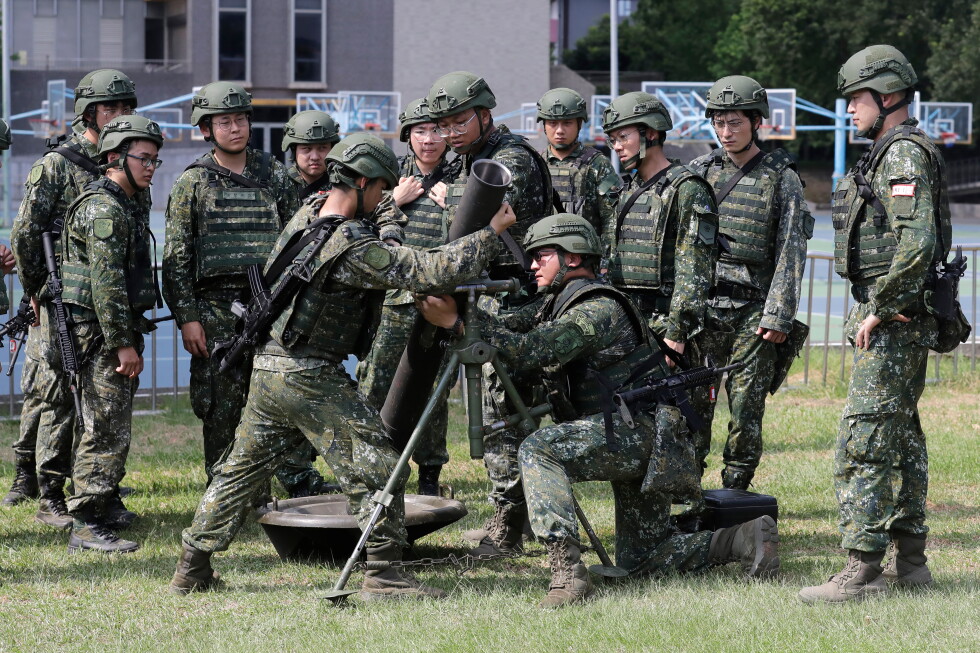
    What has shifted dramatically in recent decades is the strategic context in which U.S. patronage is offered. Washington’s current grand strategy is focused on great-power competition with China, requiring that it redirect the vast majority of its military resources and diplomatic attention to the Indo-Pacific, rather than remaining entangled in open-ended conflicts in the Middle East. This shift is not tied to a single ideological stance or political administration; it is a fiscal and strategic reality that has persisted across changes in partisan control of the White House. Every recent Pentagon planning framework, regardless of who occupies the Oval Office, prioritizes potential flashpoints in the Indo-Pacific: the Taiwan Strait, the South China Sea, and the broader arc of competition with Beijing. What was once the central, consuming obsession of U.S. foreign policy, the Middle East, has been reclassified as a secondary distraction from the primary great-power competition.

    Even among proponents of a close U.S.-Israel relationship, Israel’s value as a strategic partner is increasingly being questioned by pragmatic, realist analysts who note that core U.S. interests in the region—from energy security to counterterrorism to great power competition—can often be advanced more effectively through alliances with Arab states that do not carry the same domestic political baggage that comes with the U.S.-Israel relationship. This line of thinking is expected to gain more traction in coming years, regardless of which party controls power in Washington.

    Beyond the shifts in global strategy, deep domestic political changes in the U.S. are also reshaping the alliance, and these shifts may prove the most consequential of all. For decades, U.S. support for Israel rested on a solid bipartisan consensus that has now fractured visibly. American public opinion, particularly among younger generations of voters and racial minority groups, has grown increasingly skeptical of unconditional, blank-check support for any foreign nation, Israel included. In democratic politics, demographic change drives long-term political outcomes, and the demographic cohorts most skeptical of unwavering support for Israel are the groups that will shape the future of both major U.S. political parties.

    Currently, the U.S. provides Israel with $3.8 billion in annual military aid under a bilateral memorandum of understanding that expires in 2028. When the agreement comes up for renegotiation, it will take place in a domestic political environment dramatically different from the one that produced the original deal. While the current aid package remains politically untouchable in today’s Washington, it is exactly the type of foreign spending that America First-aligned voters and political movements have increasingly called into question.

    None of these shifts mean that the United States is on the verge of a sudden, complete break with Israel. The relationship is too deeply embedded in U.S. institutional, cultural, and political structures to collapse overnight. The U.S. will remain Israel’s closest ally for the foreseeable future, and its support remains a core pillar of Israel’s national security, granting access to advanced weapons systems, intelligence sharing, defense technology cooperation, and critical diplomatic protection at the United Nations Security Council.

    But a guarantee that the U.S. will not abandon Israel is not equivalent to a guarantee of unconditional support on every issue. Israel’s leaders must recognize this critical distinction and adjust their long-term strategic planning accordingly. The lesson from every past crisis is clear: Washington will support Israel up to the point that support conflicts with its own broader national interests. At that juncture, calls from the U.S. Secretary of State grow more insistent, military resupply shipments come with new strings attached, and the so-called “ironclad commitment” is revealed to have practical limits.

    What conclusion should clear-eyed Israeli strategists draw from this analysis? It does not mean the alliance is worthless—on the contrary, it remains enormously valuable to Israel. But its value is contingent, transactional, and subject to change driven by forces outside of Jerusalem’s control: shifts in U.S. electoral politics, changing generational attitudes toward foreign policy, intensifying great-power competition, and the enduring U.S. ambition to act as the primary Middle Eastern mediator, a role that often requires concessions from Israel.

    For Jerusalem, every ceasefire ultimately brings a morning of reckoning. What strategic gains did Israel secure? What critical goals were left unmet? What long-term costs will stem from the terms Washington imposed? These are the questions that outlast any immediate crisis.

    Israel’s long-term security cannot be built on the assumption that any U.S. administration will always prioritize Israeli needs over its own core national calculations. A clear, unsentimental reading of the historical record offers no support for that assumption. The uncomfortable, unavoidable answer to the question of whether Israel can count on U.S. support over the long run is this: yes, as a reliable partner—but never as an unconditional guarantor.

    This distinction carries enormous stakes for Israeli national strategy. The sooner Israel’s strategic establishment internalizes this reality, the sooner it can prioritize the critical work of building alternative strategic foundations: deeper diplomatic and economic ties with regional partners, greater strategic self-sufficiency, and a more diversified foreign policy that does not rely on a single patron whose top priorities will always be its own.

  • EU releases 3 billion-euro loan package for Ukraine’s recovery as part of 2-year commitment

    EU releases 3 billion-euro loan package for Ukraine’s recovery as part of 2-year commitment

    GDANSK, Poland — A landmark conference focused on Ukraine’s post-war reconstruction and long-term recovery opened Thursday in Poland, marking a major milestone in Western financial backing for Kyiv as the European Union disbursed the first 3 billion euro ($3.4 billion) installment of its massive 90 billion euro ($101 billion) multi-year macrofinancial loan package to Ukraine, Ukrainian Prime Minister Yulia Svyrydenko announced at the event. The gathering, which brings together top European leaders including German Chancellor Friedrich Merz and European Commission President Ursula von der Leyen, serves a dual purpose: it acts as a global forum to secure pledges and investments for Ukraine’s war-ravaged economy, while sending a unified message to Moscow that Kyiv’s Western allies remain committed to supporting Ukraine for the long term.

    Opening Ukraine’s membership negotiations with the EU just last week, von der Leyen used the conference to reaffirm the bloc’s unwavering commitment to Ukraine. She noted that since Russia launched its full-scale invasion in February 2022, EU member states have already provided 200 billion euros ($225 billion) in combined economic, financial, and military assistance to Ukraine. The newly approved 90 billion euro loan package spread over the next four years builds on that existing support. Von der Leyen added that the second 6 billion euro ($6.7 billion) tranche of the new package, earmarked specifically for expanding Ukrainian drone production, will be disbursed to Kyiv in the coming days.

    Alongside the coordinated macrofinancial support, European leaders launched a new European equity fund designed to drive private investment into strategic sectors of Ukraine’s economy. The initiative, which grew out of 2023’s recovery conference in Rome, counts backing from the EU, Germany, Poland, Italy, and France, with an initial public seed capital allocation of up to 220 million euros. Merz explained that the fund is structured to create the confidence and risk-sharing framework private investors require to enter Ukraine’s market amid ongoing conflict. While public funding alone cannot cover the full cost of rebuilding Ukraine, Merz emphasized that the early investment and long-term capital commitment sends a clear signal: Europe believes in Ukraine’s future as part of the European family.

    Svyrydenko, who leads the Ukrainian delegation after President Volodymyr Zelenskyy pulled out of the conference just days before it began, said Ukrainian officials expect to sign 160 bilateral and multilateral agreements totaling more than 10 billion euros ($11.2 billion) over the course of the conference. Addressing attendees, she framed Ukraine’s adaptation amid ongoing invasion as a unique strength: “We are forced to innovate to survive and this has become our superpower,” adding that the Ukrainian people remain deeply grateful for the support extended to their war-battered nation.

    Zelenskyy’s last-minute withdrawal stems from a growing bilateral dispute between Kyiv and Warsaw over contested World War II history that has strained relations in recent weeks. The dispute erupted after Polish President Karol Nawrocki stripped Zelenskyy of Poland’s highest state honor, the Order of the White Eagle, over Zelenskyy’s decision to name a Ukrainian military unit after the Ukrainian Insurgent Army (UPA), a mid-20th century paramilitary group that fought for Ukrainian independence against Nazi Germany and the Soviet Union. Poland accuses the UPA of carrying out the genocide of tens of thousands of Polish civilians in the Volhynia and Eastern Galicia regions during World War II, a classification Kyiv disputes. Following Nawrocki’s announcement, Zelenskyy returned the honor to Poland, with other senior Ukrainian officials following suit.

    Polish Prime Minister Donald Tusk noted that Zelenskyy’s absence may actually create space to reduce the current tensions between the two nations. Svyrydenko did not reference the bilateral dispute in her opening remarks at the conference. In his own address, Tusk emphasized the shared path forward: “We can only build the future on the basis of truth, mutual respect and understanding the past.” The conference proceeds amid a recent string of Ukrainian long-range strikes on strategic Russian infrastructure, including a major natural gas plant, satellite facilities, and a key railway bridge connecting the Russian-held Crimean Peninsula to mainland Russia, with Kyiv reporting that Russian military command has shifted air defense assets away from frontline positions to protect Moscow and other key Russian territory. The Associated Press contributed reporting from Kyiv and Berlin.