分类: politics

  • Partial US government shutdown enters third day as funding standoff continues

    Partial US government shutdown enters third day as funding standoff continues

    The United States government entered its third day of a partial shutdown on Monday as legislative negotiations reached an impasse over Department of Homeland Security funding and immigration enforcement policies. The political deadlock persists despite the Senate’s approval last Thursday of a comprehensive spending package covering five key government sectors.

    Lawmakers face a critical juncture regarding Homeland Security funding after senators deliberately excluded full fiscal year appropriations for DHS from their initial legislative package. Instead, they implemented a temporary two-week funding measure specifically for the department, creating a limited window for resolving contentious immigration policy disagreements.

    The congressional stalemate centers on Democratic demands for substantial reforms to immigration enforcement protocols. These include mandatory body camera usage by agents during operations and prohibitions on facial coverings that obscure identification. The proposed changes gained urgency following recent fatal shootings of American citizens during immigration enforcement operations.

    While the Senate-approved legislation allocates full fiscal year funding through September 30, 2026 for defense, health, treasury, federal courts, and other agencies, its implementation remains pending House approval. The funding lapse technically began at midnight Saturday, though minimal immediate impact occurred due to weekend government service schedules.

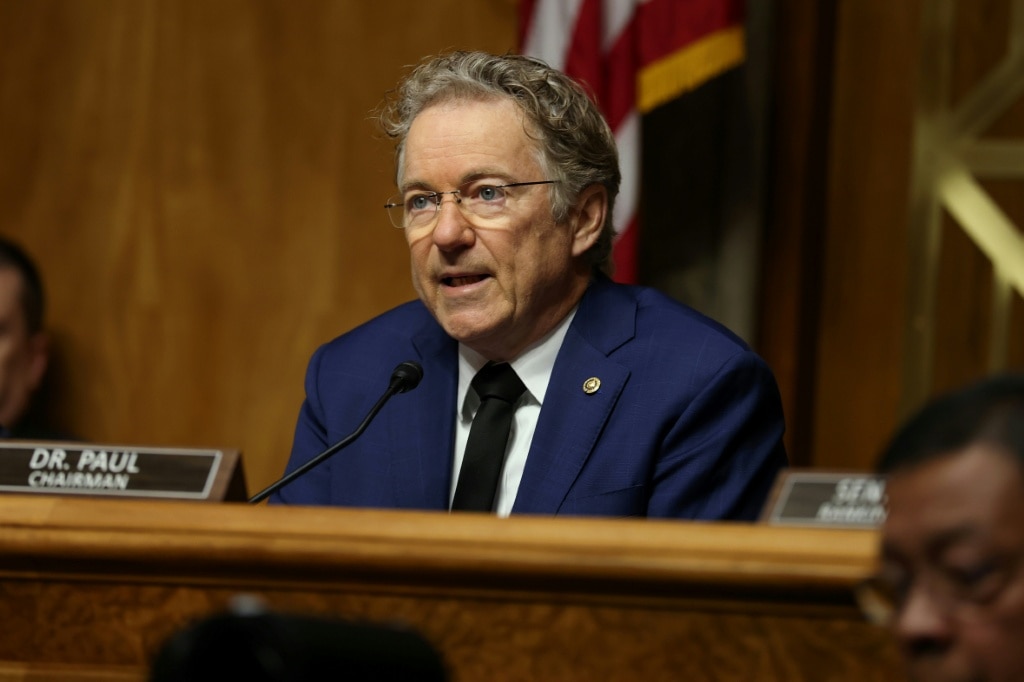
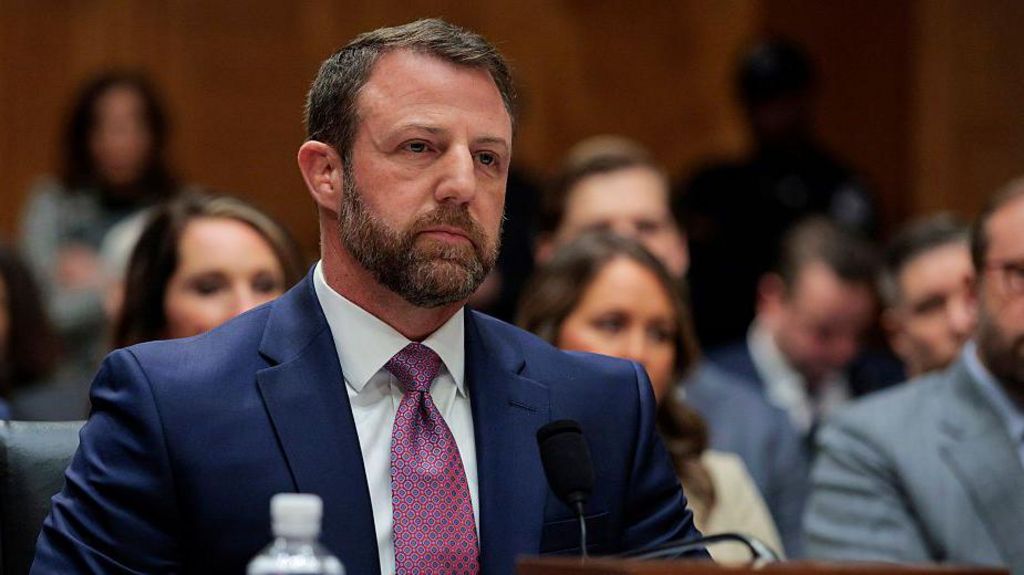
    The House Rules Committee scheduled a Monday afternoon session to evaluate the legislative package, which must first overcome a procedural vote that Democrats reportedly plan to oppose. Representative Ro Khanna (D-CA) articulated progressive opposition, questioning the ethical implications of funding Immigration and Customs Enforcement without structural reforms.

    Republican leadership expressed confidence in resolving the impasse, with House Speaker Mike Johnson predicting legislative completion by Tuesday. However, practical challenges emerge from both political divisions and external factors, including winter weather complicating lawmaker travel and the Republican party’s narrow single-vote House majority.

    The funding debate occurs alongside widespread public demonstrations in Minneapolis protesting Operation Metro Surge, a Trump administration immigration initiative that has drawn criticism following recent enforcement-related fatalities. These events have intensified Democratic demands for revised ICE protocols including enhanced warrant requirements and transparency measures.

    The Department of Homeland Security’s extensive jurisdiction—spanning ICE, Customs and Border Protection, the Coast Guard, and Secret Service—has positioned it at the center of both budgetary discussions and national policy debates regarding immigration enforcement strategies and accountability mechanisms.

  • Candidate tough on crime wins Costa Rica presidential election

    Candidate tough on crime wins Costa Rica presidential election

    Costa Rica has ushered in a new political era with the decisive first-round victory of Laura Fernández, the conservative Sovereign People’s Party candidate, in Sunday’s presidential election. With over 88% of ballots tallied, Fernández secured a commanding 48% of the vote, eliminating any requirement for a runoff election as she surpassed the 40% threshold for outright victory. Her nearest competitor, centrist contender Álvaro Ramos, publicly conceded defeat following the results announcement.

    The 39-year-old president-elect ran as the chosen successor to outgoing President Rodrigo Chaves, pledging to intensify his administration’s aggressive anti-crime measures. This platform resonated strongly with voters increasingly alarmed by escalating drug-related violence that has challenged Costa Rica’s historical reputation as one of Central America’s most stable democracies.

    In her victory address, Fernández committed to continuing Chaves’ policies while striking a balance between firm governance and institutional respect. ‘My government will be one of dialogue and national harmony, respectful and firmly based in the rule of law,’ she declared, while simultaneously criticizing opposition parties for what she termed ‘obstruction and sabotage’ during her predecessor’s term.

    Fernández’s approach appears influenced by Salvadoran President Nayib Bukele’s controversial security model, which has dramatically reduced homicide rates through stringent measures. The president-elect has outlined plans to declare states of emergency in gang-dominated territories and complete construction of a maximum-security prison modeled after El Salvador’s Cecot facility.

    Significantly, Fernández’s party captured 30 of 57 parliamentary seats, providing stronger legislative support than enjoyed by Chaves. Constitutional term limits prevented Chaves from seeking reelection, though Fernández has indicated she may appoint him to a cabinet position in her administration, which will be inaugurated on May 8.

    International relations are expected to maintain continuity, particularly regarding migration agreements with the United States. The Trump administration’s designation of Costa Rica as a ‘key global cocaine transshipment point’ underscores the complex security challenges facing the incoming administration as transnational criminal networks expand their regional operations.

  • Bangladesh’s ex-leader Hasina and her UK lawmaker niece sentenced in graft case

    Bangladesh’s ex-leader Hasina and her UK lawmaker niece sentenced in graft case

    A Bangladeshi special court has delivered significant prison sentences to former Prime Minister Sheikh Hasina and multiple family members in high-profile corruption cases related to a government housing project. The Special Judge’s Court-4, presided over by Judge Mohammed Rabiul Alam, imposed a 10-year prison term on Hasina while handing four-year and seven-year sentences to her British parliamentarian niece Tulip Siddiq and other relatives respectively.

    The convictions stem from allegations brought by Bangladesh’s official anti-corruption agency, which accused the former leader of illegally obtaining six residential plots in the Purbachal New Town Project near Dhaka for herself and ineligible family members. The prosecution contended that Hasina colluded with government officials to circumvent eligibility regulations governing the township development.

    This judicial development occurs during a critical period as the interim administration under Nobel Peace Prize recipient Muhammad Yunus prepares for February 12 national elections. The political landscape has been dramatically altered by the banning of Hasina’s former ruling Awami League party from electoral participation.

    Both Hasina and Siddiq have vehemently denied the allegations, with Siddiq emphasizing her status as a British citizen who received no government land during her aunt’s 15-year administration. The prosecution maintained that Siddiq influenced the allocation process to benefit her mother and siblings—claims she has categorically rejected.

    These latest convictions add to Hasina’s existing legal challenges, including four previous corruption cases related to the same project that resulted in cumulative prison sentences totaling 26 years. Multiple family members, including her son Sajeeb Wazed and daughter Saima Wazed, have received five-year sentences each, while her sister Sheikh Rehana was sentenced to seven years. All convicted parties currently reside abroad.

    Hasina has been in exile in India since August 2024 following her ouster during widespread student-led protests that ended her lengthy tenure. She additionally faces a death sentence from a separate tribunal addressing crimes against humanity allegations connected to hundreds of fatalities during the uprising. The former leader has consistently denounced the judicial proceedings as politically motivated ‘kangaroo court’ actions.

    Diplomatic dimensions continue to evolve as Bangladesh’s request for Hasina’s extradition from India remains unanswered, creating ongoing tension between the neighboring nations during this transitional period.

  • Iran summons EU ambassadors to protest Revolutionary Guard being listed as terror group

    Iran summons EU ambassadors to protest Revolutionary Guard being listed as terror group

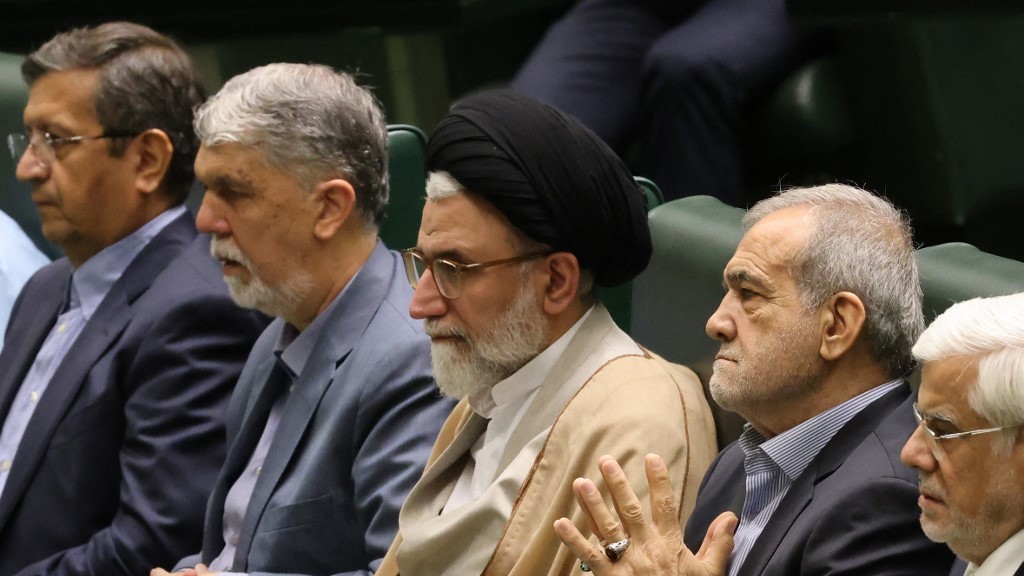
    DUBAI, United Arab Emirates — Iran has initiated a significant diplomatic escalation by summoning European Union ambassadors in Tehran to formally protest the bloc’s recent designation of Iran’s Revolutionary Guard as a terrorist organization. The move comes amid heightened regional tensions and the potential threat of U.S. military action in response to Iran’s crackdown on demonstrators and possible mass executions.

    Iranian Foreign Ministry spokesman Esmail Baghaei confirmed that ambassador summons began Sunday and continued through Monday, characterizing the EU’s decision as “illegal, unreasonable and very wrong.” Baghaei indicated that Iranian authorities are preparing reciprocal measures, with decisions expected in coming days.

    The EU’s designation last week specifically references the Revolutionary Guard’s role in suppressing nationwide protests in January that resulted in thousands of deaths and tens of thousands of detentions. This places the EU alongside the United States and Canada, which had previously classified the paramilitary force as terrorist entities.

    Concurrently, Iran’s parliament speaker declared that Tehran now considers all European Union militaries to be terrorist organizations, invoking a 2019 law that mandates reciprocal responses to such designations.

    The Revolutionary Guard, established during Iran’s 1979 Islamic Revolution as a protector of the clerical government, has evolved into a powerful parallel military force with substantial economic influence. Its expansion into private enterprise followed the Iran-Iraq war under Supreme Leader Ayatollah Ali Khamenei’s authorization.

    Evidence emerging via Starlink satellites and other means indicates the Guard’s Basij force played a central role in the violent suppression of protests, with footage showing armed personnel shooting and beating demonstrators during internet blackouts that isolated Iran’s 85 million citizens.

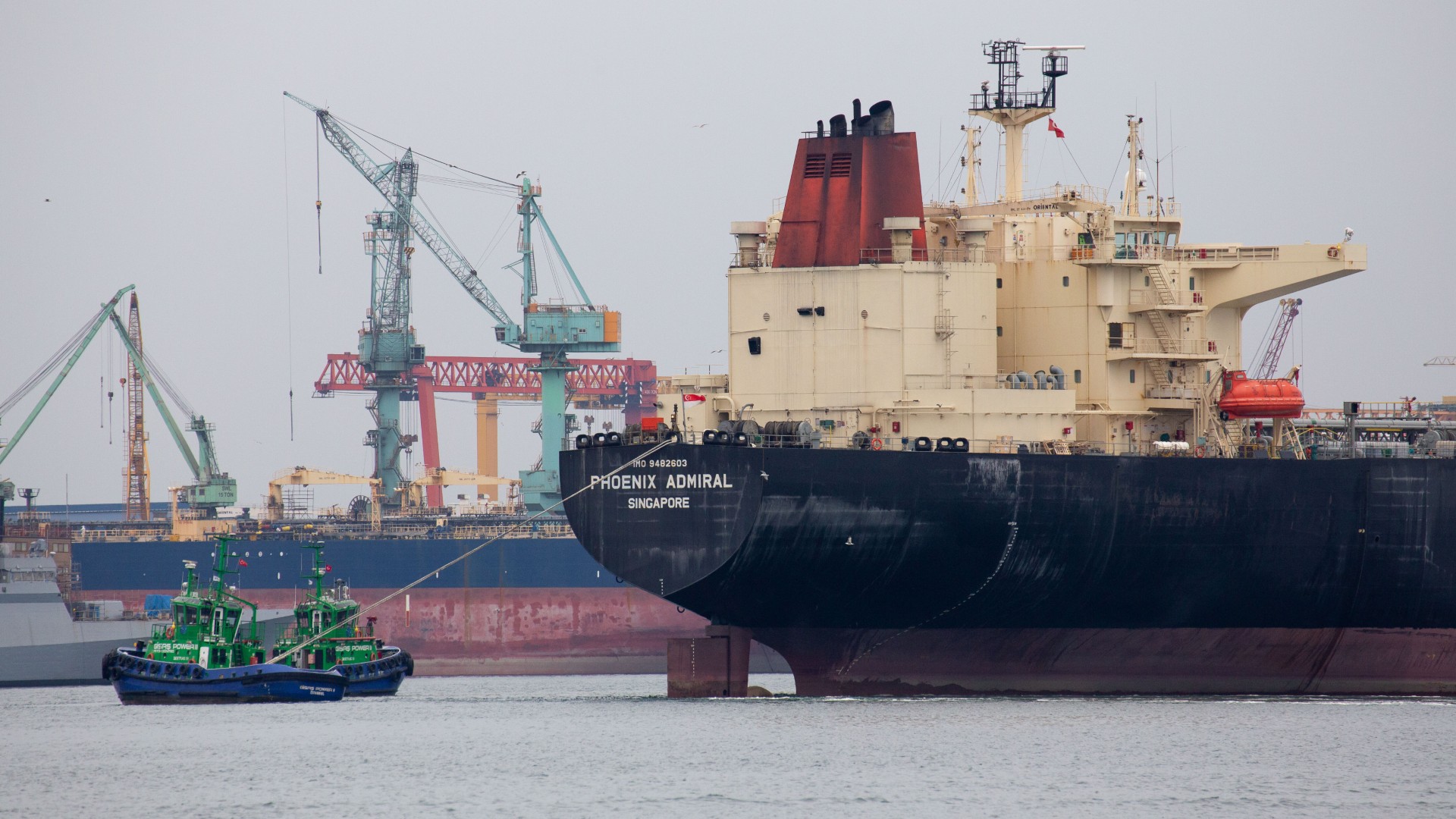
    Meanwhile, the Revolutionary Guard conducted naval exercises in the strategically critical Strait of Hormuz, through which twenty percent of globally traded oil passes. While Iran had notified shipping traffic of the drills, it hasn’t officially acknowledged their execution. The U.S. Central Command issued stern warnings against Iranian harassment of its warships and aircraft or interference with commercial vessel transit through the vital waterway.

  • ‘Executions, torture, abductions, rape’: Ethiopia’s hidden conflict

    ‘Executions, torture, abductions, rape’: Ethiopia’s hidden conflict

    Deep within the forested terrain of Ethiopia’s Oromia region, rebel commander Jaal Marroo maintains a nomadic existence, evading government drones while leading the Oromo Liberation Army (OLA). Designated as a terrorist organization by Ethiopian authorities, the OLA has waged an insurgency since 2018, with both sides accused of committing severe human rights violations against civilians.

    Marroo, in a rare interview from an undisclosed location, refuted government allegations that his fighters target civilians. “Our war is not against the people,” he told The Associated Press. “It is against the brutal regime that has occupied and oppressed the nation for generations. We are fighting to correct a system that treats the Oromo as subjects, rather than citizens.”

    The conflict has created a humanitarian crisis largely obscured from international view due to government restrictions on journalists and rights groups. United Nations investigators and human rights organizations document atrocities committed by both parties, including summary executions, torture, abductions, and sexual violence.

    Amnesty International’s regional spokesperson Sarah Kimani stated: “Our research puts both the OLA and government forces in the middle of the conflict in terms of summary executions, torture, abductions, and rape of women.” The organization plans to publish a comprehensive report on human rights abuses in March.

    Civilians recount harrowing experiences of being targeted by both sides. Ayantu Bulcha, an opposition party member, described how soldiers killed her cousin, father, and uncle in early December after accusing them of supporting rebels. “I can’t even go there to grieve with her,” Bulcha said of her mother. “I am afraid for my own safety.”

    The violence has crippled essential services, with the UN reporting 3.2 million children out of school due to fighting. Humanitarian aid distribution remains severely constrained, contributing to widespread malnutrition. Medical facilities have not been spared—the International Committee of the Red Cross reported in 2023 that nearly all 42 health posts in Oromia’s Begi district had been looted or damaged.

    Although recent government offensives have degraded OLA capabilities, including convincing a key commander to defect, the region remains highly unstable. Beyond the insurgency, criminal enterprises engage in extortion, kidnapping, and robberies, creating a complex security landscape where civilians suffer regardless of affiliation.

    Prime Minister Abiy Ahmed’s Oromo heritage has not resolved longstanding grievances among Ethiopia’s largest ethnic group, who say they remain marginalized in the federal power structure. With movement severely restricted and violence pervasive, residents describe Oromia as fundamentally insecure, caught between multiple armed factions with civilians paying the ultimate price.

  • A mix of hope and fear settles over Venezuela after US-imposed government change

    A mix of hope and fear settles over Venezuela after US-imposed government change

    Venezuela remains suspended in a state of paradoxical temporality following the dramatic capture of former President Nicolás Maduro by U.S. forces thirty days ago. The nation experiences both accelerated political transformation and agonizing stagnation as citizens grapple with profound uncertainty under the acting presidency of Delcy Rodríguez.

    In Caracas, government propaganda demands Maduro’s release while residents question whether Rodríguez exercises genuine autonomy or capitulates to White House directives. The acting president attempts to project authority, insisting Venezuela ‘does not accept orders from any external factor,’ yet her administration has swiftly enacted sweeping reforms previously unthinkable under Chavismo.

    The most significant policy shift came Thursday with the legislative approval of Rodríguez’s energy sector overhaul, effectively abandoning a core tenet of Chavismo by opening state-owned oil resources to privatization. This strategic pivot follows President Trump’s assertion that his administration would control Venezuelan oil exports to revitalize the industry through foreign investment.

    Meanwhile, the political landscape shows tentative signs of transformation. Long-silent opposition figures have begun reemerging, with privately-owned media airing segments featuring opposition leader María Corina Machado for the first time in years. Dozens of citizens maintain vigils outside prisons demanding release of political detainees.

    Despite these developments, pervasive fear persists among the population. Many Venezuelans practice rigorous self-censorship, avoiding political discourse on social media and even during video calls. No large demonstrations demanding governmental change have materialized, and wanted posters of opposition figures remain displayed at official facilities.

    The human dimension of this crisis manifests in personal stories like that of Margaret García, a teacher whose son experienced severe trauma following the January 3rd operation that killed dozens. While condemning the violence, García acknowledges potential economic improvements under Rodríguez’s administration, capturing the complex dichotomy of hope and apprehension defining Venezuela’s current reality.

    As the nation balances between potential economic relief and ongoing political repression, the fundamental question remains whether Rodríguez’s leadership represents genuine change or merely Maduro’s legacy under a different name.

  • UAE leaders offer condolences to Pakistan President over terrorist attacks in Balochistan

    UAE leaders offer condolences to Pakistan President over terrorist attacks in Balochistan

    In a significant diplomatic gesture, the United Arab Emirates’ highest leadership has formally expressed condolences to Pakistan following devastating terrorist attacks in the restive Balochistan province. UAE President Sheikh Mohamed bin Zayed Al Nahyan spearheaded the response by dispatching an official cable to Pakistani President Asif Ali Zardari, conveying profound sympathy for the tragic loss of life and injuries resulting from the coordinated assaults.

    The presidential message emphasized the UAE’s solidarity with Pakistan during this period of national grief while extending heartfelt wishes for the rapid recovery of all individuals injured in the violence. This demonstration of regional solidarity was further reinforced by parallel communications from Sheikh Mohammed bin Rashid Al Maktoum, Vice President and Prime Minister of the UAE and Ruler of Dubai, alongside Sheikh Mansour bin Zayed Al Nahyan, who serves as Vice President, Deputy Prime Minister and Chief of the Presidential Court.

    The coordinated diplomatic response underscores the strategic importance of UAE-Pakistan relations and reflects the Emirates’ consistent foreign policy stance against transnational terrorism. The attacks in Balochistan represent the latest challenge to regional security, with the province having experienced persistent instability due to separatist movements and extremist activities. The UAE’s prompt expression of support signals continued cooperation between the Gulf states and South Asian nations in addressing shared security concerns while promoting regional stability through diplomatic channels.

  • Top US, Israeli generals meet at Pentagon amid soaring Iran tensions

    Top US, Israeli generals meet at Pentagon amid soaring Iran tensions

    In a significant development amid heightened regional tensions, the highest-ranking military officials from the United States and Israel conducted confidential talks at the Pentagon on Friday. The meeting between US General Dan Caine, Chairman of the Joint Chiefs of Staff, and Israeli Armed Forces Chief of Staff Eyal Zamir occurred as Washington substantially enhanced its military footprint across the Middle Eastern theater.

    The previously undisclosed strategic dialogue unfolded against the backdrop of increasingly confrontational rhetoric from the Trump administration toward Iran. President Donald Trump’s repeated threats against Tehran have prompted substantial US military deployments, including the reinforcement of naval assets and the bolstering of regional air defense capabilities throughout the Middle East.

    Meanwhile, Iranian leadership issued a stark warning on Sunday, cautioning that any American offensive action could trigger a broader regional conflict. This diplomatic tension occurs alongside reports of a US military destroyer docking at Israel’s Eilat port, further illustrating the deepening military coordination between Washington and its key Middle Eastern ally.

    The Pentagon meeting represents the latest in a series of coordinated measures between the two nations as the United States attempts to pressure Iran back to negotiation tables through a demonstrated military readiness. Both defense establishments maintain that these preparations serve as precautionary measures while diplomatic channels remain theoretically open.

  • Kennedy Center to close for two years for renovations, Trump says

    Kennedy Center to close for two years for renovations, Trump says

    Washington D.C.’s renowned performing arts venue, now officially designated as the Donald J Trump and John F Kennedy Memorial Center for the Performing Arts, will commence a comprehensive two-year renovation starting July 4th, 2026. President Trump announced the closure via his Truth Social platform, framing the temporary shutdown as coinciding with the nation’s 250th anniversary celebrations.

    The naming modification, ratified by the center’s board in December following substantial personnel changes that installed Trump allies, has generated significant backlash. Multiple performing artists, including celebrated composer Stephen Schwartz (creator of ‘Wicked’) and the dance ensemble Doug Varone and the Dancers, have withdrawn from scheduled engagements in protest of the Trump affiliation.

    Legal challenges have emerged regarding the renaming process. Democratic Representative Joyce Beatty initiated litigation in December contending that Congressional approval is mandated for any name alteration, as the center’s original designation was established through 1964 legislation. The Kennedy family has likewise expressed disapproval, with former Congressman Joe Kennedy III emphasizing the venue’s status as a federally-designated memorial to his assassinated granduncle.

    Despite controversies, the institution recently hosted the premiere screening of a documentary chronicling First Lady Melania Trump. President Trump has secured over $250 million in Congressional funding for the renovation project, which he envisions will transform the facility into ‘the finest performing arts facility of its kind, anywhere in the world.’ The administration promises a grand reopening following the extensive refurbishment period.

  • Three West African juntas have turned to Russia. Now the US wants to engage them

    Three West African juntas have turned to Russia. Now the US wants to engage them

    The United States has initiated a fundamental recalibration of its foreign policy toward three West African nations currently combating Islamist insurgencies. This strategic shift sees Washington prioritizing security cooperation and mineral resource interests over previously emphasized democratic governance principles.

    State Department officials confirmed that Nick Checker, head of the Bureau of African Affairs, will soon visit Bamako to formalize this new approach centered on “respect for Mali’s sovereignty.” The diplomatic mission aims to establish revised relations with Mali and its allies Burkina Faso and Niger, collectively known as the Alliance of Sahel States (AES).

    This policy transformation, increasingly evident since Donald Trump’s return to presidency twelve months ago, represents a dramatic departure from previous administrations. The Biden government had suspended military cooperation following constitutional overthrows that deposed elected civilian leaders in all three nations between 2020-2023.

    The revised American stance explicitly sidelines democracy and human rights concerns that previously dominated diplomatic engagements. Instead, Washington now emphasizes counterterrorism collaboration and economic interests, particularly regarding the region’s substantial mineral resources including gold, lithium, and uranium.

    This recalibration responds to several strategic considerations. Security apprehensions remain paramount as the Sahel region currently accounts for approximately half of global terrorism-related fatalities according to some metrics. Islamic State in the Greater Sahara (ISGS) maintains particularly strong presence in the tri-border area where Mali, Burkina Faso and Niger converge.

    Additionally, the administration seeks to counterbalance Russia’s growing influence. Moscow has deployed approximately 1,000 security contractors across the three nations, establishing itself as their primary defense partner following their rejection of French military cooperation.

    The new American approach will not involve significant troop deployments, aligning with President Trump’s campaign promises to avoid “forever wars.” Instead, support will center on intelligence sharing, potential weapons transfers, and limited training missions rather than reactivating former operational bases like the Agadez drone facility in Niger.

    This policy evolution occurs as regional dynamics continue shifting. The three military governments have withdrawn from ECOWAS, the West African regional bloc, to form their own confederation. This development has enabled remaining ECOWAS members to pursue practical security cooperation without addressing the AES nations’ internal governance standards.