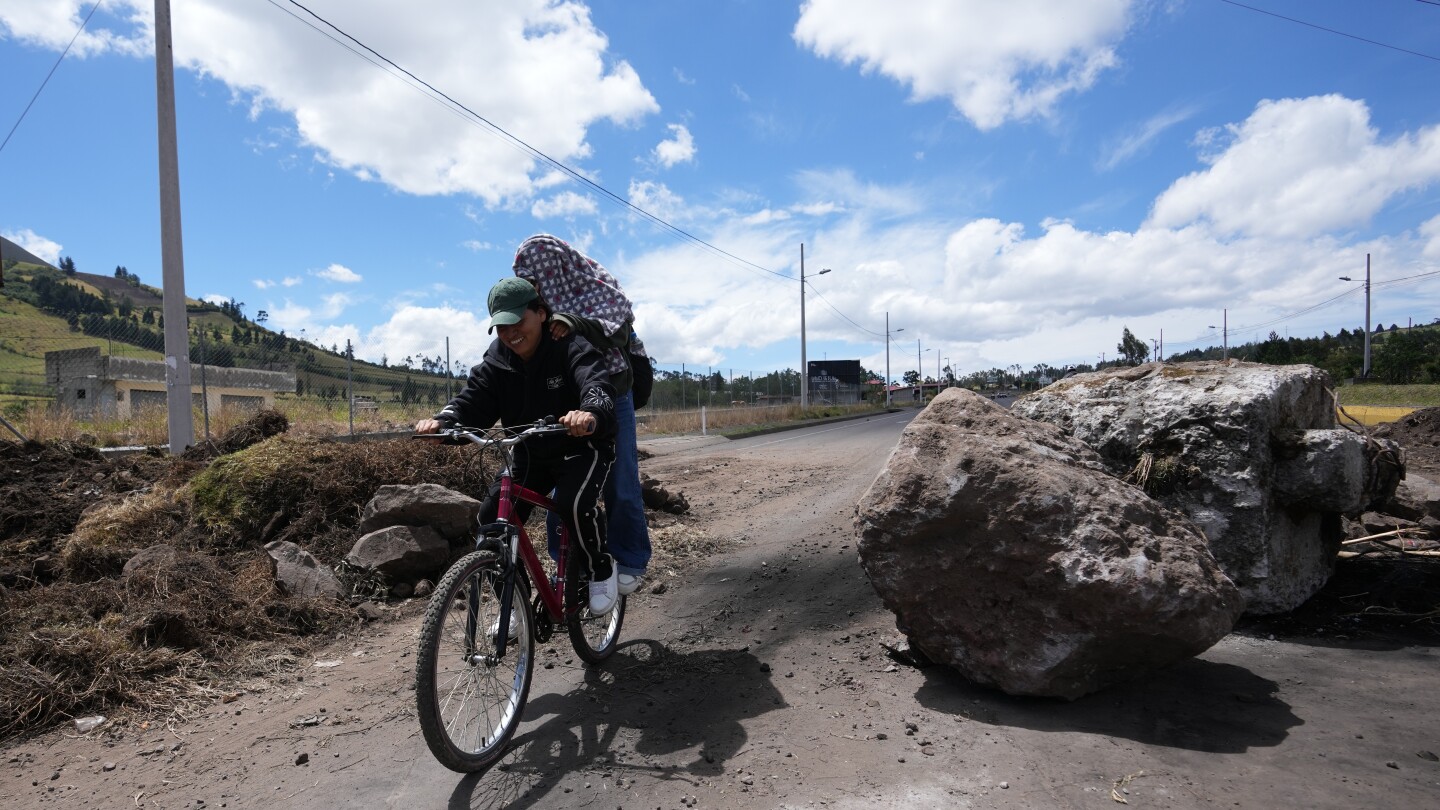
QUITO, Ecuador — The streets of Ecuador’s capital, Quito, became a battleground on Sunday as opposing factions rallied in support of and against President Daniel Noboa. The demonstrations unfolded just hours after the government imposed a state of emergency in 10 provinces, citing “serious internal unrest.” The unrest stems from the removal of a fuel subsidy, which has driven diesel prices up from $1.80 to $2.80 per gallon, sparking widespread outrage among the nation’s largest Indigenous group. The protests, which began two weeks ago, have intensified, with anti-government demonstrators chanting slogans like “Diesel goes up, everything goes up” and “Out with Noboa.” Pro-government supporters, however, outnumbered their counterparts at a popular park in Quito, where tensions escalated. Police intervened with tear gas to disperse protesters attempting to breach security cordons, though no injuries or arrests were reported. The state of emergency, effective from Sunday midnight, restricts freedom of assembly but permits peaceful demonstrations. The Confederation of Indigenous Nationalities of Ecuador condemned the decree, accusing Noboa of waging a “war policy” against legitimate demands and urging international human rights organizations to monitor the situation. The protests also called for the release of detainees, including 13 individuals accused of terrorism. Meanwhile, pro-government activities, such as an art fair in El Arbolito Park, proceeded under heavy police and military protection. Government officials, including Minister Zaida Rovira, emphasized Ecuador’s exhaustion with violence, while President Noboa reaffirmed his stance on the fuel subsidy cut, vowing to treat violent protesters as criminals.
分类: politics
-
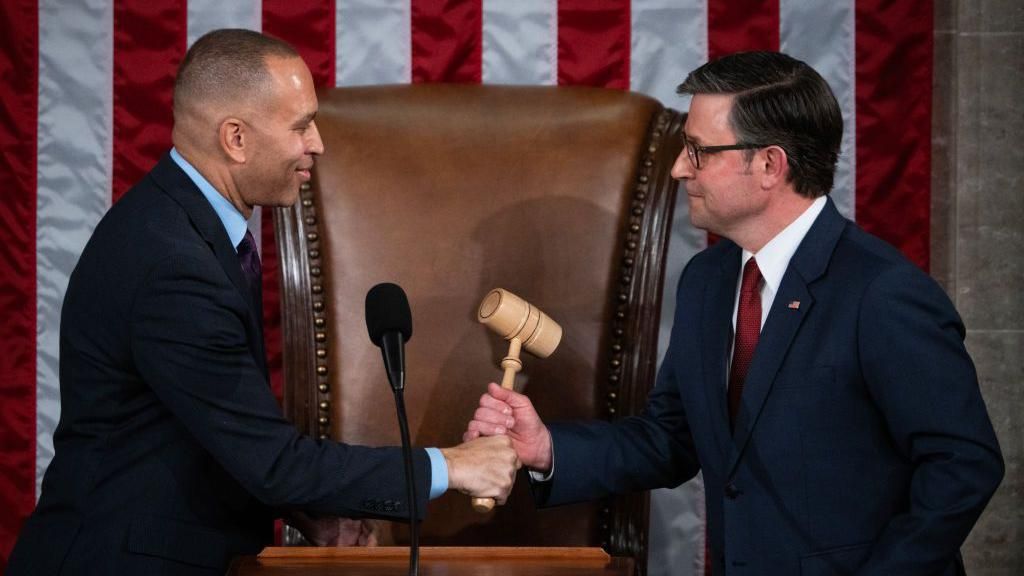
Congress remains deadlocked on shutdown ahead of Monday vote
As the partial shutdown of the U.S. government enters its fifth day, Democratic and Republican leaders remain deeply divided, with healthcare emerging as the central issue. In separate interviews on NBC’s *Meet the Press*, House Democratic Leader Hakeem Jeffries and Republican Leader Mike Johnson each blamed the opposing party for the impasse. Democrats are pushing to preserve health insurance subsidies for low-income individuals and reverse Medicaid cuts, while Republicans argue that such measures are unnecessary and fiscally irresponsible. A funding bill has passed the House but repeatedly stalled in the Senate, where Republicans hold a narrow 53-seat majority but require 60 votes to pass any measure. Jeffries accused Republicans of misrepresenting Democratic intentions to gain political leverage, while Johnson claimed Democrats are negotiating in bad faith. The Senate is set to reconvene Monday to consider continuing resolutions, but the House, now in recess, will not be in session to address any potential Senate-approved changes. Polling data from CBS, in partnership with the BBC, reveals widespread public dissatisfaction with both parties’ handling of the shutdown, with 80% of respondents expressing concern over its economic impact. Meanwhile, the shutdown’s consequences are becoming increasingly tangible, with the National Gallery of Art closing due to funding shortages. President Donald Trump has threatened mass layoffs and cuts to federal agencies, framing the shutdown as an opportunity to eliminate waste. Johnson described the situation as regrettable but urged Senate Majority Leader Chuck Schumer to act decisively to reopen the government.
-
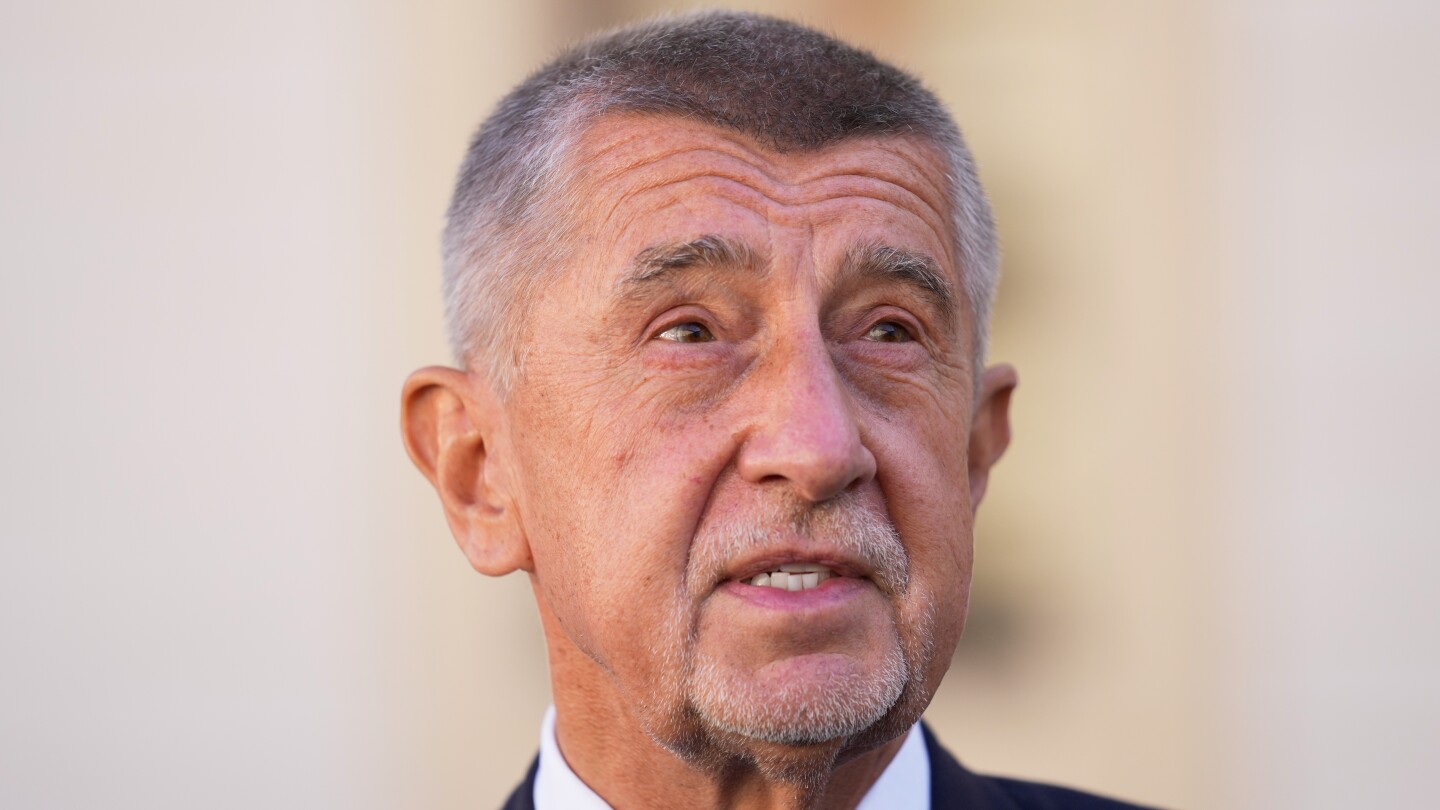
Babiš is back: Billionaire’s return steers Czechia away from Ukraine and toward Hungary and Slovakia
In a dramatic political comeback, billionaire Andrej Babiš and his ANO movement have secured their most significant electoral victory since their inception in 2011. This triumph marks a pivotal moment in Czech politics, as Babiš, often compared to former U.S. President Donald Trump, has reasserted his influence despite earlier setbacks. His populist rhetoric, which blames the ruling coalition for issues ranging from the energy crisis to inflation, resonated deeply with voters. Babiš has pledged to reverse the controversial increase in the state pension age and halt aid to Ukraine, while mocking Prime Minister Petr Fiala for his pro-Ukraine stance. This victory not only solidifies Babiš’s political career but also signals a potential shift in Czechia’s foreign policy, aligning it more closely with pro-Russian nations like Hungary and Slovakia. Babiš has already announced plans to abandon a Czech initiative that supplies artillery shells to Ukraine and opposes NATO’s increased defense spending commitments. Domestically, Babiš faces ongoing legal challenges, including fraud charges related to EU subsidies, and must navigate a fragmented parliament to form a stable government. His return to power raises questions about the future of Czechia’s relationship with the EU and NATO, as well as the stability of its domestic policies.
-
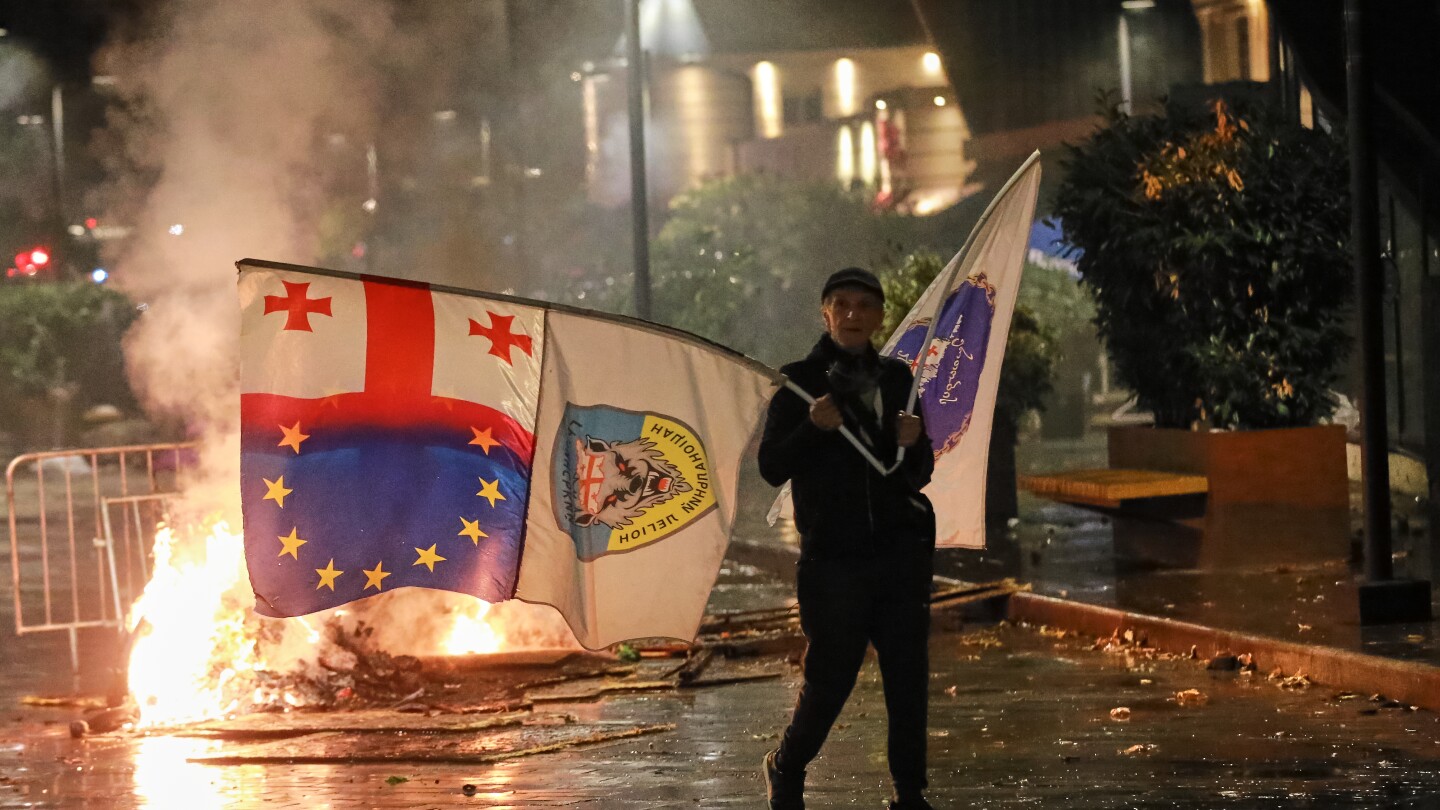
Georgia’s prime minister says protesters want to topple his government and vows a further crackdown
Georgia’s political landscape is in turmoil as Prime Minister Irakli Kobakhidze accused the opposition of attempting to overthrow his government, following a landslide victory by his ruling Georgian Dream party in local elections. The elections, held on Saturday, were boycotted by the two main opposition blocs, who dismissed the process as illegitimate. Tens of thousands of protesters took to the streets of Tbilisi, decrying the government’s repressive policies and its perceived alignment with Moscow. The protests, which have persisted since Georgian Dream halted EU accession talks last November, were met with a heavy-handed response, including the use of water cannons and tear gas by riot police. Kobakhidze, in a press briefing on Sunday, vowed to intensify the crackdown on dissent, labeling the opposition as ‘foreign agents’ and accusing EU officials of meddling in Georgian politics. The EU, however, condemned these allegations, emphasizing the importance of democratic values and urging the release of arbitrarily detained activists. The political unrest has raised concerns about Georgia’s democratic trajectory, with critics pointing to the government’s increasingly authoritarian tactics, including laws targeting demonstrators, NGOs, and independent media. The absence of major international election observers further underscored the contentious nature of the vote, as Georgian Dream’s dominance in the political arena continues to fuel widespread discontent.
-
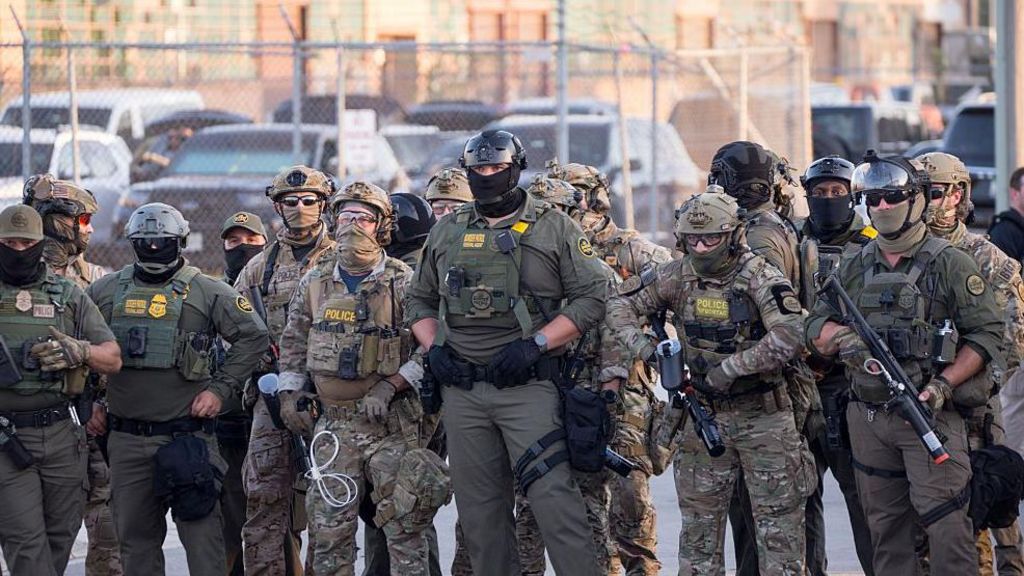
Trump authorises deployment of 300 National Guard troops to Chicago
In a controversial move, President Donald Trump has authorized the deployment of 300 National Guard troops to Chicago, Illinois, citing escalating crime and unrest in the city. This decision follows a tense confrontation between immigration authorities and protesters, during which an armed woman was shot after allegedly ramming her vehicle into law enforcement cars. The incident has further fueled tensions in the Democrat-led city, where protests against immigration enforcement have intensified in recent weeks. Illinois Governor J.B. Pritzker criticized the deployment, accusing Trump of manufacturing a crisis and abusing federal power. The announcement comes on the heels of a federal judge in Portland, Oregon, temporarily blocking a similar deployment of 200 troops, ruling that such actions risk undermining state sovereignty and blurring the lines between civil and military authority. Legal challenges are expected in Chicago as well, though it remains unclear whether any troops have been mobilized yet. The White House defended the decision, emphasizing the need to protect federal officers and assets amidst what it described as lawlessness in American cities. The situation in Chicago mirrors recent deployments in other Democratic strongholds, including Washington, Los Angeles, Memphis, and Portland, all of which have sparked widespread debate over the role of federal military intervention in local affairs.
-
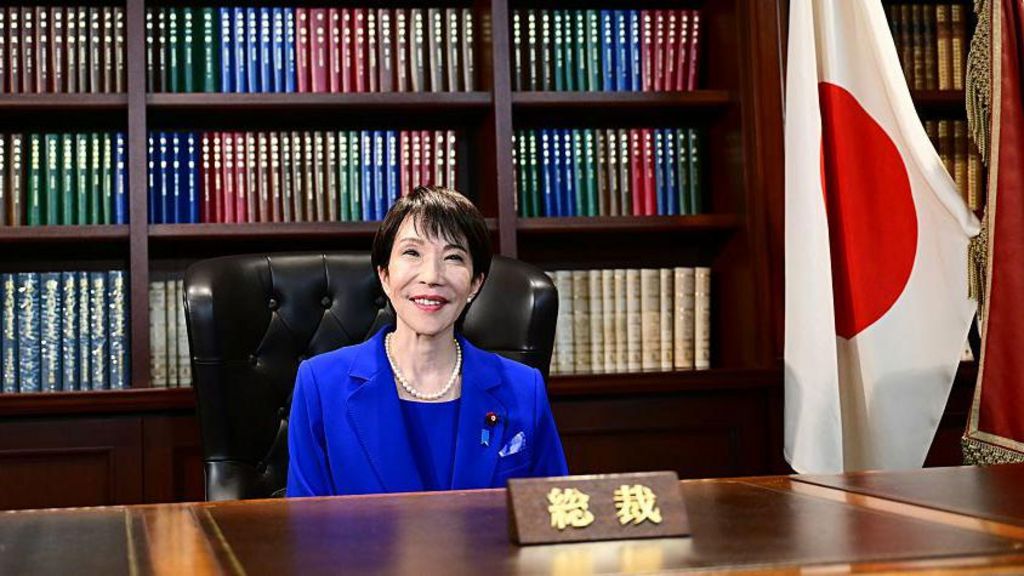
Who is Japan’s ‘Iron Lady’ Sanae Takaichi?
In a historic turn of events, Sanae Takaichi, a 64-year-old veteran politician, has been elected as the leader of Japan’s ruling Liberal Democratic Party (LDP), paving the way for her to become the nation’s first female prime minister. This milestone comes on the 70th anniversary of the LDP, a party that has long dominated Japanese politics but now faces significant challenges, including declining voter trust and a rising far-right movement. Takaichi, a former government minister and TV host, who once drummed in a heavy metal band, has overcome two previous failed attempts to secure the LDP leadership. Her victory marks a pivotal moment for Japan, as she aims to restore the party’s credibility and address pressing national issues. Born in Nara Prefecture in 1961, Takaichi’s journey into politics was unconventional. Her early career included stints as a television host and a heavy metal drummer, where she gained fame for her intense performances. Her political awakening came during the 1980s, amid US-Japan trade tensions, which shaped her determination to defend Japan’s autonomy. After losing her first parliamentary election in 1992, she persisted, eventually winning a seat in 1993 and joining the LDP in 1996. Over the years, she has held multiple senior government roles, including minister for economic security and internal affairs and communications. Takaichi’s conservative stance has been a defining feature of her political career. She has opposed legislation allowing married women to keep their maiden names and same-sex marriage, though she has recently softened her tone on some social issues. Her policy proposals focus on expanding women’s health services, improving childcare support, and addressing Japan’s aging population. A protégé of the late Shinzo Abe, she has pledged to revive his ‘Abenomics’ economic strategy. However, her leadership will be tested as she navigates the LDP’s declining majority and seeks to counter the rise of the far-right Sanseito party. Parliament is expected to confirm her as prime minister on October 15, ushering in a new chapter for Japan.
-
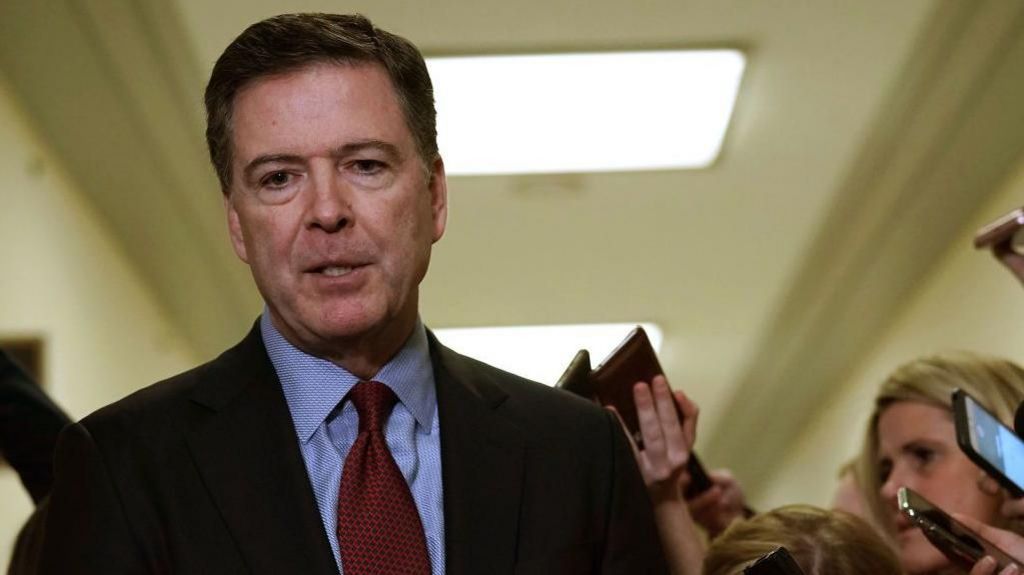
FBI agent suspended over refusal to ‘perp walk’ former director
Former FBI Director James Comey has been indicted on two federal charges in Virginia, just days after former President Donald Trump urged law enforcement to intensify investigations into his political opponents. The charges, which include lying to Congress and obstructing a congressional proceeding, stem from allegations that Comey authorized a leak of classified information to the media in 2020. Comey, who led the FBI during a period marked by investigations into Russian interference in the 2016 election and Hillary Clinton’s use of a private email server, has denied the allegations, expressing confidence in the federal judicial system. The indictment comes shortly before the five-year statute of limitations would have expired and follows Trump’s appointment of Lindsey Halligan, his former personal attorney, as a top prosecutor in the region. Trump has publicly called for investigations into Comey and other political adversaries, emphasizing the urgency of such actions. Meanwhile, an FBI agent was reportedly suspended for refusing to participate in a ‘perp walk’ for Comey, a practice where law enforcement publicly escorts an accused individual, often in view of media cameras. Comey is scheduled to appear in court on October 9 for his arraignment, where the charges will be formally read. If convicted, he could face up to five years in prison. The situation underscores the ongoing political tensions in the U.S., with Comey remaining a focal point of Trump’s ire since his firing in 2017.
-
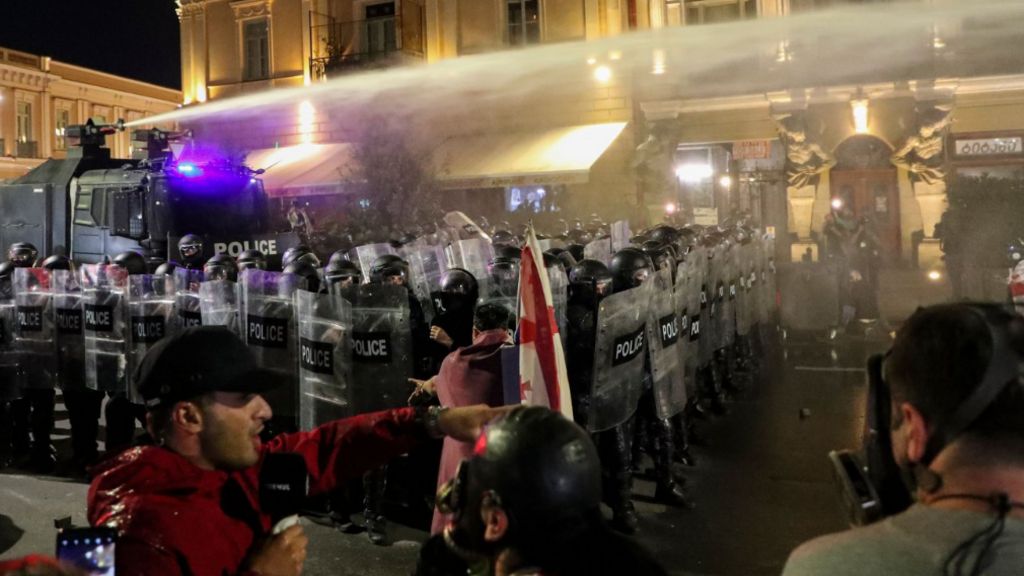
Georgia protesters try to storm Tbilisi presidential palace
Tensions escalated in Tbilisi, Georgia, as anti-government demonstrators clashed with police forces while attempting to storm the presidential palace. Security personnel deployed water cannons and pepper spray to disperse the crowd, marking a dramatic turn in the ongoing political crisis gripping the Caucasus nation. The protest, organized under the banner of ‘saving democracy,’ drew tens of thousands of participants who marched through the capital waving Georgian and European Union flags. The demonstration coincided with local elections, which the opposition largely boycotted in protest against alleged electoral fraud and government repression. Opera singer Paata Burchuladze, a key organizer, read a declaration urging law enforcement to arrest six senior figures from the ruling Georgian Dream party, accusing them of undermining democratic processes. The unrest follows months of government crackdowns on activists, independent media, and opposition leaders, many of whom are now imprisoned. The crisis began after the Georgian Dream party’s contested victory in last year’s parliamentary elections, which the pro-EU opposition claims was rigged. Since then, EU accession talks have been paused, further fueling public discontent.
-
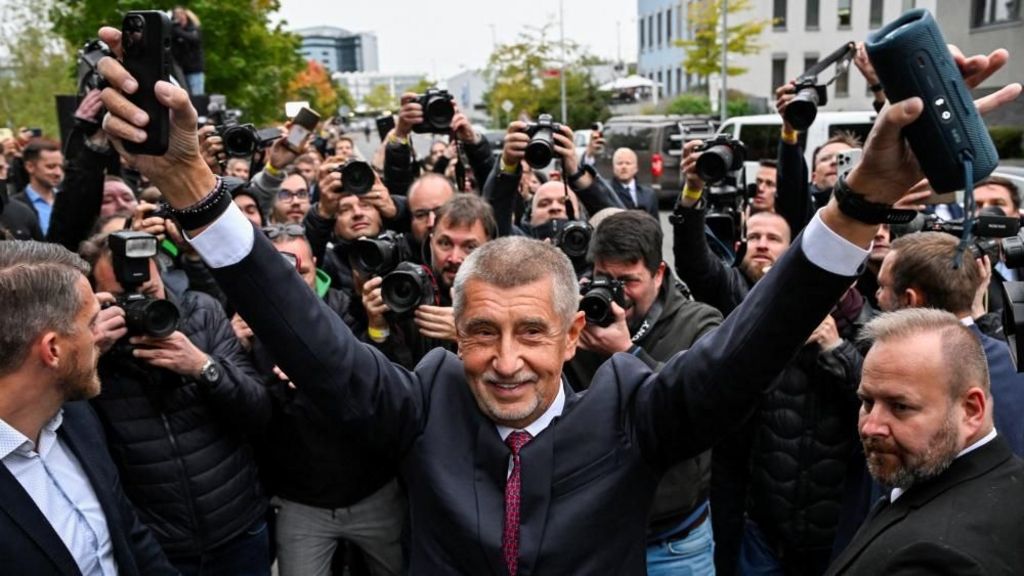
Billionaire populist Andrej Babis’ party wins Czech parliamentary election
Billionaire entrepreneur Andrej Babis has emerged victorious in the Czech Republic’s parliamentary elections, although his populist ANO party failed to secure an outright majority. Preliminary results indicate that ANO garnered just under 35% of the vote, translating to 81 seats in the 200-member lower house. Babis, who previously served as prime minister from 2017 to 2021, is now poised to initiate negotiations to form a new coalition government. While the election outcome aligns with long-standing predictions, it raises significant questions about the future political landscape. Babis is expected to engage in talks with two smaller right-wing, eurosceptic parties that crossed the 5% electoral threshold: the anti-Green Deal Motorists for Themselves and the anti-immigrant Freedom and Direct Democracy (SPD) party, led by Czech-Japanese entrepreneur Tomio Okamura. ANO shares common ground with the Motorists, particularly in their opposition to EU emissions targets and the financial burden of transitioning to cleaner energy. However, forming an alliance with the SPD may prove more challenging due to ideological differences and internal party dynamics. Babis has firmly rejected SPD’s key demands, such as referendums on EU or NATO membership. Despite these hurdles, Babis may opt to lead a minority government supported by the Motorists and SPD, navigating the complexities of coalition politics.
-
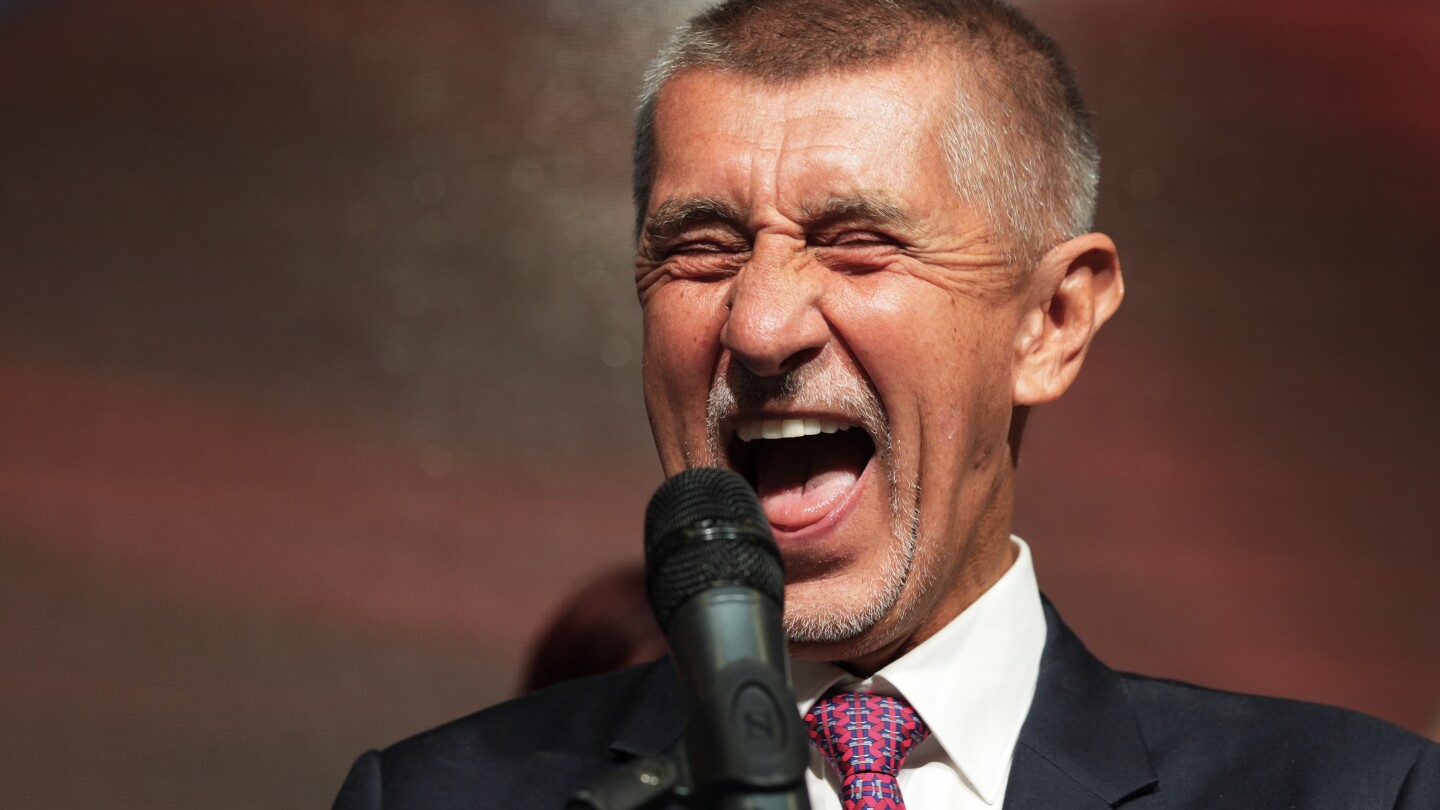
Populist billionaire Andrej Babiš wins Czech parliamentary election, official results show
In a significant political shift, billionaire Andrej Babiš has emerged victorious in the Czech Republic’s parliamentary election, marking a historic comeback for the populist leader. According to nearly complete results released on Saturday, Babiš’ ANO (YES) movement secured 34.7% of the vote, decisively outperforming Prime Minister Petr Fiala’s Together conservative coalition, which garnered 23.2%. This outcome could potentially steer the Czech Republic away from its staunch support for Ukraine and align it more closely with Hungary and Slovakia, both of which have adopted pro-Russian stances. Babiš, jubilant over his best electoral result, described the victory as historic for himself and his ‘catch-all’ political group, which has been a dominant force in national politics since 2013. He pledged to make the Czech Republic the best place to live in the European Union, vowing to take all necessary steps to achieve this goal. The election results position Babiš alongside other Central European populist leaders such as Hungary’s Viktor Orbán and Slovakia’s Robert Fico, both of whom have opposed military aid to Ukraine, continued to import Russian oil, and resisted EU sanctions on Russia. The Czech Republic has been a key supporter of Ukraine since Russia’s full-scale invasion in February 2022, providing arms and backing initiatives to supply artillery shells. However, Babiš has expressed disapproval of these efforts, stating that his party holds a different view. The opposition, led by Babiš, has blamed Fiala for recent challenges, including the energy crisis and soaring inflation, and has promised to revoke pension reforms and reduce support for Ukraine. Fiala conceded defeat, acknowledging the clear result and the need to accept it. The election, which filled 200 seats in the lower house of the Czech parliament, saw Babiš’ ANO movement win 80 seats, while the Freedom and Direct Democracy party secured 15 and the Motorists party 13. Babiš aims to form a one-party government but will likely need the tacit support of the Freedom party and the Motorists to secure a parliamentary confidence vote. The election outcome represents a setback for a coalition of far-left fringe parties, including the pro-Russian Communists, who failed to win any seats. President Petr Pavel is scheduled to meet with Babiš and other party leaders on Sunday to discuss the formation of a new government.