分类: politics

  • US and Iran pause strikes but disagree over next steps on talks

    US and Iran pause strikes but disagree over next steps on talks

    Diplomatic chaos has emerged around potential new negotiations between the United States and Iran this week, after conflicting official statements from both capitals compounded rising tensions that threaten to unravel a fragile interim nuclear and energy deal in the Persian Gulf.

    Both nations confirmed Monday that they will dispatch delegations to Qatar, a key facilitator of the ongoing talks. But Iranian officials flatly rejected the U.S. claim that bilateral talks with Washington are scheduled to kick off Tuesday in Doha, creating deep uncertainty over the future of negotiations meant to de-escalate the regional conflict.

    U.S. President Donald Trump claimed Monday that Iran itself had requested a meeting with American negotiators, confirming the planned Tuesday session in the Qatari capital. White House Press Secretary Karoline Leavitt later told Fox News that U.S. Special Envoy Steve Witkoff and Jared Kushner, Trump’s son-in-law and senior advisor, were already en route to Qatar. Pakistan, another key mediator in the talks, also publicly confirmed that U.S.-Iran negotiations would resume Tuesday.

    However, Iran’s diplomatic team pushed back immediately against these claims. Senior Iranian negotiator Kazem Gharibabadi told Iranian state media that no talks with the U.S. had been confirmed, and Foreign Ministry spokesman Esmail Baghaei emphasized that Iran’s delegation was only traveling to Doha to discuss technical terms of the existing interim agreement, specifically the release of Tehran’s frozen assets, with Qatari mediators. “There are no negotiation meetings with the U.S. side at any level scheduled in the coming days,” Baghaei said. “The fact that U.S. representatives are traveling to Qatar has no connection with the visit of the Iranian delegation.”

    The diplomatic confusion comes on the heels of a sharp escalation of hostilities in the Strait of Hormuz, the critical global energy chokepoint that handles roughly one-fifth of the world’s oil shipments. Since the outbreak of cross-border conflict in late February, Iran’s attacks and threats of force had halted commercial shipping traffic through the strait, triggering a global energy crisis. After four days of tit-for-tat strikes over the weekend that included Iranian attacks on commercial vessels (including a Qatari crude tanker) and drone and missile strikes on Bahrain and Kuwait, both sides appeared to pause offensive operations on Monday. A senior anonymous U.S. official said the White House was operating under the assumption that both sides had stood down and commercial shipping could resume free passage through the waterway.

    The existing fragile interim agreement between Washington and Tehran, reached earlier this month, lays out a 60-day window to negotiate a broader permanent deal. Its terms require Iran to dilute its stockpile of enriched uranium, open the Strait of Hormuz to unimpeded commercial traffic, in exchange for the temporary lifting of U.S. sanctions and the release of billions in frozen Iranian assets held abroad. On Monday, both Iranian President Masoud Pezeshkian and a senior U.S. official confirmed that Qatar is set to release $6 billion in frozen Iranian funds, which will be allocated to purchasing American food and humanitarian goods for the Iranian public. Pezeshkian, a reformist leader within Iran’s theocratic system, called the pending release “a great victory for the Iranian people.”

    In parallel diplomatic developments Monday, multiple other regional initiatives tied to the Gulf crisis unfolded. Omani Foreign Minister Badr Albusaidi announced that Oman and Iran were discussing the possibility of charging service fees for commercial vessels transiting the Strait of Hormuz, covering costs for navigational assistance, pollution prevention, water safety and emergency response. Albusaidi clarified that Oman opposes outright transit fees, which he noted are forbidden under international maritime law, and only supports charges for concrete services provided.

    A separate diplomatic clash also broke out between Iran and France on Monday, after French President Emmanuel Macron announced on social media platform X that Paris and other international partners were coordinating mine-clearing operations in the strait. Gharibabadi, who also serves as Iran’s deputy foreign minister, warned France against “provocations,” noting that the interim agreement clearly assigns sole responsibility for demining the waterway to Iran. The clash came during a Paris meeting between Macron and Omani Sultan Haitham bin Tariq, where the two leaders issued a joint statement calling for “free, unconditional, and unrestricted navigation” in the Strait of Hormuz and announced plans to conduct joint demining operations in coordination with regional stakeholders.

    Further south in the Levant, another regional diplomatic development unfolded Monday: Lebanese President Joseph Aoun told top U.S. Middle East military commander Adm. Brad Cooper that Beirut remains committed to deploying its armed forces along the entire southern border with Israel as part of a new framework agreement signed Friday. The deal, which requires the Iran-backed Hezbollah militant group to disarm before Israel fully withdraws its troops from southern Lebanon, was rejected outright by Hezbollah. The group launched the current Israel-Lebanon conflict in early March when it fired cross-border rockets into northern Israel, and Hezbollah officials have warned that attempts to enforce the disarmament terms could trigger a Lebanese civil war. Under the initial terms of the agreement, Israel will first withdraw from small “pilot zones” where the Lebanese army will deploy, though no details have been released on how the process will work in practice.

    Reporting from Washington, with additional contributions from Associated Press journalists across Tehran, Beirut, Paris and Savannah, the developing situation remains fluid as mediators work to salvage the talks and prevent a full resumption of hostilities across the Middle East.

  • Indian journalists condemn ‘denial’ of voting and passport rights of prominent editor

    Indian journalists condemn ‘denial’ of voting and passport rights of prominent editor

    A high-profile controversy has erupted in India over a national electoral roll revision exercise that has stripped a veteran former newspaper editor of his voting rights and blocked his passport renewal, drawing sharp condemnation from the country’s leading organization of editors and sparking widespread outrage across political and media circles.

    R Rajagopal, who served as editor of the widely read Kolkata-based daily *The Telegraph* from 2016 to 2023, is one of millions of voters affected by the Election Commission of India’s (ECI) Special Intensive Revision (SIR), a nationwide effort launched to remove ineligible entries from voter registries. The exercise, which kicked off in November 2025 across 12 Indian states and union territories, has already resulted in roughly 60 million names being struck from electoral rolls, with nearly 9 million of those deletions coming from Rajagopal’s home state of West Bengal alone. A second phase of the revision is currently ongoing in 16 additional states and three union territories.

    In a personal account published by Indian news outlet *The Wire*, Rajagopal detailed that despite being a registered voter in Kolkata’s Ballygunge constituency since 2010 and residing in the area for over 25 years, his name was removed from the roll during the SIR process. The revision cross-references all current voter records against the 2002 national electoral roll—the last time a nationwide update of this scale was conducted—and Rajagopal’s entry was cut because neither his nor his father’s name appeared in the 2002 rolls. Even after submitting his matriculation certificate as proof of residency and identity to dispute the deletion, he says he received no formal explanation for the exclusion, and his appeal remains pending before a special tribunal established per Supreme Court guidelines.

    The fallout from the deletion extended far beyond losing his voting right: Rajagopal revealed that regional authorities have halted the police verification required for his passport renewal, explicitly citing his removal from the electoral roll as the reason. The veteran editor noted he has been unable to find any official regulation that lists a valid voter ID as a mandatory requirement for passport renewal, leaving his application in limbo with no clear timeline for resolution.

    The Editors Guild of India, the country’s leading journalists’ advocacy body, issued a formal statement on Sunday condemning the incident and using Rajagopal’s case to highlight broader flaws in the SIR process. “If an influential public figure like Rajagopal could be stripped of his voting rights, the plight of ordinary Indians was likely to be far worse,” the organization said, adding that the case exposes the unnecessary hardship the SIR has imposed on millions of eligible voters across the country.

    Critics of the electoral revision have long argued that the ECI’s process has wrongly disenfranchised millions of valid, eligible Indian voters—a claim the commission has repeatedly rejected. The ECI has not issued any public response to the specific allegations raised by Rajagopal, and representatives from the ECI have not yet responded to requests for comment from the BBC.

    Rajagopal’s case has quickly gone viral on Indian social media, drawing widespread expressions of solidarity from journalists, opposition politicians, and public figures. Veteran journalist Rajdeep Sardesai wrote on X that he stood in full solidarity with Rajagopal, noting “Scary part is this could happen to anyone!” Congress party spokesperson Supriya Shrinate claimed that Rajagopal was targeted as retaliation for his independent journalism and his work demanding accountability from the government. MA Baby, General Secretary of the Communist Party of India (Marxist), added that his party had long warned the SIR process would disenfranchise poor and marginalized communities, saying “But now, even an editor of repute and an acclaimed journalist like R Rajagopal has been denied his right to vote.” Rajagopal himself echoed that sentiment, noting that if a well-known professional journalist can face these barriers, the situation for ordinary marginalized voters must be far more dire. Thousands of affected voters, Rajagopal included, have already filed legal appeals to challenge their removal from the West Bengal electoral rolls.

  • Top South African police officer survives assassination attempt

    Top South African police officer survives assassination attempt

    A high-ranking South African law enforcement official has escaped death in a targeted shooting in Johannesburg, just days before he was scheduled to give evidence under oath at a public commission examining widespread criminal infiltration of the national police service.

    Major-General Feroz Khan, Deputy Head of South Africa’s Crime Intelligence Division, was ambushed and shot multiple times while driving to his residence on Sunday evening, according to local media reports. He was immediately rushed to a nearby medical facility where he underwent urgent emergency surgery, as of Monday his current condition has not been updated by official authorities.

    The timing of the attack has sparked immediate public speculation, as Khan was expected to testify before the Madlanga Commission, a public inquiry established to probe systemic criminality and corruption within South Africa’s police force. The commission was convened last year after Lieutenant-General Nhlanhla Mkhwanazi, another senior police leader, publicly alleged that transnational organised crime syndicates had successfully infiltrated key levels of the South African government and law enforcement apparatus.

    In an official statement released to the public on Monday, South African Police Service (SAPS) spokesperson Brigadier Athlenda Mathe confirmed that a full investigation into the attempted assassination is already underway. Mathe cautioned against premature conclusions regarding the motive for the attack, noting that it would be irresponsible to link the shooting to Khan’s upcoming appearance at the corruption inquiry at this early stage of the investigation.

    The attack comes amid growing public concern in South Africa over the links between organised crime, corruption, and state institutions, with the Madlanga Commission tasked with uncovering the full extent of criminal penetration of the national police force. No suspects have yet been named or arrested in connection with Sunday’s shooting.

  • A long-awaited Australia-Vanuatu pact blocks China from building a military base

    A long-awaited Australia-Vanuatu pact blocks China from building a military base

    CANBERRA, Australia – In a long-anticipated step that reshapes regional security dynamics in the South Pacific, Australian Prime Minister Anthony Albanese and Vanuatuan counterpart Jotham Napat have formalized the bilateral Nakamal Agreement, a sweeping security and economic partnership designed to block any third-party nation from establishing a permanent military foothold on Vanuatuan soil. The signing on Monday comes nine months after the Vanuatuan government walked away from an earlier draft of the treaty, raising questions about Canberra’s push to counter growing Chinese influence across the Pacific region.

    Vanuatu’s initial rejection of the 2023 draft stemmed from widespread domestic concerns that the original text would overly restrict the island nation’s ability to court global infrastructure investment, leaving it overly dependent on Australia. Key concessions in the revised version addressed these concerns: unlike the first proposal, Australia does not hold an official veto over third-party engagement in Vanuatu’s critical infrastructure, though the agreement requires Vanuatu to hold formal consultations with Canberra before moving forward with major third-party projects in strategic sectors.

    The core terms of the finalized accord remain clear: Vanuatu has formally committed to bar all foreign military bases or military-focused infrastructure on its territory, and pledged to protect its critical national infrastructure from foreign militarization, interference, or unauthorized access. In addition, the treaty outlines that when responding to large-scale natural disasters – a frequent risk for low-lying Pacific island nations – Vanuatu will prioritize coordination and support from Australia, New Zealand, and France. Vanuatu has also agreed to prioritize policing cooperation with members of the Pacific Islands Forum, a 18-member bloc of regional nations and territories that includes Australia, though the agreement does not ban existing engagement with Chinese police personnel. China has never maintained a permanent police presence in Vanuatu, which has a total population of roughly 350,000, but Chinese officers make regular visits to the country.

    In remarks to reporters following the signing, Albanese emphasized that the new agreement codifies Australia’s long-standing position as Vanuatu’s largest and most comprehensive partner across economic, security, and development cooperation. “This agreement reflects and confirms Australia’s role as Vanuatu’s largest and most comprehensive economic, security and development partner, a responsibility that we take seriously,” Albanese said.

    Napat echoed the framing of the partnership as a mutual, respect-driven alliance, noting “this pact reaffirms our shared commitment to continuing and strengthening the comprehensive partnership between our two countries, founded on mutual respect, trust and our common vision for a peaceful, stable and prosperous Pacific.”

    The Nakamal Agreement is just one of several regional security deals Australia has pursued or negotiated with Pacific neighbors in recent years, part of a broader strategy to limit expanding Chinese security influence in the strategically vital South Pacific. The original draft proposal offered Vanuatu 500 million Australian dollars (equivalent to roughly $344 million USD) in funding over 10 years, but Albanese confirmed that full details of the revised agreement’s funding commitments will not be released to the public until December.

    In a notable disclosure during Monday’s proceedings, Napat confirmed that Vanuatu continues to negotiate a separate broad cooperation agreement with China, dubbed the Namele Agreement, which he has previously characterized as a purely development-focused deal, not a security pact. Napat noted that the text of the Namele Agreement will be made public once it receives formal approval from Beijing, adding that the Vanuatuan government has nothing to hide regarding its diplomatic and economic engagements. “Currently, it’s not yet signed. We will share the (Namele) agreement. There is nothing to hide. Our government is transparent and I am so grateful that the Prime Minister (Albanese) has also given me the clearance to share with them (China) the Nakamal Agreement,” Napat said. Vanuatu has already received hundreds of millions in Chinese loans and development aid for public infrastructure projects, including government buildings, port wharves, and other key assets.

    The path to Monday’s signing has been fraught: last September, Albanese was notified just hours before he was scheduled to fly to Vanuatu for the signing of the original draft that the Vanuatuan cabinet had rejected the proposal, in a move that embarrassed the Australian government and drew global attention to competing great power interests in the Pacific.

  • China imposes export controls on 40 Japanese entities as tensions with Tokyo rise

    China imposes export controls on 40 Japanese entities as tensions with Tokyo rise

    Escalating long-simmering geopolitical tensions between Beijing and Tokyo, China announced new sweeping export restrictions on Monday targeting 40 Japanese entities that Beijing accuses of enabling Japan’s accelerating military buildup. According to an official statement released by China’s Ministry of Commerce, 20 Japanese firms — including multiple business divisions of the major Japanese conglomerate Mitsubishi Corporation — have been added to a formal control list. This designation bars both Chinese and foreign-based exporters from selling China-manufactured dual-use goods, products that have both civilian and potential military applications, to the listed entities.

    A further 20 Japanese organizations have been placed on a watch list for dual-use trade, the ministry confirmed. Notable entities on this secondary monitoring list include Mitsui E&S, a manufacturer of marine engines and key shipboard equipment, alongside selected divisions of technology giant Fujitsu and construction equipment producer Komatsu. For Chinese exporters seeking to conduct business with watch-listed firms, strict new regulatory requirements are now in place: exporters must obtain specialized government licenses, submit detailed third-party risk assessments of the Japanese entities, and file formal written guarantees confirming that the exported dual-use items will not be diverted to military end-uses.

    In its official statement, the Ministry of Commerce emphasized that the new measures are fully justified, procedurally reasonable, and compliant with both domestic Chinese law and international trade norms. The policy is explicitly framed as a targeted deterrent against what Beijing calls Japan’s “reckless push for new militarism.” The statement went on to urge Japanese leadership to acknowledge its policy missteps, reverse its current confrontational trajectory, pursue genuine reflection on historical actions, and return diplomatic and security relations to a cooperative path.

    The rift between the two Asian powers has widened sharply over the past year, after Japanese Prime Minister Sanae Takaichi’s administration suggested Japan could intervene militarily if China attempted to seize Taiwan by force. China claims the self-governing island democracy of Taiwan as an inalienable part of its sovereign territory, and has increased military pressure on the island in recent years.

    Beyond the Taiwan issue, Takaichi’s government has moved aggressively to expand Japan’s military offensive capabilities. Recent policy shifts include lifting longstanding restrictions on lethal weapons exports, deploying extended-range missiles to remote Japanese island outposts, and plans to revise national defense and security policy documents by December, a move that is widely expected to unlock further increases to Japan’s already growing defense budget. Just on Monday, Japan’s Ground Self-Defense Force confirmed it had deployed a Type-12 surface-to-surface missile launcher to Minamitorishima, Japan’s southernmost remote Pacific island, a move widely interpreted as a direct response to increased Chinese military and maritime activity in the Western Pacific.

    This round of export controls marks the second major trade action China has taken against Japanese entities this year. Back in February, Beijing added an identical 20 firms to its export control list and another 20 to the watch list. According to Monday’s statement, Japan has failed to course-correct following the February restrictions, instead doubling down on what Beijing calls its “wrong path” by accelerating remilitarization, deploying offensive weapons systems, and conducting missile test launches.

    Tensions have flared further in recent weeks over maritime claims in waters east of Taiwan. Earlier this month, the China Coast Guard conducted organized patrols in the region, which Chinese state media framed as a “pointed warning” to both Japan and the Philippines after the two nations announced plans to hold bilateral talks on overlapping maritime claims in waters Beijing asserts as its own. In an uncommon display of coordinated diplomatic pushback, the United Kingdom, Germany, and France released a joint statement last week condemning Chinese maritime activity east of Taiwan and reaffirming their opposition to any unilateral change to the cross-strait status quo between Beijing and Taipei.

    Reporting contributions for this article were provided by Mari Yamaguchi in Tokyo.

  • Australia to double potential fines for Facebook and Instagram over child social media accounts

    Australia to double potential fines for Facebook and Instagram over child social media accounts

    CANBERRA, Australia — More than six months after Australia implemented its landmark world-first ban on social media use by children under 16, the federal government is moving to double maximum penalties for non-compliant platforms after widespread failures to block underage users, a development that is being closely watched by governments around the globe considering similar age restrictions.

    Communications Minister Anika Wells confirmed Sunday that the government will table draft amendment legislation in national parliament this week, which would lift the top fine for platforms that fail to take reasonable steps to block under-16 accounts from AU$49.5 million to AU$99 million (equivalent to US$68 million). Major platforms targeted by the original law include Meta-owned Facebook and Instagram, which have been the focus of ongoing criticism over weak enforcement.

    Speaking to Australian Broadcasting Corp. on Monday, Wells blamed deliberate intransigence from Big Tech for the need to strengthen the regulation that came into full effect on December 10 last year. “We can all agree we would like the scheme to work better than it is currently, but that is on Big Tech taking the Mickey,” Wells said, deploying the common Australian colloquialism for bad faith and deceptive conduct.

    Alongside steeper penalties, the proposed amendments would grant expanded regulatory authority to Julie Inman Grant, Australia’s eSafety Commissioner — the national body tasked with overseeing compliance with the ban. The new powers would allow Inman Grant’s office to compel relevant information and documentation from platforms, as well as from third-party stakeholders such as age verification technology providers. This access will allow regulators to independently verify platforms’ own claims about enforcement efforts, and shed light on the persistent gaps that allow under-16 users to circumvent age restrictions.

    The push for tougher rules comes after official data revealed deep failures in the initial phase of the ban. The federal government initially reported that more than 5 million underage accounts had been removed, deactivated, or restricted shortly after the ban entered into force. But a March progress report from eSafety found that 70% of children who held accounts on major platforms on December 10 still retained access to those accounts on leading services including Facebook, Instagram, Snapchat and TikTok.

    Inman Grant publicly revealed in April that her office was actively considering court action against the underperforming platforms alongside YouTube, over allegations that they had not fulfilled their legal obligation to take reasonable steps to exclude underage users. The commissioner has already publicly acknowledged satisfactory progress from a smaller group of other platforms covered by the ban, including X (formerly Twitter), Kick, Reddit, Threads and Twitch.

    Wells noted that monthly compliance updates from eSafety since March have shown no meaningful improvement in enforcement from the major platforms, prompting the legislative overhaul. “These changes ensure that the eSafety Commissioner has the tools and powers she needs to hold platforms to account and we’re making sure that she can do just that,” Wells added.

    The amendment has already garnered early cross-party support. Senior opposition lawmaker Jane Hume announced that the center-right coalition would review the proposal with an openness to supporting it, noting that the original 2024 legislation was flawed from the start. Hume argued that the initial law failed to grant the eSafety Commissioner sufficient authority to hold major tech companies accountable, resulting in the stalled implementation. “The legislation was clearly undercooked in the first place,” Hume said.

    The original under-16 social media ban passed parliament with overwhelming bipartisan support in 2024, giving targeted platforms more than 12 months to prepare and roll out enforcement measures ahead of the law’s entry into force. As one of the first national mandatory bans on underage social media use in the world, Australia’s regulatory experiment is being closely monitored by dozens of other countries that have either implemented or are planning similar age restrictions to protect minor children online.

  • A rights group warns Vietnam is ramping up arrests under broad laws to crush dissent

    A rights group warns Vietnam is ramping up arrests under broad laws to crush dissent

    BANGKOK – A new analysis from a prominent international human rights organization has uncovered a sharp, multi-year rise in politically motivated arrests in Vietnam, where authorities are leveraging broadly worded national legislation to target activists, dissidents, and ordinary critics seen as challenging the ruling Communist Party’s authority.

    Released Monday by The 88 Project, a group that monitors human rights conditions across Vietnam, the report documents 56 confirmed name-verifiable, trackable arrests for political reasons in 2025. This figure marks the third consecutive annual increase, and is exactly double the total number of confirmed political arrests recorded by the group in 2022. Ben Swanton, co-director of The 88 Project, emphasized that the actual number of politically motivated detentions is almost certainly far higher, as the report only includes cases where defendants can be publicly identified and legal proceedings can be tracked independently.

    The report centers its criticism on the administration of Vietnam’s new top leader To Lam, a former national security chief who assumed the role of General Secretary of the Communist Party in 2024 and was elected to the country’s presidency earlier this year. Under To Lam’s leadership, the report concludes, Vietnamese authorities systematically “weaponize criminal law” to eliminate all forms of public dissent.

    The core driver behind this expanding crackdown, the report notes, is the ruling party’s deep-seated fear of mass pro-democracy uprisings labeled “color revolutions” — such as the 2004 Orange Revolution in Ukraine and the 1986 People Power Revolution in the Philippines, often referred to as the Yellow Revolution. This anxiety is shared by the Communist Party of China, which has faced widespread international criticism for deploying identical legal tactics to suppress political opposition and critical speech. Despite periodic bilateral tensions over competing maritime claims in the South China Sea, the two communist governments reached an agreement earlier this year to jointly “prioritize political security and enhance efforts to prevent and resist color revolutions,” according to state-run Chinese news outlet Xinhua News Agency.

    Swanton argued that To Lam’s rise to power has transformed Vietnam into an outright police state that refuses to tolerate any form of public disagreement. “This represents a serious regression from the period of relative openness in the 2010s when some dissent was tolerated and civil society groups were able to engage in policy activism,” Swanton added.

    Vietnam’s Foreign Ministry has not issued any response to multiple requests for comment on the report’s findings.

    The 88 Project’s analysis highlights that Vietnamese authorities increasingly rely on Article 331 of the country’s penal code, a vaguely worded provision that criminalizes “abusing democratic freedoms to infringe upon the interests of the state” and carries a maximum penalty of seven years’ imprisonment. Once a rarely enforced statute, Article 331 has been expanded in both scope and application in recent years, extending far beyond high-profile democracy and human rights activists to target any person who voices criticism of national or local party and government officials, according to a 2024 report from New York-based Human Rights Watch.

    “The Vietnamese authorities’ increased use of Article 331 is a little known facet of the government’s expanding crackdown on ordinary people who are seeking to use social media and other peaceful means to publicly raise important social issues, including religious freedom, land rights, rights of Indigenous people, and government and Communist Party corruption,” Human Rights Watch found last year.

    Among the 2025 arrests prosecuted under Article 331 documented by The 88 Project are three administrators of the popular YouTube channel “Nguoi Da Tin — The Messenger,” who were detained on allegations that their uploaded content constituted “distorted content” in violation of the penal code.

    The report includes detailed case notes for every confirmed politically motivated arrest in 2025. Other notable cases include a Montagnard ethnic minority activist who was arrested in Thailand and extradited back to Vietnam to face charges, a dissident writer accused of spreading “propaganda against the state,” and a local man who assisted residents of Ha Tinh province in filing formal complaints demanding fair compensation for land seized for the construction of a new highway.

    “The Vietnamese government has dealt alarmingly severe punishments to longstanding targets like journalists and human rights activists, while displaying an increasing willingness to attack groups previously thought safe, such as political exiles and legal petitioners,” the report concluded.

  • Iraq arrests 47 officials in anti-corruption crackdown

    Iraq arrests 47 officials in anti-corruption crackdown

    In a landmark first major crackdown on deep-rooted graft, Iraqi security forces have detained 47 current and former officials – including sitting lawmakers and senior oil ministry leaders – in a nationwide overnight anti-corruption operation spearheaded by newly appointed Prime Minister Ali al-Zaidi, Iraq’s official state news agency INA confirmed Sunday.

    Senior Iraqi officials confirmed to INA that all suspects are being held on formal corruption charges, following months of coordinated, rigorous monitoring by the country’s Commission of Integrity. The operation stretched across multiple Iraqi provinces, with the most high-profile raids carried out in central Baghdad. Security teams also executed search and arrest warrants in Baghdad’s heavily fortified Green Zone, the secure diplomatic and government compound that hosts Iraq’s national ministries, foreign embassies and luxury commercial hotels, according to regional broadcaster Rudaw.

    Beyond current public servants, the sweep also targeted former government officials, sitting members of parliament and private sector business leaders allegedly tied to corrupt public contracting and graft schemes, the Commission of Integrity confirmed in a statement released after the operation.

    Zaidi, a private sector entrepreneur with limited prior formal political experience, was tapped by Iraq’s majority Coordination Framework to form a new national governing administration back in April. From the launch of his premiership, cracking down on systemic corruption has been framed as his administration’s top domestic priority. Systemic graft has plagued Iraqi public institutions for decades, with every successive Iraqi prime minister since the 2003 political transition vowing to eliminate the practice, though none have succeeded in enacting meaningful, lasting reform.

    Global anti-corruption watchdog Transparency International consistently ranks Iraq among the world’s most corrupt nations. On the organization’s most recent Corruption Perceptions Index, Iraq placed 136th out of 180 evaluated countries, reflecting deep, pervasive institutional graft that has drained public resources, eroded public trust in government and stunted the country’s economic development despite its vast oil reserves.

  • Rights groups criticise Turkey protest ban ahead of Nato summit

    Rights groups criticise Turkey protest ban ahead of Nato summit

    As the 32-nation NATO alliance prepares to convene its upcoming summit in Ankara this July 7–8, sweeping pre-event security measures implemented by Turkish authorities have drawn fierce international condemnation from human rights and press freedom advocates.

    Last week, the Ankara Governorate unveiled a 13-day province-wide prohibition on all public gatherings, set to begin Sunday. Officials justified the broad restriction by citing the need for enhanced national security and protective measures surrounding the high-stakes leadership conference. The ban has been accompanied by a large-scale law enforcement crackdown that has resulted in the detention of hundreds of people across Turkey.

    Turkish authorities confirm that 225 individuals have been taken into custody, with the government identifying many detainees as alleged affiliates of two groups: the leftist Revolutionary People’s Liberation Party/Front (DHKP/C) and the Islamic State. However, the detainee pool also includes a number of prominent Turkish civil society figures unaffiliated with any militant organization. Among those held are academic Emel Memis, LGBTQ rights activist and journalist Yildiz Tar, Nevzat Ozer, a representative from leading environmental NGO the Tema Foundation, Burcu Arikan, spokesperson for the independent labor union Umut-Sen, and Semra Demir and Kursat Bafra, two attorneys with the Progressive Lawyers Association. State-run Anadolu Agency confirmed that 178 of the detained suspects have been formally arrested, while the remaining 34 have been released conditional to judicial supervision.

    Global human rights watchdog Amnesty International has issued a scathing rebuke of the measures, framing the protest ban and mass arrests as an unjustifiable assault on foundational rights to peaceful assembly and free expression. “All the excessively broad and disproportionate restrictions that prevent the exercise of the right to peaceful assembly must be lifted,” stated Esther Major, Amnesty International’s deputy research director for Europe. Major also called out a separate, parallel restriction on press freedom: NATO’s decision to deny press accreditation to dozens of Turkish journalists, including reporters from leading independent Turkish outlets such as Cumhuriyet, Sozcu, Anka, T24 and Medyascope. Major described the accreditation denial as a direct blow to media freedom, urging the alliance to reverse its decision and allow excluded journalists to cover the summit.

    The upcoming summit marks a landmark gathering for the alliance, bringing together heads of state from all 32 member states, including U.S. President Donald Trump. Turkey has held NATO membership since 1952, and currently boasts the alliance’s second-largest standing land army. For decades, the country’s NATO membership has faced criticism from Turkish leftist groups and some Islamist factions, who argue the alliance has locked Turkey into U.S. geopolitical dominance and suppressed domestic socialist and anti-imperialist movements. Public anger over the summit has intensified in recent months, fueled by widespread opposition to U.S. support for Israel’s military campaign in Gaza and recent U.S. strikes on Iran, leaving the Turkish government eager to prevent large-scale public demonstrations during the leaders’ meeting.

    Following the accreditation denial, a coalition of global and Turkish press freedom organizations released a joint statement last Friday condemning NATO’s decision. The statement highlighted a striking contradiction at the heart of the rejection: NATO’s own accreditation criteria list editorial independence as a core eligibility requirement, making it deeply inconsistent that the alliance would reject applications from outlets that are explicitly defined by that standard of independence. “Should a governmental institution with a documented track record of restricting press access have played any role in this process, NATO risks allowing domestic media pressures to influence what should be an independent credentialing framework,” the joint statement added.

    Outlets that do not meet accreditation requirements in the upcoming NATO Summit. Middle East Eye, which first reported on the unfolding controversy, reached out to NATO press officials for comment on the accusations, but received no response by the time of this publication.

    This report has been prepared for independent news dissemination from the original reporting by Middle East Eye, which provides unrivaled independent coverage and analysis of the Middle East, North Africa and broader global affairs.

  • Israel moves to formally recognize Armenian WWI deaths as a genocide

    Israel moves to formally recognize Armenian WWI deaths as a genocide

    In a landmark decision that underscores the growing rift between Jerusalem and Ankara, Israel’s Cabinet voted unanimously on Sunday to advance a formal recognition of the 1915 mass killing of Armenians by the Ottoman Empire during World War I as a genocide. The groundbreaking proposal, which still requires a final vote of approval in Israel’s parliament the Knesset, marks a major shift from decades of Israeli policy that avoided formal classification to protect diplomatic relations with Turkey.

    Scholars widely accept that roughly 1.5 million Armenians were systematically killed between 1915 and 1917, an event most historians label as the first systematic genocide of the 20th century. For more than a century, successive Turkish governments have rejected the genocide label, arguing the death toll is exaggerated and that the casualties stemmed from widespread civil conflict and regional unrest, not a coordinated campaign of extermination. Turkey has also lobbied aggressively against formal recognition by governments across the globe, while Armenian communities and advocacy groups have spent decades pushing for international acknowledgment of the atrocities.

    For generations, Israeli leaders avoided taking an official stance out of diplomatic caution, but the once-closely strategic alliance between Israel and Turkey has eroded steadily over the past 20 years, with tensions accelerating sharply in recent years amid ongoing conflicts in Gaza, Lebanon and tensions with Iran. Israeli Foreign Minister Gideon Saar, who sponsored the cabinet resolution, delivered sharp criticism of Turkey’s longstanding denial campaign following Sunday’s vote.

    “Despite the extensive and unambiguous historical documentation, the Armenian Genocide remains to this day the subject of an institutionalized campaign of denial and minimization, including a manipulative rewriting of history, mainly by the Turkish government,” Saar told the cabinet. He added that multiple senior Israeli leaders, including current Prime Minister Benjamin Netanyahu, have previously characterized the 1915 violence as genocide, but no formal government vote had ever enshrined that designation into official Israeli policy.

    Calling formal recognition “a moral and historical duty,” Saar noted that 32 other countries, including the United States, Syria and Lebanon, have already formally classified the atrocities as a genocide. As of Sunday evening, it remained unclear when the cabinet-approved proposal would be brought to the Knesset for a final vote, and there was no immediate public response from Turkish authorities following the cabinet’s announcement.

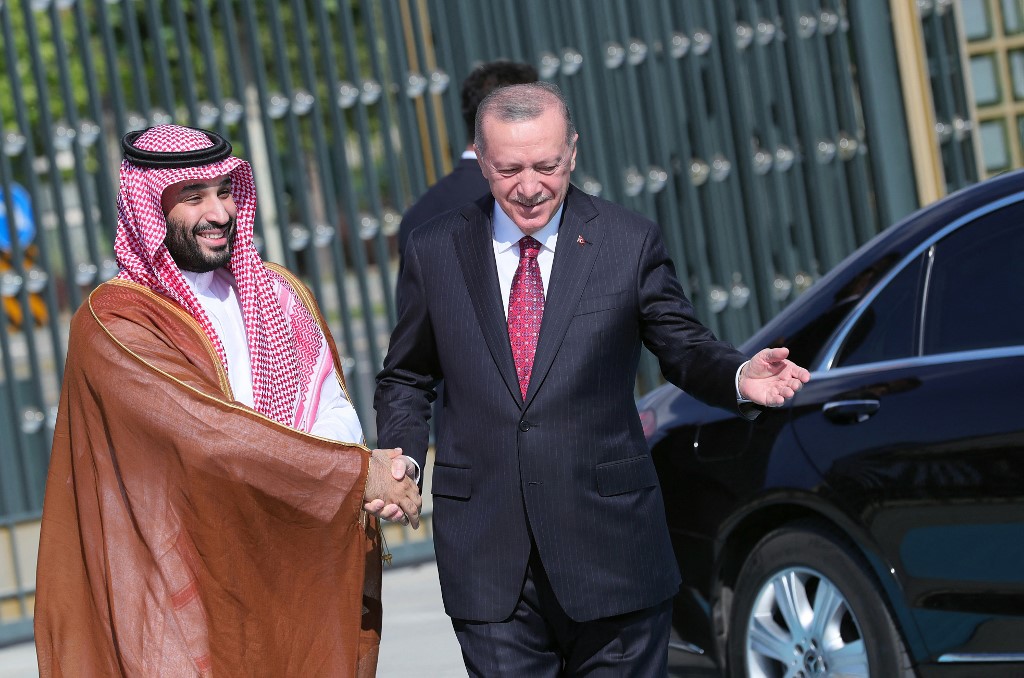
    Analysts trace the shift in Israel’s position to the steady deterioration of bilateral relations after Recep Tayyip Erdogan took power as Turkey’s president, with Erdogan’s increasingly Islamist foreign policy and open support for Palestinian armed groups pushing ties between the two countries to their lowest point in decades.

    The vote comes as Israel itself faces widespread international accusations, including from a United Nations-appointed independent expert panel, that its ongoing military offensive in the Gaza Strip constitutes genocide. Israel, which was founded in the aftermath of the Nazi Holocaust that killed six million European Jews, has forcefully rejected these accusations, calling the claims baseless and antisemitic. Last week, the UN expert panel released a report accusing Israeli forces of deliberately targeting children in Gaza and repeated the genocide allegations, prompting Israeli officials to dismiss the document as a “libelous sham.”

    Israel launched its current military campaign in Gaza in response to the October 7, 2023, attack carried out by Hamas that killed roughly 1,200 people, most of them civilians, and took roughly 250 hostages. Gaza’s Hamas-run Ministry of Health reports that more than 73,000 people have been killed in Israeli strikes to date, approximately half of whom are women and children. Israeli officials maintain they do not intentionally target civilian populations, and accuse Hamas of operating military infrastructure in densely populated civilian areas and using residents as human shields.