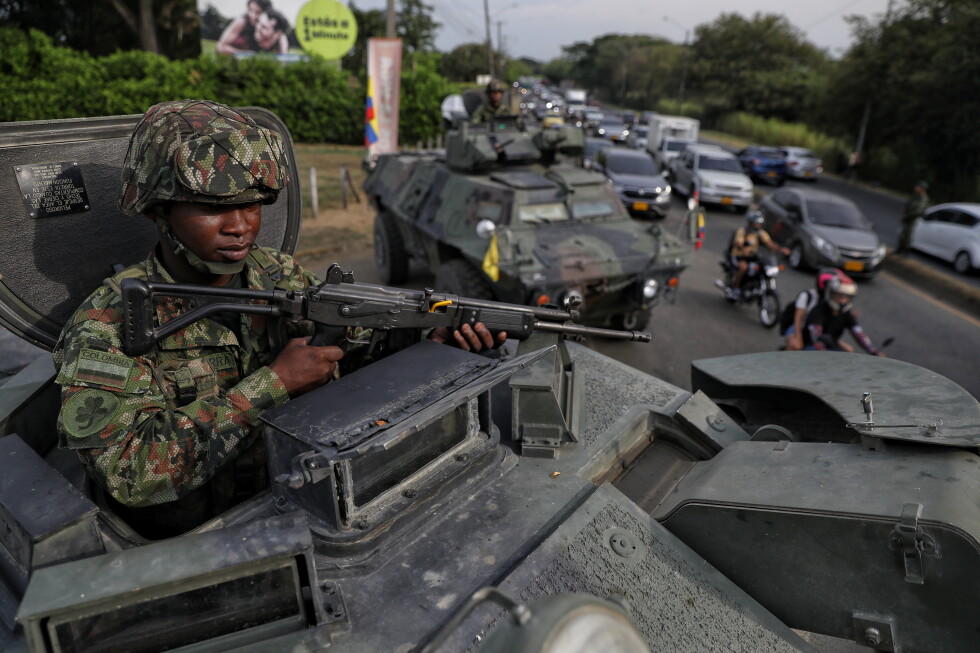
On Friday, Colombian President-elect Abelardo de la Espriella, a 48-year-old conservative political outsider, will be sworn into office in the southwestern city of Cali under stringent security measures, breaking with decades of tradition that inaugurate new heads of state in the capital Bogotá. The unconventional venue is no random choice: it is a deliberate public signal of the new president’s uncompromising hardline stance against the illegal armed groups that have long plagued Colombia’s volatile southwestern regions.
De la Espriella, who earned the nickname “El Tigre” (The Tiger) during his campaign, defeated former President Gustavo Petro’s ally Senator Iván Cepeda in a close June 21 runoff election to succeed Petro. A Colombian-American lawyer and businessman who has never previously held public office, de la Espriella self-funded his entire campaign with the personal fortune he built over his decades in the private sector, running as an anti-establishment outsider against the incumbent left-wing government’s policies.
His inauguration, set to take place in a university auditorium before the full session of Colombian Congress, cements a broader rightward political shift that has swept across Latin America in recent years. High-profile international attendees include Spain’s King Felipe VI and a slate of conservative regional leaders: Argentina’s President Javier Milei, Ecuador’s President Daniel Noboa, and Chilean conservative leader José Antonio Kast.
Following the swearing-in ceremony, de la Espriella will travel to a local Cali military battalion to address deployed troops. The trip serves two core purposes: to boost military morale amid ongoing counter-insurgency operations, and to deliver an explicit ultimatum to illegal armed groups active in the region: surrender immediately, or be designated legitimate military targets. The new president has made dismantling the power of these groups a central campaign promise, rejecting the outgoing Petro administration’s signature policy of negotiating with armed factions. He has repeatedly argued that the decade-old peace process initiated by the government with former rebel groups has failed to curb widespread violence linked to illegal economies including drug trafficking and unregulated mining.
Colombia’s southwestern regions currently face persistent instability from multiple competing armed factions: dissident splinter groups of the formerly demobilized Revolutionary Armed Forces of Colombia (FARC) that rejected the 2014 peace agreement, the powerful Clan del Golfo drug cartel, and the ongoing National Liberation Army (ELN) guerrilla movement.
On the international stage, de la Espriella’s rise to power has been framed by the backing of former U.S. President Donald Trump, coming at a moment of heightened regional anxiety over surging violent crime, mass irregular migration, and sluggish economic growth across Latin America. Glaeldys González, Andean analyst for the International Crisis Group, noted that de la Espriella’s election will reinforce the accelerating rightward shift across much of the region, helping to consolidate a cohesive bloc of conservative-led governments that stand in opposition to the shrinking number of remaining left-wing administrations across Latin America.
De la Espriella has already confirmed that his new government will join the “Shield of the Americas”, a regional anti-drug trafficking coalition launched at a summit convened by Trump in March 2024. He has also announced sharp shifts in Colombian foreign policy: his administration will resume full diplomatic relations with Israel, while severing formal ties with Cuba and Nicaragua, which he has labeled authoritarian tyrannies.
The new president will face immediate, fierce opposition from outgoing President Gustavo Petro, who has refused to recognize de la Espriella’s electoral victory and pushed unsubstantiated claims of widespread electoral fraud, alleging that thousands of vote tally sheets were manipulated by partisan programmers. Both Colombian electoral authorities and independent international election observers have thoroughly dismissed these fraud allegations.
Political analyst Sergio Guzmán noted that Petro intends to act as a relentless, sharply critical opposition leader, using his platform to consolidate his standing among left-wing supporters. The outgoing president has gone so far as to urge social movements in southwestern Colombia to organize so-called “people’s militias” to defend against what he has labeled impending attacks from de la Espriella’s “fascist” administration. He has also called on his supporters to prepare for a national general strike if the new government moves to arrest him after he leaves office, a concern that comes after the U.S. Drug Enforcement Administration named Petro a “priority target” in comments reported by the AP in March 2024.
Andrés Macías, a conflict and peace researcher at Colombia’s Externado University, warned that the combination of Petro’s inflammatory mobilization calls and de la Espriella’s hardline policy approach significantly raises the risk of violent confrontations during street protests, as well as more aggressive security responses from the new government.
Protests are already planned across multiple major Colombian cities during the inauguration: in Cali, where Petro retains a large base of support, social and student organizations have called for demonstrations during the swearing-in ceremony, with additional protest actions expected in the capital Bogotá and the northern coastal city of Barranquilla.