分类: politics

  • By the numbers: What to know about Spain’s legalization program for immigrants

    By the numbers: What to know about Spain’s legalization program for immigrants

    MADRID – Spain’s groundbreaking immigration regularization program, launched earlier this year to bring undocumented migrants living and working in the country into legal status, has drawn far more applicants than initial government projections, with nearly 1 million people submitting requests by mid-June ahead of this week’s application deadline.

    Unveiled by Prime Minister Pedro Sánchez’s progressive government in January and opened for submissions in April, the initiative closes its application window on June 30. Eligible undocumented immigrants who have resided in Spain for a minimum of five years and hold a clean criminal record can receive a one-year renewable residence and work permit, allowing them to access public services and contribute legally to the Spanish economy. When the program was first introduced, Spanish officials projected that roughly 500,000 people would qualify for legal status. However, that estimate has already been blown past: by June 12 alone, the government confirmed it had received more than 900,000 applications, and immigration analysts forecast the final total will cross the 1 million threshold once all submissions are counted. This matches pre-program projections from independent think tanks and Spanish law enforcement, who long estimated the actual number of undocumented people living in Spain hovered around 1 million.

    For Sánchez, a leading progressive figure in European politics, the regularization policy is both a moral and economic imperative. “This is an act of justice and a necessity,” the prime minister has argued, noting that migrants already residing and working in Spanish communities deserve the right to operate under equal legal conditions, and to contribute taxes to public systems that all Spaniards rely on.

    This policy marks a clear break from the hardening immigration stance adopted by many other European Union member states and the United States, where stepped-up deportation operations have become the dominant policy response to undocumented migration in recent years. While this is the seventh mass immigration regularization initiative Spain has carried out since 1986, the volume of applicants for the 2024 program is unprecedented. Previous amnesty efforts never crossed the 600,000 application mark: the largest prior effort, held in 2005, resulted in roughly 576,500 immigrants gaining legal status. Three of the past six regularization programs were implemented under Socialist prime minister Felipe González starting in 1986, while conservative leader José Aznar’s government oversaw two more initiatives during the 2000s.

    By mid-June, Spanish officials had already processed roughly 360,000 applications, with successful applicants approved for temporary legal status. The government retains a three-month window after the application deadline to process all submissions, so the final number of people granted status will continue to rise in the coming months.

    Demographic breakdowns of applicants show that 30% of all requests come from Colombian nationals, reflecting the large Colombian-born community already resident in Spain – per the country’s National Statistics Institute, more than 980,000 Colombian-born people currently live in Spain. Moroccan applicants account for 14% of total submissions, followed by Venezuelans at 10% and Peruvians at 9%. These migration flows align with broader demographic shifts in Spain: today, roughly one in five of the country’s 50 million residents are foreign-born, totaling around 10 million people. Most of these residents arrived from Latin America and North Africa, fleeing political instability, violence, or economic hardship in search of better opportunities in Spain.

    Industries at the core of the Spanish economy – including agriculture, tourism, and domestic services – rely heavily on migrant labor, a reality that supporters of the program cite as a key justification for bringing undocumented workers into the formal economy. Even so, the initiative has sparked significant public debate and scrutiny across Spain, dividing public opinion over the country’s approach to migration.

    As of mid-June, 360,000 applicants have already been processed, and officials are working through the remaining backlogged submissions in the months following the deadline. Analysts widely expect the final count of approved applicants will make this the largest immigration regularization effort in Spanish history.

  • Britain sets out a plan for future defense with a focus on drones and a fight over money

    Britain sets out a plan for future defense with a focus on drones and a fight over money

    LONDON – As global conflict grows increasingly defined by technological innovation, the United Kingdom is set to roll out a landmark new defense strategy Tuesday that places autonomous military systems at the core of its future military capabilities. The long-delayed Defense Investment Plan, years in the making, has emerged amid bitter internal wrangling over funding, shifting geopolitical risks, and a wave of political upheaval that has shaken the current British government.

    For months, the plan has been stalled after tense negotiations between top military commanders and Treasury officials, who clashed over the price tag of modernizing Britain’s armed forces to match a rapidly deteriorating global security landscape. Like many fellow NATO allies, the UK faces dual pressures: the need to counter an increasingly assertive Russia, and growing uncertainty over the reliability of long-standing security commitments from the United States.

    Internal tensions boiled over in June when former Defense Secretary John Healey stepped down from his post, criticizing the ruling government for refusing to commit sufficient military funding at a moment of growing global danger. Healey pushed for the UK to raise defense spending to 3% of gross domestic product by 2030, pointing to British intelligence assessments that Russia could launch an attack on a NATO member nation by that date. He noted that the Treasury’s original proposal would only lift spending to 2.6% of GDP next year, reaching just 2.68% by 2030 — far short of the target he called necessary.

    Under Healey’s successor, current Defense Secretary Dan Jarvis, the proposal has been refocused in recent weeks, with a small funding increase added to the original 13.5 billion pounds ($18 billion) package Healey was offered. Even with the adjustment, however, the final total is expected to fall far short of the 28 billion pounds ($37 billion) that senior defense leaders had requested.

    In comments ahead of the plan’s official launch, Prime Minister Keir Starmer framed the strategy as a critical step to equip frontline personnel with cutting-edge tools to deter emerging threats and protect British citizens. The full text of the 10-year roadmap is scheduled for publication later Tuesday, confirming the UK’s commitment to reach a NATO spending target of 3.5% of GDP by 2035.

    The push for modernization comes as the UK military seeks to reverse decades of capability decline, driven by Moscow’s 2022 full-scale invasion of Ukraine and its growing pattern of overt and covert military probes along NATO’s eastern flank. British military planners have drawn direct lessons from Ukraine’s war, where drone technology has upended traditional combat doctrine: Ukraine currently deploys roughly 200,000 drones per month to repel Russian advances. In response, the UK will direct billions in new investment to drone systems across the army, navy, and air force. In a shift from earlier plans to build a new fleet of conventional destroyers, the Royal Navy will instead develop hybrid vessels designed to serve as mobile command hubs for uncrewed drone and submarine systems.

    Pressure to boost British defense spending has also come from across the Atlantic. Former U.S. President Donald Trump, who has long raised questions about NATO’s purpose and repeatedly criticized European allies for failing to meet their spending commitments, has made increased defense outlays a core condition of continued U.S. security support for the alliance.

    The disputes over defense spending have contributed to a growing political crisis in London. The resignations of Healey and junior Defense Minister Al Carns were among a series of political setbacks that led Starmer to announce his resignation last week. Starmer is expected to fulfill one of his final prime ministerial duties by attending the upcoming NATO summit in Turkey scheduled for July 7 and 8, before stepping down.

    The likely next prime minister, former Greater Manchester Mayor Andy Burnham, will inherit immediate pressure to uphold the binding spending commitments laid out in the new defense plan. The main opposition Conservative Party has already dismissed the strategy as insufficient, with defense spokesperson James Cartlidge calling it “too little, too late.” Cartlidge argued the plan has been rushed through nearly a year behind schedule, only to allow Starmer to secure a policy legacy ahead of his departure from office.

  • CPJ board member removed as it undertakes review of journalists killed in Gaza

    CPJ board member removed as it undertakes review of journalists killed in Gaza

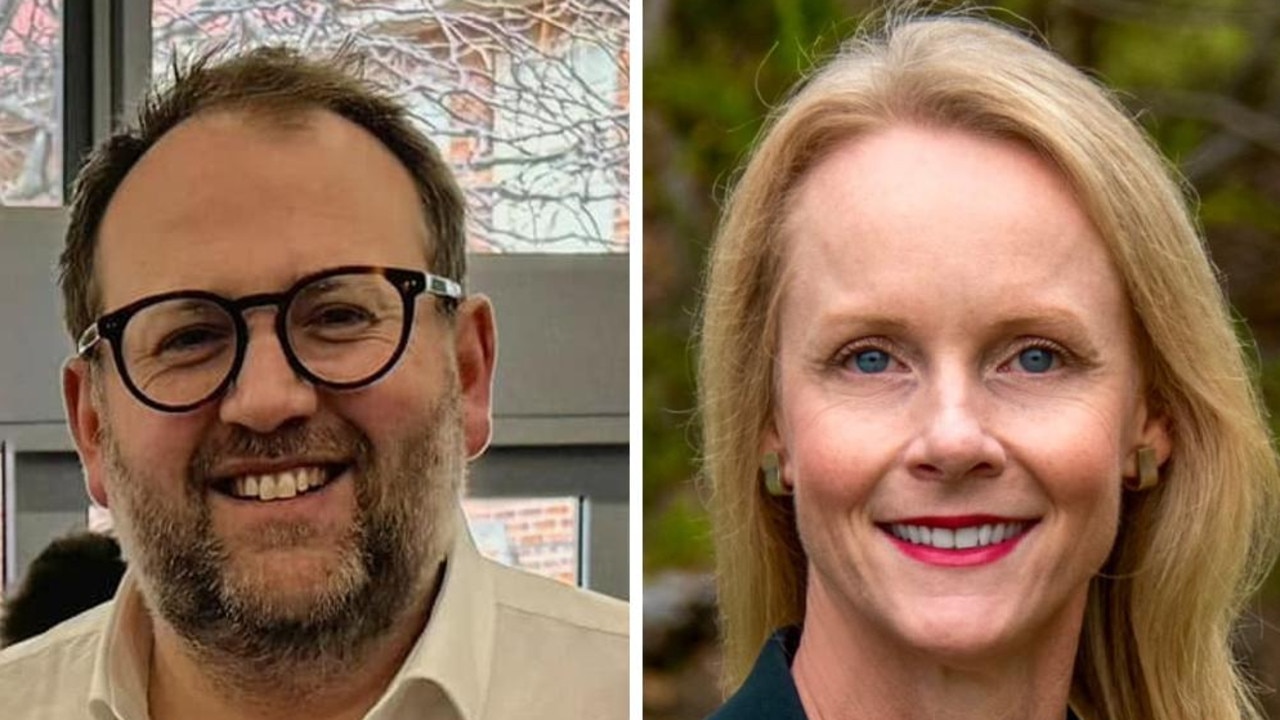
    In a bombshell revelation shared on social media platform X Monday, Nika Soon-Shiong, publisher of independent outlet Drop Site News, announced she has been ousted from the board of the Committee to Protect Journalists (CPJ) — a move that comes directly after she publicly challenged the organization’s controversial decision to strip dozens of Palestinian journalists from its official count of media workers killed in Gaza.

    Soon-Shiong posted the announcement alongside the full text of the internal email she sent to fellow board members outlining her concerns, writing simply: “I have been informed that I’m no longer a member of the Committee to Protect Journalists board.”

    When contacted for comment by Middle East Eye, CPJ offered a vague response in an emailed statement, claiming only that Soon-Shiong’s five-year board term was not set to expire until June 2026, declining to address whether her removal was tied to the ongoing internal review of its Gaza casualty database that she opposed.

    The conflict stems from CPJ’s announcement last week that it would launch a full review of its Gaza casualty list, after the militant groups Hamas and Palestinian Islamic Jihad published obituaries identifying 20 people previously listed by CPJ as journalists as combatants. Those 20 names were immediately removed from CPJ’s count, dropping its official total of journalists killed in Gaza to 209, far below the 270+ confirmed by the Palestinian Journalists’ Syndicate. The full review is expected to conclude next month.

    In her internal email, Soon-Shiong questioned the entire premise of the review, noting CPJ had failed to establish clear objectives, a defined scope of work, or a public assessment of the institutional risks of revisiting the fundamental question of who qualifies as a journalist for protection. At the core of her criticism is the organization’s decision to single out Palestinian journalists for removal based on affiliations, while applying a double standard to journalists with links to the Israeli military.

    Soon-Shiong explicitly tied the push for the review to a hit piece published May 27 by the right-wing U.S. outlet Washington Free Beacon by reporter Adam Kredo, who has a long track record of targeting pro-Palestinian and pro-Muslim voices. Kredo’s article attacked the CPJ board for what it claimed was widespread anti-Israel sentiment, calling out Soon-Shiong and Nobel Prize-winning Filipino journalist Maria Ressa by name as “virulent anti-Israel voices” for publicly labeling Israel’s military campaign in Gaza a genocide and comparing its actions to those of Nazi Germany. Soon-Shiong wrote that the proposal to exclude journalists based on “behaviors and activities” or affiliation with “state-backed propaganda outlets, militant- and designated terror-affiliated organizations” emerged directly from the criticisms Kredo leveled in that article.

    “Accusations of terrorism are widespread and politically motivated to discredit journalists and political opponents,” Soon-Shiong wrote in the email. “I appreciated the Board’s dismissal of the article… [but] because baseless accusations will become more common, not less, CPJ must strive to rise above the fray. Reopening the question of ‘who is a journalist’ carries profound implications for the individuals CPJ protects and for the organizations with which they are affiliated. It’s a betrayal to our colleagues in Gaza who have faced the deadliest conflict for journalists ever recorded.”

    Weeks before Soon-Shiong’s removal, prominent Palestinian journalist Mohammed el-Kurd, Palestine correspondent for *The Nation*, warned of CPJ’s plans in a post on X. Citing anonymous sources inside the organization, el-Kurd said CPJ planned to formally revise its definition of a journalist to exclude Palestinian and Lebanese journalists working for state-funded outlets — while explicitly allowing Israeli, American, and Ukrainian journalists employed by state-funded outlets or embedded with national militaries to keep their recognized status.

    For mainstream U.S. and Canadian media outlets, CPJ’s casualty count has long been the default source for the number of journalists killed in Gaza, with most outlets declining to cite local Palestinian organizations or the Gaza Health Ministry’s official totals. That reliance makes CPJ’s review all the more consequential for public understanding of the unprecedented danger Gaza journalists face.

    In her criticisms of the review, Soon-Shiong pushed back on the organization’s unequal application of its new standards, asking why only Hamas and Palestinian Islamic Jihad affiliations were being targeted for scrutiny. She noted that Israeli forces have been widely accused of war crimes in Gaza, and multiple U.S. journalists working for major mainstream outlets employ reporters who serve in the Israeli Defense Forces (IDF).

    “What should happen to outlets like The Atlantic, LA Times, or BBC where editors served in the IDF directly?” Soon-Shiong asked. “CPJ cannot credibly position itself as an objective judge of who is a legitimate journalist and what merits protection.”

    In its response to Middle East Eye, CPJ denied changing its longstanding methodology, which it says applies uniformly across all global conflict zones, and claimed it has not altered how it classifies journalists. “Our long-standing policy is to include journalists working for state-backed media and those working with media organizations affiliated with militant groups provided they are not engaging in combat or inciting violence in a manner likely to have imminent effect. This is consistent with international humanitarian law,” the organization said. “If we determine an individual was an active combatant or incited imminent violence then they would be removed from our list regardless of their outlet’s affiliation.”

    Soon-Shiong, who is the daughter of Los Angeles Times billionaire owner Patrick Soon-Shiong, joined the CPJ board in 2021 and took over leadership of Drop Site News last year. Founded by veteran investigative journalists Jeremy Scahill and Ryan Grim, Drop Site News has gained recognition for its in-depth, on-the-ground coverage of Israel’s military campaign in Gaza and Palestinian politics that is largely missing from mainstream U.S. media, including rare wide-ranging interviews with Hamas and Islamic Jihad officials.

  • What to know about the looming  deadline on North American free trade

    What to know about the looming deadline on North American free trade

    As the critical July 1 review deadline for the United States-Mexico-Canada Agreement (USMCA) draws near, all three North American nations are widely expected to miss the target without a final resolution to the trade pact’s future. This Wednesday will mark the first formal trilateral meeting between the countries’ top trade representatives since the mandatory review of the 2018 agreement launched earlier this year. Both Canada and Mexico have publicly pushed for a full renewal of the accord, but the United States has so far declined to lay out a clear official stance.

    Recent remarks from former President Donald Trump, who originally negotiated USMCA to replace the 1990s-era North American Free Trade Agreement (NAFTA), have deepened uncertainty: Trump has stated he believes the deal should “expire immediately,” arguing the U.S. would gain a stronger position without the trilateral pact. The agreement, which serves as the backbone of regional economic integration, currently supports $1.6 trillion in annual cross-border trade, enables integrated supply chains for core industries like automobile manufacturing, and sustains millions of jobs across the three countries. It also grants Canadian and Mexican goods exemption from most U.S. tariffs imposed by the Trump administration, a critical protection for North American exporters.

    Public opinion in the U.S. leans heavily in favor of retaining the deal: a late 2025 Ipsos survey conducted by the Chicago Council on Global Affairs found that 75% of U.S. respondents view USMCA as beneficial to the American economy. Even so, negotiations have been tangled by tensions stemming from Trump’s existing tariffs, with Canada’s retaliatory trade measures adding extra layers of complexity to discussions. All three sides have already acknowledged that no final decision will come out of Wednesday’s meeting. Canadian officials have openly prepared for extended negotiations beyond the July 1 deadline, while Mexico and the U.S. have already scheduled a second round of bilateral talks for later this month.

    In an official statement shared with the BBC, the office of Canadian Minister of U.S. Trade Dominic LeBlanc framed Wednesday’s gathering as a chance to build on the productive one-on-one talks LeBlanc has held with officials from both partner nations in recent weeks. “He is looking forward to continuing the work of supporting Canadian workers, farmers and businesses, on July 1 and beyond,” the statement read.

    Since the review launched, the U.S. has held separate bilateral discussions with Mexico and Canada to address longstanding trade frictions. Many observers have noted Canada has fallen behind in visible progress, as Mexico and the U.S. have already held multiple formal negotiating rounds while U.S.-Canada talks were slower to materialize. But members of the trade advisory committee assembled by Canadian Prime Minister Mark Carney push back on that narrative, noting the list of U.S. demands for Canada is far shorter than the list presented to Mexico, and behind-the-scenes negotiations are advancing steadily.

    Key U.S. demands for Canada include expanded market access for American dairy producers, the elimination of Canadian digital taxes on large U.S. streaming services, and the reversal of provincial alcohol boycotts that Canada put in place as a retaliatory response to Trump’s steel and aluminum tariffs. For its part, Canada’s top priority remains removing the existing U.S. tariffs on core Canadian exports including steel, aluminum and automobiles. Carney has repeatedly emphasized Canada will not accept a deal that harms national economic interests, a position echoed by Canadian business groups. While the current trade uncertainty has already inflicted harm on Canadian companies, most industry leaders are willing to extend negotiations to secure a favorable outcome, according to Dennis Darby, president of Canadian Manufacturers and Exporters and a member of Carney’s trade advisory committee.

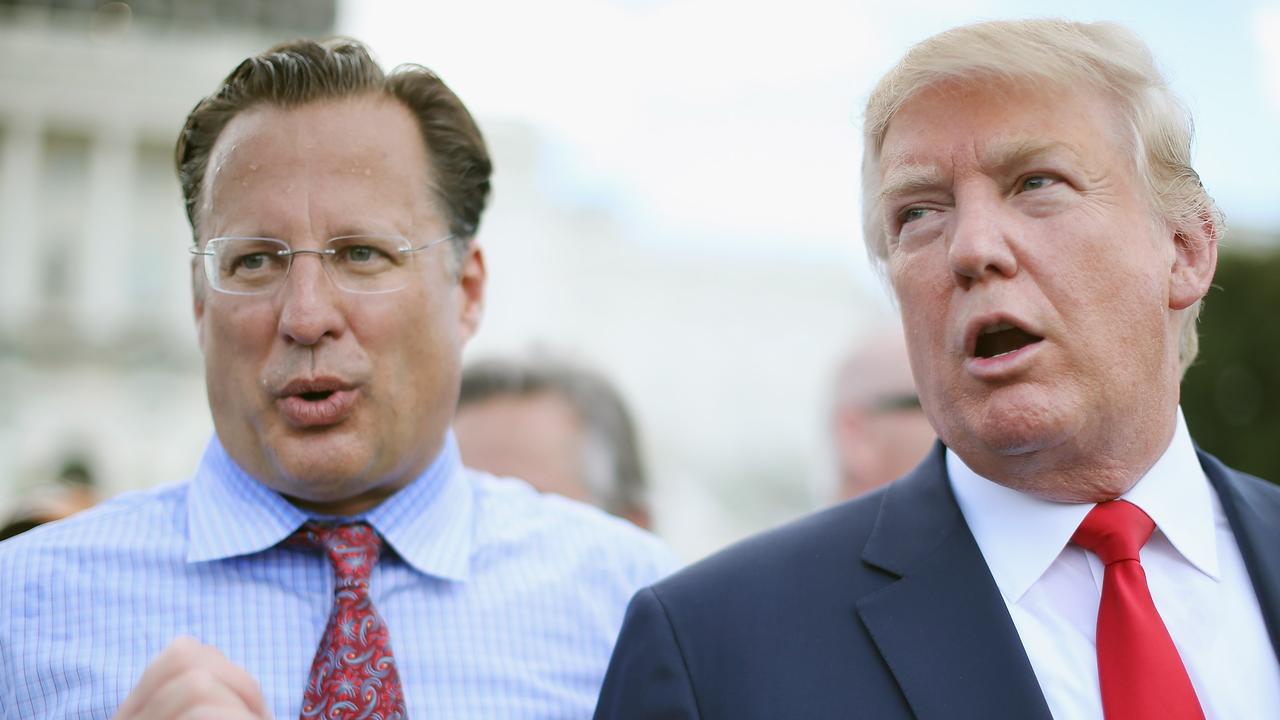
    U.S. Ambassador to Canada Pete Hoekstra revealed that a U.S.-Canada deal was nearly reached last October, but talks collapsed after Ontario ran an anti-tariff advertisement on U.S. television networks that angered Trump. “They were very, very close to having an agreement, and then you know, poof, it’s all gone,” Hoekstra told Canadian broadcaster CTV in an interview last week.

    Even if no deal is reached by July 1, the existing USMCA will remain in effect until its scheduled expiration date in 2036. The three parties have three potential paths forward after the deadline: first, all three can agree to extend the deal for 16 additional years, pushing its expiry to 2042; second, if no consensus is reached, the agreement will move to an annual review process that will repeat until 2036; third, any one party can formally notify the others of its intention to withdraw, triggering a six-month waiting period before the exit takes effect.

    Canadian business leaders overwhelmingly view a full U.S. withdrawal as the least likely outcome, even with Trump’s public criticism of the deal. “Everyone is hopeful that won’t be the case,” Darby said, adding that U.S. negotiators recognize the agreement has delivered mutual benefits to all three nations. Still, Darby noted that permanent annual reviews would be a bad outcome for Canadian business, as ongoing uncertainty would continue to disrupt investment and planning. Ultimately, most key players agree the final decision rests with Trump and Carney. Trump’s recent comments on the deal have been contradictory: he has both said he is “not looking to renew it” and claimed he is “open” to keeping the pact in place. While Carney acknowledged it is no secret that Trump is dissatisfied with USMCA, he noted U.S. negotiators have already accepted that the agreement’s core structure is sound. “What I have seen with the president is you’re not close to making a deal – and then you make a deal,” Carney told reporters recently.

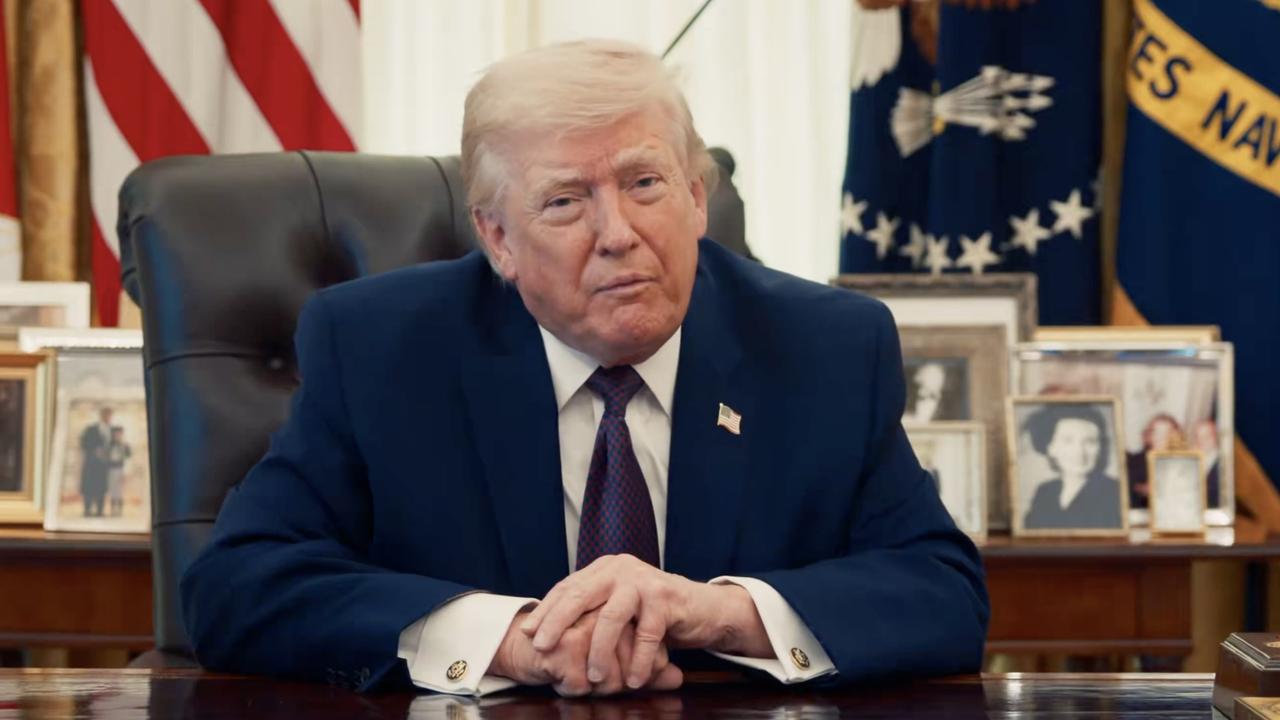
  • One big win and three defeats for Trump in dramatic day at Supreme Court

    One big win and three defeats for Trump in dramatic day at Supreme Court

    On the penultimate day of the U.S. Supreme Court’s 2025-2026 term, the nation’s highest court delivered a mix of landmark victories and unexpected setbacks to former and current President Donald Trump, revealing surprising ideological shifts within the court’s conservative majority that defy common partisan assumptions. A close examination of the four major rulings involving the president lays bare the evolving dynamics of the nation’s most powerful judicial body.

    Almost a century ago, the Supreme Court issued a unanimous ruling that blocked Democratic President Franklin D. Roosevelt from claiming unlimited authority to oust commissioners from congressionally established regulatory agencies designed to operate independent of direct presidential control. On this eventful Monday, that 90-year-old precedent was formally overturned in a case brought by Trump, with the court’s six conservative justices — three of whom Trump himself appointed during his first term — forming a unified majority to expand executive power.

    “Subordinates who exercise the president’s power are subject to removal by him,” Chief Justice John Roberts wrote in the majority opinion. “Then, and only then, can they remain accountable to the president, and the president to the people.” The outcome of this ruling hands Trump and all future U.S. presidents sweeping authority to replace regulators across dozens of key federal agencies when the sitting president disagrees with their policy stances. While the Federal Trade Commission was the specific agency at the heart of this case, echoing FDR’s dispute a century prior, the new precedent applies to every sector of federal regulation, from election oversight and communications policy to labor disputes, financial rulemaking and environmental protections. This decision is widely expected to accelerate the dramatic policy swings that have become standard when a new president of a different party takes office — a trend that has already played out between the presidencies of Barack Obama, Trump, Joe Biden, and now Trump’s second term. Trump himself celebrated the ruling in a post on his Truth Social platform, writing, “Ninety years of precedent has been completely and unequivocally overruled, greatly increasing presidential power at a time when it is most needed!”

    Not long after delivering that sweeping win for executive authority, the court drew a clear line against one of Trump’s specific personal policy priorities: his bid to remove Federal Reserve Board of Governors member Lisa Cook. In a narrow 5-4 ruling, two conservative justices — Chief Justice Roberts and Brett Kavanaugh — broke ranks with their fellow conservatives to join the court’s three liberal justices in blocking Trump’s removal attempt. Trump has claimed Cook engaged in mortgage fraud to justify her ouster, but observers widely view the move as rooted in his anger over the Fed’s refusal to cut U.S. interest rates, a key policy demand of his second term. Writing for the new majority, Roberts ruled that Cook is entitled to a full opportunity to challenge her removal and rebut Trump’s unsubstantiated allegations, warning of the “calamities that could arise” if presidents were allowed to force their monetary policy preferences on the independent central bank.

    A second major setback came in a case over late-arriving mail-in ballots, where the court again ruled against Trump. The case centered on whether federal law bars states from counting mail-in ballots that are postmarked by Election Day but arrive after the polls close. In this ruling, the three liberal justices were joined by Roberts and Trump-appointed Justice Amy Coney Barrett, who authored the majority opinion. Citing the U.S. Constitution’s grant of broad authority to states to set the “time, place and manner” of congressional elections, Barrett rejected Trump’s claims that late-arriving mail-in ballots are inherently vulnerable to widespread fraud, arguing that disputes over election rules are best resolved through the democratic process rather than judicial intervention. Trump immediately responded by doubling down on his push for congressional passage of an election reform package that would drastically restrict mail-in voting. While the Republican-controlled House of Representatives has already approved the legislation, Democrats and a small bloc of moderate Republicans have blocked a Senate vote, leaving the measure stalled.

    The final blow for Trump on Monday came in a little-noticed entry on the court’s list of cases it declined to hear: the president’s final appeal of the civil judgment in the E. Jean Carroll sexual abuse and defamation case. Carroll, a former magazine writer, accused Trump of sexually assaulting her in a 1990s department store dressing room, and a 2023 jury found Trump liable for defamation, ordering him to pay $5 million in damages. The Supreme Court’s refusal to take up the appeal closes off the final avenue for Trump to challenge that $5 million judgment, though he still plans to appeal a separate $83.3 million damages award from a second defamation case brought by Carroll. Trump decried the decision in a Truth Social post, writing, “I will continue the fight against this weaponization and lawfare case against me, including the ridiculous claim of defamation, with all my power and strength. This injustice cannot be allowed to stand!”

    Monday’s rulings served as a stark reminder of the Supreme Court’s unique role as the final arbiter of U.S. law, and delivered a day of mixed outcomes for Trump: a historic expansion of presidential power that delivers a long-term partisan victory, but concrete defeats for his immediate policy priorities and personal legal battles. The day also upended expectations of unified conservative control, showing that even with a 6-3 conservative majority, Trump cannot count on automatic victory for every one of his priorities before the nation’s highest court.

  • John Major says Reform are ‘ragbag’ scapegoating Muslims and migrants

    John Major says Reform are ‘ragbag’ scapegoating Muslims and migrants

    In a sharp rebuke that has reignited debate over rising far-right populism in British politics, former Conservative Prime Minister John Major has launched a blistering attack on right-wing party Reform UK, accusing the group of systematic scapegoating targeting Muslim communities and migrants.

    Major, who led the UK as Conservative Prime Minister from 1990 to 1997, laid out his criticisms in a recent interview with The Independent, delivering one of the most high-profile rejections of Reform UK’s growing political influence from within the traditional conservative establishment.

    Dismissing the party’s ideological foundation entirely, Major questioned Reform UK’s core identity: “What is Reform? It’s a ragbag really. What’s its philosophy? What’s its purpose? What are its convictions? I don’t know. Nobody knows. Nobody talks about it. I don’t hear lectures about the convictions and philosophy of Reform.”

    The former prime minister argued that Reform UK’s recent electoral momentum does not stem from a compelling positive policy platform, but rather from widespread public disillusionment with decades of governance from the two main parties, Labour and the Conservatives. “Reform had nothing good to offer” and are drawing “wholly negative votes” because successive Labour and Conservative governments have failed the British public, he said.

    Major went on to identify the party’s core unifying tactic: anti-Muslim and anti-migrant rhetoric. “But what positivity is there about Reform? What is their unique selling brand? It’s that they are opposed to Muslims and migrants,” he added. “And when that wears out, because that is the way they operate, they’ll find somebody else in order to be a scapegoat. They are certainly narrow in concept, nationalist in instinct, and hostile to those, in a quite crude way, who don’t actually agree with them.”

    Major’s condemnation comes on the heels of a groundbreaking electoral performance for Reform UK in last month’s UK-wide local elections. Led by veteran populist figure Nigel Farage, the party secured more than 1,300 council seats across England, Scotland and Wales, and won full control of 13 local councils – marking the largest surge in vote share of any political party in the contest.

    Multiple recent opinion polls and electoral projections now place Reform UK on track to become the largest party in the UK House of Commons following the next general election, a shift that has upended traditional British political dynamics.

    Compounding the criticisms leveled by Major are multiple recent reports of inflammatory, racist rhetoric from newly elected and former Reform UK candidates. Last month, Middle East Eye documented several alleged cases of racist comments among the party’s newly elected council representatives.

    In the lead-up to the local elections, the Daily Mail exposed alleged Islamophobic social media posts from Phil Tierney, a Reform UK candidate for the Chelmsley Wood council seat. One public post on X, formerly Twitter, had Tierney openly stating “I am Islamophobic.”

    In another high-profile incident, Daniel Devaney, who initially ran as a Reform UK candidate for the Clayton and Fairweather Green ward in Bradford, was forced to step down from the party ticket after old racist posts resurfaced. Despite the public backlash, Devaney still won election to the council seat. His controversial posts included a threat to “blast [Muslims] off the face of the earth,” where he referred to Muslim people as “pure scum.” Devaney later issued an apology for the remarks.

    The extraordinary rise of Reform UK, paired with widespread allegations of bigotry among its ranks, has prompted soul-searching across Britain’s mainstream political parties, with many figures echoing Major’s warnings that the party’s brand of exclusionary nationalism poses a fundamental threat to the country’s pluralistic social fabric.

  • Serbia’s President Vucic says elections will be held in the next 3 to 4 months

    Serbia’s President Vucic says elections will be held in the next 3 to 4 months

    BELGRADE, Serbia — Populist Serbian President Aleksandar Vucic has formally confirmed that snap general elections will take place in the Balkan nation between three and four months from now, repeating his public commitment to step down from the country’s presidency ahead of the scheduled vote. Vucic has not yet released a specific timeline for his departure or the election date, but told supporters at a major rally Saturday that the gathering was almost certainly his final public address as head of state, noting he would formally resign within the coming weeks.

    Political analysts and regional observers widely interpret Vucic’s announcement as a calculated strategic political move. Currently serving his second consecutive presidential term, Vucic is constitutionally prohibited from seeking re-election to the post. The restructuring, analysts argue, would clear a path for him to shift into the role of prime minister — a position that holds the country’s formal executive power.

    “Yes, it is logical that we will have elections soon, and when I say soon I mean the next three-four months,” Vucic stated publicly Monday. He stopped short of confirming a concrete plan to run for prime minister, saying a final decision on whether he will seek the premiership if his ruling Serbian Progressive Party (SNS) secures a parliamentary majority will come after the vote.

    “Whatever I decide and whatever decision I make, it will be transparent, just like I have done by announcing my resignation,” Vucic said. The president added that his resignation could come at any point between July and September, stressing that his departure would not come as an unannounced shock to the public or Serbian political system. Per Serbian electoral law, once a sitting president resigns, a new presidential election must be held within 90 days of the vacancy taking effect. Regularly scheduled parliamentary and presidential elections were originally set to be held in 2025.

    Vucic has faced sustained pressure from more than a year of mass public demonstrations across Serbia, a movement that erupted in response to the November 2024 collapse of a concrete canopy at Novi Sad’s main railway station that killed 15 people. A youth-led campaign demanding accountability for the disaster has posed the most significant challenge to Vucic’s decade-long hold on power since he took office, with protesters arguing the collapse was rooted in systemic corruption and negligence in public infrastructure contracting.

    Before his election to the presidency in 2017, Vucic previously held the post of prime minister. Since his right-wing SNS party won control of government in 2012, Vucic has steadily centralized executive power, drawing repeated criticism from the European Union over documented democratic backsliding, including restrictive policies targeting independent media outlets. Security force responses to ongoing protests have also drawn international condemnation: hundreds of demonstrators have been detained, with both protesters and leading international human rights organizations accusing Serbian police of excessive use of force and arbitrary arrests of opposition activists.

  • How Andy Burnham can win back the Muslim voters Labour has lost

    How Andy Burnham can win back the Muslim voters Labour has lost

    Following a devastating collapse in support for Keir Starmer’s Labour Party triggered by last month’s local elections, Andy Burnham is poised to enter Downing Street without a contested leadership race, after widespread rallying by Labour parliamentarians who see him as the only figure capable of reversing the party’s electoral hemorrhaging.

    Starmer’s strategic approach, crafted over his tenure by former chief of staff Morgan McSweeney, centered on courting right-leaning voters who might otherwise back the Conservatives or Reform UK. The strategy operated under the flawed assumption that traditional left-wing and British Muslim voters had no alternative political home and would remain loyal to Labour regardless of the party’s direction. That calculation backfired spectacularly, sparking a mass exodus of core Labour supporters and fueling the explosive growth of the Green Party over the past 12 months.

    The long-held orthodoxy that Reform posed the greatest threat to Labour was shattered in last month’s local votes, which ultimately led to Starmer’s resignation: data confirmed Labour lost far more votes to the Greens than to Reform. The shift has been especially dramatic among British Muslim voters, who once formed a reliably loyal Labour bloc. In 2019, more than 80% of Muslim voters backed Labour, but new polling from heavily Muslim-populated constituencies puts that number at just 33% today. Many have shifted their support to the Greens or independent candidates, a trend that directly impacted the 2024 general election results: four Labour MPs, including former cabinet-hopeful Jonathan Ashworth of Leicester South, lost their seats to independent challengers, while senior figures including current Home Secretary Shabana Mahmood and former Health Secretary Wes Streeting only held their seats by razor-thin margins.

    Contrary to the popular narrative that British Muslim voters hold unique, sectarian policy priorities, data shows their concerns align closely with other traditional left-wing Labour voters who have abandoned the party. Cost of living topped the list of issues for Muslim voters in the 2025 local elections, followed by widespread opposition to Britain’s foreign policy on Israel and Gaza. This alignment is not an isolated trend: a recent study found that more than half of former Labour voters who now plan to back other centre-left parties cite Israel’s military campaign in Gaza as a core factor in their decision to leave the party.

    There are clear signs Burnham is already aware of the urgent need to repair Labour’s fractured relationship with Muslim and left-wing voters. Ali Milani, chair of the Labour Muslim Network (LMN), has been a close ally of Burnham for years and played a key role in his successful campaign to win the Makerfield parliamentary seat earlier this month. Milani, who rose to national prominence after challenging Boris Johnson in the 2019 Uxbridge and South Ruislip by-election, warned early in 2024 that Starmer’s unwavering support for Israel’s actions in Gaza would destroy Labour’s standing with Muslim voters.

    While LMN is not formally affiliated to the Labour Party, it maintains deep connections within the party and draws heavy attendance from Labour MPs at its events. A 2025 LMN poll of Muslim Labour elected officials found that 82% believed Starmer had handled the Gaza war badly, two-thirds said Muslim representatives did not receive equal treatment within the party, and 64% agreed the party operated a “hierarchy of racism” that sidelined Muslim voices.

    A recent revelation that Burnham has asked James Purnell, a former Blair and Brown era minister and one-time chair of Labour Friends of Israel, to serve as his chief of staff has sparked speculation about the incoming prime minister’s policy direction, with Muslim and left-wing groups calling for a clean break from Starmer’s legacy.

    Samayya Afzal, vice chair of LMN, laid out the scale of the challenge in an interview with Middle East Eye, acknowledging the decades-long relationship between Labour and British Muslim communities had been pushed past the breaking point. “The Labour Party has lost the trust of Muslim communities and voters,” Afzal said. “From the scale of Islamophobia within our own party and its prevalence in wider society, to our approach to the genocide in Gaza, we have seen a historic relationship between British Muslims and the Labour Party driven well past the point of crisis.”

    Still, Afzal framed Burnham’s leadership as a rare opportunity to reset the fractured relationship. “With a real commitment to truly engage with the breadth of our Muslim communities, ending the factional and unfair treatment of Muslim representatives, and taking seriously the concerns around the genocide in Gaza, Sudan and ongoing situation in Kashmir, we may be able to begin to rebuild relationships with Muslim voters,” she added.

    Other Muslim advocacy organizations echoed the call for sweeping change on both domestic and foreign policy. Mustafa al-Dabbagh, assistant secretary general of the Muslim Council of Britain, emphasized that British Muslim voters demand to be treated as equal partners, not spoken through third-party gatekeepers. “Any incoming prime minister must also reckon honestly with the deep anger felt over the genocide in Gaza and our government’s response to it,” al-Dabbagh said. “They must not only fix our broken public services, ensure a better NHS and education, and tackle this cost-of-living crisis, but bring people and communities together.”

    Abubakr Nanabawa, a spokesperson for The Muslim Vote (TMV), a campaign group that backed independent challenges to pro-Starmer Labour candidates in 2024, said any meaningful trust-building requires a total rejection of Starmer’s policy approach. “If Andy Burnham wants to win back the trust of voters, he needs a clear break with the legacy of Keir Starmer,” Nanabawa said. “In the short term that means a complete arms embargo on Israel and sanctions on all trade with the West Bank. He also needs to put ordinary Britons first and that means delivering a bold economic agenda that deals with the cost-of-living crisis. The strategy is simple: stop supporting genocide and make life affordable for everyone.”

    Early hints of a potential policy shift have already emerged from the UK Foreign Office. Current Foreign Secretary Yvette Cooper recently acknowledged the need for stronger action on Israel-Palestine, with Whitehall sources confirming the Foreign Office has long pushed for tougher measures against Israel, only to be blocked by Downing Street under Starmer. Privately, Foreign Office ministers have accepted that banning goods from illegal Israeli settlements is consistent with Britain’s official position on the occupied territories.

    It remains unclear who Burnham will appoint to the critical foreign secretary role. Some speculate Cooper could retain her post, while others point to Wes Streeting, who ruled out a leadership challenge and is widely expected to receive a senior cabinet role. Streeting, who narrowly held his Ilford North seat in 2024 against a challenge from British Palestinian independent candidate Leanne Mohammed, has privately pushed Starmer for a harder line on Israel and publicly accused Starmer of ignoring evidence of Israeli war crimes, making a significant policy shift likely if he takes the foreign secretary post. Even a formal acknowledgment that Israel has committed war crimes – a step no UK government has taken to date – would mark a major break from Starmer’s approach.

    Other potential candidates for the role include Emily Thornberry, chair of the parliamentary foreign affairs select committee and former shadow foreign secretary under Jeremy Corbyn, who has emerged as a leading internal voice calling for stronger action against illegal settlements in the West Bank. Burnham is also widely expected to consider appointing progressive, pro-ceasefire MPs to senior roles, including Abtisam Mohamed, the 2024 elected Sheffield Central MP and Britain’s first Yemeni-origin MP who sits on the Foreign Affairs Committee, as well as the eight backbench MPs who resigned their shadow ministerial posts in 2023 to vote for a Gaza ceasefire. That group includes high-profile figures such as Naz Shah, Andy Slaughter and Sarah Owen, all of whom retain strong credibility with Muslim and left-wing voters.

    Despite some media speculation that Burnham will avoid major foreign policy changes, advocacy leaders argue a significant course correction is non-negotiable. Chris Doyle, director of the Council for Arab-British Understanding (Caabu), noted Burnham has long supported the organization and traveled to the occupied West Bank with Caabu and Labour Friends of Palestine in 2012. “Burnham will need to make a really significant course correction on Middle East foreign policy,” Doyle said, adding that the incoming prime minister will need to resist pressure from the U.S. Trump administration and avoid caving to demands for continued unwavering support for Israel.

    Caabu and the British Palestine Project have laid out five core policy pledges they are calling on Burnham to adopt: banning all UK trade with goods and services from illegal Israeli settlements, upholding international law, guaranteeing unrestricted access for UN and humanitarian agencies, opening the occupied territories to international journalists and investigators, and working with allies to end unlawful regional occupations. The call for a full ban on settlement goods has broad backing within the parliamentary Labour Party, with recent polling showing 87% of rank-and-file Labour members support the ban, compared to just 6% who oppose it.

    Rohan Talbot, director of advocacy and campaigns at Medical Aid for Palestinians, laid out clear expectations for the new prime minister: “The next prime minister must do what Starmer would not to end these horrors: stop providing arms to Israel, stop trading with illegal settlements in the West Bank, guarantee unrestricted humanitarian access, and ensure that those responsible for crimes against humanity are held fully accountable.”

    Liverpool Labour MP Kim Johnson, one of the most prominent progressive voices within the party, emphasized that Gaza is not a peripheral issue but a core test of Labour’s values and credibility. “If Andy wants to win back traditional Labour voters, especially those who feel abandoned on foreign policy, he has to show the moral clarity [Starmer] has too often lacked on Gaza,” Johnson said. “He needs to be prepared to say clearly what Starmer would not: that a genocide is ongoing and that Labour’s refusal to speak honestly and act decisively about it has come at a huge political cost.”

    Recapping the damage of Starmer’s approach in last month’s local elections, Johnson noted: “We lost 58 percent of the seats we were defending in England and lost almost four times as many voters to the Greens than to Reform UK. We cannot deny that Gaza is a major reason many have walked. Foreign policy isn’t a side issue. It’s about values, credibility and whose side you are on when it matters.”

    For Burnham, the path to holding power and reuniting the Labour movement will depend entirely on whether he is willing to make the bold breaks from Starmer’s legacy that disaffected voters are demanding.

  • Lebanon-Israel deal could block war crimes accountability, experts warn

    Lebanon-Israel deal could block war crimes accountability, experts warn

    A US-mediated framework accord reached between Lebanon and Israel late last month has ignited fierce domestic and international backlash over a hidden provision that critics argue could permanently block Lebanese efforts to hold Israel accountable for alleged war crimes committed since the start of its 2024 military campaign. Signed on June 26 in Washington D.C. by the U.S., Lebanon, and Israel, the 14-point trilateral deal’s Article 13 requires both signatory nations to commit to “good faith measures demonstrating positive intent”, which explicitly includes halting all hostile or adversarial actions in international political or legal bodies. For Lebanese legal and human rights advocates, this wording amounts to a blanket ban on pursuing justice for thousands of civilian casualties documented over the past eight months of conflict.

    Halima Kaakour, a Lebanese member of parliament, international law scholar, and prominent human rights activist, was among the first to condemn the provision. Speaking to Middle East Eye, Kaakour emphasized that decades of documented Israeli violations against Lebanese civilians have cemented the inherent legal right of the Lebanese state and public to demand full reparations for harms suffered. “This clause strips that right away and robs the Lebanese people of the justice they are owed,” she said. “The right to justice cannot be traded away for any political deal, no matter how important it is framed to be.” Kaakour further noted that the provision exposes a calculated political bargain by Lebanon’s ruling authorities: the government has agreed to abandon international legal action in exchange for a promised Israeli withdrawal from occupied Lebanese territory, a withdrawal that is already Lebanon’s legal right under existing UN resolutions, and should never have been conditional on surrendering justice.

    Since October 2023, Israel’s military campaign in Lebanon has been linked to widespread accusations of war crimes, including the forced displacement of over 1 million Lebanese civilians and the deliberate targeting of civilian infrastructure and non-combatants. Official figures put the total Lebanese death toll from Israeli strikes at more than 8,000 people since the conflict began. A sharp escalation in hostilities that followed Israel’s March 2024 strike on Iran has pushed the four-month death toll alone above 4,200, including more than 300 medical and rescue workers and 11 professional journalists.

    Farouk al-Moghrabi, a former senior legal advisor to the Lebanese government, echoed Kaakour’s criticism, arguing the deal represents a deliberate attempt to override longstanding international legal frameworks designed to protect victims’ rights and guarantee accountability for mass atrocities. “This right to justice belongs exclusively to the Lebanese people and the individual victims of these crimes,” al-Moghrabi told Middle East Eye. “Not even the Lebanese state, nor any authority signing this agreement, has the legal power to eliminate this inalienable right.” He added that the provision is fundamentally unconstitutional under Lebanese law, which explicitly enshrines that valid international treaties take precedence over domestic legislation, meaning no domestic political deal can erase the rights granted to victims under international human rights law. Al-Moghrabi also raised urgent questions about the upcoming planned visit of the UN High Commissioner for Human Rights to Lebanon, which is intended to document war crimes on the ground, asking whether the terms of the agreement would force Lebanon to block the UN’s investigation.

    Lebanon’s National Human Rights Commission released an official statement backing these criticisms, stressing that no sovereign agreement can supersede the fundamental right of victims to pursue legal redress. “The commission underlines that prosecuting perpetrators of war crimes, crimes against humanity, and torture does not qualify as a hostile act or partisan political position,” the statement read. “It is simply the legitimate exercise of the core human right to justice.” Middle East Eye attempted to contact Lebanon’s presidency for an official response to these criticisms but received no reply before the publication of its original report.

    A key complicating factor in this debate is that neither Lebanon nor Israel are member states of the International Criminal Court (ICC), meaning the court currently holds no formal jurisdiction over crimes committed on Lebanese territory. For decades, regional human rights organizations have pressured the Lebanese government to grant the ICC jurisdiction over its territory, a move that would open the door to formal investigations of alleged war crimes committed by all parties to the conflict. For the ICC to gain jurisdiction over crimes committed during the current conflict, either nation would need to ratify the Rome Statute, the court’s founding international treaty, or Lebanon could submit a special declaration under Article 12(3) of the statute that grants the court temporary jurisdiction over crimes committed on its soil. This exact mechanism was used by Ukraine in 2014 after Russia’s invasion of Crimea, when Ukraine was not yet an ICC member.

    Lebanese civil society groups have pushed for exactly this step since October 2023, after the outbreak of the latest conflict. In April 2024, the Lebanese government came close to meeting their demands: the Council of Ministers formally instructed the country’s foreign minister to submit the Article 12(3) declaration, granting the ICC jurisdiction over all crimes committed on Lebanese territory starting October 7, 2023. The move came after Israeli forces killed Reuters journalist Issam Abdallah and independent investigators confirmed Israel had illegally used white phosphorus against civilian populations. Just one month later, however, the government reversed its decision without any public explanation, and the declaration was never filed. Unconfirmed reporting from Middle East Eye indicates the reversal stemmed from fears the ICC would also open investigations into military actions carried out by Lebanese armed groups against Israel.

    The June 26 framework deal, which capped five rounds of direct talks brokered by the U.S. starting in April, includes a pilot program that would allow Lebanese military forces to take control of two small areas currently occupied by Israel, as well as a vague process aimed at the disarmament of Hezbollah. Critically, the agreement sets no clear timeline or conditions for Israel to withdraw from the much larger swathes of Lebanese territory it currently occupies, instead tying any full withdrawal to progress on Hezbollah disarmament and unspecified “security improvements” that eliminate threats to Israel.

    Hezbollah, the dominant Lebanese armed and political movement, has long maintained it will only agree to disarm if Israel fully withdraws from all occupied Lebanese territory and ends all threats to Lebanese sovereignty. Hezbollah Secretary-General Naim Qassem has already rejected the framework deal outright, calling it “null and void” and demanding an unconditional Israeli withdrawal with no concessions required.

    For Israeli Prime Minister Benjamin Netanyahu, the deal represents a major diplomatic win. Netanyahu confirmed that the agreement permits Israeli forces to remain in occupied southern Lebanon indefinitely if Hezbollah refuses to disarm, and framed the accord as a significant geopolitical defeat for Iran, which provides political and military support to Hezbollah. “Iran is trying to force us out of southern Lebanon through violence,” Netanyahu said. “In this agreement, Israel, Lebanon, and the United States are collectively telling Iran: this conflict is no business of yours.”

    The United States, which served as the broker and third signatory to the deal, hailed the agreement as a historic breakthrough. U.S. Secretary of State Marco Rubio called the signing “the beginning of the beginning” of a long-term peace process between the two long-adversarial nations.

  • Putin makes rare admission of fuel shortages caused by Ukrainian strikes

    Putin makes rare admission of fuel shortages caused by Ukrainian strikes

    For months, the tangible effects of Ukraine’s long-range missile and drone attacks on Russian energy infrastructure stretching from central Moscow to the Black Sea coast have been impossible to ignore. Motorists have faced long lines at filling stations, mandatory fuel rationing has rolled out across dozens of regions, key oil refineries have been knocked offline by strikes, and in Russian-annexed Crimea, civilian drivers have been barred from purchasing fuel entirely to prioritize military convoys. Until now, however, Russian President Vladimir Putin had never publicly addressed the scope of the crisis. That changed over the weekend, when Putin met with top government officials and leading Russian oil industry executives to discuss the growing fuel shortage, marking an unprecedented moment of candor from the Kremlin leader.

    In opening remarks to the gathering, Putin conceded that ongoing disruptions have created hardship for both ordinary drivers and commercial operators across the country. “You’re well aware that problems persist for both motorists and businesses,” he told attendees. “Unfortunately, there are still queues at petrol stations, and finding the right grade of petrol isn’t always easy.” He also highlighted the acute risks the shortage poses to Russia’s agricultural sector, noting that the success of the annual domestic harvest is directly tied to consistent, reliable fuel access for harvesting equipment.

    According to independent Russian media outlet Mediazona, fuel purchase restrictions are currently in effect across 56 of Russia’s 85 regions, a scale of disruption that left Putin with little choice but to address the issue publicly. In a subsequent interview with Russian state television, he went even further, directly linking the fuel crisis to Ukrainian attacks on energy infrastructure. Ukraine’s strikes are “obviously creating problems,” Putin admitted, confirming: “We are currently seeing a certain shortage, but it’s not critical.”

    The Russian leader outlined immediate steps his administration would take to mitigate the crisis, including ramping up production of air defense systems to better protect critical energy facilities across the country and accelerating repair work at refineries that have been damaged or destroyed by Ukrainian strikes. He acknowledged that the situation in Crimea is particularly strained, admitting the occupied peninsula only holds “a few days’ supply” of fuel stockpiles, but added he remained “confident” additional supplies would be transported to the region quickly.

    Experts note that Putin’s level of openness about the impact of Ukrainian strikes on civilian life is highly unusual for the Kremlin, which has worked aggressively to downplay the domestic costs of its full-scale invasion of Ukraine since 2022. The public acknowledgement of hardship in Crimea carries extra symbolic weight, as the peninsula has been a core strategic and ideological priority for the Kremlin since its illegal annexation in 2014. Moscow has since turned Crimea into a major regional military hub, using it as a staging ground for much of its southern front offensive in the 2022 invasion.

    Putin also framed his decision to speak openly about the fuel crisis as a counter to what he framed as a Ukrainian information offensive. He claimed that Kyiv is deliberately targeting energy infrastructure to sow division among Russian civilians, erode public support for the invasion, and pressure the Kremlin to enter peace negotiations. “We won’t give them that chance,” he said, adding that Ukrainian long-range strikes have had “absolutely no impact on the situation at the front line.”

    That assessment is flatly rejected by Ukrainian authorities, who say their deep strikes into Russian territory serve two core military goals: they bring the reality of the war home to ordinary Russians who have largely been insulated from its effects, and they force Russia’s military command to reallocate critical air defense and troop resources away from frontline positions in eastern and southern Ukraine to protect infrastructure deep inside Russia.

    In recent months, Kyiv has ramped up the frequency and scope of its deep strikes, hitting targets as far inland as St. Petersburg and central Moscow, while significantly increasing pressure on Russian military and energy assets in Crimea. Ukrainian officials have grown increasingly confident that their long-range strike campaign is shifting the momentum of the war in Kyiv’s favor.

    Despite the growing domestic disruptions, Kremlin spokesman Dmitry Peskov reaffirmed on Monday that Moscow’s core war aims remain unchanged. Russia continues to demand that Ukrainian forces withdraw from the four southeastern Ukrainian regions Donetsk, Luhansk, Zaporizhzhia and Kherson, which Moscow illegally claimed to annex in 2022 – a claim that Kyiv and the vast majority of the international community reject entirely. “Our position is well known,” Peskov said.

    In his state television interview, Putin also addressed recent reports that Kyiv has proposed a pause in hostilities to open negotiations, a suggestion Putin dismissed as a cynical ploy for Kyiv to buy time to rebuild its depleted forces and reequip its military for further offensive operations. Putin claimed that any proposal for talks comes only because Russia’s own deep strikes into Ukrainian territory are far more powerful and destructive than Kyiv’s attacks. He claimed Ukraine’s army is “catastrophically” depleted, and that Kyiv’s energy strike campaign is a desperate attempt to distract from losses on the front. “Saving the Kyiv regime is not part of our plans,” he added.